



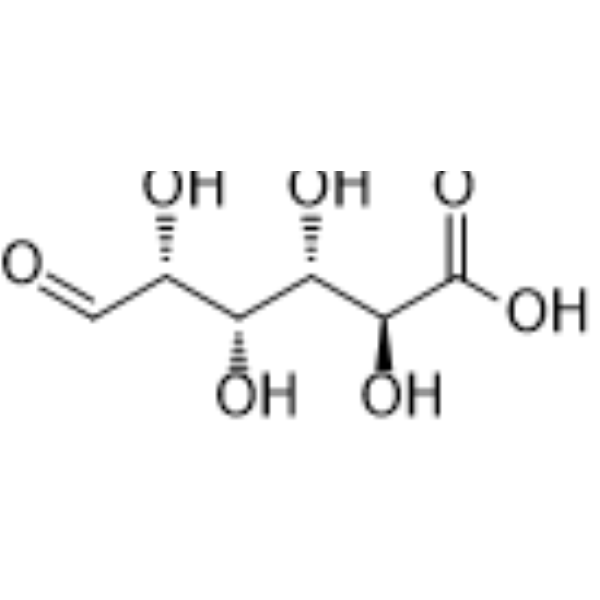
D-Glucuronic acid
Based on 1 publication(s) in Google Scholar
D-Glucuronic acid is a major component of many anti-inflammatory proteoglycans, which can promote embryonic development and inhibit cell aggregation. After being metabolized into ethyl glucuronide (HY-113093), D-Glucuronic acid activates Toll-like receptor 4 (TLR4), causing pain. D-Glucuronic acid and its derivative glucurono-lactone can serve as liver detoxifiers, and its derivatives also possess anti-tumor activity.
For research use only. We do not sell to patients.
- Purity : 98.0%
- CAS No.: 6556-12-3
- Formula: C6H10O7
- Molecular Weight:194.14
-
Storage:Powder -20°C, 3 years , 4°C, 2 years ; In solvent -80°C, 2 years , -20°C, 1 year

To place orders, for customer services and technical support, please contact: MedChemExpress USA
Tel: 609-228-6898 E-mail: [email protected] [email protected]


-
 Biological Activity
-
Chemical Information
-
Solvent & Solubility
- Protocols
- Purity & Documentation
- References
-
 Help & FAQs


-
HY-N0378
D-MannitolResistant Sugar/Osmotic Diuretics -
HY-Y0320
Dimethyl sulfoxide, meets analytical specification of Ch.P.Aprotic Solvent -
HY-B0445
NAD+Endogenous Metabolite -
HY-B2162
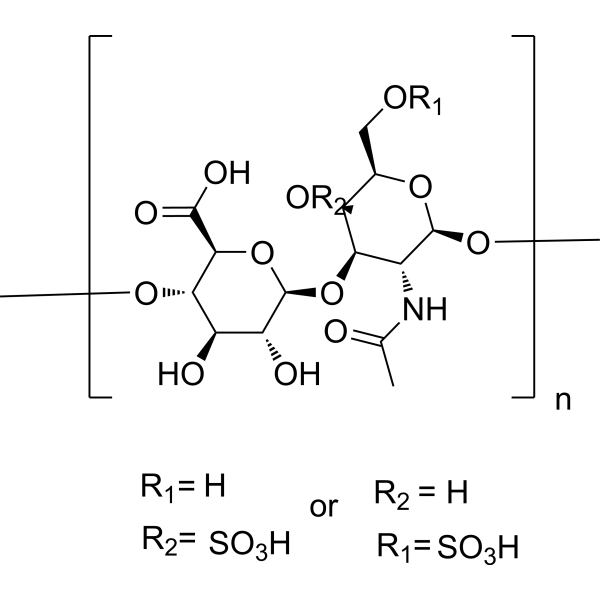
Chondroitin sulfateGlycosaminoglycan -
HY-B0351
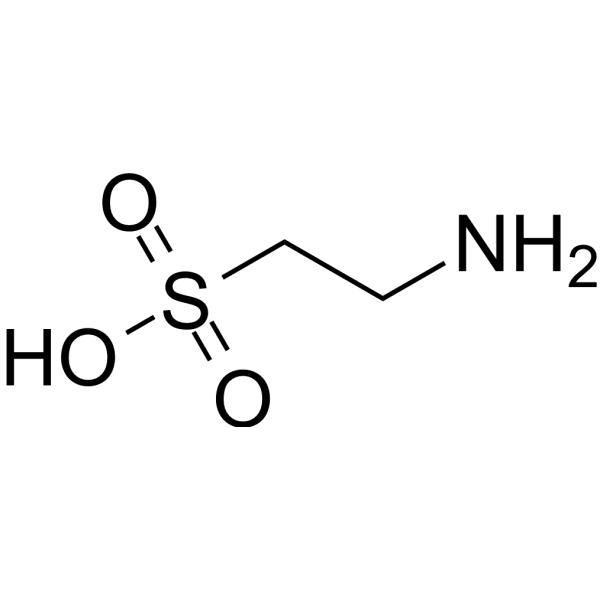
TaurineAutophagy Inducer -
HY-K0010
Protease Inhibitor Cocktail (EDTA-Free, 100× in DMSO) -

HY-N6612R
D-Glucuronic acid (Standard)Endogenous Metabolite -
HY-N0537
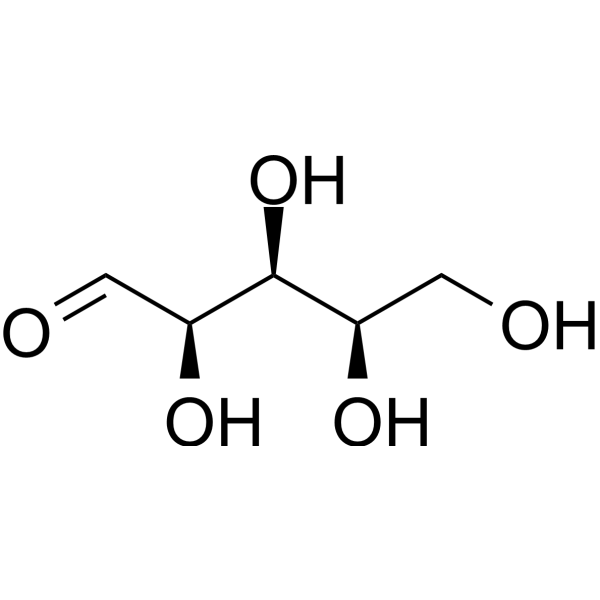
XyloseEndogenous Metabolite -
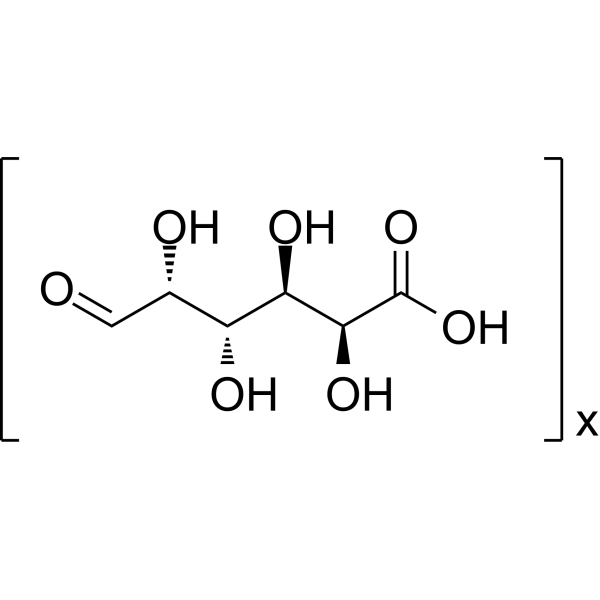
HY-N6613
Polygalacturonic acidHyaline Acid -
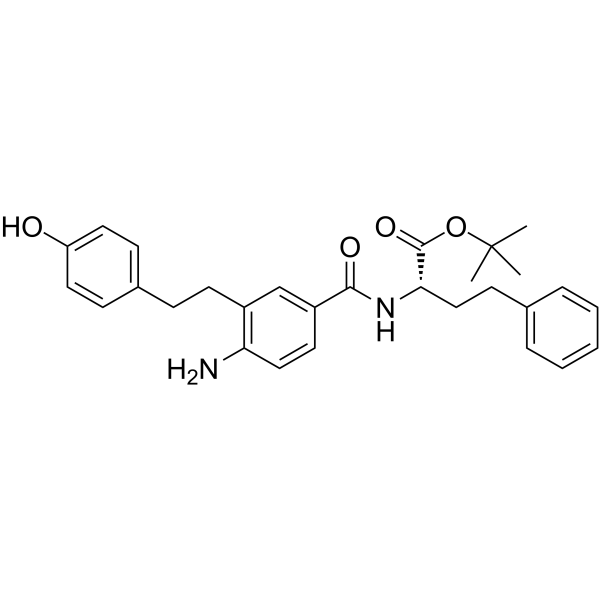
HY-U00435
Neoseptin 3 -
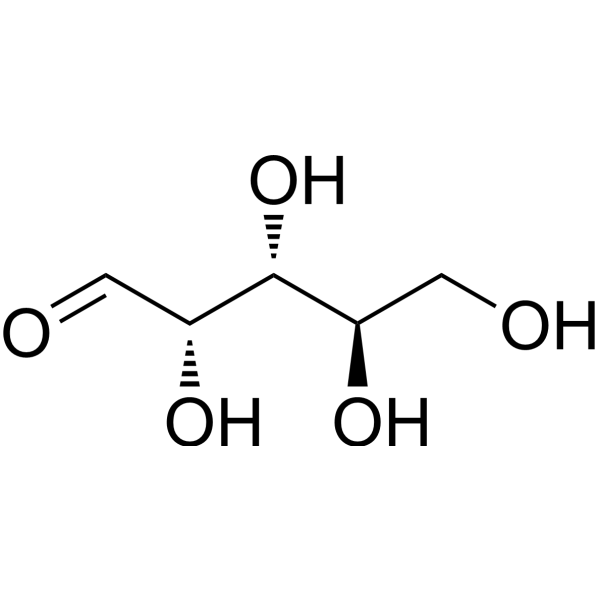
HY-N0059
D-ArabinoseAnti-parasite Agent -
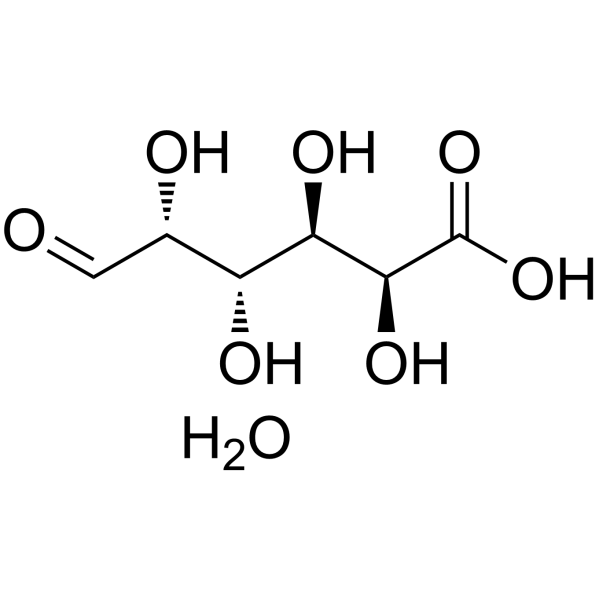
HY-B1827
D-Galacturonic acid hydrateSugar Acid
Publications Citing Use of MedChemExpress (MCE) D-Glucuronic acid
MoreAll Endogenous Metabolite Isoforms
More

Biological Activity
Description
IC50 & Target
|
Human Endogenous Metabolite |
TLR4 |
In Vitro
D-Glucuronic acid (0.05 mM, 22 h) can promote early embryonic development of pig oocytes[3]. A high concentration of D-Glucuronic acid (7 mM, 6 h) significantly inhibits the aggregation factor (AF)-mediated aggregation of GEODIA cells[4][5].
MedChemExpress (MCE) has not independently confirmed the accuracy of these methods. They are for reference only. Further protocols information, click here.
-
Cell Line:Pig oocytes
-
Concentration:0.05 mM
-
Incubation Time:22 h
-
Result:Had beneficial effects on cumulus expansion, perivitelline space thickness, cytoplasmic maturation, reactive oxygen species level, cortical granule exocytosis, and early embryonic development after parthenogenesis and somatic cell nuclear transfer.
In Vivo
MedChemExpress (MCE) has not independently confirmed the accuracy of these methods. They are for reference only.
-
Animal Model:Sprague-Dawley rats (325-375 g)[6]
-
Dosage:0.32 μg
-
Administration:Intrathecal injection (i.t.), single dose
-
Result:Caused a significant allodynia 3 hours post injection, which was blocked by coadministered LPS-RS (Lipid A from Rhodobacter sphaeroides, a type of lipopolysaccharide (LPS) that acts as an antagonist to Toll-like receptor 4 (TLR4)).


Chemical Information
-
CAS No. 6556-12-3
-
Appearance Solid
-
Molecular Weight 194.14
-
Formula C6H10O7
-
Color White to off-white
-
SMILES
O=C[C@@H]([C@H]([C@@H]([C@@H](C(O)=O)O)O)O)O
-
Structure Classification
-
Initial Source
-
Shipping
Room temperature in continental US; may vary elsewhere.
-
Storage
Powder -20°C 3 years 4°C 2 years In solvent -80°C 2 years -20°C 1 year


Publications (1)
-
Journal Impact Factor
-
Most Recent
-
Food Chem
Discovery of novel ascorbic acid derivatives and other metabolites in fruit of Rosa roxburghii Tratt through untargeted metabolomics and feature-based molecular networking. [Abstract]2023 Mar 30;405(Pt A):134807. PMID: 36370576


Solvent & Solubility
In Vitro:
H2O : 100 mg/mL (515.09 mM; Need ultrasonic)
DMSO : 33.33 mg/mL (171.68 mM; Need ultrasonic; Hygroscopic DMSO has a significant impact on the solubility of product, please use newly opened DMSO)
Please refer to the solubility information to select the appropriate solvent. Once prepared, please aliquot and store the solution to prevent product inactivation from repeated freeze-thaw cycles.
Storage method and period of stock solution: -80°C, 2 years; -20°C, 1 year. When stored at -80°C, please use it within 2 years. When stored at -20°C, please use it within 1 year.
* Note: If you choose water as the stock solution, please dilute it to the working solution, then filter and sterilize it with a 0.22 μm filter before use.
Please refer to the solubility information to select the appropriate solvent. Once prepared, please aliquot and store the solution to prevent product inactivation from repeated freeze-thaw cycles.
Storage method and period of stock solution: -80°C, 2 years; -20°C, 1 year. When stored at -80°C, please use it within 2 years. When stored at -20°C, please use it within 1 year.
* Note: If you choose water as the stock solution, please dilute it to the working solution, then filter and sterilize it with a 0.22 μm filter before use.
Concentration (start) × Volume (start) = Concentration (final) × Volume (final)
In Vivo:
Select the appropriate dissolution method based on your experimental animal and administration route.
- For the following dissolution methods, please ensure to first prepare a clear stock solution using an In Vitro approach and then sequentially add co-solvents:
- To ensure reliable experimental results, the clarified stock solution can be appropriately stored based on storage conditions. As for the working solution for In Vivo experiments, it is recommended to prepare freshly and use it on the same day.
- The percentages shown for the solvents indicate their volumetric ratio in the final prepared solution. If precipitation or phase separation occurs during preparation, heat and/or sonication can be used to aid dissolution.
Add each solvent one by one: 10% DMSO 40% PEG300 5% Tween-80 45% Saline
Solubility: ≥ 2.5 mg/mL (12.88 mM); Clear solution
This protocol yields a clear solution of ≥ 2.5 mg/mL (saturation unknown).
Taking 1 mL working solution as an example, add 100 μL DMSO stock solution (25.0 mg/mL) to 400 μL PEG300, and mix evenly; then add 50 μL Tween-80 and mix evenly; then add 450 μL Saline to adjust the volume to 1 mL.
Preparation of Saline: Dissolve 0.9 g sodium chloride in ddH₂O and dilute to 100 mL to obtain a clear Saline solution.
Add each solvent one by one: 10% DMSO 90% (20% SBE-β-CD in Saline)
Solubility: ≥ 2.5 mg/mL (12.88 mM); Clear solution
This protocol yields a clear solution of ≥ 2.5 mg/mL (saturation unknown).
Taking 1 mL working solution as an example, add 100 μL DMSO stock solution (25.0 mg/mL) to 900 μL 20% SBE-β-CD in Saline, and mix evenly.
Preparation of 20% SBE-β-CD in Saline (4°C, storage for one week): 2 g SBE-β-CD powder is dissolved in 10 mL Saline, completely dissolve until clear.
For the following dissolution methods, please prepare the working solution directly:
It is recommended to prepare fresh solutions and use them promptly within a short period of time.
The percentages shown for the solvents indicate their volumetric ratio in the final prepared solution. If precipitation or phase separation occurs during preparation, heat and/or sonication can be used to aid dissolution.
Add each solvent one by one: PBS
Solubility: 100 mg/mL (515.09 mM); Clear solution; Need ultrasonic
In Vivo Dissolution Calculator
Please enter the basic information of animal experiments:
-
-
-
-
Recommended: Prepare an additional quantity of animals to account for potential losses during experiments.
Working solution concentration: 0.22 mg/mL
This product has good water solubility, please refer to the measured solubility data in water/PBS/Saline for details.

Protocols
-
Suspension Spheroid Formation (Low-Adhesion/Forced Aggregation)
Suspension spheroid formation by low-adhesion or forced aggregation is a scaffold-free 3D culture method in which cells are prevented from attaching to plastic and are guided to interact with each other, forming compact multicellular aggregates through cell-cell adhesion, gravity-driven settling, microwell confinement, or centrifugation-assisted aggregation. The method detects the capacity of a cell population to self-assemble into spheroids, and the main readouts are spheroid formation efficiency, morphology, compactness, projected area or diameter, circularity, viability, proliferation, and experimental responses such as drug sensitivity. Classic implementations include hanging drops, agarose or hydrogel microwells, ultra-low-attachment round-bottom wells, and centrifugation-assisted aggregation in non-adherent wells. Low-adhesion culture shifts the system away from cell-substrate adhesion and toward cell-cell adhesion, while round-bottom or microwell geometry concentrates cells into
-
Hanging Drop Spheroid Culture
Hanging drop spheroid culture is a scaffold-free 3D culture method in which a small droplet of cell suspension is inverted so that suspended cells sediment by gravity toward the lowest point of the drop, aggregate, and form a multicellular spheroid with direct cell-cell contact. Spheroids generated by this method are used to study 3D cell cohesion, cell-ECM interactions, drug response, co-culture organization, and tumor-like microenvironmental behavior. The primary readouts are spheroid formation efficiency, spheroid size, circularity or compactness, viability, and treatment response; these can be measured by bright-field microscopy, fluorescence viability staining, ATP-, fluorescence-, or colorimetric-based assays, and image-based diameter or volume calculations.
-
Research Protocol for Inflammation-related Diseases
The NLRP3 inflammasome is a cytosolic innate immune signaling platform that integrates priming signals and danger-signal activation to promote caspase-1 activation, maturation of IL-1β and IL-18, and gasdermin D-mediated pyroptotic cell death. The core experimental logic is to determine whether inflammatory disease phenotypes are driven by increased NLRP3 expression, ASC-containing inflammasome assembly, caspase-1 cleavage, GSDMD cleavage, and extracellular release of IL-1β/IL-18 rather than by nonspecific cell injury alone. The pathway is strongly linked to inflammation-related disease phenotypes because monosodium urate crystals activate NALP3/NLRP3 inflammasome signaling in gout-like crystal inflammation, cholesterol crystals activate NLRP3 inflammasomes in atherogenesis models, and DSS-induced intestinal inflammation has been reported to involve NLRP3 inflammasome activity. However, experimental colitis studies also show context-dependent protective effects of NLRP3 inflammasome co


Purity & Documentation
-
Data Sheet (279 KB)
-
SDS (396 KB)
- English - EN (396 KB)
- Français - FR (396 KB)
- Deutsch - DE (396 KB)
- Norwegian - NO (396 KB)
- Español - ES (396 KB)
- Swedish - SV (396 KB)
- Italian - IT (396 KB)
- Korean - KR (396 KB)
- Portuguese - PT (396 KB)
-
Handling Instructions (2659 KB)
References
[1]. Teng F, et al. Production of d-glucuronic acid from myo-inositol using Escherichia coli whole-cell biocatalyst overexpressing a novel myo-inositol oxygenase from Thermothelomyces thermophile. Enzyme Microb Technol. 2019 Aug;127:70-74. [Content Brief]
[2]. el-Nezhawy AO, et al. Design, synthesis and antitumor activity of novel D-glucuronic acid derivatives. Med Chem. 2011 Nov;7(6):624-38. [Content Brief]
[3]. Lee J, et al. Effect of D-Glucuronic Acid and N-acetyl-D-Glucosamine Treatment during In Vitro Maturation on Embryonic Development after Parthenogenesis and Somatic Cell Nuclear Transfer in Pigs. Animals (Basel). 2021 Apr 6;11(4):1034. [Content Brief]
[4]. Müller WE, et al. Purification and characterization of a species-specific aggregation factor in sponges. Exp Cell Res. 1973 Jul;80(1):95-104. [Content Brief]
[5]. Vaith P, et al. On the role of D-glucuronic acid in the aggregation of cells from the marine sponge Geodia cydonium. Dev Comp Immunol. 1979 Spring;3(2):259-75. [Content Brief]
[6]. Lewis SS, et al. Glucuronic acid and the ethanol metabolite ethyl-glucuronide cause toll-like receptor 4 activation and enhanced pain. Brain Behav Immun. 2013 May;30:24-32. [Content Brief]


Complete Stock Solution Preparation Table
Please refer to the solubility information to select the appropriate solvent. Once prepared, please aliquot and store the solution to prevent product inactivation from repeated freeze-thaw cycles.
Storage method and period of stock solution: -80°C, 2 years; -20°C, 1 year. When stored at -80°C, please use it within 2 years. When stored at -20°C, please use it within 1 year.
| Optional Solvent | Concentration Solvent Mass | 1 mg | 5 mg | 10 mg | 25 mg |
|---|---|---|---|---|---|
| DMSO / H2O | 1 mM | 5.1509 mL | 25.7546 mL | 51.5092 mL | 128.7731 mL |
| 5 mM | 1.0302 mL | 5.1509 mL | 10.3018 mL | 25.7546 mL | |
| 10 mM | 0.5151 mL | 2.5755 mL | 5.1509 mL | 12.8773 mL | |
| 15 mM | 0.3434 mL | 1.7170 mL | 3.4339 mL | 8.5849 mL | |
| 20 mM | 0.2575 mL | 1.2877 mL | 2.5755 mL | 6.4387 mL | |
| 25 mM | 0.2060 mL | 1.0302 mL | 2.0604 mL | 5.1509 mL | |
| 30 mM | 0.1717 mL | 0.8585 mL | 1.7170 mL | 4.2924 mL | |
| 40 mM | 0.1288 mL | 0.6439 mL | 1.2877 mL | 3.2193 mL | |
| 50 mM | 0.1030 mL | 0.5151 mL | 1.0302 mL | 2.5755 mL | |
| 60 mM | 0.0858 mL | 0.4292 mL | 0.8585 mL | 2.1462 mL | |
| 80 mM | 0.0644 mL | 0.3219 mL | 0.6439 mL | 1.6097 mL | |
| 100 mM | 0.0515 mL | 0.2575 mL | 0.5151 mL | 1.2877 mL |
* Note: If you choose water as the stock solution, please dilute it to the working solution, then filter and sterilize it with a 0.22 μm filter before use.


D-Glucuronic acid Related Classifications
HY-N6612 Related Classifications
 Powered by Bioz