



Alendronate sodium
Based on 10 publication(s) in Google Scholar
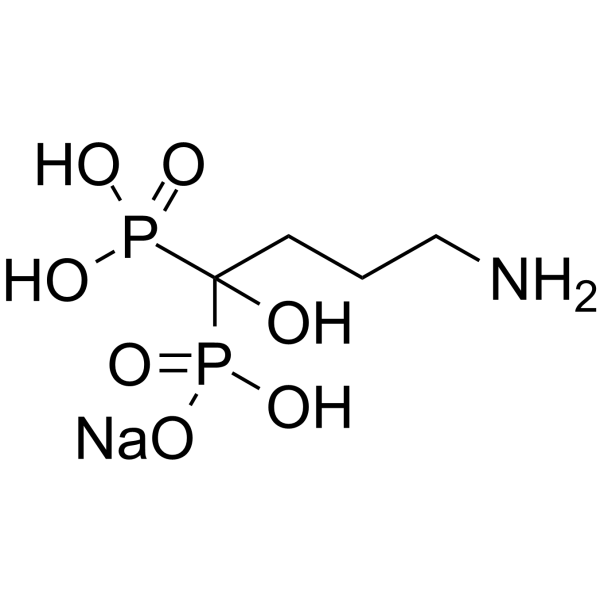
Alendronate sodium is an orally active bisphosphonate which binds to bone surfaces and inhibits bone resorption by osteoclasts. Alendronate sodium induces skeletal alterations in the chicken embryonic development model. Alendronate sodium can be used for osteoporosis research.
For research use only. We do not sell to patients.
- Purity : 98.0%
- CAS No.: 129318-43-0
- Formula: C4H12NNaO7P2
- Molecular Weight:271.08
-
Storage:
4°C, sealed storage, away from moisture
* In solvent : -80°C, 6 months; -20°C, 1 month (sealed storage, away from moisture)

To place orders, for customer services and technical support, please contact: MedChemExpress USA
Tel: 609-228-6898 E-mail: [email protected] [email protected]


-
 Biological Activity
-
Chemical Information
-
Solvent & Solubility
- Protocols
- Purity & Documentation
- References
-
 Help & FAQs


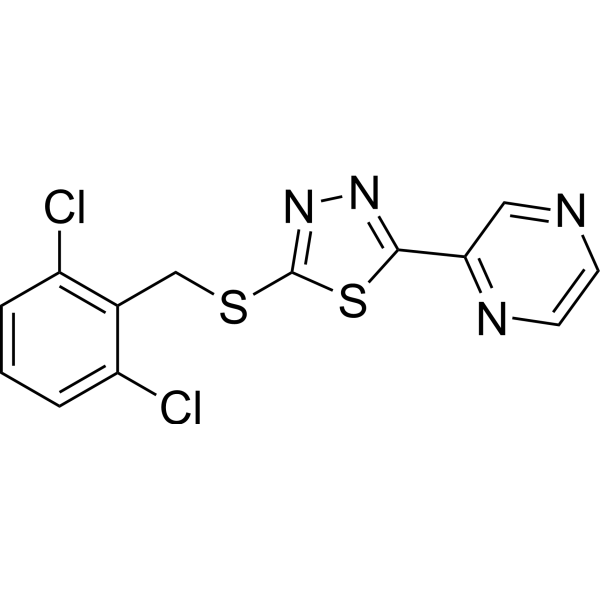
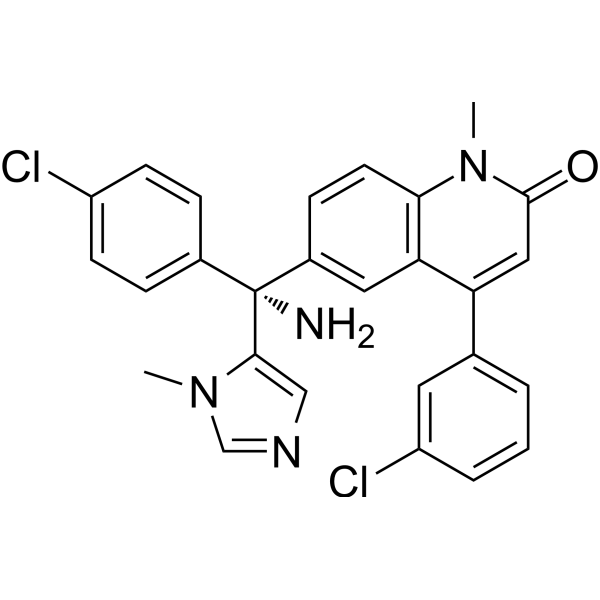
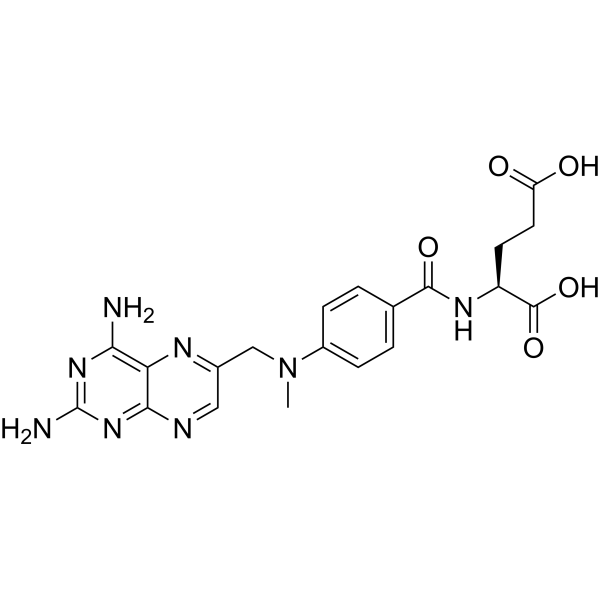
Publications Citing Use of MedChemExpress (MCE) Alendronate sodium
More- J Pharm Anal. 2025 Jul 31.
- Int J Mol Med. 2025 Dec;56(6):206. [Abstract]
- Cell Rep. 2022 Oct 25;41(4):111508. [Abstract]
- J Med Chem. 2024 Sep 12;67(17):15738-15755. [Abstract]
- Biochem Pharmacol. 2025 Aug 13;242(Pt 1):117234. [Abstract]
- Int J Mol Sci. 2024 Jul 16;25(14):7798. [Abstract]
- Am J Physiol Endocrinol Metab. 2024 Jul 1;327(1):E55-E68. [Abstract]
- J Biol Chem. 2019 Jul 19;294(29):11240-11247. [Abstract]
- Bone. 2025 Mar:192:117348. [Abstract]
- Pathol Res Pract. 2025 Sep:273:156138. [Abstract]
 Customer Validation & Images

-
Bio/Physico-chemical Assay
-
Cell Imaging/Staining
-
Flow Cytometry
-
Flow Cytometry
-
Cell Imaging/Staining



Biological Activity
Description
Cellular Effect
|
Cell Line

|
Type | Value | Description | References |
|---|---|---|---|---|
| BMDM | IC50 |
3.7 μM
Compound: Alen
|
Inhibition of M-CSF/RANKL-induced osteoclast differentiation in C57BL/6 mouse bone marrow macrophage assessed as reduction in multinucleated TRAP+ cells incubated for 6 days with fresh media replacement on day 3 and measured on day 6 by TRAP staining-base
Inhibition of M-CSF/RANKL-induced osteoclast differentiation in C57BL/6 mouse bone marrow macrophage assessed as reduction in multinucleated TRAP+ cells incubated for 6 days with fresh media replacement on day 3 and measured on day 6 by TRAP staining-base
|
[PMID: 31257875] |
| BMDM | IC50 |
0.39 μM
Compound: ALN
|
Anti-osteoclastogenic activity in M-CSF/RANKL-induced C57BL/6 mouse BMDM cells assessed as inhibition of M-CSF/RANKL-stimulated osteoclast differentiation measured after 5 days by TRAP staining based microscopic analysis
Anti-osteoclastogenic activity in M-CSF/RANKL-induced C57BL/6 mouse BMDM cells assessed as inhibition of M-CSF/RANKL-stimulated osteoclast differentiation measured after 5 days by TRAP staining based microscopic analysis
|
[PMID: 39167391] |
| BMMC | IC50 |
1.71 μM
Compound: Alendronate
|
Anti-osteoporosis activity in C57BL/6 mouse BMM cells assessed as inhibition of M-CSF/RANKL-induced osteoclastogenesis by measuring reduction in multinucleated TRAP+ cells incubated for 5 days with media replenishment for every 48 hrs measured by TRAP-sta
Anti-osteoporosis activity in C57BL/6 mouse BMM cells assessed as inhibition of M-CSF/RANKL-induced osteoclastogenesis by measuring reduction in multinucleated TRAP+ cells incubated for 5 days with media replenishment for every 48 hrs measured by TRAP-sta
|
[PMID: 33485256] |
| RAW264.7 | IC50 |
0.084 μM
Compound: AS
|
Antiosteoclast activity in mouse RAW264.7 cells assessed as inhibition of RANKL-induced osteoclast differentiation after 5 days by TRAP assay
Antiosteoclast activity in mouse RAW264.7 cells assessed as inhibition of RANKL-induced osteoclast differentiation after 5 days by TRAP assay
|
10.1039/C5MD00482A |
| T-cell | EC50 |
0.75 μM
Compound: Alendronate
|
Mean effective concentration of compound was determined in stimulating Vgamma9 / Vdelta2 T cell
Mean effective concentration of compound was determined in stimulating Vgamma9 / Vdelta2 T cell
|
[PMID: 12657258] |
In Vivo
MedChemExpress (MCE) has not independently confirmed the accuracy of these methods. They are for reference only.
-
Animal Model:Viable fertilized chick eggs (7 days)[3]
-
Dosage:1.5E-7 M, 1.5E-8 M, 1.5E-9 M, and 1.5E-10 M
-
Administration:intra-air cell injection, single dose at embryonic day 7, exposure for 4 days
-
Result:Showed an 87.5% viability rate and a 75% viability rate at 1.5E-10 M and other doses, respectively.
Significantly reduced bone morphometric indexes (bone volume (BV) and bone surface (BS)) and cortical thickness in a dose-dependent manner.
Significantly reduced dimensions and diminished mineralization in a concentration-dependent manner.
Significantly increased TNFRSF11B, NF-κB1 and IL-6 levels, and decreased TNFRSF11A, CTSK, COL1A2, SPP1, and SOST levels, compared to control.


Chemical Information
-
CAS No. 129318-43-0
-
Appearance Solid
-
Molecular Weight 271.08
-
Formula C4H12NNaO7P2
-
Color White to off-white
-
SMILES
O=P(O)(O)C(CCCN)(O)P(O)(O[Na])=O
-
Synonyms
Alendronic acid monosodium salt
-
Shipping
Room temperature in continental US; may vary elsewhere.
-
Storage
4°C, sealed storage, away from moisture
* In solvent : -80°C, 6 months; -20°C, 1 month (sealed storage, away from moisture)


Publications (10)
-
Journal Impact Factor
-
Most Recent
-
-
Int J Mol Med
Cynarin as a potent anti‑osteolytic agent: Targeting MAPK and Nrf2‑Keap1 pathways for osteoclast inhibition and bone protection. [Abstract]2025 Dec;56(6):206. PMID: 40999989 -
Cell Rep
Genome-wide CRISPR screen reveals v-ATPase as a drug target to lower levels of ALS protein ataxin-2. [Abstract]2022 Oct 25;41(4):111508. PMID: 36288714 -
J Med Chem
Discovery of Novel Neo-Clerodane Derivatives as Potent Dual-Functional Antiosteoporosis Agents through Targeting Peroxisome Proliferator-Activated Receptor-γ. [Abstract]2024 Sep 12;67(17):15738-15755. PMID: 39185622
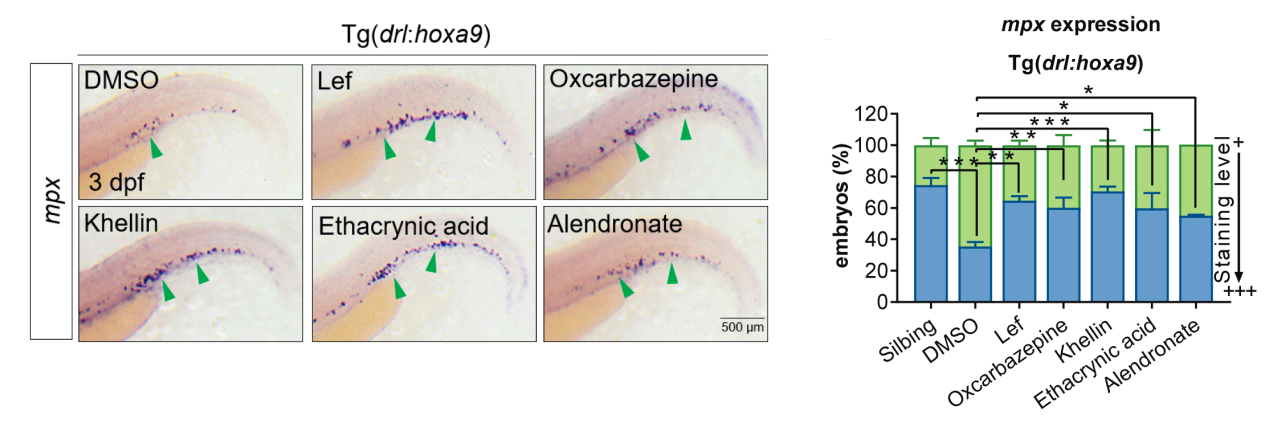
Alendronate sodium purchased from MedChemExpress. Usage Cited in: J Med Chem. 2024 Sep 12;67(17):15738-15755. [Abstract]
Alendronate sodium hydrate (33 μM; 48 h) significantly restored mpx expression in Tg(drl:hoxa9) embryos.
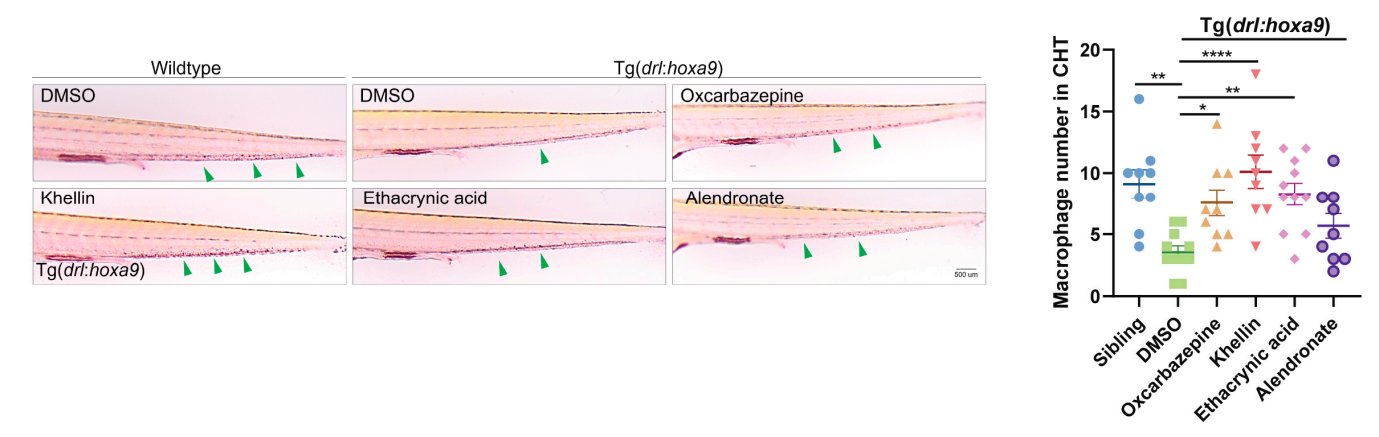
Alendronate sodium purchased from MedChemExpress. Usage Cited in: J Med Chem. 2024 Sep 12;67(17):15738-15755. [Abstract]
Alendronate sodium hydrate (33 μM; 48 h) recovered macrophage differentiation in Tg(drl:hoxa9) embryos.
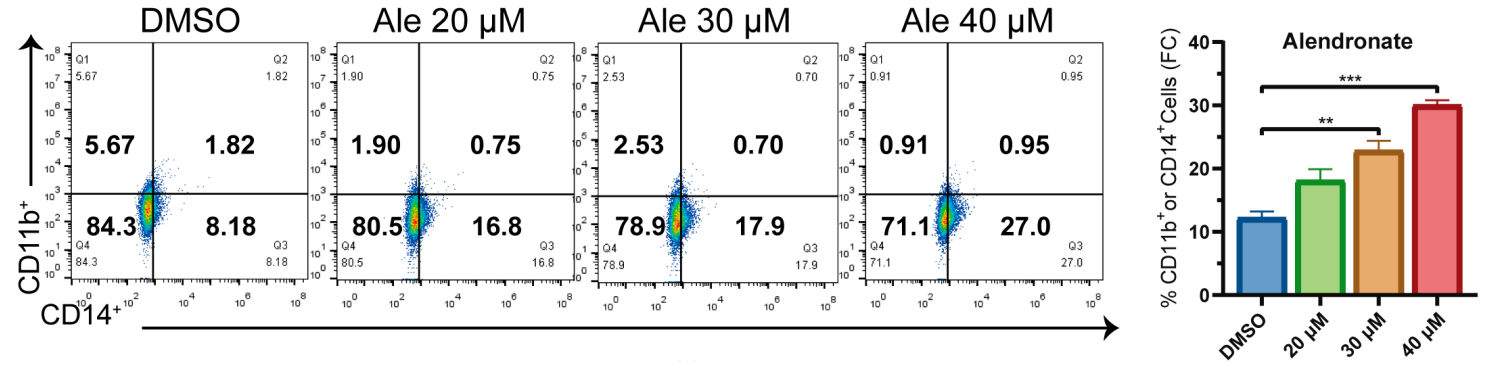
Alendronate sodium purchased from MedChemExpress. Usage Cited in: J Med Chem. 2024 Sep 12;67(17):15738-15755. [Abstract]
Flow cytometry analysis of CD14 and CD11b expression in U937 cells treated with different doses of Alendronate sodium hydrate (20-40 μM).
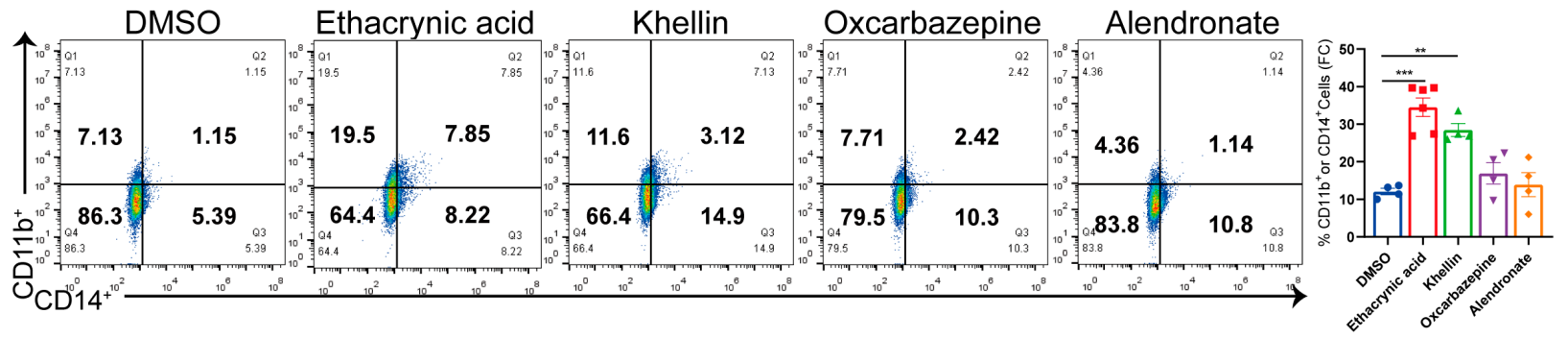
Alendronate sodium purchased from MedChemExpress. Usage Cited in: J Med Chem. 2024 Sep 12;67(17):15738-15755. [Abstract]
Flow cytometry analysis of CD14 and CD11b expression in U937 cells treated with Alendronate sodium hydrate (30 μM; 3 d).
Alendronate sodium purchased from MedChemExpress. Usage Cited in: J Med Chem. 2024 Sep 12;67(17):15738-15755. [Abstract]
Alendronate sodium hydrate (30 μM) induced chromatin condensation and increased the nucleocytoplasmic ratio in U937 cells, supporting the differentiation of these cells.
-
Biochem Pharmacol
Irisolidone enhances osteoblast differentiation via the AMPK-ULK1-autophagy Axis to accelerate osteoporotic fracture repair. [Abstract]2025 Aug 13;242(Pt 1):117234. PMID: 40816626 -
Int J Mol Sci
In Vivo Chemical Screening in Zebrafish Embryos Identified FDA-Approved Drugs That Induce Differentiation of Acute Myeloid Leukemia Cells. [Abstract]2024 Jul 16;25(14):7798. PMID: 39063039 -
Am J Physiol Endocrinol Metab
Mononuclear phagocyte morphologic response to chemoattractants is dependent on geranylgeranyl pyrophosphate. [Abstract]2024 Jul 1;327(1):E55-E68. PMID: 38717364 -
J Biol Chem
Mature osteoclast-derived apoptotic bodies promote osteogenic differentiation via RANKL-mediated reverse signaling. [Abstract]2019 Jul 19;294(29):11240-11247. PMID: 31167789 -
Bone
2025 Mar:192:117348. PMID: 39617111 -
Pathol Res Pract
Alendronate-functionalized ZIF-8 nanoplatform for targeted delivery of SHH siRNA and docetaxel to treat prostate cancer bone metastasis. [Abstract]2025 Sep:273:156138. PMID: 40694986


Solvent & Solubility
In Vitro:
H2O : 25 mg/mL (92.22 mM; ultrasonic and warming and heat to 60°C)
Please refer to the solubility information to select the appropriate solvent. Once prepared, please aliquot and store the solution to prevent product inactivation from repeated freeze-thaw cycles.
Storage method and period of stock solution: -80°C, 6 months; -20°C, 1 month (sealed storage, away from moisture). When stored at -80°C, please use it within 6 months. When stored at -20°C, please use it within 1 month.
* Note: If you choose water as the stock solution, please dilute it to the working solution, then filter and sterilize it with a 0.22 μm filter before use.
Please refer to the solubility information to select the appropriate solvent. Once prepared, please aliquot and store the solution to prevent product inactivation from repeated freeze-thaw cycles.
Storage method and period of stock solution: -80°C, 6 months; -20°C, 1 month (sealed storage, away from moisture). When stored at -80°C, please use it within 6 months. When stored at -20°C, please use it within 1 month.
* Note: If you choose water as the stock solution, please dilute it to the working solution, then filter and sterilize it with a 0.22 μm filter before use.
Concentration (start) × Volume (start) = Concentration (final) × Volume (final)


Purity & Documentation
-
Data Sheet (277 KB)
-
SDS (393 KB)
- English - EN (393 KB)
- Français - FR (393 KB)
- Deutsch - DE (393 KB)
- Norwegian - NO (393 KB)
- Español - ES (393 KB)
- Swedish - SV (393 KB)
- Italian - IT (393 KB)
- Korean - KR (393 KB)
- Portuguese - PT (393 KB)
-
Handling Instructions (2659 KB)
References
[1]. Imai K. Alendronate sodium hydrate (oral jelly) for the treatment of osteoporosis: review of a novel, easy to swallow formulation. Clin Interv Aging. 2013;8:681-688. [Content Brief]
[2]. Sharpe M, et al. Alendronate: an update of its use in osteoporosis. Drugs. 2001;61(7):999-1039. [Content Brief]
[3]. de Campos WG, et al. Alendronate induces skeletal alterations in the chicken embryonic development model. Toxicol Appl Pharmacol. 2023 Oct 1;476:116673. [Content Brief]


Complete Stock Solution Preparation Table
Please refer to the solubility information to select the appropriate solvent. Once prepared, please aliquot and store the solution to prevent product inactivation from repeated freeze-thaw cycles.
Storage method and period of stock solution: -80°C, 6 months; -20°C, 1 month (sealed storage, away from moisture). When stored at -80°C, please use it within 6 months. When stored at -20°C, please use it within 1 month.
| Optional Solvent | Concentration Solvent Mass | 1 mg | 5 mg | 10 mg | 25 mg |
|---|---|---|---|---|---|
| H2O | 1 mM | 3.6889 mL | 18.4447 mL | 36.8895 mL | 92.2237 mL |
| 5 mM | 0.7378 mL | 3.6889 mL | 7.3779 mL | 18.4447 mL | |
| 10 mM | 0.3689 mL | 1.8445 mL | 3.6889 mL | 9.2224 mL | |
| 15 mM | 0.2459 mL | 1.2296 mL | 2.4593 mL | 6.1482 mL | |
| 20 mM | 0.1844 mL | 0.9222 mL | 1.8445 mL | 4.6112 mL | |
| 25 mM | 0.1476 mL | 0.7378 mL | 1.4756 mL | 3.6889 mL | |
| 30 mM | 0.1230 mL | 0.6148 mL | 1.2296 mL | 3.0741 mL | |
| 40 mM | 0.0922 mL | 0.4611 mL | 0.9222 mL | 2.3056 mL | |
| 50 mM | 0.0738 mL | 0.3689 mL | 0.7378 mL | 1.8445 mL | |
| 60 mM | 0.0615 mL | 0.3074 mL | 0.6148 mL | 1.5371 mL | |
| 80 mM | 0.0461 mL | 0.2306 mL | 0.4611 mL | 1.1528 mL |
* Note: If you choose water as the stock solution, please dilute it to the working solution, then filter and sterilize it with a 0.22 μm filter before use.


Alendronate sodium Related Classifications
HY-108685 Related Classifications
 Powered by Bioz