1. Search Result
Search Result
Pathways Recommended: Stem Cell/Wnt Cell Cycle/DNA Damage
Results for "

gastric cancer cell invasion

" in MedChemExpress (MCE) Product Catalog:

22

Inhibitors & Agonists

1

Biochemical Assay Reagents

4

Natural
Products

Cat. No. Product Name Target Research Areas Chemical Structure
  • HY-N0554
    Escin IA
    1 Publications Verification

    HIV Protease Monoamine Oxidase Infection Inflammation/Immunology Cancer
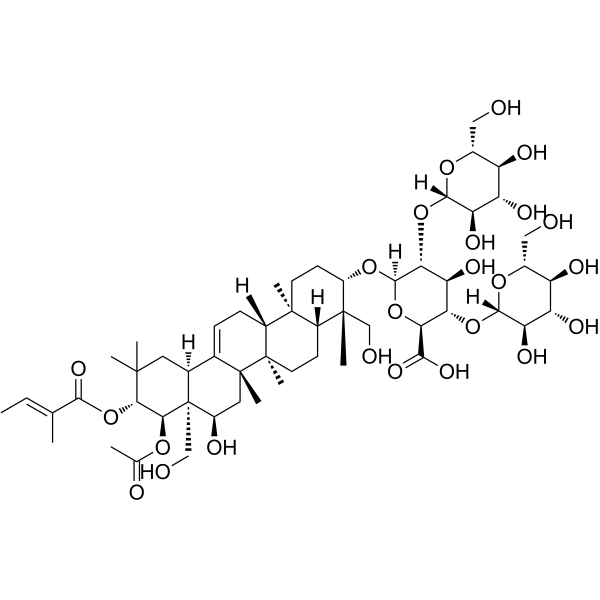
    Escin IA is an oral LOXL2 inhibitor and EMT inhibitor, with selectivity for LOXL2-expressing cells. Escin IA suppresses invasion, migration, and metastasis of breast cancer cells, and acts as the primary anti-TNBC metastasis constituent of Aesculus chinensis Bunge fruit saponin fraction. Escin IA can be used for the research of triple-negative breast cancer, acute inflammation, and ethanol-induced gastric mucosal lesions .



    Escin IA
  • HY-12873

    Ras p38 MAPK JNK Cancer
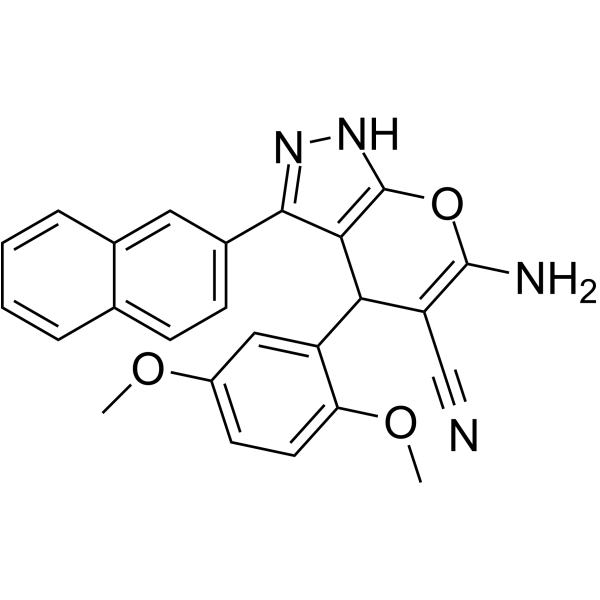
    RBC8 is a selective and allosteric RALA and RALB inhibitor. RBC8 stabilizes the inactive GDP-bound state of Ral, preventing its activation. RBC8 promotes the phosphorylation of proteins related to the MAPK/JNK pathway. RBC8 has the activity of inhibiting tumor cell proliferation, migration and invasion. RBC8 is used in the study of various cancers such as lung cancer, gastric cancer, and multiple myeloma .
    RBC8
  • HY-N4247

    Bombesin Receptor Bacterial Apoptosis Reactive Oxygen Species (ROS) PI3K Akt GSK-3 MMP mTOR NF-κB LXR Infection Cardiovascular Disease Neurological Disease Inflammation/Immunology Cancer
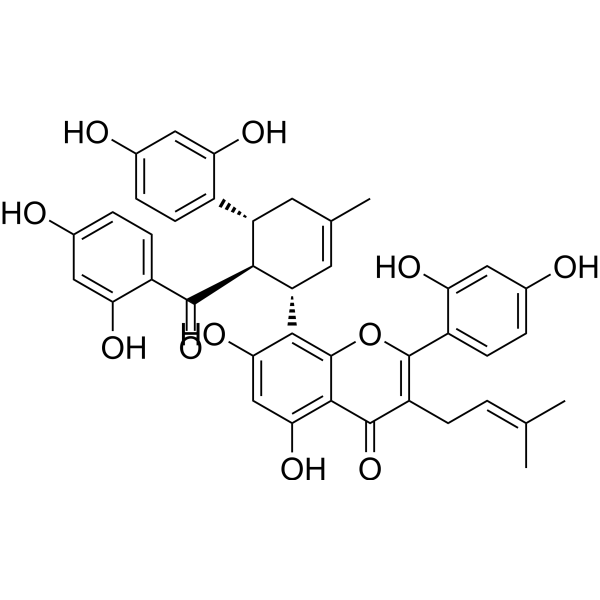
    Kuwanon G is a flavonoid compound and an antagonist of the bombesin receptor. Kuwanon G has multiple activities such as bactericidal, anti-tumor, anti-inflammatory, antioxidant, anti-atherosclerotic, and neuroprotective effects. Kuwanon G exhibits strong antibacterial activity against oral pathogens, especially cariogenic bacteria and periodontal pathogens. Kuwanon G can induce apoptosis and inhibit proliferation, migration, and invasion of tumor cells. Kuwanon G can be used in the research of diseases such as gastric cancer and atherosclerosis .
    Kuwanon G
  • HY-16441

    S-1; TS-1

    PI3K Akt mTOR Apoptosis Bcl-2 Family Cancer
    Tegafur-gimeracil-oteracil potassium (S-1; TS-1) is an orally active anticancer agent composed of Tegafur (HY-17400), Gimeracil (HY-17469), and Oteracil potassium (HY-17511). Tegafur-gimeracil-oteracil potassium inhibits the proliferation, migration and invasion of endometrial cancer cells and induces apoptosis by blocking the PI3K/AKT/mTOR signaling pathway. Tegafur-gimeracil-oteracil potassium can be used in research related to endometrial cancer and gastric cancer with peritoneal metastasis .
    Tegafur-gimeracil-oteracil potassium
  • HY-N1510

    Glycosidase Notch Toll-like Receptor (TLR) NF-κB Mucin Reactive Oxygen Species (ROS) Bacterial TGF-beta/Smad Anaplastic lymphoma kinase (ALK) Infection Inflammation/Immunology Cancer
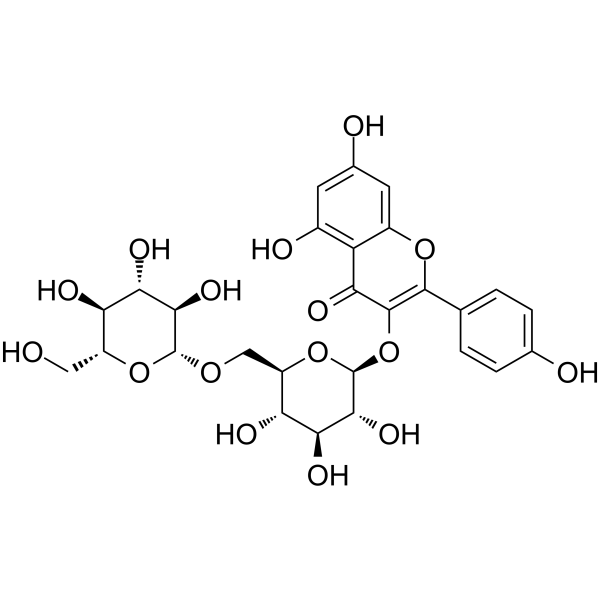
    Kaempferol 3-O-gentiobioside is an orally active flavonoid, with a Ka value of 57 µM against human NOTCH1 and an IC50 value of 50 μM against α-glucosidase. Kaempferol 3-O-gentiobioside inhibits the NOTCH signaling pathway. It downregulates the expression of TLR4 and NLRP3, and suppresses the activation and nuclear translocation of NF-κB. Kaempferol 3-O-gentiobioside inhibits the expression of MUC5AC, reduces nitrite and ROS levels, and attenuates excessive mucus secretion. It exhibits antibacterial activity, reducing the formation and growth of MRSA biofilms. Kaempferol 3-O-gentiobioside blocks the TGF-β/ALK5/Smad signaling pathway and inhibits epithelial-mesenchymal transition. It suppresses the proliferation, migration, invasion and metastatic growth of tumor cells. Kaempferol 3-O-gentiobioside alleviates airway inflammation and mucus hypersecretion in mice with allergic asthma . It reduces the volume of ovarian cancer xenografts in mice. Kaempferol 3-O-gentiobioside can be used in research related to allergic asthma, diabetes, MRSA infection, breast cancer, gastric cancer and ovarian cancer .
    Kaempferol 3-O-gentiobioside
  • HY-W357818

    GX

    Sodium Channel ERK MEK NF-κB Drug Metabolite Cancer
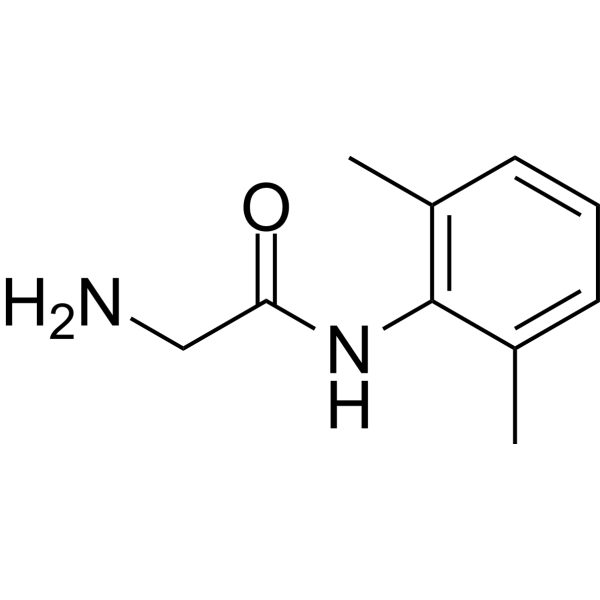
    Glycinexylidide (GX) is the active metabolite of Lidocaine. Lidocaine is a local agent that can suppress or relieve pain, that inhibits sodium channels involving complex voltage and dependence. Lidocaine also reduces the growth, migration and invasion of gastric cancer cells. Glycinexylidide has research potential for use in anesthesia, cancer, and cardiovascular disease .
    Glycinexylidide
  • HY-W854385A
    Sialyl Lewis A sodium
    1 Publications Verification

    SLeA sodium

    Biochemical Assay Reagents Cancer
    Sialyl Lewis A (SLeA) sodium is a tumor-associated carbohydrate antigen, also known as carbohydrate antigen 19-9 (CA19-9), that binds to E-selectin (ELAM-1) and selectins to mediate cell-endothelium adhesion. Sialyl Lewis A sodium promotes cancer cell-vascular endothelium adhesion, and its surface presence correlates with increased tumorigenicity and invasiveness in cancer cells. Sialyl Lewis A sodium shows elevated expression in human adenocarcinomas of the colon, pancreas, and stomach, with expression levels linked to tumor progression and poor prognosis in colorectal and gastric carcinomas. Sialyl Lewis A sodium can be used for the research of cancers, such as colon, pancreas, stomach, and squamous lung cancer .
    Sialyl Lewis A sodium
  • HY-W854385

    SLeA

    Biochemical Assay Reagents E-Selectin Cancer
    Sialyl Lewis A (SLeA) is a tumor-associated carbohydrate antigen, also known as carbohydrate antigen 19-9 (CA19-9), that binds to E-selectin (ELAM-1) and selectins to mediate cell-endothelium adhesion. Sialyl Lewis A promotes cancer cell-vascular endothelium adhesion, and its surface presence correlates with increased tumorigenicity and invasiveness in cancer cells. Sialyl Lewis A shows elevated expression in human adenocarcinomas of the colon, pancreas, and stomach, with expression levels linked to tumor progression and poor prognosis in colorectal and gastric carcinomas. Sialyl Lewis A can be used for the research of cancers, such as colon, pancreas, stomach, and squamous lung cancer .
    Sialyl Lewis A
  • HY-176237

    NAMPT Apoptosis Cancer
    Nampt-IN-16 (Compound 9a) is an orally active NAMPT inhibitor with an IC50 of 0.15 μM. Nampt-IN-16 can reduce intracellular NAD + and ATP levels. Nampt-IN-16 can inhibit the proliferation, migration, and invasion, induce cell cycle arrest and apoptosis, and alter cellular metabolism of gastric cancer cells. Nampt-IN-16 can be used in the research of tumors such as gastric cancer .
    Nampt-IN-16
  • HY-124398

    PAK Cancer
    GL-1196 is an inhibitor of PAK4. GL-1196 can suppress the proliferation and invasion of gastric cancer cells. GL-1196 inhibits PAK4-mediated signaling pathways. GL-1196 can hinder the proliferation of human gastric cancer cells through suppressing PAK4/c-Src/EGFR/CyclinD1 and CDK4/6. GL-1196 can reduce filamentous pseudopodia formation and induce filamentous pseudopodia formation and promote cell elongation in SGC7901 and BGC823 cells. GL-1196 can be studied in anti-cancer research .
    GL-1196
  • HY-N4247R

    Reference Standards Bombesin Receptor Bacterial Apoptosis Reactive Oxygen Species (ROS) PI3K Akt GSK-3 MMP mTOR NF-κB LXR Infection Cardiovascular Disease Neurological Disease Inflammation/Immunology Cancer
    Kuwanon G (Standard) is the analytical standard of Kuwanon G (HY-N4247). This product is intended for research and analytical applications. Kuwanon G is a flavonoid compound and an antagonist of the bombesin receptor. Kuwanon G has multiple activities such as bactericidal, anti-tumor, anti-inflammatory, antioxidant, anti-atherosclerotic, and neuroprotective effects. Kuwanon G exhibits strong antibacterial activity against oral pathogens, especially cariogenic bacteria and periodontal pathogens. Kuwanon G can induce apoptosis and inhibit proliferation, migration, and invasion of tumor cells. Kuwanon G can be used in the research of diseases such as gastric cancer and atherosclerosis .
    Kuwanon G (Standard)
  • HY-164374

    PAK Cancer
    AK963/40708899 is a potent PAK1 inhibitor. AK963/40708899 suppresses the proliferation of human gastric cancer cells by downregulation of PAK1-NF-κB-cyclinB1 pathway. AK963/40708899 induces cell cycle arrest at G2 phase and reduces the migration and invasion. AK963/40708899 inhibits the formation of filopodia and promots cell adhesion which in turn inhibits invasive potential of gastric cells by negatively regulating PAK1-LIMKl-cofilin and PAK1-ERK-FAK pathways .
    AK963/40708899
  • HY-146030

    Others Cancer
    Anticancer agent 46 is an anti cancer agent. Anticancer agent 46 can be used in the research of gastric cancer .
    Anticancer agent 46
  • HY-W110138

    DNA/RNA Synthesis Cytochrome P450 ROCK Cancer
    Chloroxoquinoline is an anticancer agent. Chloroxoquinoline damages the DNA templates of cancer cells, inducing DNA breaks and cell death, and inhibits cell invasion via down-regulating Rho/Rho kinase signaling pathway. Chloroxoquinoline enhances the radiation sensitivity of Lewis lung cancer cells and xenograft tumors in tumor-bearing mouse models but decreases efficacy after long term exposure in rat models by auto-induction effects on CYP1A and CYP3A. Chloroxoquinoline has a broad-spectrum anticancer activity, such as non-small-cell lung carcinoma (NSCLC), breast cancer and gastric cancer .
    Chloroxoquinoline
  • HY-172809

    Histone Demethylase PD-1/PD-L1 Inflammation/Immunology Cancer
    LSD1-IN-42 (Compound 7ae) is an orally active LSD1 inhibitor that potently inhibits LSD1 activity (IC50 = 0.08 μM). LSD1-IN-42 downregulates PD-L1 expression and enhances T cell-mediated tumor killing effects. LSD1-IN-42 demonstrates significant anti-gastric cancer activity by inhibiting tumor cell invasion and migration .
    LSD1-IN-42
  • HY-181578

    NAMPT Apoptosis Cancer
    Nampt-IN-17 is an selective orally active NAMPT inhibitor with a human NAMPT IC50 of 17 nM and Ki of 25.9 nM. Nampt-IN-17 depletes intracellular NAD + and ATP, disrupts mitochondrial membrane potential, suppresses cell proliferation, self-renewal, invasion, and migration, induces cell-cycle arrest and apoptosis. Nampt-IN-17 exhibits selective activity against NAPRT-deficient gastric cancer cells. Nampt-IN-17 can be used for the research of NAPRT-deficient gastric cancer .
    Nampt-IN-17
  • HY-160740

    Others Cancer
    Antitumor agent-148 (Example 1) is an anti-cancer agent. Antitumor agent-148 effectively inhibits the growth, migration and invasion of cancer cells. Antitumor agent-148 significantly inhibits the lymphatic metastasis of breast cancer cells in mouse models. Antitumor agent-148 can be used for the study of malignant tumors such as breast cancer, lung cancer and gastric cancer .
    Antitumor agent-148
  • HY-183941

    PAK Cancer
    SPU-106 is a p21 activated kinase 4 (PAK4) inhibitor with a target IC50 of 21.36 μM. SPU-106 selectively binds to the C-terminal kinase domain of PAK4 to inhibit its kinase activity. SPU-106 inhibits the PAK4/LIMK1/cofilin and PAK4/SCG10 signaling pathways. SPU-106 inhibits invasion of gastric cancer cells and lacks cytotoxicity against cancer cells. SPU-106 can be used for the research of gastric cancer .
    SPU-106
  • HY-171824

    PROTACs c-Met/HGFR Apoptosis Cancer
    PROTAC c-Met Degrader-4 (compound D15) is a potent orally active PROTAC c-MET degrader. PROTAC c-Met Degrader-4 demonstrates excellent intracellular degradation potency with a DC50 < 0.5 nM. PROTAC c-Met Degrader-4 induces cell cycle arrest and apoptosis, inhibits cell invasion and migration, thereby suppressing cell proliferation. PROTAC c-Met Degrader-4 inhibits the growth of Hs746T xenograft tumors in nude mice. PROTAC c-Met Degrader-4 can be used for cancer research, such as non-small cell lung cancer and gastric cancer .
    PROTAC c-Met Degrader-4
  • HY-181285

    Methionine Adenosyltransferase (MAT) Cancer
    MAT2A ligand 1 is a MAT2A ligand inhibitor (IC50=29.5 nM) and PET tracer that crosses the blood-brain barrier. MAT2A ligand 1 enables non-invasive imaging of MAT2A-expressing tumors, with rapid tumor uptake equilibrium, a high tumor-to-muscle ratio, and specific tumor-binding properties. MAT2A ligand 1 is applicable to research related to non-small cell lung cancer, hepatocellular carcinoma, colorectal cancer, gastric cancer, glioblastoma, pancreatic adenocarcinoma, urothelial carcinoma, breast cancer, and prostate cancer .
    MAT2A ligand 1
  • HY-179535

    TAM Receptor Discoidin Domain Receptor TGF-β Receptor Hedgehog Cancer
    Axl-IN-21 is an orally active and selective AXL inhibitor (Kd = 2.7 nM, IC50 = 4.0 nM). Axl-IN-21 displays kinase selectivity and retains strong activity against cancer-related mul-kinases (Mer with Kd = 1.4 nM, DDR1 with IC50 = 22.2 nM, HIPK4 with Kd = 11.0 nM and LOK with Kd =10 nM). Axl-IN-21 overcomes tumor microenvironment-driven resistance by blocking CAF-derived GAS6-induced AXL/STAT3/ABCG1 signaling, restoring chemosensitivity and inhibiting drug efflux in gastric cancer (GC). Axl-IN-21 suppresses TGF-β1-induced epithelial-mesenchymal transition (EMT), migration, and invasion in MDA-MB-231 cells. Axl-IN-21 exhibits no significant cytotoxicity in non-cancerous cells. Axl-IN-21 can be research for triple negative breast cancer and gastric cancer [1] [2] .
    Axl-IN-21
  • HY-180292

    VEGFR Microtubule/Tubulin Reactive Oxygen Species (ROS) Apoptosis Cancer
    Tubulin/VEGFR-2-IN-2 is an orally active tubulin and VEGFR-2 inhibitor with IC50s of 3.27 and 0.09 μM, respectively. Tubulin/VEGFR-2-IN-2 exerts the antitumor effects through multifaceted pathways, including enhancing reactive oxygen species (ROS) generation, disrupting mitochondrial membrane potential, inducing apoptosis, and arresting the cell cycle. Tubulin/VEGFR-2-IN-2 demonstrates anti-angiogenic properties by significantly impairing endothelial cell migration, invasion, and tube formation in vitro. Tubulin/VEGFR-2-IN-2 suppresses angiogenesis, tumor growth, and metastasis in vivo. Tubulin/VEGFR-2-IN-2 can be used for non-small lung cancer, breast cancer, gastric cancer and lymphoma .
    Tubulin/VEGFR-2-IN-2

Inquiry Online

Your information is safe with us. * Required Fields.

Salutation


Country or Region *

Applicant Name *


Organization Name *

Department *


Email Address *


Product Name *

Cat. No.


Requested quantity *

Phone Number *


Remarks

Inquiry Online

Inquiry Information

Product Name:
Cat. No.:
Quantity:
MCE Japan Authorized Agent: