



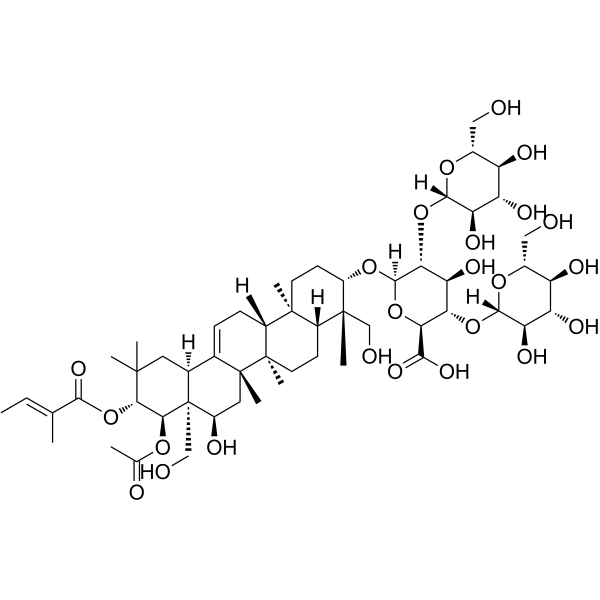
Escin IA
Based on 1 publication(s) in Google Scholar
Escin IA is an oral LOXL2 inhibitor and EMT inhibitor, with selectivity for LOXL2-expressing cells. Escin IA suppresses invasion, migration, and metastasis of breast cancer cells, and acts as the primary anti-TNBC metastasis constituent of Aesculus chinensis Bunge fruit saponin fraction. Escin IA can be used for the research of triple-negative breast cancer, acute inflammation, and ethanol-induced gastric mucosal lesions.
商品は「研究用試薬」です。人や動物の医療用・臨床診断用・食品用の製品ではありません。
研究用途以外に使用した場合、当社は一切の責任を負いかねます。
- 純度 : 99.59%
- CAS 番号: 123748-68-5
- 分子式: C55H86O24
- 分子量:1131.26
-
保管条件:
4°C, protect from light
* In solvent : -80°C, 6 months; -20°C, 1 month (protect from light)

To place orders, for customer services and technical support, please contact: MedChemExpress USA
Tel: 609-228-6898 E-mail: [email protected] [email protected]


-
 生物活性
生物活性
-
化学情報
-
溶剤 & 溶解度
- プロトコル
- 純度とドキュメンテーション
- 参考文献
-
 Help & FAQs


-
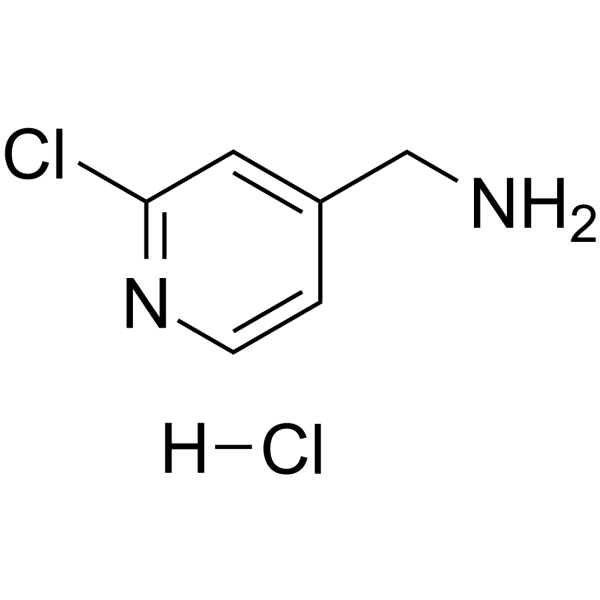
HY-101771A
(2-Chloropyridin-4-yl)methanamine hydrochlorideLOXL2 Inhibitor -
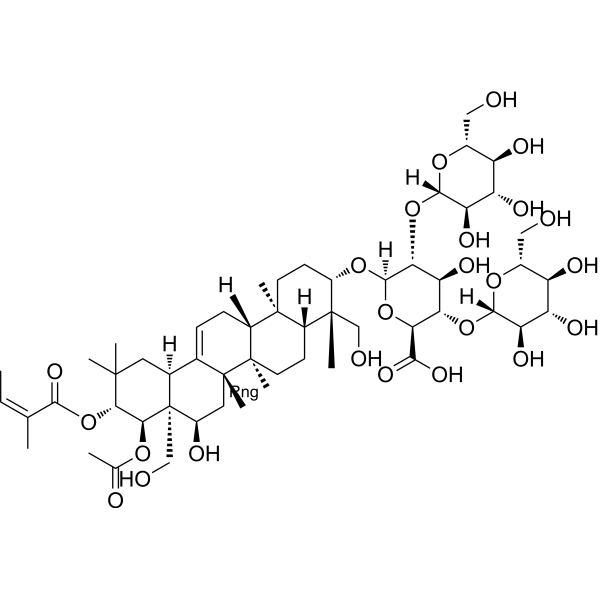
HY-N0555
Escin IBSaponin Compound -
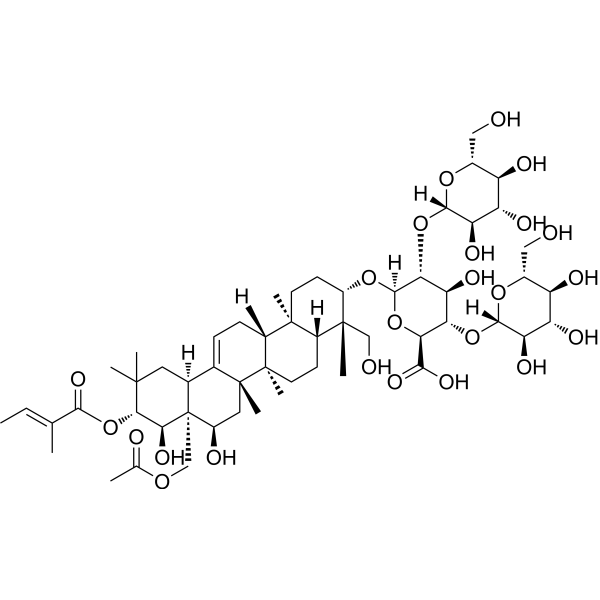
HY-N0556
Isoescin IAHIV Protease Inhibitor -

HY-N0554R
Escin IA (Standard)HIV-1 Protease Inhibitor -
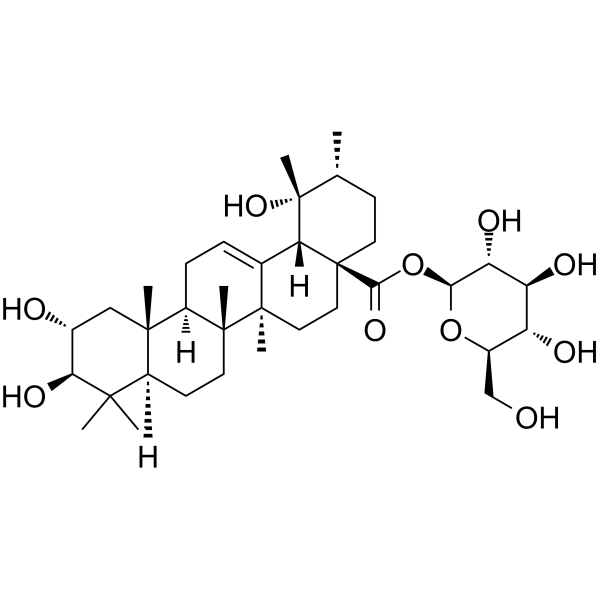
HY-N2565
RosamultinHIV-1 Protease Inhibitor -
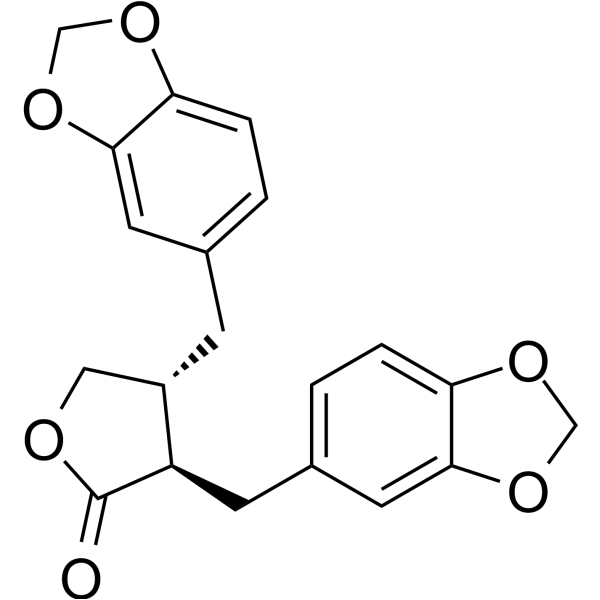
HY-N10420
HinokininHIV-1 Inhibitor -
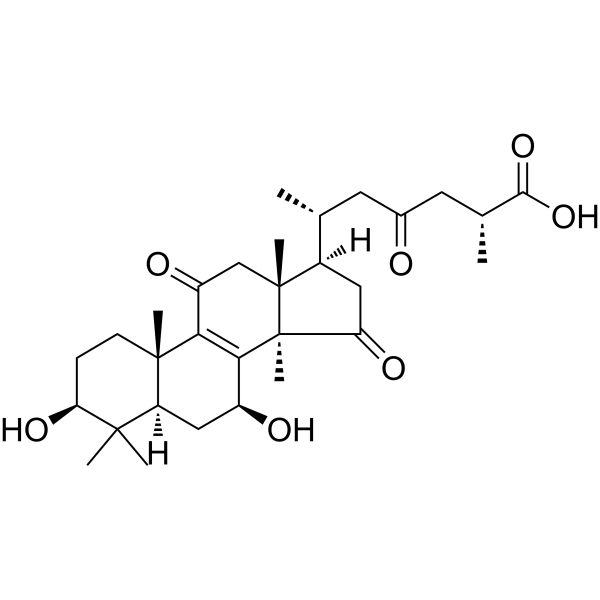
HY-N2006
Ganoderic acid BHIV Protease Inhibitor -
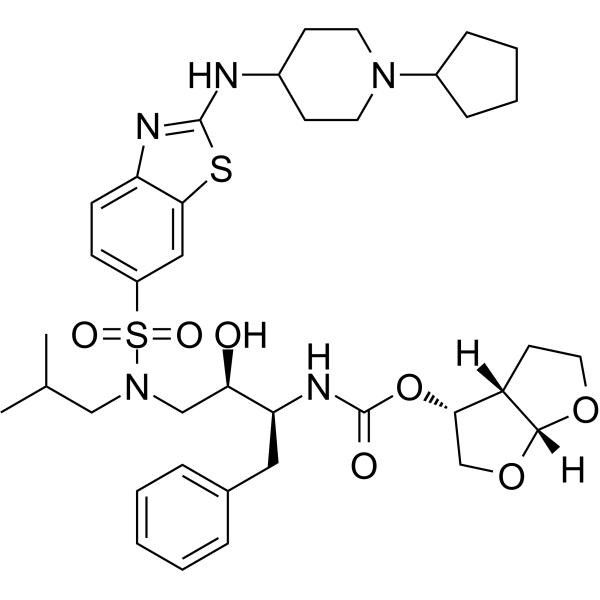
HY-107123
TMC310911HIV-1 Protease Inhibitor -
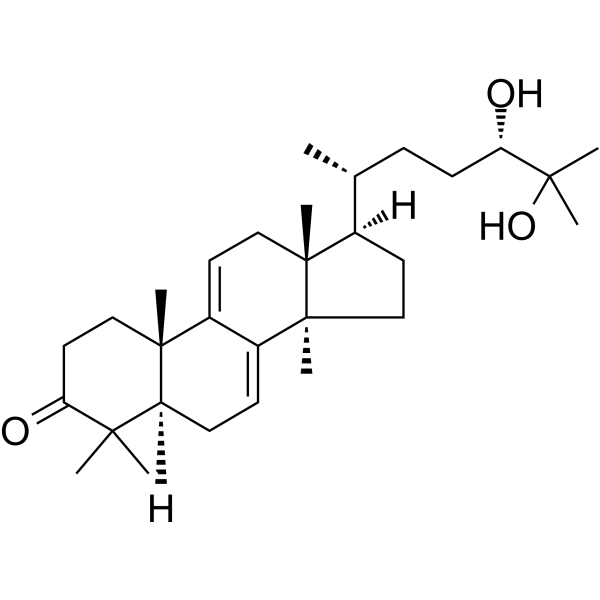
HY-N2996
GanodermanondiolHIV Protease Inhibitor -

HY-N2006R
Ganoderic acid B (Standard)HIV Protease Inhibitor -

HY-N0556R
Isoescin IA (Standard)HIV Protease Inhibitor -

HY-N10420R
Hinokinin (Standard)HIV-1 Inhibitor
MedChemExpress(MCE)の使用を引用している文献 Escin IA
More

生物活性
製品説明
Cellular Effect
|
Cell Line

|
Type | Value | Description | References |
|---|---|---|---|---|
| Vero C1008 | CC50 |
25 μM
Compound: 71
|
Cytotoxicity against African green monkey Vero E6 cells incubated for 2 days by the MTS assay
Cytotoxicity against African green monkey Vero E6 cells incubated for 2 days by the MTS assay
|
[PMID: 32845145] |
体外実験
Escin Ia (2.5-10 μM; 24 h) inhibits the invasion of MDA-MB-231 cells in a concentration-dependent manner, with 10 μM causing the highest inhibition (76.23%)[1].
Escin Ia (2.5-10 μM; 24 h) modulates mRNA expression of LOXL2, E-cadherin, and MMP9 in MDA-MB-231 cells, with LOXL2 down-regulation and E-cadherin up-regulation being prominent effects[1].
Escin Ia (2.5-10 μM; 6-24 h, unspecified intervals) suppresses the epithelial-mesenchymal transition (EMT) process in MDA-MB-231 cells by modulating EMT markers and transcription factors[1].
Escin Ia (2.5-10 μM; 6-24 h, unspecified intervals) reverses the EMT process in TNF−α/TGF−β-stimulated MCF-7 cells by normalizing EMT marker expressions[1].
Escin Ia (2.5-10 μM; 6-24 h, unspecified intervals) down-regulates LOXL2 expression in MDA-MB-231 cells and abrogates induced LOXL2 expression in TNF-α/TGF-β-stimulated or LOXL2-transfected MCF-7 cells[1].
Escin Ia (2.5-10 μM; unspecified intervals) inhibits the EMT process in LOXL2-transfected MCF-7 cells by down-regulating LOXL2 and normalizing EMT markers[1].
Escin Ia (2.5-10 μM; unspecified intervals) inhibits the EMT process in hypoxia-stimulated MCF-7 cells by down-regulating LOXL2 (without affecting HIF-1α) and normalizing EMT markers[1].
MedChemExpress (MCE) has not independently confirmed the accuracy of these methods. They are for reference only.
-
Cell Line:MDA-MB-231
-
Concentration:5 μM; 2.5-10 μM
-
Incubation Time:24 h
-
Result:Inhibited MDA-MB-231 cell invasion by 68.92% at 5 μM (stronger than other escin analogs); inhibited invasion by 39.46% at 2.5 μM, 64.22% at 5 μM, and 76.23% at 10 μM.
-
Cell Line:MDA-MB-231
-
Concentration:2.5-10 μM
-
Incubation Time:24 h
-
Result:Down-regulated LOXL2 mRNA expression and up-regulated E-cadherin mRNA expression; moderately down-regulated MMP9 mRNA expression at 10 μM; exerted slight effects on BRMS1, Keratin19, Orai1, Stim1, TGF-β, and VEGF mRNAs.
Parmacokinetics
| Species | Dose | Route | Cmax | T1/2 | AUC0-t | AUC0-∞ | CL | Vd | MRT |
|---|---|---|---|---|---|---|---|---|---|
| Rat[3] | 0.5 mg/kg | i.v. | 2280 ng/mL | 7.5 h | 10,036 ng·h/mL | 10,145 ng·h/mL | 4.82 mL/min/kg | 2.86 L/kg | 5.46 h |
| Rat[3] | 1.0 mg/kg | i.v. | 4362 ng/mL | 9.6 h | 12989 ng·h/mL | 13185 ng·h/mL | 6.05 mL/min/kg | 5.02 L/kg | 5.39 h |
| Rat[3] | 2.0 mg/kg | i.v. | 11220 ng/mL | 12.2 h | 29156 ng·h/mL | 29941 ng·h/mL | 5.81 mL/min/kg | 6.16 L/kg | 6.29 h |
体内実験
Escin Ia (50-200 mg/kg; p.o.) dose-dependently inhibits acetic acid-induced vascular permeability in Mus musculus, with 43.6% inhibition at 200 mg/kg[2].
Escin Ia (25-200 mg/kg; p.o.) inhibits compound 48/80-induced scratching in mice, with significant 42.4% inhibition at 200 mg/kg[2].
Escin Ia (200 mg/kg; p.o.) significantly inhibits the early phase (1 hour) of carrageenin-induced hind paw edema in rats[2].
Escin Ia (25-200 mg/kg; p.o.) dose-dependently inhibits histamine-induced vascular permeability in rats (significant at 50-200 mg/kg) but does not inhibit serotonin-induced vascular permeability[2].
Escin IA (10-50 mg/kg; p.o.; single dose 1 hour before ethanol administration) potently protects against ethanol-induced gastric mucosal lesions in rats via mechanisms involving capsaicin-sensitive afferent neurons, endogenous nitric oxide, and prostaglandins, with no gastric antisecretory activity at effective doses[4].
Escin IA (10 mg/kg; p.o.; single dose 1 hour before ethanol administration) relies on capsaicin-sensitive afferent neurons for its gastroprotective effect in rats[4].
Escin IA (10 mg/kg; p.o.; single dose 1 hour before ethanol administration) relies on endogenous prostaglandins for its gastroprotective effect in rats[4].
Escin IA (10 mg/kg; p.o.; single dose 1 hour before ethanol administration) relies on endogenous nitric oxide for its gastroprotective effect in rats[4].
Escin IA (10 mg/kg; p.o.; single dose 1 hour before ethanol administration) does not rely on endogenous sulfhydryls for its gastroprotective effect in rats[4].
Escin IA (10-20 mg/kg; p.o.; single dose 1 hour before ethanol administration) relies on the sympathetic nervous system for its gastroprotective effect in rats[4].
MedChemExpress (MCE) has not independently confirmed the accuracy of these methods. They are for reference only.
-
Animal Model:athymic nude mice (female, 4-6 week-old)[1]
-
Dosage:2 mg/kg; 4 mg/kg
-
Administration:i.p.; three times per week; five weeks
-
Result:Down-regulated LOXL2, vimentin, α-SMA, Snail, Slug, Zeb1, Zeb2, and Twist, and up-regulated E-cadherin at protein and mRNA levels in breast tumors (4 mg/kg); showed little effect on HIF-1α expression in breast tumors (2 mg/kg, 4 mg/kg)
-
Animal Model:ddY mice (male, 27-30 g, acetic acid-induced vascular permeability model)[2]
-
Dosage:50, 100, 200 mg/kg
-
Administration:p.o.
-
Result:Inhibited acetic acid-induced vascular permeability with 12.1% inhibition at 50 mg/kg, 30.6% inhibition at 100 mg/kg, and 43.6% inhibition at 200 mg/kg.
-
Animal Model:ddY mice (male, 26-29 g, compound 48/80-induced scratching model)[2]
-
Dosage:25, 50, 100, 200 mg/kg
-
Administration:p.o.
-
Result:Inhibited compound 48/80-induced scratching with 16.8% inhibition at 25 mg/kg, 32.4% inhibition at 50 mg/kg, 31.5% inhibition at 100 mg/kg, and 42.4% inhibition at 200 mg/kg (significant at 200 mg/kg).
-
Animal Model:Wistar rats (male, 140-160 g, carrageenin-induced hind paw edema model)[2]
-
Dosage:200 mg/kg
-
Administration:p.o.
-
Result:Significantly inhibited carrageenin-induced hind paw swelling at 1 hour but showed no effect at 3-5 hours.
-
Animal Model:Wistar rats (male, 140-150 g, histamine/serotonin-induced vascular permeability model)[2]
-
Dosage:25, 50, 100, 200 mg/kg
-
Administration:p.o.
-
Result:Inhibited histamine-induced vascular permeability with significant effects at 50 mg/kg (28.4 μg/site dye leakage), 100 mg/kg (28.5 μg/site), and 200 mg/kg (19.4 μg/site); did not significantly inhibit serotonin-induced vascular permeability at any dose.
-
Animal Model:Sprague-Dawley (male, 250 g, fasted 24-26 hours prior to experiments; ethanol-induced gastric mucosal lesions)[4]
-
Dosage:10, 20, 50 mg/kg
-
Administration:p.o.; single dose 1 hour before ethanol administration
-
Result:Dose-dependently reduced ethanol-induced gastric lesion scores; showed potent protective effect at 10-50 mg/kg. Did not decrease gastric secretion (volume, acid output, pepsin output) in pylorus-ligated rats at 10 and 20 mg/kg. Had gastroprotective effect attenuated by pretreatment with capsaicin, indomethacin, or L-NAME at 10 mg/kg. Had gastroprotective effect not attenuated by pretreatment with N-ethylmaleimide at 10 mg/kg. Showed marked attenuation of gastroprotective effect in streptozotocin-induced diabetic rats at 10 and 20 mg/kg.
-
Animal Model:Sprague-Dawley (male, 180-200 g for capsaicin pretreatment; 250 g for other pretreatments, fasted 24-26 hours prior to experiments; capsaicin-pretreated, ethanol-induced gastric mucosal lesions)[4]
-
Dosage:10 mg/kg
-
Administration:p.o.; single dose 1 hour before ethanol administration
-
Result:Showed gastroprotective effect against ethanol-induced lesions markedly attenuated by capsaicin pretreatment.
-
Animal Model:Sprague-Dawley (male, 250 g, fasted 24-26 hours prior to experiments; indomethacin-pretreated, ethanol-induced gastric mucosal lesions)[4]
-
Dosage:10 mg/kg
-
Administration:p.o.; single dose 1 hour before ethanol administration
-
Result:Showed gastroprotective effect against ethanol-induced lesions partly reduced by indomethacin pretreatment.
-
Animal Model:Sprague-Dawley (male, 250 g, fasted 24-26 hours prior to experiments; L-NAME-pretreated, ethanol-induced gastric mucosal lesions)[4]
-
Dosage:10 mg/kg
-
Administration:p.o.; single dose 1 hour before ethanol administration
-
Result:Showed gastroprotective effect against ethanol-induced lesions partly reduced by L-NAME pretreatment.
-
Animal Model:Sprague-Dawley (male, 250 g, fasted 24-26 hours prior to experiments; N-ethylmaleimide-pretreated, ethanol-induced gastric mucosal lesions)[4]
-
Dosage:10 mg/kg
-
Administration:p.o.; single dose 1 hour before ethanol administration
-
Result:Showed gastroprotective effect against ethanol-induced lesions not attenuated by N-ethylmaleimide pretreatment.
-
Animal Model:Sprague-Dawley (male, 250 g, fasted 24-26 hours prior to experiments; streptozotocin-induced diabetic, ethanol-induced gastric mucosal lesions)[4]
-
Dosage:10, 20 mg/kg
-
Administration:p.o.; single dose 1 hour before ethanol administration
-
Result:Showed marked attenuation of gastroprotective effect against ethanol-induced lesions in streptozotocin-induced diabetic rats at 10 and 20 mg/kg.


化学情報
-
CAS 番号 123748-68-5
-
性状 Solid
-
分子量 1131.26
-
分子式 C55H86O24
-
Color White to off-white
-
SMILES
OC[C@]1([C@H]2OC(C)=O)[C@](CC(C)(C)[C@H]2OC(/C(C)=C/C)=O)([H])C3=CC[C@@]4([H])[C@@](C)(CC[C@]5([H])[C@@]4(CC[C@H](O[C@@](O[C@H](C(O)=O)[C@@H](O[C@]([C@@H]([C@@H](O)[C@@H]6O)O)([H])O[C@@H]6CO)[C@@H]7O)([H])[C@@H]7O[C@]([C@@H]([C@@H](O)[C@@H]8O)O)([H])O[C@@H]8CO)[C@]5(C)CO)C)[C@]3(C)C[C@H]1O
-
別名
エスシンIA
-
Structure Classification
-
輸送条件
Room temperature in continental US; may vary elsewhere.
-
保管条件
4°C, protect from light
* In solvent : -80°C, 6 months; -20°C, 1 month (protect from light)


Publications (1)
-
Journal Impact Factor
-
Most Recent
-
Microbiome
Maternal intestinal L. vaginalis facilitates embryo implantation and survival through enhancing uterine receptivity in sows. [Abstract]2025 Jun 18;13(1):145. PMID: 40533850


溶剤 & 溶解度
体外:
DMSO : 100 mg/mL (88.40 mM; Need ultrasonic; Hygroscopic DMSO has a significant impact on the solubility of product, please use newly opened DMSO)
Please refer to the solubility information to select the appropriate solvent. Once prepared, please aliquot and store the solution to prevent product inactivation from repeated freeze-thaw cycles.
Storage method and period of stock solution: -80°C, 6 months; -20°C, 1 month (protect from light). When stored at -80°C, please use it within 6 months. When stored at -20°C, please use it within 1 month.
Please refer to the solubility information to select the appropriate solvent. Once prepared, please aliquot and store the solution to prevent product inactivation from repeated freeze-thaw cycles.
Storage method and period of stock solution: -80°C, 6 months; -20°C, 1 month (protect from light). When stored at -80°C, please use it within 6 months. When stored at -20°C, please use it within 1 month.
濃度 (開始) × 体積 (開始) = 濃度 (終了) × 体積 (終了)
体内:
Select the appropriate dissolution method based on your experimental animal and administration route.
- For the following dissolution methods, please ensure to first prepare a clear stock solution using an In Vitro approach and then sequentially add co-solvents:
- To ensure reliable experimental results, the clarified stock solution can be appropriately stored based on storage conditions. As for the working solution for In Vivo experiments, it is recommended to prepare freshly and use it on the same day.
- The percentages shown for the solvents indicate their volumetric ratio in the final prepared solution. If precipitation or phase separation occurs during preparation, heat and/or sonication can be used to aid dissolution.
Add each solvent one by one: 10% DMSO 40% PEG300 5% Tween-80 45% Saline
Solubility: ≥ 2.5 mg/mL (2.21 mM); Clear solution
This protocol yields a clear solution of ≥ 2.5 mg/mL (saturation unknown).
Taking 1 mL working solution as an example, add 100 μL DMSO stock solution (25.0 mg/mL) to 400 μL PEG300, and mix evenly; then add 50 μL Tween-80 and mix evenly; then add 450 μL Saline to adjust the volume to 1 mL.
Preparation of Saline: Dissolve 0.9 g sodium chloride in ddH₂O and dilute to 100 mL to obtain a clear Saline solution.
In Vivo Dissolution Calculator
Please enter the basic information of animal experiments:
-
-
-
-
Recommended: Prepare an additional quantity of animals to account for potential losses during experiments.
Please enter your animal formula composition:
-
%DMSO +
Recommended: Keep the proportion of DMSO in working solution below 2% if your animal is weak.
-
%+
-
+%Tween-80 + +
-
%Saline +
The co-solvents required include: DMSO, . All of co-solvents are available by MedChemExpress (MCE). , Tween 80. All of co-solvents are available by MedChemExpress (MCE).
Working solution concentration: 0.22 mg/mL
Method for preparing stock solution: mg drug dissolved in μL DMSO. Stock solution concentration: mg/mL. * In solvent : -80°C, 6 months; -20°C, 1 month (protect from light)
1. Take μL DMSO stock solution;
2. Add μL .
μL , mix evenly;
3. Then add μL Tween 80, mix evenly;
4. Then add μL
Please ensure that the stock solution in the first step is dissolved to a clear state, and add co-solvents in sequence. You can use ultrasonic heating (ultrasonic cleaner, recommended frequency 20-40 kHz), vortexing, etc. to assist dissolution.


純度とドキュメンテーション
-
データシート (297 KB)
-
SDS (393 KB)
- English - EN (393 KB)
- Français - FR (393 KB)
- Deutsch - DE (393 KB)
- Norwegian - NO (393 KB)
- Español - ES (393 KB)
- Swedish - SV (393 KB)
- Italian - IT (393 KB)
- Korean - KR (393 KB)
- Portuguese - PT (393 KB)
-
取扱説明書 (2659 KB)
参考文献
[1]. Wang Y, et al. Escin Ia suppresses the metastasis of triple-negative breast cancer by inhibiting epithelial-mesenchymal transition via down-regulating LOXL2 expression. Oncotarget. 2016;7(17):23684-23699. [Content Brief]
[2]. Matsuda H, et al. Effects of escins Ia, Ib, IIa, and IIb from horse chestnut, the seeds of Aesculus hippocastanum L., on acute inflammation in animals. Biol Pharm Bull. 1997;20(10):1092-1095. [Content Brief]
[3]. Wu XJ, et al. Pharmacokinetics of escin Ia in rats after intravenous administration. J Ethnopharmacol. 2014;156:125-129. [Content Brief]
[4]. Matsuda H, et al. Gastroprotections of escins Ia, Ib, IIa, and IIb on ethanol-induced gastric mucosal lesions in rats. Eur J Pharmacol. 1999;373(1):63-70. [Content Brief]


Complete Stock Solution Preparation Table
Please refer to the solubility information to select the appropriate solvent. Once prepared, please aliquot and store the solution to prevent product inactivation from repeated freeze-thaw cycles.
Storage method and period of stock solution: -80°C, 6 months; -20°C, 1 month (protect from light). When stored at -80°C, please use it within 6 months. When stored at -20°C, please use it within 1 month.
| Optional Solvent | Concentration Solvent Mass | 1 mg | 5 mg | 10 mg | 25 mg |
|---|---|---|---|---|---|
| DMSO | 1 mM | 0.8840 mL | 4.4199 mL | 8.8397 mL | 22.0993 mL |
| 5 mM | 0.1768 mL | 0.8840 mL | 1.7679 mL | 4.4199 mL | |
| 10 mM | 0.0884 mL | 0.4420 mL | 0.8840 mL | 2.2099 mL | |
| 15 mM | 0.0589 mL | 0.2947 mL | 0.5893 mL | 1.4733 mL | |
| 20 mM | 0.0442 mL | 0.2210 mL | 0.4420 mL | 1.1050 mL | |
| 25 mM | 0.0354 mL | 0.1768 mL | 0.3536 mL | 0.8840 mL | |
| 30 mM | 0.0295 mL | 0.1473 mL | 0.2947 mL | 0.7366 mL | |
| 40 mM | 0.0221 mL | 0.1105 mL | 0.2210 mL | 0.5525 mL | |
| 50 mM | 0.0177 mL | 0.0884 mL | 0.1768 mL | 0.4420 mL | |
| 60 mM | 0.0147 mL | 0.0737 mL | 0.1473 mL | 0.3683 mL | |
| 80 mM | 0.0110 mL | 0.0552 mL | 0.1105 mL | 0.2762 mL |


Escin IA 関連分類
HY-N0554 関連分類
 Powered by Bioz