Search Result
Results for "
glucagon receptor antagonist
" in MedChemExpress (MCE) Product Catalog:
| Cat. No. |
Product Name |
Target |
Research Areas |
Chemical Structure |
-
- HY-P0264
-
|
Avexitide
|
GLP Receptor
|
Metabolic Disease
|
|
Exendin(9-39) amide (Avexitide) is a glucagon-like peptide-1 (GLP-1) antagonist that competes with endogenous GLP-1 for binding to GLP-1 receptors, thereby antagonizing the effects of excess GLP-1 secretion. Exendin(9-39) amide can be used to study postoperative hypoglycemia (PBH) .
|
-

-
- HY-50663
-
|
|
GCGR
|
Metabolic Disease
|
|
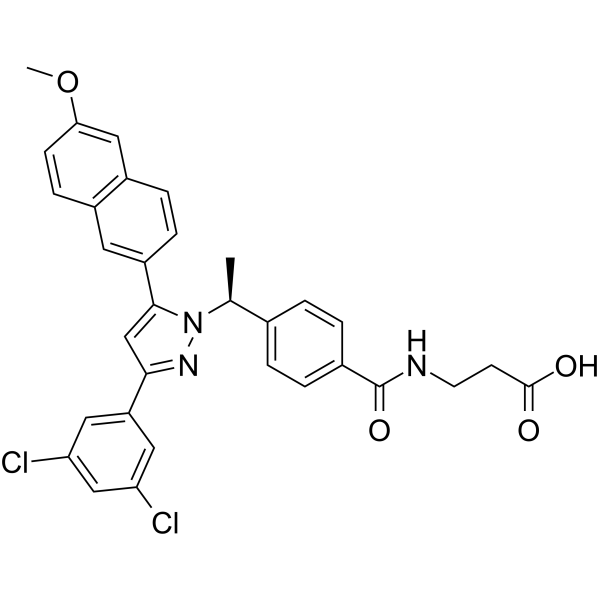
MK 0893 is a potent and selective glucagon receptor antagonist with an IC50 of 6.6 nM.
|
-
-
- HY-19904
-
|
LY2409021
|
GCGR
|
Metabolic Disease
|
|
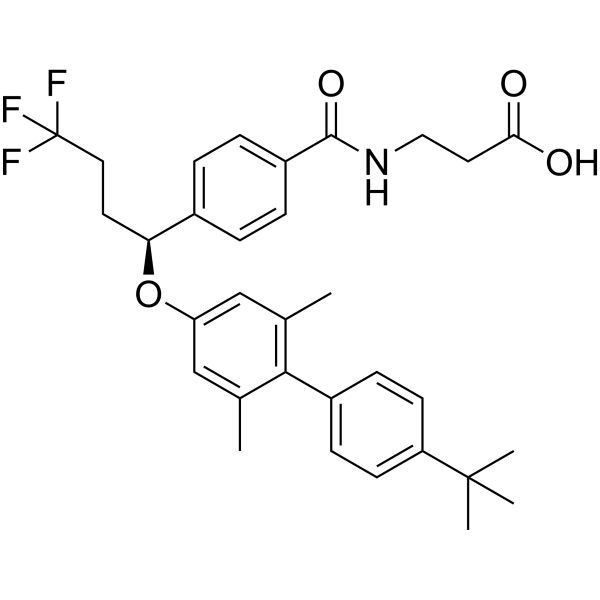
Adomeglivant (LY2409021) is a potent, selective glucagon receptor (GluR) allosteric antagonist. Adomeglivant is widely used in the research for type 2 diabetes mellitus .
|
-
-
- HY-P1141
-
|
|
GCGR
|
Metabolic Disease
|
|
GLP-1(9-36)amide is a major metabolite of glucagon-like peptide-1-(7-36) amide formed by the enzyme dipeptidyl peptidase-4 (DPP-4). GLP-1(9-36)amide acts as an antagonist to the human pancreatic GLP-1 receptor .
|
-

-
- HY-12525
-
|
|
GCGR
|
Metabolic Disease
|
|
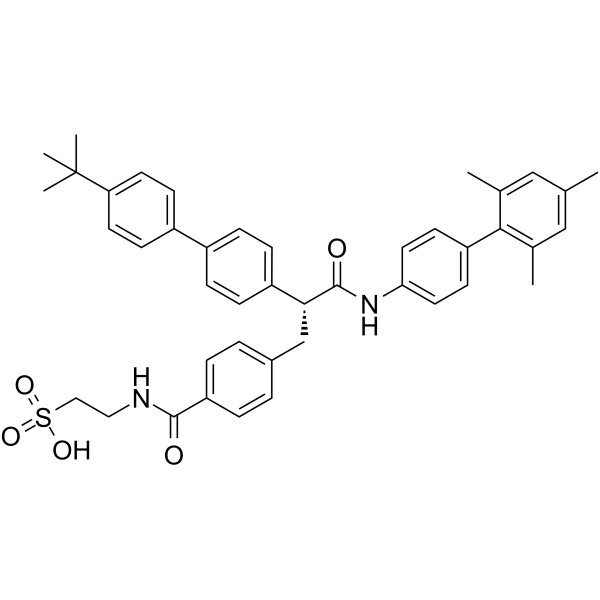
LGD-6972 is a selective and orally active glucagon receptor antagonist. LGD-6972 has the potential for type 2 diabetes research .
|
-
-
- HY-101116
-
|
|
GCGR
|
Metabolic Disease
|
|
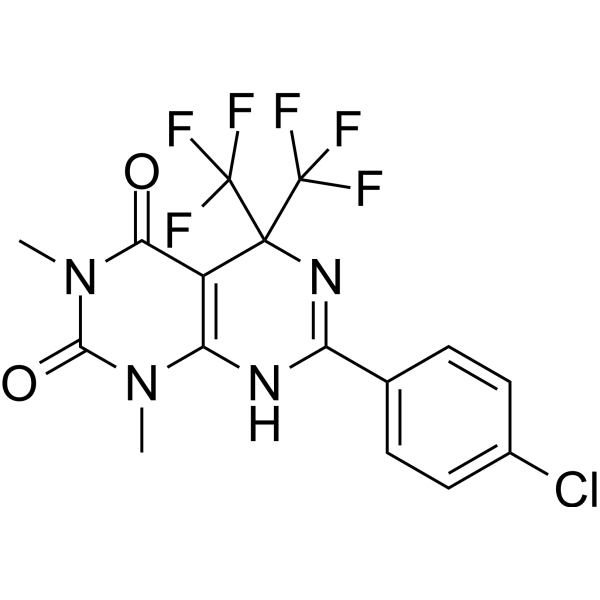
GLP-1R Antagonist 1 (compound 5d) is an orally active, CNS penetrant and non-competitive antagonist of glucagon-like peptide 1 receptor (GLP-1R), with an IC50 of 650 nM .
|
-
-
- HY-19947
-
|
glucagon receptor antagonists-4
|
GCGR
|
Metabolic Disease
|
|
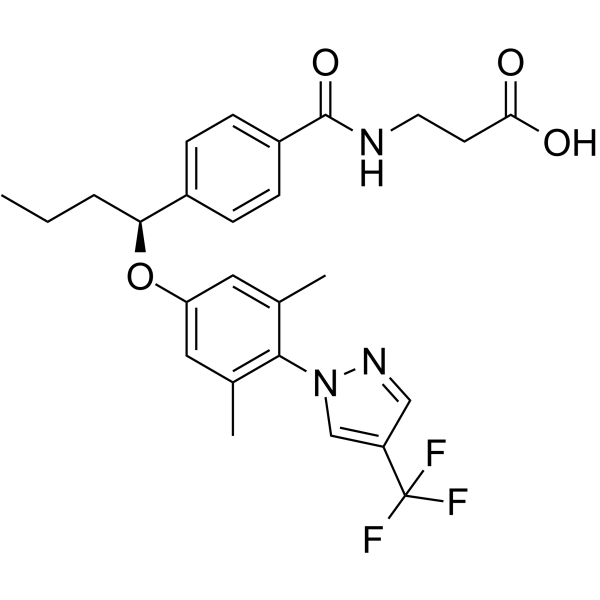
PF-06291874 is a highly potent, non-peptide and orally active glucagon receptor antagonist. PF-06291874 is under the study for type 2 diabetes mellitus (T2DM) .
|
-
-
- HY-P1782
-
|
|
Amylin Receptor
|
Metabolic Disease
|
|
Calcitonin (8-32), salmon is a highly selective Amylin receptor antagonist. Calcitonin (8-32), salmon reverses the Amylin-mediated inhibition of glucose-induced insulin release, but has no effect on either glucagon release or somatostatin release. Calcitonin (8-32), salmon can be used for studies related to β-cell amylin .
|
-

-
- HY-103547
-
|
|
GCGR
|
Metabolic Disease
|
|
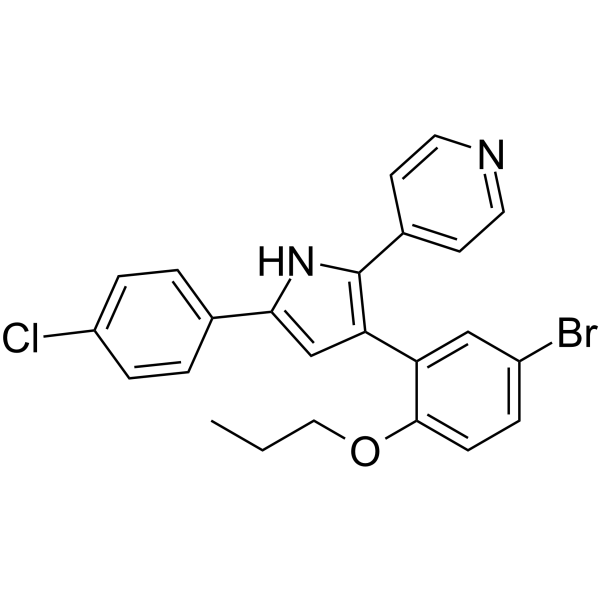
L-168049 is a potent, selective, orally active and non-competitive glucagon receptor antagonist with IC50s of 3.7 nM, 63 nM, and 60 nM for human, murine, and canine glucagon receptors, respectively .
|
-
-
- HY-P10957
-
|
MBX 1416
|
GLP Receptor
|
Metabolic Disease
|
|
Imapextide is a glucagon-like peptide-1 (GLP-1) receptor antagonist that can be used in hypoglycemia research .
|
-

-
- HY-50159
-
-
-
- HY-148844
-
|
|
GCGR
|
Metabolic Disease
|
|
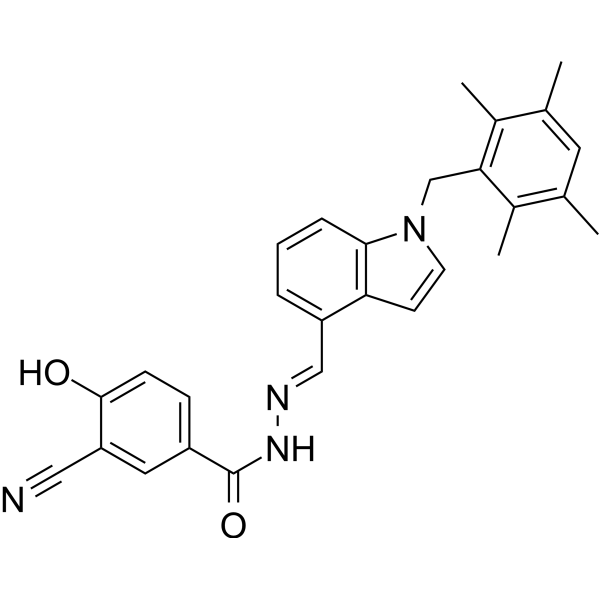
GCGR antagonist 2, a Furan-2-carbohydrazide, is an orally active glucagon receptor antagonist. GCGR antagonist 2 binds to hGluR with an Kd value of 2.3 nM, and inhibits rat receptor with an IC50 value of 0.43 nM. GCGR antagonist 2 inhibits glucagon-stimulated glycogenolysis .
|
-
-
- HY-P99383
-
|
REMD-477; AMG-477
|
GCGR
|
Metabolic Disease
|
|
Volagidemab is an antagonistic glucagon receptor (GCGR) monoclonal antibody (mAb). Volagidemab can be used in the research of type 1 diabetes (T1D) .
|
-

-
- HY-50158
-
|
|
GCGR
|
Metabolic Disease
Inflammation/Immunology
|
|
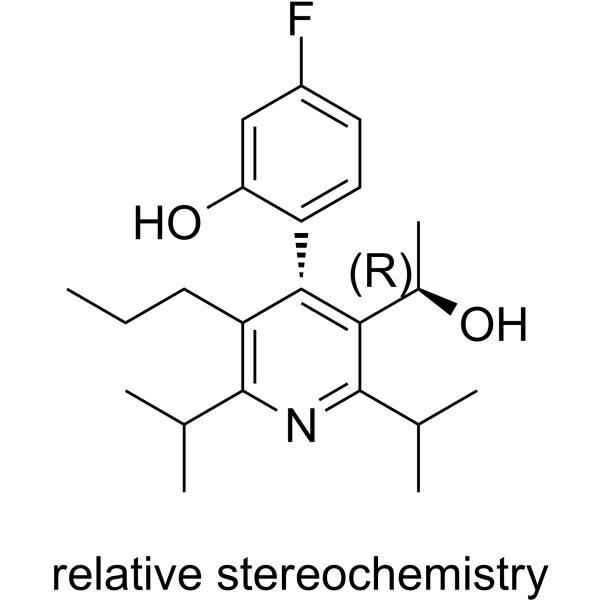
Glucagon receptor antagonist-2 is a glucagon receptor antagonist. Glucagon receptor antagonist-2 functionally inhibits receptor activity via reduced cAMP production. Glucagon receptor antagonist-2 can be used for the research of type 2 diabetes .
|
-
-
- HY-10036
-
-
-
- HY-106103
-
|
MK-678; L-363586
|
Somatostatin Receptor
|
Cardiovascular Disease
Neurological Disease
Metabolic Disease
Inflammation/Immunology
|
|
Seglitide (MK-678) is an orally active, selective SSTR2 agonist and somatostatin analog. Seglitide also acts as a competitive Somatostatin receptor antagonist, with pA2 values of 6.50, 6.24 and 6.09 against SS14, SS25 and SS28, respectively. Seglitide produces only weak, transient inhibition of myocardial contractility in isolated right atria of guinea pigs. Seglitide inhibits glucagon secretion and reduces circulating insulin levels. Seglitide causes a sustained, reversible reduction in elevated systolic blood pressure in streptozotocin (HY-13753)-induced diabetic rats, but exerts no effect on spontaneously hypertensive rats. Seglitide induces membrane hyperpolarization and inhibits electrical excitability. Seglitide induces concentration-dependent contraction and significant desensitization in isolated distal colon of rats. Seglitide can be used in research related to hypertension complicated with insulin-dependent diabetes mellitus .
|
-

-
- HY-P1143A
-
|
|
GCGR
|
Metabolic Disease
|
|
[Des-His1,Glu9]-Glucagon amide TFA is a potent and peptide antagonist of the glucagon receptor, with a pA2 of 7.2. [Des-His1,Glu9]-Glucagon amide TFA is potentially useful in the study of the pathogenesis of diabetes .
|
-
![[Des-His1,Glu9]-Glucagon amide TFA](//file.medchemexpress.com/product_pic/hy-p1143a.gif)
-
- HY-P2497
-
|
|
GCGR
|
Neurological Disease
|
|
Exendin (5-39) is a potent glucagon-like peptide 1 (GLP-1) receptor antagonist. Exendin (5-39) improves memory impairment in β-amyloid protein-treated rats .
|
-

-
- HY-116930
-
|
|
Melatonin Receptor
|
Metabolic Disease
|
|
S-20928 is an antagonist for melatonin receptor through inhibition of binding of melatonin to its receptors. S-20928 enhances the 2-Deoxy-D-glucose (2DG) (HY-13966)-induced increase in blood glucose and glucagon levels in rats brain .
|
-

-
- HY-P1159A
-
|
|
PACAP Receptor
|
Neurological Disease
Inflammation/Immunology
|
|
[D-p-Cl-Phe6,Leu17]-VIP TFA is a competitive and selective antagonist of vasoactive intestinal peptide (VIP) receptor, with the IC50 of 125.8 nM. [D-p-Cl-Phe6,Leu17]-VIP TFA has no activity on glucagon, secretin or GRF receptors .
|
-
![[D-p-Cl-Phe6,Leu17]-VIP TFA](//file.medchemexpress.com/product_pic/hy-p1159a.gif)
-
- HY-P1141A
-
|
|
GCGR
|
Metabolic Disease
|
|
GLP-1(9-36)amide TFA is a major metabolite of glucagon-like peptide-1-(7-36) amide formed by the enzyme dipeptidyl peptidase-4 (DPP-4). GLP-1(9-36)amide TFA acts as an antagonist to the human pancreatic GLP-1 receptor .
|
-

-
- HY-128781
-
|
|
GCGR
|
Metabolic Disease
|
|
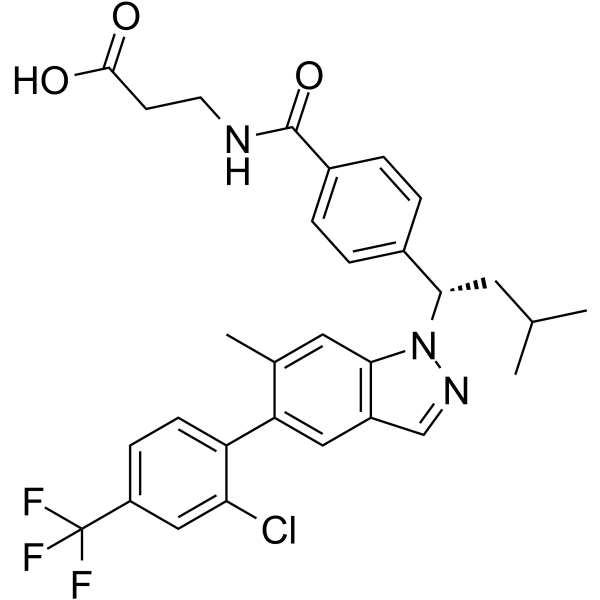
Glucagon receptor antagonist-5 (compound 13K) is a potent and orally bioavailable indazole-based glucagon receptor antagonist (Ki=32 nM). Glucagon receptor antagonist-5 has potential for the treatment of type 2 diabetes mellitus (T2DM) .
|
-
-
- HY-P1143
-
|
|
GCGR
|
Metabolic Disease
|
|
[Des-His1,Glu9]-Glucagon amide is a potent and peptide antagonist of the glucagon receptor, with a pA2 of 7.2. [Des-His1,Glu9]-Glucagon amide is potentially useful in the study of the pathogenesis of diabetes .
|
-
![[Des-His1,Glu9]-Glucagon amide](//file.medchemexpress.com/product_pic/hy-p1143.gif)
-
- HY-P1159
-
-
![[D-p-Cl-Phe6,Leu17]-VIP](//file.medchemexpress.com/product_pic/hy-p1159.gif)
-
- HY-106103A
-
|
MK 678 acetate; L 36358 acetate
|
Somatostatin Receptor
|
Cardiovascular Disease
Neurological Disease
Metabolic Disease
|
|
Seglitide acetate (MK 678; L 36358 acetate) is a potent, orally active somatostatin receptor 2 (SSTR2) agonist, and also a competitive antagonist of SSTR14, SSTR25, and SSTR28. Seglitide acetate has antihypertensive effects and can inhibit plasma glucagon and growth hormone. Seglitide acetate can be used for research on diabetes .
|
-

-
- HY-19374
-
|
|
GCGR
|
Metabolic Disease
|
|
BAY-27-9955 is an orally active non-peptide glucagon receptor antagonist. Bay 27-9955 competitively blocks the interaction of glucagon with the human glucagonreceptor at an IC50 value of 110 nM. BAY-27-9955 can be used for the study of type 2 diabetes .
|
-

-
- HY-119739
-
Skyrin
1 Publications Verification
|
GCGR
|
Metabolic Disease
Cancer
|
|
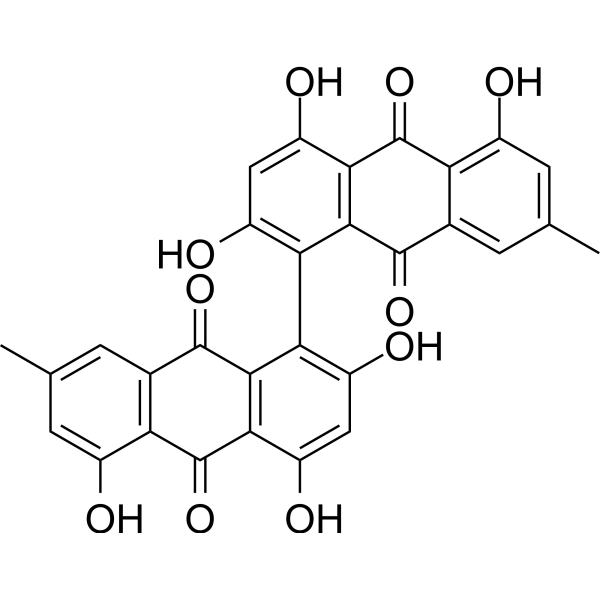
Skyrin is an anthraquinone compound that can be isolated from almond fruit. Skyrin is a receptor-selective glucagon antagonist. Skyrin can inhibit the growth of tumor cells .
|
-
-
- HY-P11043
-
|
|
GLP Receptor
Neuropeptide Y Receptor
Arrestin
|
Metabolic Disease
|
|
GEP44 is a peptide biased triple agonist targeting Glucagon-like peptide 1 receptor (GLP-1R), neuropeptide Y1 Receptor (Y1-R), and neuropeptide Y2 Receptor (Y2-R). GEP44 induces Y1-R antagonist-controlled, GLP-1R-dependent stimulation of insulin secretion in both rat and human pancreatic islets by counteracting effects of Y1-R and GLP-1R agonism. GEP44 promotes insulin-independent Y1-R-mediated glucose uptake in muscle tissue and significantly reduces food intake and body weight in diet-induced obese rat models. GEP44 can be used for obesity and type 2 diabetes mellitus research .
|
-

-
- HY-128103
-
|
|
GCGR
Adenylate Cyclase
|
Metabolic Disease
|
|
Glucagon receptor antagonist-7 (Compound 1) is an antagonist for hGCGR, that inhibits the binding of 125I-labeled glucagon to the human glucagon receptor (hGCGR) with IC50 of 181 nM. Glucagon receptor antagonist-7 activates glucagon-stimulated adenylyl cyclase with a KDB of 81 nM in CHO cell. Glucagon receptor antagonist-7 inhibits glucagon-mediated glycogenolysis in human hepatocytes, and lowers blood glucose levels .
|
-

-
- HY-118914
-
|
|
GCGR
|
|
|
Glucagon receptor antagonist inactive control (Compound 2) is a compound structurally similar to the glucagon receptor (GCGR) antagonist Glucagon receptor antagonist (Compound 1) but lacks antagonistic activity against glucagon receptor (GCGR). Glucagon receptor antagonist inactive control can be used as a negative control to study mechanisms related to glucagon receptor-mediated signaling pathways .
|
-

-
- HY-107129
-
|
|
GCGR
|
Metabolic Disease
|
|
MK-3577 is an orally effective glucagon receptor (GCGR) antagonist that reduces hepatic glucose production and lowers blood glucose levels by blocking glucagon receptors on target organs, primarily the liver. Pharmacokinetic analysis in domestic cats indicates that MK-3577 reaches peak levels 3 to 4 hours after oral administration, with a half-life of approximately 15 hours. MK-3577 can be used in diabetes research .
|
-

-
- HY-116854
-
|
|
GCGR
|
Metabolic Disease
|
|
NNC 92-1687 is a non-peptide competitive human glucagon receptor antagonist (IC50=20 μM; Ki=9.1 μM). NNC 92-1687 can be used in the research of type 2 diabetes .
|
-

-
- HY-180446
-
|
|
GCGR
|
Metabolic Disease
|
|
Glucagon receptor antagonist-11 (Compound 14) is a glucagon receptor antagonist with a pIC50 of 6.677. Glucagon receptor antagonist-10 can be used in studies of glucose homeostasis .
|
-

-
- HY-180445
-
|
|
GCGR
|
Metabolic Disease
|
|
Glucagon receptor antagonist-10 (Compound 11) is a glucagon receptor antagonist with a pIC50 of 7.154. Glucagon receptor antagonist-10 can be used in studies of glucose homeostasis .
|
-

-
- HY-180444
-
|
|
GCGR
|
Metabolic Disease
|
|
Glucagon receptor antagonist-9 (compound 13) is a potent glucagon receptor antagonist with a pIC50 of 7.000 .
|
-

-
- HY-177156
-
|
|
GCGR
p38 MAPK
|
Metabolic Disease
|
|
Glucagon receptor antagonist-8 (Compound 1) is a human glucagon receptor and p38 mitogen-activated protein (MAP) kinase antagonist, with IC50s of 0.27 μM and 0.16 μM, respectively .
|
-

-
- HY-169707
-
|
|
GCGR
|
Metabolic Disease
|
|
GCGR antagonist 3 (example 1) is an antagonist of the glucagon receptor (GCGR) and can be used in diabetes research .
|
-

-
- HY-12735
-
|
|
GCGR
|
Metabolic Disease
Endocrinology
|
|
SCH 900822 is a potent and selective glucagon receptor (hGCGR) antagonist that blocks the binding of glucagon to its receptor, thereby reducing hepatic glycogenolysis and gluconeogenesis, thereby lowering blood glucose production. SCH 900822 can be used in the study of type 2 diabetes .
|
-

-
- HY-P3608
-
|
|
GCGR
|
Metabolic Disease
|
|
[Des-His1,Glu9] Glucagon is a potent glucagon receptor system peptide antagonist. [Des-His1,Glu9] Glucagon enhances the glucose-stimulated release of insulin from pancreatic islet cells. [Des-His1,Glu9] Glucagon can be used to research diabetes .
|
-
![[Des-His1,Glu9] Glucagon](//file.medchemexpress.com/product_pic/hy-p3608.gif)
-
- HY-12525A
-
|
|
GCGR
|
Metabolic Disease
|
|
LGD-6972 sodium is a selective and orally active glucagon receptor antagonist. LGD-6972 sodium has the potential for type 2 diabetes research .
|
-

-
- HY-19904A
-
|
(+/-)-LY2409021
|
Endogenous Metabolite
|
Metabolic Disease
|
|
(+/-)-Adomeglivant ((+/-)-LY2409021) is a potent and selective glucagon receptor antagonist with hypoglycemic activity. (+/-)-Adomeglivant is effective in lowering blood sugar levels in both healthy people and people with type 2 diabetes. (+/-)-Adomeglivant is well tolerated by glucagon signaling blockade in patients with type 2 diabetes and significantly reduces fasting and postprandial blood glucose with a concomitant reversible elevation of aminotransferases. Glucagon signaling inhibition by (+/-)-Adomeglivant is a promising potential inhibitory approach for patients with type 2 diabetes and warrants further evaluation of its benefits and risks in longer clinical trials .
|
-

-
- HY-19904R
-
|
LY2409021 (Standard)
|
GCGR
Reference Standards
|
Metabolic Disease
|
|
Adomeglivant (Standard) is the analytical standard of Adomeglivant. This product is intended for research and analytical applications. Adomeglivant (LY2409021) is a potent, selective glucagon receptor (GluR) allosteric antagonist. Adomeglivant is widely used in the research for type 2 diabetes mellitus .
|
-

-
- HY-P3542
-
|
|
GCGR
|
Metabolic Disease
|
|
Des His1, Glu8 Exendin-4 is a potent glucagon-like peptide-1 receptor (GLP-1-R) antagonist. Des His1, Glu8 Exendin-4 improves glucose homeostasis by regulating both insulin secretion and glucose production. Des His1, Glu8 Exendin-4 can be used for the research of type 2 diabetic and gastrointestinal .
|
-

-
- HY-103547R
-
|
|
Reference Standards
GCGR
|
Metabolic Disease
|
|
L-168049 (Standard) is the analytical standard of L-168049 (HY-103547). This product is intended for research and analytical applications. L-168049 is a potent, selective, orally active and non-competitive glucagon receptor antagonist with IC50s of 3.7 nM, 63 nM, and 60 nM for human, murine, and canine glucagon receptors, respectively .
|
-

-
- HY-12525B
-
|
|
GCGR
|
Metabolic Disease
|
|
LGD-6972 ammonium is a selective and orally active glucagon receptor antagonist. LGD-6972 ammonium has the potential for type 2 diabetes research .
|
-

-
- HY-101116R
-
|
|
GCGR
Reference Standards
|
Metabolic Disease
|
|
GLP-1R Antagonist 1 (Standard) is the analytical standard of GLP-1R Antagonist 1 (HY-101116). This product is intended for research and analytical applications. GLP-1R Antagonist 1 (compound 5d) is an orally active, CNS penetrant and non-competitive antagonist of glucagon-like peptide 1 receptor (GLP-1R), with an IC50 of 650 nM .
|
-

-
- HY-P992007
-
|
RN909
|
GCGR
|
Metabolic Disease
|
|
PF-06293620 (RN909) is a monoclonal antibody antagonist of the glucagon receptor. PF-06293620 produces dose-dependent, durable lowering of fasting plasma glucose and reduces HbA1c levels. PF-06293620 can be used for the research of type 2 diabetes mellitus .
|
-

| Cat. No. |
Product Name |
Target |
Research Area |
-
- HY-P0264
-
|
Avexitide
|
GLP Receptor
|
Metabolic Disease
|
|
Exendin(9-39) amide (Avexitide) is a glucagon-like peptide-1 (GLP-1) antagonist that competes with endogenous GLP-1 for binding to GLP-1 receptors, thereby antagonizing the effects of excess GLP-1 secretion. Exendin(9-39) amide can be used to study postoperative hypoglycemia (PBH) .
|
-
- HY-P1141
-
|
|
GCGR
|
Metabolic Disease
|
|
GLP-1(9-36)amide is a major metabolite of glucagon-like peptide-1-(7-36) amide formed by the enzyme dipeptidyl peptidase-4 (DPP-4). GLP-1(9-36)amide acts as an antagonist to the human pancreatic GLP-1 receptor .
|
-
- HY-P1782
-
|
|
Amylin Receptor
|
Metabolic Disease
|
|
Calcitonin (8-32), salmon is a highly selective Amylin receptor antagonist. Calcitonin (8-32), salmon reverses the Amylin-mediated inhibition of glucose-induced insulin release, but has no effect on either glucagon release or somatostatin release. Calcitonin (8-32), salmon can be used for studies related to β-cell amylin .
|
-
- HY-P10957
-
|
MBX 1416
|
GLP Receptor
|
Metabolic Disease
|
|
Imapextide is a glucagon-like peptide-1 (GLP-1) receptor antagonist that can be used in hypoglycemia research .
|
-
- HY-106103
-
|
MK-678; L-363586
|
Somatostatin Receptor
|
Cardiovascular Disease
Neurological Disease
Metabolic Disease
Inflammation/Immunology
|
|
Seglitide (MK-678) is an orally active, selective SSTR2 agonist and somatostatin analog. Seglitide also acts as a competitive Somatostatin receptor antagonist, with pA2 values of 6.50, 6.24 and 6.09 against SS14, SS25 and SS28, respectively. Seglitide produces only weak, transient inhibition of myocardial contractility in isolated right atria of guinea pigs. Seglitide inhibits glucagon secretion and reduces circulating insulin levels. Seglitide causes a sustained, reversible reduction in elevated systolic blood pressure in streptozotocin (HY-13753)-induced diabetic rats, but exerts no effect on spontaneously hypertensive rats. Seglitide induces membrane hyperpolarization and inhibits electrical excitability. Seglitide induces concentration-dependent contraction and significant desensitization in isolated distal colon of rats. Seglitide can be used in research related to hypertension complicated with insulin-dependent diabetes mellitus .
|
-
- HY-P1143A
-
|
|
GCGR
|
Metabolic Disease
|
|
[Des-His1,Glu9]-Glucagon amide TFA is a potent and peptide antagonist of the glucagon receptor, with a pA2 of 7.2. [Des-His1,Glu9]-Glucagon amide TFA is potentially useful in the study of the pathogenesis of diabetes .
|
-
- HY-P2497
-
|
|
GCGR
|
Neurological Disease
|
|
Exendin (5-39) is a potent glucagon-like peptide 1 (GLP-1) receptor antagonist. Exendin (5-39) improves memory impairment in β-amyloid protein-treated rats .
|
-
- HY-P1159A
-
|
|
PACAP Receptor
|
Neurological Disease
Inflammation/Immunology
|
|
[D-p-Cl-Phe6,Leu17]-VIP TFA is a competitive and selective antagonist of vasoactive intestinal peptide (VIP) receptor, with the IC50 of 125.8 nM. [D-p-Cl-Phe6,Leu17]-VIP TFA has no activity on glucagon, secretin or GRF receptors .
|
-
- HY-P1141A
-
|
|
GCGR
|
Metabolic Disease
|
|
GLP-1(9-36)amide TFA is a major metabolite of glucagon-like peptide-1-(7-36) amide formed by the enzyme dipeptidyl peptidase-4 (DPP-4). GLP-1(9-36)amide TFA acts as an antagonist to the human pancreatic GLP-1 receptor .
|
-
- HY-P1143
-
|
|
GCGR
|
Metabolic Disease
|
|
[Des-His1,Glu9]-Glucagon amide is a potent and peptide antagonist of the glucagon receptor, with a pA2 of 7.2. [Des-His1,Glu9]-Glucagon amide is potentially useful in the study of the pathogenesis of diabetes .
|
-
- HY-P1159
-
-
- HY-106103A
-
|
MK 678 acetate; L 36358 acetate
|
Somatostatin Receptor
|
Cardiovascular Disease
Neurological Disease
Metabolic Disease
|
|
Seglitide acetate (MK 678; L 36358 acetate) is a potent, orally active somatostatin receptor 2 (SSTR2) agonist, and also a competitive antagonist of SSTR14, SSTR25, and SSTR28. Seglitide acetate has antihypertensive effects and can inhibit plasma glucagon and growth hormone. Seglitide acetate can be used for research on diabetes .
|
-
- HY-P11043
-
|
|
GLP Receptor
Neuropeptide Y Receptor
Arrestin
|
Metabolic Disease
|
|
GEP44 is a peptide biased triple agonist targeting Glucagon-like peptide 1 receptor (GLP-1R), neuropeptide Y1 Receptor (Y1-R), and neuropeptide Y2 Receptor (Y2-R). GEP44 induces Y1-R antagonist-controlled, GLP-1R-dependent stimulation of insulin secretion in both rat and human pancreatic islets by counteracting effects of Y1-R and GLP-1R agonism. GEP44 promotes insulin-independent Y1-R-mediated glucose uptake in muscle tissue and significantly reduces food intake and body weight in diet-induced obese rat models. GEP44 can be used for obesity and type 2 diabetes mellitus research .
|
-
- HY-P3608
-
|
|
GCGR
|
Metabolic Disease
|
|
[Des-His1,Glu9] Glucagon is a potent glucagon receptor system peptide antagonist. [Des-His1,Glu9] Glucagon enhances the glucose-stimulated release of insulin from pancreatic islet cells. [Des-His1,Glu9] Glucagon can be used to research diabetes .
|
-
- HY-P3542
-
|
|
GCGR
|
Metabolic Disease
|
|
Des His1, Glu8 Exendin-4 is a potent glucagon-like peptide-1 receptor (GLP-1-R) antagonist. Des His1, Glu8 Exendin-4 improves glucose homeostasis by regulating both insulin secretion and glucose production. Des His1, Glu8 Exendin-4 can be used for the research of type 2 diabetic and gastrointestinal .
|
| Cat. No. |
Product Name |
Target |
Research Area |
Image |
-
- HY-P99383
-
|
REMD-477; AMG-477
|
GCGR
|
Metabolic Disease
|
|
Volagidemab is an antagonistic glucagon receptor (GCGR) monoclonal antibody (mAb). Volagidemab can be used in the research of type 1 diabetes (T1D) .
|
-

(5)
-
- HY-P992007
-
|
RN909
|
GCGR
|
Metabolic Disease
|
|
PF-06293620 (RN909) is a monoclonal antibody antagonist of the glucagon receptor. PF-06293620 produces dose-dependent, durable lowering of fasting plasma glucose and reduces HbA1c levels. PF-06293620 can be used for the research of type 2 diabetes mellitus .
|
-
(5)
| Cat. No. |
Product Name |
Category |
Target |
Chemical Structure |
Your information is safe with us. * Required Fields.
Inquiry Information
- Product Name:
- Cat. No.:
- Quantity:
- MCE Japan Authorized Agent:





![[Des-His1,Glu9]-Glucagon amide TFA](http://file.medchemexpress.com/product_pic/hy-p1143a.gif)

![[D-p-Cl-Phe6,Leu17]-VIP TFA](http://file.medchemexpress.com/product_pic/hy-p1159a.gif)
![[Des-His1,Glu9]-Glucagon amide](http://file.medchemexpress.com/product_pic/hy-p1143.gif)
![[D-p-Cl-Phe6,Leu17]-VIP](http://file.medchemexpress.com/product_pic/hy-p1159.gif)


![[Des-His1,Glu9] Glucagon](http://file.medchemexpress.com/product_pic/hy-p3608.gif)





