1. Search Result
Search Result
Results for "

gout disease

" in MedChemExpress (MCE) Product Catalog:

25

阻害剤およびアゴニスト

2

生化学アッセイ試薬

2

ペプチド

2

天然物

1

同位体標識化合物

製品番号 製品名 Target 研究分野 構造式
  • HY-D0837
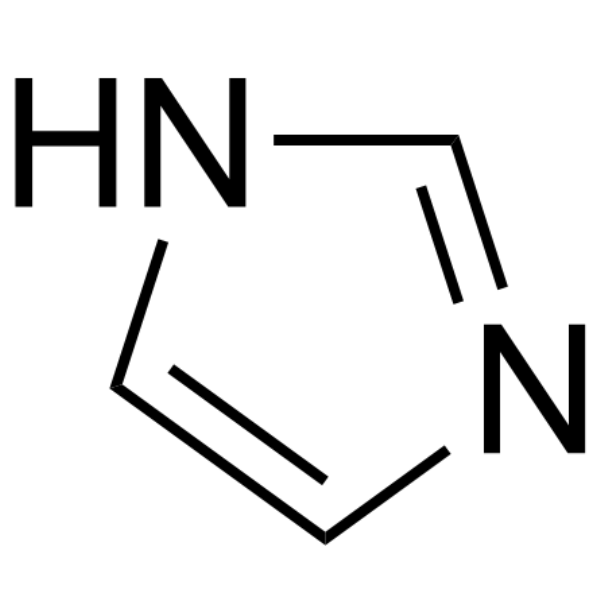
    Imidazole
    2 Publications Verification

    Glyoxaline; 1,3-Diaza-2,4-cyclopentadiene

    MOFs Ser/Thr Protease Thrombopoietin Receptor Neurological Disease Inflammation/Immunology
    Imidazole (Glyoxaline; 1,3-Diaza-2,4-cyclopentadiene) is a heterocyclic aromatic compound. Imidazole bearing molecules have been used as corrosion, acetylcholinesterase (AChEI) and xanthine oxidase (XO) inhibitors, performing biological activities such as antifungal, antituberculosis, anti-inflammatory, antioxidant, and analgesic, amongst many others. Imidazole inhibits the enzymatic conversion of the endoperoxides (PGG2 and PGH2) to thromboxane A2 by platelet microsomes. Imidazole derivatives exhibits inhibition on SARS-CoV-2 3CL Pro enzyme, which is promising for research in the field of Alzheimer’s disease, gout, COVID-19 and thrombo-embolic disease .
    Imidazole
  • HY-126382
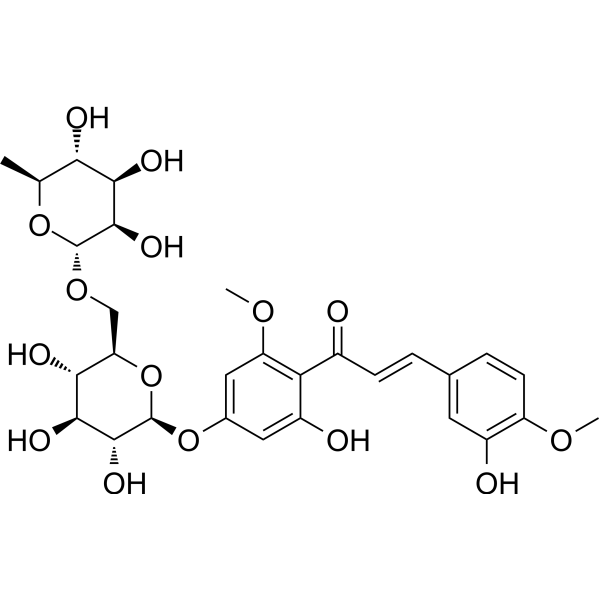
    Hesperidin methylchalcone
    1 Publications Verification

    NF-κB Inflammation/Immunology
    Hesperidin methylchalcone (Hesperidin methyl chalcone) is an orally active flavonoid that has analgesic, anti-inflammatory and antioxidant properties. Hesperidin methylchalcone exhibits vasoprotective activity. Hesperidin methylchalcone inhibits oxidative stress, cytokine production and NF-κB activation. Hesperidin methylchalcone can be used for the research of gout disease .
    Hesperidin methylchalcone
  • HY-106373
    Adrenocorticotropic hormone
    1 Publications Verification

    ACTH; Adrenocorticotrophic hormone

    Androgen Receptor Reactive Oxygen Species (ROS) Mitochondrial Metabolism Interleukin Related TNF Receptor Metabolic Disease Inflammation/Immunology
    Adrenocorticotropic hormone (ACTH; Adrenocorticotrophic hormone) is a polypeptide tropic hormone produced by the anterior pituitary gland. Adrenocorticotropic hormone stimulates cortisol secretion from the adrenal cortex via the hypothalamic-pituitary-adrenal (HPA) axis. Adrenocorticotropic hormone regulates cortisol and androgen production. Adrenocorticotropic hormone can promote the development of spermatogenesis. Adrenocorticotropic hormone can relieve acute inflammation in gout models by inhibiting the polarization of macrophages to M1 type, inhibiting ROS and proinflammatory factor production and protecting mitochondrial function. Adrenocorticotropic hormone can be used for the researches of inflammation, endocrinology, metabolic disease, such as gout and nephrotic syndrome .
    Adrenocorticotropic hormone
  • HY-P2921

    Uox, Microorganism

    Endogenous Metabolite Metabolic Disease Inflammation/Immunology
    Uricase, Microorganism (Uox, Microorganism) is a uricase (urate oxidase) derived from Microorganism. Uricase, Microorganism converts uric acid into allantoin. The absence of Uricase in mammals causes kidney diseases resulting from uric acid accumulation. Uricase, Microorganism can be used for research on chronic refractory gout and hyperuricemia .
    Uricase, Microorganism
  • HY-163358
    SLC3037
    1 Publications Verification

    NOD-like Receptor (NLR) NEKs Cardiovascular Disease Neurological Disease Inflammation/Immunology
    SLC3037 is a NLRP3 inhibitor which blocks NLRP3 from binding to NEK7 or oligomerization, inhibiting inflammasome caused by MSU and other inflammasome activators. SLC3037 can be used for research of gout, cardiovascular diseases, metabolic syndrome or neurodegenerative diseases .
    SLC3037
  • HY-148187

    NOD-like Receptor (NLR) Infection Cardiovascular Disease Neurological Disease Inflammation/Immunology
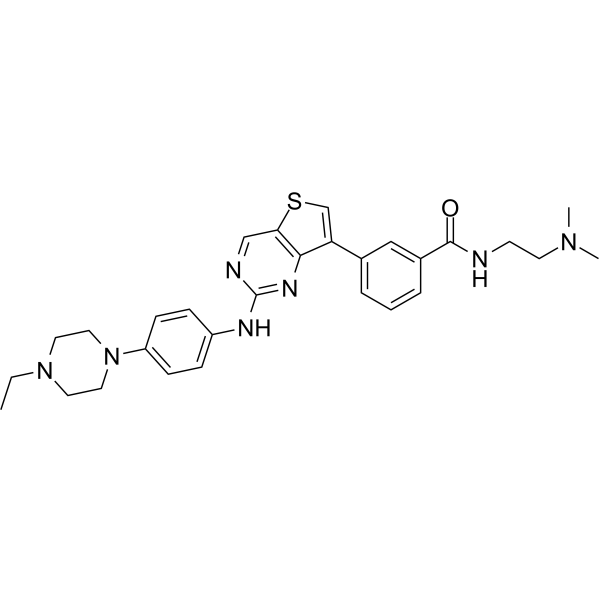
    NLRP3-IN-11 is a NLR family pyrin domain containing 3 (NLRP3) proteins inhibitor. NLRP3-IN-11 has biological activity for NLRP3 with an IC50 value of <0.3 μM. NLRP3-IN-11 can be used for the researh of inflammatory and degenerative diseases including NASH, atherosclerosis and other cardiovascular diseases, Alzheimer's disease, Parkinson's disease, diabetes, gout, and numerous other autoinflammatory diseases .
    NLRP3-IN-11
  • HY-P2921C

    Uox (Recombinant)

    Endogenous Metabolite Metabolic Disease Inflammation/Immunology
    Uricase (Recombinant) (Uox (Recombinant)) is a uricase (urate oxidase). Uricase (Recombinant) converts uric acid into allantoin. The deficiency of Uricase in mammals causes kidney diseases resulting from uric acid accumulation. Uricase (Recombinant) can be used for research on chronic refractory gout and hyperuricemia .
    Uricase (Recombinant)
  • HY-P2921D

    Uox, candida utilis

    Endogenous Metabolite Metabolic Disease Inflammation/Immunology
    Uricase, candida utilis (Uox, candida utilis) is a uricase (urate oxidase) derived from Candida utilis. Uricase, candida utilis converts uric acid into allantoin. The absence of Uricase in mammals causes kidney diseases resulting from uric acid accumulation. Uricase, candida utilis can be used for research on chronic refractory gout and hyperuricemia .
    Uricase, candida utilis
  • HY-106373A
    Adrenocorticotropic hormone TFA
    1 Publications Verification

    ACTH TFA; Adrenocorticotrophic hormone TFA

    Androgen Receptor Reactive Oxygen Species (ROS) Mitochondrial Metabolism Interleukin Related TNF Receptor Metabolic Disease Inflammation/Immunology
    Adrenocorticotropic hormone (ACTH; Adrenocorticotrophic hormone) TFA is a polypeptide tropic hormone produced by the anterior pituitary gland. Adrenocorticotropic hormone TFA stimulates cortisol secretion from the adrenal cortex via the hypothalamic-pituitary-adrenal (HPA) axis. Adrenocorticotropic hormone TFA regulates cortisol and androgen production. Adrenocorticotropic hormone TFA can promote the development of spermatogenesis. Adrenocorticotropic hormone TFA can relieve acute inflammation in gout models by inhibiting the polarization of macrophages to M1 type, inhibiting ROS and proinflammatory factor production and protecting mitochondrial function. Adrenocorticotropic hormone TFA can be used for the researches of inflammation, endocrinology, metabolic disease, such as gout and nephrotic syndrome .
    Adrenocorticotropic hormone TFA
  • HY-124857

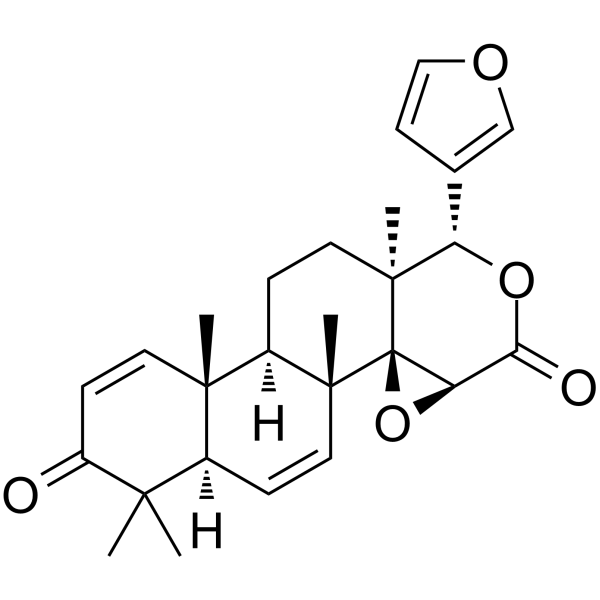
    7-Desacetoxy-6,7-dehydrogedunin

    PERK Prokineticin Receptor P2X Receptor Caspase NOD-like Receptor (NLR) Pyroptosis Tyrosinase Neurological Disease Metabolic Disease Inflammation/Immunology
    7DG (7-Desacetoxy-6,7-dehydrogedunin) is a PKR inhibitor, P2X7 purinergic receptor inhibitor, and skin-lightening agent. 7DG binds outside the ATP-catalytic domain of PKR, blocks the kinase activity-independent protein-protein interactions of PKR, inhibits the phosphorylation and activity of PKR, disrupts ASC assembly and caspase-1 activation, and suppresses the activation of the NLRP1 inflammasome. 7DG inhibits pyroptosis, suppresses the ATP-P2X7 signaling pathway, and abolishes ATP-induced increases in the expression levels of MITF, tyrosinase, PMEL/gp100, and melanin content. 7DG exerts skin-lightening effects in cultured skin in vitro. 7DG can be used in research related to chronic obstructive pulmonary disease, gout, type 2 diabetes, Alzheimer's disease, and hyperpigmentary skin disorders .
    7DG
  • HY-P2921B

    Uox, Arthrobacter globiformis

    Endogenous Metabolite Metabolic Disease Inflammation/Immunology
    Uricase, Arthrobacter globiformis (Uox, Arthrobacter globiformis) is a uricase (urate oxidase) derived from Arthrobacter globiformis. Uricase, Arthrobacter globiformis converts uric acid into allantoin. The absence of Uricase in mammals causes kidney diseases resulting from uric acid accumulation. Uricase, Arthrobacter globiformis can be used for research on chronic refractory gout and hyperuricemia .
    Uricase, Arthrobacter globiformis
  • HY-P2921A

    Uox, Bacillus fastidious

    Endogenous Metabolite Metabolic Disease Inflammation/Immunology
    Uricase, Bacillus fastidious (Uox, Bacillus fastidious) is a uricase (urate oxidase) derived from Bacillus fastidious. Uricase, Bacillus fastidious converts uric acid into allantoin. The absence of Uricase in mammals causes kidney diseases resulting from uric acid accumulation. Uricase, Bacillus fastidious can be used for research on chronic refractory gout and hyperuricemia .
    Uricase, Bacillus fastidious
  • HY-179024

    NOD-like Receptor (NLR) Interleukin Related Cardiovascular Disease Metabolic Disease Inflammation/Immunology
    NP3-742 is an orally active NLRP3 inhibitor that binds to the NLRP3 NACHT domain. NP3-742 inhibits IL-1β release with IC50s of 6 nM and 47 nM in both the cellular and whole blood assays, respectively. NP3-742 is highly selective against a panel of more than 50 enzymes, receptors and sodium and calcium channels. NP3-742 can be used for the study of gout, cardiovascular disease or osteoarthritis .
    NP3-742
  • HY-177070

    Xanthine Oxidase Inflammation/Immunology
    Angexostat (Compound 2) is an inhibitor of xanthine oxidase. Angexostat exhibits high permeability. Angexostat inhibits CYP2C9 with an IC50 of 18.1 μM. Angexostat can be studied in research for xanthine oxidase-related diseases such as hyperuricemia and gout .
    Angexostat
  • HY-163497

    NOD-like Receptor (NLR) Neurological Disease Inflammation/Immunology
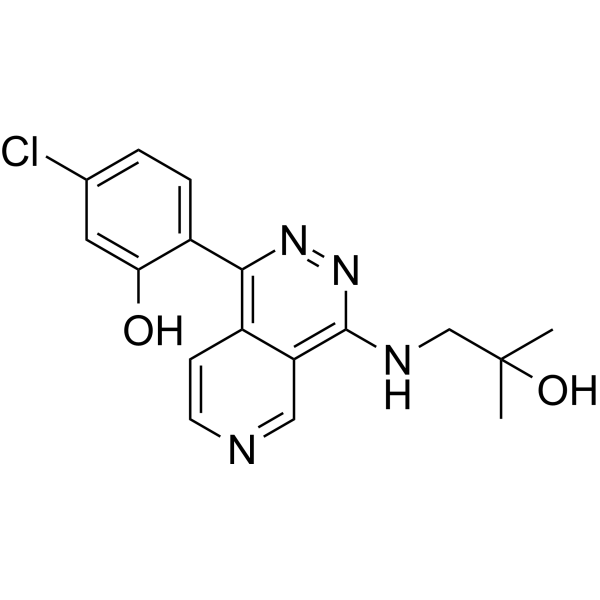
    NLRP3-IN-38 (Compound 18) is an inhibitor for NOD-like receptor protein 3 (NLRP3), that inhibits NLRP3 inflammasome activation with an EC50 of 23 nM .
    NLRP3-IN-38
  • HY-D0837R

    Glyoxaline (Standard); 1,3-Diaza-2,4-cyclopentadiene (Standard)

    Xanthine Oxidase Reference Standards Ser/Thr Protease Thrombopoietin Receptor Neurological Disease Inflammation/Immunology
    Imidazole (Standard) is the analytical standard of Imidazole. This product is intended for research and analytical applications. Imidazole (Glyoxaline; 1,3-Diaza-2,4-cyclopentadiene) is a heterocyclic aromatic compound. Imidazole bearing molecules have been used as corrosion, acetylcholinesterase (AChEI) and xanthine oxidase (XO) inhibitors, performing biological activities such as antifungal, antituberculosis, anti-inflammatory, antioxidant, and analgesic, amongst many others. Imidazole inhibits the enzymatic conversion of the endoperoxides (PGG2 and PGH2) to thromboxane A2 by platelet microsomes. Imidazole derivatives exhibits inhibition on SARS-CoV-2 3CLPro enzyme, which is promising for research in the field of Alzheimer’s disease, gout, COVID-19 and thrombo-embolic disease .
    Imidazole (Standard)
  • HY-163498

    NOD-like Receptor (NLR) Neurological Disease Inflammation/Immunology
    NLRP3-IN-37 (Compound 23) is a NLRP3 inhibitor (EC50: 5 nM). NLRP3-IN-37 can be used for NLRP3 related research, such as gout, pseudogout, CAPS, NASH fibrosis, heart failure, idiophathic pericarditis, atopic dermatitis, inflammatory bowel disease, Alzheimer's Disease, Parkinson's Disease and traumatic brain injury .
    NLRP3-IN-37
  • HY-W104467

    (+/-)-Epicatechol; (+/-)-epi-Catechin

    Xanthine Oxidase Metabolic Disease
    (+/-)-Epicatechin is a xanthine oxidase inhibitor with an IC50 of 982.14 μM, and can be found in Semen Plantaginis (Plantago seed). (+/-)-Epicatechin can be used in research on diseases such as hyperuricemia and gout .
    (+/-)-Epicatechin
  • HY-105526

    Desacetylcolchiceine; N-Deacetylcolchiceine

    Microtubule/Tubulin Metabolic Disease Cancer
    Trimethylcolchicinic acid (Desacetylcolchiceine; N-Deacetylcolchiceine) is a colchicine analogue. Trimethylcolchicinic acid promotes the production of chondroitin sulfate in L cells and inhibits the production of dermatan sulfate. Trimethylcolchicinic acid reduces liver fibrosis and cholestasis induced by long-term biliary obstruction in rats. Trimethylcolchicinic acid has potential for use in research on diseases such as liver fibrosis, gout, and cancer .
    Trimethylcolchicinic acid
  • HY-173231

    URAT1 Metabolic Disease
    hURAT1 inhibitor 2 (Compound 5) is an inhibitor of hURAT1 (uric acid transporter 1, SLC22A12) with an IC50 of 18 nM. hURAT1 inhibitor 2 also has a certain inhibitory effect on OATP1B1, with an IC50 value of 0.73 μM. hURAT1 inhibitor 2 can be used in the research of diseases related to abnormal uric acid metabolism, such as hyperuricemia and gout .
    hURAT1 inhibitor 2
  • HY-W699983

    Glyoxaline-15N2; 1,3-Diaza-2,4-cyclopentadiene-15N2

    Isotope-Labeled Compounds Thrombopoietin Receptor Ser/Thr Protease Xanthine Oxidase Neurological Disease Inflammation/Immunology
    Imidazole- 15N2 (Glyoxaline- 15N2) is 15N labeled Imidazole. Imidazole (Glyoxaline; 1,3-Diaza-2,4-cyclopentadiene) is a heterocyclic aromatic compound. Imidazole bearing molecules have been used as corrosion, acetylcholinesterase (AChEI) and xanthine oxidase (XO) inhibitors, performing biological activities such as antifungal, antituberculosis, anti-inflammatory, antioxidant, and analgesic, amongst many others. Imidazole inhibits the enzymatic conversion of the endoperoxides (PGG2 and PGH2) to thromboxane A2 by platelet microsomes. Imidazole derivatives exhibits inhibition on SARS-CoV-2 3CL Pro enzyme, which is promising for research in the field of Alzheimer’s disease, gout, COVID-19 and thrombo-embolic disease .
    Imidazole-15N2
  • HY-182849

    GLP Receptor Cardiovascular Disease Metabolic Disease Inflammation/Immunology
    GLP-1R agonist 44 is a glucagon-like peptide-1 receptor (GLP-1R) agonist. GLP-1R agonist 44 can be used for the research of diseases related to GLP-1R, such as type 2 diabetes, obesity, non-alcoholic fatty liver disease, non-alcoholic steatohepatitis, nephropathy, gout, hematuria, cardiovascular disease .
    GLP-1R agonist 44
  • HY-186072

    NOD-like Receptor (NLR) Interleukin Related Cytochrome P450 Neurological Disease Metabolic Disease Inflammation/Immunology
    NT-0527 is a selective, orally active, and brain-permeable NLRP3 inflammasome inhibitor. NT-0527 can specifically block the formation of the NLRP3 inflammasome, resulting in the reduction in the maturation and release of IL-1β, exhibit inhibition on CYP2C19. NT-0527 displays anti-inflammatory activity in the mouse LPS (HY-D1056) /ATP (HY-B2176)-induced peritonitis model. NT-0527 can be used for the research of neuroinflammatory disorders (Parkinson's disease, Alzheimer's disease, amyotrophic lateral sclerosis) and peripheral inflammatory disorders (type II diabetes, atherosclerosis, gout, etc.) associated with NLRP3 inflammasome .
    NT-0527
  • HY-P2921E

    Uox, Candida sp.

    Endogenous Metabolite Metabolic Disease Inflammation/Immunology
    Uricase, Candida sp. (Uox, Candida sp.) is a uricase (urate oxidase) derived from Candida sp.. Uricase, Candida sp. converts uric acid into allantoin. The absence of Uricase in mammals causes kidney diseases resulting from uric acid accumulation. Uricase, Candida sp. can be used for research on chronic refractory gout and hyperuricemia .
    Uricase, Candida sp.
  • HY-183889

    NOD-like Receptor (NLR) Neurological Disease Inflammation/Immunology
    p-Ethoxychrysoidin is a benzotriazole-based NLRP3 inhibitor. p-Ethoxychrysoidin can be used in research on inflammatory diseases and neurodegenerative diseases .
    p-Ethoxychrysoidin

オンラインお問い合わせ

入力情報は安全に管理されます. 必須入力項目.

タイトル


国或いは地域 *

お名前 *


組纖名 *

デパートメント *


メールアドレス *


製品名 *

製品番号


カスタマ需要量 *

電話番号 *


必ず会社名を記載ください。個人への返信は行いません。

備考

バルクお問い合わせ

Inquiry Information

製品名:
製品番号:
数量:
MCE 日本正規代理店:

