
Search Result
Results for "
hepatic stellate cell activation
" in MedChemExpress (MCE) Product Catalog:
4
Biochemical Assay Reagents
2
Isotope-Labeled Compounds
| Cat. No. |
Product Name |
Target |
Research Areas |
Chemical Structure |
-
- HY-P1624
-
|
ALX-0600
|
Nuclear Hormone Receptor 4A/NR4A
FXR
|
Inflammation/Immunology
|
|
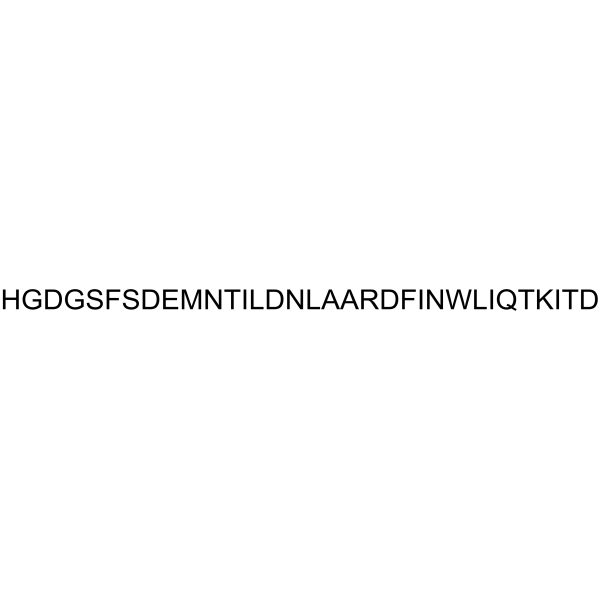
Teduglutide (ALX-0600) is an analog of human glucagon like peptide-2 (GLP-2). Teduglutide can activate the expression of nuclear receptor subfamily 4 group a member 1 (NR4a1)/nur77 and intestinal FXR signaling in human hepatic stellate cells, thereby improving liver inflammation and fibrosis in mice with sclerosing cholangitis. Teduglutide can alleviate intestinal dysfunction in mice, improve lung injury, alleviate obesity related neuroinflammation and cell apoptosis .
|
-
-
- HY-124748A
-
|
|
Protease Activated Receptor (PAR)
Apoptosis
|
Inflammation/Immunology
|
|
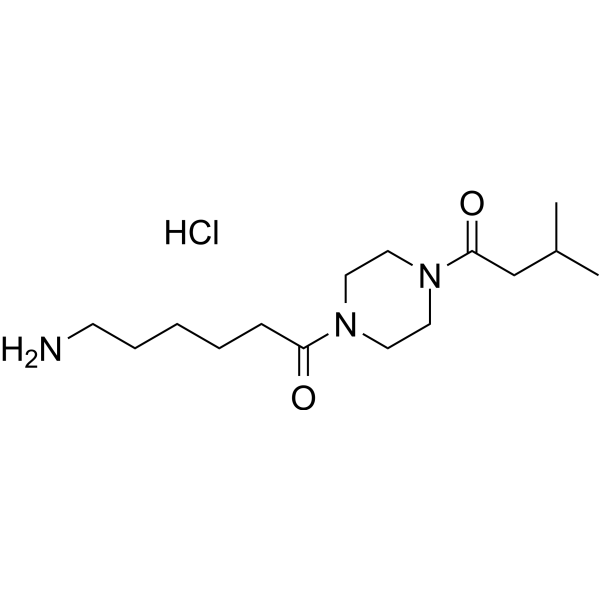
ENMD-1068 hydrochloride is a selective protease-activated receptor 2 (PAR2) antagonist. ENMD-1068 hydrochloride reduces hepatic stellate cell activation and collagen expression by inhibiting TGF-β1/Smad signaling. ENMD-1068 hydrochloride also inhibits the proliferation of endometrial cells and induces apoptosis of epithelial cells in the lesion. ENMD-1068 hydrochloride can be used in the study of endometriosis and liver fibrosis .
|
-
-
- HY-P10709
-
|
|
Collagen
|
Cardiovascular Disease
Cancer
|
|
CREKA peptide is a selective non-covalent binding agent targeting fibrin, type IV collagen, and fibronectin, often used as a targeting ligand to modify delivery carriers. CREKA peptide specifically recognizes fibrin, fibronectin, and type IV collagen that are excessively deposited in the tumor microenvironment or fibrotic tissue, mediating the targeted accumulation of the carrier at the lesion site and promoting drug internalization into target cells (such as cancer cells and activated hepatic stellate cells). CREKA peptide can enhance targeted delivery efficiency, increase drug concentration at the lesion site, and reduce systemic side effects .
|
-
-
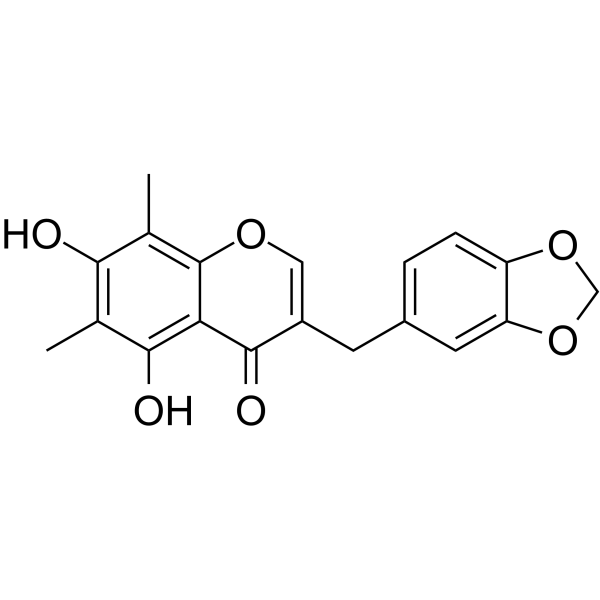
- HY-N2413
-
-
-
- HY-N0909
-
|
20(S)-Notoginsenoside R2; Ginsenoside Ng-R2
|
Apoptosis
MEK
ERK
Reactive Oxygen Species (ROS)
Caspase
COX
β-catenin
Src
MDM-2/p53
JAK
STAT
|
Neurological Disease
Metabolic Disease
Inflammation/Immunology
|
|
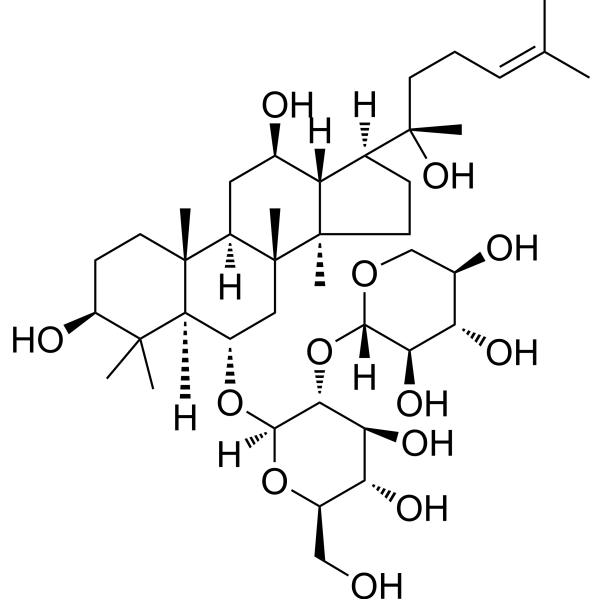
Notoginsenoside R2 (20(S)-Notoginsenoside R2; Ginsenoside Ng-R2) is an orally active notoginsenoside . Notoginsenoside R2 activates P90RSK and Nrf2 via the MEK1/2-ERK1/2 pathway to inhibit 6-OHDA-induced apoptotic damage in nerve cells. Notoginsenoside R2 upregulates SOX8/β-catenin by reducing miR-27a, thereby suppressing Aβ25-35-induced neuronal apoptosis and inflammatory responses . Notoginsenoside R2 alleviates lipid accumulation and mitochondrial dysfunction in diabetic nephropathy by inhibiting c-Src. Notoginsenoside R2 alleviates hepatic fibrosis by inducing hepatic stellate cell senescence and inhibiting the inflammatory microenvironment via JAK/STAT3 suppression . Notoginsenoside R2 can be used in research related to Parkinson's disease, Alzheimer's disease, diabetic nephropathy and hepatic fibrosis .
|
-
-
- HY-172275A
-
|
|
Liposome
|
Inflammation/Immunology
|
|
DSPE-PEG2000-pPB is a PEG compound which composed of DSPE and a cyclic oligopeptide (pPB). pPB has a strong binding affinity with PDGFRβ, which is overexpressed on activated hepatic stellate cells (HSC). DSPE-PEG2000-pPB can be used for drug delivery .
|
-
-
- HY-156119
-
|
|
Mixed Lineage Kinase
Necroptosis
|
Metabolic Disease
Cancer
|
|
MLKL-IN-6 (compound P28) is a mixed lineage kinase inhibitor targeting Mixed Lineage Kinase domain-like (MLKL). MLKL-IN-6 inhibits cell necrosis. MLKL-IN-6 inhibits MLKL phosphorylation and oligomerization during cell necrosis, inhibits immune cell death, and reduces the expression of adhesion factors. MLKL-IN-6 has low cytotoxicity, and it inhibits hepatic stellate cell activation, reduces liver fibrosis marker levels, and has anti-fibrotic effects .
|
-
-
- HY-P1624S1
-
|
ALX-0600-Leu(13C6,15N) sodium
|
Isotope-Labeled Compounds
Nuclear Hormone Receptor 4A/NR4A
FXR
|
Inflammation/Immunology
|
|
Teduglutide-Leu( 13C6, 15N) (ALX-0600-Leu( 13C6, 15N)) sodium is the 13C- and 15N-labeled Teduglutide (HY-P1624). Teduglutide (ALX-0600) is an analog of human glucagon like peptide-2 (GLP-2). Teduglutide can activate the expression of nuclear receptor subfamily 4 group a member 1 (NR4a1)/nur77 and intestinal FXR signaling in human hepatic stellate cells, thereby improving liver inflammation and fibrosis in mice with sclerosing cholangitis. Teduglutide can alleviate intestinal dysfunction in mice, improve lung injury, alleviate obesity related neuroinflammation and cell apoptosis .
|
-
-
- HY-179133
-
|
|
P2Y Receptor
PKA
Raf
MEK
ERK
|
Inflammation/Immunology
|
|
HDB-1 is a selective inhibitor of the P2Y14 receptor (P2Y14R) with an IC50 of 26 pM. HDB-1 shows no significant inhibition on P2Y1R, P2Y2R, P2Y4R, P2Y6R, and P2Y12R. HDB-1 blocks the activation of hepatic stellate cells (HSC) by inhibiting the PKA/Raf1/MEK/ERK signaling pathway mediated by P2Y14R, thereby alleviating the core pathological process of liver fibrosis. HDB-1 can be used for the study of liver fibrosis .
|
-
-
- HY-124748
-
|
|
Protease Activated Receptor (PAR)
Apoptosis
|
Inflammation/Immunology
|
|
ENMD-1068 is a selective protease-activated receptor 2 (PAR2) antagonist. ENMD-1068 reduces hepatic stellate cell activation and collagen expression by inhibiting TGF-β1/Smad signaling. ENMD-1068 also inhibits the proliferation of endometrial cells and induces apoptosis of epithelial cells in the lesion. ENMD-1068 can be used in the study of endometriosis and liver fibrosis .
|
-
-
- HY-W719989
-
|
|
Drug Intermediate
|
Metabolic Disease
|
|
γ-Carotene is a carotenoid found in Hippophae rhamnoides L. and peach palm fruits. γ-Carotene exhibits no significant inhibitory activity against self-activated hepatic stellate cells in vitro. γ-Carotene can be converted into retinol (Vitamin A) (HY-B1342) and can be used for the research of vitamin A deficiency [2].
|
-
-
- HY-P1624A
-
|
ALX-0600 TFA
|
Nuclear Hormone Receptor 4A/NR4A
FXR
|
Inflammation/Immunology
|
|
Teduglutide TFA is a dipeptidyl peptidase IV resistant glucagon-like peptide 2 (GLP-2) analogue. Teduglutide TFA can activate the expression of nuclear receptor subfamily 4 group a member 1 (NR4a1)/nur77 and intestinal FXR signaling in human hepatic stellate cells, thereby improving liver inflammation and fibrosis in mice with sclerosing cholangitis. Teduglutide TFA can alleviate intestinal dysfunction in mice, improve lung injury, alleviate obesity related neuroinflammation and cell apoptosis .
|
-
-
- HY-W753806
-
|
UK 33274 hydrochloride
|
Akt
|
Cardiovascular Disease
|
|
Doxazosin hydrochloride (UK 33274 hydrochloride) is a compound used to inhibit hypertension and prostate hyperplasia, with activity that inhibits postsynaptic α1-adrenoceptors on vascular smooth muscle. Doxazosin hydrochloride can cause vasodilation, thereby reducing peripheral vascular resistance. Doxazosin hydrochloride was found to inhibit the proliferation and migration of hepatic stellate cells in a mouse liver fibrosis model. Doxazosin hydrochloride regulates fibrosis, autophagy, and apoptosis of hepatic stellate cells by activating the PI3K/Akt/mTOR signaling pathway. Doxazosin hydrochloride also blocks autophagic flux and induces apoptosis of hepatic stellate cells .
|
-
-
- HY-162605
-
|
|
STAT
HSP
|
Cancer
|
|
CYD0682 is an analog of Oridonin (HY-N0004). CYD0682 attenuates STAT3 activation and ECM production via an HSP90 pathway in hepatic stellate cells .
|
-
-
- HY-125522
-
|
|
ERK
Apoptosis
|
Inflammation/Immunology
|
|
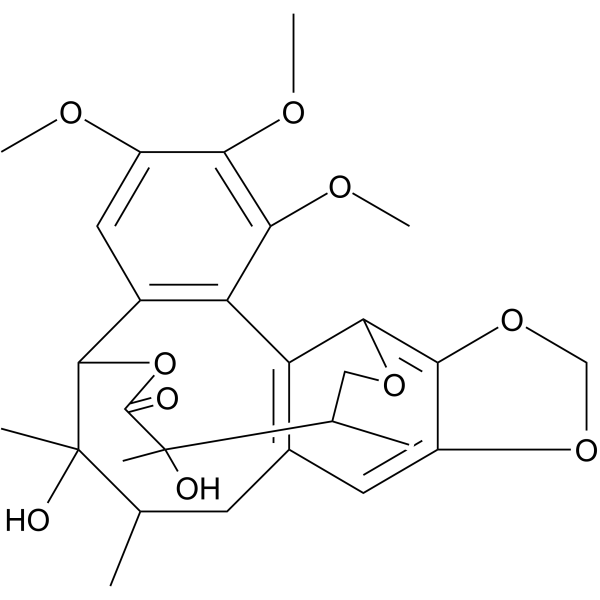
Methyl helicterate is a triterpenoid, that can be isolated from Helicteres angustifolia (Sterculiaceae). Methyl helicterate inhibits hepatic stellate cell activation and promotes cell apoptosis through downregulating the ERK1/2 signaling pathway .
|
-
-
- HY-149899
-
|
|
VD/VDR
|
Others
|
|
VDR agonist 2 (compound 16i) is a VDR (vitamin D receptor) agonist that can effectively inhibit TGF-β1-induced activation of hepatic stellate cells (HSC). VDR agonist 2 has significant anti-hepatic fibrosis effects both in vitro and in vivo .
|
-
-
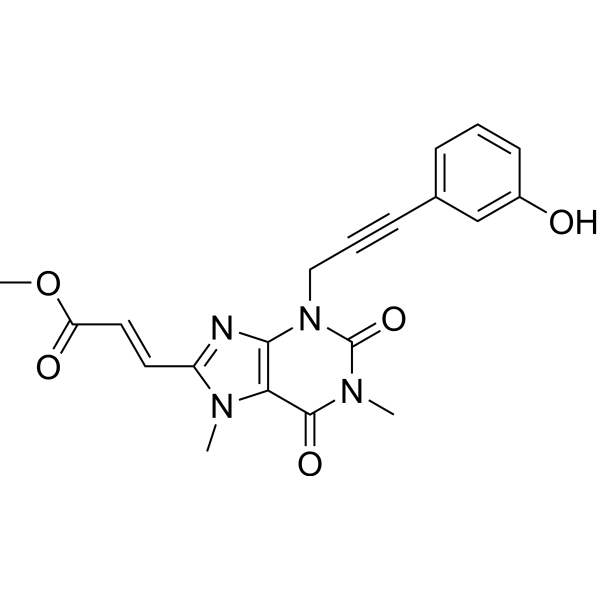
- HY-162147
-
-
-
- HY-172275B
-
|
|
Liposome
|
Inflammation/Immunology
|
|
DSPE-PEG5000-pPB is a PEG compound which composed of DSPE and a cyclic oligopeptide (pPB). pPB has a strong binding affinity with PDGFRβ, which is overexpressed on activated hepatic stellate cells (HSC). DSPE-PEG5000-pPB can be used for drug delivery .
|
-
-
- HY-178328
-
|
|
VD/VDR
Collagen
TGF-beta/Smad
MMP
JAK
|
Metabolic Disease
Inflammation/Immunology
Endocrinology
|
|
VDR agonist 4 is an orally active potent VDR agonist. VDR agonist 4 exerts VDR-dependent antifibrotic activity by regulating multiple fibrosis-related genes to suppress α-SMA and collagen I production, thereby inhibiting hepatic stellate cell (HSC) activation. VDR agonist 4 improves CCl4 (HY-RS16594)-induced hepatic fibrosis in mice. VDR agonist 4 can be used for liver fibrosis research .
|
-
-
- HY-170543
-
|
|
Galectin
EGFR
Apoptosis
|
Inflammation/Immunology
|
|
Dual Galectin-3/EGFR-IN-1 (Compound 29) is the dual inhibitor for Galectin-3 and EGFR with the KD of 52.29 μM and 3.31 μM. Dual Galectin-3/EGFR-IN-1 inhibits TGF-β-induced hepatic stellate cell (HSCs) activation, induces apoptosis in LX-2 cell, and exhibits anti-liver fibrotic efficacy .
|
-
-
- HY-122179
-
|
|
TGF-β Receptor
|
Inflammation/Immunology
|
|
NUCC-555 is an activin antagonist. NUCC-555 interacts with Trp25, Trp28, Phe55, Tyr93, Lys103, and Asn107 in the Activin A binding pocket. NUCC-555 blocks Activin A-mediated hepatic stellate cells (HSCs) activation. NUCC-555 promotes liver regeneration and halts fibrosis progression in chronic liver disease models. NUCC-555 inhibits Activin A-mediated ovarian cell proliferation. NUCC-555 decreases FSH levels in ovariectomized mice .
|
-
-
- HY-P1624S
-
|
ALX-0600-Ala(13C3,15N) sodium
|
Isotope-Labeled Compounds
Nuclear Hormone Receptor 4A/NR4A
FXR
|
Inflammation/Immunology
|
|
Teduglutide-Ala( 13C3, 15N) (ALX-0600-Ala( 13C3, 15N)) sodium is the 13C- and 15N-labeled Teduglutide (HY-P1624). Teduglutide (ALX-0600) is an analog of human glucagon like peptide-2 (GLP-2). Teduglutide can activate the expression of nuclear receptor subfamily 4 group a member 1 (NR4a1)/nur77 and intestinal FXR signaling in human hepatic stellate cells, thereby improving liver inflammation and fibrosis in mice with sclerosing cholangitis. Teduglutide can alleviate intestinal dysfunction in mice, improve lung injury, alleviate obesity related neuroinflammation and cell apoptosis .
|
-
-
- HY-181808
-
|
|
AMPK
TGF-beta/Smad
Collagen
|
Metabolic Disease
|
|
HSF1/AMPK activator 1 is a compound that modulates the HSF1/AMPK axis and the TGF-β1/Smad signaling pathway. HSF1/AMPK activator 1 exhibits anti-hepatic fibrosis activity and metabolic stability. HSF1/AMPK activator 1 inhibits fibrosis formation and cell proliferation in activated hepatic stellate cells. HSF1/AMPK activator 1 alleviates liver injury and hepatic fibrosis symptoms in fibrotic mice. HSF1/AMPK activator 1 is applicable to research related to hepatic fibrosis .
|
-
-
- HY-172275
-
|
|
Liposome
|
Inflammation/Immunology
|
|
DSPE-PEG1000-pPB is a PEG compound which composed of DSPE and a cyclic oligopeptide (pPB). pPB has a strong binding affinity with PDGFRβ, which is overexpressed on activated hepatic stellate cells (HSC). DSPE-PEG1000-pPB can be used for drug delivery .
|
-
-
- HY-172275C
-
|
|
Liposome
|
Inflammation/Immunology
|
|
DSPE-PEG3400-pPB is a PEG compound which composed of DSPE and a cyclic oligopeptide (pPB). pPB has a strong binding affinity with PDGFRβ, which is overexpressed on activated hepatic stellate cells (HSC). DSPE-PEG3400-pPB can be used for drug delivery .
|
-
-
- HY-182287
-
|
|
Reactive Oxygen Species (ROS)
NOD-like Receptor (NLR)
|
Metabolic Disease
|
|
PRDX1-IN-4 is a PRDX1 inhibitor with an IC50 of 122 nM against human targets and high subtype selectivity. PRDX1-IN-4 covalently binds to PRDX1 to promote ROS accumulation. PRDX1-IN-4 inhibits NLRP3 inflammasome activation, blocks hepatic stellate cell activation and reduces collagen deposition. PRDX1-IN-4 induces apoptosis in activated hepatic stellate cells. PRDX1-IN-4 has good safety profile, with no significant body weight loss or hepatotoxicity observed in mice at a dose of 20 mg/kg. PRDX1-IN-4 ameliorates CCl4-induced liver injury and liver fibrosis in mice at a dose of 1 mg/kg. PRDX1-IN-4 can be used for the research of liver fibrosis .
|
-
-
- HY-181655
-
|
|
Cathepsin
|
Metabolic Disease
|
|
Anti-hepatic fibrosis agent 3 is an orally active anti-hepatic fibrosis compound targeting Cathepsin D. Anti-hepatic fibrosis agent 3 shows an IC50 of 53.18 μM against COL1A1-promoter and a Kd of 8.86 μM for binding to Cathepsin D. Anti-hepatic fibrosis agent 3 directly binds to and promotes the degradation of Cathepsin D, with no significant effect on Cathepsin B or Cathepsin L. Anti-hepatic fibrosis agent 3 inhibits hepatic stellate cell activation and reduces extracellular matrix deposition and inflammatory cytokine expression. Anti-hepatic fibrosis agent 3 exhibits remarkable anti-fibrotic activity in rat BDL and mouse CDAHFD-induced hepatic fibrosis models. Anti-hepatic fibrosis agent 3 can be used for the study of hepatic fibrosis .
|
-
-
- HY-181486
-
|
|
VD/VDR
|
Metabolic Disease
|
|
VDR agonist 5 is an oral active VDR agonist. VDR agonist 5 activates VDR-mediated signaling to reduce liver fibrosis progression. VDR agonist 5 does not induce hypercalcemia. VDR agonist 5 can be used for the research of hepatic fibrosis .
|
-
-
- HY-182038
-
|
|
VD/VDR
TGF-beta/Smad
Collagen
Hippo (MST)
|
Metabolic Disease
|
|
TGF-β1/Smad3-IN-2 is an orally active antifibrotic agent. TGF-β1/Smad3-IN-2 has high affinity for VDR and can inhibit the TGFβ/SMAD3 signaling pathway. TGF-β1/Smad3-IN-2 inhibits hepatic stellate cell activation, reduces extracellular matrix deposition, and alleviates liver fibrosis in a bile duct ligation mouse model. TGF-β1/Smad3-IN-2 can be used for the research of liver fibrosis .
|
-
| Cat. No. |
Product Name |
Type |
-
- HY-172275A
-
|
|
Biochemical Assay Reagents
|
|
DSPE-PEG2000-pPB is a PEG compound which composed of DSPE and a cyclic oligopeptide (pPB). pPB has a strong binding affinity with PDGFRβ, which is overexpressed on activated hepatic stellate cells (HSC). DSPE-PEG2000-pPB can be used for drug delivery .
|
-
- HY-172275B
-
|
|
Biochemical Assay Reagents
|
|
DSPE-PEG5000-pPB is a PEG compound which composed of DSPE and a cyclic oligopeptide (pPB). pPB has a strong binding affinity with PDGFRβ, which is overexpressed on activated hepatic stellate cells (HSC). DSPE-PEG5000-pPB can be used for drug delivery .
|
-
- HY-172275
-
|
|
Biochemical Assay Reagents
|
|
DSPE-PEG1000-pPB is a PEG compound which composed of DSPE and a cyclic oligopeptide (pPB). pPB has a strong binding affinity with PDGFRβ, which is overexpressed on activated hepatic stellate cells (HSC). DSPE-PEG1000-pPB can be used for drug delivery .
|
-
- HY-172275C
-
|
|
Biochemical Assay Reagents
|
|
DSPE-PEG3400-pPB is a PEG compound which composed of DSPE and a cyclic oligopeptide (pPB). pPB has a strong binding affinity with PDGFRβ, which is overexpressed on activated hepatic stellate cells (HSC). DSPE-PEG3400-pPB can be used for drug delivery .
|
| Cat. No. |
Product Name |
Target |
Research Area |
-
- HY-P1624
-
|
ALX-0600
|
Nuclear Hormone Receptor 4A/NR4A
FXR
|
Inflammation/Immunology
|
|
Teduglutide (ALX-0600) is an analog of human glucagon like peptide-2 (GLP-2). Teduglutide can activate the expression of nuclear receptor subfamily 4 group a member 1 (NR4a1)/nur77 and intestinal FXR signaling in human hepatic stellate cells, thereby improving liver inflammation and fibrosis in mice with sclerosing cholangitis. Teduglutide can alleviate intestinal dysfunction in mice, improve lung injury, alleviate obesity related neuroinflammation and cell apoptosis .
|
-
- HY-P10709
-
|
|
Collagen
|
Cardiovascular Disease
Cancer
|
|
CREKA peptide is a selective non-covalent binding agent targeting fibrin, type IV collagen, and fibronectin, often used as a targeting ligand to modify delivery carriers. CREKA peptide specifically recognizes fibrin, fibronectin, and type IV collagen that are excessively deposited in the tumor microenvironment or fibrotic tissue, mediating the targeted accumulation of the carrier at the lesion site and promoting drug internalization into target cells (such as cancer cells and activated hepatic stellate cells). CREKA peptide can enhance targeted delivery efficiency, increase drug concentration at the lesion site, and reduce systemic side effects .
|
-
- HY-P1624S1
-
|
ALX-0600-Leu(13C6,15N) sodium
|
Isotope-Labeled Compounds
Nuclear Hormone Receptor 4A/NR4A
FXR
|
Inflammation/Immunology
|
|
Teduglutide-Leu( 13C6, 15N) (ALX-0600-Leu( 13C6, 15N)) sodium is the 13C- and 15N-labeled Teduglutide (HY-P1624). Teduglutide (ALX-0600) is an analog of human glucagon like peptide-2 (GLP-2). Teduglutide can activate the expression of nuclear receptor subfamily 4 group a member 1 (NR4a1)/nur77 and intestinal FXR signaling in human hepatic stellate cells, thereby improving liver inflammation and fibrosis in mice with sclerosing cholangitis. Teduglutide can alleviate intestinal dysfunction in mice, improve lung injury, alleviate obesity related neuroinflammation and cell apoptosis .
|
-
- HY-P1624A
-
|
ALX-0600 TFA
|
Nuclear Hormone Receptor 4A/NR4A
FXR
|
Inflammation/Immunology
|
|
Teduglutide TFA is a dipeptidyl peptidase IV resistant glucagon-like peptide 2 (GLP-2) analogue. Teduglutide TFA can activate the expression of nuclear receptor subfamily 4 group a member 1 (NR4a1)/nur77 and intestinal FXR signaling in human hepatic stellate cells, thereby improving liver inflammation and fibrosis in mice with sclerosing cholangitis. Teduglutide TFA can alleviate intestinal dysfunction in mice, improve lung injury, alleviate obesity related neuroinflammation and cell apoptosis .
|
-
- HY-P1624S
-
|
ALX-0600-Ala(13C3,15N) sodium
|
Isotope-Labeled Compounds
Nuclear Hormone Receptor 4A/NR4A
FXR
|
Inflammation/Immunology
|
|
Teduglutide-Ala( 13C3, 15N) (ALX-0600-Ala( 13C3, 15N)) sodium is the 13C- and 15N-labeled Teduglutide (HY-P1624). Teduglutide (ALX-0600) is an analog of human glucagon like peptide-2 (GLP-2). Teduglutide can activate the expression of nuclear receptor subfamily 4 group a member 1 (NR4a1)/nur77 and intestinal FXR signaling in human hepatic stellate cells, thereby improving liver inflammation and fibrosis in mice with sclerosing cholangitis. Teduglutide can alleviate intestinal dysfunction in mice, improve lung injury, alleviate obesity related neuroinflammation and cell apoptosis .
|
| Cat. No. |
Product Name |
Category |
Target |
Chemical Structure |
| Cat. No. |
Product Name |
Chemical Structure |
-
- HY-P1624S1
-
|
|
|
Teduglutide-Leu( 13C6, 15N) (ALX-0600-Leu( 13C6, 15N)) sodium is the 13C- and 15N-labeled Teduglutide (HY-P1624). Teduglutide (ALX-0600) is an analog of human glucagon like peptide-2 (GLP-2). Teduglutide can activate the expression of nuclear receptor subfamily 4 group a member 1 (NR4a1)/nur77 and intestinal FXR signaling in human hepatic stellate cells, thereby improving liver inflammation and fibrosis in mice with sclerosing cholangitis. Teduglutide can alleviate intestinal dysfunction in mice, improve lung injury, alleviate obesity related neuroinflammation and cell apoptosis .
|
-
-
- HY-P1624S
-
|
|
|
Teduglutide-Ala( 13C3, 15N) (ALX-0600-Ala( 13C3, 15N)) sodium is the 13C- and 15N-labeled Teduglutide (HY-P1624). Teduglutide (ALX-0600) is an analog of human glucagon like peptide-2 (GLP-2). Teduglutide can activate the expression of nuclear receptor subfamily 4 group a member 1 (NR4a1)/nur77 and intestinal FXR signaling in human hepatic stellate cells, thereby improving liver inflammation and fibrosis in mice with sclerosing cholangitis. Teduglutide can alleviate intestinal dysfunction in mice, improve lung injury, alleviate obesity related neuroinflammation and cell apoptosis .
|
-
| Cat. No. |
Product Name |
|
Classification |
-
- HY-172275A
-
|
|
|
Pegylated Lipids
|
|
DSPE-PEG2000-pPB is a PEG compound which composed of DSPE and a cyclic oligopeptide (pPB). pPB has a strong binding affinity with PDGFRβ, which is overexpressed on activated hepatic stellate cells (HSC). DSPE-PEG2000-pPB can be used for drug delivery .
|
-
- HY-172275B
-
|
|
|
Pegylated Lipids
|
|
DSPE-PEG5000-pPB is a PEG compound which composed of DSPE and a cyclic oligopeptide (pPB). pPB has a strong binding affinity with PDGFRβ, which is overexpressed on activated hepatic stellate cells (HSC). DSPE-PEG5000-pPB can be used for drug delivery .
|
-
- HY-172275
-
|
|
|
Pegylated Lipids
|
|
DSPE-PEG1000-pPB is a PEG compound which composed of DSPE and a cyclic oligopeptide (pPB). pPB has a strong binding affinity with PDGFRβ, which is overexpressed on activated hepatic stellate cells (HSC). DSPE-PEG1000-pPB can be used for drug delivery .
|
-
- HY-172275C
-
|
|
|
Pegylated Lipids
|
|
DSPE-PEG3400-pPB is a PEG compound which composed of DSPE and a cyclic oligopeptide (pPB). pPB has a strong binding affinity with PDGFRβ, which is overexpressed on activated hepatic stellate cells (HSC). DSPE-PEG3400-pPB can be used for drug delivery .
|
Your information is safe with us. * Required Fields.
Inquiry Information
- Product Name:
- Cat. No.:
- Quantity:
- MCE Japan Authorized Agent:

