



Gomisin D

Based on 1 Customer Validation
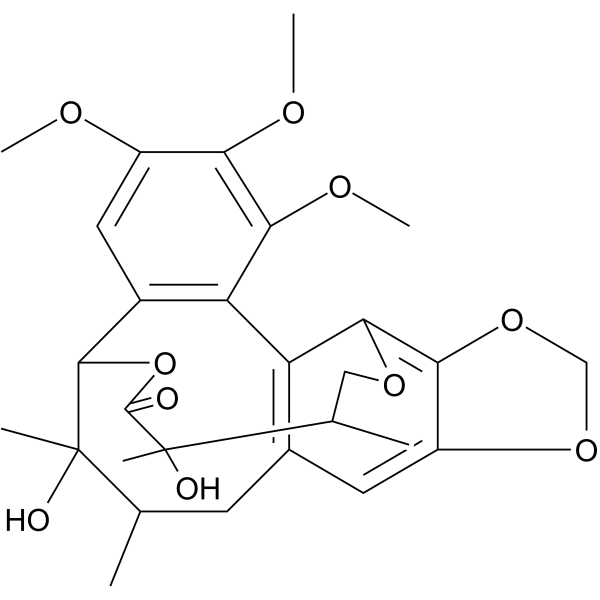
Gomisin D is an orally active lignan that binds to PDGFRβ with a Kd of 10 μM. By targeting PDGFRβ to regulate signaling pathways, Gomisin D inhibits the activation and proliferation of hepatic stellate cells and promotes their apoptosis, thereby ameliorating hepatic fibrosis. Gomisin D exhibits multiple activities such as photoprotection, antimelanogenesis, antioxidant effects, and hypoglycemic activity. Gomisin D can be used in studies related to diabetes, Alzheimer's disease, and hepatic fibrosis.
For research use only. We do not sell to patients.
- Purity : 99.86%
- CAS No.: 60546-10-3
- Formula: C28H34O10
- Molecular Weight:530.56
-
Storage:
4°C, sealed storage, away from moisture and light
* In solvent : -80°C, 6 months; -20°C, 1 month (sealed storage, away from moisture and light)

To place orders, for customer services and technical support, please contact: MedChemExpress USA
Tel: 609-228-6898 E-mail: [email protected] [email protected]


-
 Biological Activity
-
Chemical Information
-
Solvent & Solubility
- Protocols
- Purity & Documentation
- References
-
 Help & FAQs


-
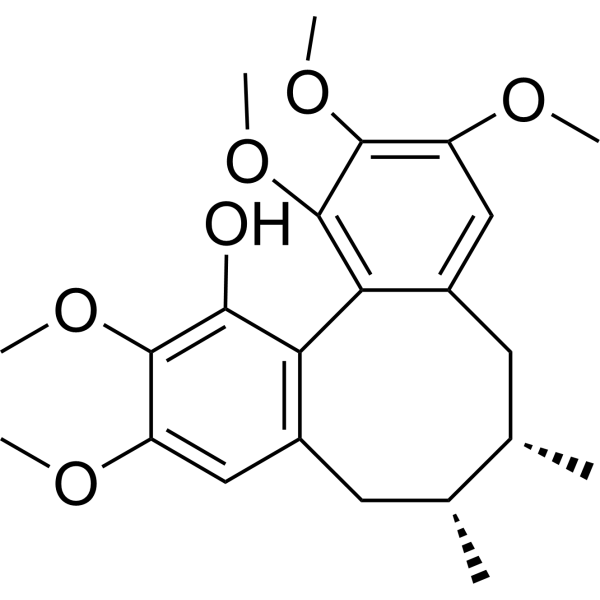
HY-N0859
SchisanhenolAntioxidant Agent -
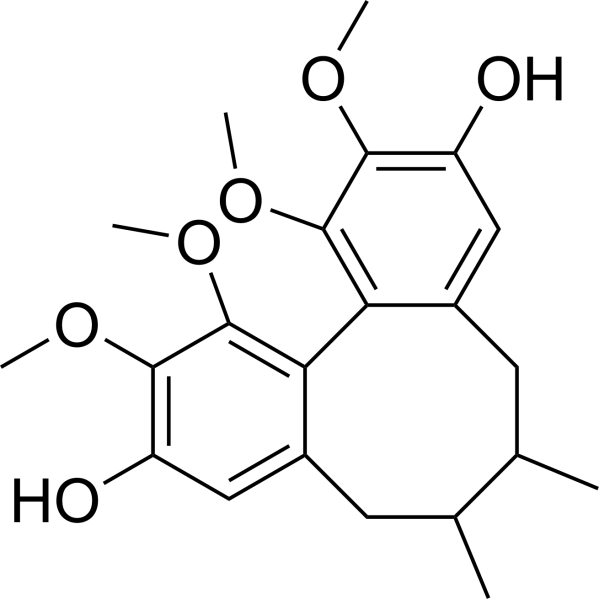
HY-N0385
Gomisin JCalcium Channel Activator -
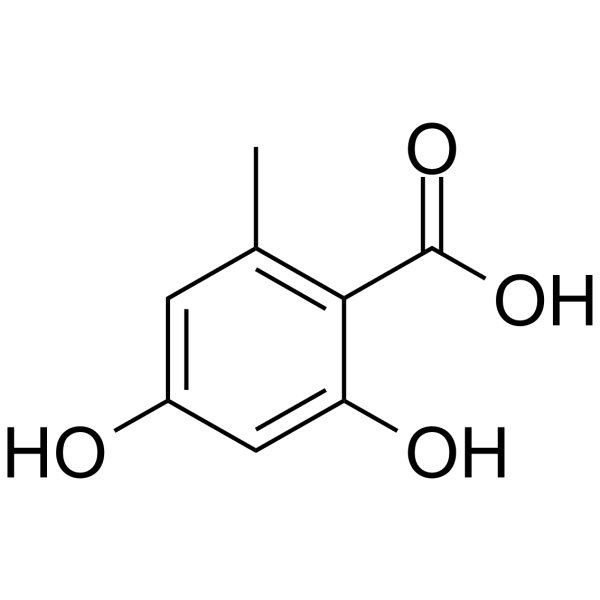
HY-N3126
Orsellinic acidBenzoic Acid Derivative -
HY-W040045
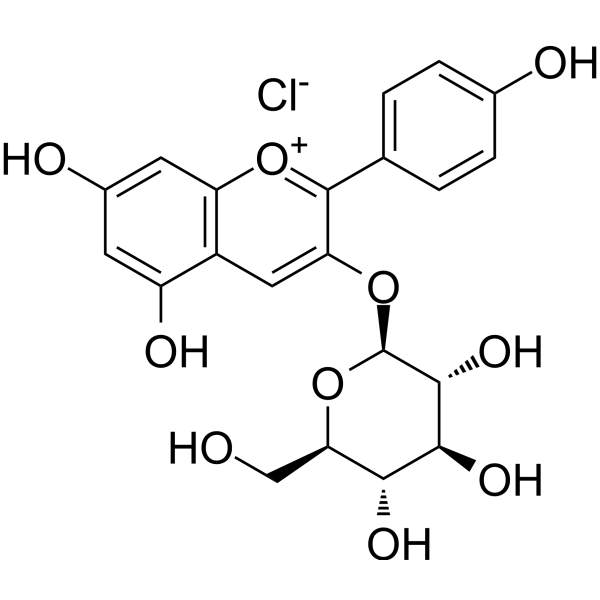
Callistephin chlorideROS/iNOS/TNF-α/COX-2 Inhibitor -
HY-N0701
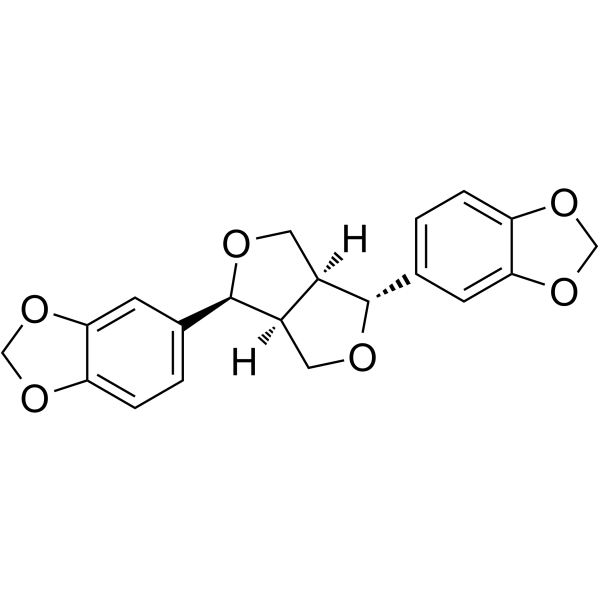
(-)-AsarininTetrahydrofurofurano Lignan -
HY-111253
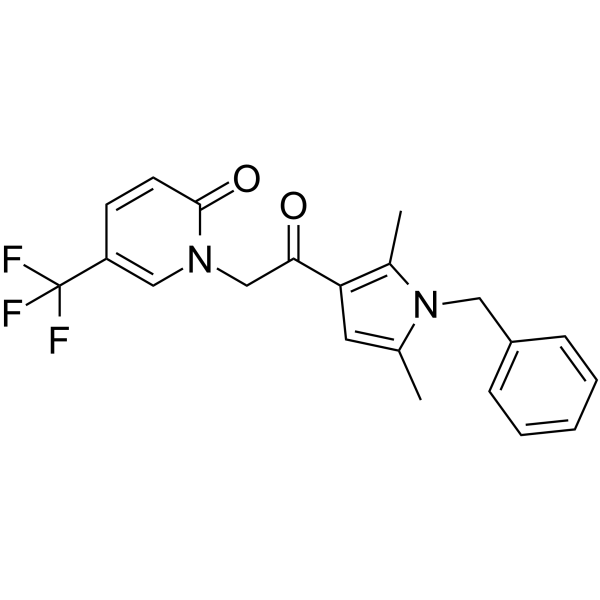
CYM-5478S1P2 Agonist -

HY-N0859R
Schisanhenol (Standard)Analytical Standard -
HY-N9926
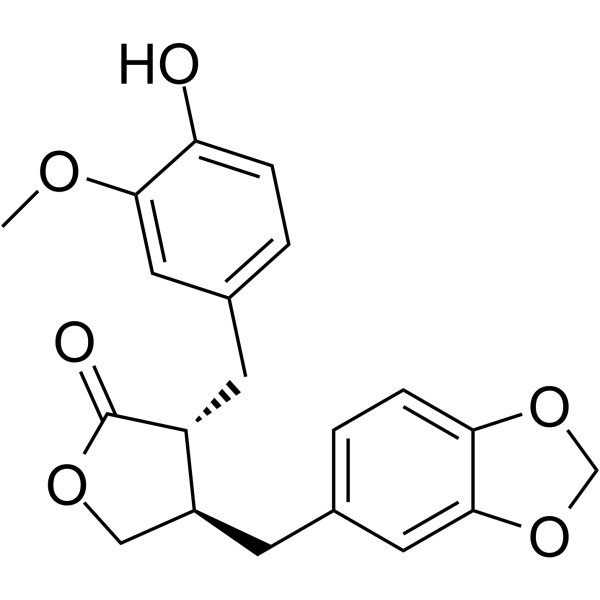
PluviatolideLignan -
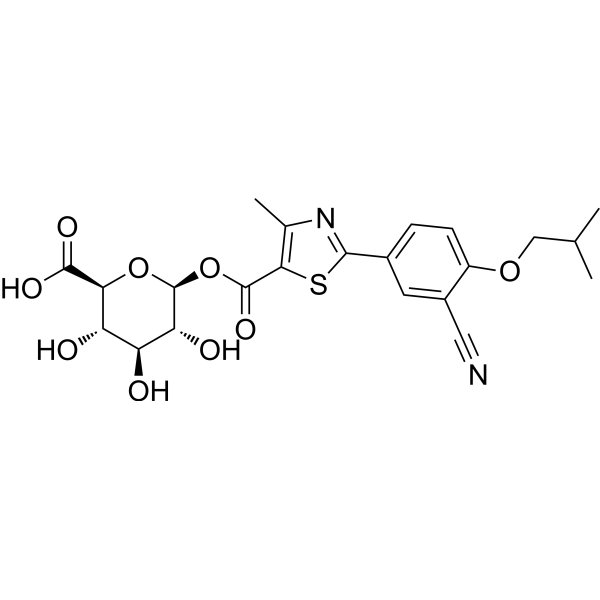
HY-129889
Febuxostat acyl glucuronideFebuxostat Metabolite -
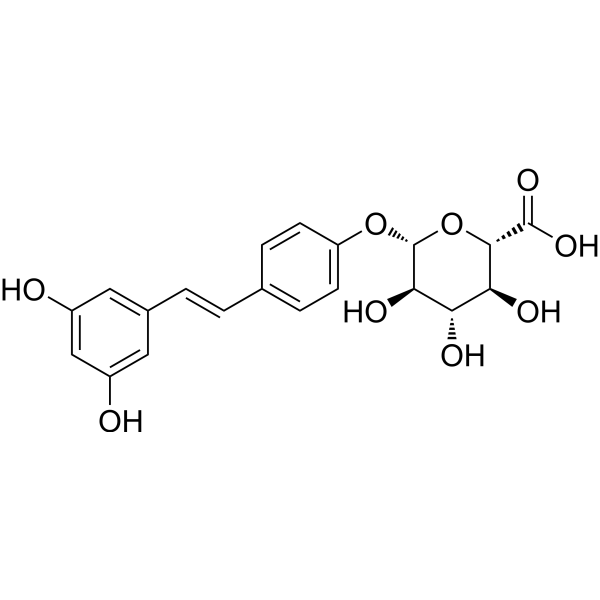
HY-118634
trans-Resveratrol-4'-O-D-GlucuronideAnti-fat Accumulation Agent -
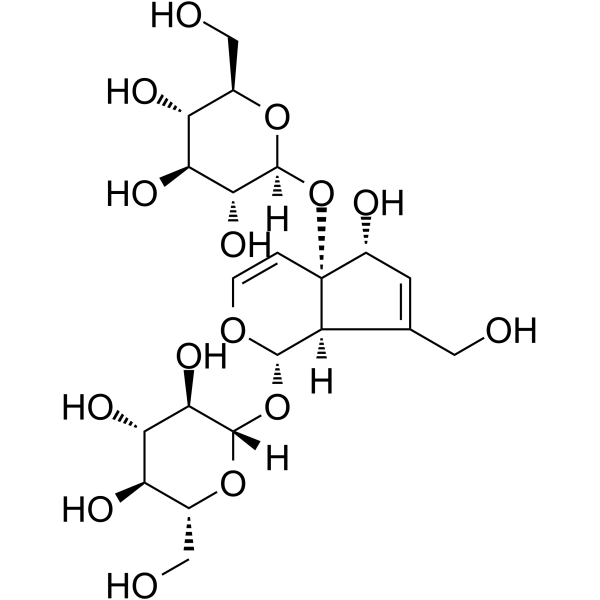
HY-N0915
MelittosideNatural Product -
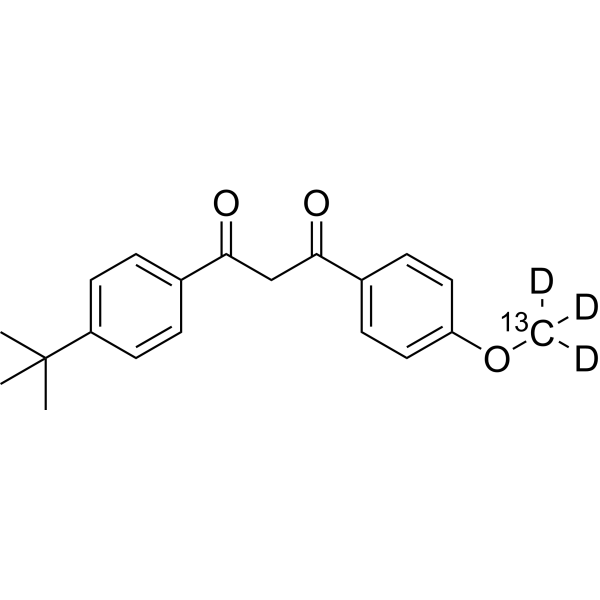
HY-B0316S
Avobenzone-13C,d3Stable Isotope


Biological Activity
Description
IC50 & Target
UDP-Glucuronosyltransferases[1]
Cellular Effect
|
Cell Line

|
Type | Value | Description | References |
|---|---|---|---|---|
| C8166 | CC50 |
185.7 μM
Compound: 23
|
Cytotoxicity against human C8166 cells after 3 days by MTT assay
Cytotoxicity against human C8166 cells after 3 days by MTT assay
|
[PMID: 23738539] |
| C8166 | EC50 |
9.8 μM
Compound: 23
|
Antiviral activity against HIV-1 3B infected in human C8166 cells assessed as inhibition of virus-induced cytopathic effect after 3 days by Syncytia Assay
Antiviral activity against HIV-1 3B infected in human C8166 cells assessed as inhibition of virus-induced cytopathic effect after 3 days by Syncytia Assay
|
[PMID: 23738539] |
In Vitro
Gomisin D (10-80 μM; 25 h) enhances the viability and reduces the cytotoxicity of HaCaT keratinocytes irradiated with UVA and UVB, and inhibits intracellular ROS generation[1].
Gomisin D (30 μM; 25 h) significantly inhibits apoptosis of UVA- and UVB-irradiated HaCaT keratinocytes[1].
Gomisin D (10-80 μM; 49 h) dose-dependently inhibits α-MSH-induced tyrosinase activity[1].
Gomisin D (30 μM; 49 h) significantly downregulates the mRNA and protein expression of α-MSH-induced melanogenesis-related factors MITF, tyrosinase, TRP-1 and TRP-2, as well as the phosphorylation of PKA and CREB, in B16F10 melanocytes[1].
Gomisin D (20-80 μM; 48 h) inhibits the activation of T6, LX-2 and primary mouse hepatic stellate cells by targeting PDGFRβ[3].
Gomisin D (40 μM) inhibits the downstream signaling pathways (p38, AKT, ERK pathways) of PDGFRβ in HSC-T6 cells by targeting PDGFRβ[3].
Gomisin D (5-80 μM) dose-dependently inhibits PDGF-BB-induced activation, proliferation, and PDGF-BB/PDGFRβ pathway signaling in LX-2 cells[3].
MedChemExpress (MCE) has not independently confirmed the accuracy of these methods. They are for reference only.
-
Cell Line:HaCaT keratinocytes (UVA or UVB irradiated)
-
Concentration:10, 20, 30, 40 and 80 μM
-
Incubation Time:1 h pre-incubation, 24 h post-irradiation incubation
-
Result:Improved viability of UVA- and UVB-irradiated HaCaT keratinocytes in a dose-dependent manner at 10, 20, 40, 80 μM.
Significantly increased viability and reduced LDH release in UVA- and UVB-irradiated HaCaT keratinocytes at 30 μM, compared to respective irradiated only groups.
Parmacokinetics
| Species | Dose | Route | AUC0-t | AUC0-∞ | MRT0-t | MRT0-∞ | T1/2 | Tmax | CL | V | Cmax | Bioavailability |
|---|---|---|---|---|---|---|---|---|---|---|---|---|
| Rat[2] | 5 mg/kg | i.v. | 3136.2 μg/L·h | 3261.1 μg/L·h | 6.0 h | 6.9 h | 5.0 h | 0.083 h | 1.6 L/h/kg | 11.2 L/kg | 539.5 μg/L | / |
| Rat[2] | 50 mg/kg | i.g. | 32795.6 μg/L·h | 35091.7 μg/L·h | 7.8 h | 10.6 h | 5.6 h | 3.0 h | 1.5 L/h/kg | 13.3 L/kg | 2575.2 μg/L | 107.6 % |
In Vivo
Gomisin D (50 mg/kg; p.o.; 30 days) causes no observable histotoxicity in male BALB/c mice[3].
MedChemExpress (MCE) has not independently confirmed the accuracy of these methods. They are for reference only.
-
Animal Model:BALB/c (male, 6-8 weeks old, 18-22 g, CCl4-induced hepatic fibrosis)[3]
-
Dosage:25 mg/kg; 50 mg/kg
-
Administration:i.g.; once daily; 4 weeks
-
Result:Improved survival status and liver morphology.
Reduced hepatocyte necrosis, preserved hepatic lobule structure, and decreased collagen deposition in both dose groups, with more significant improvements in the 50 mg/kg group.
Significantly reduced serum alanine aminotransferase (ALT) and aspartate aminotransferase (AST) levels compared to the model group in both dose groups.
Significantly decreased mRNA and protein levels of α-smooth muscle actin (α-SMA) and collagen I in liver tissue and isolated primary hepatic stellate cells (HSCs) from both dose groups, with the 50 mg/kg group showing greater reductions.
Significantly decreased protein levels of phosphorylated AKT (p-AKT), phosphorylated ERK (p-ERK), and phosphorylated p38 (p-p38) in liver tissue from both dose groups.
Significantly decreased mRNA levels of inflammatory factors IL-1β, IL-6, TNF-α, TGF-β, and COX-2 in liver tissue from both dose groups.
- Fibrosis/Collagen Morphometry
- Collagen: Sirius Red Staining
- Detection of Apoptosis
- TUNEL staining for apoptotic DNA fragmentation
- Annexin V plus membrane-impermeant dye apoptosis staining
- Connective Tissue: Masson's Trichrome/Collagen Trichrome Staining
- Apoptosis Solutions
- Research Protocol for Metabolic Diseases
- Cell Viability Determination by MTT Colorimetric Assay
- Alzheimer’s Disease Modeling


Chemical Information
-
CAS No. 60546-10-3
-
Appearance Solid
-
Molecular Weight 530.56
-
Formula C28H34O10
-
Color Off-white to light yellow
-
SMILES
COC1=C(OC)C(OC)=CC2=C1C3=C(CC(C)C(C)(O)C2O4)C=C(OCO5)C5=C3OCC(C)C(C)(O)C4=O
-
Structure Classification
-
Shipping
Room temperature in continental US; may vary elsewhere.
-
Storage
4°C, sealed storage, away from moisture and light
* In solvent : -80°C, 6 months; -20°C, 1 month (sealed storage, away from moisture and light)


Solvent & Solubility
In Vitro:
DMSO : 100 mg/mL (188.48 mM; Need ultrasonic; Hygroscopic DMSO has a significant impact on the solubility of product, please use newly opened DMSO)
Please refer to the solubility information to select the appropriate solvent. Once prepared, please aliquot and store the solution to prevent product inactivation from repeated freeze-thaw cycles.
Storage method and period of stock solution: -80°C, 6 months; -20°C, 1 month (sealed storage, away from moisture and light). When stored at -80°C, please use it within 6 months. When stored at -20°C, please use it within 1 month.
Please refer to the solubility information to select the appropriate solvent. Once prepared, please aliquot and store the solution to prevent product inactivation from repeated freeze-thaw cycles.
Storage method and period of stock solution: -80°C, 6 months; -20°C, 1 month (sealed storage, away from moisture and light). When stored at -80°C, please use it within 6 months. When stored at -20°C, please use it within 1 month.
Concentration (start) × Volume (start) = Concentration (final) × Volume (final)
In Vivo:
Select the appropriate dissolution method based on your experimental animal and administration route.
- For the following dissolution methods, please ensure to first prepare a clear stock solution using an In Vitro approach and then sequentially add co-solvents:
- To ensure reliable experimental results, the clarified stock solution can be appropriately stored based on storage conditions. As for the working solution for In Vivo experiments, it is recommended to prepare freshly and use it on the same day.
- The percentages shown for the solvents indicate their volumetric ratio in the final prepared solution. If precipitation or phase separation occurs during preparation, heat and/or sonication can be used to aid dissolution.
Add each solvent one by one: 10% DMSO 40% PEG300 5% Tween-80 45% Saline
Solubility: 2.5 mg/mL (4.71 mM); Suspended solution; Need ultrasonic
This protocol yields a suspended solution of 2.5 mg/mL. Suspended solution can be used for oral and intraperitoneal injection.
Taking 1 mL working solution as an example, add 100 μL DMSO stock solution (25.0 mg/mL) to 400 μL PEG300, and mix evenly; then add 50 μL Tween-80 and mix evenly; then add 450 μL Saline to adjust the volume to 1 mL.
Preparation of Saline: Dissolve 0.9 g sodium chloride in ddH₂O and dilute to 100 mL to obtain a clear Saline solution.
Add each solvent one by one: 10% DMSO 90% (20% SBE-β-CD in Saline)
Solubility: ≥ 2.5 mg/mL (4.71 mM); Clear solution
This protocol yields a clear solution of ≥ 2.5 mg/mL (saturation unknown).
Taking 1 mL working solution as an example, add 100 μL DMSO stock solution (25.0 mg/mL) to 900 μL 20% SBE-β-CD in Saline, and mix evenly.
Preparation of 20% SBE-β-CD in Saline (4°C, storage for one week): 2 g SBE-β-CD powder is dissolved in 10 mL Saline, completely dissolve until clear.
In Vivo Dissolution Calculator
Please enter the basic information of animal experiments:
-
-
-
-
Recommended: Prepare an additional quantity of animals to account for potential losses during experiments.
Please enter your animal formula composition:
-
%DMSO +
Recommended: Keep the proportion of DMSO in working solution below 2% if your animal is weak.
-
%+
-
+%Tween-80 + +
-
%Saline +
The co-solvents required include: DMSO, . All of co-solvents are available by MedChemExpress (MCE). , Tween 80. All of co-solvents are available by MedChemExpress (MCE).
Working solution concentration: 0.22 mg/mL
Method for preparing stock solution: mg drug dissolved in μL DMSO. Stock solution concentration: mg/mL. * In solvent : -80°C, 6 months; -20°C, 1 month (sealed storage, away from moisture and light)
1. Take μL DMSO stock solution;
2. Add μL .
μL , mix evenly;
3. Then add μL Tween 80, mix evenly;
4. Then add μL
Please ensure that the stock solution in the first step is dissolved to a clear state, and add co-solvents in sequence. You can use ultrasonic heating (ultrasonic cleaner, recommended frequency 20-40 kHz), vortexing, etc. to assist dissolution.


Purity & Documentation
-
Data Sheet (290 KB)
-
SDS (394 KB)
- English - EN (394 KB)
- Français - FR (394 KB)
- Deutsch - DE (394 KB)
- Norwegian - NO (394 KB)
- Español - ES (394 KB)
- Swedish - SV (394 KB)
- Italian - IT (394 KB)
- Korean - KR (394 KB)
- Portuguese - PT (394 KB)
-
Handling Instructions (2659 KB)
References
[1]. Jeon JS, et al. Comparative study of the photo‑protective and anti‑melanogenic properties of gomisin D, J and O. Mol Med Rep. 2022;25(1):8. [Content Brief]
[2]. Zheng X, et al. A Rapid UPLC-MS Method for Quantification of Gomisin D in Rat Plasma and Its Application to a Pharmacokinetic and Bioavailability Study. Molecules. 2019;24(7):1403. Published 2019 Apr 10. [Content Brief]
[3]. Wang R, et al. Gomisin D alleviates liver fibrosis through targeting PDGFRβ in hepatic stellate cells. Int J Biol Macromol. 2023;235:123639. [Content Brief]


Complete Stock Solution Preparation Table
Please refer to the solubility information to select the appropriate solvent. Once prepared, please aliquot and store the solution to prevent product inactivation from repeated freeze-thaw cycles.
Storage method and period of stock solution: -80°C, 6 months; -20°C, 1 month (sealed storage, away from moisture and light). When stored at -80°C, please use it within 6 months. When stored at -20°C, please use it within 1 month.
| Optional Solvent | Concentration Solvent Mass | 1 mg | 5 mg | 10 mg | 25 mg |
|---|---|---|---|---|---|
| DMSO | 1 mM | 1.8848 mL | 9.4240 mL | 18.8480 mL | 47.1200 mL |
| 5 mM | 0.3770 mL | 1.8848 mL | 3.7696 mL | 9.4240 mL | |
| 10 mM | 0.1885 mL | 0.9424 mL | 1.8848 mL | 4.7120 mL | |
| 15 mM | 0.1257 mL | 0.6283 mL | 1.2565 mL | 3.1413 mL | |
| 20 mM | 0.0942 mL | 0.4712 mL | 0.9424 mL | 2.3560 mL | |
| 25 mM | 0.0754 mL | 0.3770 mL | 0.7539 mL | 1.8848 mL | |
| 30 mM | 0.0628 mL | 0.3141 mL | 0.6283 mL | 1.5707 mL | |
| 40 mM | 0.0471 mL | 0.2356 mL | 0.4712 mL | 1.1780 mL | |
| 50 mM | 0.0377 mL | 0.1885 mL | 0.3770 mL | 0.9424 mL | |
| 60 mM | 0.0314 mL | 0.1571 mL | 0.3141 mL | 0.7853 mL | |
| 80 mM | 0.0236 mL | 0.1178 mL | 0.2356 mL | 0.5890 mL | |
| 100 mM | 0.0188 mL | 0.0942 mL | 0.1885 mL | 0.4712 mL |


Gomisin D Related Classifications
HY-N2413 Related Classifications
 Powered by Bioz