


1. Search Result
Search Result
Results for "

maltose

" in MedChemExpress (MCE) Product Catalog:

37

Inhibitors & Agonists

1

Fluorescent Dyes

5

Biochemical Assay Reagents

11

Natural
Products

4

Recombinant Proteins

7

Isotope-Labeled Compounds

1

Antibodies

1

Click Chemistry

2

Oligonucleotides

Cat. No. Product Name Target Research Areas Chemical Structure
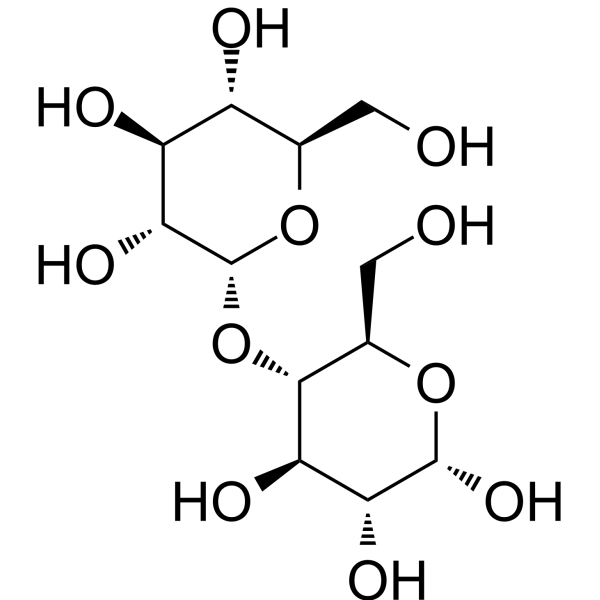
  • HY-N2024
    Maltose
    1 Publications Verification

    Endogenous Metabolite Glycosidase Metabolic Disease
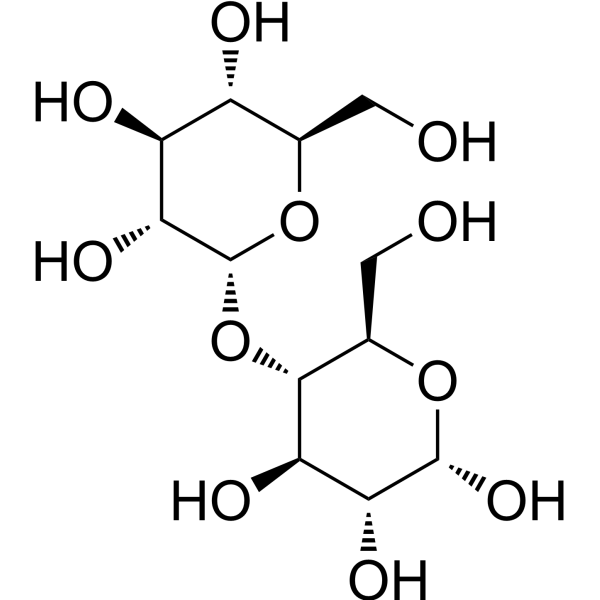
    Maltose is a disaccharide composed of two glucose molecules linked together. Maltose is an endogenous metabolic product in plants, yeast, or bacteria, and it participates in carbon source storage and metabolism. Maltose is a key core metabolite and main transport form in the temporary starch degradation, carbon output, and subsequent sucrose synthesis metabolism of the night chloroplast. In X. dendrorhous, maltose can act as a sugar donor and is converted into isomaltulose by α-glucosidase). Maltose can act as a osmotic agent, supporting continuous capillary ultrafiltration and preventing severe metabolic disorders .
    Maltose
  • HY-B2193
    α-Amylase
    2 Publications Verification

    Environmental Pollutants Amylases Others
    α-Amylase is a hydrolase enzyme that catalyses the hydrolysis of internal α-1, 4-glycosidic linkages in starch to yield products like glucose and maltose.
    α-Amylase
  • HY-113011
    Maltotriose
    1 Publications Verification

    Endogenous Metabolite Others
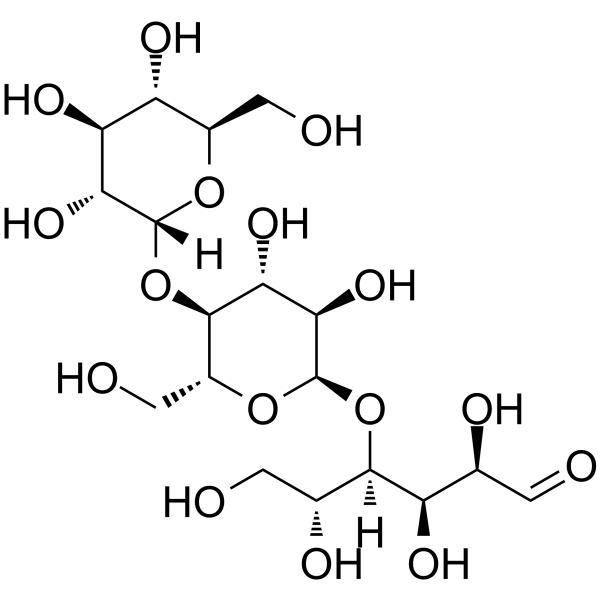
    Maltotriose is a maltooligosaccharide and a specific inducer of the Escherichia coli maltose operon. The oligosaccharide structure of Maltotriose acts as a highly efficient drug delivery carrier, which significantly enhances the targeting ability and water solubility of photosensitizers in photodynamic therapy for pancreatic cancer .
    Maltotriose
  • HY-N2024A
    Maltose monohydrate
    1 Publications Verification

    Endogenous Metabolite Glycosidase Metabolic Disease
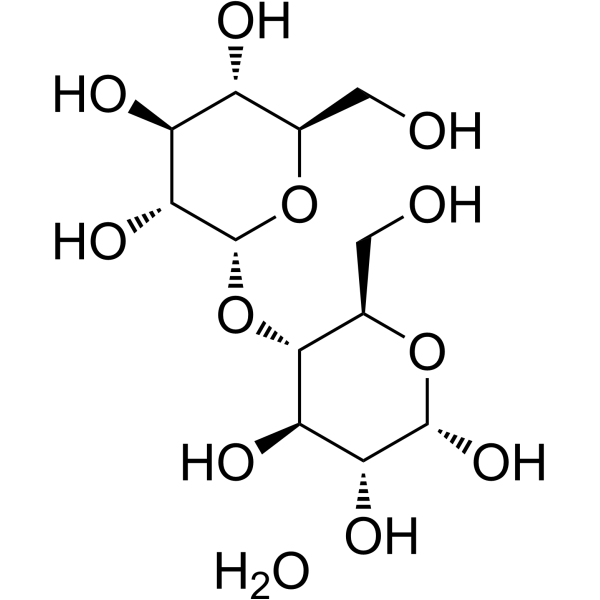
    Maltose monohydrate is a disaccharide composed of two glucose molecules linked together. Maltose monohydrate is an endogenous metabolic product in plants, yeast, or bacteria, and it participates in carbon source storage and metabolism. Maltose monohydrate is a key core metabolite and main transport form in the temporary starch degradation, carbon output, and subsequent sucrose synthesis metabolism of the night chloroplast. In X. dendrorhous, maltose can act as a sugar donor and is converted into isomaltulose by α-glucosidase. Maltose monohydrate can act as a osmotic agent, supporting continuous capillary ultrafiltration and preventing severe metabolic disorders .
    Maltose monohydrate
  • HY-B2122

    PPAR Fatty Acid Synthase (FASN) Others
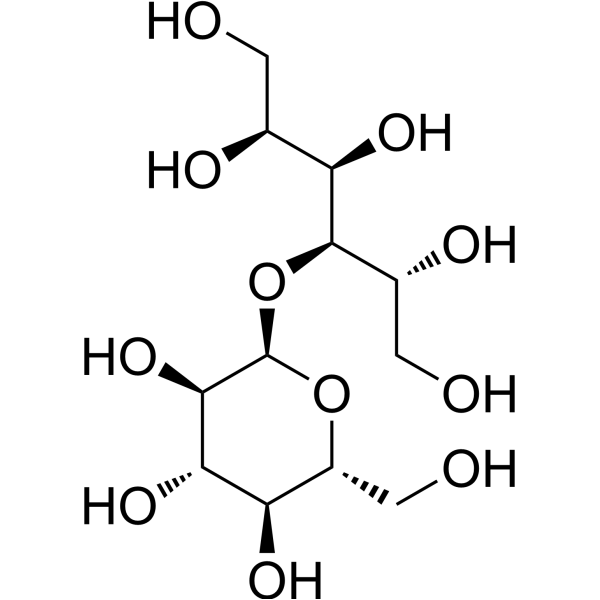
    Maltitol is an orally active polyol and sugar alcohol sweetener produced by the hydrogenation of maltose. Maltitol can replace sucrose and has characteristics of having a minor impact on blood sugar and potential prebiotic effects .
    Maltitol
  • HY-42680

    D-(-)-Tagatose

    Endogenous Metabolite Metabolic Disease Inflammation/Immunology Cancer
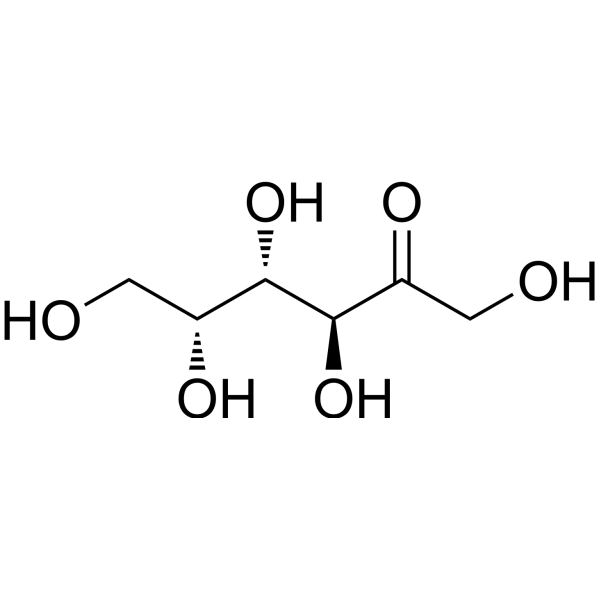
    D-Tagatose (D-(-)-Tagatose) is a natural low-calorie rare sugar. D-Tagatose inhibits the activities of sucrase, maltase and intestinal disaccharidases, reduces the digestion of sucrose and starch, and blocks the absorption of sucrose, maltose and glucose. D-Tagatose promotes glucokinase activity and inhibits glycogen phosphorylase activity via tagatose-1-phosphate, regulates the synthesis and decomposition of hepatic glycogen, reduces postprandial and fasting blood glucose levels, and improves hyperinsulinemia. D-Tagatose regulates lipid profiles, stimulates GLP-1 secretion, and exhibits prebiotic effects. D-Tagatose is a bulking sweetener. D-Tagatose can be used in research related to diabetes, hyperlipidemia, dental caries, atherosclerosis and type 2 diabetes .
    D-Tagatose
  • HY-N2024AS1

    Isotope-Labeled Compounds Endogenous Metabolite Glycosidase Metabolic Disease
    Maltose monohydrate- 13C12 is the 13C labeled isotope of Maltose monohydrate. Maltose monohydrate is a disaccharide composed of two glucose molecules linked together. Maltose monohydrate is an endogenous metabolic product in plants, yeast, or bacteria, and it participates in carbon source storage and metabolism. Maltose monohydrate is a key core metabolite and main transport form in the temporary starch degradation, carbon output, and subsequent sucrose synthesis metabolism of the night chloroplast. In X. dendrorhous, maltose can act as a sugar donor and is converted into isomaltulose by α-glucosidase. Maltose monohydrate can act as a osmotic agent, supporting continuous capillary ultrafiltration and preventing severe metabolic disorders.
    Maltose-13C12 monohydrate
  • HY-P2968

    Amylases Others
    Bacterial α-Amylase catalyses the hydrolysis of internal α-1,4-glycosidic linkages in starch in low molecular weight products, such glucose, maltose and maltotriose units. Bacterial α-Amylase is often used in biochemical studies .
    Bacterial α-Amylase
  • HY-138887
    Decyl maltose neopentyl glycol
    2 Publications Verification

    DMNG

    Biochemical Assay Reagents Others
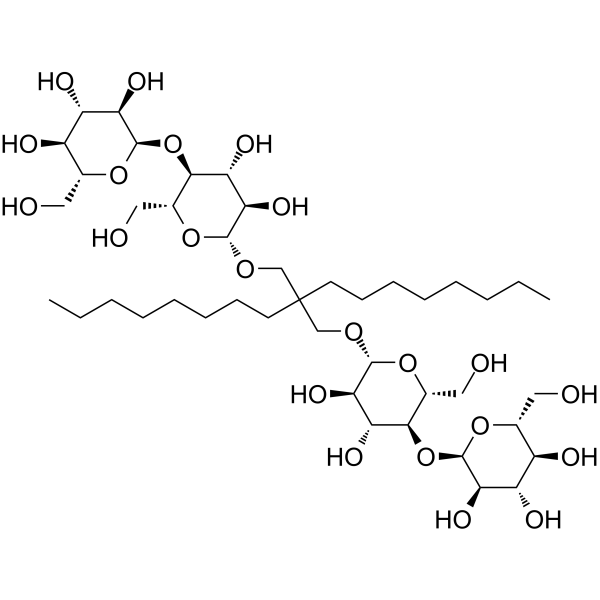
    Decyl maltose neopentyl glycol (DMNG) is the neopentyl glycol detergent that does not disrupt the AlkB oligomeric state. AlkB is a nonheme di-iron alkane hydroxylase .
    Decyl maltose neopentyl glycol
  • HY-B2193A

    1,4-alpha-D-Glucan-glucanohydrolase, ptyalin

    Biochemical Assay Reagents Metabolic Disease Inflammation/Immunology
    α-Amylase, Human Saliva (1,4-alpha-D-Glucan-glucanohydrolase) is a hydrolase enzyme that can be isolated from human saliva. α-Amylase, Human Saliva catalyses the hydrolysis of internal α-1, 4-glycosidic linkages in starch to yield products like glucose and maltose. α-Amylase, Human Saliva can be used in life science research .
    α-Amylase, Human Saliva
  • HY-B2193C

    1,4-alpha-D-Glucan-glucanohydrolase, amy2, PPA, PA

    Biochemical Assay Reagents Others
    α-Amylase, Porcine Pancreatic (1,4-alpha-D-Glucan-glucanohydrolase) is a hydrolase enzyme that can be isolated from porcine pancreatic. α-Amylase, Porcine Pancreatic catalyses the hydrolysis of internal α-1, 4-glycosidic linkages in starch to yield products like glucose and maltose. α-Amylase, Porcine Pancreatic can be used in life science research .
    α-Amylase, Porcine Pancreatic
  • HY-N2024R

    Reference Standards Endogenous Metabolite Glycosidase Metabolic Disease
    Maltose (Standard) is the analytical standard of Maltose. This product is intended for research and analytical applications. Maltose is a disaccharide composed of two glucose molecules linked together. Maltose is an endogenous metabolic product in plants, yeast, or bacteria, and it participates in carbon source storage and metabolism. Maltose is a key core metabolite and main transport form in the temporary starch degradation, carbon output, and subsequent sucrose synthesis metabolism of the night chloroplast. In X. dendrorhous, maltose can act as a sugar donor and is converted into isomaltulose by α-glucosidase (α-Glucosidase). Maltose can act as a osmotic agent, supporting continuous capillary ultrafiltration and preventing severe metabolic disorders.
    Maltose (Standard)
  • HY-B2193B

    Amylase, a-Amylase, 1,4-a-D-glucan glucanohydrolase, glycogenase

    Biochemical Assay Reagents Others
    α-Amylase, Human Pancreas (Amylase) is a hydrolase enzyme that can be isolated from human pancreas. α-Amylase, Human Pancreas catalyses the hydrolysis of internal α-1, 4-glycosidic linkages in starch to yield products like glucose and maltose. α-Amylase, Human Pancreas can be used in life science research .
    α-Amylase, Human Pancreas
  • HY-123622

    Biochemical Assay Reagents Others
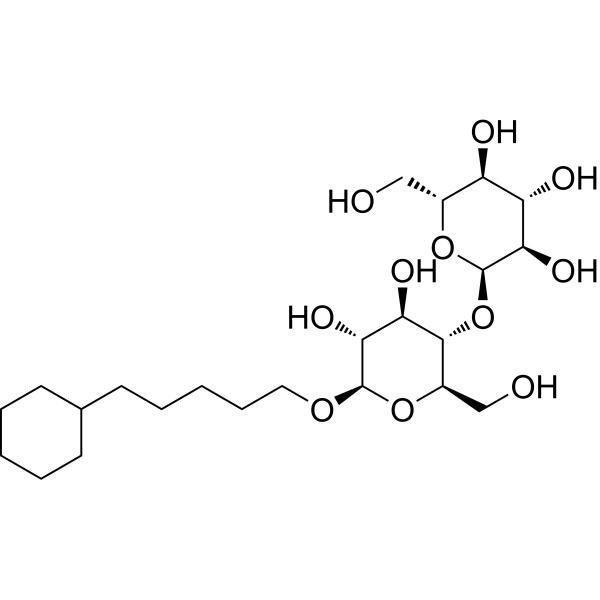
    CYMAL-5, 98% (TLC) is a cycloalkyl aliphatic saccharide. CYMAL-5, 98% (TLC) is a glycosidic surfactant (GS) with a chiral maltose polar head group and a cyclohexyl-pentyl hydrophobic tail. CYMAL-5, 98% (TLC) is a non-ionic detergent that has a tenfold lower critical micelle concentration (CMC) in comparison with OG, and has previously been used for membrane protein extraction or crystallization of membrane proteins for X-ray crystallographic studies .
    CYMAL-5, 98% (TLC)
  • HY-P2741

    E.C. 2.4.1.8

    Endogenous Metabolite Metabolic Disease
    Maltose phosphorylase is a dimerase which catalyzes the transformation of maltose and inorganic phosphate into β-D-glucose-1-phosphate and glucose. Maltose phosphorylases have been classified in family 65 of the glycoside hydrolases .
    Maltose phosphorylase
  • HY-N2024B

    Endogenous Metabolite Glycosidase Metabolic Disease
    Maltose solution, 20% in H2O is a 20% aqueous maltose solution. Maltose is a disaccharide composed of two glucose molecules linked together. Maltose is an endogenous metabolic product in plants, yeast, or bacteria, and it participates in carbon source storage and metabolism. Maltose is a key core metabolite and main transport form in the temporary starch degradation, carbon output, and subsequent sucrose synthesis metabolism of the night chloroplast. In X. dendrorhous, maltose can act as a sugar donor and is converted into isomaltulose by α-glucosidase. Maltose can act as a osmotic agent, supporting continuous capillary ultrafiltration and preventing severe metabolic disorders .
    Maltose solution, 20% in H2O
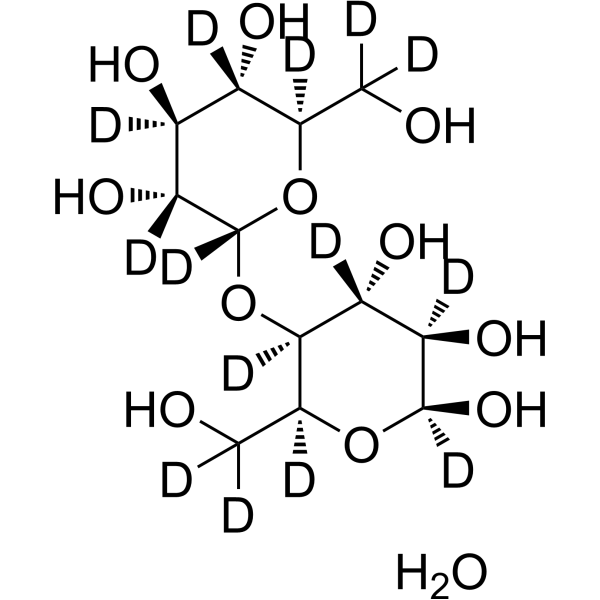
  • HY-N2024AS

    Isotope-Labeled Compounds Endogenous Metabolite Glycosidase Metabolic Disease
    Maltose monohydrate-d14 is the deuterium labeled Maltose monohydrate. Maltose monohydrate is a disaccharide composed of two glucose molecules linked together. Maltose monohydrate is an endogenous metabolic product in plants, yeast, or bacteria, and it participates in carbon source storage and metabolism. Maltose monohydrate is a key core metabolite and main transport form in the temporary starch degradation, carbon output, and subsequent sucrose synthesis metabolism of the night chloroplast. In X. dendrorhous, maltose can act as a sugar donor and is converted into isomaltulose by α-glucosidase. Maltose monohydrate can act as a osmotic agent, supporting continuous capillary ultrafiltration and preventing severe metabolic disorders.
    Maltose monohydrate-d14
  • HY-W113965

    Octaacetyl-β-maltose; β-D-Maltopyranose octaacetate

    Biochemical Assay Reagents Others
    β-D-Maltose octaacetate (Octaacetyl-β-maltose; β-D-Maltopyranose octaacetate) is a synthetic sugar compound.
    β-D-Maltose octaacetate
  • HY-B2192A

    Maltin

    Biochemical Assay Reagents Others
    Diastase, Aspergillus oryzae (Maltin) is a starch hydrolase derived from Aspergillus oryzae. Diastase, Aspergillus oryzae catalyzes starch hydrolysis through sequential stages, first producing dextrins, then glucose and maltose .
    Diastase, Aspergillus oryzae
  • HY-P2802D

    Glycosidase Others
    exo-α-Glucosidase,Bacteroides thetaiotaomicron (EC.3.2.1.20) is a α-Glucosidase. exo-α-Glucosidase, using maltose as a donor, exhibits excellent transglycosidic activity towards various receptors .
    exo-α-Glucosidase, Bacteroides thetaiotaomicron
  • HY-N2024AR

    Reference Standards Endogenous Metabolite Glycosidase Metabolic Disease
    Maltose monohydrate (Standard) is the analytical standard of Maltose monohydrate. This product is intended for research and analytical applications. Maltose monohydrate is a disaccharide composed of two glucose molecules linked together. Maltose monohydrate is an endogenous metabolic product in plants, yeast, or bacteria, and it participates in carbon source storage and metabolism. Maltose monohydrate is a key core metabolite and main transport form in the temporary starch degradation, carbon output, and subsequent sucrose synthesis metabolism of the night chloroplast. In X. dendrorhous, maltose can act as a sugar donor and is converted into isomaltulose by α-glucosidase. Maltose monohydrate can act as a osmotic agent, supporting continuous capillary ultrafiltration and preventing severe metabolic disorders.
    Maltose monohydrate (Standard)
  • HY-W768304

    Isotope-Labeled Compounds Others
    D-(+)-Maltose Monohydrate- 13C12 is the 13C-labeled D-(+)-Maltose Monohydrate.
    D-(+)-Maltose Monohydrate-13C12
  • HY-W357329

    Acetobromo-alpha-maltose,98%

    Biochemical Assay Reagents Others
    Acetobromo-α-maltose,98% (Acetobromo-alpha-maltose,98%) is a class of biochemical reagents used in glycobiology research. Glycobiology studies the structure, synthesis, biology, and evolution of sugars. It involves carbohydrate chemistry, enzymology of glycan formation and degradation, protein-glycan recognition, and the role of glycans in biological systems. This field is closely related to basic research, biomedicine, and biotechnology .
    Acetobromo-α-maltose,98%
  • HY-B2122R

    Reference Standards PPAR Fatty Acid Synthase (FASN) Others
    Maltitol (Standard) is the analytical standard of Maltitol (HY-B2122). This product is intended for research and analytical applications. Maltitol is an orally active polyol and sugar alcohol sweetener produced by the hydrogenation of maltose. Maltitol can replace sucrose and has characteristics of having a minor impact on blood sugar and potential prebiotic effects .
    Maltitol (Standard)
  • HY-113011R

    Reference Standards Endogenous Metabolite Others
    Maltotriose (Standard) is the analytical standard of Maltotriose (HY-13011). This product is intended for research and analytical applications. Maltotriose is a maltooligosaccharide and a specific inducer of the Escherichia coli maltose operon. The oligosaccharide structure of Maltotriose acts as a highly efficient drug delivery carrier, which significantly enhances the targeting ability and water solubility of photosensitizers in photodynamic therapy for pancreatic cancer.
    Maltotriose (Standard)
  • HY-N2024AS2

    Isotope-Labeled Compounds Endogenous Metabolite Glycosidase Metabolic Disease
    Maltose monohydrate- 13C is the 13C labeled isotope of Maltose monohydrate. Maltose monohydrate is a disaccharide composed of two glucose molecules linked together. Maltose monohydrate is an endogenous metabolic product in plants, yeast, or bacteria, and it participates in carbon source storage and metabolism. Maltose monohydrate is a key core metabolite and main transport form in the temporary starch degradation, carbon output, and subsequent sucrose synthesis metabolism of the night chloroplast. In X. dendrorhous, maltose can act as a sugar donor and is converted into isomaltulose by α-glucosidase. Maltose monohydrate can act as a osmotic agent, supporting continuous capillary ultrafiltration and preventing severe metabolic disorders.
    Maltose monohydrate-13C
  • HY-W415940

    Biochemical Assay Reagents Others
    α-D-Maltose octaacetate is a class of biochemical reagents used in glycobiology research. Glycobiology studies the structure, synthesis, biology, and evolution of sugars. It involves carbohydrate chemistry, enzymology of glycan formation and degradation, protein-glycan recognition, and the role of glycans in biological systems. This field is closely related to basic research, biomedicine, and biotechnology .
    α-D-Maltose octaacetate
  • HY-155438

    Fluorescent Dye Others
    Mal-Cz is a maltose-derived fluorescence-on imaging probe for the detection of E. coli and Staphylococcus aureus . It contains an Azide group and can undergo copper-catalyzed azide-alkyne cycloaddition reaction (CuAAc) with molecules containing Alkyne groups. It can also undergo strain-promoted alkyne-azide cycloaddition (SPAAC) reactions with molecules containing DBCO or BCN groups.
    Mal-Cz
  • HY-42680S1

    D-(-)-Tagatose-13C-1

    Isotope-Labeled Compounds Endogenous Metabolite Cardiovascular Disease Metabolic Disease Cancer
    D-Tagatose- 13C-1 is the 13C labeled D-Tagatose (HY-42680). D-Tagatose (D-(-)-Tagatose) is a natural low-calorie rare sugar. D-Tagatose inhibits the activities of sucrase, maltase and intestinal disaccharidases, reduces the digestion of sucrose and starch, and blocks the absorption of sucrose, maltose and glucose. D-Tagatose promotes glucokinase activity and inhibits glycogen phosphorylase activity via tagatose-1-phosphate, regulates the synthesis and decomposition of hepatic glycogen, reduces postprandial and fasting blood glucose levels, and improves hyperinsulinemia. D-Tagatose regulates lipid profiles, stimulates GLP-1 secretion, and exhibits prebiotic effects. D-Tagatose is a bulking sweetener. D-Tagatose can be used in research related to diabetes, hyperlipidemia, dental caries, atherosclerosis and type 2 diabetes.
    D-Tagatose-13C-1
  • HY-42680R

    D-(-)-Tagatose (Standard)

    Reference Standards Endogenous Metabolite Cardiovascular Disease Metabolic Disease Cancer
    D-Tagatose (Standard) is the analytical standard of D-Tagatose (HY-42680). This product is intended for research and analytical applications. D-Tagatose (D-(-)-Tagatose) is a natural low-calorie rare sugar. D-Tagatose inhibits the activities of sucrase, maltase and intestinal disaccharidases, reduces the digestion of sucrose and starch, and blocks the absorption of sucrose, maltose and glucose. D-Tagatose promotes glucokinase activity and inhibits glycogen phosphorylase activity via tagatose-1-phosphate, regulates the synthesis and decomposition of hepatic glycogen, reduces postprandial and fasting blood glucose levels, and improves hyperinsulinemia. D-Tagatose regulates lipid profiles, stimulates GLP-1 secretion, and exhibits prebiotic effects. D-Tagatose is a bulking sweetener. D-Tagatose can be used in research related to diabetes, hyperlipidemia, dental caries, atherosclerosis and type 2 diabetes.
    D-Tagatose (Standard)
  • HY-42680S

    D-(-)-Tagatose-13C

    Isotope-Labeled Compounds Endogenous Metabolite Cardiovascular Disease Metabolic Disease Cancer
    D-Tagatose- 13C is the 13C labeled D-Tagatose (HY-42680). D-Tagatose (D-(-)-Tagatose) is a natural low-calorie rare sugar. D-Tagatose inhibits the activities of sucrase, maltase and intestinal disaccharidases, reduces the digestion of sucrose and starch, and blocks the absorption of sucrose, maltose and glucose. D-Tagatose promotes glucokinase activity and inhibits glycogen phosphorylase activity via tagatose-1-phosphate, regulates the synthesis and decomposition of hepatic glycogen, reduces postprandial and fasting blood glucose levels, and improves hyperinsulinemia. D-Tagatose regulates lipid profiles, stimulates GLP-1 secretion, and exhibits prebiotic effects. D-Tagatose is a bulking sweetener. D-Tagatose can be used in research related to diabetes, hyperlipidemia, dental caries, atherosclerosis and type 2 diabetes.
    D-Tagatose-13C
  • HY-P2741A

    Biochemical Assay Reagents Metabolic Disease
    Maltose phosphorylase, Bacteria (EC 2.4.1.8) is a dimeric enzyme that catalyzes maltose and inorganic phosphate into β-D-glucose-1-phosphate and glucose.
    Maltose phosphorylase, Bacteria
  • HY-138193S

    LMNG-d42

    Isotope-Labeled Compounds Others
    Lauryl maltose neopentyl glycol-d42 (LMNG-d42) is the deuterium labeled Lauryl maltose neopentyl glycol (HY-138193). Lauryl maltose neopentyl glycol (LMNG) is a detergent that can solubilize and stabilize membrane proteins. Lauryl maltose neopentyl glycol extracts integral membrane proteins from membranes, and improves substantially the stability of various membrane proteins, including G protein-coupled receptors and respiratory complexes .
    Lauryl maltose neopentyl glycol-d42
  • HY-B2193H

    Endogenous Metabolite Metabolic Disease
    α-Amylase, Porcine (EC 3.2.1.1) is a protein enzyme that hydrolyses alpha bonds of large, alpha-linked polysaccharides, such as starch and glycogen, yielding glucose and maltose.
    α-Amylase, Porcine
  • HY-B2193E

    Endogenous Metabolite Metabolic Disease
    α-Amylase, Bacteroides fragilis (EC 3.2.1.1) is a protein enzyme that hydrolyses alpha bonds of large, alpha-linked polysaccharides, such as starch and glycogen, yielding glucose and maltose.
    α-Amylase, Bacteroides fragilis
  • HY-B2193D

    Endogenous Metabolite Metabolic Disease
    α-Amylase, Escherichia coli (EC 3.2.1.1) is a protein enzyme that hydrolyses alpha bonds of large, alpha-linked polysaccharides, such as starch and glycogen, yielding glucose and maltose.
    α-Amylase, Escherichia coli
  • HY-E71207

    Biochemical Assay Reagents Others
    α,α-Trehalose synthase (EC 2.4.1.245) requires Mg2+ for maximal activity. The enzyme-catalysed reaction is reversible. In the reverse direction to that shown above, α,α-Trehalose synthase (EC 2.4.1.245) is specific for α,α-Trehalose as substrate, as it cannot use α-or β-paranitrophenyl glucosides, maltose, sucrose, lactose or cellobiose.
    α,α-Trehalose synthase

Inquiry Online

Your information is safe with us. * Required Fields.

Salutation


Country or Region *

Applicant Name *


Organization Name *

Department *


Email Address *


Product Name *

Cat. No.


Requested quantity *

Phone Number *


Remarks

Inquiry Online

Inquiry Information

Product Name:
Cat. No.:
Quantity:
MCE Japan Authorized Agent:

