1. Search Result
Search Result
Results for "

oxygen+consumption

" in MedChemExpress (MCE) Product Catalog:

31

Inhibitors & Agonists

1

Biochemical Assay Reagents

1

Peptides

4

Natural
Products

1

Isotope-Labeled Compounds

Cat. No. Product Name Target Research Areas Chemical Structure
  • HY-W039315

    Biochemical Assay Reagents Metabolic Disease
    2,5-Anhydro-D-mannitol, 97% is an antimetabolic fructose analogue. 2,5-Anhydro-D-mannitol, 97% depletes intracellular ATP, reduces oxygen consumption, regulates substrate oxidation, increases phosphomonoester levels, decreases inorganic phosphate levels, and promotes the release of intracellular calcium from intracellular calcium stores via phospholipase C-dependent activity in hepatocytes .
    2,5-Anhydro-D-mannitol, 97%
  • HY-100607A

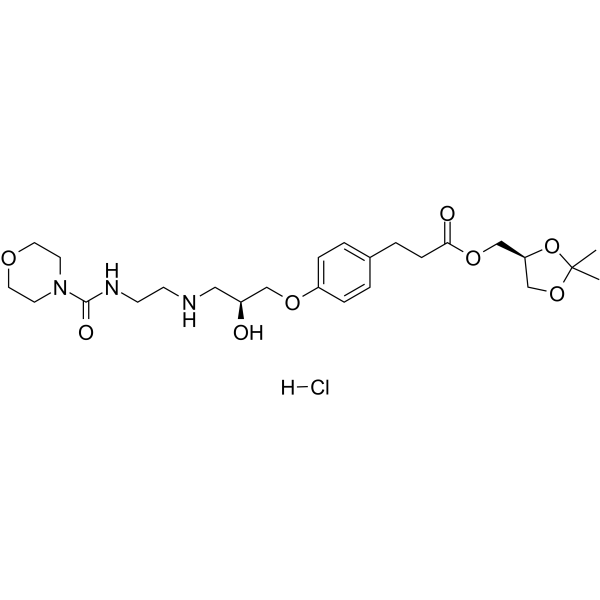
    ONO1101 hydrochloride

    Adrenergic Receptor Calcium Channel Potassium Channel Reactive Oxygen Species (ROS) Cardiovascular Disease Inflammation/Immunology Endocrinology
    Landiolol (ONO1101) hydrochloride is a highly selective, ultra-short-acting competitive inhibitor of β1 adrenergic receptors. Landiolol hydrochloride specifically blocks cardiac β1 receptors, reducing heart rate and myocardial oxygen consumption. Landiolol hydrochloride inhibits TNF-α-induced excessive mitochondrial oxygen consumption and reactive oxygen species production in a sepsis model, alleviating renal injury. Landiolol hydrochloride has little effect on cardiac ion channels (such as L-type calcium current and inward rectifier potassium current) and has a weak negative inotropic effect. Landiolol hydrochloride can be used for perioperative tachycardia control and protection studies of sepsis-related acute kidney injury .
    Landiolol hydrochloride
  • HY-B2011

    Environmental Pollutants Succinate Dehydrogenase Fungal Mitochondrial Metabolism Infection
    Flutolanil is a succinate dehydrogenase complex inhibitor and fungicide. Flutolanil blocks electron transfer between the redox center of succinate dehydrogenase and coenzyme Q, inhibits mycelial oxygen consumption, and suppresses mycelial growth. Flutolanil induces acute and sublethal toxicity in zebrafish at different life stages. Flutolanil can be used in studies on plant disease control .
    Flutolanil
  • HY-131901

    Oxophenylarsine; PhAsO; Arsenosobenzene

    Environmental Pollutants Phosphatase Others
    Phenylarsine oxide (PAO), an inhibitor of endocytosis, inhibits PTPε with an IC50 of 18 μM. Phenylarsine oxide (PAO) inhibits oxygen consumption and decreases cellular ATP content overlap with those used to inhibit protein internalization .
    Phenylarsine oxide
  • HY-170404

    Phosphatase Metabolic Disease
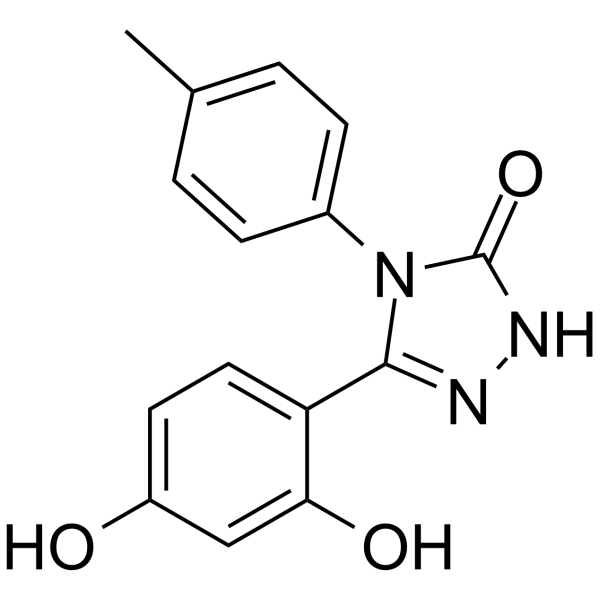
    KF-52 is a phosphofructokinase-1 (PFK1) inhibitor with an IC50 value of 2.1 μM. KF-52 significantly increases the ratio of oxygen consumption rate (OCR) to extracellular acidification rate (ECAR). KF-52 is applicable to research related to mitochondrial dysfunction .
    KF-52
  • HY-128578
    KPLH1130
    2 Publications Verification

    PDHK NO Synthase Interleukin Related HIF/HIF Prolyl-Hydroxylase Metabolic Disease Inflammation/Immunology
    KPLH1130 is a pyruvate dehydrogenase kinase (PDK) inhibitor. KPLH1130 potently inhibits M1 macrophage polarization by reducing the expression of pro-inflammatory cytokines, decreasing the levels of M1 phenotype markers (HIF-1α, iNOS) and nitric oxide (NO) production. KPLH1130 prevents the reduction of mitochondrial oxygen consumption rate (OCR) induced by inflammatory stimuli (LPS ((HY-D1056) + IFN-γ) in various macrophage types. KPLH1130 improves glucose tolerance in HFD-fed mice. KPLH1130 can be used for the study of obesity-associated metabolic disorders and other inflammatory conditions .
    KPLH1130
  • HY-W267444

    Amylparaben

    Bacterial Infection
    Pentyl 4-hydroxybenzoate (Amylparaben) is a type of paraben compound commonly used as a preservative, it has antibacterial properties and is related to the inhibition of induced oxygen consumption .
    Pentyl 4-hydroxybenzoate
  • HY-155554

    Mitochondrial Metabolism Oxidative Phosphorylation Reactive Oxygen Species (ROS) MMP Cancer
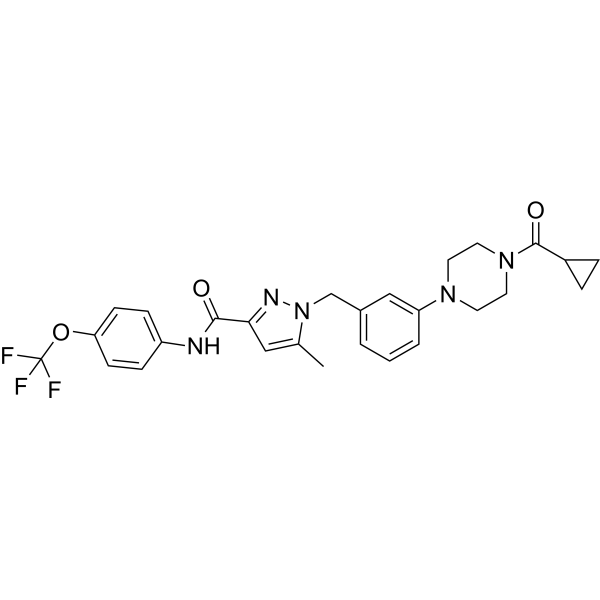
    SCAL-255 is a potent mitochondrial complex I (CI) inhibitor with an IC50 of 1.14 μM. SCAL-255 blocks mitochondrial function, inhibits oxygen consumption rate (OCR), induces reactive oxygen species (ROS) production, and reduces MMP. SCAL-255 can be used in the research of oxidative phosphorylation (OXPHOS)-dependent cancers, such as colorectal cancer (CRC) and acute myeloid leukemia (AML), etc .
    SCAL-255
  • HY-155363

    AMPK Metabolic Disease
    AMPK activator 13 is a potent activator of AMPK. AMPK activator 13 inhibits mitotic clonal expansion of 3T3-L1 cells by activating AMPK pathway and enhances cell mitochondrial oxygen consumption rate. AMPK activator 13 can be used in study obesity .
    AMPK activator 13
  • HY-W014316

    Bacterial Fungal Infection
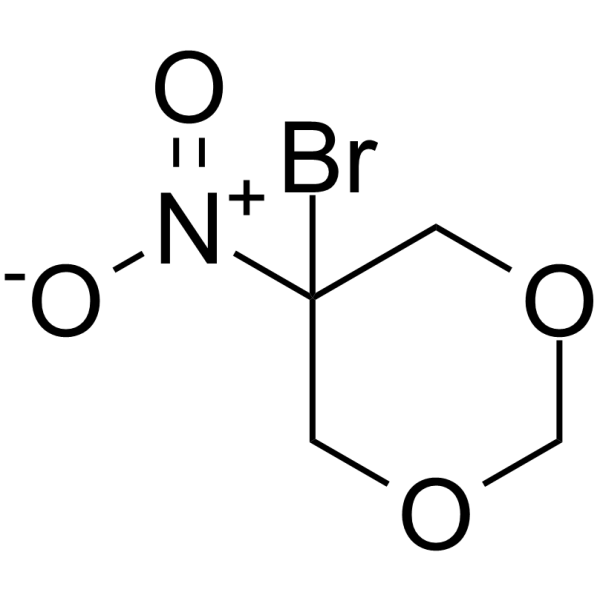
    5-Bromo-5-nitro-1,3-dioxane is a broad-spectrum antimicrobial agent active against Gram-positive bacteria, Gram-negative bacteria and fungi. 5-Bromo-5-nitro-1,3-dioxane oxidizes free thiol groups to their corresponding disulfides. 5-Bromo-5-nitro-1,3-dioxane induces intracellular substance leakage in Escherichia coli and Staphylococcus aureus. 5-Bromo-5-nitro-1,3-dioxane modulates the oxygen consumption of Escherichia coli and Staphylococcus aureus .
    5-Bromo-5-nitro-1,3-dioxane
  • HY-16461

    (-)-Solenopsin A

    Akt Ribosomal S6 Kinase (RSK) PI3K PDK-1 FOXO Mitophagy Reactive Oxygen Species (ROS) Mitochondrial Metabolism Cardiovascular Disease
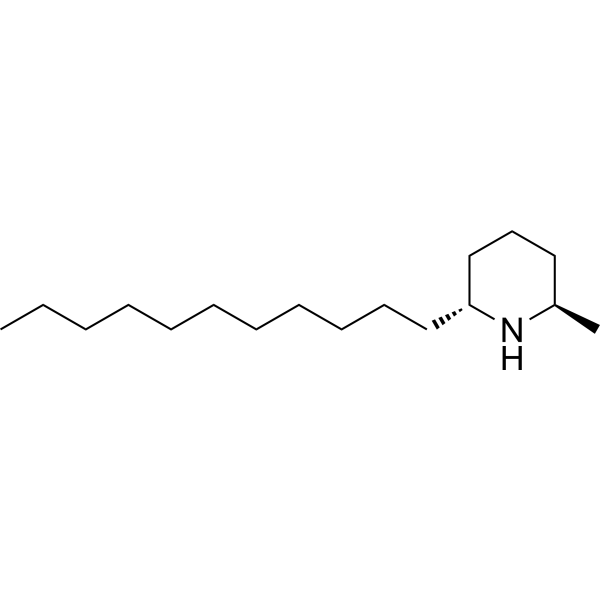
    Solenopsin ((-)-Solenopsin A) is an ATP-competitive and selective Akt-1 inhibitor with an IC50 of 5-10 μM, and also acts as an RSK1 inhibitor. Solenopsin inhibits the activities of PDK1 in lipid rafts, downregulates PI3K, blocks PI3K-dependent generation of 3-phosphoinositides, and suppresses the phosphorylation of FOXO1a. Solenopsin induces Mitophagy and ROS production, reduces mitochondrial oxygen consumption, and exhibits antiproliferative and antiangiogenic activities. Solenopsin can be used in research related to hyperproliferative skin diseases and malignant diseases .
    Solenopsin
  • HY-101646

    HOE-731

    Proton Pump Inflammation/Immunology
    Saviprazole (HOE-731) is a H +,K +-ATPase inhibitor. Saviprazole inhibits gastric acid secretion. Saviprazole inhibits histamine- and dbcAMP-stimulated [ 14C]aminopyrine uptake, dbcAMP-induced oxygen consumption. Saviprazole can be used in research related to gastrointestinal diseases, such as gastric ulcers and acid reflux .
    Saviprazole
  • HY-117843

    Mitochondrial Metabolism Interleukin Related Bacterial Infection Metabolic Disease Inflammation/Immunology
    Ppc-1 is a mitochondrial uncoupler. Ppc-1 enhances mitochondrial oxygen consumption without adverse effects on ATP production. Ppc-1 is a cell-permeate interleukin-2 (IL-2) inhibitor. Ppc-1 inhibits the Gram-negative periodontopathogen Porphyromonas gingivalis. Ppc-1 has anti-obesity, antibacterial and anti-inflammatory activities .
    Ppc-1
  • HY-178987

    Mitochondrial Metabolism Phosphodiesterase (PDE) Cancer
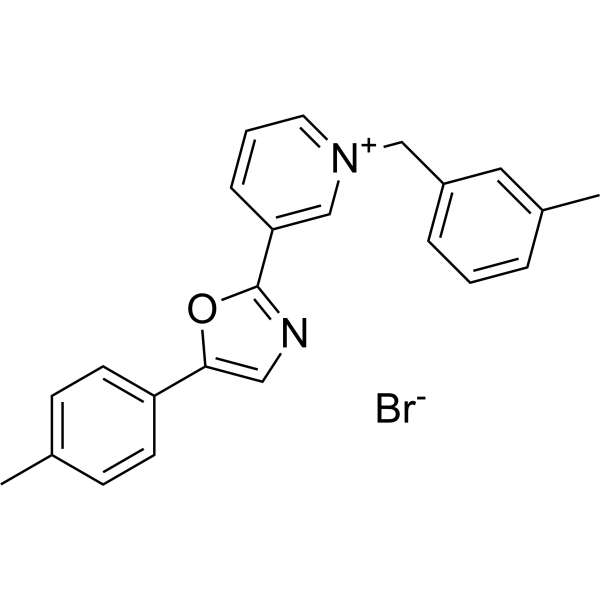
    BJH-86 is a soluble mitochondrial complex 1 inhibitor (oxygen consumption rate inhibition IC50 = 5 μM). BJH-86 exhibits weak inhibitory activity against phosphodiesterase 10A (PDE10A) (IC50 >10 μM). BJH-86 can reduce cellular oxygen consumption and inhibit cancer cell proliferation. BJH-86 can be used for the research of cancer, such as lung cancer .
    BJH-86
  • HY-N2953

    Fatty Acid Synthase (FASN) Metabolic Disease
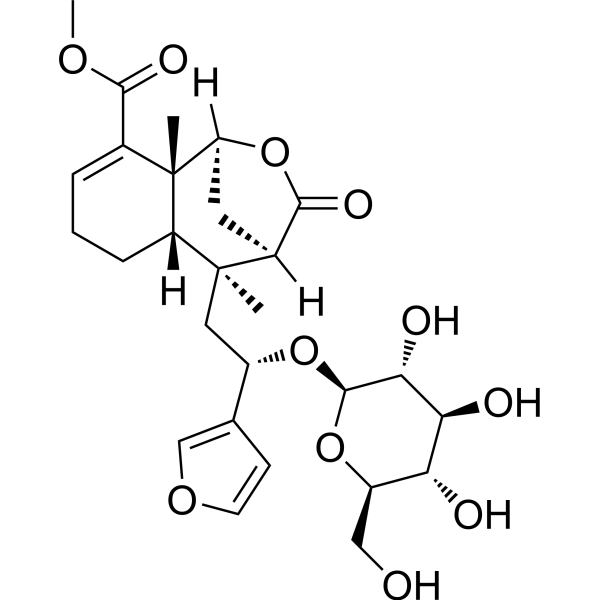
    Borapetoside E can be isolated from T. crispa. Borapetoside E improves hyperglycemia, insulin resistance, hepatic steatosis, hyperlipidemia, and oxygen consumption in obese mice. Borapetoside E also inhibits SREBPs expression in the liver and adipose tissue .
    Borapetoside E
  • HY-170369

    Mitochondrial Metabolism Metabolic Disease
    SHO1122147 (Compound 7m) affects the mitochondrial electron transport chain, exhibits mitochondrial uncoupling activity (EC50=3.6 μM), and increases the oxygen consumption rate (OCR=69%) and promotes cellular respiration. SHO1122147 is orally active, and can be used in reaearch of obesity and metabolic dysfunction-associated steatohepatitis (MASH) .
    SHO1122147
  • HY-P10622

    Apoptosis Reactive Oxygen Species (ROS) Metabolic Disease Cancer
    SHLP-3 is a mitochondrial derived peptide encoded by the 16S ribosomal RNA (MT-RNR2) gene. SHLP-3 increases cell viability and reduces apoptosis in insulinoma NIT-1β cells and human prostate cancer 22Rv1 cells. SHLP-3 increases mitochondrial function and exerts cytoprotective effects by increasing mitochondrial oxygen consumption rate (OCR), cellular ATP and reducing the ability to produce ROS. SHLP-3 can be used in the study of diabetes and cancer .
    SHLP-3
  • HY-100607

    ONO1101

    Adrenergic Receptor Calcium Channel Potassium Channel Reactive Oxygen Species (ROS) Cardiovascular Disease Inflammation/Immunology Endocrinology
    Landiolol (ONO1101) is a highly selective, ultra-short-acting competitive inhibitor of β1 adrenergic receptors. Landiolol specifically blocks cardiac β1 receptors, reducing heart rate and myocardial oxygen consumption. Landiolol inhibits TNF-α-induced excessive mitochondrial oxygen consumption and reactive oxygen species production in a sepsis model, alleviating renal injury. Landiolol has little effect on cardiac ion channels (such as L-type calcium current and inward rectifier potassium current) and has a weak negative inotropic effect. Landiolol can be used for perioperative tachycardia control and protection studies of sepsis-related acute kidney injury .
    Landiolol
  • HY-W701246

    Amylparaben-d11

    Isotope-Labeled Compounds Bacterial Infection
    Pentyl 4-hydroxybenzoate-d11 (Amylparaben-d11) is the deuterium labeled Pentyl 4-hydroxybenzoate (HY-W267444). Pentyl 4-hydroxybenzoate (Amylparaben) is a type of paraben compound commonly used as a preservative, it has antibacterial properties and is related to the inhibition of induced oxygen consumption .
    Pentyl 4-hydroxybenzoate-d11
  • HY-178986

    Mitochondrial Metabolism Cancer
    BJH-60 is a mitochondrial complex 1 inhibitor. BJH-60 can inhibit mitochondrial oxygen consumption rate with an IC50 of 1.9 μM in A549 cells. BJH-60 shows no PDE inhibitory effect. BJH-60 can be used for the research of cancer, such as breast cancer .
    BJH-60
  • HY-100607AR

    ONO1101 hydrochloride (Standard)

    Reference Standards Adrenergic Receptor Calcium Channel Potassium Channel Reactive Oxygen Species (ROS) Cardiovascular Disease Inflammation/Immunology Endocrinology
    Landiolol (ONO1101) hydrochloride (Standard) is the analytical standard of Landiolol hydrochloride (HY-100607A). This product is intended for research and analytical applications. Landiolol (ONO1101) hydrochloride is a highly selective, ultra-short-acting competitive inhibitor of β1 adrenergic receptors. Landiolol hydrochloride specifically blocks cardiac β1 receptors, reducing heart rate and myocardial oxygen consumption. Landiolol hydrochloride inhibits TNF-α-induced excessive mitochondrial oxygen consumption and reactive oxygen species production in a sepsis model, alleviating renal injury. Landiolol hydrochloride has little effect on cardiac ion channels (such as L-type calcium current and inward rectifier potassium current) and has a weak negative inotropic effect. Landiolol hydrochloride can be used for perioperative tachycardia control and protection studies of sepsis-related acute kidney injury .
    Landiolol hydrochloride (Standard)
  • HY-146977

    PDK-1 Cancer
    LDHA/PDKs-IN-1 (compound 20e) is a potent and dual inhibitor of PDKs and LDHA with IC50s of 0.8 and 0.15 μM, respectively. LDHA/PDKs-IN-1 reduces A549 cell proliferation with an EC50 of 13.2 μM and decreases the lactate formation, and increases oxygen consumption. LDHA/PDKs-IN-1 has the potential for the research of cancer diseases .
    LDHA/PDKs-IN-1
  • HY-146978

    PDK-1 Cancer
    LDHA/PDKs-IN-2 (compound 20k) is a potent and dual inhibitor of PDKs and LDHA with IC50s of 1.6 and 0.7 μM, respectively. LDHA/PDKs-IN-2 reduces A549 cell proliferation with an EC50 of 15.7 μM and decreases the lactate formation, and increases oxygen consumption. LDHA/PDKs-IN-2 has the potential for the research of cancer diseases .
    LDHA/PDKs-IN-2
  • HY-B2011R

    Reference Standards Fungal Mitochondrial Metabolism Succinate Dehydrogenase Environmental Pollutants Infection
    Flutolanil (Standard) is the analytical standard of Flutolanil (HY-B2011). This product is intended for research and analytical applications. Flutolanil is a succinate dehydrogenase complex inhibitor and fungicide. Flutolanil blocks electron transfer between the redox center of succinate dehydrogenase and coenzyme Q, inhibits mycelial oxygen consumption, and suppresses mycelial growth. Flutolanil induces acute and sublethal toxicity in zebrafish at different life stages. Flutolanil can be used in studies on plant disease control .
    Flutolanil (Standard)
  • HY-117181

    Phosphodiesterase (PDE) Adrenergic Receptor Cardiovascular Disease
    UK-1745 is a cardiotonic agent with vasodilating and antiarrhythmic properties. It increases intracellular levels of cyclic adenosine monophosphate (cAMP) in cardiomyocytes by inhibiting phosphodiesterase III, thereby enhancing myocardial contractility. Additionally, UK-1745 exhibits β-adrenergic receptor blocking activity, which helps reduce the oxygen consumption of the heart and prevent calcium overload. These characteristics make UK-1745 a promising candidate for research in congestive heart failure .
    UK-1745
  • HY-W014316R

    Reference Standards Bacterial Fungal Infection
    5-Bromo-5-nitro-1,3-dioxane (Standard) is the analytical standard of 5-Bromo-5-nitro-1,3-dioxane (HY-W014316). This product is intended for research and analytical applications. 5-Bromo-5-nitro-1,3-dioxane is a broad-spectrum antimicrobial agent active against Gram-positive bacteria, Gram-negative bacteria and fungi. 5-Bromo-5-nitro-1,3-dioxane oxidizes free thiol groups to their corresponding disulfides. 5-Bromo-5-nitro-1,3-dioxane induces intracellular substance leakage in Escherichia coli and Staphylococcus aureus. 5-Bromo-5-nitro-1,3-dioxane modulates the oxygen consumption of Escherichia coli and Staphylococcus aureus .
    5-Bromo-5-nitro-1,3-dioxane (Standard)
  • HY-W555457

    Mitochondrial Metabolism Metabolic Disease
    Methyl 3,5-di-O-benzyl-D-ribofuranoside is a sugar derivative. Methyl 3,5-di-O-benzyl-D-ribofuranoside increases mitochondrial oxygen consumption .
    Methyl 3,5-di-O-benzyl-D-ribofuranoside
  • HY-W748419

    Others Cardiovascular Disease
    Acetylstrophanthidin is a cardiac glycoside compound and a positive inotropic agent. Acetylstrophanthidin increases myocardial oxygen consumption in cat papillary muscles under constant load or tension, as well as under afterload (isotonic) and isometric contraction conditions .
    Acetylstrophanthidin
  • HY-181862

    Mitochondrial Metabolism Metabolic Disease
    SHK1112218 is an orally active mitochondrial proton carrier with an EC50 of 0.48 μM. SHK1112218 restores proton transport and increases oxygen consumption rate. SHK1112218 can be used for the research of diabetes, obesity, and metabolic dysfunction-associated steatotic liver disease .
    SHK1112218
  • HY-N19627

    3′-M-ECG

    Drug Derivative Inflammation/Immunology
    3'-O-Methyl-(-)-epicatechin gallate (3′-M-ECG) is a methylated Catechin (HY-N0898) derivative and is an antioxidant agent. 3'-O-Methyl-(-)-epicatechin gallate reduces oxygen consumption and prevents decreases in linoleic and α-linolenic acids to protect canola oil from lipid oxidation when heated .
    3'-O-Methyl-(-)-epicatechin gallate
  • HY-N17745

    Others
    (-)-EGCG-3'-O-Me is a catechin derivative (HY-N0898). (-)-EGCG-3'-O-Me inhibits lipid oxidation in rapeseed oil by reducing oxygen consumption and protecting linoleic acid and α-linolenic acid from degradation during heating. The antioxidant activity of (-)-EGCG-3'-O-Me in heated rapeseed oil is lower than that of its non-methylated precursor, (-)-epigallocatechin (EGCG) (HY-N0225) .
    (-)-EGCG-3'-O-Me

Inquiry Online

Your information is safe with us. * Required Fields.

Salutation


Country or Region *

Applicant Name *


Organization Name *

Department *


Email Address *


Product Name *

Cat. No.


Requested quantity *

Phone Number *


Remarks

Inquiry Online

Inquiry Information

Product Name:
Cat. No.:
Quantity:
MCE Japan Authorized Agent: