



2,5-Anhydro-D-mannitol, 97%

Based on 1 Customer Validation
2,5-Anhydro-D-mannitol, 97% is an antimetabolic fructose analogue. 2,5-Anhydro-D-mannitol, 97% depletes intracellular ATP, reduces oxygen consumption, regulates substrate oxidation, increases phosphomonoester levels, decreases inorganic phosphate levels, and promotes the release of intracellular calcium from intracellular calcium stores via phospholipase C-dependent activity in hepatocytes.
For research use only. We do not sell to patients.
- Purity : 99.86%
- CAS No.: 41107-82-8
- Formula: C6H12O5
- Molecular Weight:164.16
-
Storage:
4°C, stored under nitrogen
* In solvent : -80°C, 6 months; -20°C, 1 month (stored under nitrogen)


To place orders, for customer services and technical support, please contact: MedChemExpress USA
Tel: 609-228-6898 E-mail: [email protected] [email protected]


-
 Biological Activity
-
Chemical Information
-
Solvent & Solubility
- Protocols
- Purity & Documentation
- References
-
 Help & FAQs


-
HY-116705
2-Deoxy-2-fluoro-L-fucoseFucosylation Inhibitor -
HY-136830
ADP-Glucose disodiumBiochemical Assay Reagent -
HY-145533
3-Deoxy-D-glycero-D-galacto-2-nonulosonic acidSialic Acid -
HY-123114
LinamarinAnticancer Agent -
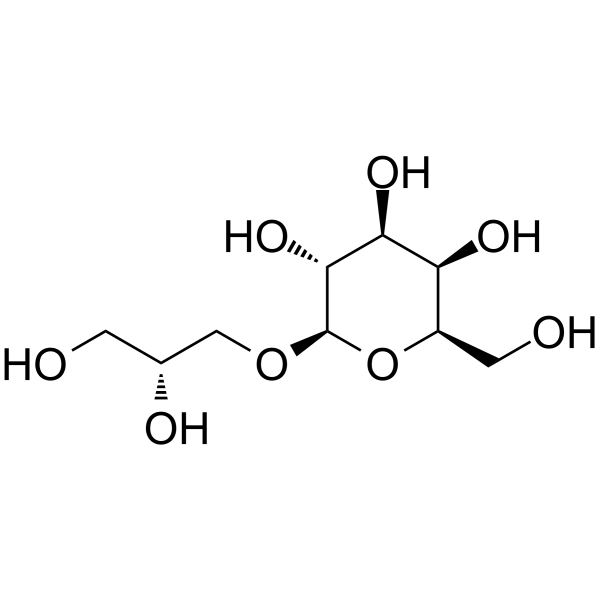
HY-116055
(2R)-Glycerol-O-β-D-galactopyranosideβ-Galactosidase/Lactose Transporter/Thiogalactoside Transacetylase Substrate -
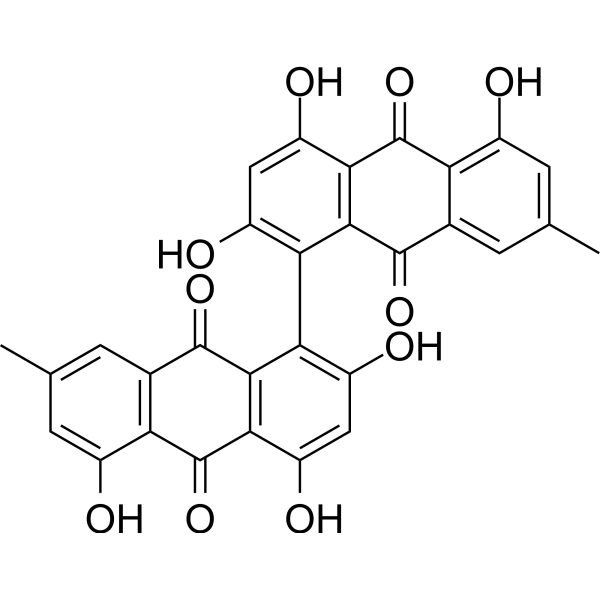
HY-119739
SkyrinGlucagon receptor Antagonist -
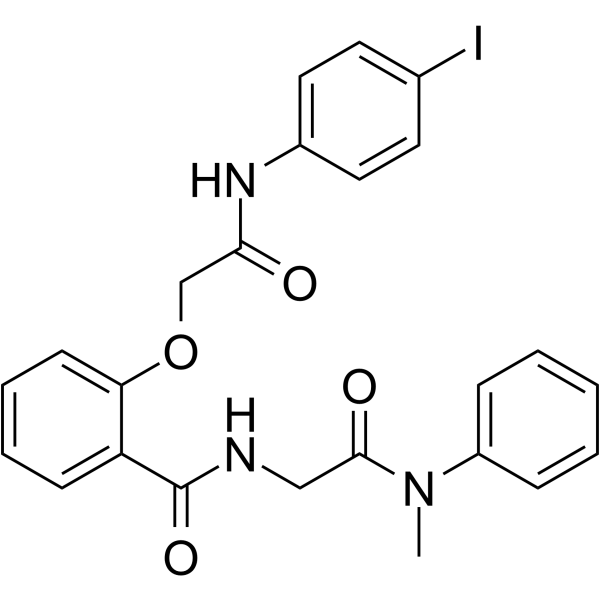
HY-120034
NCGC 607GCase Chaperone -
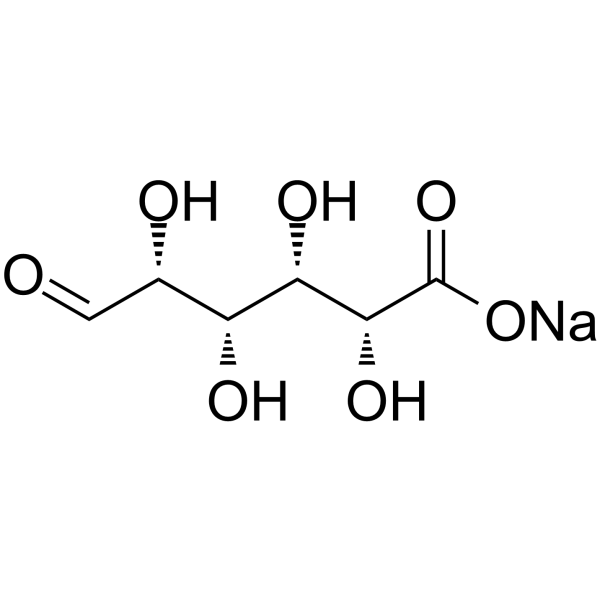
HY-135197
L-Iduronic acid sodium saltMonosaccharide Component -
HY-W040188
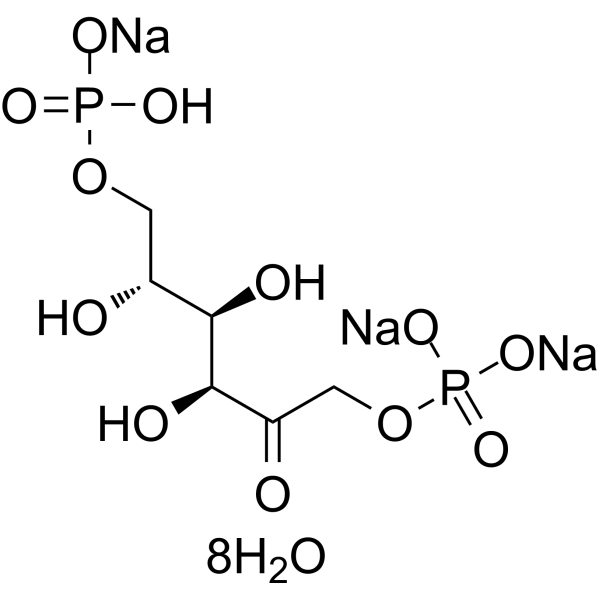
Fosfructose trisodium octahydratePhosphorylated Sugar Derivative -

HY-W009020
β-D-Glucopyranose,2-(acetylamino)-2-deoxy,1,3,4,6-tetraacetateGlycobiology -
HY-115419
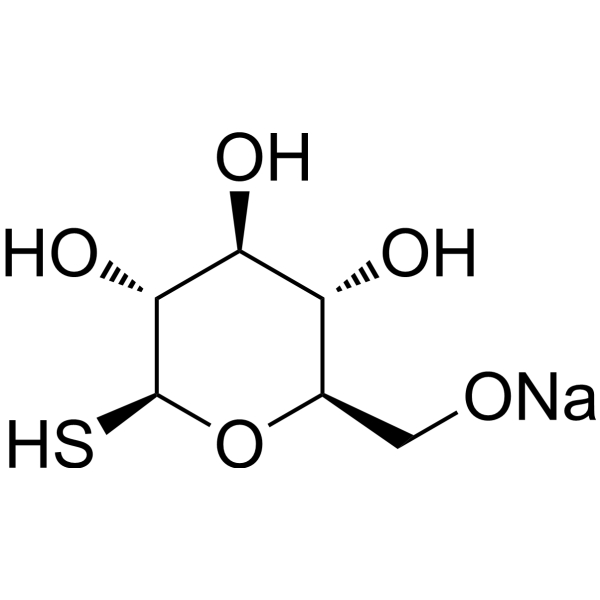
1-Thio-β-D-glucose sodiumBiochemical Reagent -

HY-138992
2,3-Indolobetulinα-glucosidase


Biological Activity
Description
In Vitro
2,5-Anhydro-D-mannitol, 97% (0-1.2 mM; 30 min) reduces ATP content in isolated HC/LF and HF/LC rat hepatocytes in a dose-dependent manner over 30 min, with a significantly larger reduction in HC/LF cells than HF/LC cells in no-substrate and 1 mM oleate-containing media, and equivalent reduction in 5 mM glucose-containing media[1].
2,5-Anhydro-D-mannitol, 97% (1 mM; 70-80 min) induces greater declines in ATP and greater increases in PME in isolated HC/LF rat hepatocytes than in HF/LC rat hepatocytes over 70-80 min of superfusion, while reducing Pi content equally in both cell groups, with partial recovery of all compounds after removal of the reagent[1].
2,5-Anhydro-D-mannitol, 97% (2.4 mM; 30 min (no preincubation); 30 min after 1 h preincubation with substrate) reduces oxygen consumption in isolated HC/LF and HF/LC rat hepatocytes over 30 min, with the magnitude of reduction dependent on the substrate present and preincubation conditions, including a significantly larger reduction in HC/LF cells without preincubation in glucose or oleate, and equivalent reduction in both cell groups after glucose preincubation[1].
2,5-Anhydro-D-mannitol, 97% (0-4 mM; 1 h) inhibits fructose oxidation in a dose-dependent manner over 1 h, with significantly greater inhibition in isolated HC/LF rat hepatocytes than in HF/LC rat hepatocytes, while increasing palmitate oxidation in HC/LF cells and only minimally inhibiting palmitate oxidation in HF/LC cells at concentrations ≥1 mM[1].
2,5-Anhydro-D-mannitol, 97% (2,5-AM) (1-5 mM; until peak response reached and until [Ca2+]i returned to baseline after washout) induces a statistically significant increase in intracellular calcium in a subset of isolated rat hepatocytes, with the response originating from intracellular calcium stores and dependent on phospholipase C activity[3].
MedChemExpress (MCE) has not independently confirmed the accuracy of these methods. They are for reference only. Further protocols information, click here.
In Vivo
2,5-Anhydro-D-mannitol, 97% (400 mg/kg; i.p.; single injection) produces a mild, transient decrease in plasma glucose levels in healthy female Syrian hamsters[2].
2,5-Anhydro-D-mannitol, 97% (400 mg/kg; i.p.; every 6 h; 48 h) does not disrupt estrous cyclicity in female Syrian hamsters, but reduces food intake on the first day of treatment[2].
MedChemExpress (MCE) has not independently confirmed the accuracy of these methods. They are for reference only.
-
Animal Model:Lak:LVG (female, 120-130 g)[2]
-
Dosage:100 mg/kg; 200 mg/kg; 400 mg/kg; 800 mg/kg
-
Administration:i.p.; single injection
-
Result:Showed no statistically significant increases in food intake at 100, 200, or 400 mg/kg compared to vehicle.
Caused a significant decrease in food intake at 800 mg/kg, with lower intake than the vehicle group at 3, 4, and 8 h post-injection, lower intake than the 100 mg/kg group at 1-8 h post-injection, and lower intake than the 400 mg/kg group at 4 h post-injection.
-
Animal Model:Lak:LVG (female, 120-130 g)[2]
-
Dosage:400 mg/kg
-
Administration:i.p.; single injection
-
Result:Caused a mild but significant decrease in plasma glucose levels (24-30% drop at 1 and 2 h post-injection) compared to vehicle.
Showed significantly lower plasma glucose levels at 1, 3, and 5 h post-injection, but not at 7 or 25 h post-injection.
-
Animal Model:Lak:LVG (female, 120-130 g, two consecutive 4-day estrous cycles, positive sex behavior test)[2]
-
Dosage:400 mg/kg
-
Administration:i.p.; every 6 h; 48 h
-
Result:Showed normal 4-day estrous cycles, including robust lordosis behavior and postovulatory vaginal discharge in all treated hamsters.
Caused significantly lower 24-h food intake on day 1 of treatment (9.7 g) compared to vehicle controls (14.8 g).
Showed no significant effects on daily food intake on days 2, 3, or 4.


Chemical Information
-
CAS No. 41107-82-8
-
Appearance Solid
-
Molecular Weight 164.16
-
Formula C6H12O5
-
SMILES
OC[C@@H]1[C@H]([C@@H]([C@H](O1)CO)O)O
-
Shipping
Room temperature in continental US; may vary elsewhere.
-
Storage
4°C, stored under nitrogen
* In solvent : -80°C, 6 months; -20°C, 1 month (stored under nitrogen)


Solvent & Solubility
In Vitro:
H2O : 175 mg/mL (1066.03 mM; Need ultrasonic)
Please refer to the solubility information to select the appropriate solvent. Once prepared, please aliquot and store the solution to prevent product inactivation from repeated freeze-thaw cycles.
Storage method and period of stock solution: -80°C, 6 months; -20°C, 1 month (stored under nitrogen). When stored at -80°C, please use it within 6 months. When stored at -20°C, please use it within 1 month.
* Note: If you choose water as the stock solution, please dilute it to the working solution, then filter and sterilize it with a 0.22 μm filter before use.
Please refer to the solubility information to select the appropriate solvent. Once prepared, please aliquot and store the solution to prevent product inactivation from repeated freeze-thaw cycles.
Storage method and period of stock solution: -80°C, 6 months; -20°C, 1 month (stored under nitrogen). When stored at -80°C, please use it within 6 months. When stored at -20°C, please use it within 1 month.
* Note: If you choose water as the stock solution, please dilute it to the working solution, then filter and sterilize it with a 0.22 μm filter before use.
Concentration (start) × Volume (start) = Concentration (final) × Volume (final)

Protocols
-
Calcium Spark Assay
Calcium sparks are localized, transient increases in intracellular calcium concentration ([Ca2+]i) that occur in cardiac myocytes and represent elementary events underlying excitation-contraction coupling. These events are generated by the coordinated opening of clusters of ryanodine receptors (RyRs) on the sarcoplasmic reticulum membrane, leading to a brief release of Ca2+ into the cytosol. The detection and analysis of calcium sparks provide insights into the mechanisms of calcium handling and signaling in cardiac cells. Imaging techniques using fluorescent calcium indicators such as Fluo-3 are employed to visualize these subcellular calcium transients with high spatial and temporal resolution. The protocol is based on established methodologies described in primary literature for both experimental measurement and automated analysis of calcium sparks.
-
Ca2+ Staining Technique
Ca2+ staining is an experimental technique that utilizes specific fluorescent probes (such as Fluo-4 AM, Fura-2, etc.) to qualitatively or quantitatively detect dynamic changes in intracellular Ca2+ concentrations; this is achieved by monitoring the changes in fluorescent signals generated when these probes bind to free intracellular calcium ions. The underlying principle relies primarily on the presence of chelating groups within the probe's molecular structure that possess high affinity for calcium ions.


Purity & Documentation
-
Data Sheet (279 KB)
-
SDS (394 KB)
- English - EN (394 KB)
- Français - FR (394 KB)
- Deutsch - DE (394 KB)
- Norwegian - NO (394 KB)
- Español - ES (394 KB)
- Swedish - SV (394 KB)
- Italian - IT (394 KB)
- Korean - KR (394 KB)
- Portuguese - PT (394 KB)
-
Handling Instructions (2659 KB)
References
[1]. Ji H, et al. Interactions of dietary fat and 2,5-anhydro-D-mannitol on energy metabolism in isolated rat hepatocytes. Am J Physiol Regul Integr Comp Physiol. 2002;282(3):R715-R720. [Content Brief]
[2]. Schneider JE, et al. Effects of the fructose analog, 2,5-anhydro-D-mannitol, on food intake and estrous cyclicity in Syrian hamsters. Am J Physiol. 1997;272(3 Pt 2):R935-R939. [Content Brief]
[3]. Rawson NE, et al. 2,5-Anhydro-D-mannitol increases hepatocyte calcium: implications for a hepatic hunger stimulus. Biochim Biophys Acta. 2003;1642(1-2):59-66. [Content Brief]


Complete Stock Solution Preparation Table
Please refer to the solubility information to select the appropriate solvent. Once prepared, please aliquot and store the solution to prevent product inactivation from repeated freeze-thaw cycles.
Storage method and period of stock solution: -80°C, 6 months; -20°C, 1 month (stored under nitrogen). When stored at -80°C, please use it within 6 months. When stored at -20°C, please use it within 1 month.
| Optional Solvent | Concentration Solvent Mass | 1 mg | 5 mg | 10 mg | 25 mg |
|---|---|---|---|---|---|
| H2O | 1 mM | 6.0916 mL | 30.4581 mL | 60.9162 mL | 152.2904 mL |
| 5 mM | 1.2183 mL | 6.0916 mL | 12.1832 mL | 30.4581 mL | |
| 10 mM | 0.6092 mL | 3.0458 mL | 6.0916 mL | 15.2290 mL | |
| 15 mM | 0.4061 mL | 2.0305 mL | 4.0611 mL | 10.1527 mL | |
| 20 mM | 0.3046 mL | 1.5229 mL | 3.0458 mL | 7.6145 mL | |
| 25 mM | 0.2437 mL | 1.2183 mL | 2.4366 mL | 6.0916 mL | |
| 30 mM | 0.2031 mL | 1.0153 mL | 2.0305 mL | 5.0763 mL | |
| 40 mM | 0.1523 mL | 0.7615 mL | 1.5229 mL | 3.8073 mL | |
| 50 mM | 0.1218 mL | 0.6092 mL | 1.2183 mL | 3.0458 mL | |
| 60 mM | 0.1015 mL | 0.5076 mL | 1.0153 mL | 2.5382 mL | |
| 80 mM | 0.0761 mL | 0.3807 mL | 0.7615 mL | 1.9036 mL | |
| 100 mM | 0.0609 mL | 0.3046 mL | 0.6092 mL | 1.5229 mL |
* Note: If you choose water as the stock solution, please dilute it to the working solution, then filter and sterilize it with a 0.22 μm filter before use.


2,5-Anhydro-D-mannitol, 97% Related Classifications
HY-W039315 Related Classifications
 Powered by Bioz