
1. Search Result
Search Result
Results for "

phosphoglycerate

" in MedChemExpress (MCE) Product Catalog:

26

Inhibitors & Agonists

2

Natural
Products

7

Recombinant Proteins

2

Antibodies

Cat. No. Product Name Target Research Areas Chemical Structure
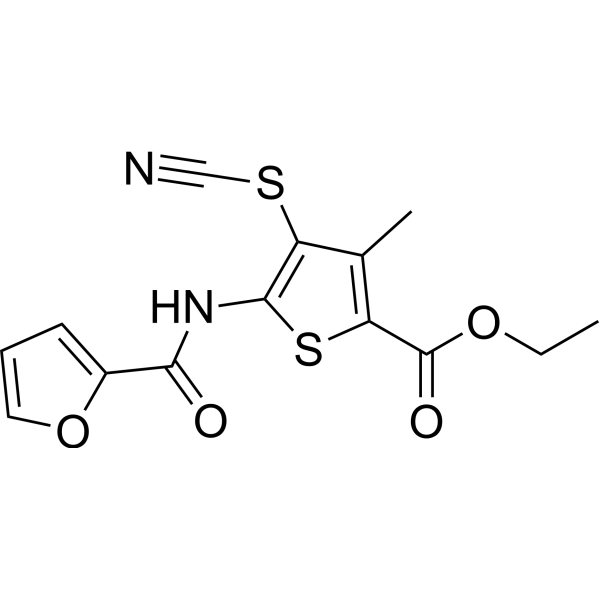
  • HY-15154
    NG 52
    10+ Cited Publications

    Compound 52

    CDK Cancer
    NG 52 is a potent, cell-permeable, selective, ATP-compatible and orally active Cdc28p and Pho85p kinase inhibitor with IC50s of 7 μM and 2 μM, respectively. NG 52 also inhibits the activity of phosphoglycerate kinase 1 (PGK1) with an IC50 of 2.5 μM. NG 52 is inactive against yeast kinases Kin28p, Srb10, and Cak1p .
    NG 52
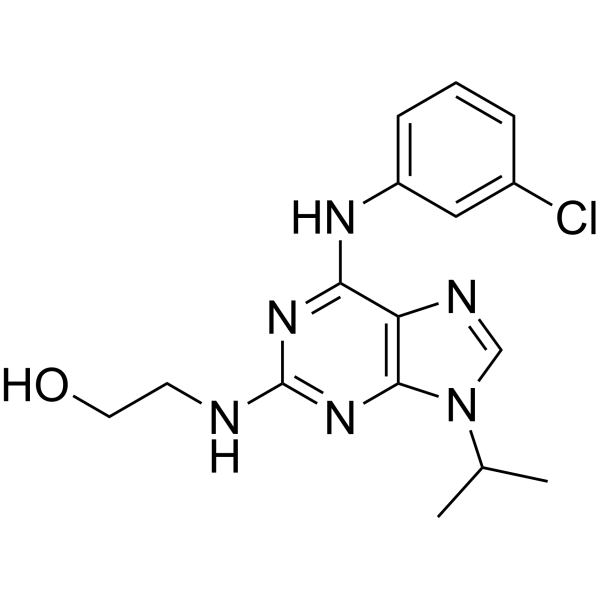
  • HY-100012
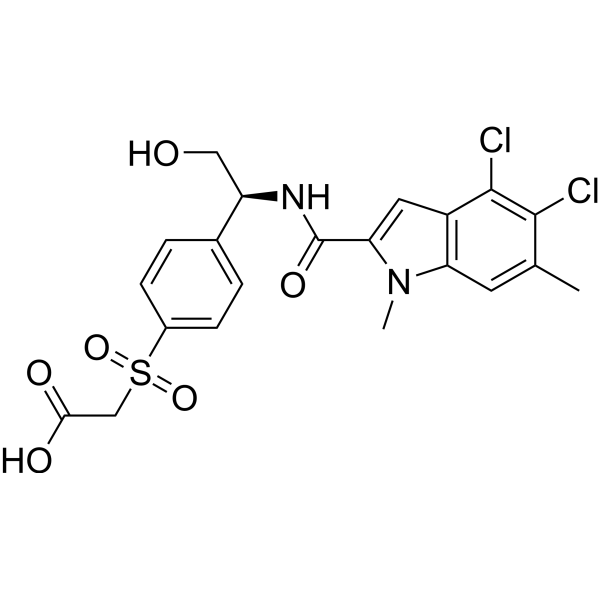
    CBR-5884
    Maximum Cited Publications
    20 Publications Verification

    Phosphoglycerate Dehydrogenase (PHGDH) Cancer
    CBR-5884 is an active, selective inhibitor of phosphoglycerate dehydrogenase (PHGDH) with an IC50 of 33 μM. CBR-5884 inhibits de novo serine synthesis in cancer cells and is selectively toxic to cancer cell lines with high serine biosynthetic activity. CBR-5884 selectively inhibits the proliferation of melanoma and breast cancer lines that have a high propensity for serine synthesis .
    CBR-5884
  • HY-141412
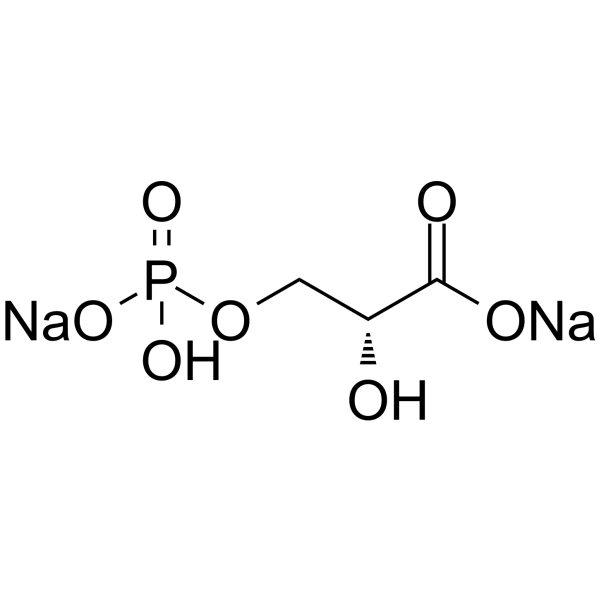
    D-(-)-3-Phosphoglyceric acid disodium
    1 Publications Verification

    3-Phospho-D-glyceric acid disodium

    Enolase Phosphoglycerate Dehydrogenase (PHGDH) MDM-2/p53 Apoptosis Infection
    D-(-)-3-Phosphoglyceric acid (3-Phospho-D-glyceric acid) disodium is an important intermediate in the enzyme-catalyzed glycolysis process. D-(-)-3-Phosphoglyceric acid disodium competitively inhibits yeast enolase (enolase). D-(-)-3-Phosphoglyceric acid disodium can regulate the activity of phosphoglycerate dehydrogenase (PHGDH) to modulate p53 protein and apoptosis .
    D-(-)-3-Phosphoglyceric acid disodium
  • HY-148510

    Phosphatase Apoptosis Akt ERK Reactive Oxygen Species (ROS) Cancer
    HKB99 is an allosteric inhibitor of phosphoglycerate mutase 1 (PGAM1). HKB99 induces apoptosis. HKB99 inhibits the formation of invasive pseudopodia and inhibits migration. HKB99 increases the oxidative stress, activates JNK/c-Jun and suppresses AKT and ERK. HKB99 can be used for the research of non-small-cell lung cancer (NSCLC) .
    HKB99
  • HY-123269

    Phosphoglycerate Dehydrogenase (PHGDH) Cancer
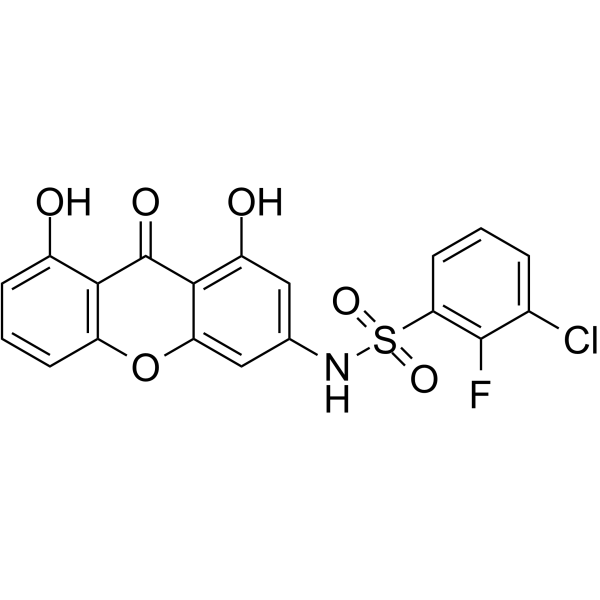
    PKUMDL-WQ-2101 is a non-NAD +-competing allosteric phosphoglycerate dehydrogenase (PHGDH) inhibitor with an IC50 of 34.8 μM. PKUMDL-WQ-2101 exhibits antitumor activity .
    PKUMDL-WQ-2101
  • HY-126254
    BI-4924
    1 Publications Verification

    Phosphoglycerate Dehydrogenase (PHGDH) Cancer
    BI-4924 is a lipophilic, highly plasma protein bound selective phosphoglycerate dehydrogenase (PHGDH) inhibitor (IC50=3 nM) with excellent microsomal, as well as hepatocytic stability. Intracellular trapping of BI-4924 disrupts serine biosynthesis with an IC50 of 2200 nM at 72 h .
    BI-4924
  • HY-148570
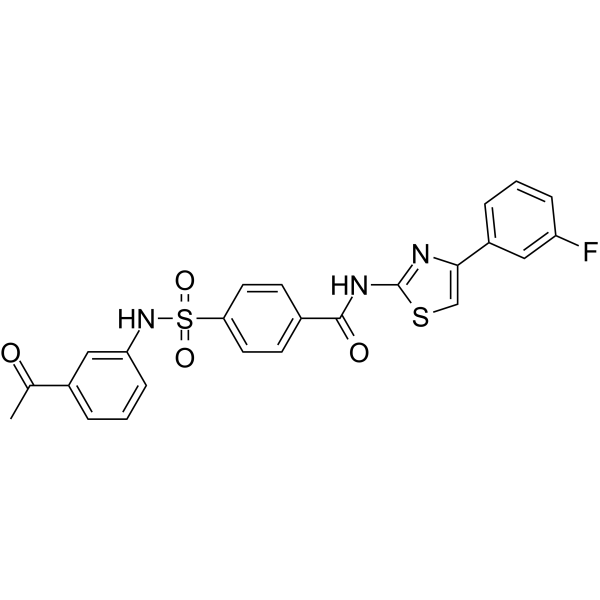
    PHGDH-IN-3
    1 Publications Verification

    Phosphoglycerate Dehydrogenase (PHGDH) Cancer
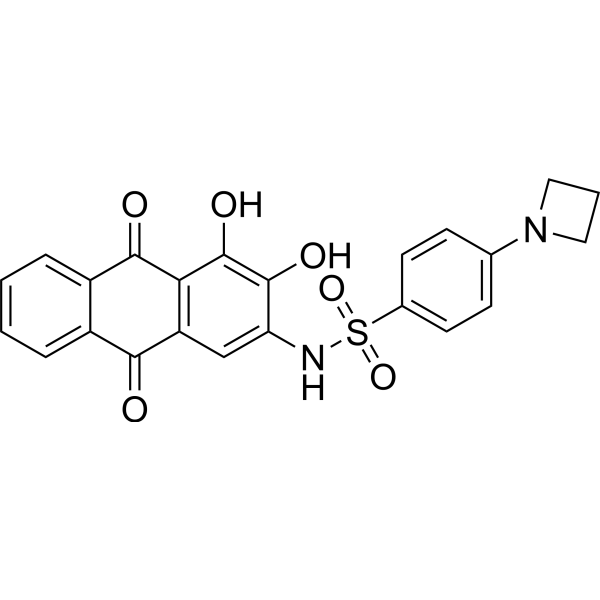
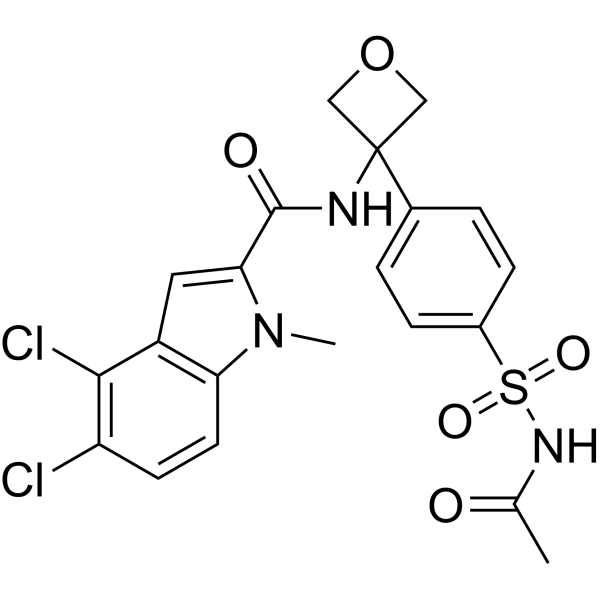
    PHGDH-IN-3 is an orally active phosphoglycerate dehydrogenase (PHGDH) inhibitor. PHGDH-IN-3 inhibits PHGDH with an IC50 value of 2.8 μM. PHGDH-IN-3 can be used for the research of cancer .
    PHGDH-IN-3
  • HY-101143

    Phosphatase Cancer
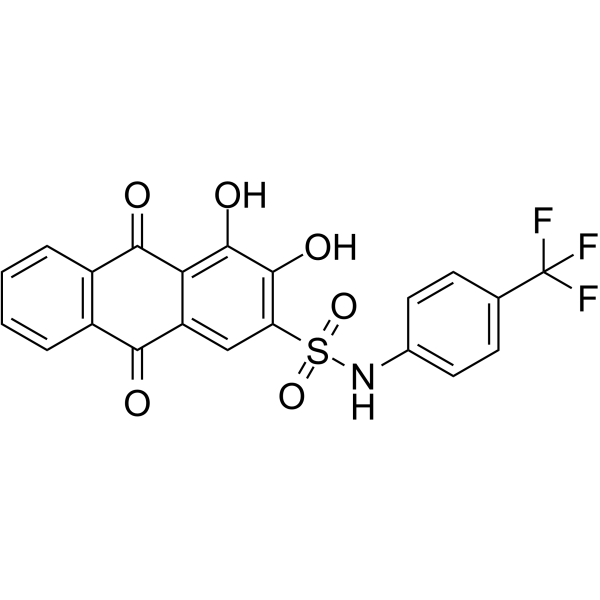
    PGMI-004A is a potent phosphoglycerate mutase 1 (PGAM1) inhibitor with an IC50 of 13.1 μM.
    PGMI-004A
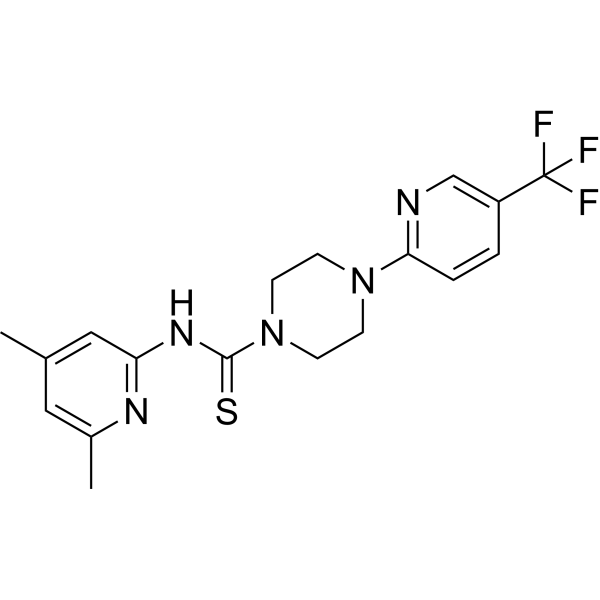
  • HY-117240
    NCT-502
    5+ Cited Publications

    Phosphoglycerate Dehydrogenase (PHGDH) Cancer
    NCT-502 is a human phosphoglycerate dehydrogenase (PHGDH) inhibitor, cytotoxic to PHGDH-dependent cancer cells, and reduces glucose-derived serine production, with an IC50 of 3.7 μM against PHGDH .
    NCT-502
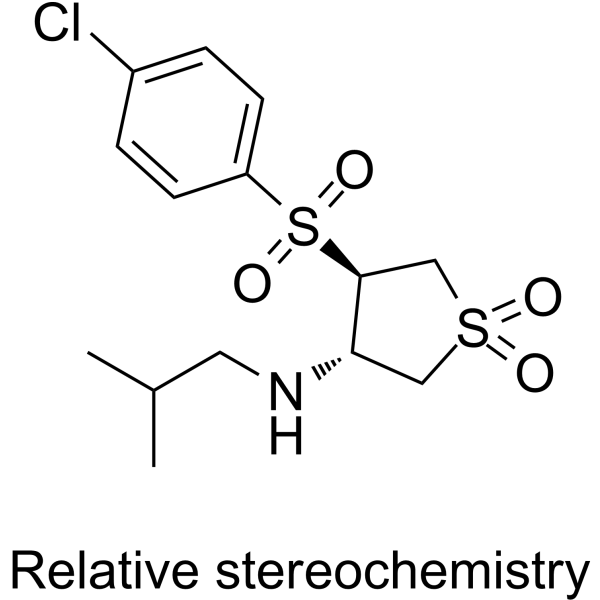
  • HY-134205A
    CBR-470-1
    3 Publications Verification

    Keap1-Nrf2 Neurological Disease Metabolic Disease
    CBR-470-1 is an inhibitor of the glycolytic enzyme phosphoglycerate kinase 1 (PGK1). CBR-470-1 is also a non-covalent Nrf2 activator. CBR-470-1 protects SH-SY5Y neuronal cells against MPP +-induced cytotoxicity through activation of the Keap1-Nrf2 cascade .
    CBR-470-1
  • HY-P2822

    PGK

    Endogenous Metabolite Biochemical Assay Reagents Infection Metabolic Disease Cancer
    Phosphoglycerate kinase (PGK), yeast is a monomeric glycolytic/gluconeogenic enzyme that can be found in Saccharomyces cerevisiae. Phosphoglycerate kinase, yeast catalyzes phosphoryl-group transfer from 1,3-bisphosphoglycerate to ADP to form 3-phosphoglycerate and ATP, binds 3PGA, ATP, and Mg 2+, and adopts a closed conformation. Phosphoglycerate kinase, yeast is commonly used in biochemical research .
    Phosphoglycerate kinase, yeast
  • HY-128681
    PGAM1-IN-1
    1 Publications Verification

    Phosphatase Cancer
    PGAM1-IN-1 is a phosphoglycerate mutase 1 (PGAM1) inhibitor with an IC50 of 6.4 μM .
    PGAM1-IN-1
  • HY-125273

    Fluorescent Dye Phosphoglycerate Dehydrogenase (PHGDH) Others
    DNS-pE is a 3-phosphoglycerate dehydrogenase (PHGDH) inhibitor with a Ki of 7.4 μM. DNS-pE selectively and irreversibly covalently modifies endogenous PHGDH in live mammalian cells, its vinyl sulfone moiety acts as a fluorescence quencher that becomes highly fluorescent upon covalent modification of PHGDH. DNS-pE can be used as a fluorescent dye for live-cell imaging .
    DNS-pE
  • HY-128682

    Phosphatase Cancer
    PGAM1-IN-2 is a phosphoglycerate mutase 1 (PGAM1) inhibitor with an IC50 of 2.1 μM .
    PGAM1-IN-2
  • HY-N8540

    Phosphoglycerate Kinase (PGK) Fungal Apoptosis Infection Cancer
    Ilicicolin H is a selective and non-ATP-competitive phosphoglycerate kinase 1 (PGK1) (IC50 = 9.02 μM) and mitochondrial cytochrome bc1 reductase (IC50 = 2-3 ng/mL) inhibitor. Ilicicolin H directly binds to PGK1 with KD of 60 μM .Ilicicolin H can inhibit cell proliferation and induce apoptosis. Ilicicolin H can inhibit the lactate production and glucose uptake of hepatocellular carcinoma (HCC) cells. Ilicicolin H has a broad antifungal spectrum including C. albicans, Cryptococcus and A. fumigatus. Ilicicolin H can be used for the researches of cancer and infection, such as hepatocellular carcinoma (HCC) and C. albicans infection .
    Ilicicolin H
  • HY-W552257

    Drug Intermediate Others
    Hydroxypyruvic acid phosphate serves as a crucial metabolic intermediate in the biosynthesis of L-Serine (HY-N0650), being formed from the conversion of the glycolytic intermediate 3-phosphoglycerate through the action of 3-phosphoglycerate dehydrogenase.
    Hydroxypyruvic acid phosphate
  • HY-160252

    Phosphoglycerate Dehydrogenase (PHGDH) Cancer
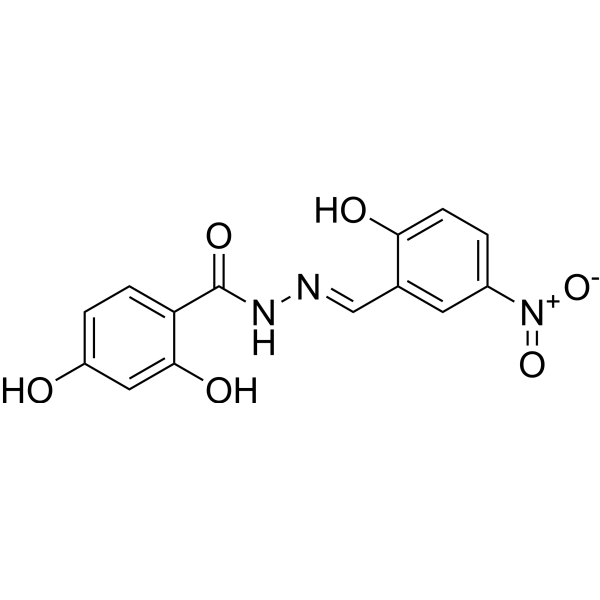
    PHGDH-IN-4 is a potent 3-phosphoglycerate dehydrogenase (PHGDH) inhibitor . PHGDH-IN-4 can be used for the research of cancer .
    PHGDH-IN-4
  • HY-126278

    Phosphoglycerate Dehydrogenase (PHGDH) Cancer
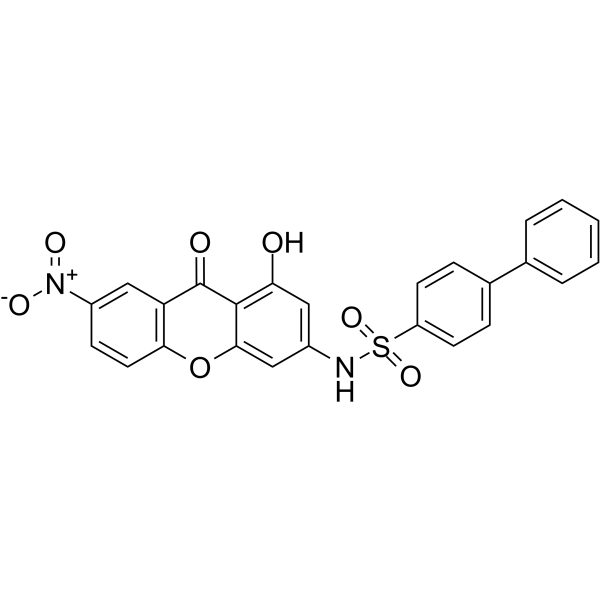
    Z1609609733 (Compound 18) is a non-covalent 3-Phosphoglycerate dehydrogenase (PHGDH) inhibitor with an IC50 of 1.46 μM. Z1609609733 significantly inhibits serine synthesis and cancer metabolism with complete abrogation of cell proliferation .
    Z1609609733
  • HY-178989

    Phosphoglycerate Kinase (PGK) Cuproptosis Cancer
    PGK1-IN-2 (Compound 60) is a PGK1 inhibitor with an IC50 of 8.24 μM. PGK1-IN-2 demonstrates a significant ability to inhibit the proliferation of osteosarcoma cells. PGK1-IN-2 interferes with the glycolytic pathway of tumor cells by inhibiting PGK1. PGK1-IN-2 inhibits cell migration and invasion, and induces cell S phase and G2-M phase cycle arrest. PGK1-IN-2 may kill cells by inducing cuproptosis. PGK1-IN-2 shows a significant anti-tumor effect in the MNNG-HOS osteosarcoma xenograft mouse model. PGK1-IN-2 can be used for the study of osteosarcoma .
    PGK1-IN-2
  • HY-177944

    Phosphoglycerate Kinase (PGK) Keap1-Nrf2 Interleukin Related Inflammation/Immunology
    DC-PGKI is an orally active ATP-competitive PGK1 inhibitor(IC50 = 0.16 Μm, Kd = 99.08 nM). DC-PGKI stabilizes PGK1 in vitro and in vivo, and suppresses both glycolytic activity and the kinase function of PGK1. DC-PGKI-mediated inhibition of PGK1 leads to the accumulation of NRF2 (nuclear factor-erythroid factor 2-related factor 2, NFE2L2), which then translocates to the nucleus, binds to the proximal regions of IL-1β and IL-6 genes, and suppresses the LPS-induced expression of these genes. DC-PGKI can be used for the study of colitis .
    DC-PGKI
  • HY-138877A

    Phosphatase Cancer
    Phosphoglycolic acid (lithium) is a competitive inhibitor of phosphoglycerate mutase (PGAM)-B, an enzyme of the glycolytic pathway. Phosphoglycolic acid increases basal and fMLF-induced levels of G6P in intact neutrophils. Phosphoglycolic acid thereby increases upstream intermediates in neutrophils, thereby amplifying the respiratory oxidative burst .
    Phosphoglycolic acid lithium
  • HY-15154R

    Compound 52 (Standard)

    CDK Reference Standards Cancer
    NG 52 (Standard) is the analytical standard of NG 52. This product is intended for research and analytical applications. NG 52 is a potent, cell-permeable, selective, ATP-compatible and orally active Cdc28p and Pho85p kinase inhibitor with IC50s of 7 μM and 2 μM, respectively. NG 52 also inhibits the activity of phosphoglycerate kinase 1 (PGK1) with an IC50 of 2.5 μM. NG 52 is inactive against yeast kinases Kin28p, Srb10, and Cak1p .
    NG 52 (Standard)
  • HY-182811

    MAP4K Apoptosis Neurological Disease
    AT-051/43421517 is a cytoprotective agent and apoptosis inhibitor that binds to human phosphoglycerate kinase 1 (hPgk1). AT-051/43421517 protects cells from rotenone-induced cell death without inducing cell proliferation. AT-051/43421517 can be used for the research of parkinson’s disease .
    AT-051/43421517
  • HY-W552257A

    Drug Intermediate Others
    Hydroxypyruvic acid phosphate lithium serves as a crucial metabolic intermediate in the biosynthesis of L-Serine (HY-N0650), being formed from the conversion of the glycolytic intermediate 3-phosphoglycerate through the action of 3-phosphoglycerate dehydrogenase.
    Hydroxypyruvic acid phosphate lithium
  • HY-180597

    Nucleoside Antimetabolite/Analog Metabolic Disease
    3-Phospho-D-glycerate can be converted to 2-phospho-d-glycerate (2-PGA) via phosphoglycerate mutase .
    3-Phospho-D-glycerate
  • HY-E70976

    Endogenous Metabolite Metabolic Disease
    3-Phosphoglyceric Phosphokinase, Baker's yeast (S. cerevisiae) (EC 2.7.2.3) is an enzyme that catalyzes the reversible transfer of a phosphate group from 1,3-bisphosphoglyceRate (1,3-BPG) to ADP producing 3-phosphoglyceRate (3-PG) and ATP. 3-Phosphoglyceric Phosphokinase, Baker's yeast (S. cerevisiae) (EC 2.7.2.3) is a transferase. 3-Phosphoglyceric Phosphokinase is a major enzyme used in glycolysis, in the first ATP-geneRating step of the glycolytic pathway. In gluconeogenesis, the reaction catalyzed by 3-Phosphoglyceric Phosphokinase proceeds in the opposite direction, geneRating ADP and 1,3-BPG.
    3-Phosphoglyceric Phosphokinase, Baker's yeast (S. cerevisiae)

Inquiry Online

Your information is safe with us. * Required Fields.

Salutation


Country or Region *

Applicant Name *


Organization Name *

Department *


Email Address *


Product Name *

Cat. No.


Requested quantity *

Phone Number *


Remarks

Inquiry Online

Inquiry Information

Product Name:
Cat. No.:
Quantity:
MCE Japan Authorized Agent:

