





1. Search Result
Search Result
Pathways Recommended: Metabolic Enzyme/Protease
Results for "

type I enzyme

" in MedChemExpress (MCE) Product Catalog:

25

Inhibitors & Agonists

2

Peptides

1

Inhibitory Antibodies

3

Natural
Products

1

Isotope-Labeled Compounds

1

Antibodies

Cat. No. Product Name Target Research Areas Chemical Structure
  • HY-O0004

    MMP Metabolic Disease
    Collagenases are enzymes that break the peptide bonds in collagen. Collagenases are derived from the Clostridium histolyticum. Collagenases (Type I) are proteolytic enzymes that break peptide bonds in collagen and can be used for tissue digestion and dissociation.
    Collagenase I, from Clostridium histolyticum
  • HY-13635
    Finasteride
    4 Publications Verification

    MK-906

    Environmental Pollutants 5 alpha Reductase Cancer
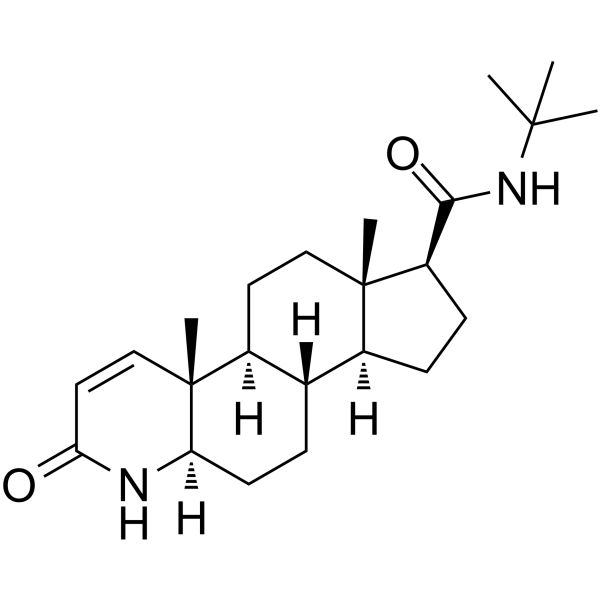
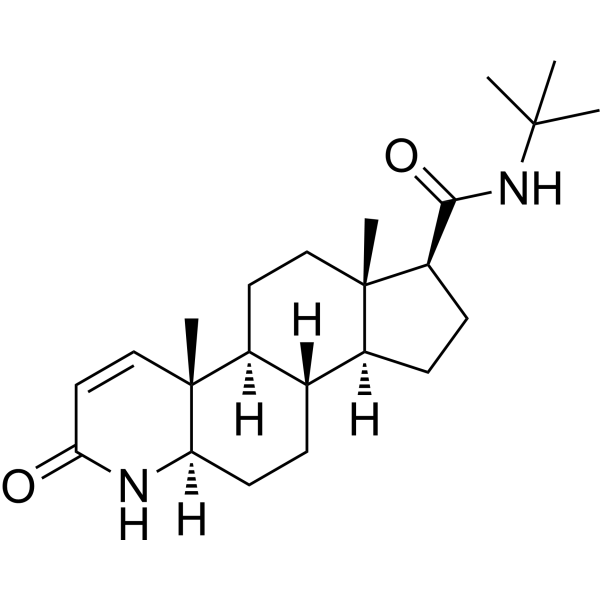
    Finasteride (MK-906) is an orally active and competitive 5α-reductase inhibitor, with an IC50 of 4.2 nM for type II 5α-reductase. Finasteride has approximately a 100-fold greater affinity for type II 5α-reductase enzyme than for the type I enzyme. Finasteride can be used for the research of benign prostatic hyperplasia (BPH) and androgenic alopecia .
    Finasteride
  • HY-P2972

    Endogenous Metabolite Others
    Sulfatase, Helix pomatia is an enzyme that catalyzes the hydrolysis of sulfate esters. Sulfatase, Helix pomatia participates in the metabolism of various substances .
    Sulfatase, Helix pomatia
  • HY-124700
    LYPLAL1-IN-1
    1 Publications Verification

    Cyclic GMP-AMP Synthase STING PD-1/PD-L1 Epoxide Hydrolase Metabolic Disease
    LYPLAL1-IN-1 (compound 11) is a selective, covalent, and irreversible inhibitor of the lysophospholipase-like enzyme LYPLAL1 (IC50 = 6 nM). LYPLAL1-IN-1 shows selectivity against other serine hydrolases such as carboxylesterase CES1 (IC50 > 50 μM for CES1). LYPLAL1-IN-1 inhibits the depalmitoylation function of LYPLAL1, blocking its depalmitoylation modification of cyclic GMP-AMP synthase (cGAS), thereby promoting cGAS dimerization and activation, and initiating the cGAS-STING pathway-mediated innate immune response. LYPLAL1-IN-1 can enhance DNA-induced type I interferon production, upregulate PD-L1 expression in tumor cells, and promote the accumulation of tumor-infiltrating CD8 + T cells, with the core function of strengthening the anti-tumor immune response. LYPLAL1-IN-1 is primarily used in tumor immunology research, especially in combination with PD-1/PD-L1 inhibitors .
    LYPLAL1-IN-1
  • HY-108882C

    DNA/RNA Synthesis Inflammation/Immunology
    DNase I is an enzyme that degrades DNA. DNase I is mainly produced by digestive system organs, such as the pancreas and parotid gland. Three types of DNase I are known in mammals: pancreatic type, parotid type, and pancreatico-parotid type. DNase I plays a key role in the cleavage of extracellular DNA, and is critical for limiting inflammatory responses and maintaining homeostasis. DNase I is responsible for digesting extracellular nucleoproteins, which may be essential for preventing autoimmune reactions. Decreased DNase I activity may be associated with the occurrence and development of systemic lupus erythematosus (SLE). DNase I (filtered) is filtered through a 0.22 μM membrane and is not tested for pyrogenicity .
    DNase I (filtered)
  • HY-108882B
    DNase I RNase & Protease free
    Maximum Cited Publications
    29 Publications Verification

    DNA/RNA Synthesis Inflammation/Immunology
    DNase I is an enzyme that degrades DNA. DNase I is mainly produced by digestive system organs, such as the pancreas and parotid gland. Three types of DNase I are known in mammals: pancreatic type, parotid type, and pancreatico-parotid type. DNase I plays a key role in the cleavage of extracellular DNA, and is critical for limiting inflammatory responses and maintaining homeostasis. DNase I is responsible for digesting extracellular nucleoproteins, which may be essential for preventing autoimmune responses. Decreased DNase I activity may be associated with the onset and progression of systemic lupus erythematosus (SLE). DNase I (RNase & Protease free) is a molecular biology-grade DNase I purified by chromatography to remove RNase and protease .
    DNase I RNase & Protease free
  • HY-P2878
    Phosphodiesterase I
    1 Publications Verification

    PDE

    Phosphodiesterase (PDE) Neurological Disease Cancer
    Phosphodiesterase I (PDE) is an enzyme that can catalyze the hydrolysis of the 3' ring phosphate bond of cyclic nucleotides, and is often used in biochemical research. Phosphodiesterase I acts as an important regulator of signal transduction mediated by the second messenger molecules cAMP and cGMP. According to their specificity to cyclic nucleotides, they can also be divided into different types, such as PDE1-PDE11, which also have certain potential in various diseases .
    Phosphodiesterase I
  • HY-113143A

    Endogenous Metabolite Infection Metabolic Disease Inflammation/Immunology
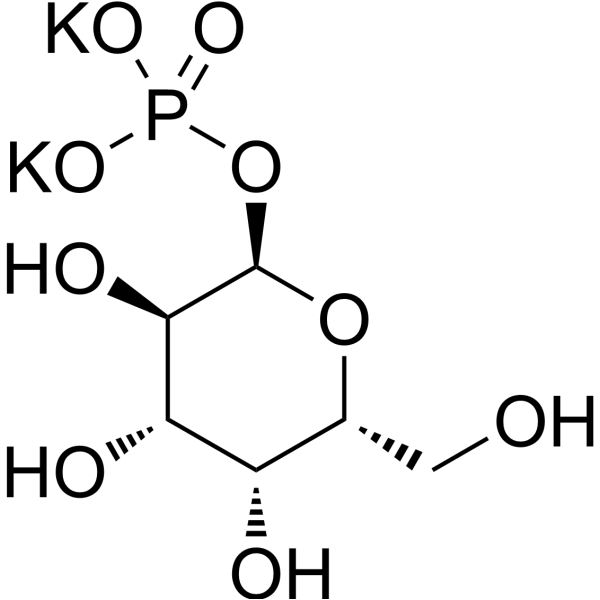
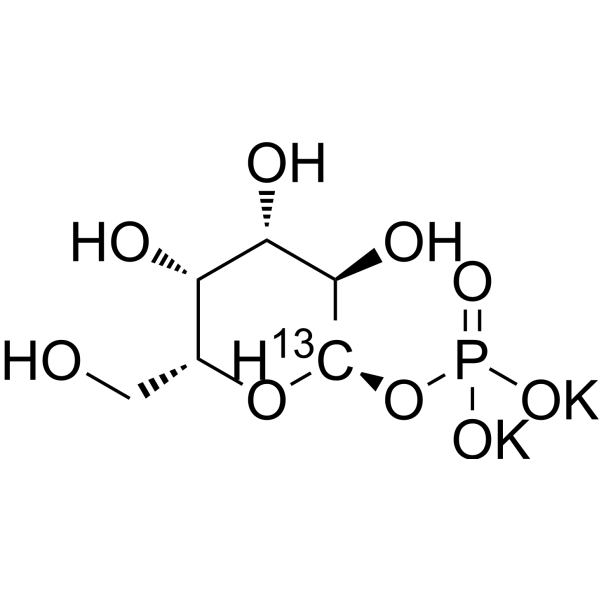
    Galactose 1-phosphate Potassium salt acts as a competitive substrate inhibitor of galactose-1-phosphate uridylyltransferase (GALT). Galactose 1-phosphate Potassium salt is a competitive inhibitor of Phosphoglucomutase, yet the rate at which this enzyme converts Galactose 1-phosphate to Galactose-6-phosphate is 400 times slower than the rate of converting Glucose-1-phosphate. Galactose 1-phosphate Potassium salt can be used in studies related to Saccharomyces cerevisiae infection and type I galactosemia .
    Galactose 1-phosphate Potassium salt
  • HY-13635A

    MK-906 acetate

    5 alpha Reductase Cancer
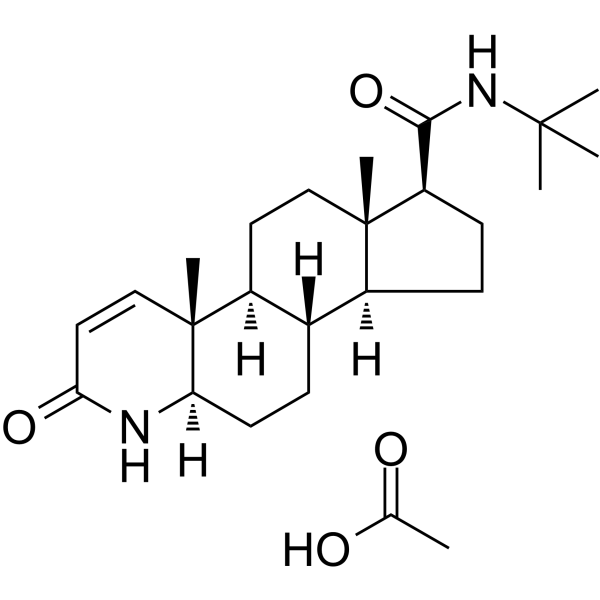
    Finasteride (MK-906) acetate is a potent and competitive 5α-reductase inhibitor, with an IC50 of 4.2 nM for type II 5α-reductase. Finasteride acetate has approximately a 100-fold greater affinity for type II 5α-reductase enzyme than for the type I enzyme. Finasteride acetate can be used for the research of benign prostatic hyperplasia (BPH) and androgenic alopecia .
    Finasteride acetate
  • HY-13635R

    MK-906 (Standard)

    Reference Standards 5 alpha Reductase Cancer
    Finasteride (Standard) is the analytical standard of Finasteride. This product is intended for research and analytical applications. Finasteride (MK-906) is a potent and competitive 5α-reductase inhibitor, with an IC50 of 4.2 nM for type II 5α-reductase. Finasteride has approximately a 100-fold greater affinity for type II 5α-reductase enzyme than for the type I enzyme. Finasteride can be used for the research of benign prostatic hyperplasia (BPH) and androgenic alopecia .
    Finasteride (Standard)
  • HY-122949
    Momordicine I
    2 Publications Verification

    Apoptosis Autophagy DGK Mitochondrial Metabolism NO Synthase PI3K Akt Interleukin Related Src AMPK mTOR NF-κB c-Met/HGFR STAT Keap1-Nrf2 Reactive Oxygen Species (ROS) Oxidative Phosphorylation Endogenous Metabolite Cardiovascular Disease Metabolic Disease Inflammation/Immunology Cancer
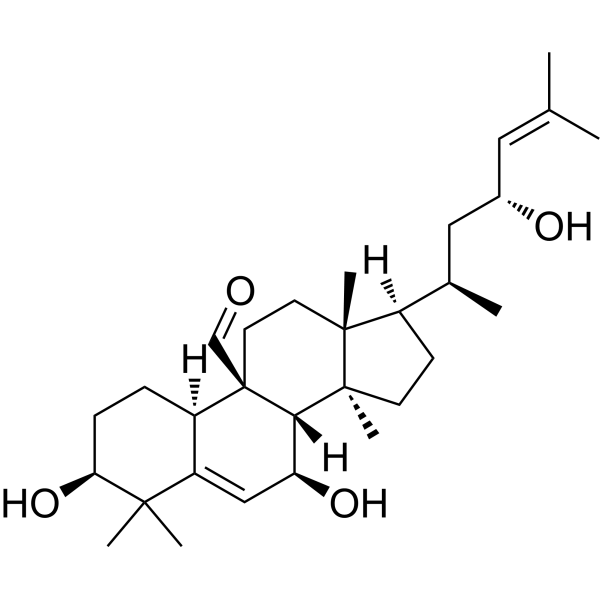
    Momordicine I is a cucurbitane-type triterpenoids. Momordicine I suppresses glioma growth by promoting apoptosis and impairing mitochondrial oxidative phosphorylation. Momordicine I inhibits glycolysis, lipid metabolism, induces autophagy in HNC cells to suppress head and neck cancer growth. Momordicine I alleviates isoproterenol-induced cardiomyocyte hypertrophy through suppression of PLA2G6 and DGK-ζ. Momordicine I exerts its cardiovascular benefits by upregulating nitric oxide, inhibiting the activity of angiotensin-converting enzyme (ACE), activating the PI3K/Akt pathway, reducing oxidative stress and inflammation. Momordicine I inhibits AKT1, IL-6, and SRC, suggesting its potential application in type 2 diabetes .
    Momordicine I
  • HY-P99694

    JR-171

    Transferrin Receptor Neurological Disease
    Lepunafusp alfa (JR-171) is a BBB-penetrable fusion protein consisting of J-Brain Cargo and IDUA (a lysosomal enzyme, α-L-iduronidase). Lepunafusp alfa can reduce concentration of heparan sulfate (HS) and dermatan sulfate (DS). Lepunafusp alfa can be used for research of mucopolysaccharidosis type I .
    Lepunafusp alfa
  • HY-P1792

    Angiotensin Receptor Metabolic Disease Endocrinology
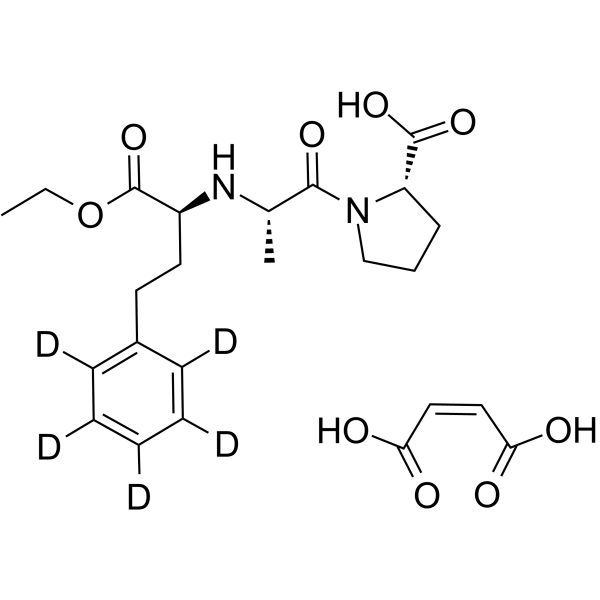
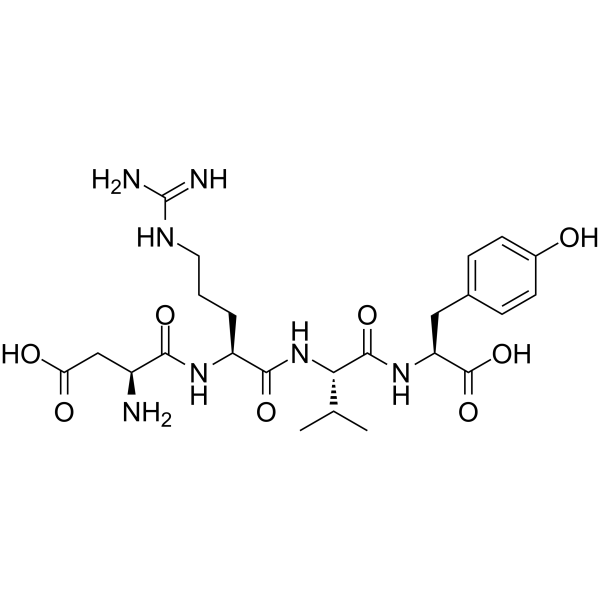
    Angiotensin II (1-4), human is an endogenous peptide produced from AT I by angiotensin-converting-enzyme (ACE). Angiotensin II binds the AT II type 1 (AT1) receptor, stimulating GPCRs in vascular smooth muscle cells and increasing intracellular Ca 2+ levels. Angiotensin II also acts at the Na +/H + exchanger in the proximal tubules of the kidney .
    Angiotensin II (1-4), human
  • HY-P3174

    Aminopeptidase Inflammation/Immunology
    Pyroglutamate aminopeptidase I is a type of enzyme that cleaves the peptide bond of pyroglutamic acid linked to the N-terminal end of a protein, including some important anti-inflammatory proteins like immunoglobulin .
    Pyroglutamate aminopeptidase I
  • HY-113143

    Endogenous Metabolite Infection Metabolic Disease
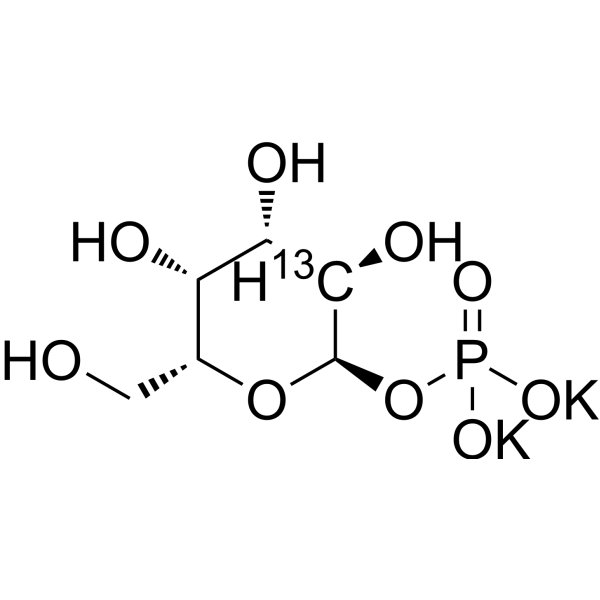
    Galactose 1-phosphate acts as a competitive substrate inhibitor of galactose-1-phosphate uridylyltransferase (GALT). Galactose 1-phosphate is a competitive inhibitor of Phosphoglucomutase, yet the rate at which this enzyme converts Galactose 1-phosphate to Galactose-6-phosphate is 400 times slower than the rate of converting Glucose-1-phosphate. Galactose 1-phosphate can be used in studies related to Saccharomyces cerevisiae infection and type I galactosemia .
    Galactose 1-phosphate
  • HY-13635S

    MK-906-d9

    Isotope-Labeled Compounds 5 alpha Reductase Cancer
    Finasteride-d9 is deuterium labeled Finasteride. Finasteride (MK-906) is a potent and competitive 5α-reductase inhibitor, with an IC50 of 4.2 nM for type II 5α-reductase. Finasteride has approximately a 100-fold greater affinity for type II 5α-reductase enzyme than for the type I enzyme. Finasteride can be used for the research of benign prostatic hyperplasia (BPH) and androgenic alopecia .
    Finasteride-d9
  • HY-E70622

    Endogenous Metabolite Metabolic Disease
    α-L-Iduronidase is key in the catabolism of glycosaminoglycans (GAG) heparan and dermatan sulfate. Measurement of α-L-iduronidase specific enzyme activity is an essential parameter for those studying mucopolysaccharidoses (MPS) type I .
    α-L-Iduronidase
  • HY-155114

    HIV Infection
    HIV-1 inhibitor-59 (Compound I-5b) is a HIV-1 inhibitor, with EC50s of 5.62-171 nM against the wild-type (WT) and mutant HIV-1 strains. HIV-1 inhibitor-59 has moderate RT enzyme inhibitory activity (IC50: 0.094-12.0 μM) .
    HIV-1 inhibitor-59
  • HY-14156

    11β-HSD Metabolic Disease
    11β-HSD1-IN-15 is an inhibitor of 11β-hydroxysteroid dehydrogenase type I (11β-HSD1). 11β-HSD1-IN-15 blocks the conversion of corticosterone to cortisol by binding to the active site of the 11β-HSD1 enzyme. 11β-HSD1-IN-15 can be used to investigate the role of 11β-HSD1 enzymes IN the development of metabolic syndrome, obesity, cognitive decline and type 2 diabetes .
    11β-HSD1-IN-15
  • HY-P1792A

    Angiotensin Receptor Metabolic Disease Endocrinology
    Angiotensin II (1-4), human (TFA) is an endogenous peptide produced from AT I by angiotensin-converting-enzyme (ACE). Angiotensin II binds the AT II type 1 (AT1) receptor, stimulating GPCRs in vascular smooth muscle cells and increasing intracellular Ca 2+ levels. Angiotensin II also acts at the Na +/H + exchanger in the proximal tubules of the kidney .
    Angiotensin II (1-4), human TFA
  • HY-E70902

    Topoisomerase Metabolic Disease
    Topoisomerase II, Yeast (EC 5.99.1.3) is a nuclear enzyme that play essential roles in DNA replication, transcription, chromosome segregation, and recombination. All cells have two major forms of topoisomerases: type I, which makes single-stranded cuts in DNA, and type II enzymes, which cut and pass double-stranded DNA.
    Topoisomerase II, Yeast
  • HY-E70900

    Topoisomerase Metabolic Disease
    Topoisomerase II β, Human (EC 5.99.1.3) is a nuclear enzyme that play essential roles in DNA replication, transcription, chromosome segregation, and recombination. All cells have two major forms of topoisomerases: type I, which makes single-stranded cuts in DNA, and type II enzymes, which cut and pass double-stranded DNA.
    Topoisomerase II β, Human
  • HY-E70901

    Topoisomerase Metabolic Disease
    Topoisomerase II α, Human (EC 5.99.1.3) is a nuclear enzyme that play essential roles in DNA replication, transcription, chromosome segregation, and recombination. All cells have two major forms of topoisomerases: type I, which makes single-stranded cuts in DNA, and type II enzymes, which cut and pass double-stranded DNA.
    Topoisomerase II α, Human
  • HY-182926

    DNA/RNA Synthesis Topoisomerase Cancer
    Topoisomerase I/II-IN-9 is a topoisomerase I/II inhibitor (IC50<10 μM) and a DNA damage inducer. Topoisomerase I/II-IN-9 blocks the interaction between the enzyme and DNA by binding to the DNA-binding pocket of the enzyme. Topoisomerase I/II-IN-9 activates the cGAS-STING pathway and promotes the accumulation of cytoplasmic double-stranded DNA. This further drives the production of type I interferons, CCL5, CXCL10 and interferon-stimulated genes, and induces anti-tumor immune responses in vivo. Topoisomerase I/II-IN-9 can be applied to the research of related diseases such as triple-negative breast cancer, colorectal cancer and gastric cancer .
    Topoisomerase I/II-IN-9
  • HY-186045

    Histone Methyltransferase Apoptosis DNA/RNA Synthesis ATP-binding cassette (ABC) transporters Cancer
    SKLB06489 is a selective and orally active inhibitor of type I PRMT enzymes, with IC50 values of 64.55 nM (PRMT1), 4.21 nM (PRMT6), and 51.27 nM (PRMT8). SKLB06489 inhibits cell proliferation, colony formation, DNA replication, and DNA damage repair in cancer cells. SKLB06489 induces G0/G1-phase cell cycle arrest and apoptosis in cancer cells. SKLB06489 enhances intracellular cholesterol efflux via ABCA1 and ABCG1 upregulation, disrupts cholesterol metabolic homeostasis, and suppresses tumor growth in subcutaneous xenograft models. SKLB06489 can be used for the research of triple-negative breast cancer (TNBC) .
    SKLB06489

Inquiry Online

Your information is safe with us. * Required Fields.

Salutation


Country or Region *

Applicant Name *


Organization Name *

Department *


Email Address *


Product Name *

Cat. No.


Requested quantity *

Phone Number *


Remarks

Inquiry Online

Inquiry Information

Product Name:
Cat. No.:
Quantity:
MCE Japan Authorized Agent:

