Search Result
Results for "
vitamin-b6
" in MedChemExpress (MCE) Product Catalog:
7
Isotope-Labeled Compounds
| Cat. No. |
Product Name |
Target |
Research Areas |
Chemical Structure |
-
- HY-B1744
-
-
-
- HY-B1328
-
-
-
- HY-N0682
-
-
-
- HY-W011727A
-
|
Pyridoxal phosphate monohydrate
|
Endogenous Metabolite
Amyloid-β
ERK
|
Neurological Disease
Metabolic Disease
Cancer
|
|
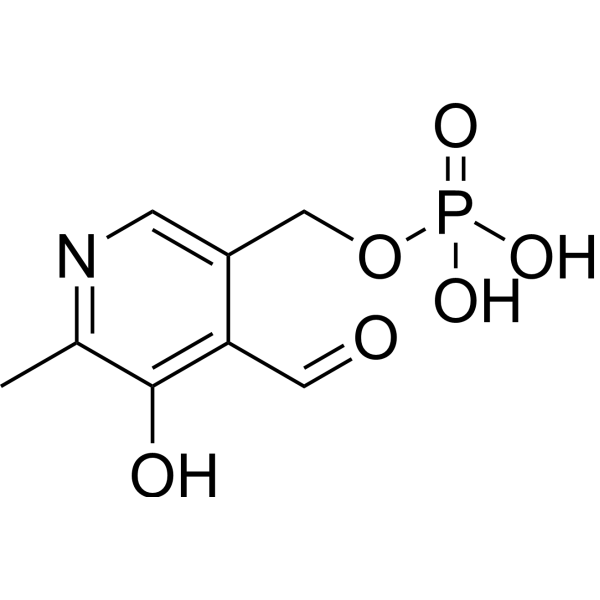
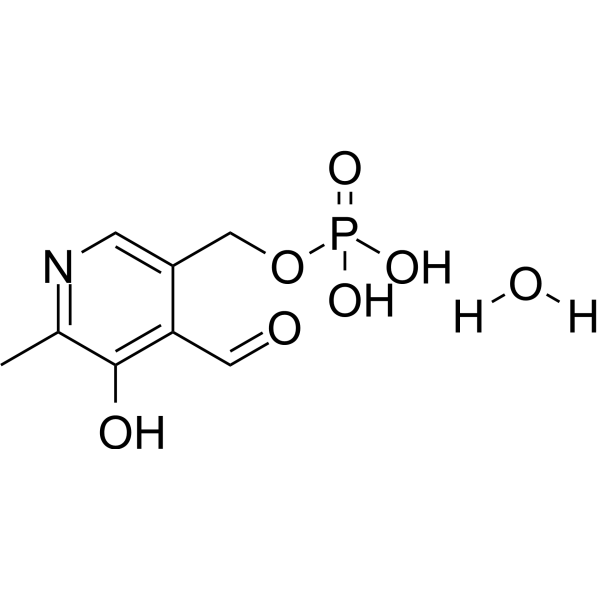
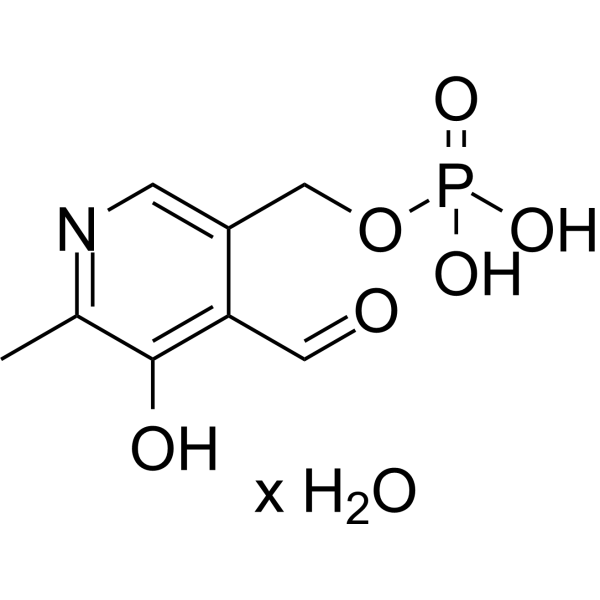
Pyridoxal 5'-phosphate monohydrate, the active form of vitamin B6, is an essential cofactor for multiple enzymes, including aromatic l-amino acid decarboxylase that catalyzes the final stage in the production of the neurotransmitters dopamine and serotonin. Pyridoxal 5'-phosphate monohydrate is the most important coenzyme variant in the process of vitamin B6 intracellular phosphorylation and is interconvertible with other variants, including pyridoxine 5′‐phosphate (PNP) and pyridoxamine 5′‐phosphate (PMP) .
|
-
-
- HY-N0682S3
-
|
Pyridoxol-13C4 hydrochloride; vitamin b6-13C4 hydrochloride
|
Isotope-Labeled Compounds
Endogenous Metabolite
Keap1-Nrf2
|
Neurological Disease
|
|
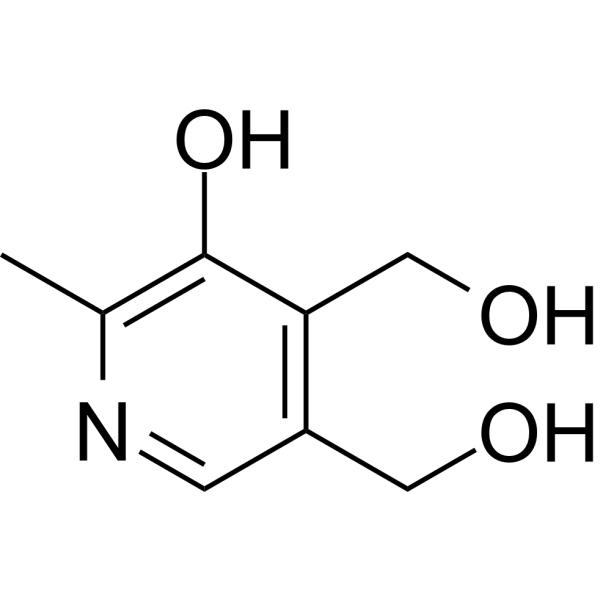
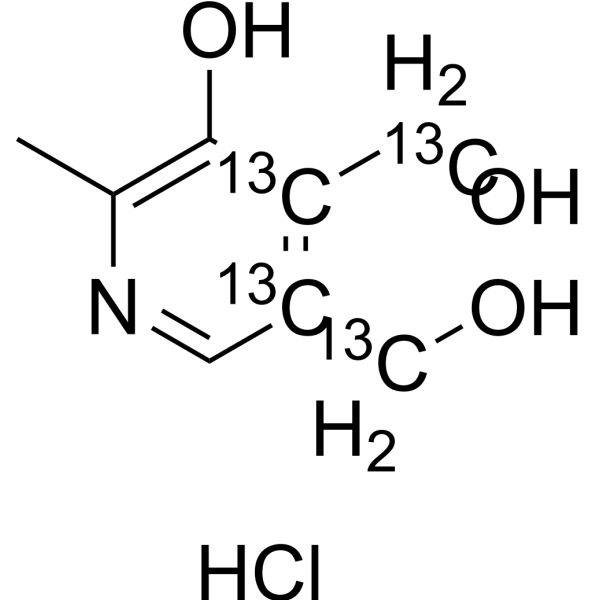
Pyridoxine- 13C4 (hydrochloride) is the 13C-labeled Pyridoxine (hydrochloride). Pyridoxine hydrochloride (Pyridoxol; Vitamin B6) is a pyridine derivative. Pyridoxine (Pyridoxol; Vitamin B6) exerts antioxidant effects in cell model of Alzheimer's disease via the Nrf-2/HO-1 pathway.
|
-
-
- HY-W027446
-
|
|
Endogenous Metabolite
|
Neurological Disease
Metabolic Disease
|
|
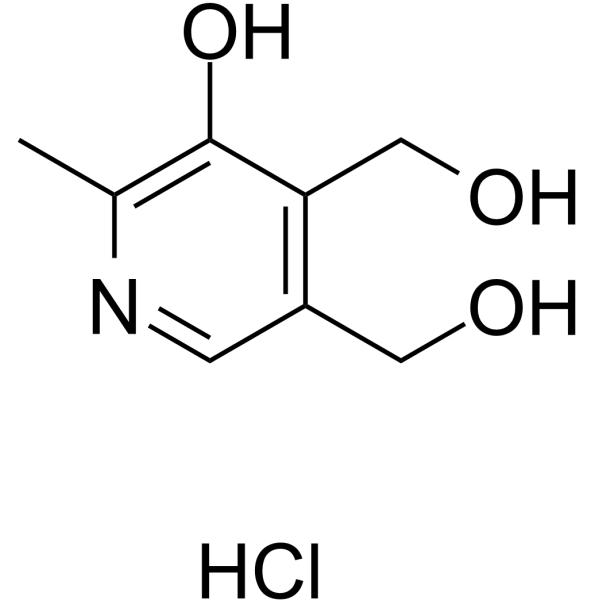
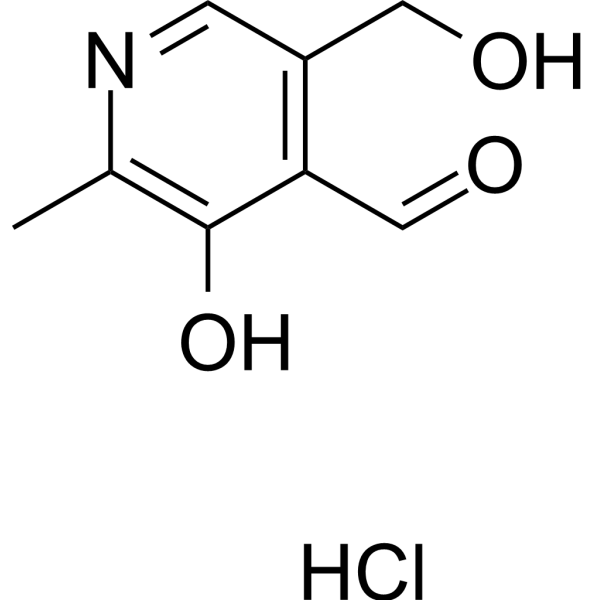
Pyridoxal hydrochloride, the hydrochloride form of Pyridoxal (HY-107469), is a newly developed neuroprotective agent. Pyridoxal hydrochloride is one of the major forms of vitamin B6. Pyridoxal hydrochloride is solvolyzed in methanol to form pyridoxal monomethylacetal. Pyridoxal is phosphorylated by pyridoxal kinase to Pyridoxal phosphate (HY-B1744). Pyridoxal is oxidized by the liver to 4-Pyridoxic acid (HY-113493) which is excreted in the urine. Pyridoxal hydrochloride is proming for research of carpal tunnel syndrome (CTS) .
|
-
-
- HY-W011727S
-
|
Pyridoxal 5'-phosphate-d3
|
Endogenous Metabolite
Amyloid-β
ERK
|
Neurological Disease
Metabolic Disease
Cancer
|
|
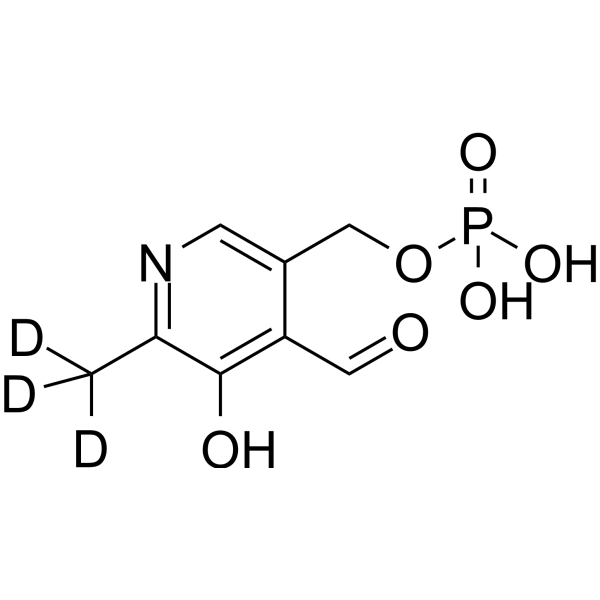
Pyridoxal Phosphate-d3 is the deuterium labeled Pyridoxal 5'-phosphate. Pyridoxal 5'-phosphate, the active form of vitamin B6, is an essential cofactor for multiple enzymes, including aromatic l-amino acid decarboxylase that catalyzes the final stage in the production of the neurotransmitters dopamine and serotonin. Pyridoxal 5'-phosphate is the most important coenzyme variant in the process of vitamin B6 intracellular phosphorylation and is interconvertible with other variants, including pyridoxine 5′‐phosphate (PNP) and pyridoxamine 5′-phosphate (PMP) .
|
-
-
- HY-B0910A
-
|
Pyritinol dihydrochloride; Pyridoxine disulfide dihydrochloride; vitamin b6 disulfide dihydrochloride
|
Drug Derivative
|
Infection
Neurological Disease
Metabolic Disease
Inflammation/Immunology
Cancer
|
|
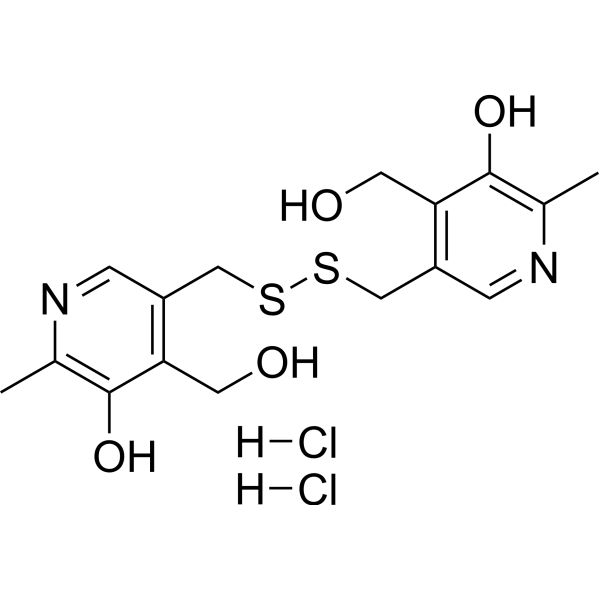
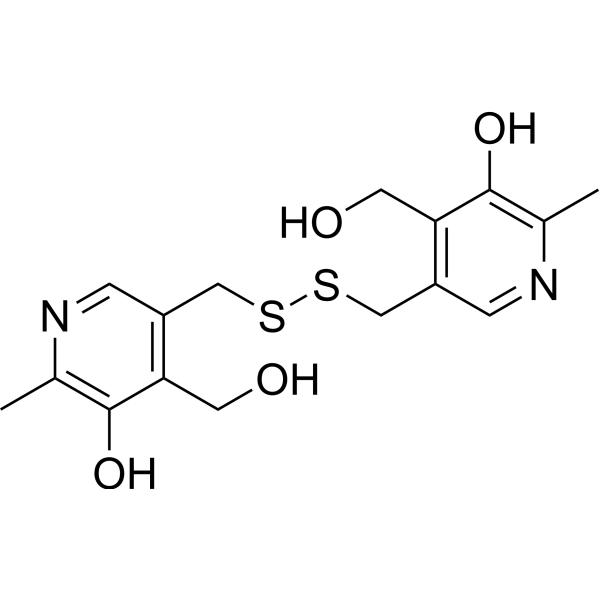
Pyrithioxin (Pyritinol) dihydrochloride is the dihydrochloride salt of Pyrithioxin (HY-B0910). Pyrithioxin (Pyritinol) is an orally active neurodynamic compound. Pyrithioxin can promote the metabolism of glucose and amino acids, increase carotid blood flow and improve cerebral blood flow. Pyrithioxin exhibits anti-inflammation, anti-tumor and neuroprotective effect. Pyrithioxin can be used for the researches of cancer, inflammation, immunology, metabolic and neurological disease such as cerebral infarct, epilepsy, fibrosarcomas and rheumatoid polyarthritis [6] .
|
-
-
- HY-W011727
-
|
Pyridoxal phosphate hydrate
|
Endogenous Metabolite
Amyloid-β
ERK
|
Neurological Disease
Metabolic Disease
Cancer
|
|
Pyridoxal 5'-phosphate hydrate, the active form of vitamin B6, is an essential cofactor for multiple enzymes, including aromatic l-amino acid decarboxylase that catalyzes the final stage in the production of the neurotransmitters dopamine and serotonin. Pyridoxal 5'-phosphate hydrate is the most important coenzyme variant in the process of vitamin B6 intracellular phosphorylation and is interconvertible with other variants, including pyridoxine 5′‐phosphate (PNP) and pyridoxamine 5′-phosphate (PMP) .
|
-
-
- HY-113493
-
|
|
Endogenous Metabolite
|
Metabolic Disease
|
|
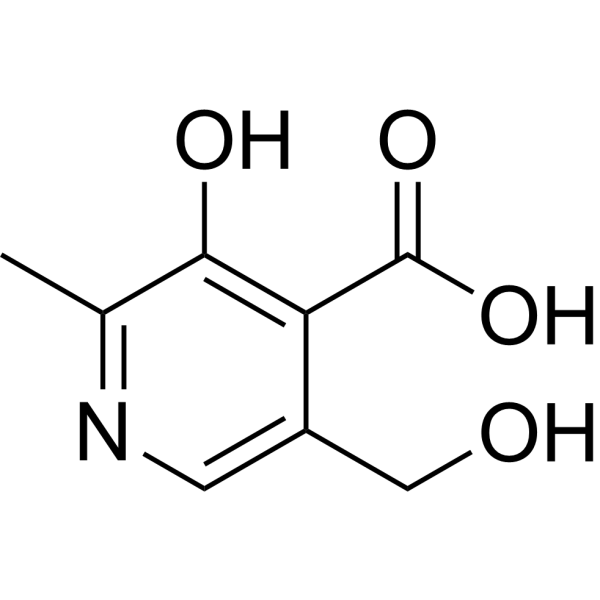
4-Pyridoxic acid is an endogenous substrate of renal organic anion transporters (OAT1/3) and a catabolite of vitamin B6. 4-Pyridoxic acid is excreted through OAT1/3-mediated tubular active secretion, which can reflect OAT1/3 activity. Elevated plasma concentrations of 4-Pyridoxic acid are associated with decreased OAT1/3 activity in chronic kidney disease (CKD) and can be used as a biomarker to reflect the severity of knee osteoarthritis (KOA) and lumbar spondylosis (LS) .
|
-
-
- HY-116073
-
|
|
Acyltransferase
|
Infection
Cancer
|
|
L-Penicillamine is an orally active serine palmitoyltransferase (SPT) inhibitor. L-Penicillamine inactivates the PLP cofactor by forming adducts, thereby inhibiting SPT activity and reducing sphingolipid biosynthesis. L-Penicillamine not only blocks tumor access to vitamin B6, but also stabilizes the human papillomavirus 16 E6 oncoprotein monomer and inhibits its polymerization, exhibiting a unique anticancer mechanism. L-Penicillamine effectively delays the growth of Sarcoma-180, induces tumor necrosis and prolongs survival (though long-term use may lead to Pyridoxine (HY-B1328) deficiency and weight loss) .
|
-

-
- HY-B1746
-
|
|
Endogenous Metabolite
|
Neurological Disease
|
|
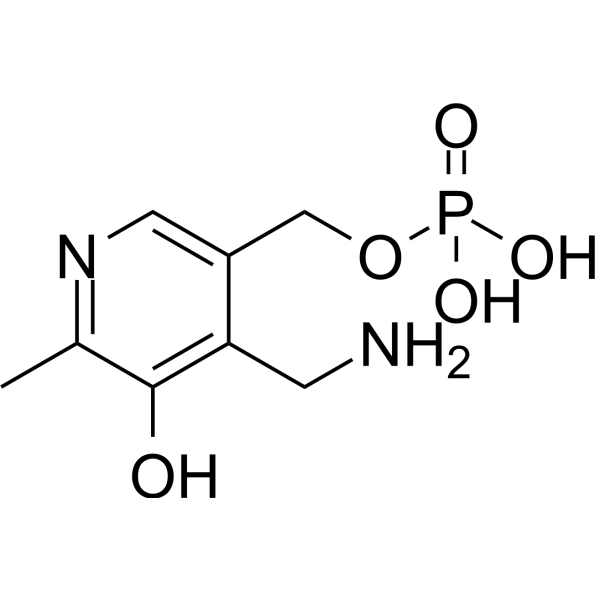
Pyridoxamine 5′-phosphate is the active form of vitamin B6 bound to phosphoric acid. Pyridoxamine 5′-phosphate is the aminated form of Pyridoxal 5'-?phosphate monohydrate (HY-W011727A) and as co-factor of a variety of enzymes central metabolite, potent antioxidant, vitamin B6 vitamer and enzyme substrate. Pyridoxamine 5′-phosphate can be interconverted with pyridoxal 5'-phosphate hydrate .
|
-
-
- HY-Y0032
-
|
|
Orthopoxvirus
|
Infection
Others
Cancer
|
|
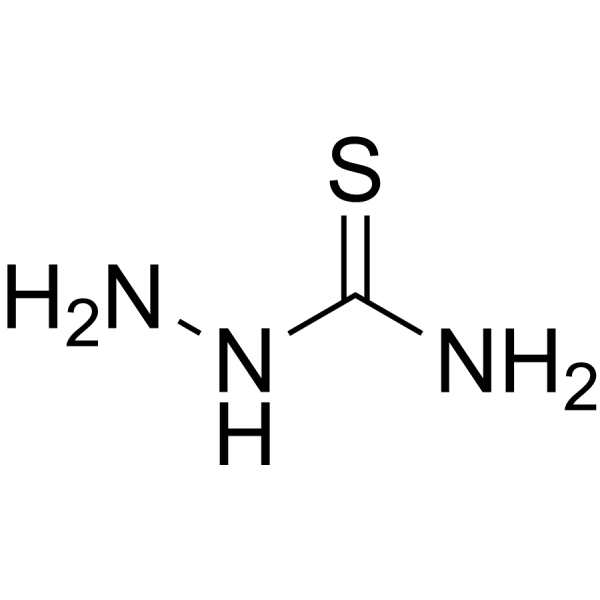
Thiosemicarbazide is a vitamin B6 antagonist with anti-acne activity. Thiosemicarbazide is also a well-known source in the synthesis of heterocycles, and its derivatives have potential anticancer activity. Thiosemicarbazide (TSC: HL1) reacts with metal salts, urea (U), to prepare Co(II) and Cu(I) metal complexes. Thiosemicarbazide is also used in the fields of media communications and optical storage, and in the spectrophotometric detection of metals .
|
-
-
- HY-N0682S1
-
|
Pyridoxol-d2 hydrochloride; vitamin b6-d2 hydrochloride
|
Isotope-Labeled Compounds
Endogenous Metabolite
Keap1-Nrf2
|
Neurological Disease
|
|
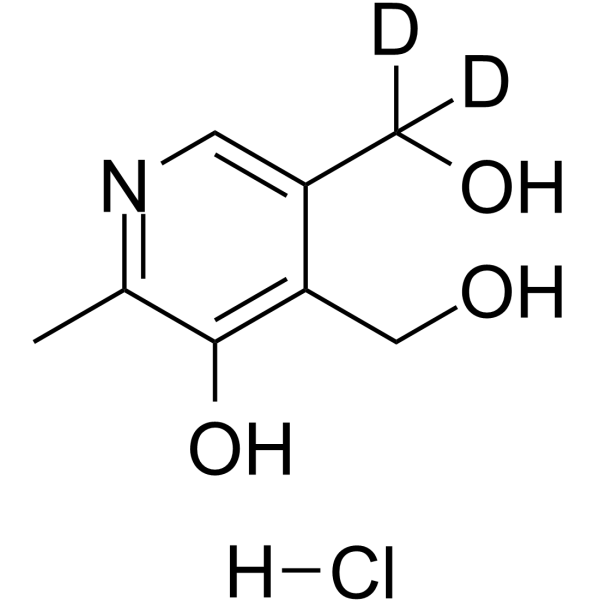
Pyridoxine-d2 (hydrochloride) is the deuterium labeled Pyridoxine hydrochloride. Pyridoxine hydrochloride is a pyridine derivative. Pyridoxine (Pyridoxol; Vitamin B6) exerts antioxidant effects in cell model of Alzheimer's disease via the Nrf-2/HO-1 pathway.
|
-
-
- HY-B1744R
-
|
Pyridoxal 5′-phosphate (Standard); Pyridoxyl phosphate (Standard)
|
Reference Standards
Reverse Transcriptase
Endogenous Metabolite
|
Neurological Disease
|
|
Pyridoxal phosphate (Standard) is the analytical standard of Pyridoxal phosphate. This product is intended for research and analytical applications. Pyridoxal phosphate is the active form of vitamin B6, acts as an inhibitor of reverse transcriptases, and is used for the treatment of tardive dyskinesia.
|
-

-
- HY-107469
-
|
Pyridoxaldehyde
|
Endogenous Metabolite
|
Neurological Disease
Metabolic Disease
|
|
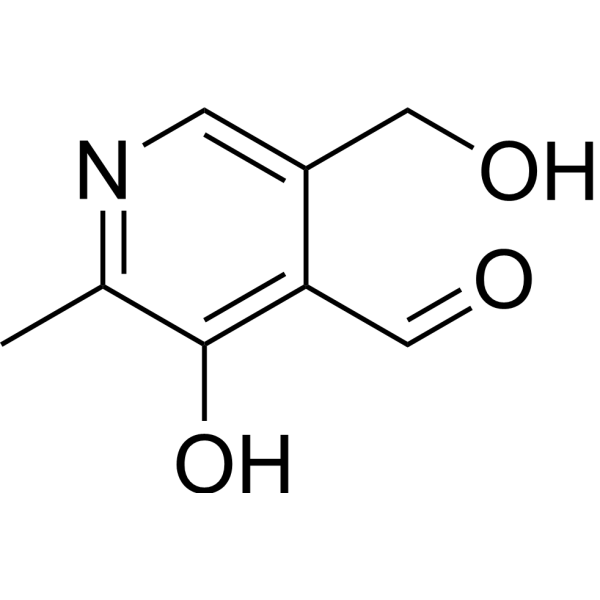
Pyridoxal is a neuroprotectant. Pyridoxal is one of the main forms of vitamin B6. Pyridoxal is phosphorylated by pyridoxal kinase to pyridoxal phosphate (HY-B1744). Pyridoxal is oxidized by the liver to 4-pyridoxic acid (HY-113493) and excreted in the urine. Pyridoxal has shown promise in the study of carpal tunnel syndrome (CTS) .
|
-
-
- HY-N0682S
-
|
Pyridoxol-d3 hydrochloride; vitamin b6-d3 hydrochloride
|
Endogenous Metabolite
Keap1-Nrf2
|
Neurological Disease
|
|
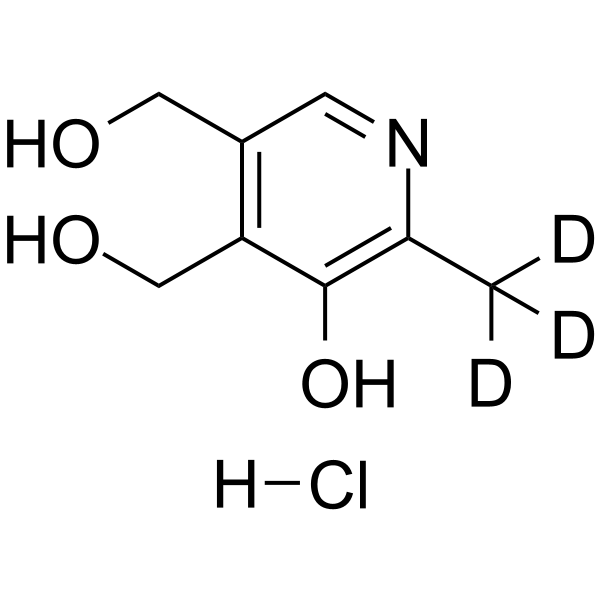
Pyridoxine-d3 (hydrochloride) is the deuterium labeled Pyridoxine hydrochloride. Pyridoxine hydrochloride (Pyridoxol; Vitamin B6) is a pyridine derivative. Pyridoxine (Pyridoxol; Vitamin B6) exerts antioxidant effects in cell model of Alzheimer's disease via the Nrf-2/HO-1 pathway.
|
-
-
- HY-113493S1
-
-
-
- HY-107469R
-
|
Pyridoxaldehyde (Standard)
|
Endogenous Metabolite
Reference Standards
|
Neurological Disease
Metabolic Disease
|
|
Pyridoxal (Standard) is the analytical standard of Pyridoxal. This product is intended for research and analytical applications. Pyridoxal is a neuroprotectant. Pyridoxal is one of the main forms of vitamin B6. Pyridoxal is phosphorylated by pyridoxal kinase to pyridoxal phosphate (HY-B1744). Pyridoxal is oxidized by the liver to 4-pyridoxic acid (HY-113493) and excreted in the urine. Pyridoxal has shown promise in the study of carpal tunnel syndrome (CTS)[1][2][3].
|
-

-
- HY-N0682R
-
|
vitamin b6 hydrochloride (Standard)
|
Reference Standards
Endogenous Metabolite
Keap1-Nrf2
|
Neurological Disease
Cancer
|
|
Pyridoxine (hydrochloride) (Standard) is the analytical standard of Pyridoxine (hydrochloride). This product is intended for research and analytical applications. Pyridoxine hydrochloride (Pyridoxol; Vitamin B6) is a pyridine derivative. Pyridoxine (Pyridoxol; Vitamin B6) exerts antioxidant effects in cell model of Alzheimer's disease via the Nrf-2/HO-1 pathway.
|
-

-
- HY-B0910
-
|
Pyritinol; Pyridoxine disulfide; vitamin b6 disulfide
|
Drug Derivative
|
Neurological Disease
Metabolic Disease
Inflammation/Immunology
Cancer
|
|
Pyrithioxin (Pyritinol) is an orally active neurodynamic compound. Pyrithioxin can promote the metabolism of glucose and amino acids, increase carotid blood flow and improve cerebral blood flow. Pyrithioxin exhibits anti-inflammation, anti-tumor and neuroprotective effect. Pyrithioxin can be used for the researches of cancer, inflammation, immunology, metabolic and neurological disease such as cerebral infarct, epilepsy, fibrosarcomas and rheumatoid polyarthritis [6] .
|
-
-
- HY-B1744S
-
-
-
- HY-113493R
-
|
|
Reference Standards
Endogenous Metabolite
|
Metabolic Disease
|
|
4-Pyridoxic acid (Standard) is the analytical standard of 4-Pyridoxic acid. This product is intended for research and analytical applications. 4-Pyridoxic acid is a catabolic product of vitamin B6 which is excreted in the urine.
|
-

-
- HY-177828
-
|
|
Liposome
|
Metabolic Disease
|
|
Liposomal Vitamin B6 is a specialized delivery system that encapsulates vitamin B6 within tiny liposomes. These liposomes act as protective shells, enhancing the absorption and bioavailability of vitamin B6. Vitamin B6 (Thiamin) is a cofactor required for
|
-

-
- HY-W747907
-
|
β-Pyracin
|
Endogenous Metabolite
|
Others
|
|
4-Pyridoxolactone (β-Pyracin) is a critical substrate in vitamin B6 degradation pathway I, primarily involved in the vitamin B6 metabolic process mediated by soil microorganisms. 4-Pyridoxolactone serves as the specific substrate for 4-pyridoxolactonase, undergoing a zinc-dependent lactone-ring hydrolysis reaction catalyzed by this enzyme to generate 4-pyridoxic acid (4PA) .
|
-

-
- HY-W717654
-
|
|
Endogenous Metabolite
|
Metabolic Disease
|
|
1-Deoxy-D-xylulose 5-phosphate (DXP) is a biosynthetic precursor to isoprenoids, thiamin (vitamin B1), and pyridoxol (vitamin B6). 1-Deoxy-D-xylulose 5-phosphate can be utilized in metabolic research .
|
-

-
- HY-Y0032R
-
|
|
Orthopoxvirus
Reference Standards
|
Infection
Others
Cancer
|
|
Thiosemicarbazide is a vitamin B6 antagonist with anti-acne activity. Thiosemicarbazide is also a well-known source in the synthesis of heterocycles, and its derivatives have potential anticancer activity. Thiosemicarbazide (TSC: HL1) reacts with metal salts, urea (U), to prepare Co(II) and Cu(I) metal complexes. Thiosemicarbazide is also used in the fields of media communications and optical storage, and in the spectrophotometric detection of metals .
|
-

-
- HY-N0682S2
-
|
Pyridoxol-d5 hydrochloride; vitamin b6-d5 hydrochloride
|
Keap1-Nrf2
Endogenous Metabolite
|
Neurological Disease
|
|
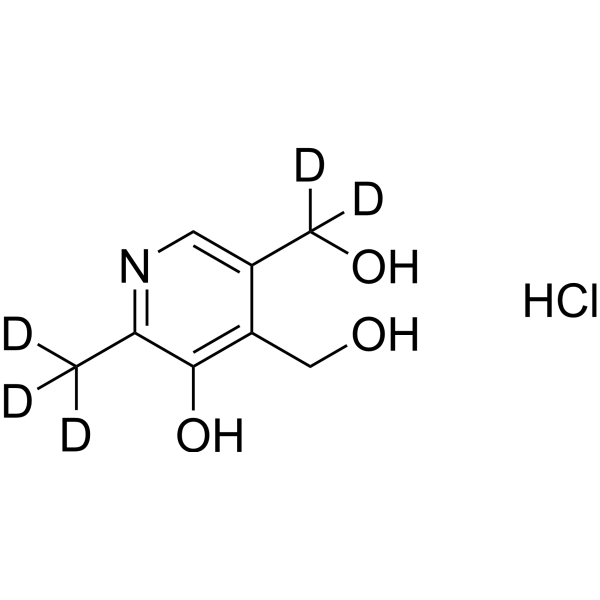
Pyridoxine-d5 (hydrochloride) is the deuterium labeled Pyridoxine hydrochloride . Pyridoxine hydrochloride (Pyridoxol;Vitamin B6) is a pyridine derivative. Pyridoxine (Pyridoxol;Vitamin B6) exerts antioxidant effects in cell model of Alzheimer's disease via the Nrf-2/HO-1 pathway .
|
-
-
- HY-113601
-
|
|
Bacterial
|
Others
|
|
Linatine is an antagonist for Vitamin B6 (HY-150525). Linatine inhibits the growth of chicken and Azotobacter vinelandii, induces vitamin B6 deficiency symptoms in chickens .
|
-

-
- HY-W011727AR
-
|
Pyridoxal phosphate monohydrate (Standard)
|
Reference Standards
Endogenous Metabolite
Amyloid-β
ERK
|
Neurological Disease
Metabolic Disease
Cancer
|
|
Pyridoxal 5'-phosphate (monohydrate) (Standard) is the analytical standard of Pyridoxal 5'-phosphate (monohydrate). This product is intended for research and analytical applications. Pyridoxal 5'-phosphate monohydrate, the active form of vitamin B6, is an essential cofactor for multiple enzymes, including aromatic l-amino acid decarboxylase that catalyzes the final stage in the production of the neurotransmitters dopamine and serotonin. Pyridoxal 5'-phosphate monohydrate is the most important coenzyme variant in the process of vitamin B6 intracellular phosphorylation and is interconvertible with other variants, including pyridoxine 5′‐phosphate (PNP) and pyridoxamine 5′-phosphate (PMP) .
|
-

-
- HY-B0910AR
-
|
Pyritinol dihydrochloride (Standard); Pyridoxine disulfide dihydrochloride (Standard); vitamin b6 disulfide dihydrochloride (Standard)
|
Reference Standards
Drug Derivative
|
Neurological Disease
Metabolic Disease
Inflammation/Immunology
Cancer
|
|
Pyrithioxin (Pyritinol) dihydrochloride (Standard) is the analytical standard of Pyrithioxin dihydrochloride (HY-B0910A). Pyrithioxin (Pyritinol) is an orally active neurodynamic compound. Pyrithioxin can promote the metabolism of glucose and amino acids, increase carotid blood flow and improve cerebral blood flow. Pyrithioxin exhibits anti-inflammation, anti-tumor and neuroprotective effect. Pyrithioxin can be used for the researches of cancer, inflammation, immunology, metabolic and neurological disease such as cerebral infarct, epilepsy, fibrosarcomas and rheumatoid polyarthritis [6] .
|
-

-
- HY-176959
-
|
|
Drug Intermediate
|
Others
|
|
1-Amino-3-(phosphonooxy)-2-propanone is a drug intermediate that can be used for the synthesis of vitamin B6 .
|
-

-
- HY-164825
-
|
|
Endogenous Metabolite
|
Others
|
|
Pyridoxine tri(2-hexyldecanoate) is a derivative of Vitamin B6 (HY-150525). Pyridoxine tri(2-hexyldecanoate) is a cosmetic ingredient .
|
-

-
- HY-E70999
-
|
|
Endogenous Metabolite
|
Metabolic Disease
|
|
L-Histidine Decarboxylase, Lactobacillus 30a (EC 4.1.1.22) catalyzes the conversion of histidine to histamine with the help of vitamin B6. The specific reaction is as follows: Histidine decarboxylase catalyzes the conversion of histidine to histamine.
|
-

-
- HY-W011727R
-
|
Pyridoxal phosphate hydrate (Standard)
|
Endogenous Metabolite
Reference Standards
Amyloid-β
ERK
|
Neurological Disease
Metabolic Disease
Cancer
|
|
Pyridoxal 5'-phosphate (hydrate) (Standard) is the analytical standard of Pyridoxal 5'-phosphate (hydrate) (HY-W011727). This product is intended for research and analytical applications. Pyridoxal 5'-phosphate hydrate, the active form of vitamin B6, is an essential cofactor for multiple enzymes, including aromatic l-amino acid decarboxylase that catalyzes the final stage in the production of the neurotransmitters dopamine and serotonin. Pyridoxal 5'-phosphate hydrate is the most important coenzyme variant in the process of vitamin B6 intracellular phosphorylation and is interconvertible with other variants, including pyridoxine 5′‐phosphate (PNP) and pyridoxamine 5′-phosphate (PMP) .
|
-

-
- HY-W027446R
-
|
|
Reference Standards
Endogenous Metabolite
|
Neurological Disease
Metabolic Disease
|
|
Pyridoxal hydrochloride (Standard) is the analytical standard of Pyridoxal hydrochloride. This product is intended for research and analytical applications. Pyridoxal hydrochloride, the hydrochloride form of Pyridoxal (HY-107469), is a newly developed neuroprotective agent. Pyridoxal hydrochloride is one of the major forms of vitamin B6. Pyridoxal hydrochloride is solvolyzed in methanol to form pyridoxal monomethylacetal. Pyridoxal is phosphorylated by pyridoxal kinase to Pyridoxal phosphate (HY-B1744). Pyridoxal is oxidized by the liver to 4-Pyridoxic acid (HY-113493) which is excreted in the urine. Pyridoxal hydrochloride is proming for research of carpal tunnel syndrome (CTS) .
|
-

-
- HY-124655
-
|
|
LPL Receptor
|
Inflammation/Immunology
|
|
S1PL-IN-2 (Compound 28) is a potent sphingosine-1-phosphate lyase (S1PL) inhibitor with an IC50 of 120 nM. S1PL-IN-2 shows an IC50 of 230 nM on HEK293 cells. S1PL-IN-2 block the conversion of Vitamin B6 into the active pyridoxal-4-phosphate cofactor required for S1P lyase activity. S1PL-IN-2 can be used for the researches of inflammation and immunology, such as rheumatoid arthritis .
|
-

| Cat. No. |
Product Name |
Target |
Research Area |
-
- HY-116073
-
|
|
Acyltransferase
|
Infection
Cancer
|
|
L-Penicillamine is an orally active serine palmitoyltransferase (SPT) inhibitor. L-Penicillamine inactivates the PLP cofactor by forming adducts, thereby inhibiting SPT activity and reducing sphingolipid biosynthesis. L-Penicillamine not only blocks tumor access to vitamin B6, but also stabilizes the human papillomavirus 16 E6 oncoprotein monomer and inhibits its polymerization, exhibiting a unique anticancer mechanism. L-Penicillamine effectively delays the growth of Sarcoma-180, induces tumor necrosis and prolongs survival (though long-term use may lead to Pyridoxine (HY-B1328) deficiency and weight loss) .
|
| Cat. No. |
Product Name |
Category |
Target |
Chemical Structure |
-
- HY-B1744
-
-
-
- HY-B1328
-
-
-
- HY-N0682
-
-
-
- HY-W011727A
-
|
Pyridoxal phosphate monohydrate
|
Ketones, Aldehydes, Acids
Endogenous metabolite
Source Classification
|
Endogenous Metabolite
Amyloid-β
ERK
|
|
Pyridoxal 5'-phosphate monohydrate, the active form of vitamin B6, is an essential cofactor for multiple enzymes, including aromatic l-amino acid decarboxylase that catalyzes the final stage in the production of the neurotransmitters dopamine and serotonin. Pyridoxal 5'-phosphate monohydrate is the most important coenzyme variant in the process of vitamin B6 intracellular phosphorylation and is interconvertible with other variants, including pyridoxine 5′‐phosphate (PNP) and pyridoxamine 5′‐phosphate (PMP) .
|
-
-
- HY-W027446
-
-
-
- HY-B0910A
-
-
-
- HY-W011727
-
-
-
- HY-113493
-
-
-
- HY-B1746
-
-
-
- HY-B1744R
-
-
-
- HY-107469
-
-
-
- HY-107469R
-
-
-
- HY-N0682R
-
-
-
- HY-B0910
-
|
Pyritinol; Pyridoxine disulfide; vitamin b6 disulfide
|
Structural Classification
Natural Products
Endogenous metabolite
Source Classification
|
Drug Derivative
|
|
Pyrithioxin (Pyritinol) is an orally active neurodynamic compound. Pyrithioxin can promote the metabolism of glucose and amino acids, increase carotid blood flow and improve cerebral blood flow. Pyrithioxin exhibits anti-inflammation, anti-tumor and neuroprotective effect. Pyrithioxin can be used for the researches of cancer, inflammation, immunology, metabolic and neurological disease such as cerebral infarct, epilepsy, fibrosarcomas and rheumatoid polyarthritis [6] .
|
-
-
- HY-113493R
-
-
-
- HY-W747907
-
-
-
- HY-W011727AR
-
|
Pyridoxal phosphate monohydrate (Standard)
|
Structural Classification
Ketones, Aldehydes, Acids
Endogenous metabolite
Source Classification
|
Reference Standards
Endogenous Metabolite
Amyloid-β
ERK
|
|
Pyridoxal 5'-phosphate (monohydrate) (Standard) is the analytical standard of Pyridoxal 5'-phosphate (monohydrate). This product is intended for research and analytical applications. Pyridoxal 5'-phosphate monohydrate, the active form of vitamin B6, is an essential cofactor for multiple enzymes, including aromatic l-amino acid decarboxylase that catalyzes the final stage in the production of the neurotransmitters dopamine and serotonin. Pyridoxal 5'-phosphate monohydrate is the most important coenzyme variant in the process of vitamin B6 intracellular phosphorylation and is interconvertible with other variants, including pyridoxine 5′‐phosphate (PNP) and pyridoxamine 5′-phosphate (PMP) .
|
-
-
- HY-B0910AR
-
|
Pyritinol dihydrochloride (Standard); Pyridoxine disulfide dihydrochloride (Standard); vitamin b6 disulfide dihydrochloride (Standard)
|
Structural Classification
Natural Products
Endogenous metabolite
Source Classification
|
Reference Standards
Drug Derivative
|
|
Pyrithioxin (Pyritinol) dihydrochloride (Standard) is the analytical standard of Pyrithioxin dihydrochloride (HY-B0910A). Pyrithioxin (Pyritinol) is an orally active neurodynamic compound. Pyrithioxin can promote the metabolism of glucose and amino acids, increase carotid blood flow and improve cerebral blood flow. Pyrithioxin exhibits anti-inflammation, anti-tumor and neuroprotective effect. Pyrithioxin can be used for the researches of cancer, inflammation, immunology, metabolic and neurological disease such as cerebral infarct, epilepsy, fibrosarcomas and rheumatoid polyarthritis [6] .
|
-
-
- HY-W011727R
-
|
Pyridoxal phosphate hydrate (Standard)
|
Structural Classification
Ketones, Aldehydes, Acids
Endogenous metabolite
Source Classification
|
Endogenous Metabolite
Reference Standards
Amyloid-β
ERK
|
|
Pyridoxal 5'-phosphate (hydrate) (Standard) is the analytical standard of Pyridoxal 5'-phosphate (hydrate) (HY-W011727). This product is intended for research and analytical applications. Pyridoxal 5'-phosphate hydrate, the active form of vitamin B6, is an essential cofactor for multiple enzymes, including aromatic l-amino acid decarboxylase that catalyzes the final stage in the production of the neurotransmitters dopamine and serotonin. Pyridoxal 5'-phosphate hydrate is the most important coenzyme variant in the process of vitamin B6 intracellular phosphorylation and is interconvertible with other variants, including pyridoxine 5′‐phosphate (PNP) and pyridoxamine 5′-phosphate (PMP) .
|
-
-
- HY-W027446R
-
|
|
Structural Classification
Ketones, Aldehydes, Acids
Endogenous metabolite
Source Classification
|
Reference Standards
Endogenous Metabolite
|
|
Pyridoxal hydrochloride (Standard) is the analytical standard of Pyridoxal hydrochloride. This product is intended for research and analytical applications. Pyridoxal hydrochloride, the hydrochloride form of Pyridoxal (HY-107469), is a newly developed neuroprotective agent. Pyridoxal hydrochloride is one of the major forms of vitamin B6. Pyridoxal hydrochloride is solvolyzed in methanol to form pyridoxal monomethylacetal. Pyridoxal is phosphorylated by pyridoxal kinase to Pyridoxal phosphate (HY-B1744). Pyridoxal is oxidized by the liver to 4-Pyridoxic acid (HY-113493) which is excreted in the urine. Pyridoxal hydrochloride is proming for research of carpal tunnel syndrome (CTS) .
|
-
| Cat. No. |
Product Name |
Chemical Structure |
-
- HY-N0682S3
-
|
|
|
Pyridoxine- 13C4 (hydrochloride) is the 13C-labeled Pyridoxine (hydrochloride). Pyridoxine hydrochloride (Pyridoxol; Vitamin B6) is a pyridine derivative. Pyridoxine (Pyridoxol; Vitamin B6) exerts antioxidant effects in cell model of Alzheimer's disease via the Nrf-2/HO-1 pathway.
|
-
-
- HY-W011727S
-
|
|
|
Pyridoxal Phosphate-d3 is the deuterium labeled Pyridoxal 5'-phosphate. Pyridoxal 5'-phosphate, the active form of vitamin B6, is an essential cofactor for multiple enzymes, including aromatic l-amino acid decarboxylase that catalyzes the final stage in the production of the neurotransmitters dopamine and serotonin. Pyridoxal 5'-phosphate is the most important coenzyme variant in the process of vitamin B6 intracellular phosphorylation and is interconvertible with other variants, including pyridoxine 5′‐phosphate (PNP) and pyridoxamine 5′-phosphate (PMP) .
|
-
-
- HY-N0682S1
-
|
|
|
Pyridoxine-d2 (hydrochloride) is the deuterium labeled Pyridoxine hydrochloride. Pyridoxine hydrochloride is a pyridine derivative. Pyridoxine (Pyridoxol; Vitamin B6) exerts antioxidant effects in cell model of Alzheimer's disease via the Nrf-2/HO-1 pathway.
|
-
-
- HY-N0682S
-
|
|
|
Pyridoxine-d3 (hydrochloride) is the deuterium labeled Pyridoxine hydrochloride. Pyridoxine hydrochloride (Pyridoxol; Vitamin B6) is a pyridine derivative. Pyridoxine (Pyridoxol; Vitamin B6) exerts antioxidant effects in cell model of Alzheimer's disease via the Nrf-2/HO-1 pathway.
|
-
-
- HY-113493S1
-
|
|
|
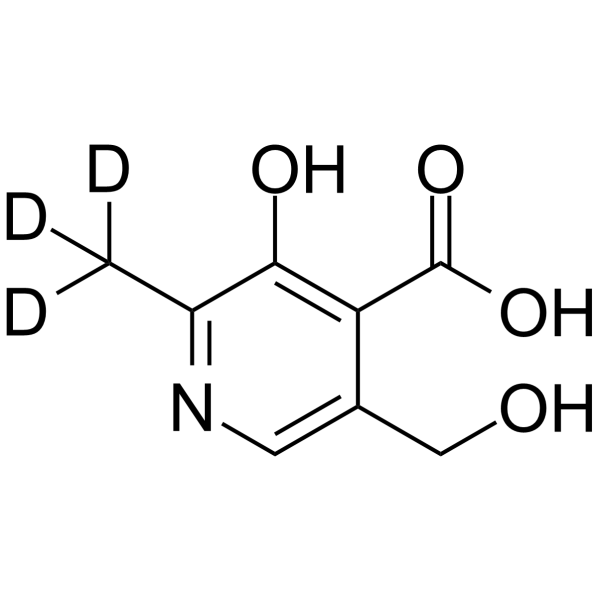
4-Pyridoxic acid-d3 is the deuterium labeled 4-Pyridoxic acid. 4-Pyridoxic acid is a catabolic product of vitamin B6 which is excreted in the urine .
|
-
-
- HY-B1744S
-
|
|
|
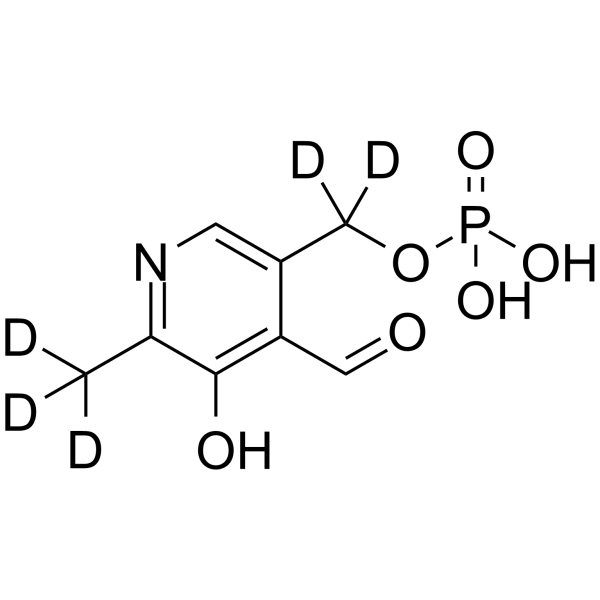
Pyridoxal phosphate-d5 is the deuterium labeled Pyridoxal phosphate. Pyridoxal phosphate is the active form of vitamin B6, acts as an inhibitor of reverse transcriptases, and is used for the treatment of tardive dyskinesia .
|
-
-
- HY-N0682S2
-
|
|
|
Pyridoxine-d5 (hydrochloride) is the deuterium labeled Pyridoxine hydrochloride . Pyridoxine hydrochloride (Pyridoxol;Vitamin B6) is a pyridine derivative. Pyridoxine (Pyridoxol;Vitamin B6) exerts antioxidant effects in cell model of Alzheimer's disease via the Nrf-2/HO-1 pathway .
|
-
| Cat. No. |
Product Name |
|
Classification |
-
- HY-177828
-
|
|
|
Liposome
|
|
Liposomal Vitamin B6 is a specialized delivery system that encapsulates vitamin B6 within tiny liposomes. These liposomes act as protective shells, enhancing the absorption and bioavailability of vitamin B6. Vitamin B6 (Thiamin) is a cofactor required for
|
Your information is safe with us. * Required Fields.
Inquiry Information
- Product Name:
- Cat. No.:
- Quantity:
- MCE Japan Authorized Agent:








