



Pyridoxine
Based on 8 publication(s) in Google Scholar
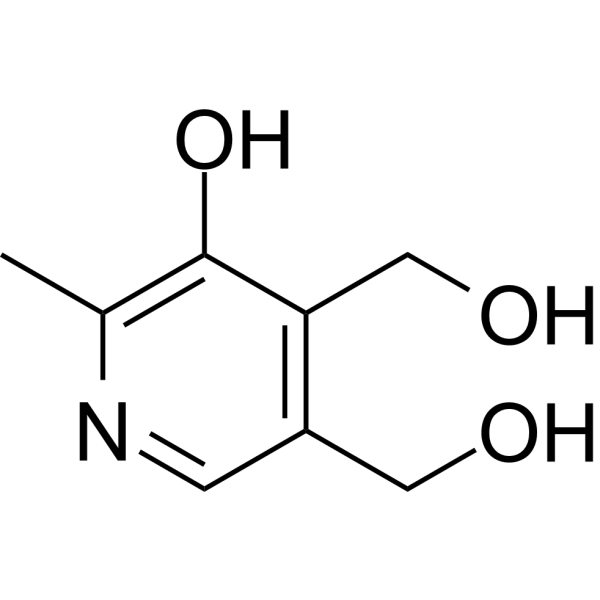
Pyridoxine (Pyridoxol) is one of the components of vitamin B6. Pyridoxine exerts antioxidant effects in cell model of Alzheimer's disease via the Nrf-2/HO-1 pathway.
Nos produits utilisent uniquement pour la recherche. Nous ne vendons pas aux patients.
- Pureté : 99.98%
- CAS No.: 65-23-6
- Formule: C8H11NO3
- Masse moléculaire:169.18
-
Stockage:
4°C, protect from light
* In solvent : -80°C, 6 months; -20°C, 1 month (protect from light)

To place orders, for customer services and technical support, please contact: MedChemExpress USA
Tel: 609-228-6898 E-mail: [email protected] [email protected]


-
 Activité biologique
-
Chemical Information
-
Solvant et solubilité
- Protocole
- Pureté et documentation
- Références
-
 Help & FAQs


-
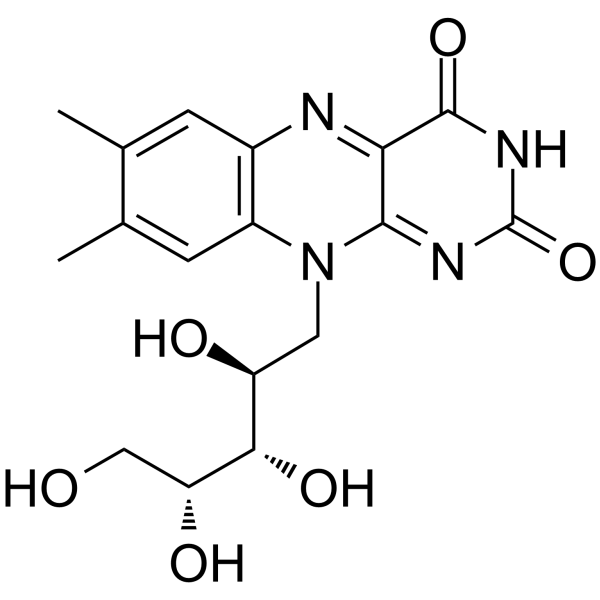
HY-B0456
RiboflavinVitamin B2 -
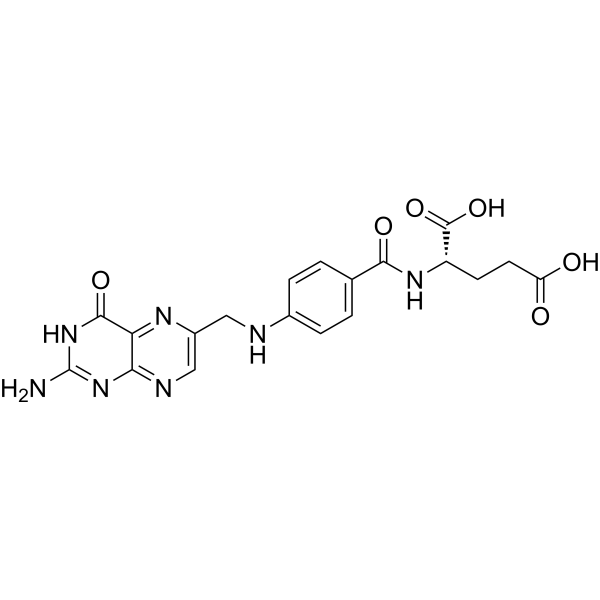
HY-16637
Folic acidB complex -
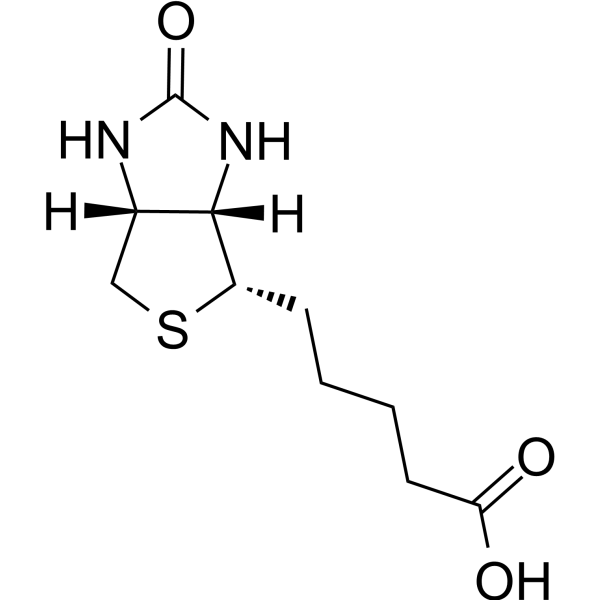
HY-B0511
BiotinVitamin B7 -
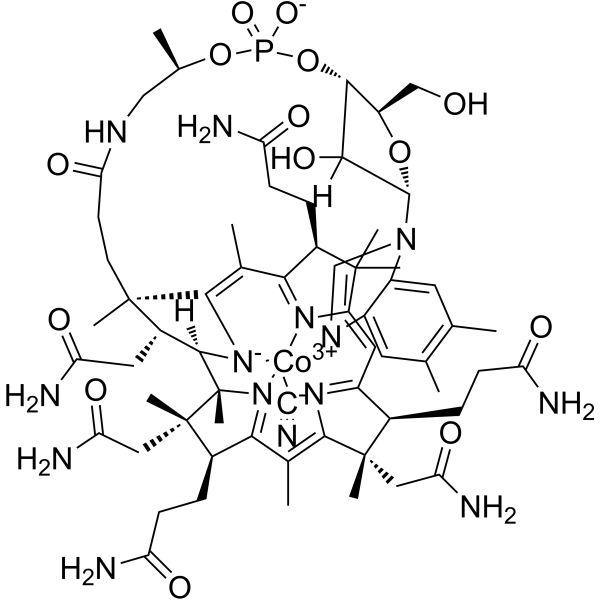
HY-B0315
Vitamin B12Endogenous Metabolite -
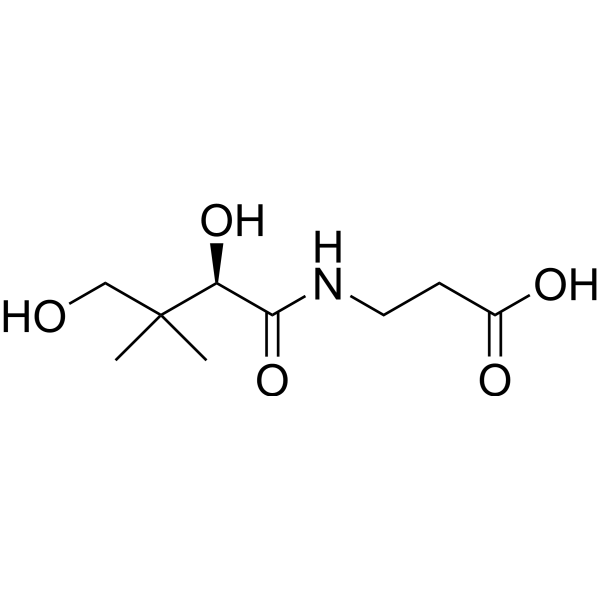
HY-B0430
D-Pantothenic acidEndogenous Metabolite -
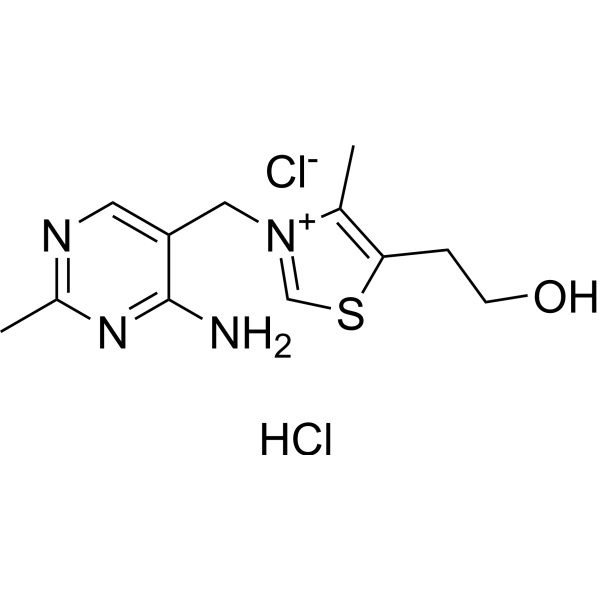
HY-N0680
Thiamine hydrochlorideVitamin B1 -
HY-B0143
NiacinB3 vitamin -
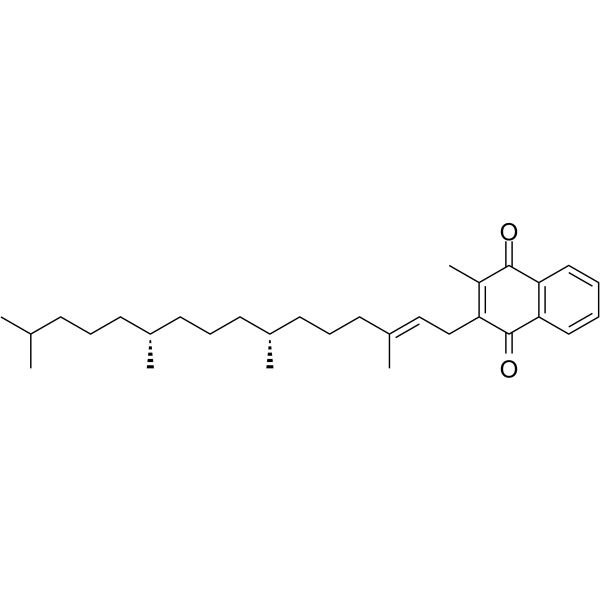
HY-N0684
Vitamin K1Endogenous Metabolite -

HY-B1342
Vitamin A -
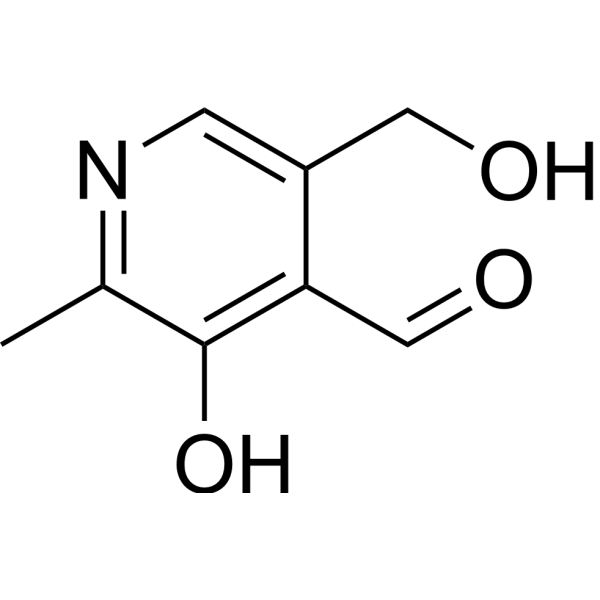
HY-107469
PyridoxalVitamin B6, Pyridoxal analog -
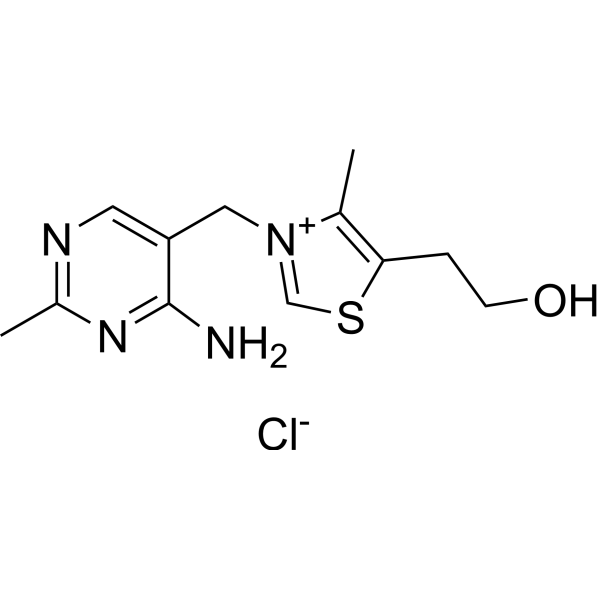
HY-A0100
Thiamine monochlorideNeuronal Effect Enhancer -
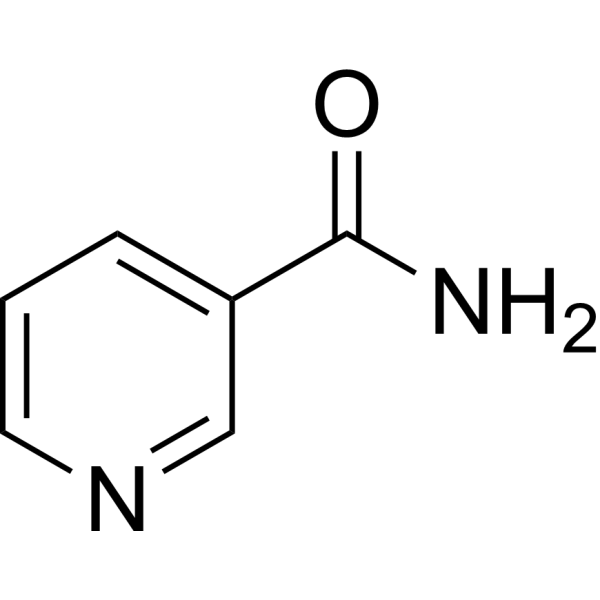
HY-B0150
NicotinamideSIRT Inhibitor
Publications Citing Use of MedChemExpress (MCE) Pyridoxine
More- Nature. 2025 Jul;643(8070):192-200. [Abstract]
- Immunity. 2026 Jul 13:S1074-7613(26)00261-X. [Abstract]
- Nat Commun. 2020 Feb 18;11(1):941. [Abstract]
- Microbiome. 2019 Mar 20;7(1):43. [Abstract]
- Cancer Lett. 2020 Nov 1:492:96-105. [Abstract]
- Dev Cell. 2025 Nov 27:S1534-5807(25)00691-4. [Abstract]
- Molecules. 2023 Apr 11;28(8):3375. [Abstract]
- Laurea Magistrale in Biomedical Engineering, Politecnico di Milano. 2019 Jun.
 Customer Validation & Images

-
IF
-
WB
-
Bio/Physico-chemical Assay
-
Bio/Physico-chemical Assay
-
RT-PCR
Voir tous les produits spécifiques à Isoform Endogenous Metabolite
More

Activité biologique
Description
IC50 & Target
|
Microbial Metabolite |
Human Endogenous Metabolite |
Cellular Effect
|
Cell Line

|
Type | Value | Description | References |
|---|---|---|---|---|
| Sf21 | IC50 |
>1000 μM
Compound: Pyridoxine
|
Inhibition of human BSEP expressed in plasma membrane vesicles of Sf21 cells assessed as inhibition of ATP-dependent [3H]taurocholate uptake
Inhibition of human BSEP expressed in plasma membrane vesicles of Sf21 cells assessed as inhibition of ATP-dependent [3H]taurocholate uptake
|
[PMID: 21965623] |
| Sf21 | IC50 |
>1000 μM
Compound: Pyridoxine
|
Inhibition of Sprague-Dawley rat Bsep expressed in plasma membrane vesicles of Sf21 cells assessed as inhibition of ATP-dependent [3H]taurocholate uptake
Inhibition of Sprague-Dawley rat Bsep expressed in plasma membrane vesicles of Sf21 cells assessed as inhibition of ATP-dependent [3H]taurocholate uptake
|
[PMID: 21965623] |
In Vitro
Pyridoxine exerts a protective potential against AD, attenuates ROS levels, decreases the expressions of cytoplasmic Nrf2, and upregulates whole-cell HO-1 expression[1].
MedChemExpress (MCE) has not independently confirmed the accuracy of these methods. They are for reference only.
Essai clinique
| NCT Number | Sponsor | Condition | Start Date |
Phase
|
|---|---|---|---|---|
| NCT01329991 | 2011-05 | PHASE1 |


Chemical Information
-
CAS No. 65-23-6
-
Appearance Solid
-
Masse moléculaire 169.18
-
Formule C8H11NO3
-
Color White to off-white
-
SMILES
OCC1=C(CO)C(O)=C(C)N=C1
-
Synonyms
Pyridoxol
-
Structure Classification
-
Livraison
Room temperature in continental US; may vary elsewhere.
-
Stockage
4°C, protect from light
* In solvent : -80°C, 6 months; -20°C, 1 month (protect from light)


Publications (8)
-
Journal Impact Factor
-
Most Recent
-
Nature
2025 Jul;643(8070):192-200. PMID: 39695227 -
Immunity
Flavin adenine dinucleotide is an endogenous suppressor for cytosolic DNA and RNA sensors to modulate innate immunity. [Abstract]2026 Jul 13:S1074-7613(26)00261-X. PMID: 42442359 -
Nat Commun
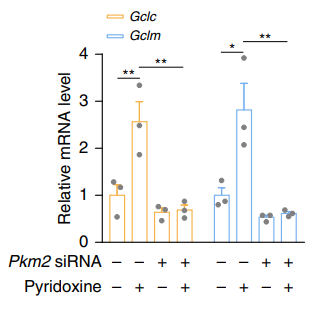
Pyridoxine induces glutathione synthesis via PKM2-mediated Nrf2 transactivation and confers neuroprotection. [Abstract]2020 Feb 18;11(1):941. PMID: 32071304
Pyridoxine purchased from MedChemExpress. Usage Cited in: Nat Commun. 2020 Feb 18;11(1):941. [Abstract]
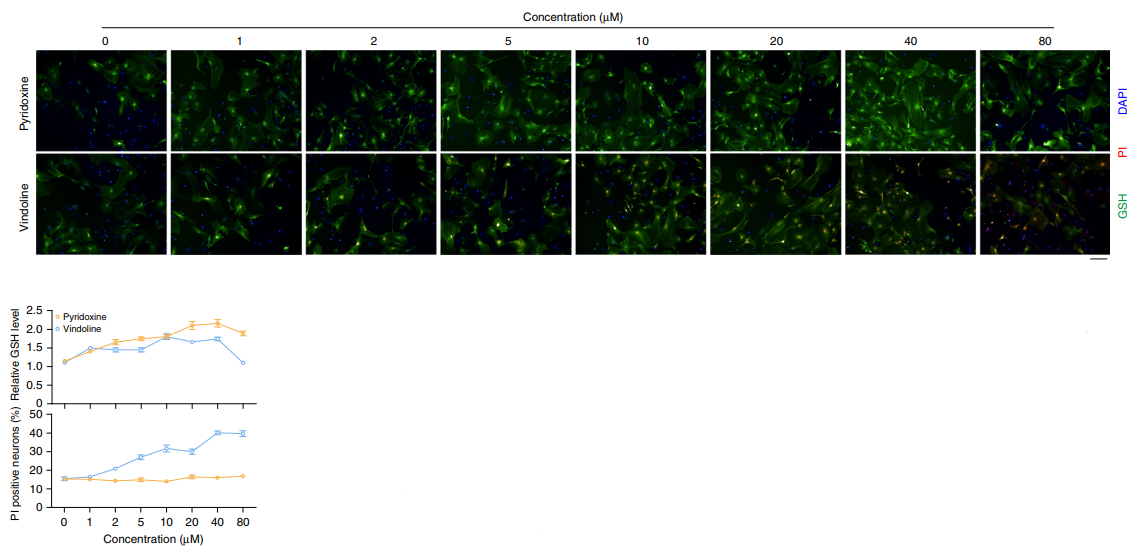
Pyridoxine (1-80 μM; 12 h) had a greater effect on increasing GSH synthesis with lower cytotoxicity than vindoline in primary astrocytes.
Pyridoxine purchased from MedChemExpress. Usage Cited in: Nat Commun. 2020 Feb 18;11(1):941. [Abstract]
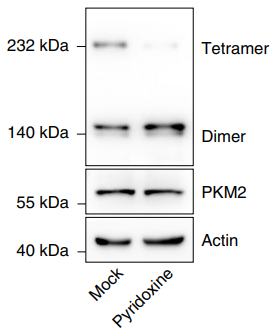
Pyridoxine (5 μM; 12 h) resulted in PKM2 dimerization in astrocytes.
Pyridoxine purchased from MedChemExpress. Usage Cited in: Nat Commun. 2020 Feb 18;11(1):941. [Abstract]
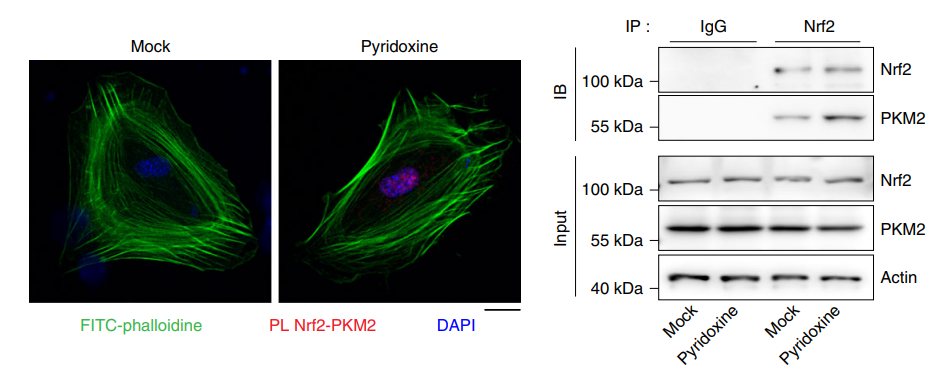
Pyridoxine (5 μM; 12 h) increased PKM2 binding to Nrf2 in astrocytes.
Pyridoxine purchased from MedChemExpress. Usage Cited in: Nat Commun. 2020 Feb 18;11(1):941. [Abstract]
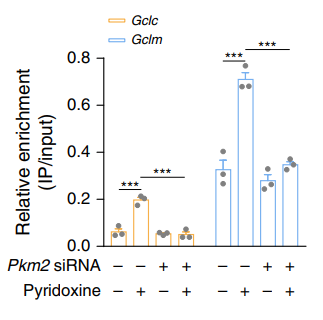
Pyridoxine (5 μM; 12 h) enhanced Nrf2 binding to the promoters of Gclc/Gclm in astrocytes.
Pyridoxine purchased from MedChemExpress. Usage Cited in: Nat Commun. 2020 Feb 18;11(1):941. [Abstract]
Pyridoxine (5 μM; 12 h) promoted the mRNA expression of Gclc and Gclm in astrocytes.
-
Microbiome
Species-specific enhancement of enterohemorrhagic E. coli pathogenesis mediated by microbiome metabolites. [Abstract]2019 Mar 20;7(1):43. PMID: 30890187 -
Cancer Lett
Pyridoxine induces monocyte-macrophages death as specific treatment of acute myeloid leukemia. [Abstract]2020 Nov 1:492:96-105. PMID: 32860849 -
Dev Cell
2025 Nov 27:S1534-5807(25)00691-4. PMID: 41314217 -
Molecules
Untargeted Metabolomics Using UHPLC-HRMS Reveals Metabolic Changes of Fresh-Cut Potato during Browning Process. [Abstract]2023 Apr 11;28(8):3375. PMID: 37110608 -


Solvant et solubilité
In Vitro:
DMSO : 100 mg/mL (591.09 mM; Need ultrasonic; Hygroscopic DMSO has a significant impact on the solubility of product, please use newly opened DMSO)
Please refer to the solubility information to select the appropriate solvent. Once prepared, please aliquot and store the solution to prevent product inactivation from repeated freeze-thaw cycles.
Storage method and period of stock solution: -80°C, 6 months; -20°C, 1 month (protect from light). When stored at -80°C, please use it within 6 months. When stored at -20°C, please use it within 1 month.
Please refer to the solubility information to select the appropriate solvent. Once prepared, please aliquot and store the solution to prevent product inactivation from repeated freeze-thaw cycles.
Storage method and period of stock solution: -80°C, 6 months; -20°C, 1 month (protect from light). When stored at -80°C, please use it within 6 months. When stored at -20°C, please use it within 1 month.
Concentration (start) × Volume (start) = Concentration (final) × Volume (final)
In Vivo:
Select the appropriate dissolution method based on your experimental animal and administration route.
- For the following dissolution methods, please ensure to first prepare a clear stock solution using an In Vitro approach and then sequentially add co-solvents:
- To ensure reliable experimental results, the clarified stock solution can be appropriately stored based on storage conditions. As for the working solution for In Vivo experiments, it is recommended to prepare freshly and use it on the same day.
- The percentages shown for the solvents indicate their volumetric ratio in the final prepared solution. If precipitation or phase separation occurs during preparation, heat and/or sonication can be used to aid dissolution.
Add each solvent one by one: 10% DMSO 40% PEG300 5% Tween-80 45% Saline
Solubility: ≥ 2.08 mg/mL (12.29 mM); Clear solution
This protocol yields a clear solution of ≥ 2.08 mg/mL (saturation unknown).
Taking 1 mL working solution as an example, add 100 μL DMSO stock solution (20.8 mg/mL) to 400 μL PEG300, and mix evenly; then add 50 μL Tween-80 and mix evenly; then add 450 μL Saline to adjust the volume to 1 mL.
Preparation of Saline: Dissolve 0.9 g sodium chloride in ddH₂O and dilute to 100 mL to obtain a clear Saline solution.
Add each solvent one by one: 10% DMSO 90% (20% SBE-β-CD in Saline)
Solubility: ≥ 2.08 mg/mL (12.29 mM); Clear solution
This protocol yields a clear solution of ≥ 2.08 mg/mL (saturation unknown).
Taking 1 mL working solution as an example, add 100 μL DMSO stock solution (20.8 mg/mL) to 900 μL 20% SBE-β-CD in Saline, and mix evenly.
Preparation of 20% SBE-β-CD in Saline (4°C, storage for one week): 2 g SBE-β-CD powder is dissolved in 10 mL Saline, completely dissolve until clear.
In Vivo Dissolution Calculator
Please enter the basic information of animal experiments:
-
-
-
-
Recommended: Prepare an additional quantity of animals to account for potential losses during experiments.
Please enter your animal formula composition:
-
%DMSO +
Recommended: Keep the proportion of DMSO in working solution below 2% if your animal is weak.
-
%+
-
+%Tween-80 + +
-
%Saline +
The co-solvents required include: DMSO, . All of co-solvents are available by MedChemExpress (MCE). , Tween 80. All of co-solvents are available by MedChemExpress (MCE).
Working solution concentration: 0.22 mg/mL
Method for preparing stock solution: mg drug dissolved in μL DMSO. Stock solution concentration: mg/mL. * In solvent : -80°C, 6 months; -20°C, 1 month (protect from light)
1. Take μL DMSO stock solution;
2. Add μL .
μL , mix evenly;
3. Then add μL Tween 80, mix evenly;
4. Then add μL
Please ensure that the stock solution in the first step is dissolved to a clear state, and add co-solvents in sequence. You can use ultrasonic heating (ultrasonic cleaner, recommended frequency 20-40 kHz), vortexing, etc. to assist dissolution.


Pureté et documentation
-
Fiche technique (275 KB)
-
SDS (396 KB)
- English - EN (396 KB)
- Français - FR (396 KB)
- Deutsch - DE (396 KB)
- Norwegian - NO (396 KB)
- Español - ES (396 KB)
- Swedish - SV (396 KB)
- Italian - IT (396 KB)
- Korean - KR (396 KB)
- Portuguese - PT (396 KB)
-
Instruction de manipulation (2659 KB)
Références


Complete Stock Solution Preparation Table
Please refer to the solubility information to select the appropriate solvent. Once prepared, please aliquot and store the solution to prevent product inactivation from repeated freeze-thaw cycles.
Storage method and period of stock solution: -80°C, 6 months; -20°C, 1 month (protect from light). When stored at -80°C, please use it within 6 months. When stored at -20°C, please use it within 1 month.
| Optional Solvent | Concentration Solvent Mass | 1 mg | 5 mg | 10 mg | 25 mg |
|---|---|---|---|---|---|
| DMSO | 1 mM | 5.9109 mL | 29.5543 mL | 59.1086 mL | 147.7716 mL |
| 5 mM | 1.1822 mL | 5.9109 mL | 11.8217 mL | 29.5543 mL | |
| 10 mM | 0.5911 mL | 2.9554 mL | 5.9109 mL | 14.7772 mL | |
| 15 mM | 0.3941 mL | 1.9703 mL | 3.9406 mL | 9.8514 mL | |
| 20 mM | 0.2955 mL | 1.4777 mL | 2.9554 mL | 7.3886 mL | |
| 25 mM | 0.2364 mL | 1.1822 mL | 2.3643 mL | 5.9109 mL | |
| 30 mM | 0.1970 mL | 0.9851 mL | 1.9703 mL | 4.9257 mL | |
| 40 mM | 0.1478 mL | 0.7389 mL | 1.4777 mL | 3.6943 mL | |
| 50 mM | 0.1182 mL | 0.5911 mL | 1.1822 mL | 2.9554 mL | |
| 60 mM | 0.0985 mL | 0.4926 mL | 0.9851 mL | 2.4629 mL | |
| 80 mM | 0.0739 mL | 0.3694 mL | 0.7389 mL | 1.8471 mL | |
| 100 mM | 0.0591 mL | 0.2955 mL | 0.5911 mL | 1.4777 mL |


Pyridoxine Related Classifications
HY-B1328 Related Classifications
 Powered by Bioz