



Pyridoxal phosphate
Based on 5 publication(s) in Google Scholar
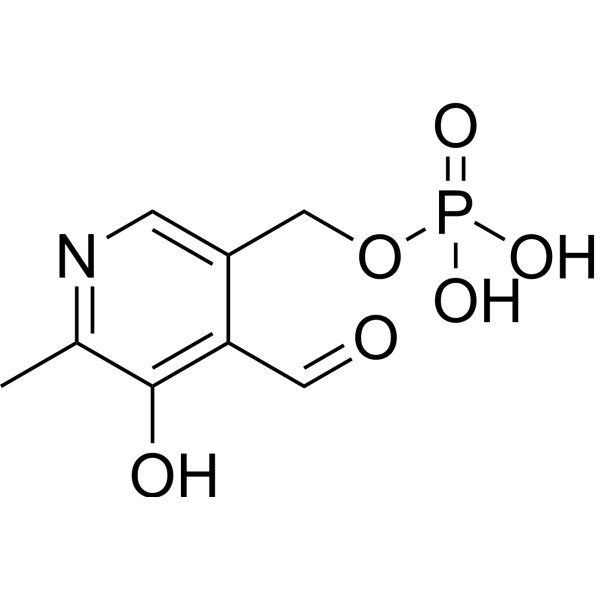
Pyridoxal phosphate is the active form of vitamin B6, acts as an inhibitor of reverse transcriptases, and is used for the treatment of tardive dyskinesia.
For research use only. We do not sell to patients.
- Purity : 99.95%
- CAS No.: 54-47-7
- Formula: C8H10NO6P
- Molecular Weight:247.14
-
Storage:Powder -20°C, 3 years , 4°C, 2 years ; In solvent -80°C, 2 years , -20°C, 1 year

To place orders, for customer services and technical support, please contact: MedChemExpress USA
Tel: 609-228-6898 E-mail: [email protected] [email protected]


-
 Biological Activity
-
Chemical Information
-
Solvent & Solubility
- Purity & Documentation
- References
-
 Help & FAQs


-
HY-B0456
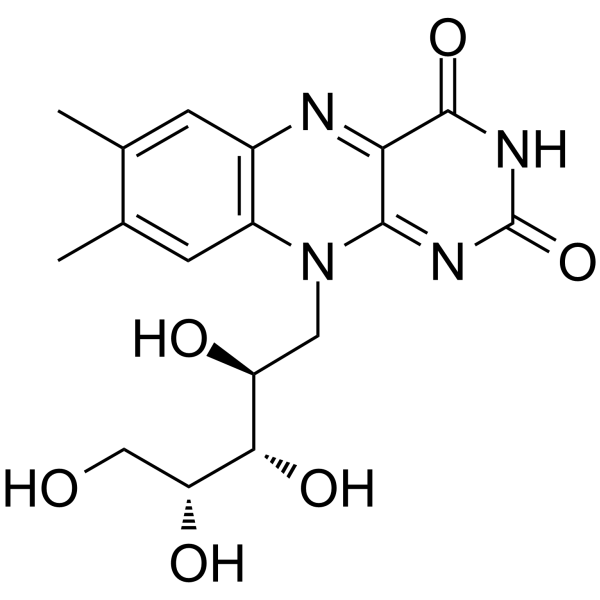
RiboflavinVitamin B2 -
HY-16637
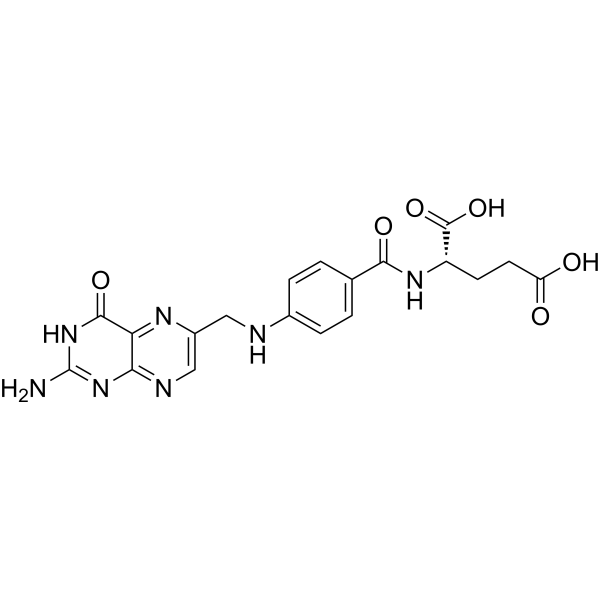
Folic acidB complex -
HY-B1328
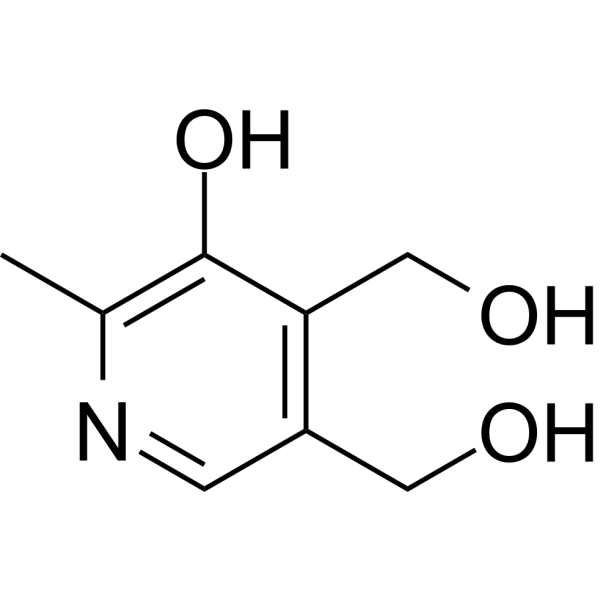
PyridoxinePyridine Derivative -
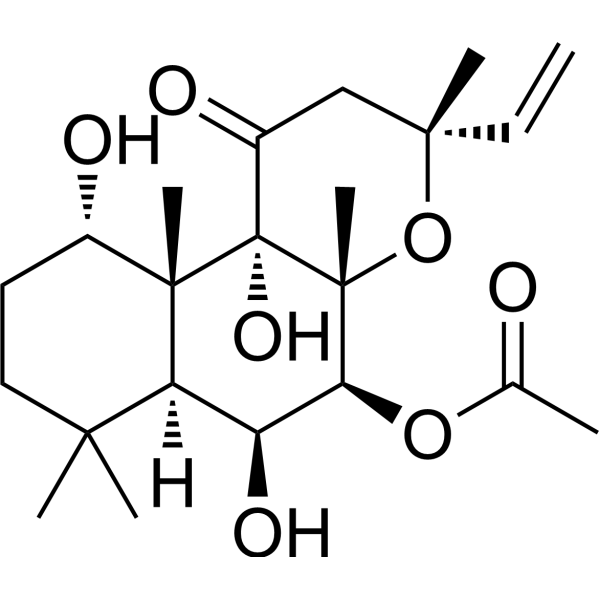
HY-15371
ForskolinAdenylate Cyclase Activator -
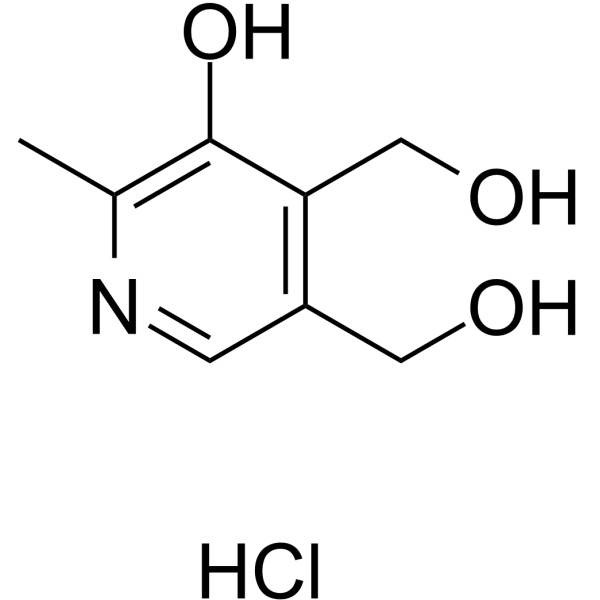
HY-N0682
Pyridoxine hydrochloridePyridine Derivative -
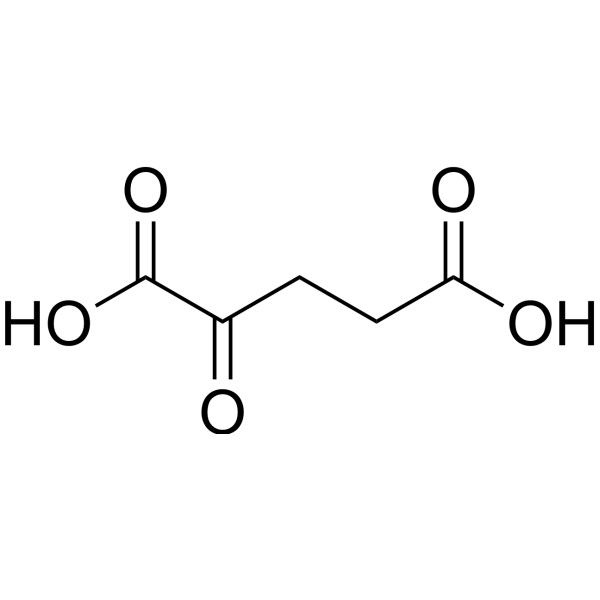
HY-W013636
2-Ketoglutaric acidKrebs Cycle Intermediate -

HY-B1744R
Pyridoxal phosphate (Standard)Endogenous Metabolite -
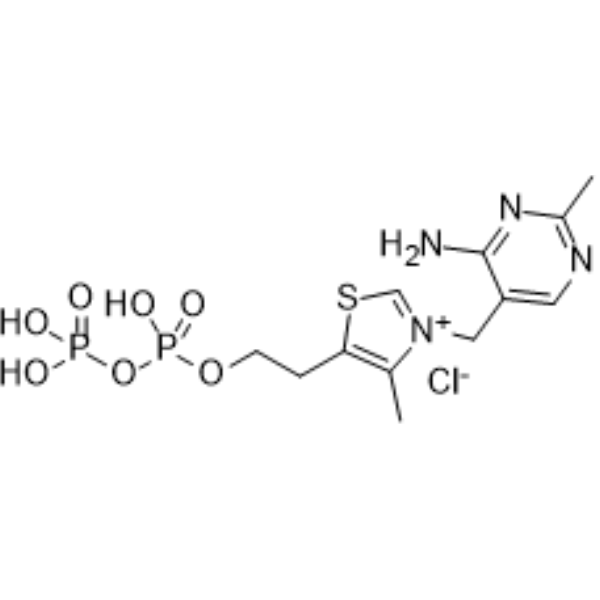
HY-113076
Thiamine pyrophosphateEndogenous Metabolite -
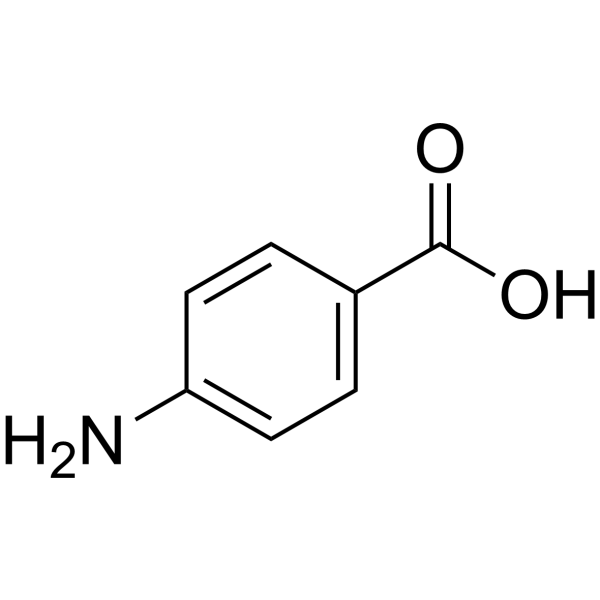
HY-B1008
4-Aminobenzoic acidFolate Synthesis Intermediate -
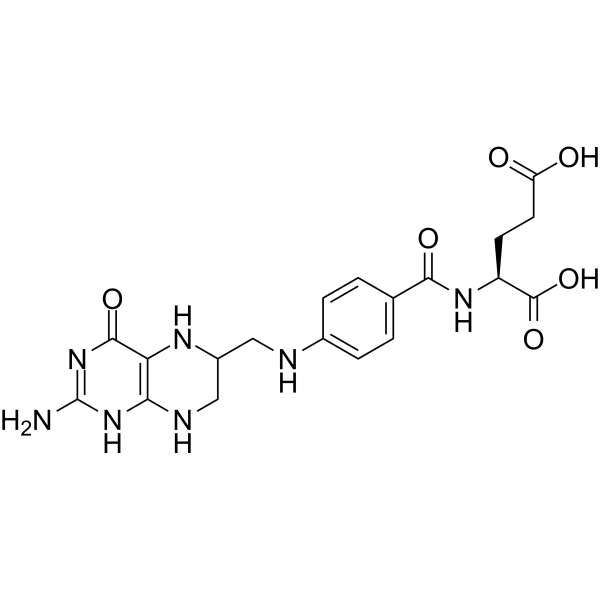
HY-14520
Tetrahydrofolic acidFolate Derivative -
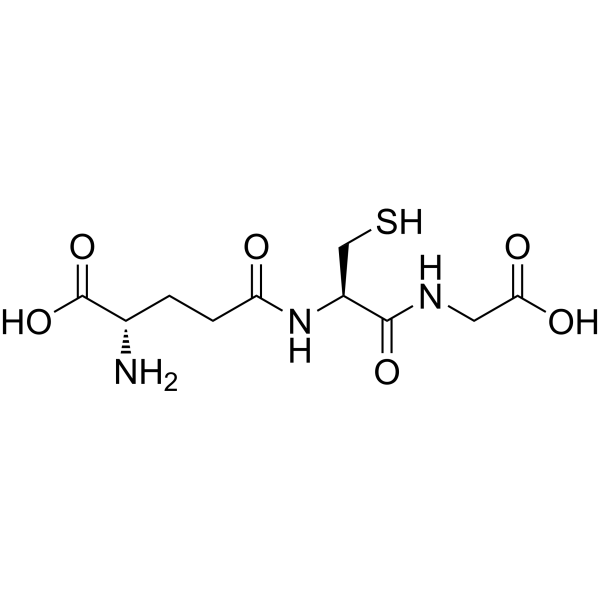
HY-D0187
L-Glutathione reducedAntioxidant -
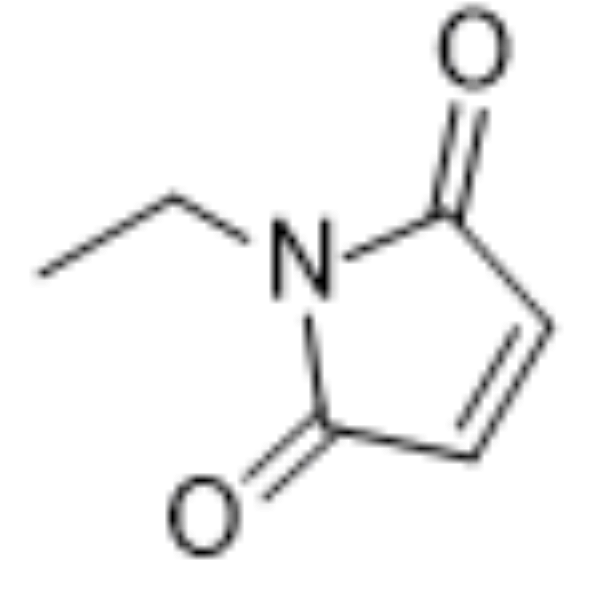
HY-D0843
N-EthylmaleimideCysteine Residues Modifier
Publications Citing Use of MedChemExpress (MCE) Pyridoxal phosphate
More Customer Validation & Images

-
Bio/Physico-chemical Assay
All Endogenous Metabolite Isoforms
More

Biological Activity
Description
IC50 & Target
|
Human Endogenous Metabolite |
In Vitro
Pyridoxal 5′-phosphate severely inhibits the DNA Polymerase and RNase H. Pyridoxal phosphate results in an imnediate reduction in the rate of DNA synthesis[1]. Conjugation to pyridoxal phosphate fully inhibits NEIL2. Pyridoxal phosphate-conjugated NEIL2 shows much lower activity than the intact enzyme over a wide range of enzyme/substrate ratios. After Pyridoxal phosphate conjugation, the ability of NEIL2 to bind the THF-ligand is completely lost[2].
Pyridoxal phosphate (500 μM, 24 h) activates the ERK/c-Jun signaling pathway, promotes the expression of IGFBP1 protein in HepG2 cells[3].
Pyridoxal phosphate (0.5 mg/mL, 48h) inhibits the proliferation of cancer cells SK-OV-3 and OVCAR-3[5].
MedChemExpress (MCE) has not independently confirmed the accuracy of these methods. They are for reference only.
In Vivo
Pyridoxal phosphate (600 mg/kg/day, po for 16 weeks) inhibits the formation of advanced glycation end-products (AGEs), and prevents the progression of diabetic nephropathy in Streptozotocin (HY-13753)-induced rats diabetes model[6].
MedChemExpress (MCE) has not independently confirmed the accuracy of these methods. They are for reference only.
-
Animal Model:Aβ25-35-induced cognitive dysfunction in ICR mouse models[4]
-
Dosage:1 mg/kg
-
Administration:ip, single dose
-
Result:Alleviated spatial and long-term memory impairment.
-
Animal Model:Streptozotocin (HY-13753)-induced rats diabetes model[6]
-
Dosage:600 mg/kg
-
Administration:po for 16 weeks
-
Result:Prevented the diabetes.


Chemical Information
-
CAS No. 54-47-7
-
Appearance Solid
-
Molecular Weight 247.14
-
Formula C8H10NO6P
-
Color Off-white to yellow
-
SMILES
O=CC1=C(O)C(C)=NC=C1COP(O)(O)=O
-
Synonyms
Pyridoxal 5′-phosphate; Pyridoxyl phosphate
-
Structure Classification
-
Shipping
Room temperature in continental US; may vary elsewhere.
-
Storage
Powder -20°C 3 years 4°C 2 years In solvent -80°C 2 years -20°C 1 year


Publications (5)
-
Journal Impact Factor
-
Most Recent
-
Nat Immunol
Ammonia detoxification promotes CD8+ T cell memory development by urea and citrulline cycles. [Abstract]2023 Jan;24(1):162-173. PMID: 36471170 -
Int J Biol Macromol
Reticuline isomerase AKR1B1 with aldo-keto reductase activity and detoxification function from the insect Blaps rhynchopetera. [Abstract]2026 Mar:352:151224. PMID: 41791543 -
Int J Biol Macromol
Cumulus cells orchestrate oocyte maturation via actin polymerization and vitamin B6 metabolism regulation: Highlights from multi-omics analysis in sheep vitrified cumulus-oocyte complex. [Abstract]2025 Jul 21;320(Pt 4):146219. PMID: 40701463 -
J Agric Food Chem
Validation of Insect Dopa Decarboxylase as a Potential Insecticide Target and Discovery of Selective Lead Compounds. [Abstract]2025 Oct 15;73(41):25991-25997. PMID: 41042682
Pyridoxal phosphate purchased from MedChemExpress. Usage Cited in: J Agric Food Chem. 2025 Oct 15;73(41):25991-25997. [Abstract]
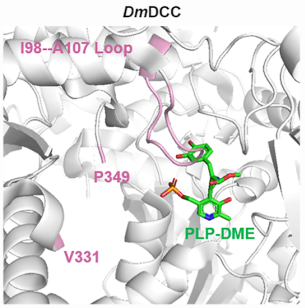
Schematic diagram of the active site of DmDDC (PDB code: 3K40). Following the structural alignment of DmDDC and hDDC, the ligand PLP (Pyridoxal phosphate)-DME (L-dopa methyl ester) of hDDC was displayed in DmDDC. PLPDME, an intermediate in the reaction between PLP and L-dopa, is shown in green in the figure.
-
FEBS J
Phenotypic characterization of Arabidopsis thaliana mutants that alleviate root growth defects in a vitamin B6 biosynthesis mutant. [Abstract]2026 Jun 15. PMID: 42298768


Solvent & Solubility
In Vitro:
DMSO : 62.5 mg/mL (252.89 mM; ultrasonic and warming and heat to 60°C; Hygroscopic DMSO has a significant impact on the solubility of product, please use newly opened DMSO)
H2O : 5 mg/mL (20.23 mM; Need ultrasonic)
Please refer to the solubility information to select the appropriate solvent. Once prepared, please aliquot and store the solution to prevent product inactivation from repeated freeze-thaw cycles.
Storage method and period of stock solution: -80°C, 2 years; -20°C, 1 year. When stored at -80°C, please use it within 2 years. When stored at -20°C, please use it within 1 year.
* Note: If you choose water as the stock solution, please dilute it to the working solution, then filter and sterilize it with a 0.22 μm filter before use.
Please refer to the solubility information to select the appropriate solvent. Once prepared, please aliquot and store the solution to prevent product inactivation from repeated freeze-thaw cycles.
Storage method and period of stock solution: -80°C, 2 years; -20°C, 1 year. When stored at -80°C, please use it within 2 years. When stored at -20°C, please use it within 1 year.
* Note: If you choose water as the stock solution, please dilute it to the working solution, then filter and sterilize it with a 0.22 μm filter before use.
Concentration (start) × Volume (start) = Concentration (final) × Volume (final)
In Vivo:
Select the appropriate dissolution method based on your experimental animal and administration route.
- For the following dissolution methods, please ensure to first prepare a clear stock solution using an In Vitro approach and then sequentially add co-solvents:
- To ensure reliable experimental results, the clarified stock solution can be appropriately stored based on storage conditions. As for the working solution for In Vivo experiments, it is recommended to prepare freshly and use it on the same day.
- The percentages shown for the solvents indicate their volumetric ratio in the final prepared solution. If precipitation or phase separation occurs during preparation, heat and/or sonication can be used to aid dissolution.
Add each solvent one by one: 10% DMSO 40% PEG300 5% Tween-80 45% Saline
Solubility: ≥ 2.5 mg/mL (10.12 mM); Clear solution
This protocol yields a clear solution of ≥ 2.5 mg/mL (saturation unknown).
Taking 1 mL working solution as an example, add 100 μL DMSO stock solution (25.0 mg/mL) to 400 μL PEG300, and mix evenly; then add 50 μL Tween-80 and mix evenly; then add 450 μL Saline to adjust the volume to 1 mL.
Preparation of Saline: Dissolve 0.9 g sodium chloride in ddH₂O and dilute to 100 mL to obtain a clear Saline solution.
Add each solvent one by one: 10% DMSO 90% (20% SBE-β-CD in Saline)
Solubility: ≥ 2.5 mg/mL (10.12 mM); Clear solution
This protocol yields a clear solution of ≥ 2.5 mg/mL (saturation unknown).
Taking 1 mL working solution as an example, add 100 μL DMSO stock solution (25.0 mg/mL) to 900 μL 20% SBE-β-CD in Saline, and mix evenly.
Preparation of 20% SBE-β-CD in Saline (4°C, storage for one week): 2 g SBE-β-CD powder is dissolved in 10 mL Saline, completely dissolve until clear.
For the following dissolution methods, please prepare the working solution directly:
It is recommended to prepare fresh solutions and use them promptly within a short period of time.
The percentages shown for the solvents indicate their volumetric ratio in the final prepared solution. If precipitation or phase separation occurs during preparation, heat and/or sonication can be used to aid dissolution.
Add each solvent one by one: PBS
Solubility: 2 mg/mL (8.09 mM); Clear solution; Need ultrasonic and warming and heat to 60°C
In Vivo Dissolution Calculator
Please enter the basic information of animal experiments:
-
-
-
-
Recommended: Prepare an additional quantity of animals to account for potential losses during experiments.
Please enter your animal formula composition:
-
%DMSO +
Recommended: Keep the proportion of DMSO in working solution below 2% if your animal is weak.
-
%+
-
+%Tween-80 + +
-
%Saline +
The co-solvents required include: DMSO, . All of co-solvents are available by MedChemExpress (MCE). , Tween 80. All of co-solvents are available by MedChemExpress (MCE).
Working solution concentration: 0.22 mg/mL
Method for preparing stock solution: mg drug dissolved in μL DMSO. Stock solution concentration: mg/mL.
1. Take μL DMSO stock solution;
2. Add μL .
μL , mix evenly;
3. Then add μL Tween 80, mix evenly;
4. Then add μL
Please ensure that the stock solution in the first step is dissolved to a clear state, and add co-solvents in sequence. You can use ultrasonic heating (ultrasonic cleaner, recommended frequency 20-40 kHz), vortexing, etc. to assist dissolution.


Purity & Documentation
-
Data Sheet (283 KB)
-
SDS (396 KB)
- English - EN (396 KB)
- Français - FR (396 KB)
- Deutsch - DE (396 KB)
- Norwegian - NO (396 KB)
- Español - ES (396 KB)
- Swedish - SV (396 KB)
- Italian - IT (396 KB)
- Korean - KR (396 KB)
- Portuguese - PT (396 KB)
-
Handling Instructions (2659 KB)
References
[1]. Modak MJ. Pyridoxal 5' phosphate: a selective inhibitor of oncornaviral DNA polymerases. Biochem Biophys Res Commun. 1976 Jul 12;71(1):180-7. [Content Brief]
[2]. Grin IR, et al. Inactivation of NEIL2 DNA glycosylase by pyridoxal phosphate reveals a loop important for substrate binding. Biochem Biophys Res Commun. 2010 Mar 26;394(1):100-5. [Content Brief]
[3]. Zhang P, et al., High concentrations of pyridoxal stimulate the expression of IGFBP1 in HepG2 cells through upregulation of the ERK/c‑Jun pathway. Mol Med Rep. 2013 Oct;8(4):973-8. [Content Brief]
[4]. Choi JM, et al., Membrane-Free Stem Cells and Pyridoxal 5'-Phosphate Synergistically Enhance Cognitive Function in Alzheimer's Disease Mouse Model. Antioxidants (Basel). 2022 Mar 21;11(3):601. [Content Brief]
[5]. Zhang L, et al., Pyridoxine 5'-phosphate oxidase is a novel therapeutic target and regulated by the TGF-β signalling pathway in epithelial ovarian cancer. Cell Death Dis. 2017 Dec 13;8(12):3214. [Content Brief]
[6]. Nakamura S, et al., Pyridoxal phosphate prevents progression of diabetic nephropathy. Nephrol Dial Transplant. 2007 Aug;22(8):2165-74. [Content Brief]


Complete Stock Solution Preparation Table
Please refer to the solubility information to select the appropriate solvent. Once prepared, please aliquot and store the solution to prevent product inactivation from repeated freeze-thaw cycles.
Storage method and period of stock solution: -80°C, 2 years; -20°C, 1 year. When stored at -80°C, please use it within 2 years. When stored at -20°C, please use it within 1 year.
| Optional Solvent | Concentration Solvent Mass | 1 mg | 5 mg | 10 mg | 25 mg |
|---|---|---|---|---|---|
| H2O / DMSO | 1 mM | 4.0463 mL | 20.2314 mL | 40.4629 mL | 101.1572 mL |
| 5 mM | 0.8093 mL | 4.0463 mL | 8.0926 mL | 20.2314 mL | |
| 10 mM | 0.4046 mL | 2.0231 mL | 4.0463 mL | 10.1157 mL | |
| 15 mM | 0.2698 mL | 1.3488 mL | 2.6975 mL | 6.7438 mL | |
| 20 mM | 0.2023 mL | 1.0116 mL | 2.0231 mL | 5.0579 mL | |
| DMSO | 25 mM | 0.1619 mL | 0.8093 mL | 1.6185 mL | 4.0463 mL |
| 30 mM | 0.1349 mL | 0.6744 mL | 1.3488 mL | 3.3719 mL | |
| 40 mM | 0.1012 mL | 0.5058 mL | 1.0116 mL | 2.5289 mL | |
| 50 mM | 0.0809 mL | 0.4046 mL | 0.8093 mL | 2.0231 mL | |
| 60 mM | 0.0674 mL | 0.3372 mL | 0.6744 mL | 1.6860 mL | |
| 80 mM | 0.0506 mL | 0.2529 mL | 0.5058 mL | 1.2645 mL | |
| 100 mM | 0.0405 mL | 0.2023 mL | 0.4046 mL | 1.0116 mL |
* Note: If you choose water as the stock solution, please dilute it to the working solution, then filter and sterilize it with a 0.22 μm filter before use.


Pyridoxal phosphate Related Classifications
HY-B1744 Related Classifications
 Powered by Bioz