



β-Aminopropionitrile
Based on 19 publication(s) in Google Scholar
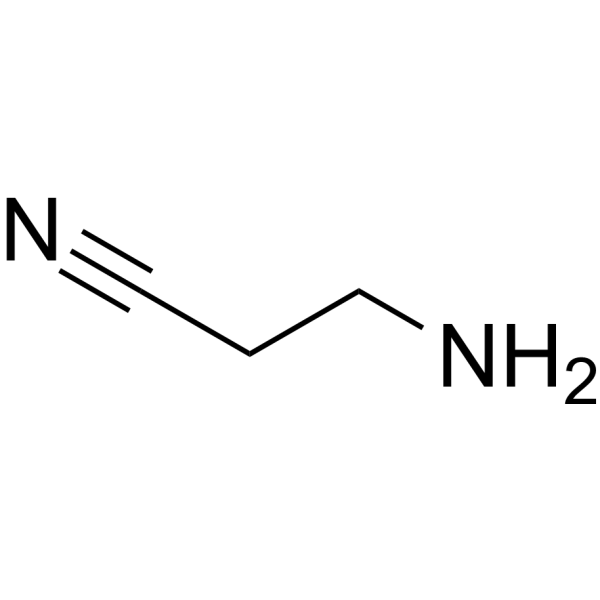
β-Aminopropionitrile (BAPN) is a specific, irreversible and orally active lysyl oxidase (LOX) inhibitor. β-Aminopropionitrile targets the active site of LOX or LOXL isoenzymes. β-Aminopropionitrile can be used for the study of obesity.
For research use only. We do not sell to patients.
- Purity : 99.84%
- CAS No.: 151-18-8
- Formula: C3H6N2
- Molecular Weight:70.09
-
Storage:
-20°C, protect from light, stored under nitrogen
* In solvent : -80°C, 6 months; -20°C, 1 month (protect from light, stored under nitrogen)

To place orders, for customer services and technical support, please contact: MedChemExpress USA
Tel: 609-228-6898 E-mail: [email protected] [email protected]


-
 Biological Activity
-
Chemical Information
-
Solvent & Solubility
- Protocols
- Purity & Documentation
- References
-
 Help & FAQs


-
HY-13948
Angiotensin II humanVasoconstrictor -
HY-10071
Y-27632ROCK Inhibitor -
HY-15144
Trichostatin AHDAC Class I/II Inhibitor -
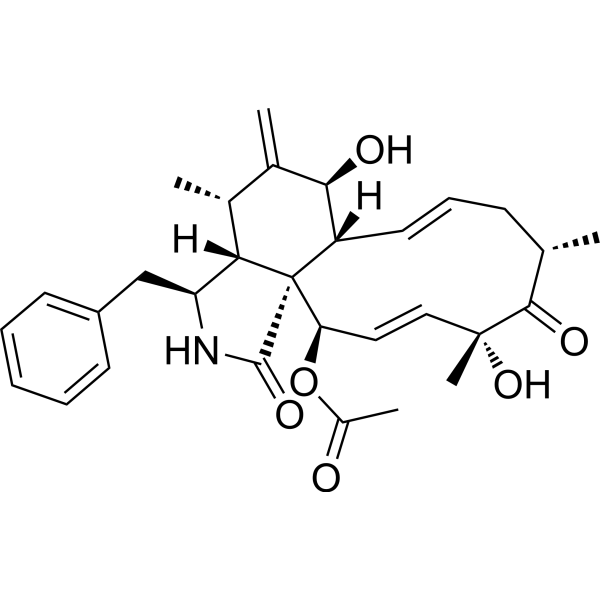
HY-N6682
Cytochalasin DActin Polymerization Inhibitor -
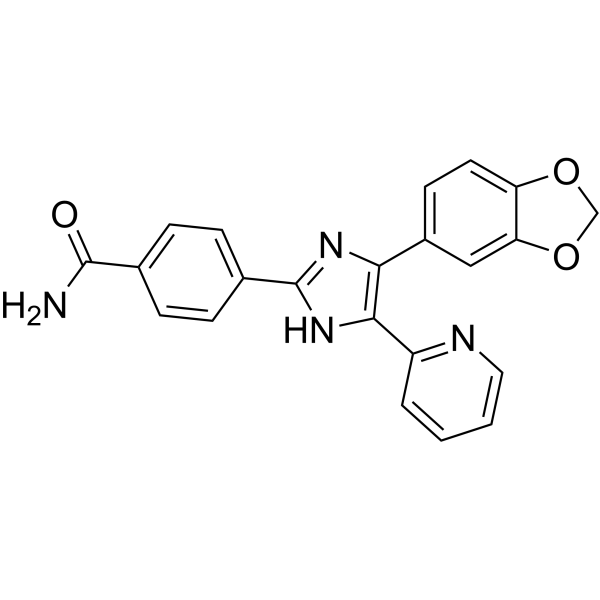
HY-10431
SB-431542TGF-β Receptor Kinase Inhibitor -
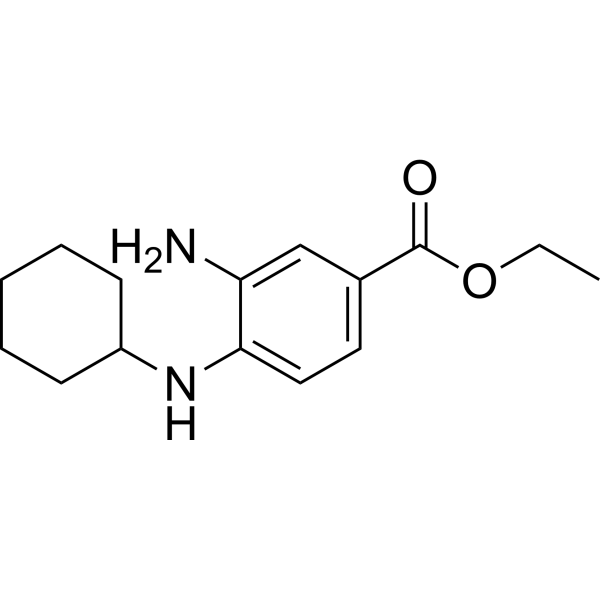
HY-100579
Ferrostatin-1Ferroptosis Inhibitor -
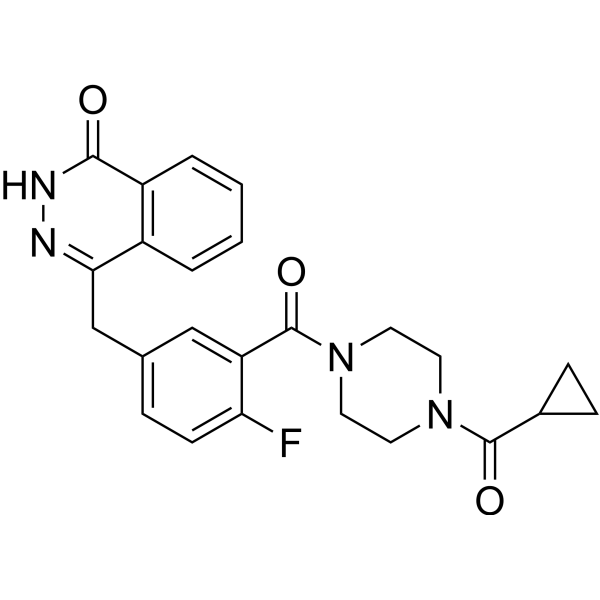
HY-10162
OlaparibPARP Inhibitor -
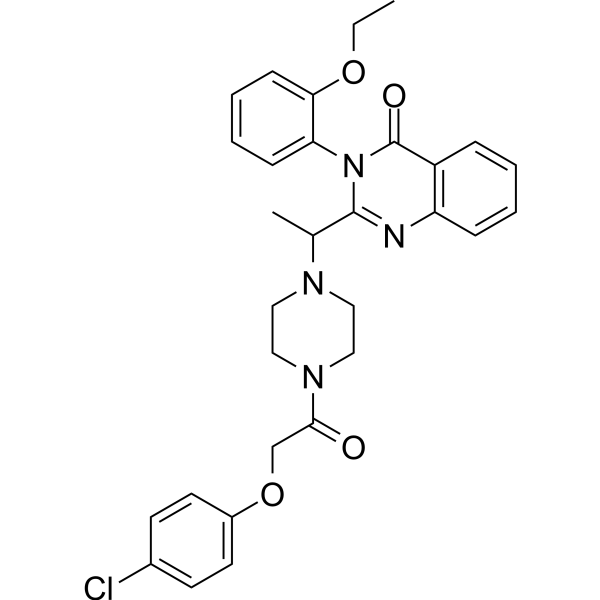
HY-15763
ErastinFerroptosis Inducer -
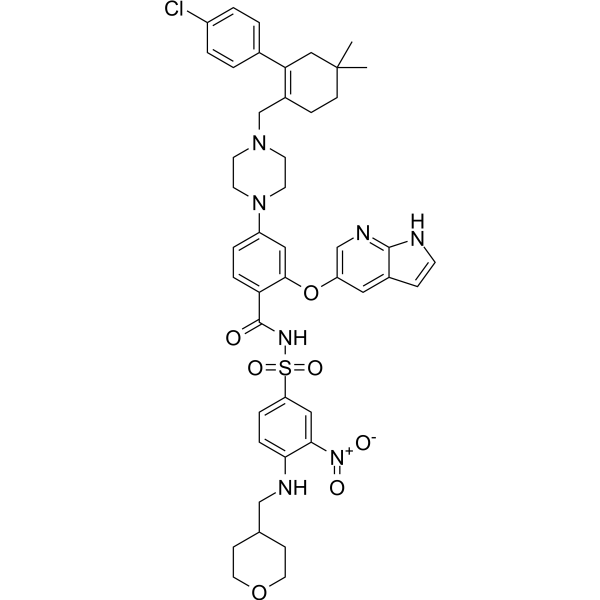
HY-15531
VenetoclaxBCL-2 Inhibitor -

HY-P2974
Elastase, Porcine pancreasSerine Protease -
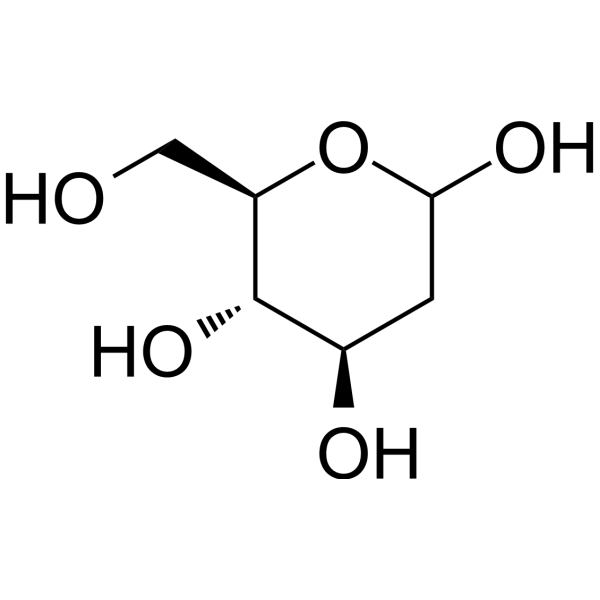
HY-13966
2-Deoxy-D-glucoseGlycolysis Inhibitor -
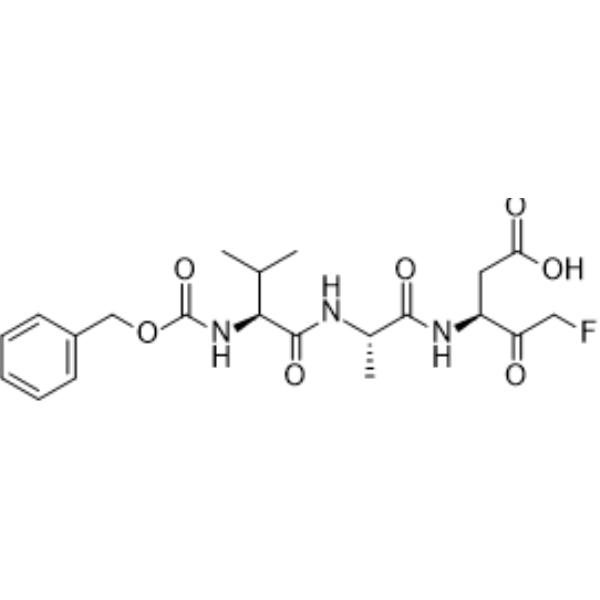
HY-16658B
Z-VAD-FMKPan-Caspase Inhibitor
Publications Citing Use of MedChemExpress (MCE) β-Aminopropionitrile
More- Nat Nanotechnol. 2026 Jun;21(6):880-891. [Abstract]
- Exp Hematol Oncol. 2025 Aug 27;14(1):111. [Abstract]
- Redox Biol. 2024 Oct:76:103346. [Abstract]
- Environ Sci Technol. 2025 Mar 21. [Abstract]
- Phytomedicine. 2026 Sep:159:158502.
- Europace. 2026 Mar 30;28(4):euag047. [Abstract]
- Dev Cell. 2025 Aug 5:S1534-5807(25)00448-4. [Abstract]
- Cell Rep. 2025 Aug 12;44(8):116126. [Abstract]
- Redox Rep. 2025 Dec;30(1):2598110. [Abstract]
- Commun Biol. 2025 Jul 5;8(1):1009. [Abstract]
- Int Immunopharmacol. 2026 Jul 1:180:116678. [Abstract]
- Int J Mol Sci. 2026 Jun 16;27(12):5431. [Abstract]
- Inflammation. 2026 May 12.
- Sci Rep. 2025 May 6;15(1):15762. [Abstract]
- Sci Rep. 2024 Apr 30;14(1):9960. [Abstract]
- J Inflamm Res. 2025 Aug 22:18:11521-11538. [Abstract]
- Front Biosci (Landmark Ed). 2024 Nov 27;29(12):401. [Abstract]
- Rofo. 2026 May 6. [Abstract]
- bioRxiv. 2025 May 28.
 Customer Validation & Images

-
In Vivo Efficacy Study
-
WB
-
In Vivo Efficacy Study
-
Cell Proliferation/Viability Assay
-
Cell Migration/Invasion Assay
All Endogenous Metabolite Isoforms
More

Biological Activity
Description
IC50 & Target
|
Lysyl Oxidase |
Human Endogenous Metabolite |
Cellular Effect
|
Cell Line

|
Type | Value | Description | References |
|---|---|---|---|---|
| CHO | IC50 |
0.31 μM
Compound: BAPN
|
Inhibition of recombinant C-terminal His-tagged human LOXL3 (1 to 753 residues) expressed in CHO cells using cadaverine hydrochloride as substrate preincubated for 1 hr followed by substrate addition by ROS-Glo assay
Inhibition of recombinant C-terminal His-tagged human LOXL3 (1 to 753 residues) expressed in CHO cells using cadaverine hydrochloride as substrate preincubated for 1 hr followed by substrate addition by ROS-Glo assay
|
[PMID: 31430136] |
In Vitro
β-Aminopropionitrile (BAPN) normalizes the expression of GLUT4 and adiponectin, and improves glucose uptake in an in vitro model of insulin resistance[1].
β-Aminopropionitrile (500 μM; 72 h) blocks the hypoxia-induced EMT morphological and marker protein changes, and inhibits invasion and migration capacities of cervical carcinoma cells in vitro[2].
MedChemExpress (MCE) has not independently confirmed the accuracy of these methods. They are for reference only. Further protocols information, click here.
-
Cell Line:3T3-L1 adipocytes
-
Concentration:200 μM with 1.15 nM and 2.87 nM TNFα
-
Incubation Time:72 h
-
Result:TNFα reduced expression of GLUT4 and adiponectin, and increased SOCS3 protein levels in these cells. And these effects were prevented.
-
Cell Line:HeLa and SiHa cells
-
Concentration:500 μM
-
Incubation Time:72 h
-
Result:Significantly reduced hypoxia-elicited cell invasion in both cell models.
-
Cell Line:HeLa and SiHa cells
-
Concentration:500 μM
-
Incubation Time:72 h
-
Result:Decreased hypoxia-induced migration from 180 and 240% to 60 and 70% in HeLa and SiHa cells, respectively.
-
Cell Line:HeLa and SiHa cells
-
Concentration:500 μM
-
Incubation Time:72 h
-
Result:Effectively prevented hypoxia-induced downregulation of E-cadherin and strongly inhibited hypoxia-induced upregulation of α-SMA and vimentin.
In Vivo
β-Aminopropionitrile monofumarate (1 g/kg/day; p.o.; 4 weeks) induces thoracic aortic dissection in C57BL/6 mice[3].
MedChemExpress (MCE) has not independently confirmed the accuracy of these methods. They are for reference only.
-
Animal Model:Male Wistar rats of 150 g, high-fat diet (HFD) model[1]
-
Dosage:100 mg/kg/day
-
Administration:In the drinking water, 6 weeks
-
Result:Significantly prevented the rise in body weight in HFD rats, but not in animals that were fed a standard diet. Reduced the increase in the weight of white adipose tissue (both epididymal and lumbar) in obese animals and attenuated their enhanced adiposity. Improved fasted glucose and insulin levels and consequently reduced HOMA index in the HFD group. Improved insulin signalling in adipose tissue from obese animals.
-
Animal Model:C57BL/6 mice[3]
-
Dosage:1 g/kg/day
-
Administration:In the drinking water, 4 weeks
-
Result:Induce thoracic aortic dissection (TAD) in all mice with 24 h of Ang II infusion. Caused 87% of C57BL/6 mice to develop TAD without Ang II.


Chemical Information
-
CAS No. 151-18-8
-
Appearance Liquid (Density: 0.9584 g/cm3)
-
Molecular Weight 70.09
-
Formula C3H6N2
-
Color Colorless to light yellow
-
SMILES
N#CCCN
-
Synonyms
BAPN
-
Structure Classification
-
Initial Source
-
Shipping
Room temperature in continental US; may vary elsewhere.
-
Storage
-20°C, protect from light, stored under nitrogen
* In solvent : -80°C, 6 months; -20°C, 1 month (protect from light, stored under nitrogen)


Publications (19)
-
Journal Impact Factor
-
Most Recent
-
Nat Nanotechnol
2026 Jun;21(6):880-891. PMID: 42286217 -
Exp Hematol Oncol
Extracellular matrix stiffness reduces DNA 6 ma level to facilitate colorectal cancer progression via disrupting P53 binding to CDKN1A promoter. [Abstract]2025 Aug 27;14(1):111. PMID: 40867005
β-Aminopropionitrile purchased from MedChemExpress. Usage Cited in: Exp Hematol Oncol. 2025 Aug 27;14(1):111. [Abstract]
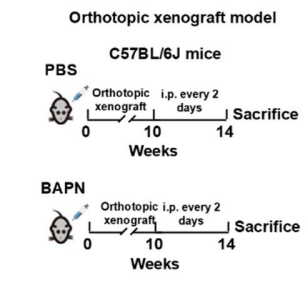
The BAPN (50 mg/kg; once every two days for four weeks; ip) treatment process for orthotopic xenograft mice model.
β-Aminopropionitrile purchased from MedChemExpress. Usage Cited in: Exp Hematol Oncol. 2025 Aug 27;14(1):111. [Abstract]
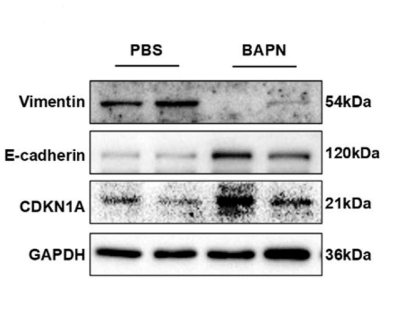
Western blot of vimentin, E-cadherin, CDKN1A in PBS-treated xenografts and BAPN (50 mg/kg; once every two days for four weeks; ip) -treated xenografts, using GAPDH as a control.
-
Redox Biol
LOX-mediated ECM mechanical stress induces Piezo1 activation in hypoxic-ischemic brain damage and identification of novel inhibitor of LOX. [Abstract]2024 Oct:76:103346. PMID: 39260063
β-Aminopropionitrile purchased from MedChemExpress. Usage Cited in: Redox Biol. 2024 Oct:76:103346. [Abstract]
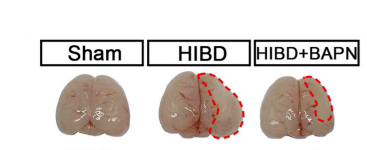
Morphology of cerebral edema in sham, HIBD and BAPN intervention groups (100 mg/kg/ip/day) at 72 h post-surgery.
β-Aminopropionitrile purchased from MedChemExpress. Usage Cited in: Redox Biol. 2024 Oct:76:103346. [Abstract]
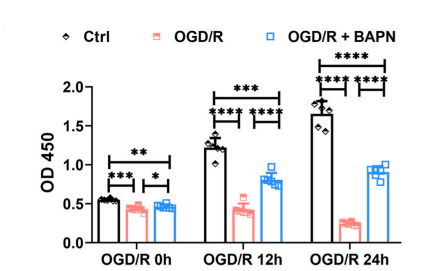
Cell viability of BAPN (500 nM)-treated OGD/R-induced HT22 cells at 0 h, 12 h and 24 h after reoxygenation.
β-Aminopropionitrile purchased from MedChemExpress. Usage Cited in: Redox Biol. 2024 Oct:76:103346. [Abstract]
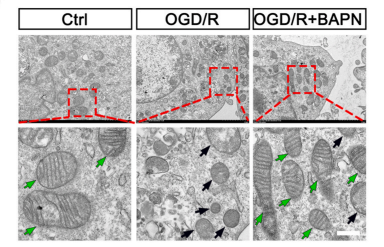
Representative TEM images of mitochondrial morphology in BAPN (500 nM) -incubated HT22 cells under OGD/R-induced conditions. Green arrows indicate normally shaped mitochondria, black arrows indicate damaged mitochondria.
-
Environ Sci Technol
Exposure to Sodium p-Perfluorous Nonenoxybenzenesulfonate Induces Renal Fibrosis in Mice by Disrupting Lysine Metabolism. [Abstract]2025 Mar 21. PMID: 40116701 -
-
Europace
Fto-mediated m6A demethylation of Lox drives atrial fibrosis and promotes atrial fibrillation in a murine model of hyperthyroidism. [Abstract]2026 Mar 30;28(4):euag047. PMID: 41812233 -
Dev Cell
The extracellular-matrix-remodeling capability exposes therapeutic vulnerability in a subset of renal cell carcinomas with tumor thrombi. [Abstract]2025 Aug 5:S1534-5807(25)00448-4. PMID: 40774251 -
Cell Rep
The Nα-acetyl-L-lysine/Loxl2/H2O2 promotes intestinal tumor growth in Drosophila and cell proliferation in human colorectal cancer. [Abstract]2025 Aug 12;44(8):116126. PMID: 40811058 -
Redox Rep
Verbascoside targets endothelial HIF-1α/ Lysyl oxidase signaling to attenuate glomerular injury in diabetic nephropathy. [Abstract]2025 Dec;30(1):2598110. PMID: 41355449 -
Commun Biol
Ursodeoxycholic acid alleviates aortic aneurysm and dissection through the intestinal farnesoid X receptor/ceramide synthase 2 axis. [Abstract]2025 Jul 5;8(1):1009. PMID: 40617906 -
Int Immunopharmacol
SB290157, a selective complement C3a receptor antagonist, ameliorates aortic dissection by suppressing inflammatory signaling pathways to attenuate aortic wall inflammation and structural damage. [Abstract]2026 Jul 1:180:116678. PMID: 42034937 -
Int J Mol Sci
Mechanistic Study of Matrix Stiffness Promoting Lymph Node Metastasis in Cervical Cancer by Regulating NETs Formation via Piezo1. [Abstract]2026 Jun 16;27(12):5431. PMID: 42353147 -
-
Sci Rep
Pharmacological alternatives to oxytetracycline as potential treatment of flexural limb deformities in foals: a preliminary in vitro cell viability and proliferation study. [Abstract]2025 May 6;15(1):15762. PMID: 40328831 -
Sci Rep
2024 Apr 30;14(1):9960. PMID: 38693222 -
J Inflamm Res
Anti-PS IgG Immune Complexes Impair Macrophage Phagocytosis in SLE via LOX-Dependent Oxidative Stress. [Abstract]2025 Aug 22:18:11521-11538. PMID: 40873781 -
Front Biosci (Landmark Ed)
Effects of Extracellular Matrix Changes Induced by a High-Fat Diet on Gallbladder Smooth Muscle Dysfunction. [Abstract]2024 Nov 27;29(12):401. PMID: 39735983 -
Rofo
Characterization of Aortic Degeneration and Inflammatory Profiles in Porcine Models of Abdominal Aortic Aneurysm. [Abstract]2026 May 6. PMID: 42091050 -


Solvent & Solubility
In Vitro:
DMSO : 100 mg/mL (1426.74 mM; Need ultrasonic; Hygroscopic DMSO has a significant impact on the solubility of product, please use newly opened DMSO)
H2O : 50 mg/mL (713.37 mM; Need ultrasonic)
Please refer to the solubility information to select the appropriate solvent. Once prepared, please aliquot and store the solution to prevent product inactivation from repeated freeze-thaw cycles.
Storage method and period of stock solution: -80°C, 6 months; -20°C, 1 month (protect from light, stored under nitrogen). When stored at -80°C, please use it within 6 months. When stored at -20°C, please use it within 1 month.
* Note: If you choose water as the stock solution, please dilute it to the working solution, then filter and sterilize it with a 0.22 μm filter before use.
Please refer to the solubility information to select the appropriate solvent. Once prepared, please aliquot and store the solution to prevent product inactivation from repeated freeze-thaw cycles.
Storage method and period of stock solution: -80°C, 6 months; -20°C, 1 month (protect from light, stored under nitrogen). When stored at -80°C, please use it within 6 months. When stored at -20°C, please use it within 1 month.
* Note: If you choose water as the stock solution, please dilute it to the working solution, then filter and sterilize it with a 0.22 μm filter before use.
Concentration (start) × Volume (start) = Concentration (final) × Volume (final)
In Vivo:
Select the appropriate dissolution method based on your experimental animal and administration route.
- For the following dissolution methods, please ensure to first prepare a clear stock solution using an In Vitro approach and then sequentially add co-solvents:
- To ensure reliable experimental results, the clarified stock solution can be appropriately stored based on storage conditions. As for the working solution for In Vivo experiments, it is recommended to prepare freshly and use it on the same day.
- The percentages shown for the solvents indicate their volumetric ratio in the final prepared solution. If precipitation or phase separation occurs during preparation, heat and/or sonication can be used to aid dissolution.
Add each solvent one by one: 10% DMSO 40% PEG300 5% Tween-80 45% Saline
Solubility: ≥ 3.25 mg/mL (46.37 mM); Clear solution
This protocol yields a clear solution of ≥ 3.25 mg/mL (saturation unknown).
Taking 1 mL working solution as an example, add 100 μL DMSO stock solution (32.5 mg/mL) to 400 μL PEG300, and mix evenly; then add 50 μL Tween-80 and mix evenly; then add 450 μL Saline to adjust the volume to 1 mL.
Preparation of Saline: Dissolve 0.9 g sodium chloride in ddH₂O and dilute to 100 mL to obtain a clear Saline solution.
Add each solvent one by one: 10% DMSO 90% (20% SBE-β-CD in Saline)
Solubility: ≥ 3.25 mg/mL (46.37 mM); Clear solution
This protocol yields a clear solution of ≥ 3.25 mg/mL (saturation unknown).
Taking 1 mL working solution as an example, add 100 μL DMSO stock solution (32.5 mg/mL) to 900 μL 20% SBE-β-CD in Saline, and mix evenly.
Preparation of 20% SBE-β-CD in Saline (4°C, storage for one week): 2 g SBE-β-CD powder is dissolved in 10 mL Saline, completely dissolve until clear.
For the following dissolution methods, please prepare the working solution directly:
It is recommended to prepare fresh solutions and use them promptly within a short period of time.
The percentages shown for the solvents indicate their volumetric ratio in the final prepared solution. If precipitation or phase separation occurs during preparation, heat and/or sonication can be used to aid dissolution.
Add each solvent one by one: PBS
Solubility: 100 mg/mL (1426.74 mM); Clear solution; Need ultrasonic
In Vivo Dissolution Calculator
Please enter the basic information of animal experiments:
-
-
-
-
Recommended: Prepare an additional quantity of animals to account for potential losses during experiments.
Working solution concentration: 0.22 mg/mL
This product has good water solubility, please refer to the measured solubility data in water/PBS/Saline for details.

Protocols
-
Research Protocol for Metabolic Diseases
AMP-activated protein kinase, AMPK, is a conserved cellular energy sensor that responds to reduced cellular energy status and coordinates metabolism by increasing ATP-generating catabolic pathways while suppressing ATP-consuming anabolic processes. In metabolic disease research, the AMPK pathway is experimentally relevant because it regulates hepatic lipid synthesis, fatty acid oxidation, glucose production, skeletal-muscle glucose disposal, mTORC1-linked biosynthesis, autophagy, mitochondrial homeostasis, and whole-body energy balance. The central pathway logic is that energy stress, metformin, exercise-like stimulation, or direct AMPK activators increase AMPKα Thr172 phosphorylation and downstream substrate phosphorylation, including ACC and RAPTOR. Phosphorylation of ACC suppresses lipogenesis and supports fatty acid oxidation, whereas phosphorylation of RAPTOR suppresses mTORC1 signaling and links cellular energy status to growth and protein synthesis control. The pathway is linked


Purity & Documentation
-
Data Sheet (277 KB)
-
SDS (641 KB)
- English - EN (641 KB)
- Français - FR (641 KB)
- Deutsch - DE (641 KB)
- Norwegian - NO (641 KB)
- Español - ES (641 KB)
- Swedish - SV (641 KB)
- Italian - IT (641 KB)
- Korean - KR (641 KB)
- Portuguese - PT (641 KB)
-
Handling Instructions (2659 KB)
References
[1]. Miana M, et al. The lysyl oxidase inhibitor β-aminopropionitrile reduces body weight gain and improves the metabolic profile in diet-induced obesity in rats. Dis Model Mech. 2015 Jun;8(6):543-51. [Content Brief]
[2]. Yang X, et al. Inactivation of lysyl oxidase by β-aminopropionitrile inhibits hypoxia-induced invasion and migration of cervical cancer cells. Oncol Rep. 2013 Feb;29(2):541-8. [Content Brief]
[3]. Ren W, et al. β-Aminopropionitrile monofumarate induces thoracic aortic dissection in C57BL/6 mice. Sci Rep. 2016 Jun 22;6:28149. [Content Brief]


Complete Stock Solution Preparation Table
Please refer to the solubility information to select the appropriate solvent. Once prepared, please aliquot and store the solution to prevent product inactivation from repeated freeze-thaw cycles.
Storage method and period of stock solution: -80°C, 6 months; -20°C, 1 month (protect from light, stored under nitrogen). When stored at -80°C, please use it within 6 months. When stored at -20°C, please use it within 1 month.
| Optional Solvent | Concentration Solvent Mass | 1 mg | 5 mg | 10 mg | 25 mg |
|---|---|---|---|---|---|
| H2O / DMSO | 1 mM | 14.2674 mL | 71.3369 mL | 142.6737 mL | 356.6843 mL |
| 5 mM | 2.8535 mL | 14.2674 mL | 28.5347 mL | 71.3369 mL | |
| 10 mM | 1.4267 mL | 7.1337 mL | 14.2674 mL | 35.6684 mL | |
| 15 mM | 0.9512 mL | 4.7558 mL | 9.5116 mL | 23.7790 mL | |
| 20 mM | 0.7134 mL | 3.5668 mL | 7.1337 mL | 17.8342 mL | |
| 25 mM | 0.5707 mL | 2.8535 mL | 5.7069 mL | 14.2674 mL | |
| 30 mM | 0.4756 mL | 2.3779 mL | 4.7558 mL | 11.8895 mL | |
| 40 mM | 0.3567 mL | 1.7834 mL | 3.5668 mL | 8.9171 mL | |
| 50 mM | 0.2853 mL | 1.4267 mL | 2.8535 mL | 7.1337 mL | |
| 60 mM | 0.2378 mL | 1.1889 mL | 2.3779 mL | 5.9447 mL | |
| 80 mM | 0.1783 mL | 0.8917 mL | 1.7834 mL | 4.4586 mL | |
| 100 mM | 0.1427 mL | 0.7134 mL | 1.4267 mL | 3.5668 mL |
* Note: If you choose water as the stock solution, please dilute it to the working solution, then filter and sterilize it with a 0.22 μm filter before use.


β-Aminopropionitrile Related Classifications
HY-Y1750 Related Classifications
 Powered by Bioz