1. Protein Tyrosine Kinase/RTK Apoptosis
  2. FGFR Apoptosis
  3. Infigratinib

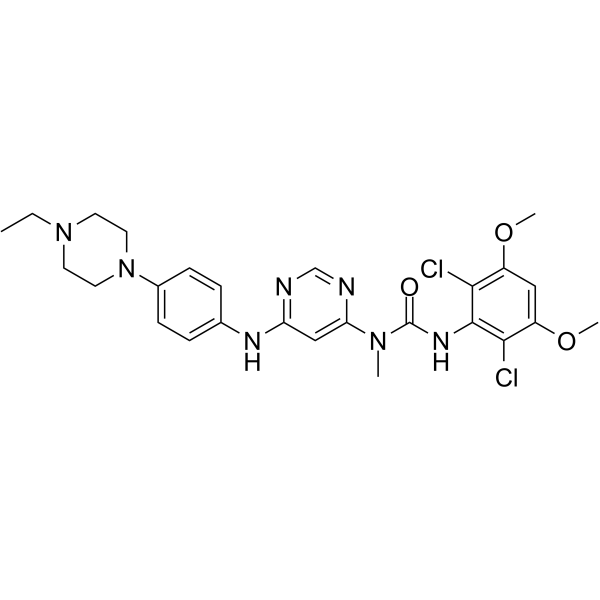
Infigratinib  (Synonyms: BGJ-398; NVP-BGJ398)

Cat. No.: HY-13311 Purity: 99.82%
Handling Instructions Technical Support

Infigratinib (BGJ-398; NVP-BGJ398) is a potent inhibitor of the FGFR family with IC50s of 0.9 nM, 1.4 nM, 1 nM, and 60 nM for FGFR1, FGFR2, FGFR3, and FGFR4, respectively.

연구목적의 판매만을 진행합니다. 환자를 대상으로 한 판매는 하지 않습니다.

CAS No. : 872511-34-7

사이즈 가격 재고 수량
무료 샘플 (0.1 - 0.2 mg)   지금 신청하기  
Solid + Solvent (Highly Recommended)
10 mM * 1 mL in DMSO
ready for reconstitution
해외재고보유
Solution
10 mM * 1 mL in DMSO 해외재고보유
Solid
5 mg 해외재고보유
10 mg 해외재고보유
25 mg 해외재고보유
50 mg 해외재고보유
100 mg 해외재고보유
200 mg 해외재고보유
500 mg 해외재고보유
1 g 해외재고보유
5 g   견적 받기  
10 g   견적 받기  

* 장바구니에 담기 전 물품의 수량을 선택해 주십시오.

This product is a controlled substance and not for sale in your territory.

고객리뷰

Based on 47 publication(s) in Google Scholar

Other Forms of Infigratinib:

Top Publications Citing Use of Products

47 Publications Citing Use of MCE Infigratinib

WB
Flow Cytometry
RT-PCR
IF
In Vivo Efficacy Study

    Infigratinib purchased from MedChemExpress. Usage Cited in: Cell Death Dis. 2025 Jul 2;16(1):485.  [Abstract]

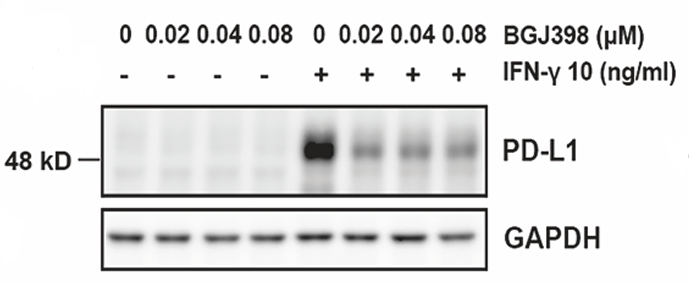
    BGJ398 (0-80 nM; 48 h). RT4 cells were treated with vehicle control or the indicated concentrations of BGJ398 in the presence or absence of interferon (IFN)-γ (10 ng/ml) for 48 h and subjected to western blot analysis.

    Infigratinib purchased from MedChemExpress. Usage Cited in: Cell Death Dis. 2025 Jul 2;16(1):485.  [Abstract]

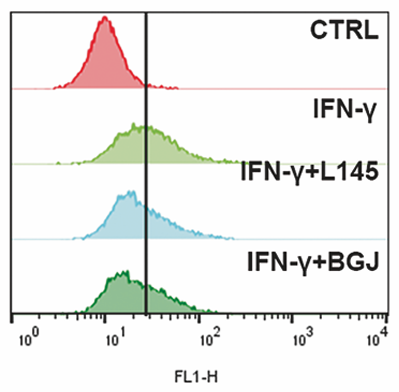
    RT-112 cells were exposed to IFN-γ (10 ng/ml) with or without L145 (2 μM) or BGJ398 (0.08 μM) for 48 h, stained with αPD-L1 antibody, and subjected to flow cytometry analysis.

    Infigratinib purchased from MedChemExpress. Usage Cited in: Cell Death Dis. 2025 Jul 2;16(1):485.  [Abstract]

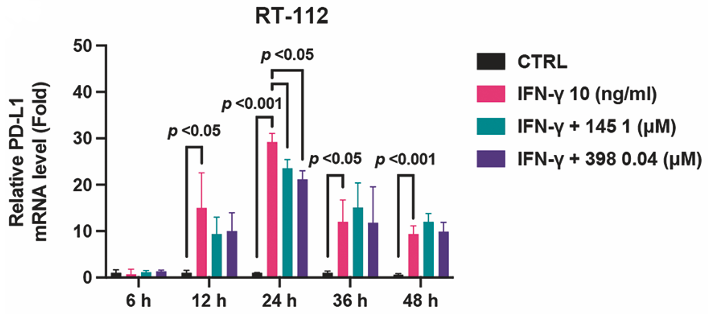
    BGJ398 (0.04 μM; 6-48 h). RT-112 cells were treated with vehicle control (CTRL) or IFN-γ (10 ng/ml) with or without L145 (1 μM) or BGJ398 (0.04 μM) for the indicated times, and subjected to RT-qPCR analyses.

    Infigratinib purchased from MedChemExpress. Usage Cited in: Cell Death Dis. 2025 Jul 2;16(1):485.  [Abstract]

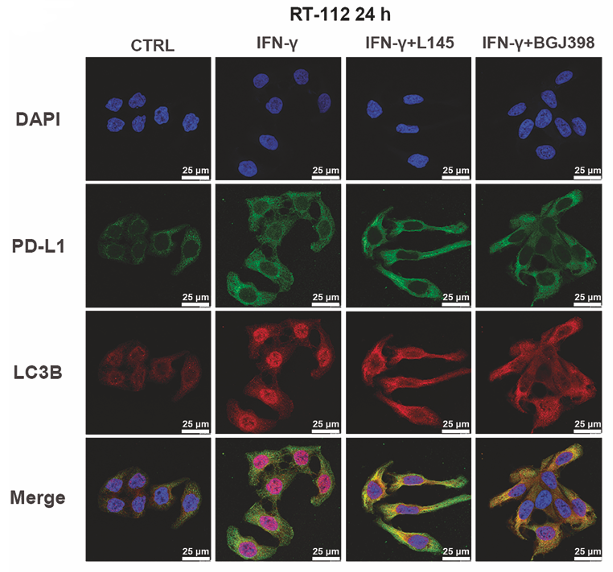
    RT-112 cells were treated with interferon (IFN)-γ (10 ng/ml) alone or in combination with L145 (1 μM) or BGJ398 (0.08 μM) for 24 h and subjected to immunofluorescence staining with antibodies against PD-L1 (green) and LC3B (red).

    Infigratinib purchased from MedChemExpress. Usage Cited in: J Exp Clin Cancer Res. 2021 Aug 27;40(1):273.  [Abstract]

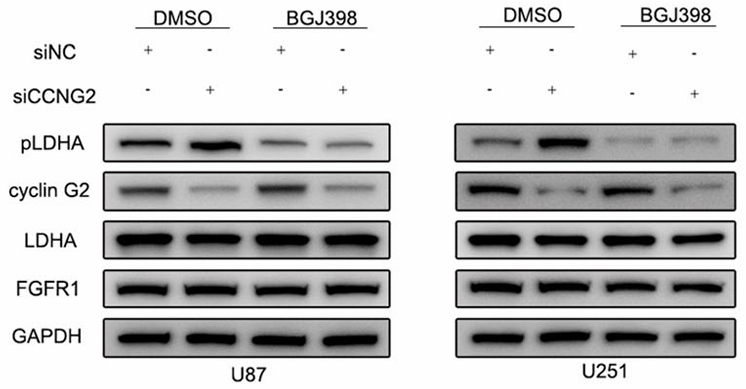
    BGJ398 (10 nM; 24 h). Western blotting was performed to examine the effect of cyclin G2 on Y10 phosphorylation of LDHA in the presence or absence of BGJ398.

    Infigratinib purchased from MedChemExpress. Usage Cited in: Cancer Discov. 2018 Mar;8(3):354-369.  [Abstract]

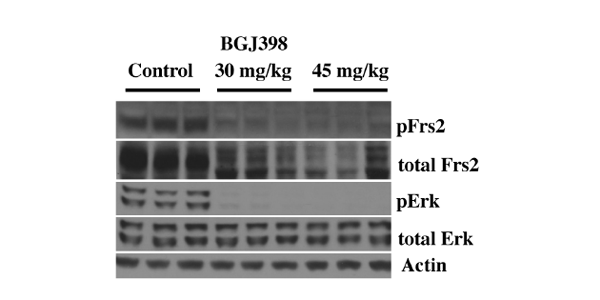
    BGJ398 (30-50 mg/kg; oral). In vivo dosing of BGJ398 at 30mg/kg achieves target inhibition measured by pFrs2 and pErk levels.

    Infigratinib purchased from MedChemExpress. Usage Cited in: Cancer Discov. 2018 Mar;8(3):354-369.  [Abstract]

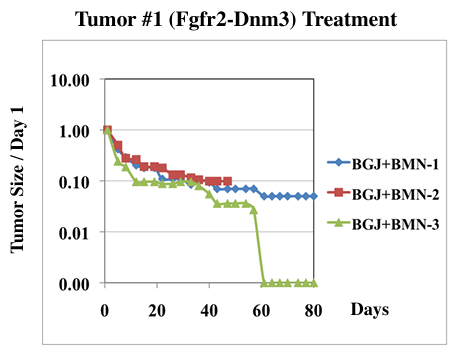
    BGJ398 (30-50 mg/kg; oral). Combining BGJ398 and a different PARP-inhibitor, BMN673, induces sustained tumor remission.
    • Biological Activity

    • Protocol

    • 순도&문서

    • References

    • 고객리뷰

    제품 설명

    Infigratinib (BGJ-398; NVP-BGJ398) is a potent inhibitor of the FGFR family with IC50s of 0.9 nM, 1.4 nM, 1 nM, and 60 nM for FGFR1, FGFR2, FGFR3, and FGFR4, respectively.

    IC50 & Target[1]

    FGFR1

    0.9 nM (IC50)

    FGFR2

    1.4 nM (IC50)

    FGFR3

    1 nM (IC50)

    FGFR4

    60 nM (IC50)

    Cellular Effect
    Cell Line Type Value Description References
    AN3-CA GI50
    0.039 μM
    Compound: 1
    Antiproliferative activity against human AN3-CA cells harboring FGFR2 K310R/N549K mutant assessed as cell growth inhibition by CellTiter-Glo assay
    Antiproliferative activity against human AN3-CA cells harboring FGFR2 K310R/N549K mutant assessed as cell growth inhibition by CellTiter-Glo assay
    [PMID: 35436119]
    BaF3 GI50
    0.005 μM
    Compound: 1
    Antiproliferative activity against mouse BaF3 cells harboring TEL-FGFR3 assessed as cell growth inhibition by CellTiter-Glo assay
    Antiproliferative activity against mouse BaF3 cells harboring TEL-FGFR3 assessed as cell growth inhibition by CellTiter-Glo assay
    [PMID: 35436119]
    BaF3 GI50
    2.605 μM
    Compound: 1
    Antiproliferative activity against mouse BaF3 cells harboring TEL-FGFR3-V555M mutant assessed as cell growth inhibition by CellTiter-Glo assay
    Antiproliferative activity against mouse BaF3 cells harboring TEL-FGFR3-V555M mutant assessed as cell growth inhibition by CellTiter-Glo assay
    [PMID: 35436119]
    BaF3 GI50
    4.005 μM
    Compound: 1
    Antiproliferative activity against mouse BaF3 cells harboring TEL-FGFR4 V550E mutant assessed as cell growth inhibition by CellTiter-Glo assay
    Antiproliferative activity against mouse BaF3 cells harboring TEL-FGFR4 V550E mutant assessed as cell growth inhibition by CellTiter-Glo assay
    [PMID: 35436119]
    BaF3 GI50
    > 5 μM
    Compound: 1
    Antiproliferative activity against mouse BaF3 cells assessed as cell growth inhibition by CellTiter-Glo assay
    Antiproliferative activity against mouse BaF3 cells assessed as cell growth inhibition by CellTiter-Glo assay
    [PMID: 35436119]
    BaF3 GI50
    > 5 μM
    Compound: 1
    Antiproliferative activity against mouse BaF3 cells harboring TEL-FGFR4 N535K mutant assessed as cell growth inhibition by CellTiter-Glo assay
    Antiproliferative activity against mouse BaF3 cells harboring TEL-FGFR4 N535K mutant assessed as cell growth inhibition by CellTiter-Glo assay
    [PMID: 35436119]
    BaF3 IC50
    132.6 nM
    Compound: 2;BGJ-398
    Antiproliferative activity against mouse BAF3 cells expressing TEL-fused FGFR4 kinase after 72 hrs by CCK8 or MTT assay
    Antiproliferative activity against mouse BAF3 cells expressing TEL-fused FGFR4 kinase after 72 hrs by CCK8 or MTT assay
    [PMID: 29522671]
    BaF3 IC50
    3343.8 nM
    Compound: 2;BGJ-398
    Antiproliferative activity against mouse BAF3 cells expressing TEL-fused KDR kinase after 72 hrs by CCK8 or MTT assay
    Antiproliferative activity against mouse BAF3 cells expressing TEL-fused KDR kinase after 72 hrs by CCK8 or MTT assay
    [PMID: 29522671]
    Hep 3B2 IC50
    85 nM
    Compound: Infigratinib
    Antiproliferative activity against human Hep3B cells assessed as reduction in cell viability by cell proliferation assay
    Antiproliferative activity against human Hep3B cells assessed as reduction in cell viability by cell proliferation assay
    [PMID: 32930584]
    Huh-7 IC50
    57.2 nM
    Compound: 2;BGJ-398
    Antiproliferative activity against FGF19/FGFR4 expressing human HuH7 cells after 72 hrs by CCK8 or MTT assay
    Antiproliferative activity against FGF19/FGFR4 expressing human HuH7 cells after 72 hrs by CCK8 or MTT assay
    [PMID: 29522671]
    Huh-7 IC50
    80 nM
    Compound: Infigratinib
    Antiproliferative activity against human HuH7 cells assessed as reduction in cell viability incubated for 3 days by cell proliferation assay
    Antiproliferative activity against human HuH7 cells assessed as reduction in cell viability incubated for 3 days by cell proliferation assay
    [PMID: 32930584]
    J82 GI50
    3.345 μM
    Compound: 1
    Antiproliferative activity against human J82 cells harboring FGFR3 K652E mutant assessed as cell growth inhibition by CellTiter-Glo assay
    Antiproliferative activity against human J82 cells harboring FGFR3 K652E mutant assessed as cell growth inhibition by CellTiter-Glo assay
    [PMID: 35436119]
    KMS-11 GI50
    0.22 μM
    Compound: 1
    Antiproliferative activity against human KMS-11 cells harboring FGFR3 Y373C mutant assessed as cell growth inhibition by CellTiter-Glo assay
    Antiproliferative activity against human KMS-11 cells harboring FGFR3 Y373C mutant assessed as cell growth inhibition by CellTiter-Glo assay
    [PMID: 35436119]
    NCI-H716 IC50
    65.9 nM
    Compound: BGJ398
    Antiproliferative activity against human NCI-H716 cells assessed as reduction in cell viability measured for 72 hrs by celltiter-glo reagent based assay
    Antiproliferative activity against human NCI-H716 cells assessed as reduction in cell viability measured for 72 hrs by celltiter-glo reagent based assay
    [PMID: 37220310]
    RT-112 IC50
    10 nM
    Compound: Infigratinib
    Antiproliferative activity against human RT-112 cells expressing FGFR3 assessed as inhibition of cell growth incubated for 5 days by Cell-titer glo assay
    Antiproliferative activity against human RT-112 cells expressing FGFR3 assessed as inhibition of cell growth incubated for 5 days by Cell-titer glo assay
    [PMID: 38267212]
    RT-112 IC50
    218 nM
    Compound: Infigratinib
    Antiproliferative activity against human RT-112 cells expressing FGFR3 K650M mutant assessed as inhibition of cell growth incubated for 5 days by Cell-titer glo assay
    Antiproliferative activity against human RT-112 cells expressing FGFR3 K650M mutant assessed as inhibition of cell growth incubated for 5 days by Cell-titer glo assay
    [PMID: 38267212]
    RT-112 IC50
    352 nM
    Compound: Infigratinib
    Antiproliferative activity against human RT-112 cells expressing FGFR3 V555M mutant assessed as inhibition of cell growth incubated for 5 days by Cell-titer glo assay
    Antiproliferative activity against human RT-112 cells expressing FGFR3 V555M mutant assessed as inhibition of cell growth incubated for 5 days by Cell-titer glo assay
    [PMID: 38267212]
    RT-112 IC50
    6.2 nM
    Compound: Infigratinib
    Antiproliferative activity against human RT-112 cells assessed as inhibition of cell growth incubated for 5 days by Cell-titer glo assay
    Antiproliferative activity against human RT-112 cells assessed as inhibition of cell growth incubated for 5 days by Cell-titer glo assay
    [PMID: 38267212]
    RT-112 IC50
    777 nM
    Compound: Infigratinib
    Antiproliferative activity against human RT-112 cells expressing FGFR3 N540K mutant assessed as inhibition of cell growth incubated for 5 days by Cell-titer glo assay
    Antiproliferative activity against human RT-112 cells expressing FGFR3 N540K mutant assessed as inhibition of cell growth incubated for 5 days by Cell-titer glo assay
    [PMID: 38267212]
    RT-112 IC50
    < 0.5 nM
    Compound: 2;BGJ-398
    Antiproliferative activity against FGFR3 amplified human RT112 cells after 72 hrs by CCK8 or MTT assay
    Antiproliferative activity against FGFR3 amplified human RT112 cells after 72 hrs by CCK8 or MTT assay
    [PMID: 29522671]
    SNU-16 IC50
    12.4 nM
    Compound: Infigratinib
    Antiproliferative activity against human SNU-16 cells assessed as inhibition of cell growth incubated for 5 days by Cell-titer glo assay
    Antiproliferative activity against human SNU-16 cells assessed as inhibition of cell growth incubated for 5 days by Cell-titer glo assay
    [PMID: 38267212]
    SNU-16 IC50
    95.4 nM
    Compound: BGJ398
    Antiproliferative activity against human SNU-16 cells assessed as reduction in cell viability measured for 72 hrs by celltiter-glo reagent based assay
    Antiproliferative activity against human SNU-16 cells assessed as reduction in cell viability measured for 72 hrs by celltiter-glo reagent based assay
    [PMID: 37220310]
    Sf9 IC50
    2.7 nM
    Compound: 3
    Inhibition of N-terminal His-Avi tagged recombinant human FGFR3 (447 to 761 residues) expressed in an Sf9 infected baculovirus expression system using biotin-EQEDEPEGDYFEWLE-amide as substrate preincubated for 5 to 10 mins followed by substrate addition and measured after 1 hr by HTRF assay
    Inhibition of N-terminal His-Avi tagged recombinant human FGFR3 (447 to 761 residues) expressed in an Sf9 infected baculovirus expression system using biotin-EQEDEPEGDYFEWLE-amide as substrate preincubated for 5 to 10 mins followed by substrate addition and measured after 1 hr by HTRF assay
    [PMID: 36356320]
    In Vitro

    Infigratinib (BGJ-398) inhibits FGFR1, FGFR2, and FGFR3 with IC50=~1 nM, FGFR3K650E with IC50=4.9 nM, and FGFR4 with IC50=60 nM. IC50 values for all other kinases are in the μM range (FYN, LCK, YES, and ABL, IC50=1.9, 2.5, 1.1, and 2.3 μM, respectively) except for VEGFR2, KIT, and LYN, which are inhibited at submicromolar concentrations (IC50=0.18, 0.75, and 0.3 μM, respectively).
    Infigratinib (BGJ-398) inhibits the proliferation of the FGFR1-, FGFR2-, and FGFR3-dependent BaF3 cells with IC50 values which are in the low nanomolar range and comparable to those observed for the inhibition of the receptors kinase activity in the enzymatic assay.
    For the remaining cells, all IC50 values are greater than 1.5 μM except for VEGFR2 (IC50 1449 and 938 nM), for which there is at least a 400-fold selectivity versus FGFR1, FGFR2, and FGFR3[1].
    Infigratinib (BGJ-398) (ranging between 1 nM and 10 μM) is potent at inhibiting cell growth of FGFR2-mutant endometrial cancer cells[2].

    MedChemExpress (MCE) has not independently confirmed the accuracy of these methods. They are for reference only.

    In Vivo

    Infigratinib (BGJ-398) is administered to athymic nude mice implanted subcutaneously with RT112/luc1 tumors: either as a 5 mg/kg intravenous bolus in NMP/PEG200 (1:9, v/v) or orally by gavage as a suspension in PEG300/D5W (2:1, v/v) at a 20 mg/kg dose.The relevant pharmacokinetic (PK) parameters indicate that the oral bioavailability of Infigratinib (BGJ-398) in this study is 32%. After intravenous dosing, Infigratinib (BGJ-398) shows a rapid distribution from the vascular compartment into the peripheral tissues, translating into a high volume of distribution (26 L/kg). The plasma clearance is high at 3.3 L/h/kg (61% of liver blood flow). The ratio of tumor to plasma after oral dosing based on AUC is determined to be 10[1].
    Infigratinib (BGJ-398) (30 mg/kg) significantly inhibits the growth of FGFR2-mutated endometrial cancer xenograft models[2].

    MedChemExpress (MCE) has not independently confirmed the accuracy of these methods. They are for reference only.

    분자량

    560.48

    화학식

    C26H31Cl2N7O3

    CAS No.
    Appearance

    Solid

    Color

    White to yellow

    SMILES

    ClC1=C(C(Cl)=C(C=C1OC)OC)NC(N(C2=CC(NC3=CC=C(C=C3)N4CCN(CC4)CC)=NC=N2)C)=O

    선적

    Room temperature in continental US; may vary elsewhere.

    보관
    Powder -20°C 3 years
    4°C 2 years
    In solvent -80°C 1 year
    -20°C 6 months
    용액&용해도
    In Vitro: 

    DMSO : 12 mg/mL (21.41 mM; Need ultrasonic; Hygroscopic DMSO has a significant impact on the solubility of product, please use newly opened DMSO)

    H2O : < 0.1 mg/mL (insoluble)

    Preparing
    Stock Solutions
    Concentration Solvent Mass 1 mg 5 mg 10 mg
    1 mM 1.7842 mL 8.9209 mL 17.8419 mL
    5 mM 0.3568 mL 1.7842 mL 3.5684 mL
    View the Complete Stock Solution Preparation Table

    * Please refer to the solubility information to select the appropriate solvent. Once prepared, please aliquot and store the solution to prevent product inactivation from repeated freeze-thaw cycles.
    Storage method and period of stock solution: -80°C, 1 year; -20°C, 6 months. When stored at -80°C, please use it within 1 year. When stored at -20°C, please use it within 6 months.

    • 몰농도 계산기

    • 농도 희석 계산기

    Mass (g) = Concentration (mol/L) × Volume (L) × Molecular Weight (g/mol)

    Mass
    =
    Concentration
    ×
    Volume
    ×
    Molecular Weight *

    Concentration (start) × Volume (start) = Concentration (final) × Volume (final)

    This equation is commonly abbreviated as: C1V1 = C2V2

    Concentration (start)

    C1

    ×
    Volume (start)

    V1

    =
    Concentration (final)

    C2

    ×
    Volume (final)

    V2

    In Vivo:

    Select the appropriate dissolution method based on your experimental animal and administration route.

    For the following dissolution methods, please ensure to first prepare a clear stock solution using an In Vitro approach and then sequentially add co-solvents:
    To ensure reliable experimental results, the clarified stock solution can be appropriately stored based on storage conditions. As for the working solution for in vivo experiments, it is recommended to prepare freshly and use it on the same day.
    The percentages shown for the solvents indicate their volumetric ratio in the final prepared solution. If precipitation or phase separation occurs during preparation, heat and/or sonication can be used to aid dissolution.

    • Protocol 1

      Add each solvent one by one:  10% DMSO    90% (20% SBE-β-CD in Saline)

      Solubility: 1.67 mg/mL (2.98 mM); Suspended solution; Need ultrasonic

      This protocol yields a suspended solution of 1.67 mg/mL. Suspended solution can be used for oral and intraperitoneal injection.

      Taking 1 mL working solution as an example, add 100 μL DMSO stock solution (16.7 mg/mL) to 900 μL 20% SBE-β-CD in Saline, and mix evenly.

      Preparation of 20% SBE-β-CD in Saline (4°C, storage for one week): 2 g SBE-β-CD powder is dissolved in 10 mL Saline, completely dissolve until clear.
    • Protocol 2

      Add each solvent one by one:  10% DMSO    90% Corn Oil

      Solubility: ≥ 1.67 mg/mL (2.98 mM); Clear solution

      This protocol yields a clear solution of ≥ 1.67 mg/mL (saturation unknown). If the continuous dosing period exceeds half a month, please choose this protocol carefully.

      Taking 1 mL working solution as an example, add 100 μL DMSO stock solution (16.7 mg/mL) to 900 μL Corn oil, and mix evenly.

    In Vivo Dissolution Calculator
    Please enter the basic information of animal experiments:

    Dosage

    mg/kg

    Animal weight
    (per animal)

    g

    Dosing volume
    (per animal)

    μL

    Number of animals

    Recommended: Prepare an additional quantity of animals to account for potential losses during experiments.
    Please enter your animal formula composition:
    %
    DMSO +
    +
    %
    Tween-80 +
    %
    Saline
    Recommended: Keep the proportion of DMSO in working solution below 2% if your animal is weak.
    The co-solvents required include: DMSO, . All of co-solvents are available by MedChemExpress (MCE). , Tween 80. All of co-solvents are available by MedChemExpress (MCE).
    Calculation results:
    Working solution concentration: mg/mL
    Method for preparing stock solution: mg drug dissolved in μL  DMSO (Stock solution concentration: mg/mL).
    The concentration of the stock solution you require exceeds the measured solubility. The following solution is for reference only. If necessary, please contact MedChemExpress (MCE).
    Method for preparing in vivo working solution for animal experiments: Take μL DMSO stock solution, add μL . μL , mix evenly, next add μL Tween 80, mix evenly, then add μL Saline.
     If the continuous dosing period exceeds half a month, please choose this protocol carefully.
    Please ensure that the stock solution in the first step is dissolved to a clear state, and add co-solvents in sequence. You can use ultrasonic heating (ultrasonic cleaner, recommended frequency 20-40 kHz), vortexing, etc. to assist dissolution.
    순도&문서

    Purity: 99.82%

    References
    Kinase Assay
    [1]

    The enzymatic kinase activity is assessed by measuring the phosphorylation of a synthetic substrate by the purified GST-fusion FGFR3-K650E kinase domain, in the presence of radiolabeled ATP. Enzyme activities are measured by mixing 10 μL of a 3-fold concentrated NVP-BGJ398 solution or control with 10 μL of the corresponding substrate mixture (peptidic substrate, ATP and [γ33P]ATP). The reactions are initiated by addition of 10 μL of a 3-fold concentrated solution of the enzyme in assay buffer. The final concentrations of the assay components are as following: 10 ng of GST-FGFR3-K650E, 20 mM Tris-HCl, pH 7.5, 3 mM MnCl2, 3 mM MgCl2, 1 mM DTT, 250 μg/mL PEG 20000, 2 μg/mL poly(EY) 4:1, 1% DMSO and 0.5 μM ATP (γ-[33P]-ATP 0.1 μCi). The assay is carried out according to the filter binding (FB) method in 96-well plates at room temperature for 10 min in a final volume of 30 μL including the components as indicated above. The enzymatic reactions are stopped by the addition of 20 μL of 125 mM EDTA, and the incorporation of 33P into the polypeptidic substrates is quantified as following: 30 μL of the stopped reaction mixture are transferred onto Immobilon-PVDF membranes previously soaked for 5 min with methanol, rinsed with water, soaked for 5 min with 0.5% H3PO4, and mounted on vacuum manifold with disconnected vacuum source. After spotting, vacuum is connected, and each well rinsed with 0.5% H3PO4 (200 μL). Free membranes are removed and washed four times on a shaker with 1% H3PO4 and once with ethanol. Membranes are dried and overlaid with addition of 10 μL/well of a scintillation fluid. The plates are eventually sealed and counted in a microplate scintillation counter. IC50 values are calculated by linear regression analysis of the percentage inhibition of NVP-BGJ398[1].

    MCE 는 독립적으로 이러한 방법들의 정확성을 확인하지 않았습니다. 참고용으로만 봐주십시오.

    Cell Assay 
    [1]

    Murine BaF3 cell lines are cultured in RPMI-1640 media supplemented with 10% FBS, 4.5 g/L glucose, 1.5 g/L sodium bicarbonate, and Pen/Strep. Cells are passaged twice weekly. Compound-mediated inhibition of BaF3 cell proliferation and viability is assessed using a Luciferase bioluminescent assay. Exponentially growing BaF3 or BaF3 Tel-TK cells are seeded into 384-well plates (4250 cells/well) at 50 μL/well using a μFill liquid dispenser in fresh medium. Infigratinib (BGJ-398) is serially diluted in DMSO and arrayed in a polypropylene 384-well plate. Then 50 nL of compound are transferred into the plates containing the cells by using the pintool transfer device, and the plates incubated at 37°C (5% CO2) for 48 h. Then 25 μL of Bright-Glo are added, and luminescence is quantified using an Analyst-GT. Custom curve-fitting software is used to produce a logistic fit of percent cell viability as a function of the logarithm of inhibitor concentration. The IC50 value is determined as the concentration of compound needed to reduce cell viability to 50% of a DMSO control[1].

    MCE 는 독립적으로 이러한 방법들의 정확성을 확인하지 않았습니다. 참고용으로만 봐주십시오.

    Animal Administration
    [1]

    Mice[1]
    Female HsdNpa: Athymic Nude-nu mice are used. Infigratinib (BGJ-398) is formulated as a suspension in PEG300/D5W (2:1, v/v) and administered orally for 12 consecutive days at the doses of 10 and 30 mg/kg/qd. Tumor and body weight data are analyzed by ANOVA with post hoc Dunnett’s test for comparison of treatment versus control group. The post hoc Tukey test is used for intragroup comparison. Statistical analysis is performed using GraphPad prism 4.02. As a measure of efficacy, the T/C (%) value is calculated.
    Rats[1]
    Female nude Rowett rats 6-9 weeks of age are used. Infigratinib (BGJ-398) is formulated as a solution in acetic acid-acetate buffer pH 4.6/PEG300 (1:1, v/v) and applied daily by gavage to the tumor-bearing rats (n=8) for 20 consecutive days at doses of 5, 10, and 15 mg/kg/qd (free base equivalents). The application volume is 5 mL/kg. Tumor volumes are measured with calipers and determined according to the formula: length×width×height×π/6. Antitumor activity is expressed as T/C (%): (mean change of tumor volume of treated animals/mean change of tumor volume of control animals)×100. Regressions (%) are calculated.

    MCE 는 독립적으로 이러한 방법들의 정확성을 확인하지 않았습니다. 참고용으로만 봐주십시오.

    References

    Complete Stock Solution Preparation Table

    * Please refer to the solubility information to select the appropriate solvent. Once prepared, please aliquot and store the solution to prevent product inactivation from repeated freeze-thaw cycles.
    Storage method and period of stock solution: -80°C, 1 year; -20°C, 6 months. When stored at -80°C, please use it within 1 year. When stored at -20°C, please use it within 6 months.

    Optional Solvent Concentration Solvent Mass 1 mg 5 mg 10 mg 25 mg
    DMSO 1 mM 1.7842 mL 8.9209 mL 17.8419 mL 44.6046 mL
    5 mM 0.3568 mL 1.7842 mL 3.5684 mL 8.9209 mL
    10 mM 0.1784 mL 0.8921 mL 1.7842 mL 4.4605 mL
    15 mM 0.1189 mL 0.5947 mL 1.1895 mL 2.9736 mL
    20 mM 0.0892 mL 0.4460 mL 0.8921 mL 2.2302 mL
    • No file chosen (Maximum size is: 1024 Kb)
    • If you have published this work, please enter the PubMed ID.
    • Your name will appear on the site.
    Help & FAQs
    • Do most proteins show cross-species activity?

      Species cross-reactivity must be investigated individually for each product. Many human cytokines will produce a nice response in mouse cell lines, and many mouse proteins will show activity on human cells. Other proteins may have a lower specific activity when used in the opposite species.

    최근 본 상품:

    온라인 문의

    Your information is safe with us. * Required Fields.

    상품명


    Requested Quantity *

    고객명 *


    호칭

    메일주소 *


    전화번호 *

    Department


    회사명 *

    City

    Country or Region *


    비고

    대량구매 문의

    Inquiry Information

    상품명:
    Infigratinib
    Cat. No.:
    HY-13311
    수량:
    MCE Japan Authorized Agent: