CXCR
CXC chemokine receptors; C-X-C motif chemokine receptors
CXCRs (CXC chemokine receptors) are integral membrane proteins that specifically bind and respond to cytokines of the CXC chemokine family. They represent one subfamily of chemokine receptors, a large family of G protein-linked receptors that are known as seven transmembrane (7-TM) proteins, since they span thecell membrane seven times. There are currently seven known CXC chemokine receptors in mammals, named CXCR1 through CXCR7. CXCR1 and CXCR2 are closely related receptors that recognize CXC chemokines that possess an E-L-R amino acid motif immediately adjacent to their CXC motif. CXCR3 is expressed predominantly on T lymphocytes. CXCR4 is the receptor for a chemokine known as CXCL12 (or SDF-1) and, as with CCR5, is utilized by HIV-1 to gain entry into target cells. The chemokine receptor CXCR5 is selectively expressed on B cells and is involved in lymphocyte homing and the development of normal lymphoid tissue. CXCR6 was formerly called three different names (STRL33, BONZO, and TYMSTR) before being assigned CXCR6 based on its chromosomal location and its similarity to other chemokine receptors in its gene sequence. CXCR7 was originally called RDC-1 (an orphan receptor) but has since been shown to cause chemotaxis in T lymphocytes in response to CXCL12 (the ligand for CXCR4) prompting the renaming of this molecule as CXCR7.
CXCR Isoform Specific Products
All Product Categories
-
CXCR Inhibitors
(107)
View all products
-
CXCR Agonists
(25)
View all products
-
CXCR Antagonists
(128)
View all products
-
CXCR Activators
(12)
View all products
-
CXCR Modulators
(19)
View all products
-
CXCR Inducer
(1)
View all products
-
CXCR Degrader
(1)
View all products
-
CXCR Controls
(2)
View all products
-
CXCR Ligand
(1)
View all products
-
CXC Chemokines Proteins
(140)
View all products
-
CXC Chemokine Receptor Proteins
(13)
View all products
-
CXCR2 Proteins
(3)
View all products
-
CXCR3 Proteins
(3)
View all products
-
CXCR4 Proteins
(6)
View all products
-
CXCR Related Products (355)
Related Products (355)

-
Recombinant Proteins (153)
-
Antibodies (9)
-
Related Compound Screening Libraries (1)
-
CXCR Isoform Comparison
-
Olopatadine
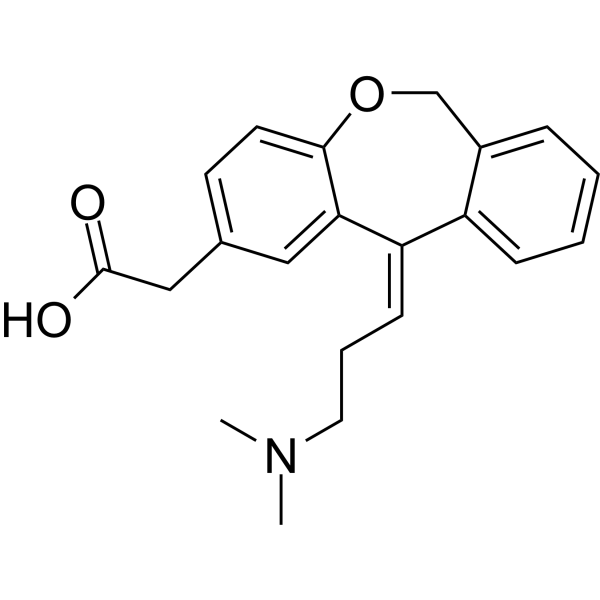 0 ImagesOlopatadine (ALO4943A; KW4679) is an orally active histamine H1 receptor antagonist and mast cell stabilizer. Olopatadine exerts antiallergic effects by blocking histamine H1 receptor-mediated activities. Olopatadine inhibits exocytosis, chemokine release, F-actin polymerization, CXCL10-induced calcium influx, and T cell chemotactic activity. Olopatadine also reduces the expression levels of CXCR3 on the surface of CD4+ and CD8+ T cells. Olopatadine inhibits scratching behavior, improves dermatitis scores, and suppresses intraepidermal neurite outgrowth. Olopatadine simultaneously decreases the levels of inflammatory markers, growth factors, histamine, and specific IgE, while increasing the expression of ErbB3A/HER3A. Olopatadine can be used in research related to seasonal pollinosis, chronic rhinitis, urticaria, allergic conjunctivitis, alopecia areata, and atopic dermatitis.
-
DV1 TFA
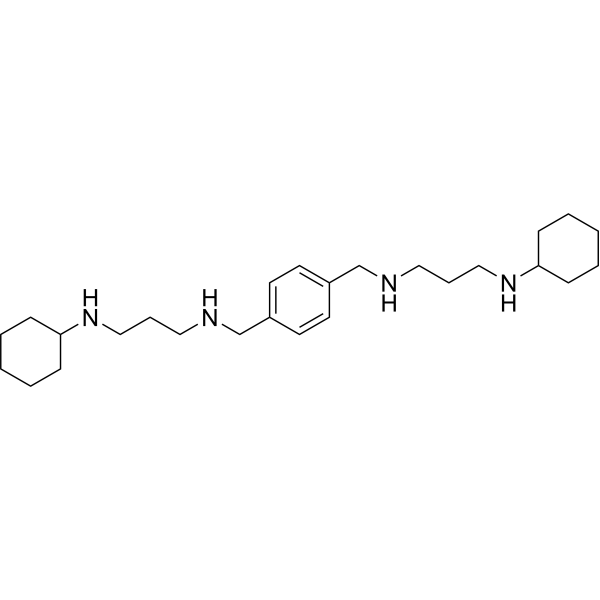
 0 ImagesCat. No.: HY-P10427APurity: 98.53%DV1 TFA is a CXCR4 inhibitor with anti-proteolytic properties that specifically blocks the binding of SDF-1α to its receptor. DV1 TFA inhibits the migration of breast cancer cells and enables the targeted delivery of avidin-PLGA nanoparticles to CXCR4-expressing cancer cells. DV1 TFA not only effectively suppresses the progression of metastatic breast cancer in mouse models, but also preferentially accumulates in brain tumor tissues rather than normal brain tissues, showing potential for inhibiting intracranial tumor metastasis. As a humoral immune stimulant, DV1 TFA induces the production of specific IgG, neutralizing antibodies and cellular immune responses, thereby providing the host with protection against lethal challenges. DV1 TFA has been applied to studies on CXCR4-expressing cancers, glioblastoma, dengue fever and other related diseases.

-
CCX662
 0 ImagesCat. No.: HY-167851CAS No.: 1226686-54-9CCX662 is a selective CXCR7 inhibitor with human IC50 values of 9 nM (buffer) and 18 nM (100% human serum), and rat IC50 of 14 nM (100% rat serum). CCX662 blocks CXCL12 binding to CXCR7, inhibits CXCR4-directed trans-endothelial migration of CXCR4+/CXCR7+ cells. CCX662 can be used for the research of glioblastoma multiforme.
-
CXCR4-IN-3
 0 ImagesCXCR4-IN-3 (compound XVI) is an orally active and potent inhibitor targeting the inflammation-related receptor CXCR4, with an IC50 of 3.2 nM. CXCR4-IN-3 exhibits potent antichemotactic activity, at 79.19±2.33% inhibition. CXCR4-IN-3 shows anti-inflammatory activity. CXCR4-IN-3 can be used for IBD (inflammatory bowel disease) research.
-
Anti-Mouse/Human CXCL12 Antibody (K15C)
 0 ImagesCat. No.: HY-P991795Purity: 99.57%Anti-Mouse/Human CXCL12 Antibody (K15C) is an antibody targeting SDF-1/CXCL12. Anti-Mouse/Human CXCL12 Antibody (K15C) blocks the biological activity of SDF-1 secreted by cancer-associated fibroblasts. Anti-Mouse/Human CXCL12 Antibody (K15C) inhibits tumor growth, reduces tumor microvessel density, and decreases the proportion of Sca1+CD31+ endothelial progenitor cells in tumors. Anti-Mouse/Human CXCL12 Antibody (K15C) can be used for research on aggressive human breast cancer. The recommended isotype control is Mouse IgG2a kappa, Isotype Control (HY-P99978).
-
ATI-2341
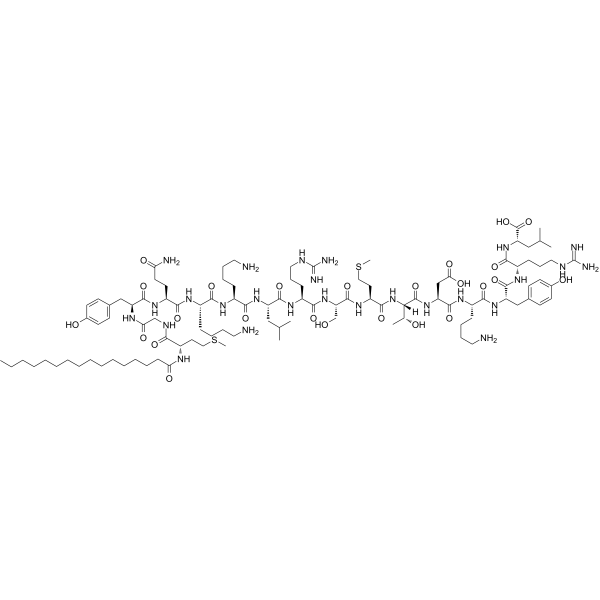 0 ImagesATI-2341 is a potent and functionally selective allosteric agonist of C-X-C chemokine receptor type 4 (CXCR4), which functions as a biased ligand, favoring Gαi activation over Gα13. ATI-2341 activates the inhibitory heterotrimeric G protein (Gi) to promote inhibition of cAMP production and induce calcium mobilization. ATI-2341 is a potent and efficacious mobilizer of bone marrow polymorphonuclear neutrophils (PMNs) and hematopoietic stem and progenitor cells (HSPCs).
-
USL311
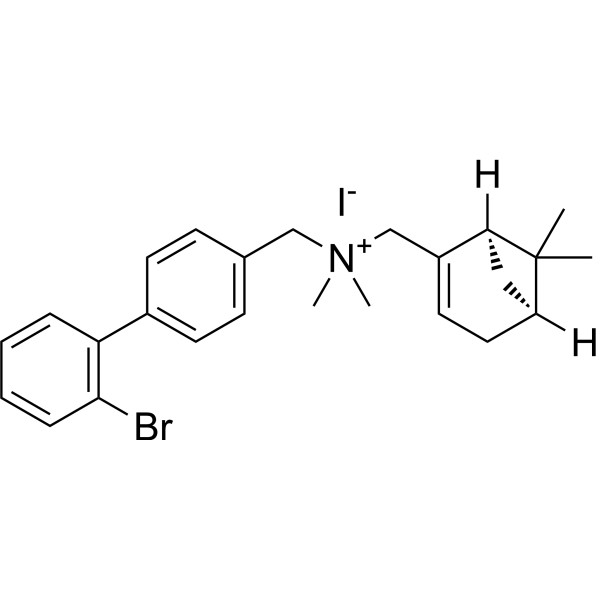
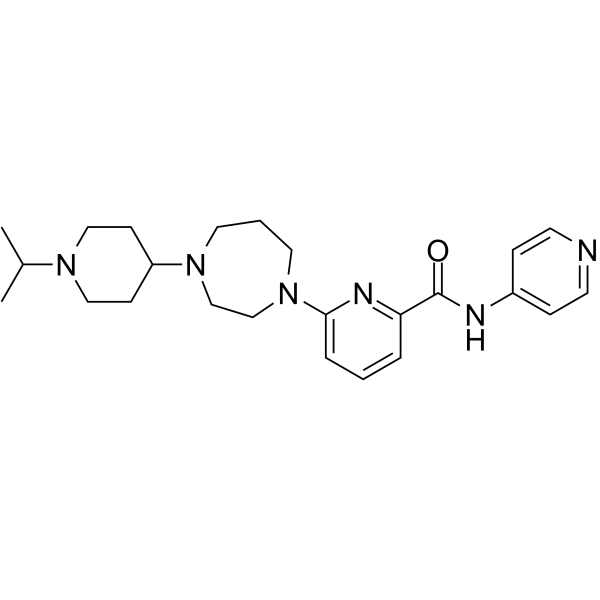 0 ImagesUSL311 is an orally active CXCR4 inhibitor. USL311 blocks the activity of the CXCR4 receptor. USL311 is applicable to research related to various cancers including breast cancer, bladder cancer, colon cancer, rectal cancer, liver cancer and glioblastoma.
-
pCXCL8-1aa
 0 ImagesCat. No.: HY-P10552Purity: 99.07%pCXCL8-1aa is an anti-inflammatory peptide. pCXCL8-1aa competitively inhibits the binding of CXCL8 to glycosaminoglycans such as heparin sulfate (HS) by binding with high affinity. This reduces the presentation of CXCL8 on the surface of vascular endothelial cells, thereby inhibiting neutrophil migration and inflammatory responses. pCXCL8-1aa can be used to study inflammatory diseases such as rheumatoid arthritis.
-
NI-0801
 0 ImagesCat. No.: HY-P990639Purity: 99.19%
-
Snail IN-1
 0 ImagesSnail IN-1 is an orally active Snail inhibitor with a Ka of 0.36 μM.Snail IN-1 disrupts Snail-CBP interaction, accelerates Snail protein degradation, reduces Snail acetylation, increases Snail polyubiquitination, and selectively downregulates Snail protein without altering other EMT transcription factors.Snail IN-1 reduces atherosclerotic plaque burden, modulates inflammation and plaque stability factors, downregulates CCL5, CXCL10, MMP2, and MMP9, and upregulates α-smooth muscle actin.Snail IN-1 exerts anti-inflammatory and plaque-stabilizing properties.Snail IN-1 can be used for the research of atherosclerosis.
-
Anti-Mouse CXCL16 Antibody (12-81)
 0 ImagesCat. No.: HY-P991752Anti-Mouse CXCL16 Antibody (12-81) is an antibody targeting mouse CXCL16. Anti-Mouse CXCL16 Antibody (12-81) blocks the CXCL16/CXCR6 signaling axis. Anti-Mouse CXCL16 Antibody (12-81) reduces the recruitment of CD8+ T cells into the brain. Anti-Mouse CXCL16 Antibody (12-81) alleviates the reduction of hippocampal neurogenesis. Anti-Mouse CXCL16 Antibody (12-81) attenuates anxiety-like behaviors in mice. Anti-Mouse CXCL16 Antibody (12-81) can be used in studies related to anxiety-like behaviors. The recommended isotype control is Rat IgG1 kappa, Isotype Control (HY-P99979).
-
CXCR4 antagonist 5
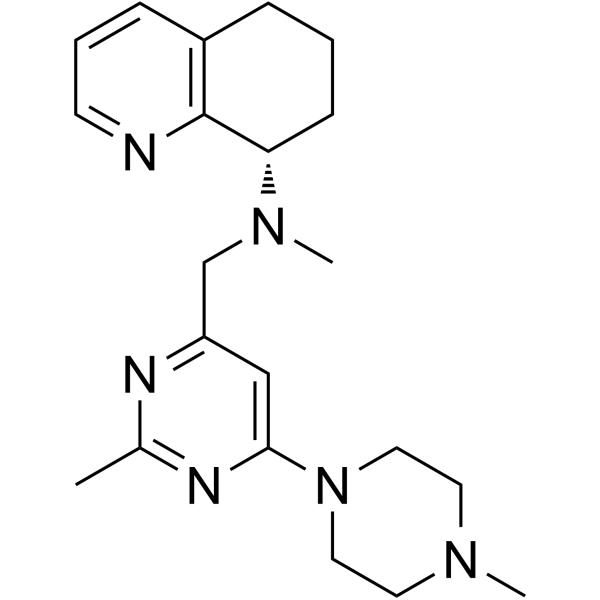 0 ImagesCXCR4 antagonist 5 (compound 23) is a highly potent CXCR4 antagonist with an IC50 value of 8.8 nM. CXCR4 antagonist 5 can inhibit CXCL12-induced cytosolic calcium increase (IC50 = 0.02 nM) and inhibits CXCR4/CXLC12-mediated chemotaxis. CXCR4 antagonist 5 has good physicochemical properties and in vitro safety profiles, inhibiting CYP isozymes and hERG marginally or moderately.
-
CXCR4 antagonist 8
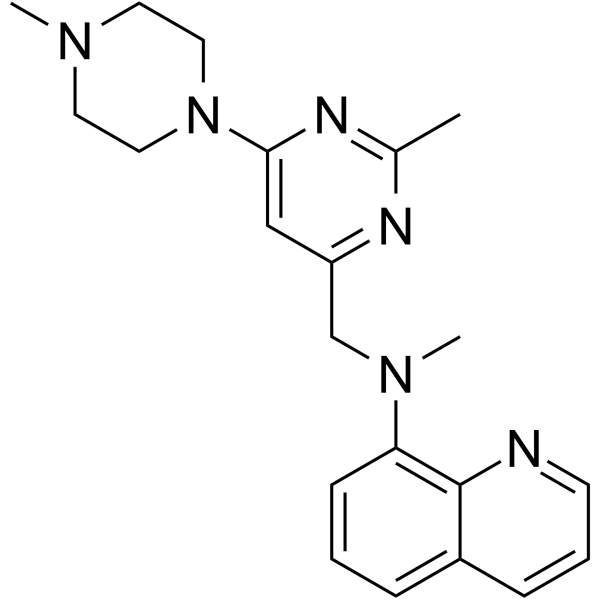 0 ImagesCXCR4 antagonist 8 (Compound 3) is a CXCR4 antagonist with an IC50 of 57 nM. CXCR4 antagonist 8 inhibits CXCL12 induced cytosolic calcium increase with an IC50 of 0.24 nM. CXCR4 antagonist 8 inhibits CXLC12/CXCR4 mediated cell migration.
-
PD-1/PD-L1-IN-63
 0 ImagesPD-1/PD-L1-IN-63 is an orally active PD-1/PD-L1 inhibitor with an IC50 of 9.1 nM. PD-1/PD-L1-IN-63 blocks the PD-1/PD-L1 interaction, induces cancer cell death and inhibits tumor growth. PD-1/PD-L1-IN-63 can be used in the research of melanoma.
-
YU241279
 0 ImagesYU241279 is an orally active CXCR5 inhibitor. YU241279 inhibits CXCL13-mediated Gαq-dependent calcium influx and Gαi2-dependent cAMP reduction in CXCR5-expressing cells. YU241279 inhibits the proliferation of CXCR5-expressing lymphoma cells. YU241279 reduces tumor burden in the peripheral blood and bone marrow of mice implanted with lymphoma tissues. YU241279 is well tolerated during oral administration in mice, maintains stable plasma drug concentrations, and shows no metabolic changes. YU241279 can be used in the research of angioimmunoblastic T-cell lymphoma and Burkitt B-cell lymphoma.
-
NI-0701
 0 ImagesCat. No.: HY-P990638Purity: 99.74%NI-0701 is a humanized antibody expressed in CHO cells that targets CCL5/RANTES. NI-0701 has a huIgG2 heavy chain and a huλ light chain, with a predicted molecular weight (MW) of 145 kDa. The isotype control for NI-0701 can be referenced as Human IgG2 lambda, Isotype Control (HY-P991206).