



Microtubule/Tubulin
Microtubules are a component of the cytoskeleton, found throughout the cytoplasm. These tubular polymers of tubulin can grow as long as 50 micrometres, with an average length of 25 µm, and are highly dynamic. The outer diameter of a microtubule is about 24 nm while the inner diameter is about 12 nm. Microtubules are found in eukaryotic cells and are formed by the polymerization of a dimer of two globular proteins, alpha and beta tubulin. Tubulin is one of several members of a small family of globular proteins. The tubulin superfamily includes five distinct families, the alpha-, beta-, gamma-, delta-, and epsilon-tubulins and a sixth family which is present only in kinetoplastid protozoa. The most common members of the tubulin family are α-tubulin and β-tubulin, the proteins that make up microtubules. Microtubules are very important in a number of cellular processes. They are involved in maintaining the structure of the cell.
All Product Categories
-
Microtubule/Tubulin Inhibitors
(811)
View all products
-
Microtubule/Tubulin Agonists
(2)
View all products
-
Microtubule/Tubulin Activators
(19)
View all products
-
Microtubule/Tubulin Modulators
(19)
View all products
-
Microtubule/Tubulin Inducers
(5)
View all products
-
Microtubule/Tubulin Degraders
(3)
View all products
-
Microtubule/Tubulin Controls
(19)
View all products
-
Microtubule/Tubulin Ligands
(5)
View all products
-
Microtubule/Tubulin Related Products (996)
Related Products (996)

-
Antibodies (69)
-
KGP591
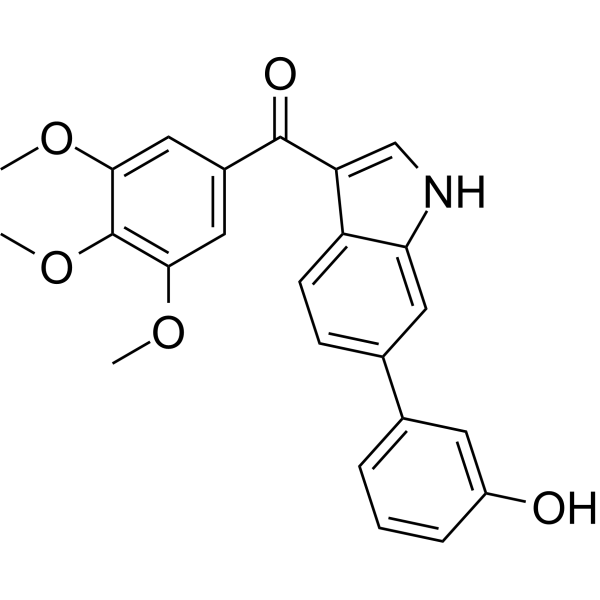 0 ImagesCat. No.: HY-155249CAS No.: 3018962-69-8KGP591 is a tubulin polymerization inhibitor (IC50 0.57 µM). KGP591 induces significant G2/M stagnation, inhibits cell migration, disrupts microtubule structure and cell morphology in MDA-MB-231 cells. KGP591 shows antitumor activity in orthotopic model of kidney cancer (RENCA).
-
Cephalomannine (Standard)
 0 ImagesCat. No.: HY-77554RCAS No.: 71610-00-9Cephalomannine (Standard) is the analytical standard of Cephalomannine. This product is intended for research and analytical applications. Cephalomannine is a Paclitaxel (HY-B0015) alkaloidal analog that can be isolated from most Cephalotaxus species. Cephalomannine is an orally active anti-tumor agent and can be used as a chemotherapy agent for cancer research.
-
DPP-21
 0 ImagesCat. No.: HY-169096CAS No.: 2924883-83-8DPP-21 is an inhibitor of tubulin polymerization (IC50: 2.4 μM). DPP-21 shows anti-proliferative activity against cancer cell lines, with IC50s of 0.38 nM (HCT116), 11.69 nM (B16), 5.37 nM (HeLa), 9.53 nM (MCF7), 8.94 nM (H23) and 9.37 nM (HepG2) respectively. DPP-21 arrests the cell cycle in the G2/M phase of mitosis, subsequently inducing tumor cell apoptosis (decreases Bcl-2 but upregulates the pro-apoptotic protein Bax).
-
Tubulin degrader 2
 0 ImagesCat. No.: HY-161641Tubulin degrader 2 is a tubulin HyT degrader and tubulin polymerization inhibitor, with a DC50 of 4.9 μM against α-tubulin in MCF-7 cells and an IC50 of 7.5 μM for the polymerization of purified recombinant tubulin. Tubulin degrader 2 binds to the colchicine-binding site of tubulin, induces proteasome-dependent degradation of α-tubulin and β-tubulin, inhibits the polymerization of purified recombinant tubulin, and triggers microtubule disruption and cell cycle arrest in cancer cells. Tubulin degrader 2 exhibits antitumor activity in a breast cancer allograft mouse model. Tubulin degrader 2 can be applied in the research of breast cancer, lung cancer, and colorectal cancer.
-
STX140
 0 ImagesCat. No.: HY-133222CAS No.: 401600-86-0STX140 is an orally active microtubule disruptor. STX140 induces apoptosis in the hormone-independent PC-3 prostate cell lines. STX140 has anti-angiogenic and anti-tumour activities.
-
Docetaxel Trihydrate (Standard)
 0 ImagesSynonyms: RP-56976 Trihydrate (Standard)Docetaxel (Trihydrate) (Standard) is the analytical standard of Docetaxel (Trihydrate). This product is intended for research and analytical applications. Docetaxel Trihydrate (RP-56976 Trihydrate) is an antineoplastic agent and inhibits microtubule?depolymerization with an IC50 value of 0.2 μM. Docetaxel Trihydrate is a semisynthetic analog of taxol and attenuates the effects of?bcl-2?and?bcl-xL?gene expression. Docetaxel Trihydrate arrests the cell cycle at G2/M and leads to cell apoptosis.
-
Tub114
 0 ImagesCat. No.: HY-177413CAS No.: 2361406-35-9Tub114 is a drug-linker conjugate for ADC. Tub114 is a Tubulysin B (HY-N1243) analog with a stable hydrophilic linker. Tub114 can be used for synthesis of ADCs.
-
Paclitaxel succinate sulfo-NHS ester
 0 ImagesCat. No.: HY-17664CAS No.: 192047-93-1Synonyms: 2’-Sulfo-NHS-succinyl-paclitaxelPaclitaxel succinate sulfo-NHS ester is a derivative of Paclitaxel (HY-B0015). Paclitaxel succinate sulfo-NHS ester can be used for the research of cancer.
-
Tubulin polymerization/V-ATPase-IN-1
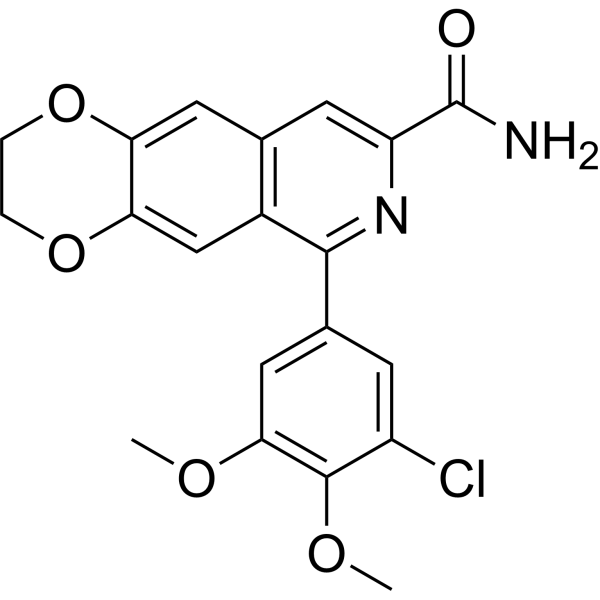 0 ImagesCat. No.: HY-162264CAS No.: 3032401-72-9Tubulin polymerization/V-ATPase-IN-1 (compound F10) is a Tubulin polymerization/V-ATPase inhibitor. Tubulin polymerization/V-ATPase-IN-1 shows robust antiproliferation activity against four human cancer cell lines, and exerts antiproliferative activity by inhibiting tubulin and V-ATPase. Tubulin polymerization/V-ATPase-IN-1 induces immunogenic cell death in addition to apoptosis, and inhibits tumor growth in an RM-1 homograft model with enhanced T lymphocyte infiltration.
-
3-(3-Phenoxybenzyl)amino-β-carboline
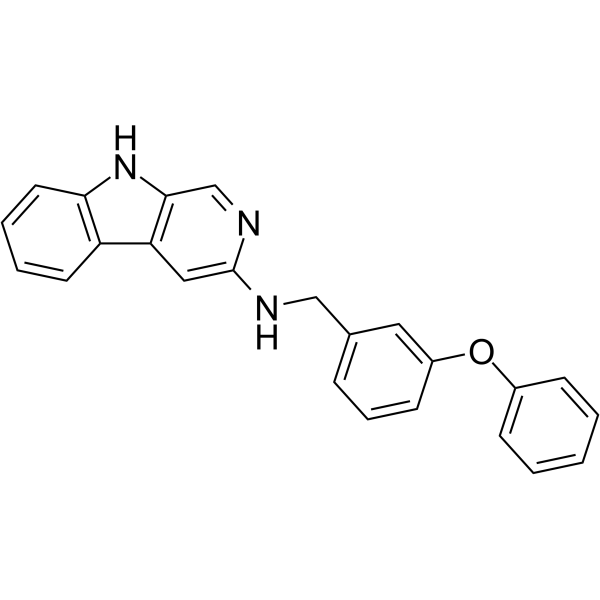 0 ImagesCat. No.: HY-150511CAS No.: 1327080-54-53-(3-Phenoxybenzyl)amino-β-carboline is a potent tubulin inhibitor. 3-(3-Phenoxybenzyl)amino-β-carboline promotes selective degradation of αβ-tubulin heterodimers. 3-(3-Phenoxybenzyl)amino-β-carboline induces G2/M phase cell cycle arrest and apoptosis. 3-(3-Phenoxybenzyl)amino-β-carboline exhibits anticancer activity.
-
PROTAC tubulin-Degrader-1
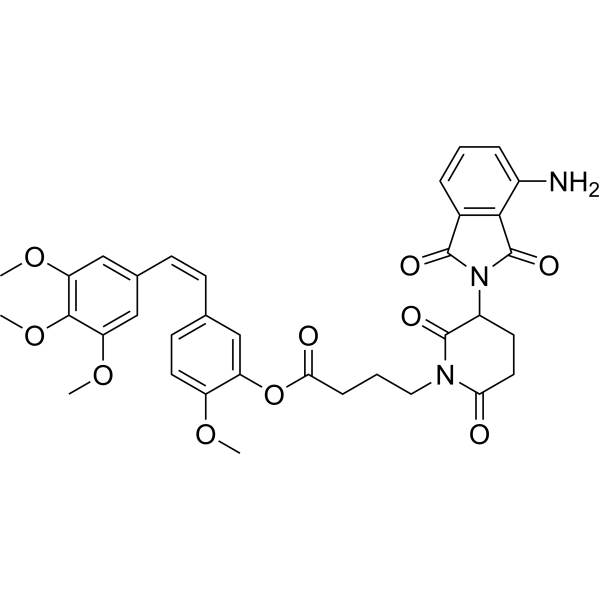 0 ImagesCat. No.: HY-162098PROTAC tubulin-Degrader-1 is a α/β/β3-tubulin PROTAC degrader. PROTAC tubulin-Degrader-1 exhibits potent anti-proliferative activity against multiple human tumor cell lines. PROTAC tubulin-Degrader-1 induces G2/M phase arrest and apoptosis and inhibits colony formation in A549 and A549/Taxol cells. PROTAC tubulin-Degrader-1demonstrates potent anti-tumor efficacy in A549 and A549/Taxol (Taxol-resistant) xenograft model. PROTAC tubulin-Degrader-1 can be used for the study of non-small cell lung cancer (NSCLC). (Pink: Tubulin ligand (HY-N2146), Blue: CRBN Ligand (HY-10984), Black: Linker (HY-N6056)).
-
Tubulin polymerization-IN-12
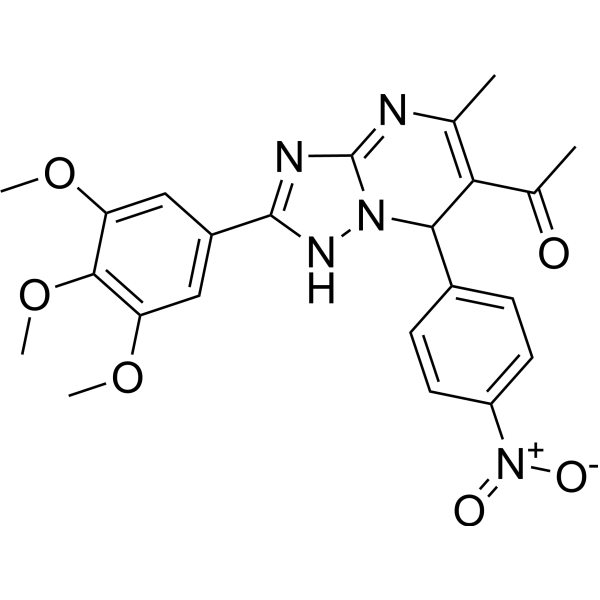 0 ImagesCat. No.: HY-146818CAS No.: 2377301-45-4Tubulin polymerization-IN-12 is a tubulin polymerization inhibitor (IC50=0.75 μM). Tubulin polymerization-IN-12 arrests cell cycle at G2/M phase, and exhibits cytotoxicity against cancer cells.
-
HK-2-IN-2
 0 ImagesCat. No.: HY-168717CAS No.: 3056278-80-6HK2-IN-2 (Compound 26) is a Hexokinase 2 inhibitor that demonstrates significant anti-tumor activity by targeting microtubules and Hexokinase 2, with an IC50 value of 0.764 μM against MD-MBA-231 cells. HK2-IN-2 effectively inhibits the activity of Hexokinase 2, leading to the accumulation of Reactive Oxygen Species and dysfunction of the mitochondrial membrane potential (MMP), thereby promoting apoptosis and blocking the cell cycle.
-
Tubulin polymerization-IN-16
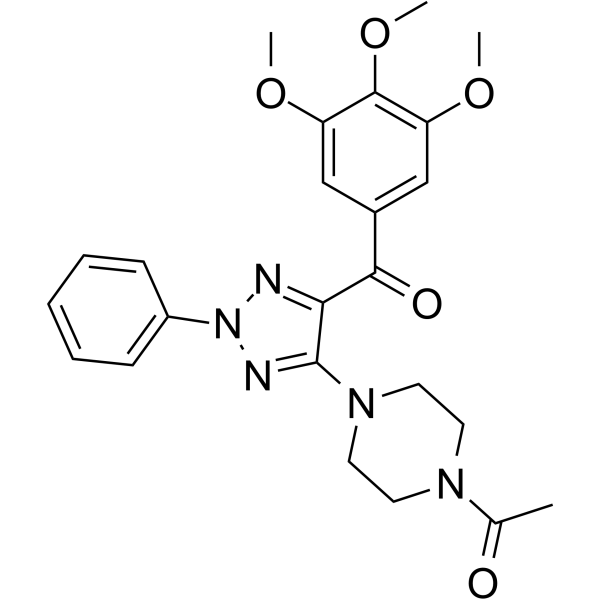 0 ImagesCat. No.: HY-146311CAS No.: 2296731-38-7Tubulin polymerization-IN-16 (compound 5g) is a potent inhibitor of tubulin polymerization. Tubulin polymerization-IN-16 shows most potent against cancer cells, with IC50 values of 0.084-0.221 μM. Tubulin polymerization-IN-16 potently disrupts microtubule/tubulin dynamics, induces cell cycle arrest at G2/M phase in SGC-7901 cells.
-
Breast cancer
targeting peptide 18–4
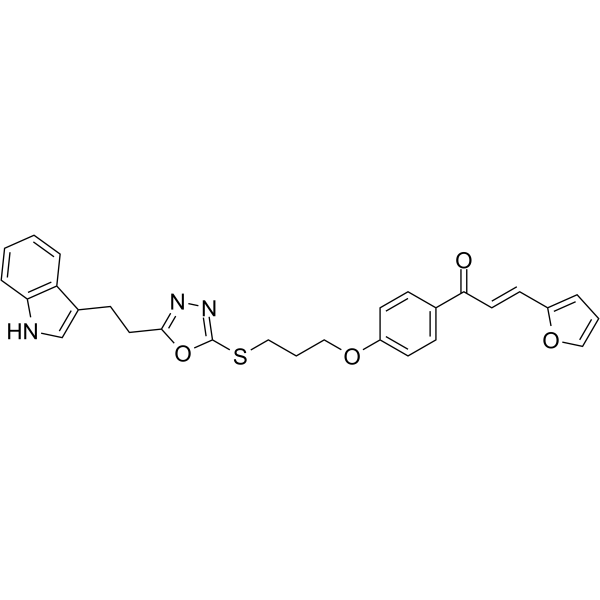
 0 ImagesCat. No.: HY-P10790CAS No.: 1332850-08-4Breast cancer targeting peptide 18–4 is a KRT1 receptor-targeting peptide, with a Kd of 0.98 μM. The amino acid sequence of Breast cancer targeting peptide 18–4 is WxEAAYQrFL, and it is an analogue of P160 peptide (HY-P10789). When covalently conjugated with the anticancer peptide MccJ25, Breast cancer targeting peptide 18–4 significantly increases the cellular uptake of MccJ25 in breast cancer cells and enhances its anticancer activity. The covalent conjugate exhibits IC50 values of 14.2, 20, and 25 μM against MCF-7, MDA-MB-435, and MDA-MB-435-MDR cells, respectively.
-
Sertaconazole
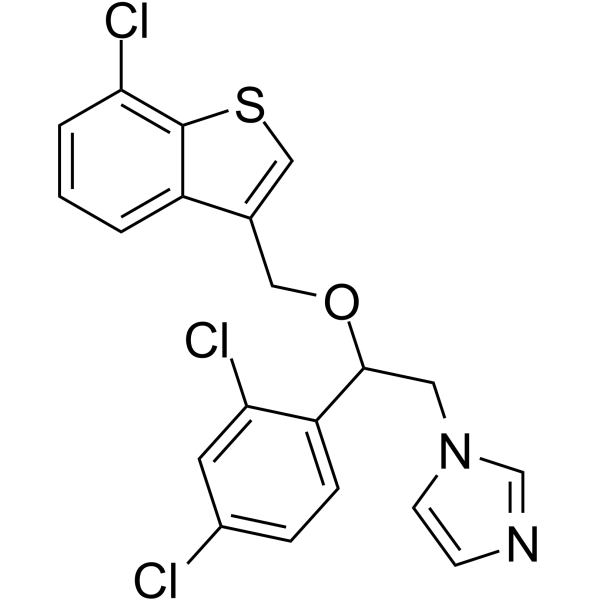 0 ImagesSynonyms: FI7056 free baseSertaconazole (FI7056 free base) is a broad-spectrum topical antifungal agent, exhibits anti-inflammatory activity via activation of a p38-COX-2-PGE2 pathway. Sertaconazole is also a microtubule inhibitor, shows antiproliferative effect, induces apoptosis and autophagy, and can also inhibit the migration of cells.
-
GV-001
 0 ImagesCat. No.: HY-182904CAS No.: 3082707-76-1GV-001 is a selective and orally active HDAC6 inhibitor with an IC50 of 1.18 nM against HDAC6. GV-001 selectively enhances α-tubulin acetylation, reduces sIL-6 and Collagen I levels, suppresses renal cyst growth, and upregulates PC1 expression. GV-001 can be used for the study of autosomal dominant polycystic kidney disease (ADPKD).
-
KIF18A-IN-12
 0 ImagesCat. No.: HY-158757CAS No.: 3033980-95-6KIF18A-IN-12 (compound 9) is a KIF18A inhibitor, with an IC50 value of 45.54 nM. KIF18A-IN-12 can be used in cancer research.
-
N-Acetylcolchinol phosphate
 0 ImagesCat. No.: HY-124397CAS No.: 219923-05-4Synonyms: ZD-6126; AZD-6126; ANG-453N-Acetylcolchinol phosphate is an inhibitor of tubulin polymerisation. N-Acetylcolchinol phosphate can bind to tubulin cytoskeleton of the endothelial cells in blood vessels of tumor. N-Acetylcolchinol phosphate can be studied in anti-cancer research.




