1. Signaling Pathways
  2. PI3K/Akt/mTOR
  3. PI3K

PI3K

Phosphoinositide 3-kinase

PI3K (Phosphoinositide 3-kinase), via phosphorylation of the inositol lipid phosphatidylinositol 4,5-bisphosphate (PI(4,5)P2), forms the second messenger molecule phosphatidylinositol (3,4,5)-trisphosphate (PI(3,4,5)P3) which recruits and activates pleckstrin homology domain containing proteins, leading to downstream signalling events crucial for proliferation, survival and migration. Class I PI3K enzymes consist of four distinct catalytic isoforms, PI3Kα, PI3Kβ, PI3Kδ and PI3Kγ.

There are three major classes of PI3K enzymes, being class IA widely associated to cancer. Class IA PI3K are heterodimeric lipid kinases composed of a catalytic subunit (p110α, p110β, or p110δ; encoded by PIK3CA, PIK3CB, and PIK3CD genes, respectively) and a regulatory subunit (p85).

The PI3K pathway plays an important role in many biological processes, including cell cycle progression, cell growth, survival, actin rearrangement and migration, and intracellular vesicular transport.

Cat. No. Product Name Effect Purity Chemical Structure
  • HY-136765
    PI3K-IN-11
    Inhibitor
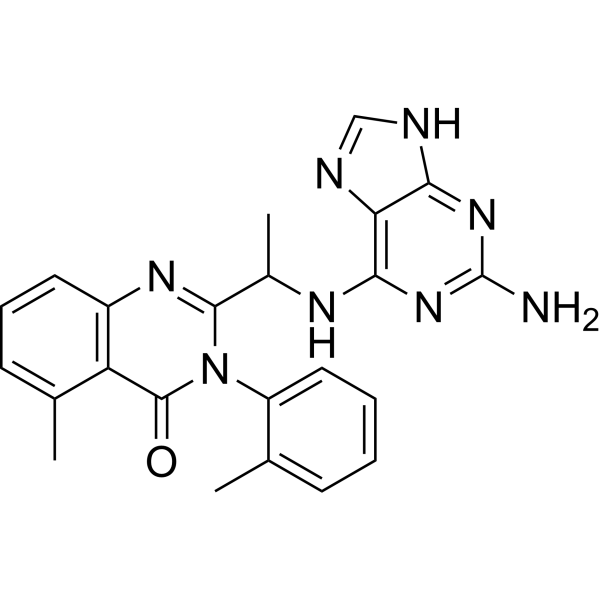
    PI3K-IN-11 (compound 13) is a PI3K inhibitor, which selectively inhibits PI3Kα, PI3Kβ, PI3K, and PI3Kδ (IC50s=6.4, 13, 8, and 11 nM, respectively) over mTOR (IC50=2.9 μM). PX-13-17OH is greater than 420-fold selective for PI3K in a panel of 20 lipid and protein kinases. PX-13-17OH inhibits phosphorylation of Akt and S6 kinase (S6K) in PTEN-negative U87MG cells when used at concentrations ranging from 0.03 to 1 μg/mL. It inhibits tumor growth in a U87MG mouse xenograft model when administered at doses ranging from 2.5 to 10 mg/kg.
    PI3K-IN-11
  • HY-N13164
    Polygalacin D3
    Inhibitor
    Polygalacin D3 is a triterpenoid saponin compound that can be extracted from the roots of the balloon flower. Polygalacin D3 can inhibit the proliferation of non-small cell lung cancer (NSCLC) cell lines by blocking the PI3K/Akt pathway, and it induces cell cycle arrest and cell apoptosis.
    Polygalacin D3
  • HY-108606R
    PI-828 (Standard)
    Inhibitor
    PI-828 (Standard) is the analytical standard of PI-828 (HY-108606). This product is intended for research and analytical applications. PI-828 is a dual PI3K and casein Kinase 2 (CK2) inhibitor with IC50s of 173 nM, 149 nM, and 1127 nM for p110α, CK2, and CK2α2 in lipid Kinase assay, respectively.
    PI-828 (Standard)
  • HY-Y1177R
    Diphenyl disulfide (Standard)
    Inhibitor
    Diphenyl disulfide (Standard) is an analytical standard for diphenyl disulfide (HY-Y1177). This product is intended for research and analytical applications. Diphenyl disulfide (Phenyl disulfide) is an organic disulfide compound. Diphenyl disulfide inhibits the PI3K/AKT/mTOR pathway, and induces ferroptosis (ferroptosis), apoptosis (apoptosis) and autophagy (autophagy) in cancer cells. Diphenyl disulfide downregulates GPX4 expression, inhibits NRF2 phosphorylation, induces lipid peroxidation, promotes xCT ubiquitination, induces proteolytic cleavage of p21 Bax into p18 Bax, and suppresses cell proliferation and viability. Diphenyl disulfide can be used in research related to melanoma and breast cancer.
    Diphenyl disulfide (Standard)
  • HY-N0721R
    Neoandrographolide (Standard)
    Inhibitor
    Neoandrographolide (Standard) is the analytical standard of Neoandrographolide. This product is intended for research and analytical applications. Neoandrographolide is a diterpenoid compound isolated from Andrographis paniculata. Neoandrographolide inhibits osteoclasts differentiation and bone resorption through inhibition of MAPK/NF-κB/PI3K/AKT/GSK3β/PPAR/CAMK signaling pathway. Neoandrographolide inhibits apoptosis in rat embryonic ventricular cardiomyocytes. Neoandrographolide inhibits iNOS and the generation of ROS, activates eNOS, exhibiting anti-inflammatory and hypolipidemic activity.
    Neoandrographolide (Standard)
  • HY-185456
    PI3K/mTOR-IN-21
    Inhibitor
    PI3K/mTOR-IN-21 is a potent dual PI3K/mTOR inhibitor that exhibits favorable overall properties.
    PI3K/mTOR-IN-21
  • HY-70063R
    Buparlisib (Standard)
    Inhibitor
    Buparlisib (Standard) is the analytical standard of Buparlisib. This product is intended for research and analytical applications. Buparlisib (BKM120; NVP-BKM120) is a pan-class I PI3K inhibitor, with IC50s of 52, 166, 116 and 262 nM for p110α, p110β, p110δ and p110γ, respectively.
    Buparlisib (Standard)
  • HY-100398R
    PF-04979064 (Standard)
    Inhibitor
    PF-04979064 (Standard) is the analytical standard of PF-04979064 (HY-100398). This product is intended for research and analytical applications. PF-04979064 is a potent and selective PI3K/mTOR dual kinase inhibitor with Kis of 0.13 nM and 1.42 nM for PI3Kα and mTOR, respectively.
    PF-04979064 (Standard)
  • HY-120471
    AM-0687
    Inhibitor
    AM-0687 is a selective inhibitor for PI3Kδ with an IC50 of 2.9 nM. AM-0687 decreases the levels of IgG and IgM specific antibodies, inhibits the anti-IgM/CD40L-induced proliferation of human B cell (IC50=0.8 nM) and the phosphorylation of AKT (IC50=0.7 nM), and exhibits anti-inflammatory efficacy.
    AM-0687
  • HY-100678R
    CGS 15943 (Standard)
    Inhibitor
    CGS 15943 (Standard) is the analytical standard of CGS 15943. This product is intended for research and analytical applications. CGS 15943 is an orally bioavailable non-xanthine Adenosine Receptor antagonist. Its Ki for human A1, A2A, A2B, and A3 Adenosine Receptors are 3.5, 4.2, 16, and 50 nM in transfected CHO cells, respectively. .
    CGS 15943 (Standard)
  • HY-12068R
    PI3K-IN-1 (Standard)
    Inhibitor
    PI3K-IN-1 (Standard) is the analytical standard of PI3K-IN-1. This product is intended for research and analytical applications. PI3K-IN-1 (XL-147 derivative 1) is a potent inhibitor of PI3K. PI3K-IN-1 (25 μM) blocks PI3K/Akt signaling pathways.
    PI3K-IN-1 (Standard)
  • HY-B1550R
    Benzoin (Standard)
    Inhibitor
    Benzoin (Standard) (DL-Benzoin (Standard)) is the analytical standard of Benzoin (HY-B1550). This product is intended for research and analytical applications. Benzoin (DL-Benzoin), a natural balsamic resin, is a PI3Kα inhibitor with anticancer effects. Benzoin inihits the growth of colon cancer cell line (HCT-116). Benzoin can be used as a food additive.
    Benzoin (Standard)
  • HY-N0696R
    Sipeimine (Standard)
    Inhibitor
    Sipeimine (Standard) is the analytical standard of Sipeimine (HY-N0696R). Sipeimine (Imperialine) is an inhibitor targeting the PI3K/AKT/NF-κB pathway and NLRP3 inflammasome, which can competitively bind to PI3K and p65. Sipeimine inhibits PI3K/AKT phosphorylation, blocks NF-κB nuclear translocation and NLRP3 inflammasome activation. Sipeimine exerts anti-inflammatory activities, inhibits pyroptosis and ferroptosis, and protects the extracellular matrix. Sipeimine can reduce cartilage degradation and synovial inflammation in osteoarthritis and improve PM2.5-induced lung injury. Sipeimine is mainly used in the study of anti-inflammatory and degenerative diseases.
    Sipeimine (Standard)
  • HY-N0143R
    Phlorizin (Standard)
    Inhibitor
    Phlorizin (Floridzin) (Standard) is the analytical standard of Phlorizin. This product is intended for research and analytical applications. Phlorizin is an orally active non-selective sodium-glucose cotransporter (SGLT) inhibitor, with an IC50 of 0.04 μM and a Ki of 39 nM against hSGLT2, and an IC50 of 0.17 μM and a Ki of 0.31 μM against hSGLT1. Phlorizin promotes GLUT4 translocation, inhibits gluconeogenesis and promotes glycogen synthesis by activating the PI3K/Akt/mTOR pathway. Phlorizin reduces DNA damage and apoptosis (apoptosis) by inhibiting the NF-κB inflammatory pathway. Phlorizin induces apoptosis via activating the Caspase pathway by antagonizing the JAK/STAT3 and PCK pathways. Phlorizin also exhibits antibacterial, anti-inflammatory and neuroprotective activities.
    Phlorizin (Standard)
  • HY-16122
    CAL-130 Racemate
    Inhibitor
    CAL-130 Racemate is the racemate of CAL-130. CAL-130 Racemate is a PI3Kδ inhibitor.
    CAL-130 Racemate
  • HY-109068R
    Parsaclisib (Standard)
    Inhibitor
    Parsaclisib (Standard) is the analytical standard of Parsaclisib (HY-109068). This product is intended for research and analytical applications. Parsaclisib (INCB050465) is a potent, selective and orally active inhibitor of PI3Kδ, with an IC50 of 1 nM at 1 mM ATP. Parsaclisib shows approximately 20000-fold selectivity over other PI3K class I isoforms. Parsaclisib can be used for the research of relapsed or refractory B-cell malignancies.
    Parsaclisib (Standard)
  • HY-N6926
    1,3,5-Tricaffeoylquinic acid
    Inhibitor
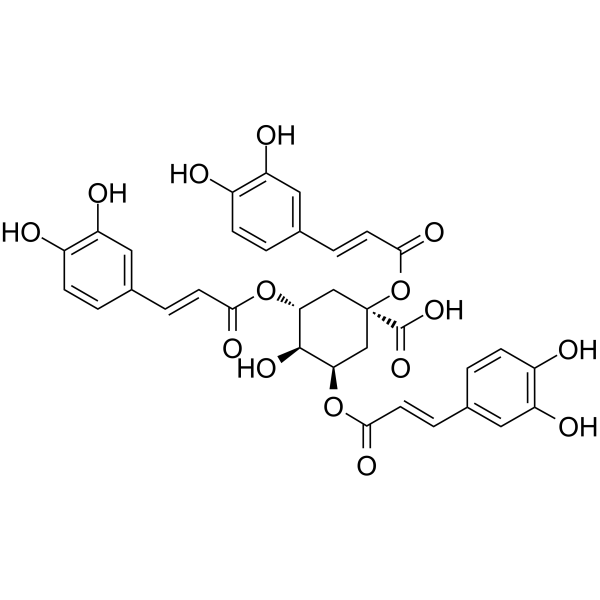
    1,3,5-Tricaffeoylquinic acid acts as an angiogenesis inhibitor and apoptosis inducer, and exhibits anti-HIV activity. 1,3,5-Tricaffeoylquinic acid inhibits the phosphorylation of VEGFR2, ERK, PI3K, Akt and mTOR in the angiogenesis signaling pathway. 1,3,5-Tricaffeoylquinic acid regulates apoptosis-related proteins, upregulates the levels of activated caspase-8, Bax, activated PARP and caspase-3/9, while downregulates the level of Bcl-2. 1,3,5-Tricaffeoylquinic acid inhibits tube formation and shows cytotoxicity against ovarian cancer cells. 1,3,5-Tricaffeoylquinic acid can be used in studies related to ovarian cancer.
    1,3,5-Tricaffeoylquinic acid
  • HY-W636234
    GSK2636771 methyl
    Inhibitor
    GSK2636771 methyl (compound II) is an inhibitor of PI3Kβ. GSK2636771 methyl can be used in the research of cancer combined with VT-464 (HY-15996).
    GSK2636771 methyl
  • HY-N0493R
    Pectolinarigenin (Standard)
    Inhibitor
    Pectolinarigenin (Standard) is the analytical standard of Pectolinarigenin. This product is intended for research and analytical applications. Pectolinarigenin is an orally active dual inhibitor of COX-2/5-LOX with anti-inflammatory, antioxidant, antitumor and neuroprotective activities. Pectolinarigenin exerts neuroprotective and anti-inflammatory effects on astrocyte inflammation via the NFκB and MAPK pathways. Pectolinarigenin inhibits LPS-induced phosphorylation of ERK1/2, N-FκB and p38MAPK, directly inhibits the enzymatic activity or binding of COX-2, 5-LOX and HIF-1α, and reduces the level of XIAP. Pectolinarigenin modifies Keap1 to promote nuclear accumulation of Nrf2, induces ARE-mediated antioxidant enzyme expression, and possesses direct free radical scavenging activity. Pectolinarigenin reduces the release of NO, proinflammatory mediators and leukotrienes, and increases the level of IL-10. Pectolinarigenin induces G2/M cell cycle arrest, apoptosis (Apoptosis) and autophagy (Autophagy) via the PI3K/AKT/mTOR signaling pathway. Pectolinarigenin reduces renal crystal deposition and inhibits melanin synthesis. Pectolinarigenin inhibits inflammation and alleviates allergy in mouse models of inflammation. Pectolinarigenin alleviates renal injury, inflammation and oxidative stress in mice by inhibiting HIF-1α activity. Pectolinarigenin can be used for the research of neurodegenerative diseases, inflammatory/allergic diseases, calcium oxalate nephrocalcinosis, gastric cancer, melasma, post-inflammatory diseases and chloasma.
    Pectolinarigenin (Standard)
  • HY-121672
    PI3K-IN-7
    Inhibitor
    PI3K-IN-7 (Compound C96) is a PI3K inhibitor. PI3K-IN-7 inhibits phosphorylation of AKT and the activation of an AKT downstream protein. PI3K-IN-7 induces apoptosis of the tumor cells. PI3K-IN-7 has low toxicity for normal cells. PI3K-IN-7 can be used for research of acute and chronic leukemia, multiple myeloma, lymphoma.
    PI3K-IN-7
Cat. No. Product Name / Synonyms Application Reactivity

Phosphatidylinositol 3 kinases (PI3Ks) are a family of lipid kinases that integrate signals from growth factors, cytokines and other environmental cues, translating them into intracellular signals that regulate multiple signaling pathways. These pathways control many physiological functions and cellular processes, which include cell proliferation, growth, survival, motility and metabolism[1]


In the absence of activating signals, p85 interacts with p110 and inhibits p110 kinase activity. Following receptor tyrosine kinase (RTK) or G protein-coupled receptor (GPCR) activation, class I PI3Ks are recruited to the plasma membrane, where p85 inhibition of p110 is relieved and p110 phosphorylates PIP2 to generate PIP3. The activated insulin receptor recruits intracellular adaptor protein IRS1. Phosphorylation of IRS proteins on tyrosine residues by the insulin receptor initiates the recruitment and activation of PI3K. PIP3 acts as a second messenger which promotes the phosphorylation of Akt at Thr308 by PDK-1. RTK activation can also trigger Ras-Raf-MEK-ERK pathway. Activated Akt, ERK and RSK phosphorylate TSC2 at multiple sites to inhibit TSC1-TSC2-TBC1D7, which is the TSC complex that acts as a GTPase-activating protein (GAP) for the small GTPase RHEB. During inhibition of the TSC complex, GTP-loaded RHEB binds the mTOR catalytic domain to activate mTORC1. Glycogen synthase kinase 3β (GSK-3β) activates the TSC complex by phosphorylating TSC2 at Ser1379 and Ser1383. Phosphorylation of these two residues requires priming by AMPK-dependent phosphorylation of Ser1387. Wnt signaling inhibits GSK-3β and the TSC complex, and thus activates mTORC1. mTORC2 is activated by Wnt in a manner dependent on the small GTPase RAC1. Akt activation contributes to diverse cellular activities which include cell survival, growth, proliferation, angiogenesis, metabolism, and migration. Important downstream targets of Akt are GSK-3, FOXOs, BAD, AS160, eNOS, and mTOR. mTORC1 negatively regulates autophagy through multiple inputs, including inhibitory phosphorylation of ULK1, and promotes protein synthesis through activation of the translation initiation promoter S6K and through inhibition of the inhibitory mRNA cap binding 4E-BP1[1][2][3].


PI3Kδ is a heterodimeric enzyme, typically composed of a p85α regulatory subunit and a p110δ catalytic subunit. In T cells, the TCR, the costimulatory receptor ICOS and the IL-2R can activate PI3Kδ. In B cells, PI3Kδ is activated upon crosslinking of the B cell receptor (BCR). The BCR co-opts the co-receptor CD19 or the adaptor B cell associated protein (BCAP), both of which have YXXM motifs to which the p85α SH2 domains can bind. In lumphocytes, BTK and ITK contribute to the activation of PLCγ and promotes the generation of DAG and the influx of Ca2+, which in turn activate PKC and the CARMA1-, BCL 10- and MALT1 containing (CBM) complex. The resulting NF-κB inhibitor kinase (IKK) activation leads to the phosphorylation and the degradation of IκB, and to the nuclear accumulation of the p50-p65 NF-κB heterodimer. MyD88 is an adapter protein that mediates signal transduction for most TLRs and leads to activation of PI3K[4].


Reference:

[1]. Thorpe LM, et al. PI3K in cancer: divergent roles of isoforms, modes of activation and therapeutic targeting.Nat Rev Cancer. 2015 Jan;15(1):7-24. 
[2]. Vanhaesebroeck B, et al. PI3K signalling: the path to discovery and understanding.Nat Rev Mol Cell Biol. 2012 Feb 23;13(3):195-203. 
[3]. Fruman DA, et al. The PI3K Pathway in Human Disease.Cell. 2017 Aug 10;170(4):605-635.
[4]. Lucas CL, et al. PI3Kδ and primary immunodeficiencies.Nat Rev Immunol. 2016 Nov;16(11):702-714. 

Your Search Returned No Results.

Sorry. There is currently no product that acts on isoform together.

Please try each isoform separately.