



Buparlisib (Standard)
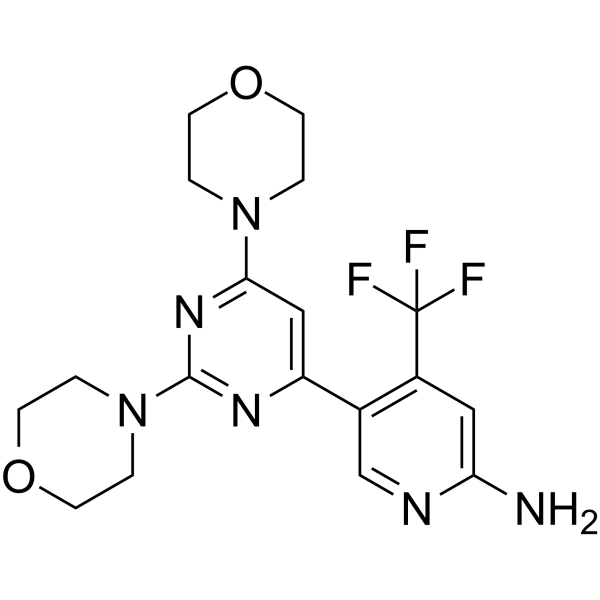
Buparlisib (Standard) is the analytical standard of Buparlisib. This product is intended for research and analytical applications. Buparlisib (BKM120; NVP-BKM120) is a pan-class I PI3K inhibitor, with IC50s of 52, 166, 116 and 262 nM for p110α, p110β, p110δ and p110γ, respectively.
For research use only. We do not sell to patients.
- Purity : 98%
- CAS No.: 944396-07-0
- Formula: C18H21F3N6O2
- Molecular Weight:410.39
-
Storage:
Please store the product under the recommended conditions in the Certificate of Analysis.


To place orders, for customer services and technical support, please contact: MedChemExpress USA
Tel: 609-228-6898 E-mail: [email protected] [email protected]


-
 Product Information
-
Chemical Information
- Purity & Documentation
-
 Help & FAQs


-
HY-70063
BuparlisibPI3K Inhibitor -

HY-10108
LY294002PI3K Inhibitor -
HY-50094
PictilisibPI3Kα/δ Inhibitor -
HY-15244
AlpelisibPI3Kα Inhibitor -
HY-10115
PI-103PI3K/mTOR Inhibitor -
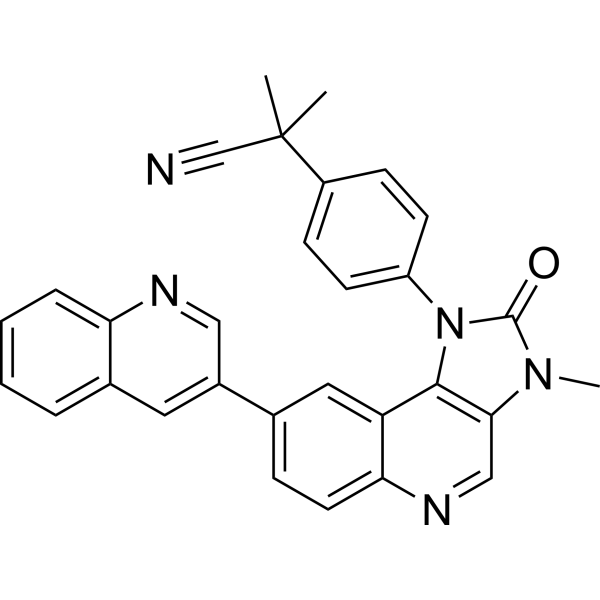
HY-50673
DactolisibPI3K/mTOR Inhibitor -
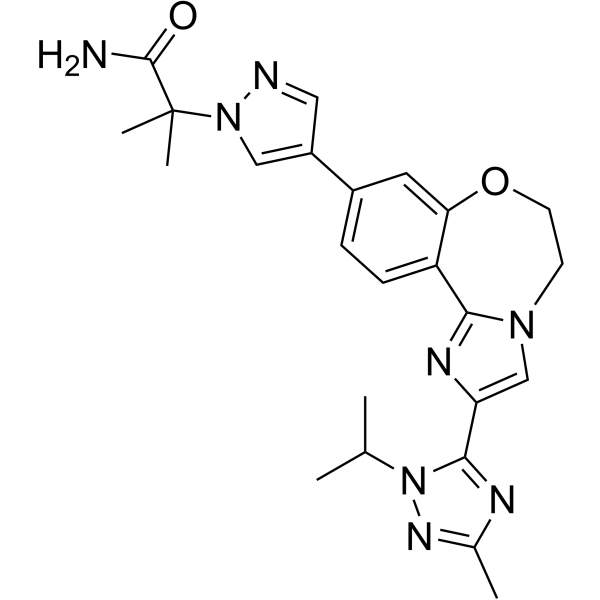
HY-13898
TaselisibPIK3CA Inhibitor -
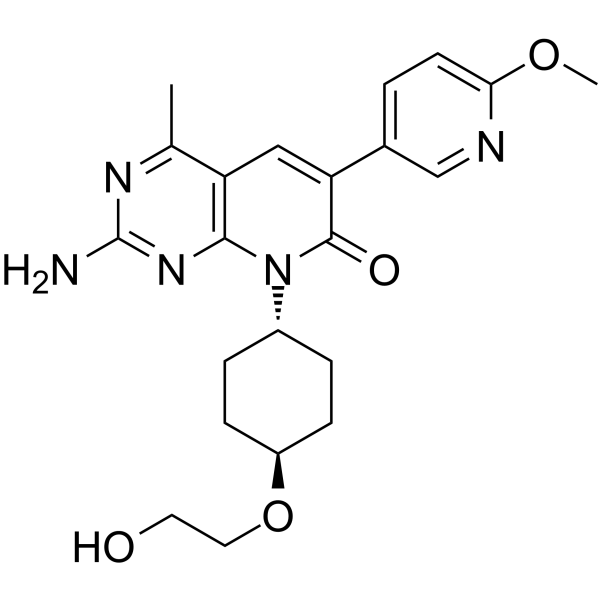
HY-15177
PF-04691502PI3K/mTOR Inhibitor -
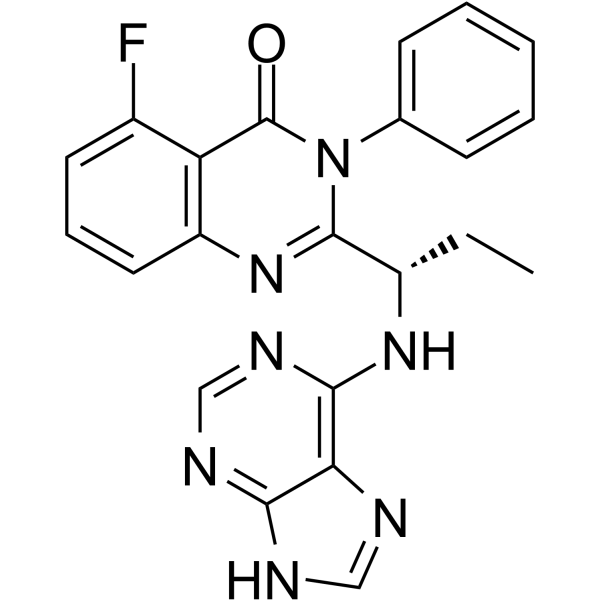
HY-13026
IdelalisibPI3Kδ Inhibitor -
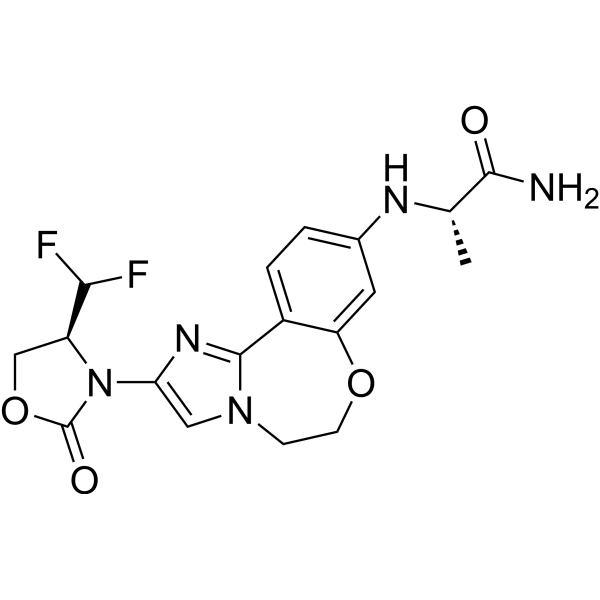
HY-101562
InavolisibPI3Kα Inhibitor -
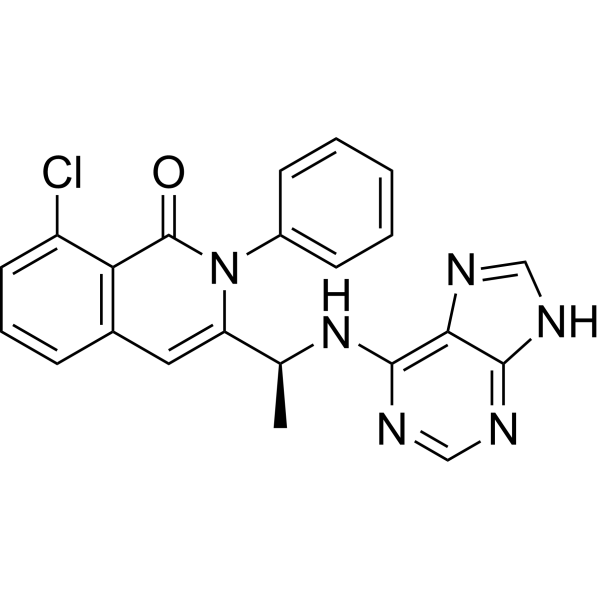
HY-17044
DuvelisibPI3Kδ Inhibitor -
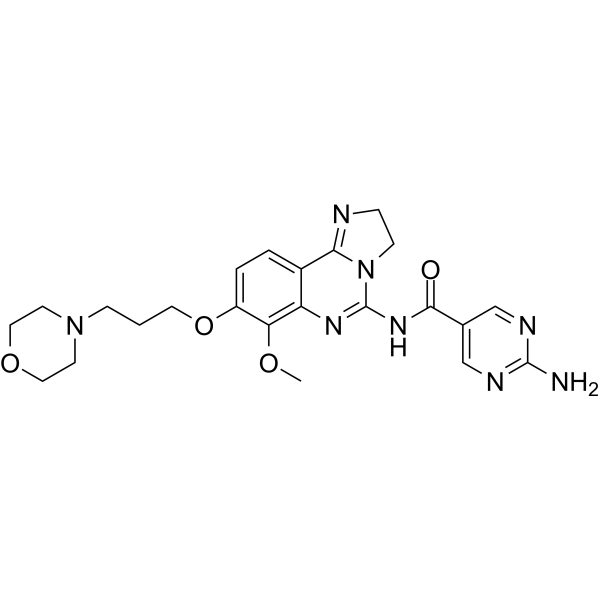
HY-15346
CopanlisibPI3K Inhibitor


Product Information
Information
Application
The compound is the grade of analytical standard, which is the reference standard supplied assay. It is commonly used in qualitative, quantitative and methodological research experiments in HPLC, GC and MS.


Chemical Information
-
CAS No. 944396-07-0
-
Molecular Weight 410.39
-
Formula C18H21F3N6O2
-
SMILES
FC(F)(C1=C(C2=CC(N3CCOCC3)=NC(N4CCOCC4)=N2)C=NC(N)=C1)F
-
Synonyms
BKM120 (Standard); NVP-BKM120 (Standard)
-
Shipping
Room temperature in continental US; may vary elsewhere.
-
Storage
Please store the product under the recommended conditions in the Certificate of Analysis.


Purity & Documentation
References
[1]. Burger MT, et al. Identification of NVP-BKM120 as a Potent, Selective, Orally Bioavailable Class I PI3 Kinase Inhibitor for Treating Cancer. ACS Med Chem Lett. 2011 Aug 26;2(10):774-9. [Content Brief]
[2]. Zheng Y, et al. Novel phosphatidylinositol 3-kinase inhibitor NVP-BKM120 induces apoptosis in myeloma cells and shows synergistic anti-myeloma activity. J Mol Med (Berl). 2012 Jun;90(6):695-706. [Content Brief]
[3]. Ni J, et al. Combination inhibition of PI3K and mTORC1 yields durable remissions in mice bearing orthotopic patient-derived xenografts of HER2-positive breast cancer brain metastases. Nat Med. 2016 Jul;22(7):723-6. [Content Brief]
[4]. Liu H, et al. Identifying and Targeting Sporadic Oncogenic Genetic Aberrations in Mouse Models of Triple Negative Breast Cancer. Cancer Discov. 2018 Mar;8(3):354-369. [Content Brief]

Calculators
Concentration (start) × Volume (start) = Concentration (final) × Volume (final)


Buparlisib (Standard) Related Classifications
HY-70063R Related Classifications
 Powered by Bioz