



WS3

Based on 1 Customer Validation
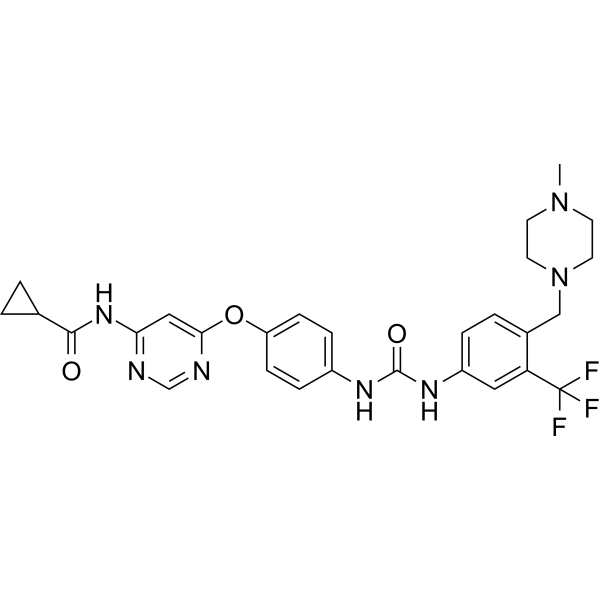
WS3 is an allosteric inhibitor of 14-3-3 (14-3-3ζ: Kd = 2.29 μM). WS3 activates GSK3β by disrupting the binding of 14-3-3-pGSK3β, promotes the ubiquitination and degradation of NRF2, and inhibits the NRF2-ARE signaling pathway (IC50 = 135 nM). It exerts antioxidant inhibition and chemotherapeutic/ferroptosis sensitizing effects in tumors with hyperactivated NRF2. WS3 binds to EBP1/IKKε and promotes the proliferation of β cells and retinal pigment epithelial (RPE) cells, which can be applied to islet regeneration and RPE expansion transplantation. WS3 is applicable to research related to age-related macular degeneration, retinal degeneration and non-small cell lung cancer.
For research use only. We do not sell to patients.
- Purity : 98.70%
- CAS No.: 1421227-52-2
- Formula: C28H30F3N7O3
- Molecular Weight:569.58
-
Storage:Powder -20°C, 3 years , 4°C, 2 years ; In solvent -80°C, 2 years , -20°C, 1 year

To place orders, for customer services and technical support, please contact: MedChemExpress USA
Tel: 609-228-6898 E-mail: [email protected] [email protected]


-
 Biological Activity
-
Chemical Information
-
Solvent & Solubility
- Protocols
- Purity & Documentation
- References
-
 Help & FAQs


-
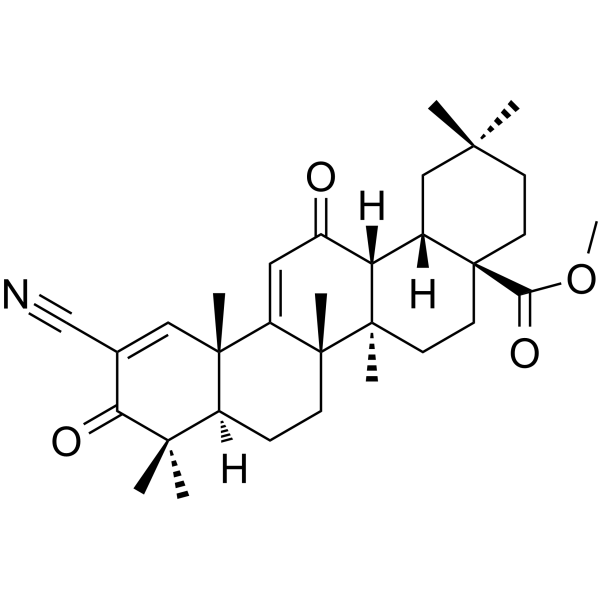
HY-13324
Bardoxolone methylNrf2 Activator -
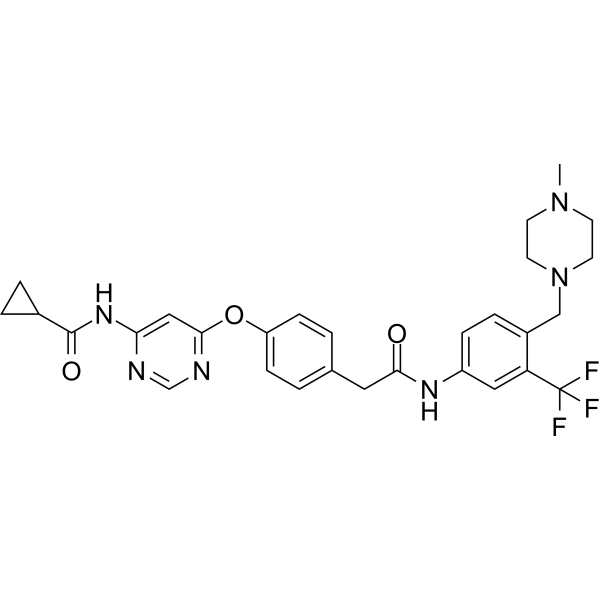
HY-12461
WS6β-Cell Proliferation Inducer -
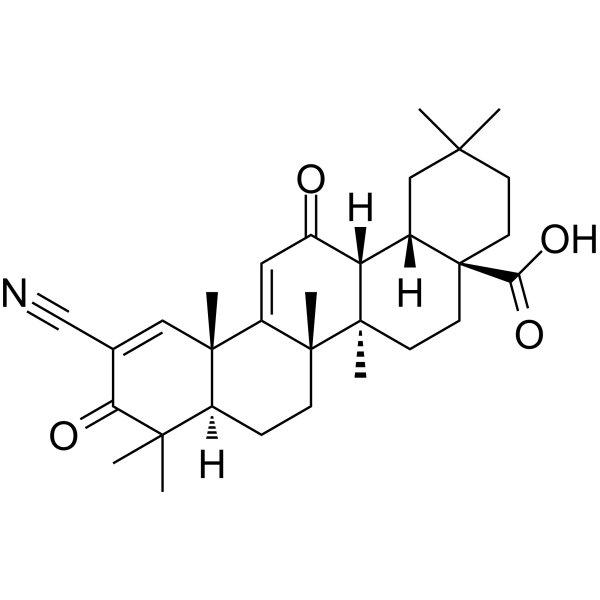
HY-14909
BardoxoloneNrf2 Activator -
HY-101840
EIPATRPP3 Channel Inhibitor -
HY-10074
TPCA-1IKK-2 Inhibitor -
HY-13687
IKK 16IKK Inhibitor -
HY-13453
BAY 11-7082IκBα/NF-κB Inhibitor -
HY-10519
BMS-345541IKK-1/IKK-2 Inhibitor -
HY-B0713
AmlexanoxIKK Inhibitor -
HY-18008
PS-1145Apoptosis Inducer -
HY-10257
BAY 11-7085NF-κB Activation Inhibitor -
HY-10172
IMD-0354IKKβ Inhibitor


Biological Activity
Description
IC50 & Target
|
14-3-3γ |
In Vitro
WS3 (25 nM; 3 days) induces proliferation in senescent passage six primary human fetal RPE cells, with 25 nM WS3 causing a four-fold increase in EdU-positive cells relative to DMSO control, and elicits similar responses in primary adult rat and adult human RPE cells[1].
WS3 (25 nM; serial passages through passage fifteen, split every three days) supports continuous proliferation of primary human fetal RPE cells through passage fifteen (maximal 1.95 doublings per passage at passage eleven), with proliferation ceasing immediately upon compound removal, and does not induce cell death during senescence[1].
WS3 (25 nM; from passage six to passage ten) does not induce chromosomal abnormalities or tumorigenic events during long-term culture of primary human fetal RPE cells from passage six to passage ten[1].
WS3 (25 nM) expanded primary human fetal RPE cells to passage ten differentiate into functional mature RPE monolayers (with cobblestone morphology, pigmentation, tight junctions, RPE marker expression, and POS phagocytosis) upon WS3 removal, and WS3-expanded primary adult human RPE cells similarly differentiate into mature RPE cells with appropriate gene expression[1].
WS3 induces dose-dependent proliferation of mouse R7T1 β cells with an EC50 of 0.074 μM[2].
WS3 (50-200 nM; 48 h) potently inhibits NRF2-ARE signaling in A549 cells with an IC50 of 135 nM, selectively reducing NRF2 and downstream target levels via proteasomal/ubiquitin-mediated degradation dependent on the SKP1-CUL1-β-TrCP complex, while sparing normal HUVEC and BEAS-2B cells[3].
WS3 (50-200 nM; 4-48 h) disrupts the 14-3-3ζ-pGSK3β interaction in A549 cells, activating GSK3β to promote CUL1-β-TrCP-mediated NRF2 ubiquitination and degradation, with this effect reversible via GSK3β or PP2A inhibition[3].
WS3 (20-400 nM; 24 h-2 week) induces oxidative stress, ferroptosis, and NRF2-dependent growth inhibition in A549 cells, with effects abrogated in NRF2-KO cells[3].
WS3 (20-200 nM; 48 h-2 week) synergizes with carboplatin and ferroptosis inducers to enhance growth inhibition of A549 cells[3].
MedChemExpress (MCE) has not independently confirmed the accuracy of these methods. They are for reference only. Further protocols information, click here.
-
Cell Line:A549 cells, HEK293T cells
-
Concentration:50, 100 and 200 nM (48 h incubation, 4 h co-IP, 12 h pull-down); 200 nM (12-48 h incubation); 200 nM with 5-10 μM CHIR-99021 (HY-10182) pretreatment, 5 nM okadaic acid (HY-N6785) pretreatment
-
Incubation Time:4 h (co-IP), 12 h (pull-down, inhibitor pretreatment), 12, 24, 36 and 48 h (200 nM), 24 h (inhibitor combination)
-
Result:Reduced pGSK3β levels in a concentration- and time-dependent manner, accompanied by NRF2 downregulation, without affecting total GSK3β.
Disrupted the 14-3-3ζ-pGSK3β interaction via co-IP and pull-down assays.
Induced NRF2 degradation and ubiquitination that were reversed when 14-3-3ζ was overexpressed.
Induced NRF2 downregulation that was partially rescued via pretreatment with CHIR-99021 or okadaic acid.
Did not affect 14-3-3ζ interactions with canonical motif-containing partners (c-Raf, FOXO3A, P27).
In Vivo
MedChemExpress (MCE) has not independently confirmed the accuracy of these methods. They are for reference only.
-
Animal Model:dystrophic Royal College of Surgeons (RCS) (postnatal day 22; retinal degeneration model via MERTK gene inactivating mutation)[1]
-
Dosage:25 nM
-
Administration:culture media supplementation; seven passages
-
Result:Achieved an average visual acuity of 0.49 cycles/degree at postnatal day 90.
Demonstrated luminance thresholds less than 1.7 log units over 35% of the superior colliculus area at postnatal day 90.
Preserved 4-6 layers of photoreceptors, compared to a single layer in control eyes.
Clinical Trial
| NCT Number | Sponsor | Condition | Start Date |
Phase

|
|---|---|---|---|---|
| NCT01329991 | Plexxikon| | 2011-05 | PHASE1 |


Chemical Information
-
CAS No. 1421227-52-2
-
Appearance Solid
-
Molecular Weight 569.58
-
Formula C28H30F3N7O3
-
Color Light yellow to yellow
-
SMILES
CN1CCN(CC1)CC2=C(C=C(C=C2)NC(NC3=CC=C(C=C3)OC4=CC(NC(C5CC5)=O)=NC=N4)=O)C(F)(F)F
-
Shipping
Room temperature in continental US; may vary elsewhere.
-
Storage
Powder -20°C 3 years 4°C 2 years In solvent -80°C 2 years -20°C 1 year


Solvent & Solubility
In Vitro:
DMSO : 2.2 mg/mL (3.86 mM; Need ultrasonic; Hygroscopic DMSO has a significant impact on the solubility of product, please use newly opened DMSO)
Please refer to the solubility information to select the appropriate solvent. Once prepared, please aliquot and store the solution to prevent product inactivation from repeated freeze-thaw cycles.
Storage method and period of stock solution: -80°C, 2 years; -20°C, 1 year. When stored at -80°C, please use it within 2 years. When stored at -20°C, please use it within 1 year.
Please refer to the solubility information to select the appropriate solvent. Once prepared, please aliquot and store the solution to prevent product inactivation from repeated freeze-thaw cycles.
Storage method and period of stock solution: -80°C, 2 years; -20°C, 1 year. When stored at -80°C, please use it within 2 years. When stored at -20°C, please use it within 1 year.
Concentration (start) × Volume (start) = Concentration (final) × Volume (final)
In Vivo:
For the following dissolution methods, please prepare the working solution directly:
It is recommended to prepare fresh solutions and use them promptly within a short period of time.
The percentages shown for the solvents indicate their volumetric ratio in the final prepared solution. If precipitation or phase separation occurs during preparation, heat and/or sonication can be used to aid dissolution.
Add each solvent one by one: 50% PEG300 50% Saline
Solubility: 3.33 mg/mL (5.85 mM); Suspended solution; Need ultrasonic

Protocols
-
Ferroptosis Solutions
Ferroptosis is an iron-dependent, non-apoptotic form of regulated cell death characterized by lethal lipid peroxidation and sensitivity to suppression by iron chelators or lipophilic radical-trapping antioxidants. The core pathway links cystine uptake through system Xc−, glutathione availability, GPX4-dependent detoxification of phospholipid hydroperoxides, iron-dependent oxidative reactions, and polyunsaturated-phospholipid metabolism into a cell-death program that is biochemically and morphologically distinct from apoptosis, necrosis, and autophagy. The ferroptosis pathway is experimentally linked to phenotype through chemical and genetic perturbation. Erastin induces ferroptosis by inhibiting cystine uptake through system Xc− and weakening antioxidant defenses, while GPX4 inhibition or depletion causes lipid peroxide accumulation and ferroptotic cancer-cell death. ACSL4 and oxidizable arachidonoyl- or adrenoyl-containing phosphatidylethanolamines shape ferroptosis sensitivity by con
-
Cell Viability Determination by MTT Colorimetric Assay
The following protocol uses the MTT colorimetric assay as a classic literature-established method for assessing cell viability/metabolic activity in cultured mammalian cells. MTT[3-(4,5-dimethylthiazol-2-yl)-2,5-diphenyltetrazolium bromide] is reduced by metabolically active cells to a colored formazan product; the amount of formazan is quantified spectrophotometrically and provides an indirect measure of metabolically active viable cells. Importantly, MTT reduction reflects cellular oxidoreductase/metabolic activity rather than an absolute direct count of living cells, so changes in cellular metabolism can alter the signal independently of cell number.


Purity & Documentation
-
Data Sheet (283 KB)
-
SDS (393 KB)
- English - EN (393 KB)
- Français - FR (393 KB)
- Deutsch - DE (393 KB)
- Norwegian - NO (393 KB)
- Español - ES (393 KB)
- Swedish - SV (393 KB)
- Italian - IT (393 KB)
- Korean - KR (393 KB)
- Portuguese - PT (393 KB)
-
Handling Instructions (2659 KB)
References
[1].
Swoboda JG, et al. Small molecule mediated proliferation of primary retinal pigment epithelial cells. ACS Chem Biol. 2013 Jul 19;8(7):1407-11.
[Content Brief]
[2].
Swoboda JG, et al. Small molecule mediated proliferation of primary retinal pigment epithelial cells. ACS Chem Biol. 2013 Jul 19;8(7):1407-11.
[Content Brief]
[3].
Zhao J, et al. Discovery of an allosteric 14-3-3 inhibitor for suppressing NRF2-driven cancer via phenotypic screening and chemoproteomic-based target deconvolution. Chem Sci. 2025 Aug 20;16(37):17248-17260.
[Content Brief]


Complete Stock Solution Preparation Table
Please refer to the solubility information to select the appropriate solvent. Once prepared, please aliquot and store the solution to prevent product inactivation from repeated freeze-thaw cycles.
Storage method and period of stock solution: -80°C, 2 years; -20°C, 1 year. When stored at -80°C, please use it within 2 years. When stored at -20°C, please use it within 1 year.
| Optional Solvent | Concentration Solvent Mass | 1 mg | 5 mg | 10 mg | 25 mg |
|---|---|---|---|---|---|
| DMSO | 1 mM | 1.7557 mL | 8.7784 mL | 17.5568 mL | 43.8920 mL |


WS3 Related Classifications
HY-12462 Related Classifications
 Powered by Bioz