1. Search Result
Search Result
Results for "

β-adrenergic receptor blocker

" in MedChemExpress (MCE) Product Catalog:

51

Inhibitors & Agonists

1

Peptides

1

Natural
Products

6

Isotope-Labeled Compounds

Cat. No. Nombre del producto Target Áreas de investigación Chemical Structure
  • HY-B0804
    Nadolol
    5 Publications Verification

    SQ-11725

    Adrenergic Receptor Cardiovascular Disease
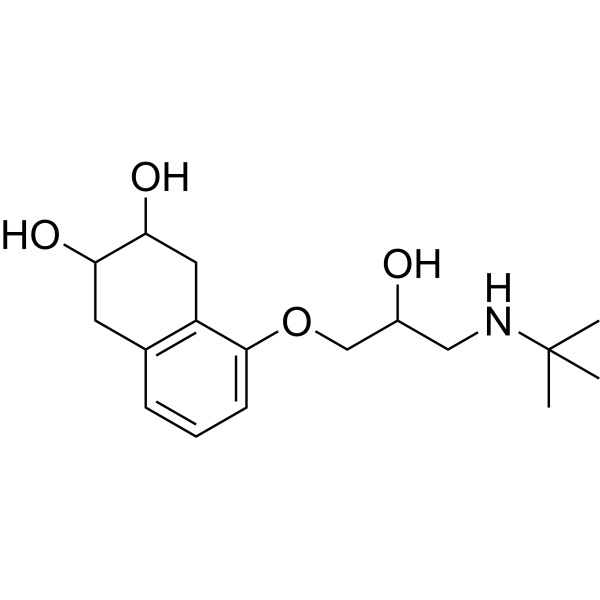
    Nadolol (SQ-11725) is a non-selective and orally active β-adrenergic receptors blocker and is a substrate of organic anion transporting polypeptide 1A2 (OATP1A2). Nadolol has the the potential for high blood pressure, angina pectoris and vascular headaches research .
    Nadolol
  • HY-A0016
    Dronedarone
    4 Publications Verification

    SR 33589

    mAChR Sodium Channel Calcium Channel Adrenergic Receptor Cytochrome P450 Autophagy Cardiovascular Disease
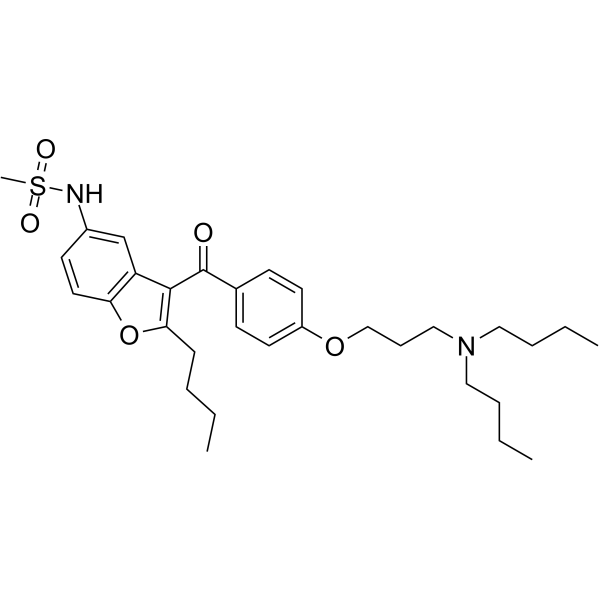
    Dronedarone (SR 33589), a derivative of amiodarone (HY-14187), is a class III antiarrhythmic agent for the study of atrial fibrillation (AF) and atrial flutter. Dronedarone is a potent blocker of multiple ion currents, including potassium current, sodium current, and L-type calcium current, and exhibits antiadrenergic effects by noncompetitive binding to β-adrenergic receptors. Dronedarone is a substrate for and a moderate inhibitor of CYP3A4 .
    Dronedarone
  • HY-112461A
    NF449 octasodium
    4 Publications Verification

    P2X Receptor Cardiovascular Disease
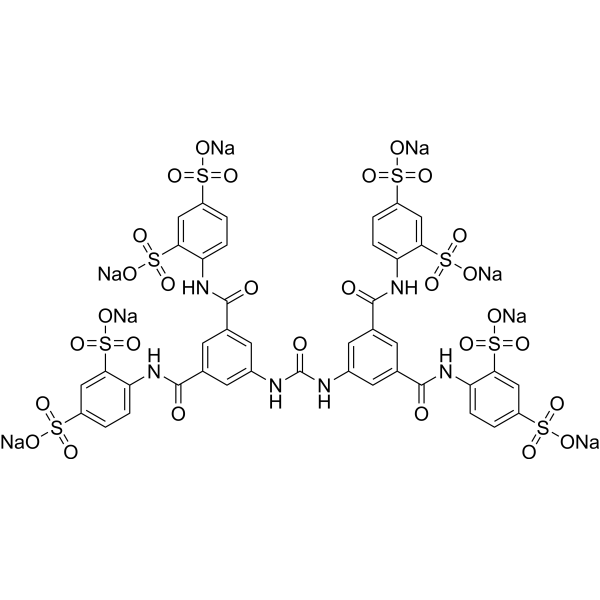
    NF449 octasodium is a highly potent P2X1 receptor antagonist, with IC50s of 0.28, 0.69, and 120 nM for rP2X1, rP2X1+5, P2X2+3, respectively. NF449 octasodium is a G-selective G Protein antagonist. NF449 octasodium suppresses the rate of GTP[γS] binding to Gsα-s, inhibits the stimulation of adenylyl cyclase activity, and blocks the coupling of β-adrenergic receptors to Gs .
    NF449 octasodium
  • HY-B0437
    Sotalol hydrochloride
    2 Publications Verification

    MJ 1999

    Adrenergic Receptor Potassium Channel Cardiovascular Disease Neurological Disease
    Sotalol hydrochloride (MJ 1999) is an orally active, non-selective β-adrenergic receptor blocker. Sotalol hydrochloride is a potent antiarrhythmic agent that can be used for the research of pediatric arrhythmias. Sotalol hydrochloride blocks β-receptors, and potassium KCNH2 channels. Antiepileptic Agent .
    Sotalol hydrochloride
  • HY-100634

    (±)-4-hydroxy Propranolol hydrochloride

    Adrenergic Receptor Cardiovascular Disease
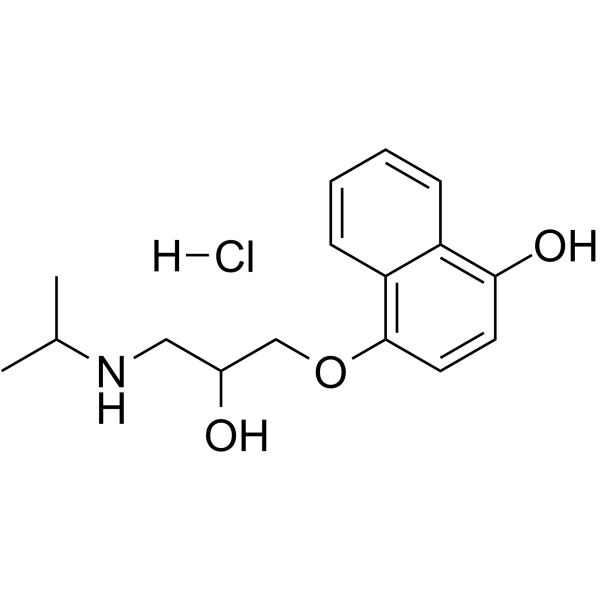
    4-Hydroxypropranolol hydrochloride is a non-cardiac selective β-adrenergic receptor antagonist and a metabolite produced after oral administration of Propranolol (HY-B0573B). 4-Hydroxypropranolol hydrochloride also acts as a membrane stabilizer and possesses intrinsic sympathomimetic inhibitory activity. 4-Hydroxypropranolol hydrochloride blocks β-adrenergic receptors to antagonize the effects of catecholamines, acts as a partial β-adrenergic receptor agonist, and induces membrane stabilization. 4-Hydroxypropranolol hydrochloride alters heart rate, left ventricular contractility, and atrioventricular conduction time. 4-Hydroxypropranolol hydrochloride can be used in research related to cardiovascular and cerebrovascular diseases .
    4-Hydroxypropranolol hydrochloride
  • HY-112461

    P2X Receptor Cardiovascular Disease
    NF449 is a highly potent P2X1 receptor antagonist, with IC50s of 0.28, 0.69, and 120 nM for rP2X1, rP2X1+5, P2X2+3, respectively. NF449 is a G-selective G Protein antagonist. NF449 suppresses the rate of GTP[γS] binding to Gsα-s, inhibits the stimulation of adenylyl cyclase activity, and blocks the coupling of β-adrenergic receptors to Gs .
    NF449
  • HY-B1035
    Levobunolol hydrochloride
    1 Publications Verification

    l-Bunolol hydrochloride

    Adrenergic Receptor Calcium Channel Casein Kinase Cardiovascular Disease
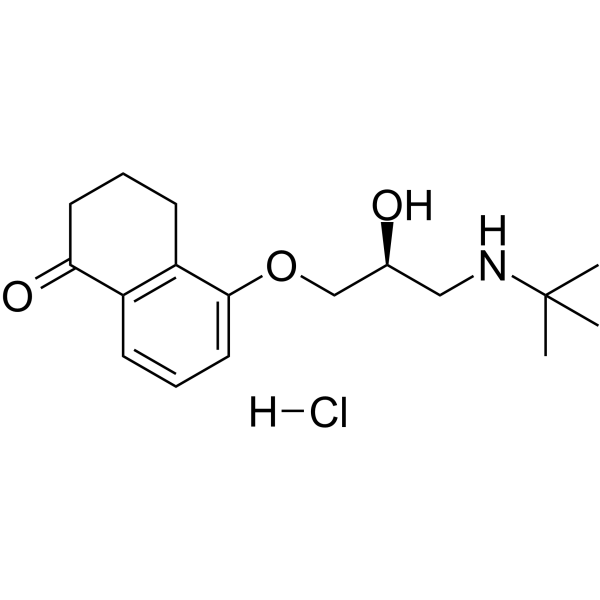
    Levobunolol (l-Bunolol) hydrochloride is a non-selective β-adrenergic antagonist and vasodilator. By blocking calcium ion influx and reducing the sensitivity of vascular smooth muscle to calcium, Levobunolol hydrochloride effectively dilates the ciliary arteries and increases ocular blood flow, so it is widely used in research on glaucoma and ocular hypertension. Levobunolol hydrochloride inhibits the β-receptor signaling pathway and the expression of related proliferation markers (such as CK3, CK14, CK19, Ki67) in corneal cells. In rabbit models, Levobunolol hydrochloride not only does not inhibit corneal epithelial regeneration, but also accelerates the healing of mechanical injury without adverse effects. Levobunolol hydrochloride also inhibits histamine-induced vasoconstriction and intracellular calcium elevation, exhibiting unique vascular regulatory activity. Levobunolol hydrochloride protects ocular blood flow and promotes corneal repair .
    Levobunolol hydrochloride
  • HY-122537A
    Arotinolol
    2 Publications Verification

    Adrenergic Receptor 5-HT Receptor Cardiovascular Disease
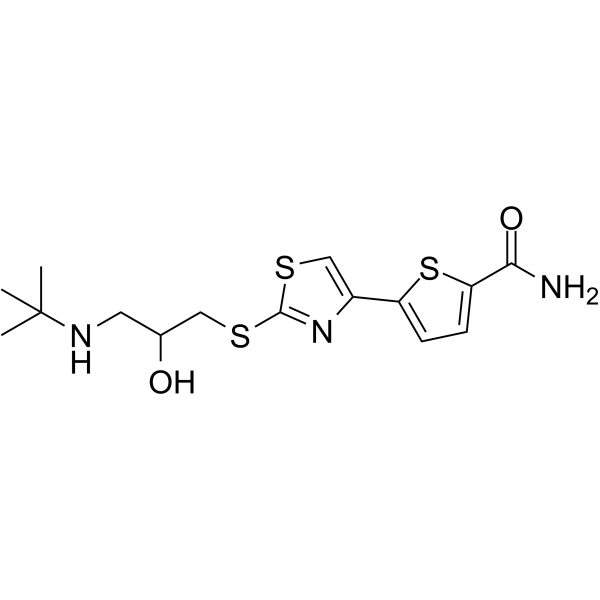
    Arotinolol is a nonselective α/β-adrenergic receptor blocker and a vasodilating β-blocker . Arotinolol also shows potency for inhibiting the binding of the radioligand 125I-ICYP to 5HT1B-serotonergic receptor sites . Arotinolol is an antihypertensive agent for the treatment of a variety of cardiovascular pathologies as well as non-cardiovascular diseases .
    Arotinolol
  • HY-126028A

    (S)-Sotalol

    Adrenergic Receptor Cardiovascular Disease Neurological Disease
    (+)-Sotalol ((S)-Sotalol) is the S-isomer of Sotalol (HY-103196). Sotalol is an orally active, non-selective β-adrenergic receptor blocker. (+)-Sotalol is an antiarrhythmic agent. (+)-Sotalol can prolong action potential duration in isolated cardiac muscle .
    (+)-Sotalol
  • HY-101656

    RMI81968

    Adrenergic Receptor Cardiovascular Disease
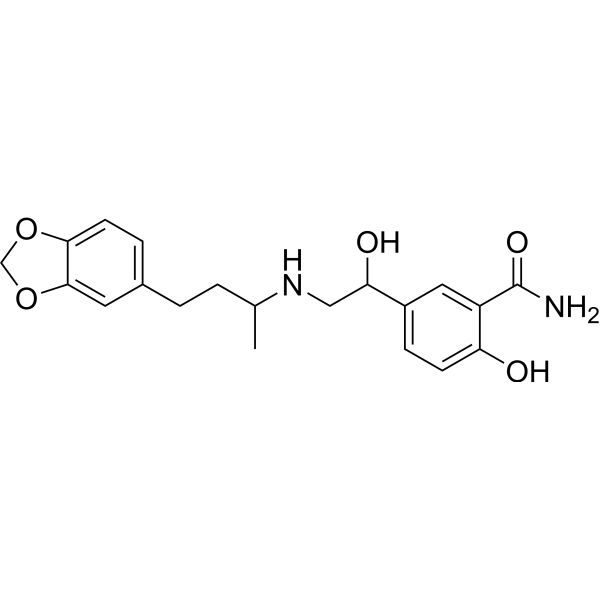
    Medroxalol (RMI81968) is an orally active adrenergic receptor antagonist, blocks α- and β-adrenergic receptors. Medroxalol shows antihypertensive and vasodilating effects .
    Medroxalol
  • HY-B0437AS

    MJ 1999-d6 hydrochloride

    Adrenergic Receptor Potassium Channel Cardiovascular Disease Endocrinology
    Sotalol-d6 (hydrochloride) is a deuterium labeled Sotalol hydrochloride. Sotalol hydrochloride is an orally active, non-selective competitive β-adrenergic receptor blocker. Sotalol hydrochloride is a potent antiarrhythmic agent that can be used for the research of pediatric arrhythmias. Sotalol hydrochloride blocks β-receptors, and potassium KCNH2 channels .
    Sotalol-d6 hydrochloride
  • HY-16316
    Metipranolol hydrochloride
    1 Publications Verification

    Adrenergic Receptor Cardiovascular Disease Endocrinology
    Metipranolol hydrochloride is a non-selective β adrenergic receptor blocking agent.
    Metipranolol hydrochloride
  • HY-121045

    KO 1366

    Adrenergic Receptor Cardiovascular Disease
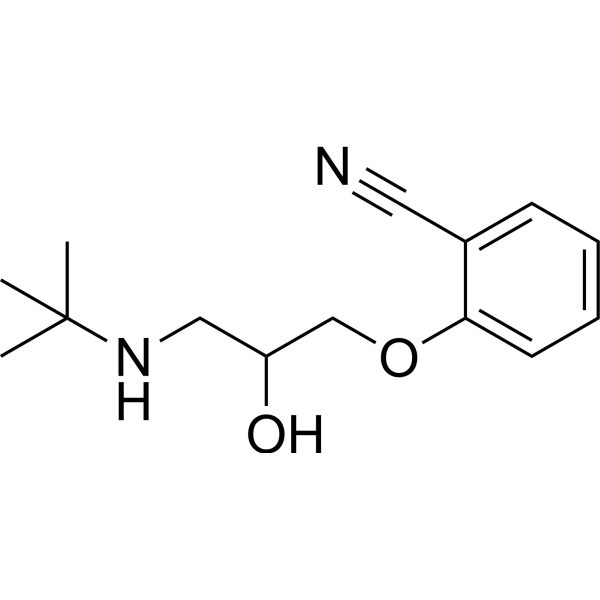
    Bunitrolol hydrochloride is an orally active β-adrenergic blocker that has a high affinity for β-adrenergic receptors. Bunitrolol hydrochloride exerts significant β-receptor antagonist activity and has weak α1-blocking activity. Bunitrolol hydrochloride is mainly used in the study of cardiovascular diseases such as hypertension and angina pectoris, and is also used in placental transport research .
    Bunitrolol
  • HY-B0381B

    (S)-Betaxolol hydrochloride; AL-1577A

    Adrenergic Receptor Cardiovascular Disease Neurological Disease Endocrinology
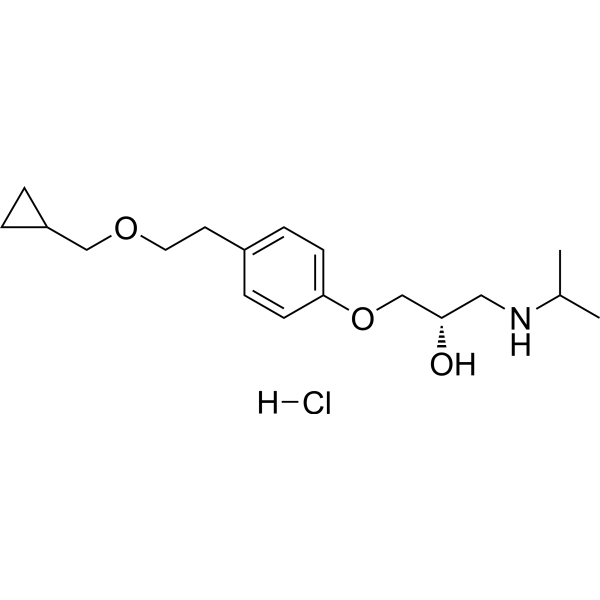
    Levobetaxolol hydrochloride is a beta-adrenergic receptor inhibitor (beta blocker) that can lower the pressure in the eye.
    Levobetaxolol hydrochloride
  • HY-105154A

    Adrenergic Receptor Cardiovascular Disease
    Proxodolol is a β-adrenergic receptor blocker. Proxodolol can be used for the study of arterial hypertension .
    Proxodolol
  • HY-B0804S

    SQ-11725-d9

    Adrenergic Receptor Cardiovascular Disease Endocrinology
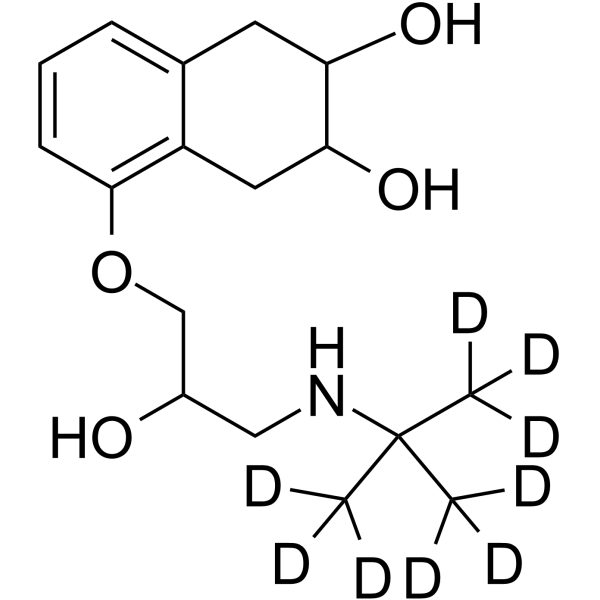
    Nadolol-d9 is the deuterium labeled Nadolol. Nadolol is a non-selective and orally active β-adrenergic receptors blocker .
    Nadolol-d9
  • HY-103196

    Adrenergic Receptor Potassium Channel Cardiovascular Disease Neurological Disease
    Sotalol is an orally active, non-selective β-adrenergic receptor blocker. Sotalol is a potent antiarrhythmic agent that can be used for the research of pediatric arrhythmias. Sotalol blocks β-receptors, and potassium KCNH2 channels. Antiepileptic Agent .
    Sotalol
  • HY-100952

    Adrenergic Receptor Cardiovascular Disease
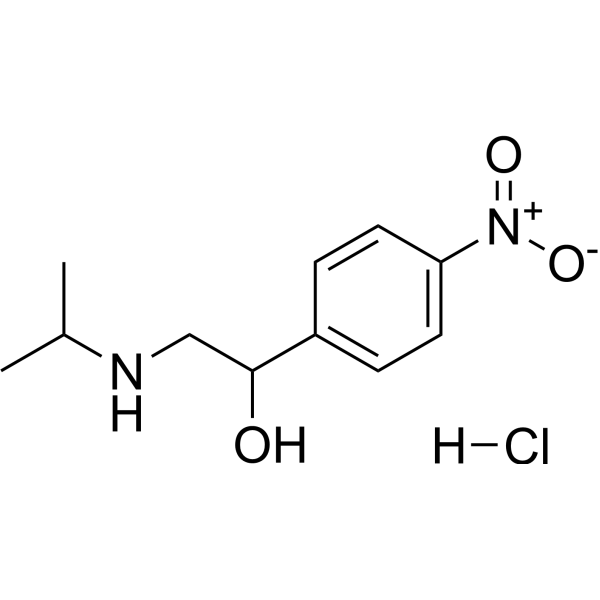
    Nifenalol hydrochloride is a β-adrenergic receptor antagonist. Nifenalol hydrochloride induces the Early Afterdepolarization (EAD) effect. EAD is a phenomenon in cardiac electrophysiology that usually occurs during an action potential in ventricular muscle cells and can lead to arrhythmia. The EAD effect of Nifenalol hydrochloride can be blocked by Tetrodotoxin. Nifenalol hydrochloride is used in the study of conditions such as irregular heartbeat or high blood pressure .
    Nifenalol hydrochloride
  • HY-B0804R

    SQ-11725 (Standard)

    Reference Standards Adrenergic Receptor Cardiovascular Disease
    Nadolol (Standard) is the analytical standard of Nadolol. This product is intended for research and analytical applications. Nadolol (SQ-11725) is a non-selective and orally active β-adrenergic receptors blocker and is a substrate of organic anion transporting polypeptide 1A2 (OATP1A2). Nadolol has the the potential for high blood pressure, angina pectoris and vascular headaches research .
    Nadolol (Standard)
  • HY-A0016S

    Isotope-Labeled Compounds mAChR Sodium Channel Calcium Channel Adrenergic Receptor Cytochrome P450 Autophagy Cardiovascular Disease
    Dronedarone-d6 (hydrochloride) is the deuterium labeled Dronedarone. Dronedarone hydrochloride, a derivative of Amiodarone (HY-14187), is a class III antiarrhythmic agent for the study of atrial fibrillation (AF) and atrial flutter. Dronedarone hydrochloride is a potent blocker of multiple ion currents, including potassium current, sodium current, and L-type calcium current, and exhibits antiadrenergic effects by noncompetitive binding to β-adrenergic receptors. Dronedarone hydrochloride is a substrate for and a moderate inhibitor of CYP3A4 .
    Dronedarone-d6 hydrochloride
  • HY-122537

    Adrenergic Receptor 5-HT Receptor Cardiovascular Disease
    Arotinolol hydrochloride is a nonselective α/β-adrenergic receptor blocker and a vasodilating β-blocker . Arotinolol hydrochloride also shows potency for inhibiting the binding of the radioligand 125I-ICYP to 5HT1B-serotonergic receptor sites . Arotinolol hydrochloride is an antihypertensive agent for the treatment of a variety of cardiovascular pathologies as well as non-cardiovascular diseases .
    Arotinolol hydrochloride
  • HY-U00016

    Adrenergic Receptor Endocrinology
    Teoprolol is a β-adrenergic receptor blocker.
    Teoprolol
  • HY-101656A

    RMI81968 hydrochloride

    Adrenergic Receptor Cardiovascular Disease
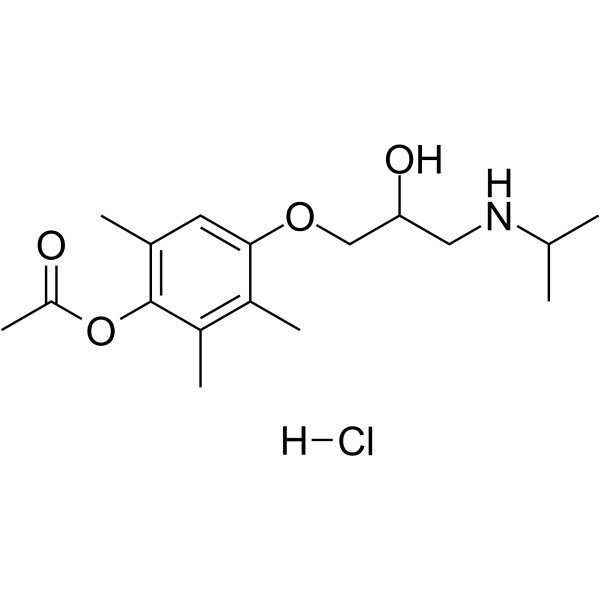
    Medroxalol hydrochloride is an orally active adrenergic receptor antagonist, blocks α- and β-adrenergic receptors. Medroxalol hydrochloride shows antihypertensive and vasodilating effects .
    Medroxalol hydrochloride
  • HY-108302

    Adrenergic Receptor Others
    Nifenalol is a β-adrenergic receptor blocker. Nifenalol inhibits β-adrenoceptor differentiation in right atrium, diaphragm and adipose tissue in a rat model .
    Nifenalol
  • HY-178319

    PZL-1

    Drug Derivative Adrenergic Receptor Cardiovascular Disease
    Photoazolol-1 is a β-adrenergic receptor (βAR)-blocker derivative. Photoazolol-1 can transfer from an inverse agonist to a neutral antagonist upon photoactivation .
    Photoazolol-1
  • HY-P10773

    Peptide-Drug Conjugates (PDCs) Calcium Channel Potassium Channel Sodium Channel Adrenergic Receptor Cardiovascular Disease
    CTP-amiodarone is a cell-penetrating conjugate of cardiomyocyte targeting peptide and Amiodarone (HY-14187). CTP-amiodarone exhibits antiarrhythmic efficacy through block of Na+, K+, Ca2+ channels and β-adrenergic receptors .
    CTP-amiodarone
  • HY-B0437S

    MJ 1999-d6

    Isotope-Labeled Compounds Adrenergic Receptor Potassium Channel Cardiovascular Disease Neurological Disease
    Sotalol-d6 is the deuterium labeled Sotalol. Sotalol is an orally active, non-selective β-adrenergic receptor blocker. Sotalol is a potent antiarrhythmic agent that can be used for the research of pediatric arrhythmias. Sotalol blocks β-receptors, and potassium KCNH2 channels. Antiepileptic Agent .
    Sotalol-d6
  • HY-B0437R

    MJ 1999 (Standard)

    Reference Standards Adrenergic Receptor Potassium Channel Cardiovascular Disease Neurological Disease
    Sotalol (hydrochloride) (Standard) is the analytical standard of Sotalol (hydrochloride). This product is intended for research and analytical applications. Sotalol hydrochloride (MJ 1999) is an orally active, non-selective β-adrenergic receptor blocker. Sotalol hydrochloride is a potent antiarrhythmic agent that can be used for the research of pediatric arrhythmias. Sotalol hydrochloride blocks β-receptors, and potassium KCNH2 channels. Antiepileptic Agent .
    Sotalol hydrochloride (Standard)
  • HY-126562R

    Reference Standards Bacterial Fungal Antibiotic Infection Cardiovascular Disease Neurological Disease Inflammation/Immunology Cancer
    Sotalol (hydrochloride) (Standard) is the analytical standard of Sotalol (hydrochloride). This product is intended for research and analytical applications. Sotalol hydrochloride (MJ 1999) is an orally active, non-selective β-adrenergic receptor blocker. Sotalol hydrochloride is a potent antiarrhythmic agent that can be used for the research of pediatric arrhythmias. Sotalol hydrochloride blocks β-receptors, and potassium KCNH2 channels. Antiepileptic Agent .
    Piperlonguminine (Standard)
  • HY-B1035C

    (R)-Bunolol hydrochloride

    Adrenergic Receptor Cardiovascular Disease
    ent-Levobunolol ((R)-Bunolol) hydrochloride is a competitive β-adrenergic receptor blocker. ent-Levobunolol hydrochloride inhibits the transmission of sympathetic nerve impulses, reduces the production of aqueous humor, and constricts blood vessels in the eye, thereby reducing intraocular pressure. ent-Levobunolol hydrochloride is promising for research of ocular hypertension diseases such as glaucoma .
    ent-Levobunolol hydrochloride
  • HY-19022

    Angiotensin Receptor Cardiovascular Disease Others Metabolic Disease
    Palatrigine is a compound with angiotensin-converting enzyme inhibitory and beta-adrenergic receptor blocking properties .
    BW A256C
  • HY-108306

    (±)-Moprolol

    Adrenergic Receptor Cardiovascular Disease Others
    Moprolol ((±)-Moprolol) is an beta-adrenergic receptor blocker, which can be used for research in essential hypertension .
    Moprolol
  • HY-A0016R

    SR 33589 (Standard)

    Reference Standards mAChR Sodium Channel Calcium Channel Adrenergic Receptor Cytochrome P450 Autophagy Cardiovascular Disease
    Dronedarone (Standard) is the analytical standard of Dronedarone. This product is intended for research and analytical applications. Dronedarone (SR 33589), a derivative of amiodarone (HY-14187), is a class III antiarrhythmic agent for the study of atrial fibrillation (AF) and atrial flutter. Dronedarone is a potent blocker of multiple ion currents, including potassium current, sodium current, and L-type calcium current, and exhibits antiadrenergic effects by noncompetitive binding to β-adrenergic receptors. Dronedarone is a substrate for and a moderate inhibitor of CYP3A4 .
    Dronedarone (Standard)
  • HY-117181

    Phosphodiesterase (PDE) Adrenergic Receptor Cardiovascular Disease
    UK-1745 is a cardiotonic agent with vasodilating and antiarrhythmic properties. It increases intracellular levels of cyclic adenosine monophosphate (cAMP) in cardiomyocytes by inhibiting phosphodiesterase III, thereby enhancing myocardial contractility. Additionally, UK-1745 exhibits β-adrenergic receptor blocking activity, which helps reduce the oxygen consumption of the heart and prevent calcium overload. These characteristics make UK-1745 a promising candidate for research in congestive heart failure .
    UK-1745
  • HY-113858

    Brefanolol

    Adrenergic Receptor Cardiovascular Disease
    Brefonalol (Brefanolol) is an orally active, non-selective β-adrenergic receptor blocker with vasodilatory properties. Brefonalol exhibits an optimal balance between β-blockade and vasodilatory effects at low doses: it reduces blood pressure and slows heart rate, while increasing stroke volume instead of decreasing it, causing no significant elevation in peripheral resistance and increasing reactive hyperemia; at high doses, the β-blockade effect dominates. Brefonalol can be used in the research of arterial hypertension .
    Brefonalol
  • HY-A0016S3

    SR 33589-d6

    Isotope-Labeled Compounds Sodium Channel Autophagy Cytochrome P450 Adrenergic Receptor mAChR Calcium Channel Cardiovascular Disease
    Dronedarone-d6 (SR 33589-d6) is deuterium labeled Dronedarone. Dronedarone (SR 33589), a derivative of amiodarone (HY-14187), is a class III antiarrhythmic agent for the study of atrial fibrillation (AF) and atrial flutter. Dronedarone is a potent blocker of multiple ion currents, including potassium current, sodium current, and L-type calcium current, and exhibits antiadrenergic effects by noncompetitive binding to β-adrenergic receptors. Dronedarone is a substrate for and a moderate inhibitor of CYP3A4 .
    Dronedarone-d6
  • HY-121902

    Adrenergic Receptor Others
    Butidrine is a compound with intraocular pressure-lowering activity that is less effective than some other beta-adrenergic receptor blockers in reducing intraocular pressure in rabbit eyes.
    Butidrine
  • HY-106476

    UK-11443

    Adrenergic Receptor Bacterial Antibiotic Infection Cardiovascular Disease
    Primidolol (UK-11443), derived from Parmotrema perlatum, possesses antibacterial and antioxidant activities. Primidolol is also an orally active α/β Adrenergic Receptor blocker with antihypertensive activity. Primidolol can be used in research related to infections and cardiovascular diseases .
    Primidolol
  • HY-19012

    Adrenergic Receptor Cardiovascular Disease
    N-1518 is an α and β adrenergic receptor blocker that has competitive antagonism against β1 and α1 receptors, but does not show selectivity for β1 receptors, but shows about 20-fold selectivity for α1 receptors. N-1518 has vasodilatory effects and can be used in the research field of hypertension treatment .
    N-1518
  • HY-106667

    Adrenergic Receptor Cardiovascular Disease Endocrinology
    DL 071IT is a potent non-selective beta-adrenergic receptor blocker. DL 071IT exhibits intrinsic sympathomimetic activity and weak membrane stabilizing activity. DL 071IT reduces exercise heart rate and systolic blood pressure, and even significantly lowers resting heart rate .
    DL 071IT
  • HY-W653969

    Isotope-Labeled Compounds Adrenergic Receptor 5-HT Receptor Cardiovascular Disease
    Arotinolol-d5 (hydrochloride) is deuterium labeled Arotinolol. Arotinolol is a nonselective α/β-adrenergic receptor blocker and a vasodilating β-blocker . Arotinolol also shows potency for inhibiting the binding of the radioligand 125I-ICYP to 5HT1B-serotonergic receptor sites. Arotinolol is an antihypertensive agent for the treatment of a variety of cardiovascular pathologies as well as non-cardiovascular diseases .
    Arotinolol-d5 hydrochloride
  • HY-122537AR

    Adrenergic Receptor 5-HT Receptor Reference Standards Cardiovascular Disease
    Arotinolol (Standard) is the analytical standard of Arotinolol. This product is intended for research and analytical applications. Arotinolol is a nonselective α/β-adrenergic receptor blocker and a vasodilating β-blocker . Arotinolol also shows potency for inhibiting the binding of the radioligand 125I-ICYP to 5HT1B-serotonergic receptor sites . Arotinolol is an antihypertensive agent for the treatment of a variety of cardiovascular pathologies as well as non-cardiovascular diseases .
    Arotinolol (Standard)
  • HY-B1035A

    l-Bunolol

    Adrenergic Receptor Casein Kinase Calcium Channel Others
    Levobunolol (l-Bunolol) is a non-selective β-adrenergic antagonist and vasodilator. By blocking calcium ion influx and reducing the sensitivity of vascular smooth muscle to calcium, Levobunolol effectively dilates the ciliary arteries and increases ocular blood flow, so it is widely used in research on glaucoma and ocular hypertension. Levobunolol inhibits the β-receptor signaling pathway and the expression of related proliferation markers (such as CK3, CK14, CK19, Ki67) in corneal cells. In rabbit models, Levobunolol not only does not inhibit corneal epithelial regeneration, but also accelerates the healing of mechanical injury without adverse effects. Levobunolol also inhibits histamine-induced vasoconstriction and intracellular calcium elevation, exhibiting unique vascular regulatory activity. Levobunolol protects ocular blood flow and promotes corneal repair .
    Levobunolol
  • HY-116957

    Adrenergic Receptor Cardiovascular Disease
    Bunitrolol hydrochloride is an orally active β-adrenergic blocker that has a high affinity for β-adrenergic receptors. Bunitrolol hydrochloride exerts significant β-receptor antagonist activity and has weak α1-blocking activity. Bunitrolol hydrochloride is mainly used in the study of cardiovascular diseases such as hypertension and angina pectoris, and is also used in placental transport research .
    Bunitrolol hydrochloride
  • HY-105154

    Adrenergic Receptor Cardiovascular Disease
    Proxodolol free base is a β-adrenergic receptor blocker. Proxodolol free base can be used for the study of arterial hypertension .
    Proxodolol free base
  • HY-101656R

    RMI81968 (Standard)

    Adrenergic Receptor Reference Standards Cardiovascular Disease
    Medroxalol (Standard) is the analytical standard of Medroxalol (HY-101656). This product is intended for research and analytical applications. Medroxalol (RMI81968) is an orally active adrenergic receptor antagonist, blocks α- and β-adrenergic receptors. Medroxalol shows antihypertensive and vasodilating effects .
    Medroxalol (Standard)
  • HY-B1562D

    Adrenergic Receptor Metabolic Disease
    (S)-Bopindolol is a β-adrenergic receptor blocker that can be used to prevent, inhibit, can be used to reduce muscle mass and/or functional loss and/or decreased bone density caused by weight loss. (S)-Bopindolol can protect the myocardium and/or cardiac function, or prevent low blood pressure and/or increased heart rate during weight loss .
    (S)-Bopindolol
  • HY-114833

    (Rac)-Bunolol; dl-Bunolol

    Adrenergic Receptor Cardiovascular Disease Neurological Disease
    Bunolol ((Rac)-Bunolol) is a β-adrenergic receptor blocker. Bunolol antagonizes the β-receptor agonist activity induced by Isoproterenol (HY-B0468) and Dichloroisoproterenol. Bunolol reduces the heart rate and mean blood pressure of anesthetized dogs. Bunolol decreases spontaneous motor activity and Amphetamine-induced hyperactivity in rats, potentiates Pentobarbital-induced hypnosis in mice, and protects rats from extensor tonic convulsions induced by maximal electroshock .
    Bunolol
  • HY-181755

    NO Synthase Inflammation/Immunology
    Phenylaminojuglone AJ-2 is a nitric oxide synthase inhibitor that interacts with soluble guanylate cyclase, β-adrenergic receptor, CaV1.2 calcium channel, KV channel and KCa channel. Phenylaminojuglone AJ-2 blocks extracellular Ca 2+ influx, regulates the activity of the NO?sGC?cGMP signaling pathway, and inhibits pharmacologic and electromechanical contractions of smooth muscle. Phenylaminojuglone AJ-2 is applicable to studies related to intestinal spasm .
    Phenylaminojuglone AJ-2
  • HY-113858A

    Brefanolol hydrochloride

    Adrenergic Receptor Cardiovascular Disease
    Brefonalol (Brefanolol) hydrochloride is an orally active, non-selective β-adrenergic receptor blocker with vasodilatory properties. Brefonalol hydrochloride exhibits an optimal balance between β-blockade and vasodilatory effects at low doses: it reduces blood pressure and slows heart rate, while increasing stroke volume instead of decreasing it, causing no significant elevation in peripheral resistance and increasing reactive hyperemia; at high doses, the β-blockade effect dominates. Brefonalol hydrochloride can be used in the research of arterial hypertension .
    Brefonalol (hydrochloride)

Consulta en línea

Your information is safe with us. * Required Fields.

Saludo


Country or Region *

Nombre del solicitante *


Nombre de la Organizaciòn *

Department *


Direcciòn del E-mail *


Nombre del producto *

Cat. No.


Requested quantity *

Número de teléfono *


Observaciones

Consulta en línea

Inquiry Information

Nombre del producto:
Cat. No.:
Cantidad:
MCE Japan Authorized Agent:

