



Dronedarone
Based on 4 publication(s) in Google Scholar
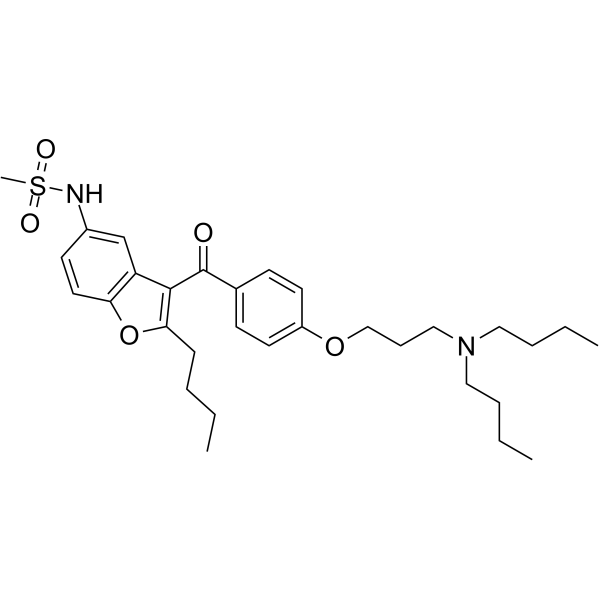
Dronedarone (SR 33589), a derivative of amiodarone (HY-14187), is a class III antiarrhythmic agent for the study of atrial fibrillation (AF) and atrial flutter. Dronedarone is a potent blocker of multiple ion currents, including potassium current, sodium current, and L-type calcium current, and exhibits antiadrenergic effects by noncompetitive binding to β-adrenergic receptors. Dronedarone is a substrate for and a moderate inhibitor of CYP3A4.
For research use only. We do not sell to patients.
- Purity : 99.93%
- CAS No.: 141626-36-0
- Formula: C31H44N2O5S
- Molecular Weight:556.76
-
Storage:Powder -20°C, 3 years , 4°C, 2 years ; In solvent -80°C, 2 years , -20°C, 1 year

To place orders, for customer services and technical support, please contact: MedChemExpress USA
Tel: 609-228-6898 E-mail: [email protected] [email protected]


-
 Biological Activity
-
Chemical Information
-
Solvent & Solubility
- Purity & Documentation
- References
-
 Help & FAQs


-
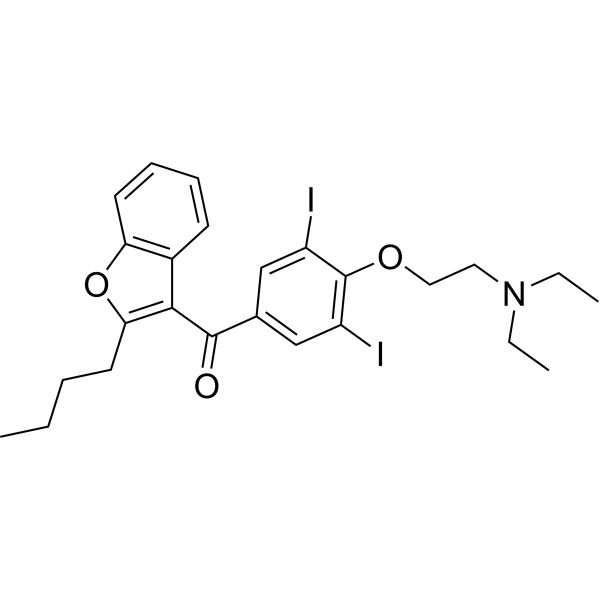
HY-14187
AmiodaroneAntiarrhythmic Compound -
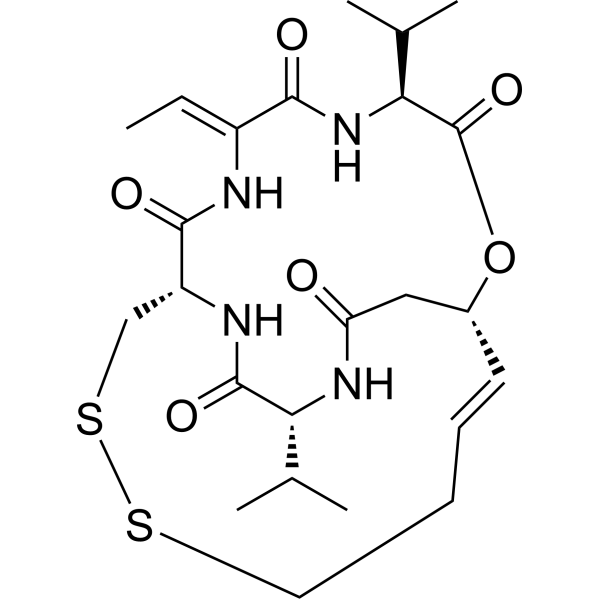
HY-15149
RomidepsinHDAC Inhibitor -

HY-Y1888
Corn oil -
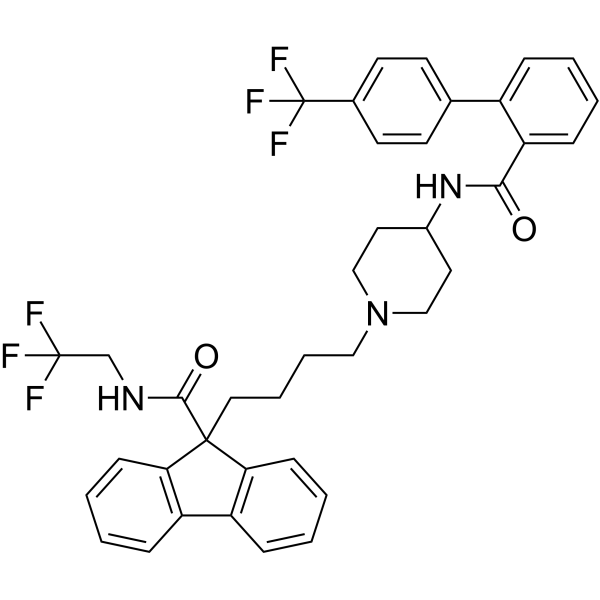
HY-14667
LomitapideMTP Inhibitor -
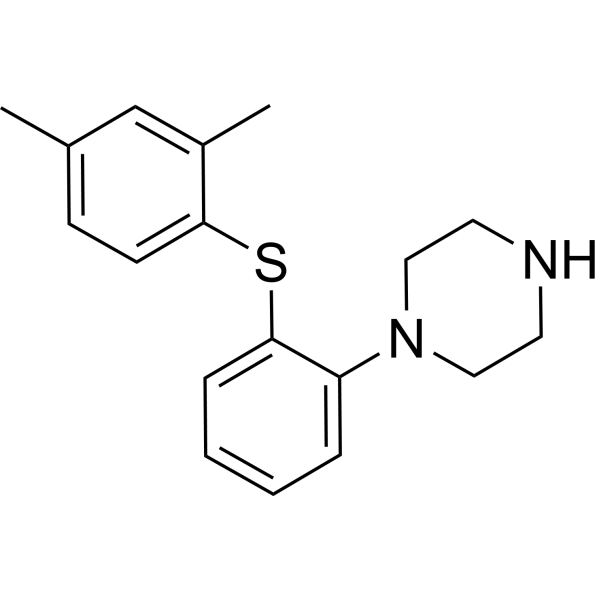
HY-15414
VortioxetineSerotonin Transporter Inhibitor -
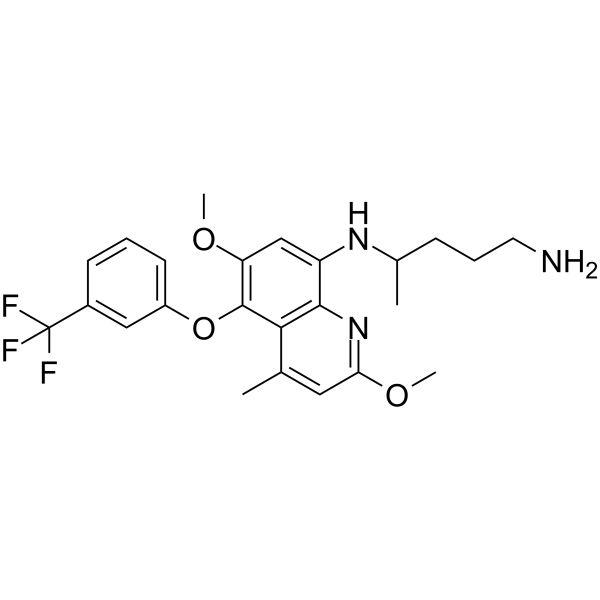
HY-111529
Tafenoquine -
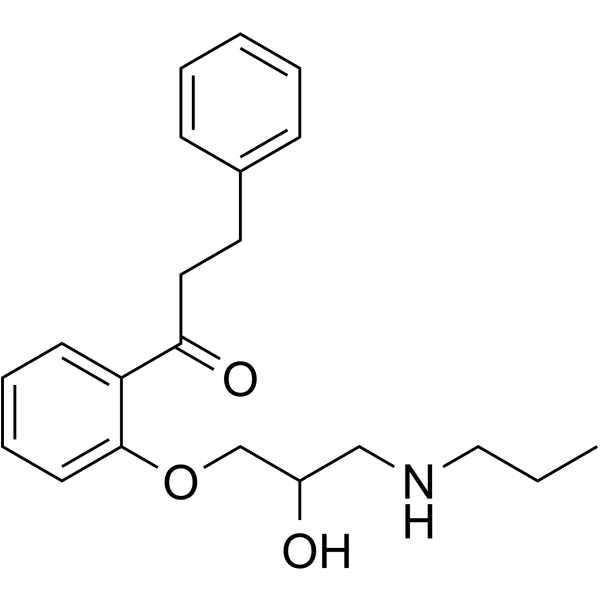
HY-B0432
PropafenoneAntiarrhythmic Agent -
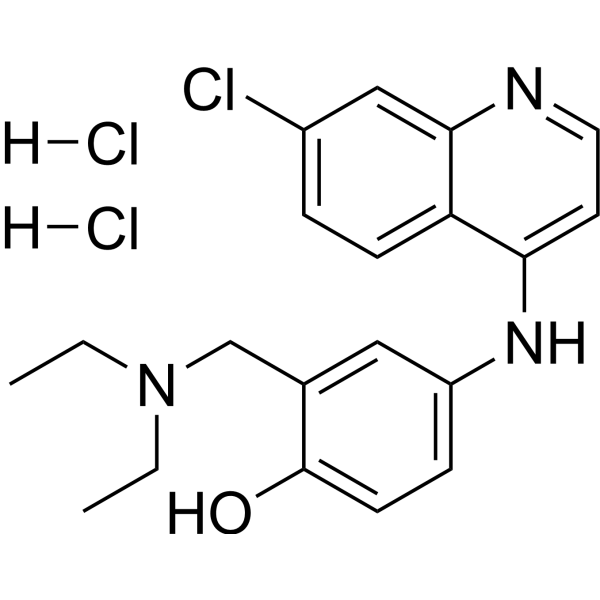
HY-B1322B
Amodiaquine dihydrochlorideAntimalarial Agent -
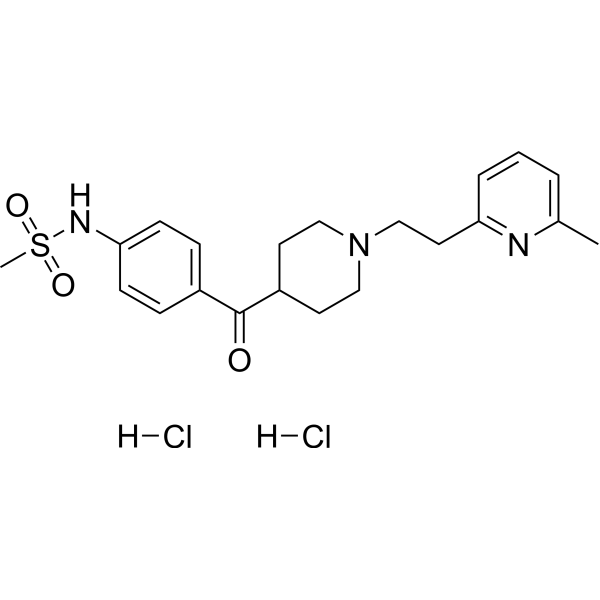
HY-15551
E-4031hERG Channels Blocker -

HY-A0016R
Dronedarone (Standard)Antiarrhythmic Agent -
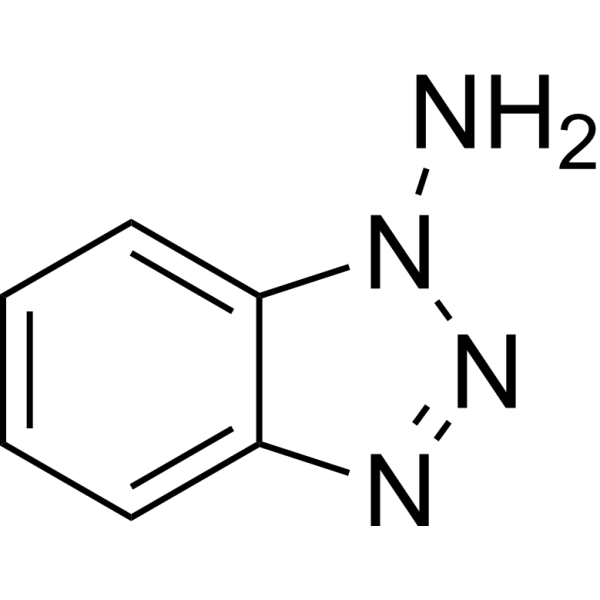
HY-103389
1-AminobenzotriazoleCytochrome P450 Inhibitor -
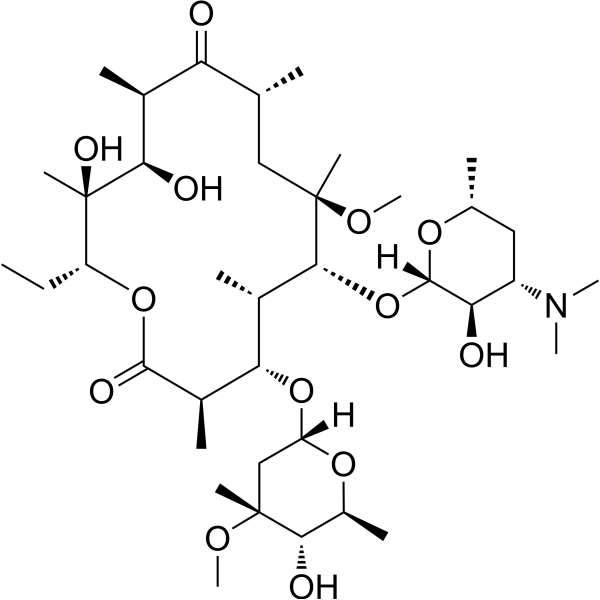
HY-17508
ClarithromycinAntimicrobial Agent
Publications Citing Use of MedChemExpress (MCE) Dronedarone
MoreAll Calcium Channel Isoforms
MoreAll Adrenergic Receptor Isoforms
More

Biological Activity
Description
IC50 & Target
|
L-type calcium channel |
CYP3 |
Cellular Effect
|
Cell Line

|
Type | Value | Description | References |
|---|---|---|---|---|
| HeLa | IC50 |
2.2 μM
Compound: Dronedarone
|
Inhibition of Ebolavirus glycoprotein/matrix protein VP40 entry in human HeLa cells after 4.5 hrs beta-lactamase reporter assay
Inhibition of Ebolavirus glycoprotein/matrix protein VP40 entry in human HeLa cells after 4.5 hrs beta-lactamase reporter assay
|
[PMID: 29624387] |
| Vero | CC50 |
8.75 μM
Compound: Dronedarone
|
Cell viability measured by CellTiter-Glo assay in Vero cells at MOI 0.05 after 72hr
Cell viability measured by CellTiter-Glo assay in Vero cells at MOI 0.05 after 72hr
|
10.1101/2020.03.20.999730 |
| Vero | IC50 |
3.92 μM
Compound: Dronedarone
|
Antiviral activity against SARS-CoV-2 (viral titer) measured by plaque assay in Vero cells at MOI 0.0125 after 24 hr
Antiviral activity against SARS-CoV-2 (viral titer) measured by plaque assay in Vero cells at MOI 0.0125 after 24 hr
|
10.1101/2020.03.20.999730 |
In Vitro
In patch clamp experiments using human atrial myocytes, Dronedarone produces potent blockade of peak sodium current, resulting in a 97% block at 3 μM[1].In guinea pig ventricular myocytes, Dronedarone inhibits the rapidly activating delayed-rectifier potassium current (IC50<3 μM), the slowly activating delayed-rectifier potassium current (IC50=10 μM), the inward rectifier potassium current (IC50>30 μM), and L-type calcium current (IC50=0.18 μM)[1].Dronedarone exhibits strong inhibitory effects on the acetylcholine-activated potassium current (IK-Ach) in rabbit inoatrial nodal cells (IC50=63 nM) and guinea pig atrial cells (IC50=10 nM). Blockade of IK-Ach by dronedarone is 100 times more potent than that of amiodarone[1].Dronedarone exerts its antiadrenergic effects by noncompetitive binding to β-adrenergic receptors (IC50=1.8 μM) and inhibition of agonist-induced increases in adenylate cyclase activity[1]. Dronedarone (0.01-1 μM) induces a concentration-dependent reduction of coronary perfusion pressure in isolated guinea pig hearts, effects that are independent of the nitric oxide synthase pathway and possibly related to its calcium current blockade[1].
MedChemExpress (MCE) has not independently confirmed the accuracy of these methods. They are for reference only.
In Vivo
MedChemExpress (MCE) has not independently confirmed the accuracy of these methods. They are for reference only.
-
Animal Model:Tonic-clonic seizures in male albino Swiss outbred mice[2]
-
Dosage:25 mg/kg; 50 mg/kg; 75 mg/kg; 100 mg/kg
-
Administration:Intraperitoneal injection
-
Result:Showed significant anticonvulsant effects.
Clinical Trial
| NCT Number | Sponsor | Condition | Start Date |
Phase
|
|---|---|---|---|---|
| NCT01329991 | Plexxikon| | 2011-05 | PHASE1 |


Chemical Information
-
CAS No. 141626-36-0
-
Appearance Solid
-
Molecular Weight 556.76
-
Formula C31H44N2O5S
-
Color White to off-white
-
SMILES
CCCCC1=C(C2=C(C=CC(NS(C)(=O)=O)=C2)O1)C(C3=CC=C(C=C3)OCCCN(CCCC)CCCC)=O
-
Synonyms
SR 33589
-
Shipping
Room temperature in continental US; may vary elsewhere.
-
Storage
Powder -20°C 3 years 4°C 2 years In solvent -80°C 2 years -20°C 1 year


Publications (4)
-
Journal Impact Factor
-
Most Recent
-
Adv Mater
Efficient Delivery of Lomitapide using Hybrid Membrane-Coated Tetrahedral DNA Nanostructures for Glioblastoma Therapy. [Abstract]2024 Jun;36(24):e2311760. PMID: 38569065 -
Pharmaceuticals (Basel)
A Simple Dual-Track HPLC-UV Methodology for Monitoring Primary Antiarrhythmic Drugs and Their Active Metabolites in Serum. [Abstract]2026 Mar 1;19(3):406. PMID: 41901253 -
Int J Mol Sci
2025 May 1;26(9):4304. PMID: 40362540 -
bioRxiv
2025 Nov 21:2025.11.20.689520. PMID: 41332603


Solvent & Solubility
In Vitro:
DMSO : 50 mg/mL (89.81 mM; Need ultrasonic; Hygroscopic DMSO has a significant impact on the solubility of product, please use newly opened DMSO)
Please refer to the solubility information to select the appropriate solvent. Once prepared, please aliquot and store the solution to prevent product inactivation from repeated freeze-thaw cycles.
Storage method and period of stock solution: -80°C, 2 years; -20°C, 1 year. When stored at -80°C, please use it within 2 years. When stored at -20°C, please use it within 1 year.
Please refer to the solubility information to select the appropriate solvent. Once prepared, please aliquot and store the solution to prevent product inactivation from repeated freeze-thaw cycles.
Storage method and period of stock solution: -80°C, 2 years; -20°C, 1 year. When stored at -80°C, please use it within 2 years. When stored at -20°C, please use it within 1 year.
Concentration (start) × Volume (start) = Concentration (final) × Volume (final)
In Vivo:
Select the appropriate dissolution method based on your experimental animal and administration route.
- For the following dissolution methods, please ensure to first prepare a clear stock solution using an In Vitro approach and then sequentially add co-solvents:
- To ensure reliable experimental results, the clarified stock solution can be appropriately stored based on storage conditions. As for the working solution for In Vivo experiments, it is recommended to prepare freshly and use it on the same day.
- The percentages shown for the solvents indicate their volumetric ratio in the final prepared solution. If precipitation or phase separation occurs during preparation, heat and/or sonication can be used to aid dissolution.
Add each solvent one by one: 10% DMSO 40% PEG300 5% Tween-80 45% Saline
Solubility: ≥ 2.5 mg/mL (4.49 mM); Clear solution
This protocol yields a clear solution of ≥ 2.5 mg/mL (saturation unknown).
Taking 1 mL working solution as an example, add 100 μL DMSO stock solution (25.0 mg/mL) to 400 μL PEG300, and mix evenly; then add 50 μL Tween-80 and mix evenly; then add 450 μL Saline to adjust the volume to 1 mL.
Preparation of Saline: Dissolve 0.9 g sodium chloride in ddH₂O and dilute to 100 mL to obtain a clear Saline solution.
Add each solvent one by one: 10% DMSO 90% (20% SBE-β-CD in Saline)
Solubility: ≥ 2.5 mg/mL (4.49 mM); Suspended solution
This protocol yields a suspended solution of ≥ 2.5 mg/mL (saturation unknown). Suspended solution can be used for oral and intraperitoneal injection.
Taking 1 mL working solution as an example, add 100 μL DMSO stock solution (25.0 mg/mL) to 900 μL 20% SBE-β-CD in Saline, and mix evenly.
Preparation of 20% SBE-β-CD in Saline (4°C, storage for one week): 2 g SBE-β-CD powder is dissolved in 10 mL Saline, completely dissolve until clear.
In Vivo Dissolution Calculator
Please enter the basic information of animal experiments:
-
-
-
-
Recommended: Prepare an additional quantity of animals to account for potential losses during experiments.
Please enter your animal formula composition:
-
%DMSO +
Recommended: Keep the proportion of DMSO in working solution below 2% if your animal is weak.
-
%+
-
+%Tween-80 + +
-
%Saline +
The co-solvents required include: DMSO, . All of co-solvents are available by MedChemExpress (MCE). , Tween 80. All of co-solvents are available by MedChemExpress (MCE).
Working solution concentration: 0.22 mg/mL
Method for preparing stock solution: mg drug dissolved in μL DMSO. Stock solution concentration: mg/mL.
1. Take μL DMSO stock solution;
2. Add μL .
μL , mix evenly;
3. Then add μL Tween 80, mix evenly;
4. Then add μL
Please ensure that the stock solution in the first step is dissolved to a clear state, and add co-solvents in sequence. You can use ultrasonic heating (ultrasonic cleaner, recommended frequency 20-40 kHz), vortexing, etc. to assist dissolution.


Purity & Documentation
-
Data Sheet (275 KB)
-
SDS (393 KB)
- English - EN (393 KB)
- Français - FR (393 KB)
- Deutsch - DE (393 KB)
- Norwegian - NO (393 KB)
- Español - ES (393 KB)
- Swedish - SV (393 KB)
- Italian - IT (393 KB)
- Korean - KR (393 KB)
- Portuguese - PT (393 KB)
-
Handling Instructions (2659 KB)
References
[1]. Chinmay Patel, et al. Dronedarone. Circulation. 2009 Aug 18;120(7):636-44. [Content Brief]
[2]. Katarzyna M Sawicka, et al. Influence of dronedarone (a class III antiarrhythmic drug) on the anticonvulsant potency of four classical antiepileptic drugs in the tonic-clonic seizure model in mice. J Neural Transm (Vienna). 2019 Feb;126(2):115-122. [Content Brief]


Complete Stock Solution Preparation Table
Please refer to the solubility information to select the appropriate solvent. Once prepared, please aliquot and store the solution to prevent product inactivation from repeated freeze-thaw cycles.
Storage method and period of stock solution: -80°C, 2 years; -20°C, 1 year. When stored at -80°C, please use it within 2 years. When stored at -20°C, please use it within 1 year.
| Optional Solvent | Concentration Solvent Mass | 1 mg | 5 mg | 10 mg | 25 mg |
|---|---|---|---|---|---|
| DMSO | 1 mM | 1.7961 mL | 8.9805 mL | 17.9611 mL | 44.9027 mL |
| 5 mM | 0.3592 mL | 1.7961 mL | 3.5922 mL | 8.9805 mL | |
| 10 mM | 0.1796 mL | 0.8981 mL | 1.7961 mL | 4.4903 mL | |
| 15 mM | 0.1197 mL | 0.5987 mL | 1.1974 mL | 2.9935 mL | |
| 20 mM | 0.0898 mL | 0.4490 mL | 0.8981 mL | 2.2451 mL | |
| 25 mM | 0.0718 mL | 0.3592 mL | 0.7184 mL | 1.7961 mL | |
| 30 mM | 0.0599 mL | 0.2994 mL | 0.5987 mL | 1.4968 mL | |
| 40 mM | 0.0449 mL | 0.2245 mL | 0.4490 mL | 1.1226 mL | |
| 50 mM | 0.0359 mL | 0.1796 mL | 0.3592 mL | 0.8981 mL | |
| 60 mM | 0.0299 mL | 0.1497 mL | 0.2994 mL | 0.7484 mL | |
| 80 mM | 0.0225 mL | 0.1123 mL | 0.2245 mL | 0.5613 mL |


Dronedarone Related Classifications
HY-A0016 Related Classifications
 Powered by Bioz