From 11:00 pm to 12:00 pm EST ( 8:00 pm to 9:00 pm PST ) on January 6th, the website will be under maintenance. We are sorry for the inconvenience. Please arrange your schedule properly.
Polyether F127 Diacrylate (F127DA) is an acrylated polyethylene glycol-polypropylene glycol-polyethylene glycol triblock copolymer. Polyether F127 Diacrylate rapidly crosslinks and cures into a gel under ultraviolet or visible light with the action of a photoinitiator. Polyether F127 Diacrylate exhibits excellent thermogelation properties and favorable biosafety. Polyether F127 Diacrylate can upregulate the Integrin-FAK pathway, enhance collagen production, increase the protein and gene expression levels of COL-1/SCX, and promote fibroblastic differentiation of periodontal ligament stem cells. Polyether F127 Diacrylate promotes periodontal ligament regeneration and reduces abnormal healing in a rat model of delayed replanted teeth . Polyether F127 Diacrylate promotes functional osteochondral regeneration in a rat model of osteoarthritis. Polyether F127 Diacrylate supports adipose tissue survival, rendering it suitable for breast reconstruction applications. Polyether F127 Diacrylate can be used in studies related to periodontal ligament injury, breast defect and osteoarthritis [1] .
Simtuzumab (AB 0024; GS 6624) is a monoclonal antibody directed against Lysyl oxidase like-2 (LOXL2). Simtuzumab non-competitively blocks collagen cross-linking, reduces LOXL2 protein expression and attenuates extracellular matrix changes. Simtuzumab reduces myocardial fibrosis and prevents cardiac dysfunction. Simtuzumab lowers Myh7 and Nppa gene expression, reduces contraction heterogeneity, and cuts COL1A1 deposition. Simtuzumab can be used for the research of LMNA mutation-induced dilated cardiomyopathy, idiopathic pulmonary fibrosis, and primary sclerosing cholangitis [1] .
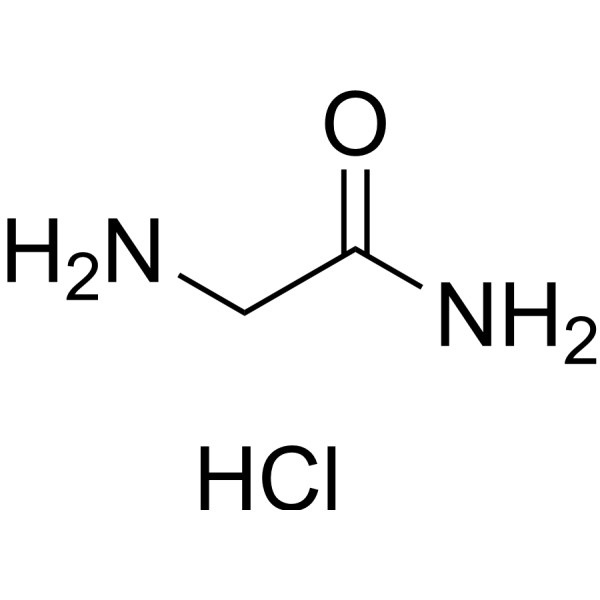
2-Aminoacetamide hydrochloride (Glycinamide hydrochloride) is a derivative of Glycine (HY-Y0966). 2-Aminoacetamide hydrochloride forms cell-absorbable nanocomplexes with proteins (such as bovine serum albumin) through strong electrostatic interactions, promoting cellular uptake of related proteins. 2-Aminoacetamide hydrochloride synergizes with BMP2 to upregulate the expression of osteogenic marker genes (such as Col1a1, Alp, Runx2) and proteins (such as COL1, BSP), enhancing collagen synthesis. 2-Aminoacetamide hydrochloride synergizes with BMP2 to promote osteoblast differentiation in vitro and bone regeneration in vivo[1].
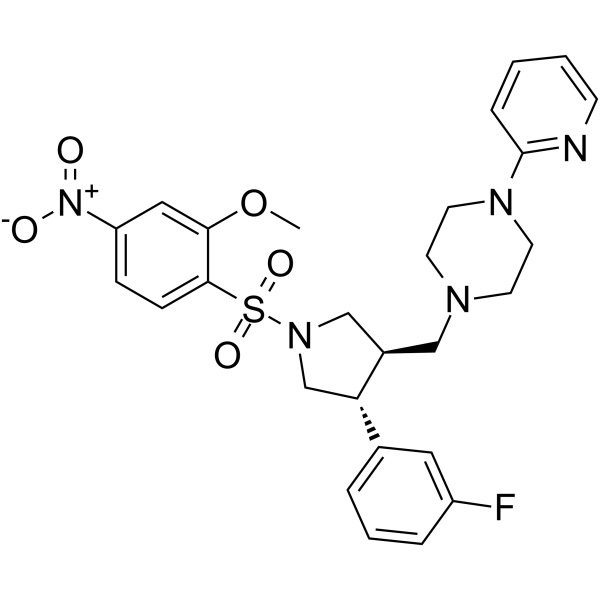
(rel)-AR234960 is a selective and competitive agonist of the G protein-coupled receptor MAS. (rel)-AR234960 binds to the MAS receptor to activate the downstream ERK1/2 signaling pathway, inducing the expression of connective tissue growth factor (CTGF) and its downstream collagen subtype genes (such as COL1A1, COL3A1). (rel)-AR234960 promotes collagen synthesis in cardiac fibroblasts through the MAS-ERK1/2-CTGF pathway and aggravates extracellular matrix remodeling. (rel)-AR234960's in vitro effect can be blocked by the MAS inverse agonist AR244555 and MEK1 inhibitor. (rel)-AR234960 regulates the expression of cardiac fibrosis-related genes and can be used in the study of heart failure [1] .
Methacrylated Type I collagen (Col1MA) is a methacrylated tissue engineering scaffold material that retains the basic properties of natural collagen [1]. Methacrylated Type I collagen needs to self-assemble into fibrous hydrogel under the action of photoinitiator LAP (HY-44076), and target bioactive adhesion sites, play an inherent supporting role for tissue cells and biodegradable activity. Application: cell culture, biological 3D printing, tissue engineering, etc.
TGFβ-IN-2 is an orally active TGF-β inhibitor. TGFβ-IN-2 suppresses the TGF-β-induced protein expression of COL1A1, α-SMA, and p-Smad3 in vitro. TGFβ-IN-2 demonstrates excellent anti-fibrotic efficacy in Bleomycin (HY-108345)-induced pulmonary fibrosis model. TGFβ-IN-2 can be used for the study of pulmonary fibrosis [1].
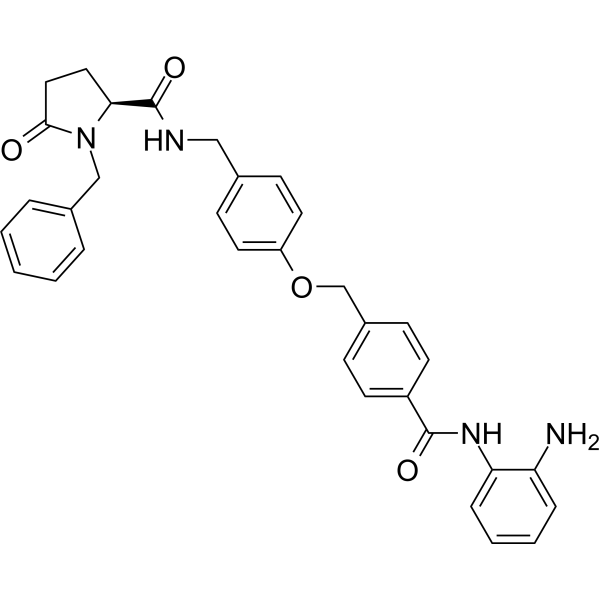
GK444 (Compound 15a) is a HDAC1/2 inhibitor (IC50: 100 and 92 nM for HDAC1/2 respectively). GK444 inhibits Caco-2 cells with IC50 of 4.1 μM. GK444 also reduces TGF-β1 induced COL1A1 mRNA levels in primary normal human lung fibroblasts. GK444 inhibits Bleomycin (HY-108345)-induced lung fibrosis in mice [1].
Acid Ceramidase-IN-3 is a acid ceramidase (aCDase) inhibitor. Acid Ceramidase-IN-3 inhibits the enzymatic activity of aCDase with a pIC 50 of 8.5 in enzymatic assays and 6.8 in A375 melanoma cellular assays. Acid Ceramidase-IN-3 promotes HSC inactivation, as measured by a dose-dependent
reduction in COL1A1 and ACTA2. Acid Ceramidase-IN-3 inhibits aCDase activity in HSCs, promotes HSC inactivation and suppresses YAP/TAZ nuclear localization. Acid Ceramidase-IN-3 increases Dynein/Kinesin (NDE1, NDEL1.
KIF3B, KIF15) while decreases several proteins involved with signaling pathway (SARM1, RGAP1,
PDGF-D,PDGFR-B). Acid Ceramidase-IN-3 can be used for the study of fibrotic diseases [1].
Galectin-3-IN-7 is a selective Galectin-3 inhibitor with a Kd of 5.7 nM and shows 390-fold selectivity over Gal-1. Galectin-3-IN-7 can downregulate profibrotic signaling such as ACTA2, COL1A2, and FN1 in TGFβ-stimulated LX2 hepatic stellate cells. Galectin-3-IN-7 can be used for the research of fibrosis [1].
TGF-β1/Smad-IN-1 (compound C9) is a potent TGF-β1/Smad inhibitor. TGF-β1/Smad-IN-1 inhibits the expression of fibrosis markers (α-SMA and COL1A1) induced by TGF-β1. TGF-β1/Smad-IN-1 shows antifibrotic effects. TGF-β1/Smad-IN-1 has the potential for the research of hepatic fibrosis [1].
LIFR/GPBAR1 modulator 1 is an orally active, potent GPBAR1 agonist (EC50 = 0.2 μM) and LIFR inhibitor (IC50 = 7.9 μM). LIFR/GPBAR1 modulator 1 upregulates leukaemia inhibitory factor (LIF)-mediated mRNA expression of LIFR and GPBAR1 and significantly reduces the expression of pro-fibrosis markers (COL1A1, ASMA, and TGFβ), and reduces TIMP1 expression and increases MMP9 expression. LIFR/GPBAR1 modulator 1 can be used for the study of human fibrotic disorders [1].
CMF9, a cyclic peptide molecule, is an inhibitor of the SMAD2-SMAD4 interaction. CMF9 effectively blocks the formation of the heterodimeric complex of SMAD2 and SMAD4 by inhibiting the phosphorylation of SMAD2. CMF9 has no effect on the phosphorylation of SMAD3 or SMAD1/5/8. CMF9 downregulates the expression of fibrotic markers α-SMA and COL1A1. CMF9 exhibits potent anti-fibrotic effects in mouse models by promoting the degradation of pathological extracellular matrix (ECM) and inhibiting inflammation. CMF9 can be used for the study of liver fibrosis [1].
TGF-β/Smad-IN-3 (Compound 4w) is an effective TGF-β/Smad inhibitor. TGF-β/Smad-IN-3 exerts anti-pulmonary fibrosis activity by simultaneously inhibiting the TGF-β/Smad and MAPK signaling pathways. TGF-β/Smad-IN-3 significantly inhibits collagen deposition induced by TGF-β1, with its IC50 value being 3.21 μM. TGF-β/Smad-IN-3 has an IC₅₀ of 46.77 nM for the autocrine motility factor (ATX). TGF-β/Smad-IN-3 significantly reduces the expression levels of α-SMA, COL1A1 and FN in TGF-β1-inducedCCC-HPF-1 cells, and effectively inhibited TGF-β1-induced cell migration. TGF-β/Smad-IN-3 can be used for the study of pulmonary fibrosis [1].
Col1a2 Rat Pre-designed siRNA Set A contains three designed siRNAs for Col1a2 gene (Rat), as well as a negative control, a positive control, and a FAM-labeled negative control.
Col1a1 Mouse Pre-designed siRNA Set A contains three designed siRNAs for Col1a1 gene (Mouse), as well as a negative control, a positive control, and a FAM-labeled negative control.
COL1A1 Human Pre-designed siRNA Set A contains three designed siRNAs for COL1A1 gene (Human), as well as a negative control, a positive control, and a FAM-labeled negative control.
Col1a1 Rat Pre-designed siRNA Set A contains three designed siRNAs for Col1a1 gene (Rat), as well as a negative control, a positive control, and a FAM-labeled negative control.
COL1A2 Human Pre-designed siRNA Set A contains three designed siRNAs for COL1A2 gene (Human), as well as a negative control, a positive control, and a FAM-labeled negative control.
Anti-hepatic fibrosis agent 2 (Compound 6k) is an orally active COL1A1 inhibitor. Anti-hepatic fibrosis agent 2 is an anti-fibrogenic agent targeting ewing sarcoma breakpoint region 1 (EWSR1) [1].
SNX3-IN-1 is a sorting nexin 3 (SNX3) inhibitor. SNX3-IN-1 reduces SNX3 protein expression and inhibits SNX3-mediated activation of the Wnt/β-catenin signaling pathway. SNX3-IN-1 inhibits the proliferation and migration of pulmonary fibrosis-related cells, and decreases the expression of fibrosis markers α-SMA and COL-1. SNX3-IN-1 can be used in research related to pulmonary fibrosis [1].
5-HT2B antagonist-2 (Compound 19c) is a 5HT2B receptor antagonist with an IC50 of 1.09 nM. 5-HT2B antagonist-2 can downregulate the expression of fibrosis-related genes α-SMA, Timp1, Col1a1, and Col3a1, and significantly reduce the deposition of fibrosis, thereby reducing the fibrotic area and inhibiting the fibrotic process in CCl4-induced liver fibrosis mouse models. 5-HT2B antagonist-2 can be used in the study of immune inflammatory-related diseases, particularly in the research of pulmonary fibrosis diseases [1].
Col1a2 Mouse Pre-designed siRNA Set A contains three designed siRNAs for Col1a2 gene (Mouse), as well as a negative control, a positive control, and a FAM-labeled negative control.
Anti-hepatic fibrosis agent 3 is an orally active anti-hepatic fibrosis compound targeting Cathepsin D. Anti-hepatic fibrosis agent 3 shows an IC50 of 53.18 μM against COL1A1-promoter and a Kd of 8.86 μM for binding to Cathepsin D. Anti-hepatic fibrosis agent 3 directly binds to and promotes the degradation of Cathepsin D, with no significant effect on Cathepsin B or Cathepsin L. Anti-hepatic fibrosis agent 3 inhibits hepatic stellate cell activation and reduces extracellular matrix deposition and inflammatory cytokine expression. Anti-hepatic fibrosis agent 3 exhibits remarkable anti-fibrotic activity in rat BDL and mouse CDAHFD-induced hepatic fibrosis models. Anti-hepatic fibrosis agent 3 can be used for the study of hepatic fibrosis [1].
JNK3-IN-11 is a selective JNK3 inhibitor with an IC50 of 2.08 nM. JNK3-IN-11 binds to the JNK3 ATP-binding pocket, forming conserved hydrogen bonds with Met149 and a water-mediated hydrogen bond with Lys93. JNK3-IN-11 suppresses TGF-β1-inducedc-Jun phosphorylation, reduces profibrotic markers COL1A1 and PAI-1, restores E-cadherin expression, and has protection against podocyte injure. JNK3-IN-11 can be used for the research of chronic kidney disease [1].
Anti-Mouse DDR2 Antibody (DAB0065) is a mAb that specifically targets mouse discoidin domain receptor DDR2 without cross-reacting with DDR1. Anti-Mouse DDR2 Antibody (DAB0065) binds to the extracellular domain of native mouse DDR2, induces endocytosis and lysosomal degradation of DDR2, and this process is independent of collagen binding. Anti-Mouse DDR2 Antibody (DAB0065) exhibits significant therapeutic effects in both the unilateral ureteral obstruction (UUO) mouse model of renal fibrosis and the bleomycin (HY-108345)-induced mouse model of pulmonary fibrosis, effectively downregulating the mRNA expression of type I collagen Col1a1 and fibronectin Fn1. Anti-Mouse DDR2 Antibody (DAB0065) can be humanized and has the potential to be developed as a targeted agent for diseases such as idiopathic pulmonary fibrosis and renal fibrosis [1] .
Polyether F127 Diacrylate (F127DA) is an acrylated polyethylene glycol-polypropylene glycol-polyethylene glycol triblock copolymer. Polyether F127 Diacrylate rapidly crosslinks and cures into a gel under ultraviolet or visible light with the action of a photoinitiator. Polyether F127 Diacrylate exhibits excellent thermogelation properties and favorable biosafety. Polyether F127 Diacrylate can upregulate the Integrin-FAK pathway, enhance collagen production, increase the protein and gene expression levels of COL-1/SCX, and promote fibroblastic differentiation of periodontal ligament stem cells. Polyether F127 Diacrylate promotes periodontal ligament regeneration and reduces abnormal healing in a rat model of delayed replanted teeth . Polyether F127 Diacrylate promotes functional osteochondral regeneration in a rat model of osteoarthritis. Polyether F127 Diacrylate supports adipose tissue survival, rendering it suitable for breast reconstruction applications. Polyether F127 Diacrylate can be used in studies related to periodontal ligament injury, breast defect and osteoarthritis [1] .
2-Aminoacetamide hydrochloride (Glycinamide hydrochloride) is a derivative of Glycine (HY-Y0966). 2-Aminoacetamide hydrochloride forms cell-absorbable nanocomplexes with proteins (such as bovine serum albumin) through strong electrostatic interactions, promoting cellular uptake of related proteins. 2-Aminoacetamide hydrochloride synergizes with BMP2 to upregulate the expression of osteogenic marker genes (such as Col1a1, Alp, Runx2) and proteins (such as COL1, BSP), enhancing collagen synthesis. 2-Aminoacetamide hydrochloride synergizes with BMP2 to promote osteoblast differentiation in vitro and bone regeneration in vivo[1].
Methacrylated Type I collagen (Col1MA) is a methacrylated tissue engineering scaffold material that retains the basic properties of natural collagen [1]. Methacrylated Type I collagen needs to self-assemble into fibrous hydrogel under the action of photoinitiator LAP (HY-44076), and target bioactive adhesion sites, play an inherent supporting role for tissue cells and biodegradable activity. Application: cell culture, biological 3D printing, tissue engineering, etc.
CMF9, a cyclic peptide molecule, is an inhibitor of the SMAD2-SMAD4 interaction. CMF9 effectively blocks the formation of the heterodimeric complex of SMAD2 and SMAD4 by inhibiting the phosphorylation of SMAD2. CMF9 has no effect on the phosphorylation of SMAD3 or SMAD1/5/8. CMF9 downregulates the expression of fibrotic markers α-SMA and COL1A1. CMF9 exhibits potent anti-fibrotic effects in mouse models by promoting the degradation of pathological extracellular matrix (ECM) and inhibiting inflammation. CMF9 can be used for the study of liver fibrosis [1].
Simtuzumab (AB 0024; GS 6624) is a monoclonal antibody directed against Lysyl oxidase like-2 (LOXL2). Simtuzumab non-competitively blocks collagen cross-linking, reduces LOXL2 protein expression and attenuates extracellular matrix changes. Simtuzumab reduces myocardial fibrosis and prevents cardiac dysfunction. Simtuzumab lowers Myh7 and Nppa gene expression, reduces contraction heterogeneity, and cuts COL1A1 deposition. Simtuzumab can be used for the research of LMNA mutation-induced dilated cardiomyopathy, idiopathic pulmonary fibrosis, and primary sclerosing cholangitis [1] .
Anti-Mouse DDR2 Antibody (DAB0065) is a mAb that specifically targets mouse discoidin domain receptor DDR2 without cross-reacting with DDR1. Anti-Mouse DDR2 Antibody (DAB0065) binds to the extracellular domain of native mouse DDR2, induces endocytosis and lysosomal degradation of DDR2, and this process is independent of collagen binding. Anti-Mouse DDR2 Antibody (DAB0065) exhibits significant therapeutic effects in both the unilateral ureteral obstruction (UUO) mouse model of renal fibrosis and the bleomycin (HY-108345)-induced mouse model of pulmonary fibrosis, effectively downregulating the mRNA expression of type I collagen Col1a1 and fibronectin Fn1. Anti-Mouse DDR2 Antibody (DAB0065) can be humanized and has the potential to be developed as a targeted agent for diseases such as idiopathic pulmonary fibrosis and renal fibrosis [1] .
The procollagen alpha 1/COL1A1 protein is an important type I collagen component and forms a trimeric structure with alpha 2(I) and two alpha 1(I) chains. It interacts with MRC2, associates with MFAP4 in a Ca2+-dependent manner, and interacts with TRAM2. COL1A1 Protein, Human (HEK293, His) is the recombinant human-derived COL1A1 protein, expressed by HEK293, with N-His labeled tag.
The procollagen alpha 1/COL1A1 protein is an important type I collagen component and forms a trimeric structure with alpha 2(I) and two alpha 1(I) chains. It interacts with MRC2, associates with MFAP4 in a Ca2+-dependent manner, and interacts with TRAM2. Pro-COL1A1 Protein, Human (HEK293, His) is the recombinant human-derived Pro-COL1A1 protein, expressed by HEK293, with N-His labeled tag.
COLlagen type I; Alpha 1 type I COLlagen; Alpha 2 type I COLlagen; COL1A1; COL1A2; COLlagen I alpha 1 polypeptide; COLlagen I alpha 2 polypeptide; COLlagen Of Skin Tendon And Bone; COLlagen Type 1; COLlagen type I alpha 1; COLlagen type I alpha 2; OI4; Osteogenesis Imperfecta Type IV; Pro alpha 1(I) COLlagen; Type I proCOLlagen; CO1A1_HUMAN.
WB, IHC-P
Human, Mouse, Rat, Rabbit
Collagen I Antibody is a Rabbit-derived and non-conjugated IgG polyclonal antibody, targeting to Collagen I.
Alpha 1 COLlagen type I; Alpha 1 type I COLlagen; Alpha 1 type I proCOLlagen; Alpha 1; I; COLlagen; Alpha 1; I; proCOLlagen; Alpha-1 type I COLlagen; CO1A1_HUMAN; COL1A1; COLlagen alpha 1; I; chain; COLlagen alpha-1; I; chain; COLlagen I alpha 1 polypeptide; COLlagen of skin tendon and bone alpha 1 chain; COLlagen type I alpha 1
IHC-P, WB, ICC/IF, ELISA
Human, Mouse, Rat
Collagen I Antibody (YA5601) is a Mouse-derived and non-conjugated IgG2b monoclonal antibody, targeting to Collagen I.
Alpha 1 COLlagen type I; Alpha 1 type I COLlagen; Alpha 1 type I proCOLlagen; Alpha 1; I; COLlagen; Alpha 1; I; proCOLlagen; Alpha-1 type I COLlagen; CO1A1_HUMAN; COL1A1; COLlagen alpha 1; I; chain; COLlagen alpha-1; I; chain; COLlagen I alpha 1 polypeptide; COLlagen of skin tendon and bone alpha 1 chain; COLlagen type I alpha 1
WB, IHC-P, ICC/IF, IP, ELISA
Human, Mouse, Rat
Collagen I Antibody (YA5793) is a Rabbit-derived and non-conjugated IgG monoclonal antibody, targeting to Collagen I.
Col1a2 Rat Pre-designed siRNA Set A contains three designed siRNAs for Col1a2 gene (Rat), as well as a negative control, a positive control, and a FAM-labeled negative control.
Col1a1 Mouse Pre-designed siRNA Set A contains three designed siRNAs for Col1a1 gene (Mouse), as well as a negative control, a positive control, and a FAM-labeled negative control.
COL1A1 Human Pre-designed siRNA Set A contains three designed siRNAs for COL1A1 gene (Human), as well as a negative control, a positive control, and a FAM-labeled negative control.
Col1a1 Rat Pre-designed siRNA Set A contains three designed siRNAs for Col1a1 gene (Rat), as well as a negative control, a positive control, and a FAM-labeled negative control.
COL1A2 Human Pre-designed siRNA Set A contains three designed siRNAs for COL1A2 gene (Human), as well as a negative control, a positive control, and a FAM-labeled negative control.
Col1a2 Mouse Pre-designed siRNA Set A contains three designed siRNAs for Col1a2 gene (Mouse), as well as a negative control, a positive control, and a FAM-labeled negative control.
Inquiry Online
Your information is safe with us. * Required Fields.
Western blot analysis of extracts from THP-1(lane 2(20μg), Jurkat (lane 3(20μg) and NIH3T3(lane 4(20μg) using FOXO1A (HY-P80132) Rabbit mAb. Proteins were transferred
to a PVDF membrane and blocked with 5% non-fat milk in TBST for 2 hour at room temperature. The primary antibody (1/1000) and Loading control antibody (Beta Actin, HY-P80438, 1/10000) was
used in 5% non-fat milk in TBST at 4°C overnight. Goat Anti-Mouse/Rabbit IgG-HRP Secondary Antibody (1/10000) was used for 1 hour at room temperature.
Western blot analysis of extracts from THP-1(lane 2(20μg), Jurkat (lane 3(20μg) and NIH3T3(lane 4(20μg) using FOXO1A (HY-P80132) Rabbit mAb. Proteins were transferred
to a PVDF membrane and blocked with 5% non-fat milk in TBST for 2 hour at room temperature. The primary antibody (1/1000) and Loading control antibody (Beta Actin, HY-P80438, 1/10000) was
used in 5% non-fat milk in TBST at 4°C overnight. Goat Anti-Mouse/Rabbit IgG-HRP Secondary Antibody (1/10000) was used for 1 hour at room temperature.
Western blot analysis of extracts from THP-1(lane 2(20μg), Jurkat (lane 3(20μg) and NIH3T3(lane 4(20μg) using FOXO1A (HY-P80132) Rabbit mAb. Proteins were transferred
to a PVDF membrane and blocked with 5% non-fat milk in TBST for 2 hour at room temperature. The primary antibody (1/1000) and Loading control antibody (Beta Actin, HY-P80438, 1/10000) was
used in 5% non-fat milk in TBST at 4°C overnight. Goat Anti-Mouse/Rabbit IgG-HRP Secondary Antibody (1/10000) was used for 1 hour at room temperature.
Western blot analysis of extracts from THP-1(lane 2(20μg), Jurkat (lane 3(20μg) and NIH3T3(lane 4(20μg) using FOXO1A (HY-P80132) Rabbit mAb. Proteins were transferred
to a PVDF membrane and blocked with 5% non-fat milk in TBST for 2 hour at room temperature. The primary antibody (1/1000) and Loading control antibody (Beta Actin, HY-P80438, 1/10000) was
MedchemExpress Validation 03
Western blot analysis of extracts from THP-1(lane 2(20μg), Jurkat (lane 3(20μg) and NIH3T3(lane 4(20μg) using FOXO1A (HY-P80132) Rabbit mAb. Proteins were transferred
MedchemExpress Validation 04
Western blot analysis of extracts from THP-1(lane 2(20μg), Jurkat (lane 3(20μg) and NIH3T3(lane 4(20μg) using FOXO1A (HY-P80132) Rabbit mAb. Proteins were transferred
to a PVDF membrane and blocked with 5% non-fat milk in TBST for 2 hour at room temperature. The primary antibody (1/1000) and Loading control antibody (Beta Actin, HY-P80438, 1/10000) was
used in 5% non-fat milk in TBST at 4°C overnight. Goat Anti-Mouse/Rabbit IgG-HRP Secondary Antibody (1/10000) was used for 1 hour at room temperature.
MedchemExpress Validation
Western blot analysis of extracts from THP-1(lane 2(20μg), Jurkat (lane 3(20μg) and NIH3T3(lane 4(20μg) using FOXO1A (HY-P80132) Rabbit mAb. Proteins were transferred
to a PVDF membrane and blocked with 5% non-fat milk in TBST for 2 hour at room temperature. The primary antibody (1/1000) and Loading control antibody (Beta Actin, HY-P80438, 1/10000) was
used in 5% non-fat milk in TBST at 4°C overnight. Goat Anti-Mouse/Rabbit IgG-HRP Secondary Antibody (1/10000) was used for 1 hour at room temperature.
Western blot analysis of extracts from THP-1(lane 2(20μg), Jurkat (lane 3(20μg) and NIH3T3(lane 4(20μg) using FOXO1A (HY-P80132) Rabbit mAb. Proteins were transferred
to a PVDF membrane and blocked with 5% non-fat milk in TBST for 2 hour at room temperature. The primary antibody (1/1000) and Loading control antibody (Beta Actin, HY-P80438, 1/10000) was
used in 5% non-fat milk in TBST at 4°C overnight. Goat Anti-Mouse/Rabbit IgG-HRP Secondary Antibody (1/10000) was used for 1 hour at room temperature.
MedchemExpress Validation
Western blot analysis of extracts from THP-1(lane 2(20μg), Jurkat (lane 3(20μg) and NIH3T3(lane 4(20μg) using FOXO1A (HY-P80132) Rabbit mAb. Proteins were transferred
to a PVDF membrane and blocked with 5% non-fat milk in TBST for 2 hour at room temperature. The primary antibody (1/1000) and Loading control antibody (Beta Actin, HY-P80438, 1/10000) was
used in 5% non-fat milk in TBST at 4°C overnight. Goat Anti-Mouse/Rabbit IgG-HRP Secondary Antibody (1/10000) was used for 1 hour at room temperature.
MedchemExpress Validation
Western blot analysis of extracts from THP-1(lane 2(20μg), Jurkat (lane 3(20μg) and NIH3T3(lane 4(20μg) using FOXO1A (HY-P80132) Rabbit mAb. Proteins were transferred
to a PVDF membrane and blocked with 5% non-fat milk in TBST for 2 hour at room temperature. The primary antibody (1/1000) and Loading control antibody (Beta Actin, HY-P80438, 1/10000) was
used in 5% non-fat milk in TBST at 4°C overnight. Goat Anti-Mouse/Rabbit IgG-HRP Secondary Antibody (1/10000) was used for 1 hour at room temperature.
MedchemExpress Validation
Western blot analysis of extracts from THP-1(lane 2(20μg), Jurkat (lane 3(20μg) and NIH3T3(lane 4(20μg) using FOXO1A (HY-P80132) Rabbit mAb. Proteins were transferred
to a PVDF membrane and blocked with 5% non-fat milk in TBST for 2 hour at room temperature. The primary antibody (1/1000) and Loading control antibody (Beta Actin, HY-P80438, 1/10000) was
used in 5% non-fat milk in TBST at 4°C overnight. Goat Anti-Mouse/Rabbit IgG-HRP Secondary Antibody (1/10000) was used for 1 hour at room temperature.
MedchemExpress Validation
Western blot analysis of extracts from THP-1(lane 2(20μg), Jurkat (lane 3(20μg) and NIH3T3(lane 4(20μg) using FOXO1A (HY-P80132) Rabbit mAb. Proteins were transferred
to a PVDF membrane and blocked with 5% non-fat milk in TBST for 2 hour at room temperature. The primary antibody (1/1000) and Loading control antibody (Beta Actin, HY-P80438, 1/10000) was
used in 5% non-fat milk in TBST at 4°C overnight. Goat Anti-Mouse/Rabbit IgG-HRP Secondary Antibody (1/10000) was used for 1 hour at room temperature.
MedchemExpress Validation
Western blot analysis of extracts from THP-1(lane 2(20μg), Jurkat (lane 3(20μg) and NIH3T3(lane 4(20μg) using FOXO1A (HY-P80132) Rabbit mAb. Proteins were transferred
to a PVDF membrane and blocked with 5% non-fat milk in TBST for 2 hour at room temperature. The primary antibody (1/1000) and Loading control antibody (Beta Actin, HY-P80438, 1/10000) was
used in 5% non-fat milk in TBST at 4°C overnight. Goat Anti-Mouse/Rabbit IgG-HRP Secondary Antibody (1/10000) was used for 1 hour at room temperature.
MedchemExpress Validation
Western blot analysis of extracts from THP-1(lane 2(20μg), Jurkat (lane 3(20μg) and NIH3T3(lane 4(20μg) using FOXO1A (HY-P80132) Rabbit mAb. Proteins were transferred
to a PVDF membrane and blocked with 5% non-fat milk in TBST for 2 hour at room temperature. The primary antibody (1/1000) and Loading control antibody (Beta Actin, HY-P80438, 1/10000) was
used in 5% non-fat milk in TBST at 4°C overnight. Goat Anti-Mouse/Rabbit IgG-HRP Secondary Antibody (1/10000) was used for 1 hour at room temperature.
MedChemExpress values your privacy and your trust is important to us. We use cookies to enhance your website experience. Some cookies are necessary to run the website.
Privacy and Cookie Policy