Search Result
Results for "
P2Y2 receptor
" in MedChemExpress (MCE) Product Catalog:
3
Biochemical Assay Reagents
| Cat. No. |
Product Name |
Target |
Research Areas |
Chemical Structure |
-
- HY-W013093
-
-
-
- HY-13104
-
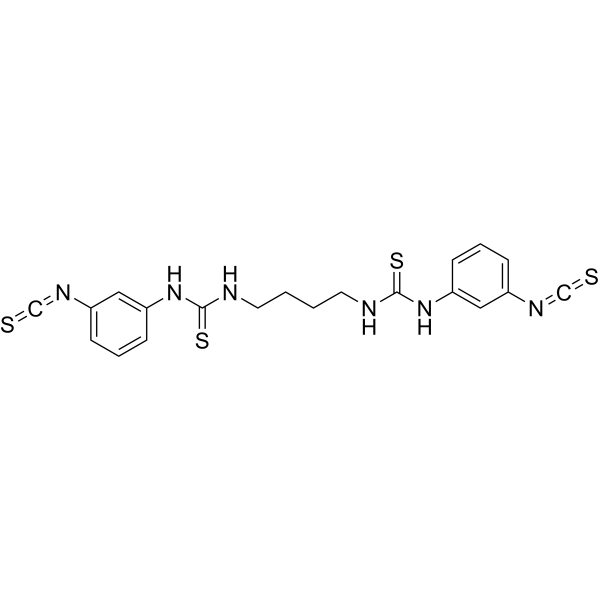
MRS 2578
Maximum Cited Publications
12 Publications Verification
|
P2Y Receptor
Apoptosis
|
Cardiovascular Disease
|
|
MRS 2578 is a selective and potent P2Y6 receptor antagonist with IC50s of 37 nM (human) and 98 nM (rat). MRS 2578 exhibits insignificant activity at P2Y1, P2Y2, P2Y4, and P2Y11 receptors .
|
-
-
- HY-101044
-
|
|
P2X Receptor
Na+/Ca2+ Exchanger
|
Neurological Disease
|
|
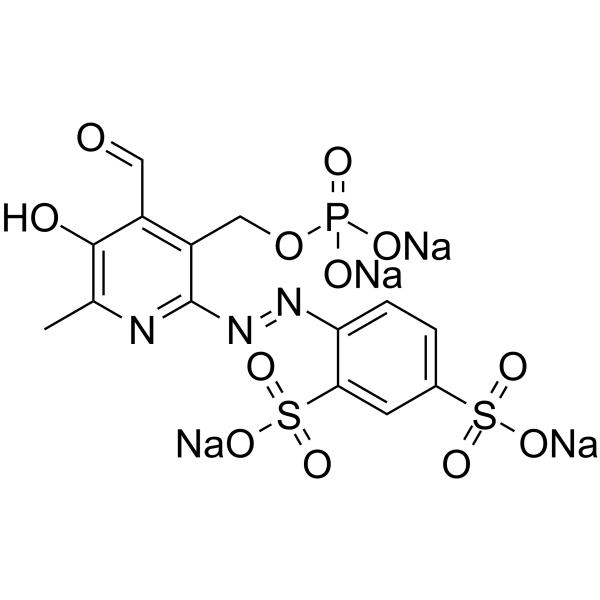
PPADS tetrasodiuma is a non-selective P2X receptor antagonist. PPADS tetrasodiuma blocks recombinant P2X1, -2, -3, -5 with IC50s ranging from 1 to 2.6 μM. PPADS tetrasodiuma blocks native P2Y2-like (IC50~0.9 mM) and recombinant P2Y4 (IC50~15 mM) receptors. PPADS tetrasodiuma is an inhibitor of the reverse mode of the Na/Ca 2+ exchanger in guinea pig airway smooth muscle .
|
-
-
- HY-110126
-
|
|
P2Y Receptor
|
Inflammation/Immunology
Cancer
|
|
AR-C118925XX is a selective P2Y2 receptor antagonist. AR-C118925XX inhibits ATP-induced IL-6 production and phosphorylation of p38. AR-C118925XX also inhibits Bleomycin (HY-108345)-induced dermal fibrosis in mice. AR-C118925XX also inhibits ATP-induced tumor growth .
|
-
-
- HY-B0606
-
|
INS365
|
P2Y Receptor
|
Inflammation/Immunology
|
|
Diquafosol tetrasodium is a P2Y2 receptor agonist that stimulates fluid and mucin secretion on the ocular surface, as a topical treatment of dry eye disease.
|
-
-
- HY-110322A
-
PPTN
4 Publications Verification
|
P2Y Receptor
|
Inflammation/Immunology
|
|
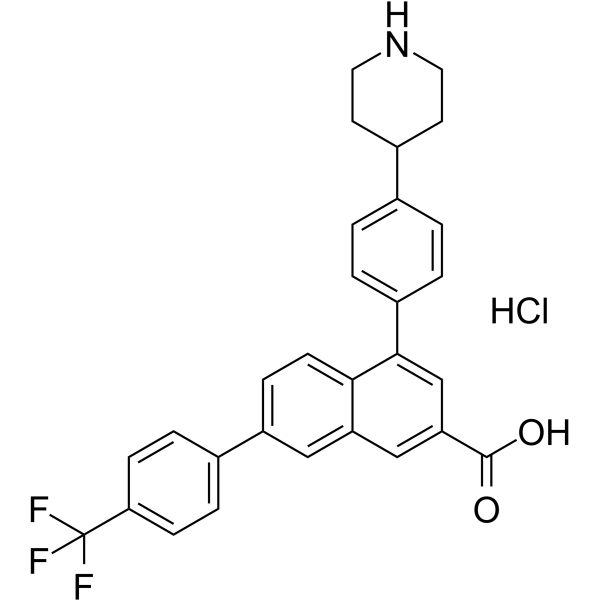
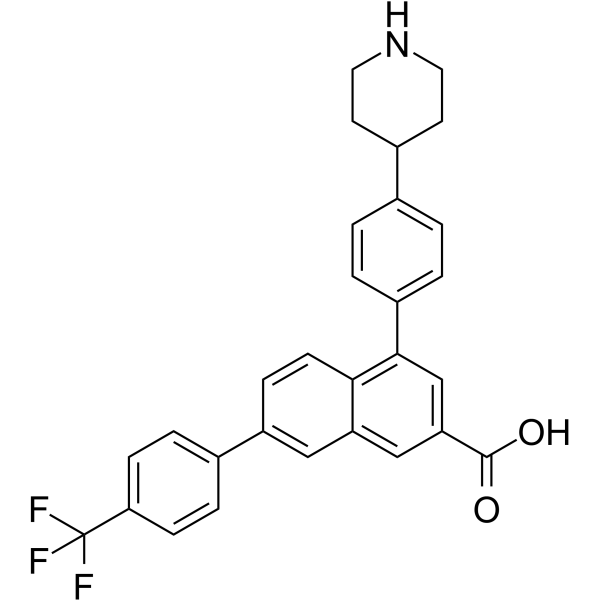
PPTN, a chemical probe, is a potent, high-affinity, competitive and highly selective P2Y14 receptor antagonist with a KB value of 434 pM. PPTN exhibits no agonist or antagonist effect at the P2Y1, P2Y2, P2Y4, P2Y6, P2Y11, P2Y12, or P2Y13 receptors. Anti-inflammatory and immune activity .
|
-
-
- HY-110322
-
|
|
P2Y Receptor
|
Inflammation/Immunology
|
|
PPTN hydrochloride is a potent, high-affinity, competitive and highly selective P2Y14 receptor antagonist with a KB value of 434 pM. PPTN hydrochloride exhibits no agonist or antagonist effect at the P2Y1, P2Y2, P2Y4, P2Y6, P2Y11, P2Y12, or P2Y13 receptors. Anti-inflammatory and anti-immune activity .
|
-
-
- HY-107372
-
-
-
- HY-W250153
-
|
|
P2Y Receptor
|
Cardiovascular Disease
|
|
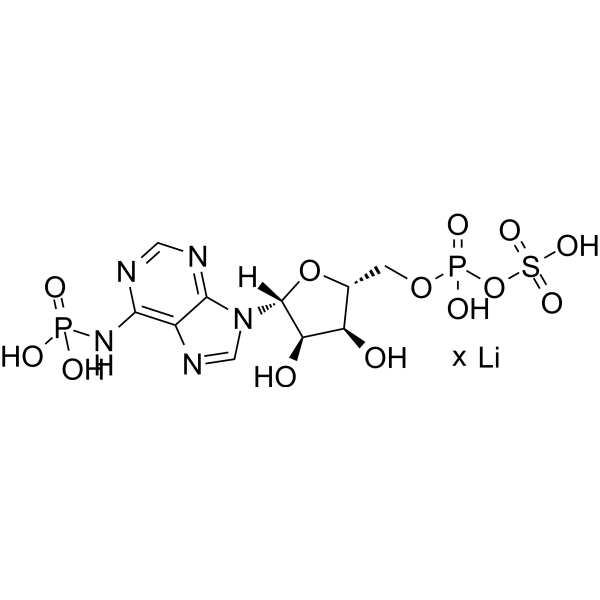
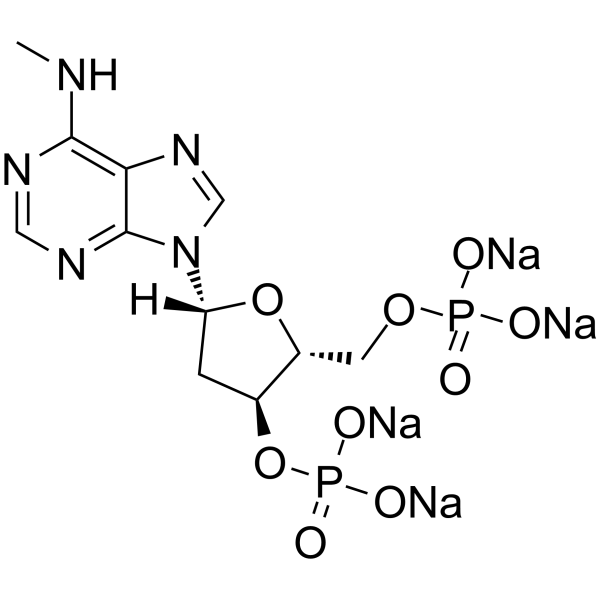
Adenosine 3'-phosphate 5'-phosphosulfate lithium, an adenine nucleotide derivative, is a selective P2Y1 antagonist with no effect on P2Y2, P2Y4, or P2Y6 receptors. Adenosine 3'-phosphate 5'-phosphosulfate lithium can competitive inhibit ADP-induced platelet aggregation, as well as the ability of ADP to cause shape change and increases in Ca 2+ in platelets, but had no effect on the inhibition of stimulated adenylate cyclase by ADP. Adenosine 3'-phosphate 5'-phosphosulfate lithium is a co-substrate used for the sulfonation of glycans. Adenosine 3'-phosphate 5'-phosphosulfate lithium can be used for Golgi-resident PAP-specific 3'-phosphatase-coupled sulfotransferase assays, which as donor substrate to transfer a sulfonate group .
|
-
-
- HY-107372H
-
|
Uridine 5'-triphosphate trisodium salt, 100 mM Solution, PCR Grade
|
Biochemical Assay Reagents
Endogenous Metabolite
DNA/RNA Synthesis
P2Y Receptor
|
Cardiovascular Disease
|
|
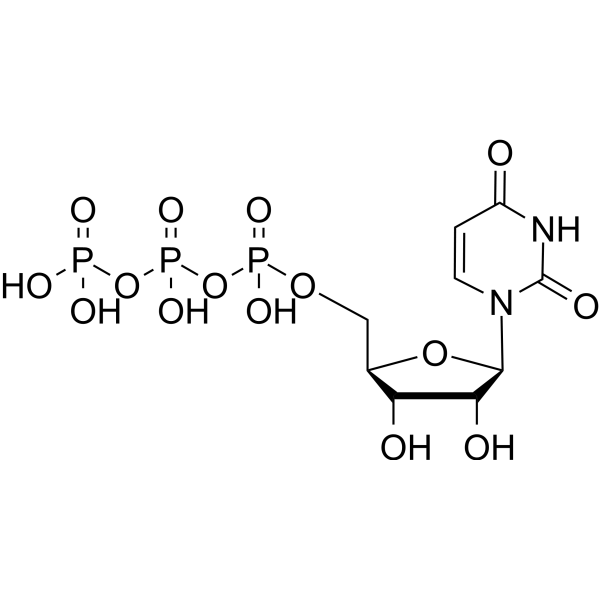
UTP (Uridine 5'-triphosphate) trisodium salt, 100 mM Solution, PCR Grade is a solution prepared from uridine triphosphate at a concentration of 100 mM, free of DNase, RNase and phosphatase contamination, suitable for molecular biology research. Uridine triphosphate (HY-107372) is a pyrimidine nucleoside triphosphate that is used as a substrate to synthesize RNA or as an energy source in metabolic reactions. Uridine triphosphate activates membrane-bound P2Y2 receptors .
|
-
-
- HY-101308A
-
|
|
P2Y Receptor
|
Cardiovascular Disease
|
|
MRS2179 tetrasodium hydrate is a competitive P2Y1 receptor antagonist, with a Kb of 102 nM and a pA2 of 6.99 for turkey P2Y1 receptor. MRS2179 tetrasodium hydrate is selective for P2Y1 over P2X1 (IC50=1.15 µM), P2X3 (12.9 µM), P2X2, P2X4, P2Y2, P2Y4, and P2Y6 receptors . MRS2179 tetrasodium hydrate inhibits platelet aggregation .
|
-
-
- HY-164090
-
|
|
P2Y Receptor
|
Cardiovascular Disease
|
|
Adenosine 3'-phosphate 5'-phosphosulfate, an adenine nucleotide derivative, is a selective P2Y1 antagonist with no effect on P2Y2, P2Y4, or P2Y6 receptors. Adenosine 3'-phosphate 5'-phosphosulfate can competitive inhibit ADP-induced platelet aggregation, as well as the ability of ADP to cause shape change and increases in Ca 2+ in platelets, but had no effect on the inhibition of stimulated adenylate cyclase by ADP. Adenosine 3'-phosphate 5'-phosphosulfate is a co-substrate used for the sulfonation of glycans. Adenosine 3'-phosphate 5'-phosphosulfate can be used for Golgi-resident PAP-specific 3'-phosphatase-coupled sulfotransferase assays, which as donor substrate to transfer a sulfonate group .
|
-
-
- HY-108649A
-
|
|
P2Y Receptor
|
Cardiovascular Disease
|
|
MRS2768 tetrasodium salt is a moderately potent and selective P2Y2 receptor agonist. MRS2768 tetrasodium salt has a protective effect on cardiomyocytes from ischemic damage in vivo and in vitro .
|
-
-
- HY-110089
-
|
|
P2Y Receptor
|
Inflammation/Immunology
|
|
mrs 4062 (TEA) is a selective P2Y4 receptor agonist with an EC50 of 23 nM. mrs 4062 (TEA) has EC50s of 640 nM and 740 nM for P2Y2 and P2Y6, respectively .
|
-
-
- HY-W013093R
-
|
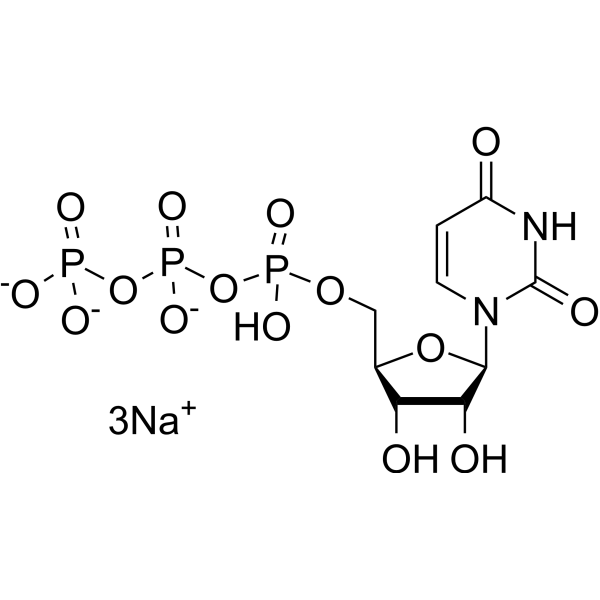
UTP trisodium salt (Standard); Uridine 5'-triphosphate trisodium salt (Standard)
|
Reference Standards
Endogenous Metabolite
P2Y Receptor
|
Cardiovascular Disease
Inflammation/Immunology
Cancer
|
|
Uridine triphosphate (trisodium salt) (Standard) is the analytical standard of Uridine triphosphate (trisodium salt). This product is intended for research and analytical applications. Uridine triphosphate (UTP) trisodium salt is a pyrimidine nucleoside triphosphate that is used as a substrate to synthesize RNA or as an energy source in metabolic reactions. Uridine triphosphate trisodium salt activates membrane-bound P2Y2 receptors .
|
-
-
- HY-101308
-
|
|
P2Y Receptor
|
Cardiovascular Disease
|
|
MRS2179 tetrasodium is a competitive P2Y1 receptor antagonist, with a Kb of 102 nM and a pA2 of 6.99 for turkey P2Y1 receptor. MRS2179 tetrasodium is selective for P2Y1 over P2X1 (IC50=1.15 µM), P2X3 (12.9 µM), P2X2, P2X4, P2Y2, P2Y4, and P2Y6 receptors . MRS2179 tetrasodium inhibits platelet aggregation .
|
-
-
- HY-N9422
-
|
|
P2Y Receptor
|
Cardiovascular Disease
|
|
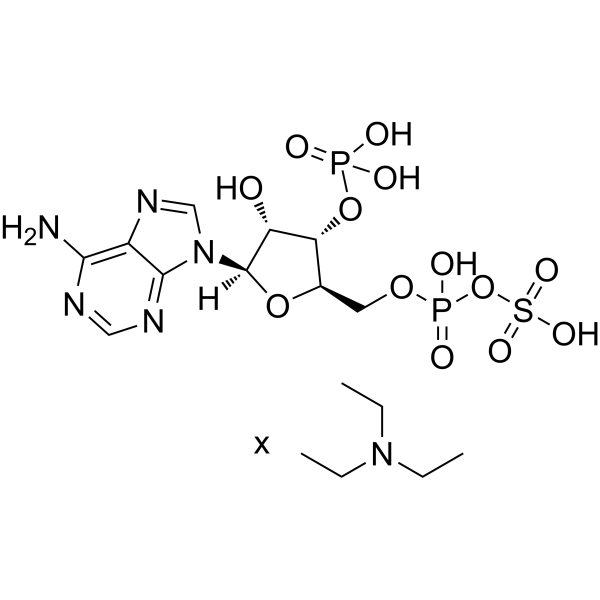
Adenosine 3'-phosphate 5'-phosphosulfate triethylamine, an adenine nucleotide derivative, is a selective P2Y1 antagonist with no effect on P2Y2, P2Y4, or P2Y6 receptors. Adenosine 3'-phosphate 5'-phosphosulfate triethylamine can competitive inhibit ADP-induced platelet aggregation, as well as the ability of ADP to cause shape change and increases in Ca 2+ in platelets, but had no effect on the inhibition of stimulated adenylate cyclase by ADP. Adenosine 3'-phosphate 5'-phosphosulfate triethylamine is a co-substrate used for the sulfonation of glycans. Adenosine 3'-phosphate 5'-phosphosulfate triethylamine can be used for Golgi-resident PAP-specific 3'-phosphatase-coupled sulfotransferase assays, which as donor substrate to transfer a sulfonate group .
|
-
-
- HY-110092
-
|
|
P2Y Receptor
|
Metabolic Disease
|
|
PSB-1114 tetrasodium is a potent, enzymatically stable, and subtype-selective P2Y2 receptor agonist with an EC50 of 134 nM. PSB-1114 tetrasodium displays >50-fold selectivity versus the P2Y4 (EC50 of 9.3 μM) and P2Y6 (EC50 of 7.0 μM) receptors .
|
-
-
- HY-179133
-
|
|
P2Y Receptor
PKA
Raf
MEK
ERK
|
Inflammation/Immunology
|
|
HDB-1 is a selective inhibitor of the P2Y14 receptor (P2Y14R) with an IC50 of 26 pM. HDB-1 shows no significant inhibition on P2Y1R, P2Y2R, P2Y4R, P2Y6R, and P2Y12R. HDB-1 blocks the activation of hepatic stellate cells (HSC) by inhibiting the PKA/Raf1/MEK/ERK signaling pathway mediated by P2Y14R, thereby alleviating the core pathological process of liver fibrosis. HDB-1 can be used for the study of liver fibrosis .
|
-
-
- HY-W250153A
-
|
|
P2Y Receptor
|
Cardiovascular Disease
|
|
Adenosine 3'-phosphate 5'-phosphosulfate lithium hydrate, an adenine nucleotide derivative, is a selective P2Y1 antagonist with no effect on P2Y2, P2Y4, or P2Y6 receptors. Adenosine 3'-phosphate 5'-phosphosulfate lithium hydrate can competitive inhibit ADP-induced platelet aggregation, as well as the ability of ADP to cause shape change and increases in Ca 2+ in platelets, but had no effect on the inhibition of stimulated adenylate cyclase by ADP. Adenosine 3'-phosphate 5'-phosphosulfate lithium hydrate is a co-substrate used for the sulfonation of glycans. Adenosine 3'-phosphate 5'-phosphosulfate lithium hydrate can be used for Golgi-resident PAP-specific 3'-phosphatase-coupled sulfotransferase assays, which as donor substrate to transfer a sulfonate group .
|
-
-
- HY-137616C
-
|
|
P2Y Receptor
|
Cancer
|
|
Rp-dUTPαS (tetrasodium) is an isomer of the sulfur-containing nucleoride dUTP-α-S and an agonist of the purinergic P2Y2 receptor. Rp-dUTPαS (tetrasodium) selectively induces inositol phosphate accumulation in P2Y2-expressing 1321N1 cells with an EC50 of 12.5 μM .
|
-
-
- HY-137612C
-
|
Rp-Uridine 5'-O-1-thiotriphosphate tetrasodium
|
P2Y Receptor
|
Cancer
|
|
Rp-UTP-α-S (Rp-Uridine 5'-O-(1-thiotriphosphate)) tetrasodium is a nucleotide agonist of purinergic P2Y2 and P2Y4 receptors. Rp-UTP-α-S (tetrasodium) can induce inositol phosphate accumulation in P2Y2 or P2Y4 expressing 1321N1 cells with EC50 values of 5.4 and 27 μM .
|
-
-
- HY-108651
-
|
UTPγS trisodium
|
P2Y Receptor
|
Metabolic Disease
|
|
Uridine-5'-O-(3-thiotriphosphate) trisodium, a stable analogue of UTP, is a potent agonist of the P2Y2 and P2Y4 receptors with increased metabolic stability .
|
-
-
- HY-137612
-
|
Uridine 5'-O-1-thiotriphosphate
|
P2Y Receptor
|
Cancer
|
|
Sp-UTP-α-S (Uridine 5-0-1-thiotrirhosphate) is a P2Y2 and P2Y4 receptor activator. Sp-UTP-α-S can be used in cancer research .
|
-
-
- HY-137606
-
|
UP4A
|
P2X Receptor
|
Cardiovascular Disease
|
|
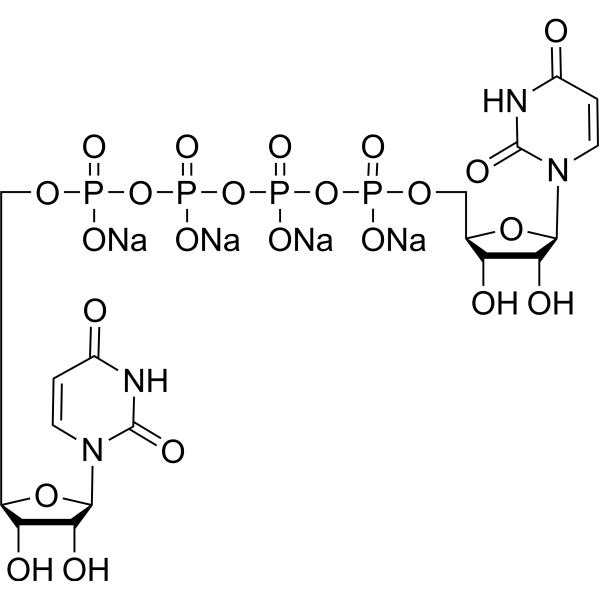
Uridine adenosine tetraphosphate (UP4A) is an endothelium-derived vasoconstrictor that primarily acts through the P2X1 receptor and possibly through the P2Y2 and P2Y4 receptors. Uridine adenosine tetraphosphate can be used in the study of cardiovascular diseases .
|
-
-
- HY-110092A
-
|
|
P2Y Receptor
|
Cancer
|
|
PSB-1114 triethylamine is a potent, enzymatically stable, and subtype-selective P2Y2 receptor agonist with an EC50 of 134 nM. PSB-1114 triethylamine displays >50-fold selectivity versus the P2Y4 (EC50 of 9.3 μM) and P2Y6 (EC50 of 7.0 μM) receptors .
|
-
-
- HY-134369
-
|
|
P2Y Receptor
|
Others
Inflammation/Immunology
|
|
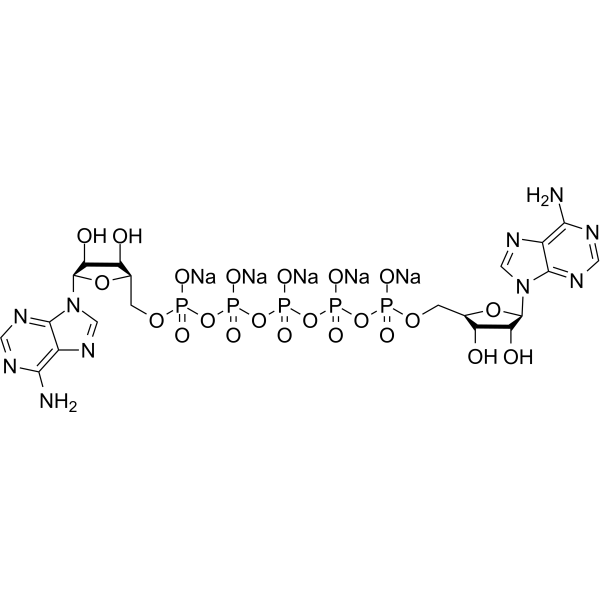
Ap4C tetrasodium is a dinucleoside polyphosphate containing purine and pyrimidine base moieties. Ap4C tetrasodium acts as a signaling molecule by binding to specific P2Y receptors, activating P2Y2 and P2Y4 receptors in platelets, leading to platelet aggregation and other cellular responses. Ap4C tetrasodium can be used for research in inflammation and blood coagulation .
|
-
-
- HY-13104R
-
|
|
P2Y Receptor
Apoptosis
|
Cardiovascular Disease
|
|
MRS 2578 (Standard) is the analytical standard of MRS 2578. This product is intended for research and analytical applications. MRS 2578 is a selective and potent P2Y6 receptor antagonist with IC50s of 37 nM (human) and 98 nM (rat). MRS 2578 exhibits insignificant activity at P2Y1, P2Y2, P2Y4, and P2Y11 receptors .
|
-
-
- HY-103055
-
|
|
P2Y Receptor
|
Inflammation/Immunology
|
|
PPTN mesylate is a potent, high-affinity, competitive and highly selective P2Y14 receptor antagonist with a KB value of 434 pM. PPTN mesylate exhibits no agonist or antagonist effect at the P2Y1, P2Y2, P2Y4, P2Y6, P2Y11, P2Y12, or P2Y13 receptors. Anti-inflammatory and immune activity .
|
-
-
- HY-137608
-
|
UDP-β-S
|
P2Y Receptor
DNA/RNA Synthesis
|
Cardiovascular Disease
Inflammation/Immunology
|
|
Uridine 5'-O-thiodiphosphate (UDP-β-S) is a P2Y6 receptor agonist with an EC50 of 25 nM. Uridine 5'-O-thiodiphosphate resists degradation by extracellular nucleotidases and stimulates the accumulation of inositol phosphates. Uridine 5'-O-thiodiphosphate stimulates contractile responses in endothelium-denuded rat mesenteric arteries. As a mitogen, Uridine 5'-O-thiodiphosphate stimulates DNA synthesis, [ 3H] thymidine incorporation, protein synthesis, [ 3H]leucine incorporation, and increases the number of vascular smooth muscle cells. Uridine 5'-O-thiodiphosphate can be used in the research of cardiovascular diseases such as atherosclerosis .
|
-
-
- HY-137608A
-
|
UDP-β-S trisodium
|
P2Y Receptor
DNA/RNA Synthesis
|
Cardiovascular Disease
Inflammation/Immunology
|
|
Uridine 5'-O-thiodiphosphate trisodium (UDP-β-S trisodium) is a P2Y6 receptor agonist with an EC50 of 25 nM. Uridine 5'-O-thiodiphosphate trisodium resists degradation by extracellular nucleotidases and stimulates the accumulation of inositol phosphates. Uridine 5'-O-thiodiphosphate trisodium stimulates contractile responses in endothelium-denuded rat mesenteric arteries. As a mitogen, Uridine 5'-O-thiodiphosphate trisodium stimulates DNA synthesis, [ 3H] thymidine incorporation, protein synthesis, [ 3H]leucine incorporation, and increases the number of vascular smooth muscle cells. Uridine 5'-O-thiodiphosphate trisodium can be used in the research of cardiovascular diseases such as atherosclerosis .
|
-
-
- HY-137603
-
|
UTPγS
|
P2Y Receptor
|
Metabolic Disease
|
|
Uridine-5'-O-(3-thiotriphosphate) (UTPγS), a stable analogue of Uridine triphosphate (UTP) (HY-107372), is a potent agonist of the P2Y2 and P2Y4 receptors with increased metabolic stability. Uridine-5'-O-(3-thiotriphosphate) stimulates inositol phosphate formation in human 1321N1 astrocytoma cells stably expressing the phospholipase C-coupled human P2U-purinoceptor (EC50 = 240 nM) .
|
-
-
- HY-137612A
-
|
Uridine 5'-O-1-thiotriphosphate tetrasodium
|
P2Y Receptor
|
Cancer
|
|
Sp-UTP-α-S (Uridine 5-0-1-thiotrirhosphate) tetrasodium is a P2Y2 and P2Y4 receptor activator. Sp-UTP-α-S tetrasodium can be used in cancer research .
|
-
-
- HY-108654
-
|
|
P2Y Receptor
Apoptosis
Drug Derivative
Phospholipase
NO Synthase
|
Neurological Disease
Inflammation/Immunology
Endocrinology
|
|
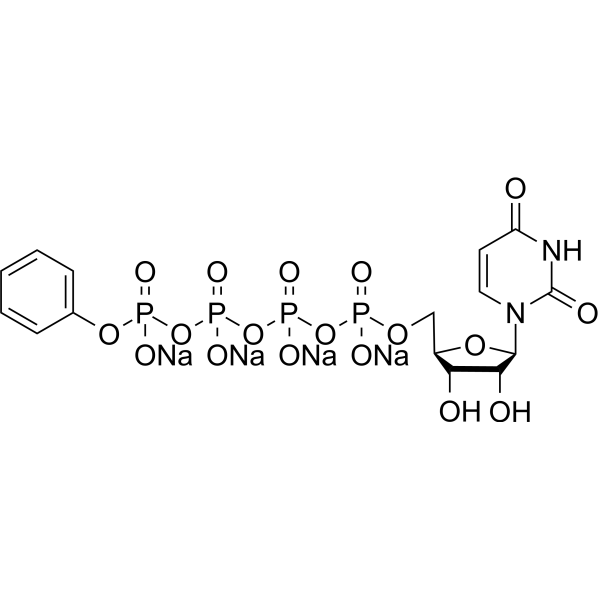
PSB 0474 (3-phenacyl-UDP) is a UDP (HY-113359) analog and selective P2Y6 receptor agonist, with an EC50 value of 70 nM for the hP2Y6 receptor. PSB 0474 activates Phospholipase C-coupled receptors to increase intracellular inositol phosphate levels. PSB 0474 enhances NO release by upregulating inducible iNOS and induces Apoptosis. PSB 0474 increases micturition frequency in urine of anesthetized rats, without altering bladder contraction amplitude/duration or causing urothelial damage. PSB 0474 can be used in studies related to chronic brain inflammation .
|
-
-
- HY-137603A
-
|
UTPγS tetrasodium
|
P2Y Receptor
|
Neurological Disease
Metabolic Disease
|
|
Uridine-5'-O-(3-thiotriphosphate) (UTPγS) tetrasodium, a stable analogue of Uridine triphosphate (UTP) (HY-107372), is a potent agonist of the P2Y2 and P2Y4 receptors with increased metabolic stability. Uridine-5'-O-(3-thiotriphosphate) tetrasodium stimulates inositol phosphate formation in human 1321N1 astrocytoma cells stably expressing the phospholipase C-coupled human P2U-purinoceptor (EC50 = 240 nM) .
|
-
-
- HY-179448
-
|
|
P2Y Receptor
|
Cancer
|
|
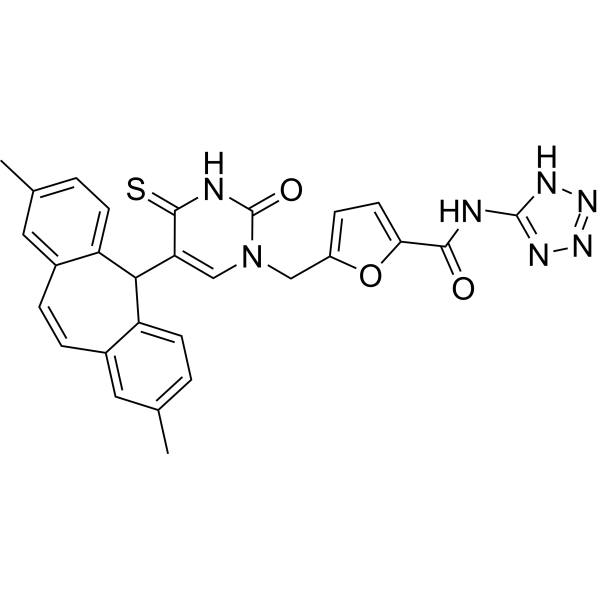
P2Y2R antagonist 1 is a selective P2Y2R antagonist (pIC50 = 7.78). P2Y2R antagonist 1 can be used for the study of Glioma .
|
-
| Cat. No. |
Product Name |
Type |
-
- HY-W250153
-
|
|
Biochemical Assay Reagents
|
|
Adenosine 3'-phosphate 5'-phosphosulfate lithium, an adenine nucleotide derivative, is a selective P2Y1 antagonist with no effect on P2Y2, P2Y4, or P2Y6 receptors. Adenosine 3'-phosphate 5'-phosphosulfate lithium can competitive inhibit ADP-induced platelet aggregation, as well as the ability of ADP to cause shape change and increases in Ca 2+ in platelets, but had no effect on the inhibition of stimulated adenylate cyclase by ADP. Adenosine 3'-phosphate 5'-phosphosulfate lithium is a co-substrate used for the sulfonation of glycans. Adenosine 3'-phosphate 5'-phosphosulfate lithium can be used for Golgi-resident PAP-specific 3'-phosphatase-coupled sulfotransferase assays, which as donor substrate to transfer a sulfonate group .
|
-
- HY-107372H
-
|
Uridine 5'-triphosphate trisodium salt, 100 mM Solution, PCR Grade
|
Biochemical Assay Reagents
|
|
UTP (Uridine 5'-triphosphate) trisodium salt, 100 mM Solution, PCR Grade is a solution prepared from uridine triphosphate at a concentration of 100 mM, free of DNase, RNase and phosphatase contamination, suitable for molecular biology research. Uridine triphosphate (HY-107372) is a pyrimidine nucleoside triphosphate that is used as a substrate to synthesize RNA or as an energy source in metabolic reactions. Uridine triphosphate activates membrane-bound P2Y2 receptors .
|
-
- HY-W250153A
-
|
|
Biochemical Assay Reagents
|
|
Adenosine 3'-phosphate 5'-phosphosulfate lithium hydrate, an adenine nucleotide derivative, is a selective P2Y1 antagonist with no effect on P2Y2, P2Y4, or P2Y6 receptors. Adenosine 3'-phosphate 5'-phosphosulfate lithium hydrate can competitive inhibit ADP-induced platelet aggregation, as well as the ability of ADP to cause shape change and increases in Ca 2+ in platelets, but had no effect on the inhibition of stimulated adenylate cyclase by ADP. Adenosine 3'-phosphate 5'-phosphosulfate lithium hydrate is a co-substrate used for the sulfonation of glycans. Adenosine 3'-phosphate 5'-phosphosulfate lithium hydrate can be used for Golgi-resident PAP-specific 3'-phosphatase-coupled sulfotransferase assays, which as donor substrate to transfer a sulfonate group .
|
| Cat. No. |
Product Name |
Category |
Target |
Chemical Structure |
| Cat. No. |
Product Name |
|
Classification |
-
- HY-W013093
-
|
UTP trisodium salt; Uridine 5'-triphosphate trisodium salt
|
|
Nucleotide Analogs
|
|
Uridine triphosphate (UTP) trisodium salt is a pyrimidine nucleoside triphosphate that is used as a substrate to synthesize RNA or as an energy source in metabolic reactions. Uridine triphosphate trisodium salt activates membrane-bound P2Y2 receptors .
|
-
- HY-107372
-
|
UTP; Uridine 5'-triphosphate
|
|
Nucleotide Analogs
|
|
Uridine triphosphate (UTP; Uridine 5'-triphosphate) is a pyrimidine nucleoside triphosphate that is used as a substrate to synthesize RNA or as an energy source in metabolic reactions. Uridine triphosphate activates membrane-bound P2Y2 receptors .
|
-
- HY-W250153
-
|
|
|
Nucleotide Analogs
Adenine Nucleotide
|
|
Adenosine 3'-phosphate 5'-phosphosulfate lithium, an adenine nucleotide derivative, is a selective P2Y1 antagonist with no effect on P2Y2, P2Y4, or P2Y6 receptors. Adenosine 3'-phosphate 5'-phosphosulfate lithium can competitive inhibit ADP-induced platelet aggregation, as well as the ability of ADP to cause shape change and increases in Ca 2+ in platelets, but had no effect on the inhibition of stimulated adenylate cyclase by ADP. Adenosine 3'-phosphate 5'-phosphosulfate lithium is a co-substrate used for the sulfonation of glycans. Adenosine 3'-phosphate 5'-phosphosulfate lithium can be used for Golgi-resident PAP-specific 3'-phosphatase-coupled sulfotransferase assays, which as donor substrate to transfer a sulfonate group .
|
-
- HY-164090
-
|
|
|
Nucleotide Analogs
Adenine Nucleotide
|
|
Adenosine 3'-phosphate 5'-phosphosulfate, an adenine nucleotide derivative, is a selective P2Y1 antagonist with no effect on P2Y2, P2Y4, or P2Y6 receptors. Adenosine 3'-phosphate 5'-phosphosulfate can competitive inhibit ADP-induced platelet aggregation, as well as the ability of ADP to cause shape change and increases in Ca 2+ in platelets, but had no effect on the inhibition of stimulated adenylate cyclase by ADP. Adenosine 3'-phosphate 5'-phosphosulfate is a co-substrate used for the sulfonation of glycans. Adenosine 3'-phosphate 5'-phosphosulfate can be used for Golgi-resident PAP-specific 3'-phosphatase-coupled sulfotransferase assays, which as donor substrate to transfer a sulfonate group .
|
-
- HY-W250153A
-
|
|
|
Nucleotide Analogs
Adenine Nucleotide
|
|
Adenosine 3'-phosphate 5'-phosphosulfate lithium hydrate, an adenine nucleotide derivative, is a selective P2Y1 antagonist with no effect on P2Y2, P2Y4, or P2Y6 receptors. Adenosine 3'-phosphate 5'-phosphosulfate lithium hydrate can competitive inhibit ADP-induced platelet aggregation, as well as the ability of ADP to cause shape change and increases in Ca 2+ in platelets, but had no effect on the inhibition of stimulated adenylate cyclase by ADP. Adenosine 3'-phosphate 5'-phosphosulfate lithium hydrate is a co-substrate used for the sulfonation of glycans. Adenosine 3'-phosphate 5'-phosphosulfate lithium hydrate can be used for Golgi-resident PAP-specific 3'-phosphatase-coupled sulfotransferase assays, which as donor substrate to transfer a sulfonate group .
|
Your information is safe with us. * Required Fields.
Inquiry Information
- Product Name:
- Cat. No.:
- Quantity:
- MCE Japan Authorized Agent:

