Search Result
Results for "
PROTAC Linker 1
" in MedChemExpress (MCE) Product Catalog:
| Cat. No. |
Product Name |
Target |
Research Areas |
Chemical Structure |
-
- HY-130604
-
DT2216
2 Publications Verification
|
Bcl-2 Family
PROTACs
Apoptosis
|
Cancer
|
|
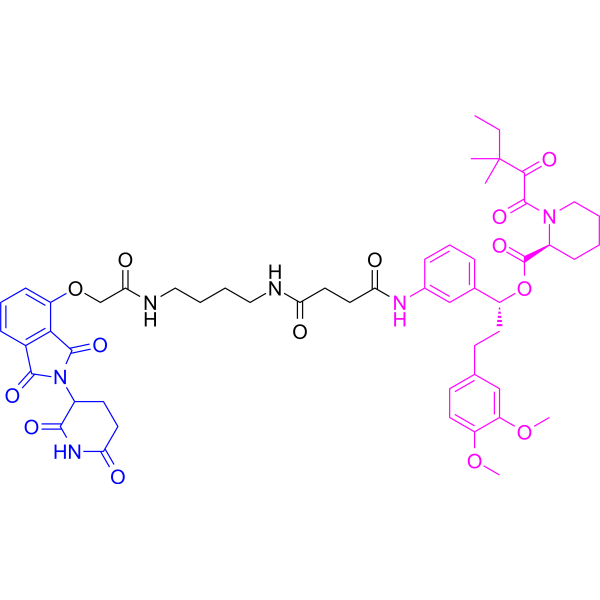
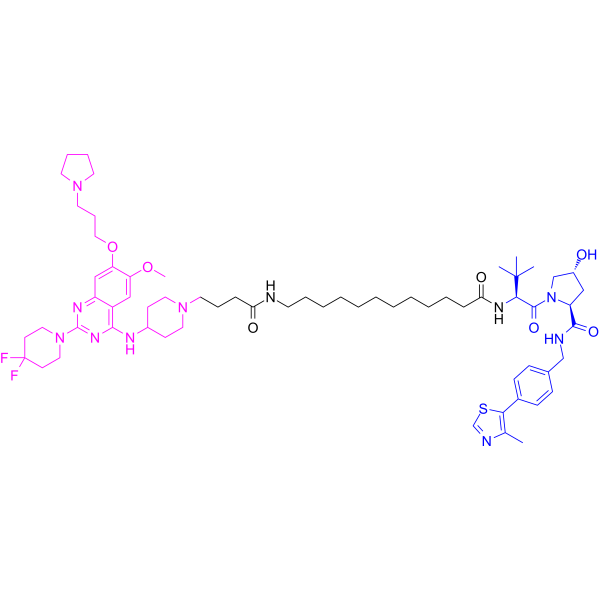
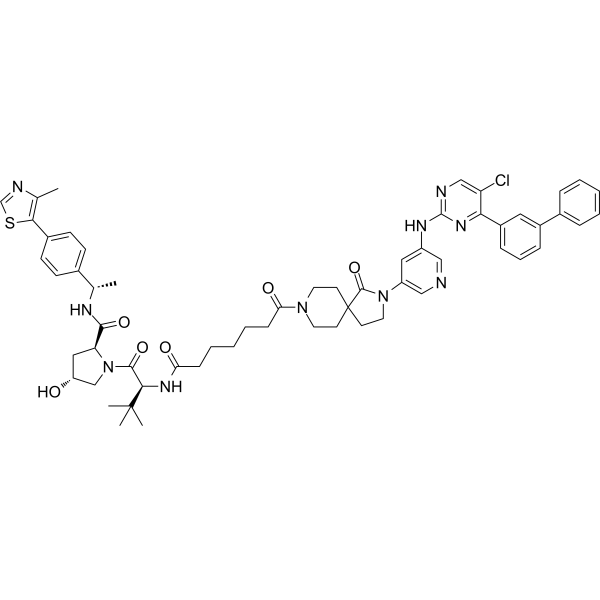
DT2216 is a potent and selective BCL-XL (Bcl-2 family member) degrader based on PROTAC technology. DT2216 causes effective degradation of BCL-XL protein by recruiting Von Hippel-Lindau (VHL) E3 ubiquitin ligase. DT2216 inhibits various BCL-XL-dependent leukemia and cancer cells but considerably less toxic to platelets. DT2216 is composed of the Bcl-2 family protein inhibitor Navitoclax-piperazine (HY-44432), a linker, and a VHL E3 ubiquitin ligase (Pink: Navitoclax-piperazine; Blue: VHL ligand; Black: linker) .
|
-
-
- HY-101838
-
dBET1
Maximum Cited Publications
20 Publications Verification
|
PROTACs
Epigenetic Reader Domain
|
Cancer
|
|
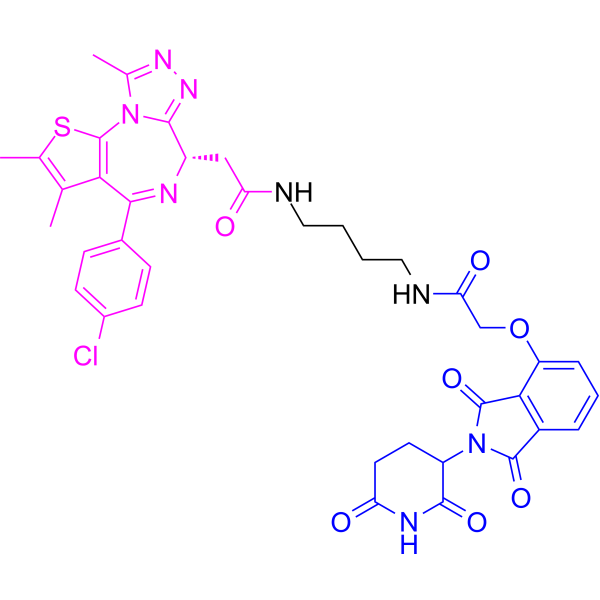
dBET1 is a PROTAC connected by ligands for Cereblon and BRD4 with an EC50 of 430 nM. dBET1 is a PROTAC that composes of (+)-JQ1 (HY-13030) linked to NSC 527179 (HY-14658) with a linker .
|
-
-
- HY-157228
-
|
|
PROTACs
Ras
|
Cancer
|
|
ACBI3 (compound 7), a chemical probe, is a PROTAC targeting KRAS. ACBI3 is composed of PROTAC target protein ligand pan-KRAS degrader 1 (HY-162960) (red part), E3 ligase ligand E3 ligase Ligand 43 (HY-401613) (blue part) and PROTAC Linker 1-Bromo-4-(ethynyloxy)butane (HY-169992) (black part), among which the conjugate of E3 ubiquitin ligase ligand + Linker is E3 Ligase Ligand-linker Conjugate 143 (HY-169995). ACBI3 achieves in vivo degradation of oncogenic KRAS, resulting in durable pathway modulation and tumor regressions in KRAS mutant xenograft mouse models .
|
-
-
- HY-153321
-
|
NX-5948; BTK-IN-24
|
PROTACs
Btk
|
Inflammation/Immunology
Cancer
|
|
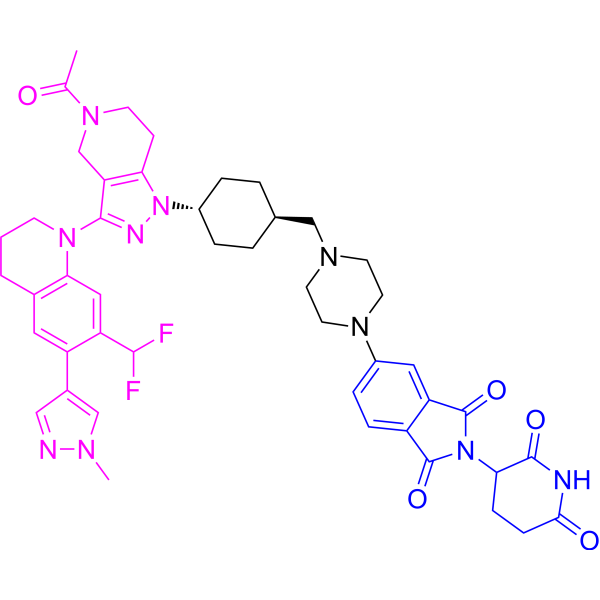
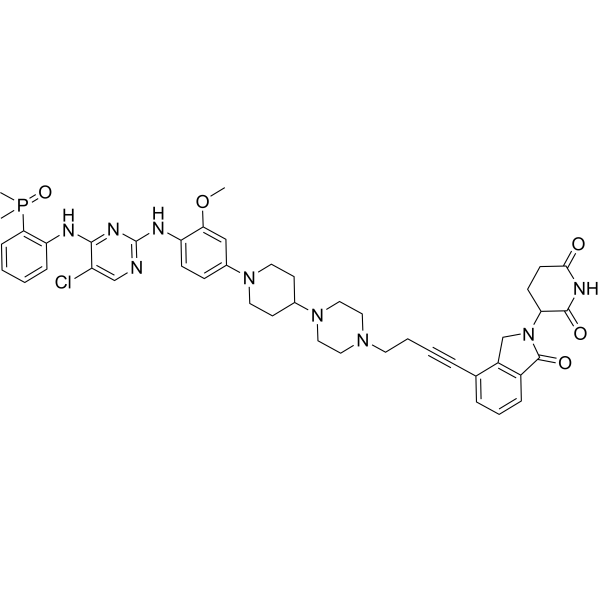
Bexobrutideg (NX-5948) is an orally active chimeric targeting molecule (CTM) that induces specific BTK protein degradation by the cereblon E3 ligase (CRBN) complex without degradation of other cereblon neo-substrates. Bexobrutideg mediates potent anti-inflammatory activity via BTK degradation with resultant inhibition of B cell activation. Bexobrutideg exhibits potent tumor growth inhibition in TMD8 xenograft models that contain either wild-type BTK or BTKi-resistant mutations. Bexobrutideg is efficacious in a mouse collageninduced arthritis (CIA) model. Bexobrutideg can cross the blood brain barrier (BBB). Bexobrutideg is a PROTAC composed of the ligand for target protein, a linker, and a cereblon E3 ligase (CRBN) complex (Red: BTK ligand (HY-170324); Blue: CRBN ligand (HY-171893); Black: linker) .
|
-
-
- HY-158113
-
|
|
Histone Acetyltransferase
PROTACs
|
Cancer
|
|
CBPD-409 is an orally active PROTAC degrader for CBP/p300, with DC50 of 0.2–0.4 nM. CBPD-409 exhibits antiproliferative effects in AR+ prostate cancer cell lines VCaP, LNCaP and 22Rv1, with IC50s of 1.2–2.0 nM. CBPD-409 exhibits antitumor efficacy (Red: CBP inhibitor GNE049 (HY-108435); Blue: CRBN/cullin 4A Thalidomide (HY-14658); Black: Linker) .
|
-
-
- HY-130435
-
|
|
ADC Linker
PROTAC Linkers
|
Cancer
|
|
DBCO-PEG4-amine is a PEG-based PROTAC linker can be used in the synthesis of PROTACs. DBCO-PEG4-amine is a cleavable ADC linker used in the synthesis of antibody-drug conjugates (ADCs). DBCO-PEG4-amine can be used in the synthesis of FPM-PEG4-DBCO (a homobifunctional azide-to-azide cross-linker) . DBCO-PEG4-amine is a click chemistry reagent, it contains a DBCO group that can undergo strain-promoted alkyne-azide cycloaddition (SPAAC) with molecules containing Azide groups.
|
-
-
- HY-156698
-
|
|
PROTACs
EGFR
|
Cancer
|
|
HJM-561 is a selective and effective orally active EGFR PROTAC degrader. HJM-561 is able to overcome the triple EGFR mutations that are resistant to Osimertinib (HY-15772). HJM-561 exhibits potent degradation of EGFR Del19/T790M/C797S (DC50: 9.2 nM) and L858R/T790M/C797S (DC50: 5.8 nM), and has anti-tumor activity (pink: EGFR ligand (HY-12857); blue: CRBN ligand (HY-A0003); black: linker) .
|
-
-
- HY-129938
-
|
|
PROTAC-Linker Conjugates for PAC
|
Cancer
|
|
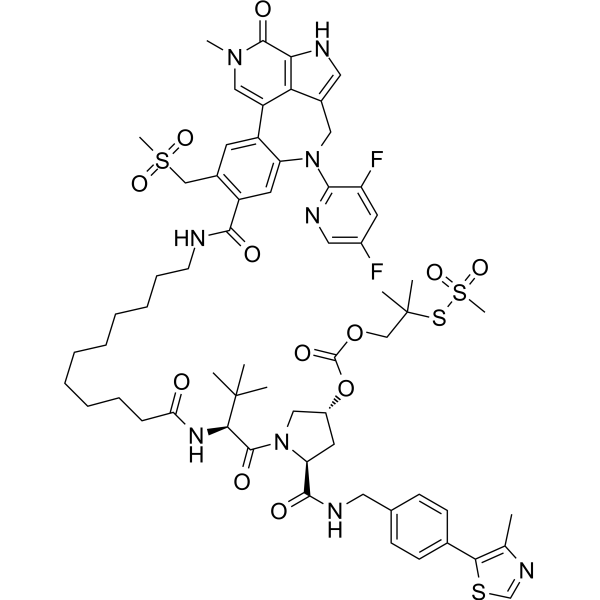
GNE-987 GSH linker-1, a PROTAC-linker Conjugate for PAC, comprises the chimeric BET degrader GNE-987 (HY-129937A) and disulfide-containing linker. GNE-987 GSH linker-1 remains inactive as a degrader until intracellular release of GNE-987 via disulfide reduction and linker self-immolation. GNE-987 GSH linker-1 can be used for the research of acute myeloid leukemia .
|
-
-
- HY-103634
-
dFKBP-1
1 Publications Verification
|
PROTACs
FKBP
|
Cancer
|
|
dFKBP-1 is a potent and PROTAC-based FKBP12 degrader. dFKBP-1 incorporates the ligand SLF (HY-114872) of FKBP12, the Thalidomide based Cereblon ligand and a linker .
|
-
-
- HY-111546
-
BI-3663
1 Publications Verification
|
PROTACs
FAK
|
Cancer
|
|
BI-3663 is a highly selective PTK2/FAK PROTAC (DC50=30 nM), with Cereblon ligands to hijack E3 ligases for PTK2 degradation. BI-3663 inhibits PTK2 with an IC50 of 18 nM. BI-3663 is a PROTAC that composes of BI-4464 (HY-124625) linked to Pomalidomide (HY-10984) with a linker . Anti-cancer activity .
|
-
-
- HY-162362
-
|
|
PROTACs
GLP Receptor
|
Cancer
|
|
MS8709 (compound 10), a potential anticancer therapeutic, is a first-in-class G9a/GLP PROTAC degrader. MS8709 is based on G9a/GLP inhibitor UNC0642 and recruits the von Hippel Lindau (VHL) E3 ligase (Red: G9a/GLP inhibitor UNC0642; Blue: VHL ligand; Black: linker) .
|
-
-
- HY-145162
-
|
|
PROTACs
SHP2
Phosphatase
|
Cancer
|
|
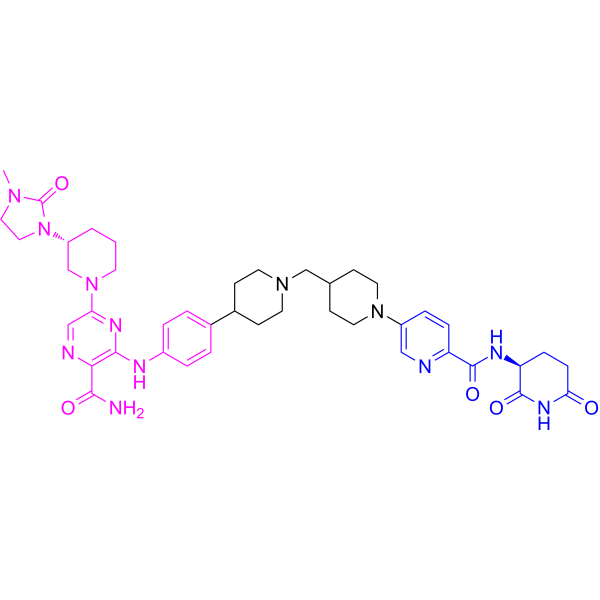
SHP2-D26 is a first, potent and effective SHP2 PROTAC degrader. SHP2-D26 induces SHP2 degradation requires binding to VHL-1 and SHP2 proteins. SHP2-D26 is also neddylation- and proteasome-dependent. SHP2-D26 can be used for the study of esophageal cancer and acute myeloid leukemia (Pink: SHP2 ligand (HY-176797); Blue: VHL ligand (HY-150803); Black: linker) .
|
-
-
- HY-137342
-
|
|
PROTACs
Src
IRAK
Bcr-Abl
MAP4K
Cyclin G-associated Kinase (GAK)
CDK
|
Cancer
|
|
SB1-G-187 is a multi-target kinase PROTAC degrader with activity against various kinases including GCK, YES1, IRAK1 and LYN. SB1-G-187 induces degradation of target kinases via a p97-dependent pathway, and forms ternary complexes with CRBN and specific functional kinases. SB1-G-187 can be used in tumor-related research. (Pink: multi-target kinase ligand (HY-125142); Blue: CRBN ligand (HY-A0003); Black: linker) .
|
-
-
- HY-108371
-
|
PROTAC Linker 1
|
PROTAC Linkers
|
Cancer
|
|
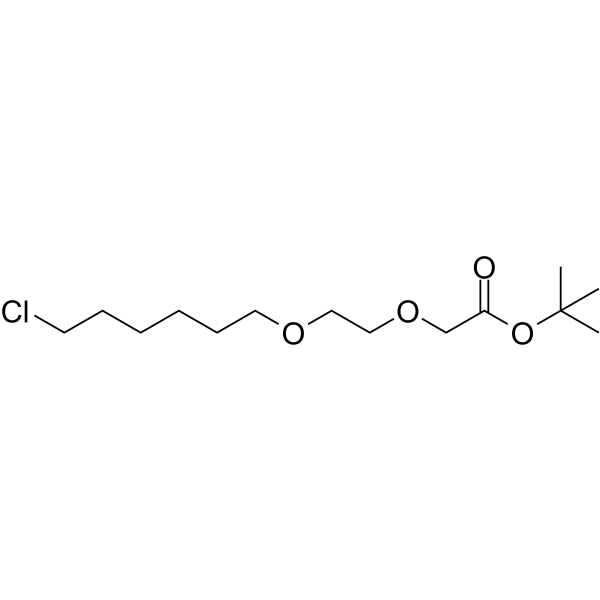
Boc-C1-PEG2-C4-Cl (PROTAC Linker 1) is a PEG-based PROTAC linker can be used in the synthesis of PROTACs .
|
-
-
- HY-147174
-
|
|
PROTACs
Epigenetic Reader Domain
|
Cancer
|
|
PROTAC_ERRα is a potent and selective ERRα PROTAC degrader (DC50: 100 nM in MCF-7 cells). PROTAC_ERRα induces proteasomal degradation and has capable of specifically degrading ERRα protein by >80%. Blue: VHL ligand (HY-125845), Pink: ERRα ligand (HY-U00425), black: linker .
|
-
-
- HY-162412
-
|
|
PROTACs
Adrenergic Receptor
Apoptosis
|
Cancer
|
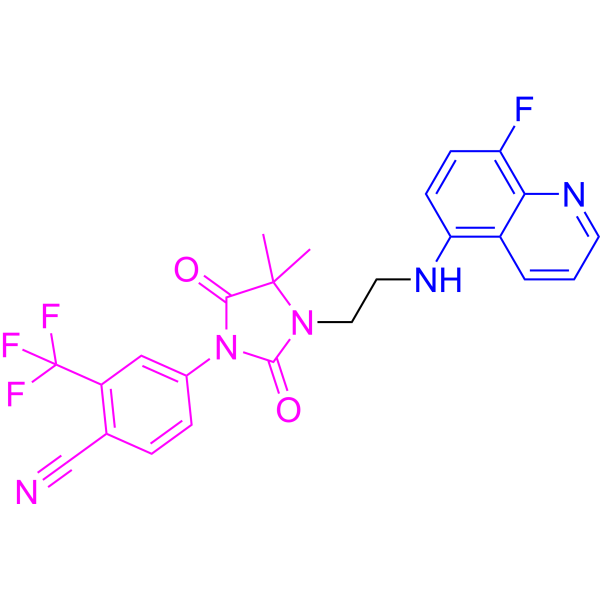
PROTAC AR/AR-V7 degrader-1 (27c) is a PROTAC-based and dual AR, AR-V7 degrader, with DC50 values of 2.67 and 2.64 μM for AR and AR-V7, respectively. PROTAC AR/AR-V7 degrader-1 (27c) induces apoptosis (Red: AR antagonist; Blue: E3 ligase ligand; Black: linker) .
|
-
-
- HY-161369
-
|
|
PROTACs
Histone Acetyltransferase
|
Cancer
|
|
CBPD-268 is a potent and orally active CBP/p300 PROTAC degrader with an DC50 value of ≤ 0.03 nM. CBPD-268 induces CBP/p300 degradation and inhibits cell growth. CBPD-268 shows antitumor activity. CBPD-268 has the potential for the research of AR-positive prostate cancer (Structure Note: Red, Androgen receptor degrader (HY-W248665A); Blue, CBP/p300 ligand (HY-161483); Black, Linker) .
|
-
-
- HY-145703
-
|
|
PROTACs
SHP2
|
Cancer
|
|
SHP2-D26 isomer-1 is an isoform of SHP2-D26 (HY-145162). SHP2-D26 isomer-1 cannot degrade SHP2 at 3-1000 nM. SHP2-D26 is a PROTAC SHP2 degrader. (Pink: SHP2 ligand (HY-176797); Blue: Isomer control of VHL Ligand 14 (HY-150803); Black: linker) .
|
-
-
- HY-161410
-
|
|
PROTACs
Apoptosis
Bcl-2 Family
|
Cancer
|
|
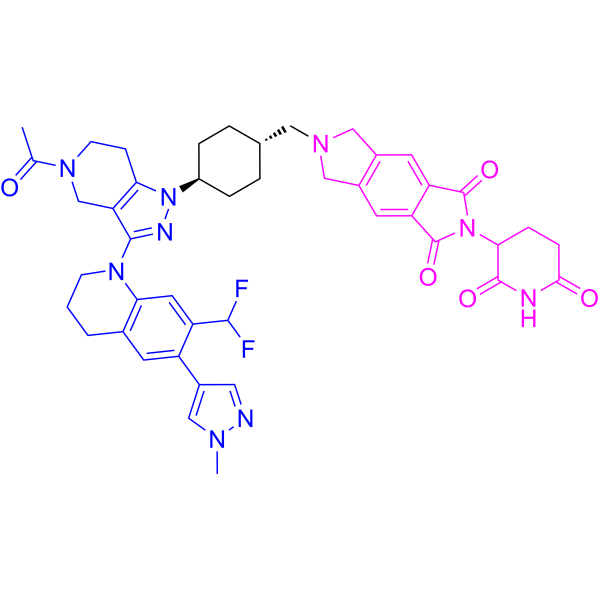
WH244 is a second generation BCL-2 and BCL-xL dual depressant (PROTAC). The primary activity of WH244 is the specific degradation of BCL-2 and BCL-xL proteins (BCL-xL: DC50=0.6 nM, BCL-2: DC50=7.4 nM). WH244 promotes their ubiquitination and subsequent proteasome degradation by targeting these proteins, thereby restoring the cell's apoptosis pathway. WH244 has good antitumor activity. (Pink: BCL-2/BCL-xL ligand (HY-161415); Blue: E3 ligase ligand (HY-112078); Black: linker) .
|
-
-
- HY-143883
-
|
|
PROTACs
Akt
|
Cancer
|
|
MS143 is a potent PROTAC AKT degrader (DC50=46 nM and GI50=0.8 μM in PC3 cells). MS143 induces rapid and robust AKT degradation in a concentration- and time-dependent manner via hijacking the ubiquitin-proteasome system. MS143 can suppress cancer cell growth (Pink: AKT ligand (HY-15431); Blue: E3 ligase ligand (HY-125845); Black: linker) .
|
-
-
- HY-153119
-
|
|
PROTACs
PIKfyve
|
Inflammation/Immunology
|
|
TMX-4153 is a selective PIP4K2C PROTAC degrader. TMX-4153 induces PIP4K2C degradation in MOLT4 cells (DC50 = 24 nM) and HAP1 cells (DC50 = 361 nM). TMX-4153 can be used for the study of biological functions of PIP4K2C (immune modulation)-related diseases. (Pink: BTK ligand (HY-177432), Blue: VHL Ligand (HY-112078), Black: Linker) .
|
-
-
- HY-75005
-
|
|
PROTAC Linkers
|
Cancer
|
|
1-Boc-4-carboxymethyl piperazine is a PROTAC linker. 1-Boc-4-carboxymethyl piperazine can be used in the synthesis of PROTACs (e.g. PROTAC IRAK4 degrader-12 (HY-168586)) .
|
-
-
- HY-158048
-
|
|
PROTACs
STING
|
Inflammation/Immunology
|
|
UNC9036 is a PROTAC-based STING degrader, with a DC50 of 227 nM. UNC9036-mediated STING degradation is proteasome and VHL dependent (Structure Note: Red, STING agonist diABZI (HY-112921A); Blue, VHL ligand VH032 (HY-120217); Black, linker) .
|
-
-
- HY-159147
-
|
|
PROTACs
ROS Kinase
Apoptosis
|
Cancer
|
|
SIAIS039 is an orally active c-ros oncogene 1 (ROS1)-specific PROTAC with DC50s of 154.46 nM, 126.47 nM, 143.69 nM for HCC78 cells, Ba/F3 expressing the CD74-ROS1 fusion and Ba/F3 expressing the SDC4-ROS1 fusion, respectively. SIAIS039 suppresses cell proliferation, induces cell cycle arrest and apoptosis, and inhibits clonogenicity against ROS1-positive cells. SIAIS039 demonstrates anti-tumour effects against ROS1-driven tumor growth vivo. SIAIS039 is composed of the ALK inhibitor Brigatinib (HY-12857), a linker EM-12 (HY-138793), and a VHL ligand E3 ubiquitin ligase 1-Butyne (Red: Brigatinib; Blue: VHL ligand; Black: linker) .
|
-
-
- HY-179166
-
|
|
PROTACs
Epoxide Hydrolase
|
Inflammation/Immunology
|
|
PROTAC sEH-degrader-4 is a highly efficient PROTAC degrader that targets soluble epoxide hydrolase (sEH) (pDC50 = 10.3). PROTAC sEH-degrader-4 can be used for research on inflammation-related diseases. Pink: sEH ligand (HY-179169); Blue: E3 ligase CRBN ligand (HY-179168); Black: Linker .
|
-
-
- HY-163440
-
|
|
PROTACs
NAMPT
|
Cancer
|
|
PROTAC NAMPT Degrader-1 is a potent PROTAC targeting NAMPT with aDC50 value of 217 nM. PROTAC NAMPT Degrader-1 has anti-proliferative activity with an IC50 value of 0.12μM against A2780 cells.
(Structure Note: PINK, NAMPT activator (HY-163445); Blue, VHL ligand (HY-163440); Black, linker) .
|
-
-
- HY-174445
-
|
|
PROTACs
Histone Methyltransferase
Apoptosis
|
Cancer
|
|
C199 is a PROTAC degrader targeting PRMT4 (DC50 = 106 nM). C199 shows high selectivity for PRMT4 over other protein arginile methyltransferases. C199 exhibits strong cell degradation ability. C199 induces apoptosis in MM cell lines. C199 efficiently clears PRMT4 protein via the VHL-proteasome pathway. C199 has a relatively long half-life and shows strong anti-multiple myeloma (MM) tumor activity (Pink: Target protein ligand (HY-111109); Blue: E3 ligase ligand (HY-112078), E3 ligase ligand + linker (HY-174474); black: Linker) .
|
-
-
- HY-177758
-
|
|
PROTACs
HDAC
|
Cancer
|
|
HDAC6 degrader-6 (Compound 11b) is a potent and selective HDAC6 PROTAC degrader with a DC50 of 1.9 nM. HDAC6 degrader-6 has no effect on the protein levels of other HDAC family members and does not degrade IKZF1, IKZF3, and GSPT1. HDAC6 degrader-6 can be used to study multiple myeloma (Pink: HDAC6 ligand (HY-177776); Blue: CRBN ligand (HY-W998281); Black: Linker) .
|
-
-
- HY-178777
-
|
|
PROTACs
BCL6
|
Cancer
|
|
BCL6-760 is an orally active BCL-6 PROTAC degrader with an EC50 of 0.8 nM. BCL6-760 only degrades BCL6 and has no effect on other CRBN substrates. BCL6-760 demonstrates significant efficacy in the orthotopic xenograft mouse model of OCI-LY-1 tumors. BCL6-760 can be used in the research of diffuse Large B-cell Lymphoma (DLBCL) (Pink: BCL-6 ligand (HY-179317); Blue: CRBN ligand (HY-179305); Black: Linker) .
|
-
-
- HY-178472
-
|
|
PROTACs
Aurora Kinase
|
Cancer
|
|
AurAP14 is an Aurora A PROTAC degrader (DC50 = 120 nM). AurAP14 shows significant inhibitory activity against various tumor cell lines, with IC50s of 0.294 μM in A549 cells and 0.534 μM in MCF-7 cells. AurAP14 induces apoptosis and arrests A549 cells in the S and G2/M phases. AurAP14 demonstrates anti-tumor efficacy in nude mouse xenograft models of A549 and A549/PTR. AurAP14can be used in the research on the treatment of Aurora A-overexpressing NSCLC. (Pink: Aurora A ligand (HY-10971), Blue: E3 ligase Ligand (HY-W437598), Black: Linker) .
|
-
-
- HY-108371R
-
|
PROTAC Linker 1 (Standard)
|
Reference Standards
PROTAC Linkers
|
Cancer
|
|
Boc-C1-PEG2-C4-Cl (Standard) is the analytical standard of Boc-C1-PEG2-C4-Cl (HY-108371). This product is intended for research and analytical applications. Boc-C1-PEG2-C4-Cl (PROTAC Linker 1) is a PEG-based PROTAC linker can be used in the synthesis of PROTACs .
|
-
-
- HY-W262798
-
|
PMP
|
PROTAC Linkers
|
Cancer
|
|
1-(Piperidin-4-ylmethyl)piperazine is a PROTAC linker. 1-(Piperidin-4-ylmethyl)piperazine can be used to design PROTAC, such as PROTAC EGFR degrader 13 (HY-158313) .
|
-
-
- HY-147052
-
|
|
PROTAC Linkers
|
Cancer
|
|
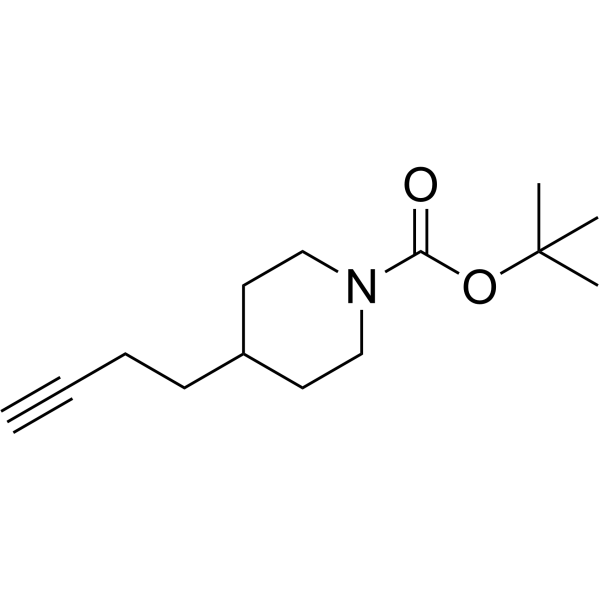
Boc-Pip-butyn is an Alkyl/ether-based PROTAC linker . Boc-Pip-butyn is a click chemistry reagent, itcontains an Alkyne group and can undergo copper-catalyzed azide-alkyne cycloaddition (CuAAc) with molecules containing Azide groups.
|
-
-
- HY-175867
-
|
|
PROTACs
Epigenetic Reader Domain
|
Cancer
|
|
PROTAC SMARCA2 degrader-34 (compound 52) is a selective SMARCA2 PROTAC degrader (DC50 in HeLa cell: < 0.1 μM for SMARCA2, > 1 μM for SMARCA4). PROTAC SMARCA2 degrader-34 can be used for study of cancer. (Pink: SMARCA2 ligand (HY-178414) ; Blue: E3 ligand (HY-168055) ; Black: linker) .
|
-
-
- HY-170828
-
|
|
PROTACs
SWI/SNF Complex
|
Others
|
|
SMD-1087 is a PROTAC that selectively targets SMARCA2 (DC50=8 nM, Dmax=89%) and SMARCA4 with a DC50 of 1 μM. SMD-1087 consists of the E3 ligase ligand (S,R,S)-AHPC-Me (blue part) (HY-112078), the target protein ligand SMI-1074 (red part) (HY-170817), and the PROTAC linker (1r,4r)-tert-Butyl 4-(bromomethyl)cyclohexanecarboxylate (black part) (HY-W890392). Among them, its target protein ligand + Linker part corresponds to SMARCA2 Ligand-Linker Conjugate-1 (HY-170829) .
|
-
-
- HY-178964
-
|
|
PROTACs
RET
|
Cancer
|
|
PROTAC RET Degrader 1 (Compound 20) is an orally active and blood-brain barrier-crossing RET PROTAC degrader with DC50 values for RET (WT), RET (G810S), RET (G810C), and RET (G810R) of 1.7, 3, 12, and 21 nM, respectively. PROTAC RET Degrader 1 exhibits potent anti-proliferative activity in cancer cell lines carrying oncogenic RET fusions (such as KIF5B-RET, CCDC6-RET) or mutations (such as RET (C634W)). PROTAC RET Degrader 1 shows significant anti-tumor activity in human tumor xenograft (PDX) mouse models. PROTAC RET Degrader 1 can be used for the study of RET-positive cancers Pink: RET ligand (HY-179308); Blue: CRBN ligand (HY-179307); Black: Linker) .
|
-
-
- HY-175459
-
|
|
PROTACs
FAK
|
Inflammation/Immunology
Cancer
|
|
PROTAC FAK degrader 3 is a selective FAK PROTAC degrader (DC50 = 1.08 nM). PROTAC FAK degrader 3 induces FAK degradation dependent on the ubiquitin-proteasome system and its binding to FAK and CRBN. PROTAC FAK degrader 3 upregulates MHC-I gene transcription and tumor cell surface expression by inhibiting the non-catalytic activity of FAK, leading to increased antigen presentation and activation of cytotoxic CD8 T cells. PROTAC FAK degrader 3 enhances in vivo anti-tumor activity by promoting MHC-I expression and enhancing T cell activation. PROTAC FAK degrader 3 can be used in cancer research targeting FAK degradation in ovarian cancer, hepatocellular carcinoma, and other cancers. (Pink: FAK-IN-3:HY-143407, Blue: Thalidomide-4-OH:HY-103596, Blue + Black: FAK ligand-3: HY-W939883, Black: Linker) .
|
-
-
- HY-153321A
-
|
(R,R)-NX-5948; (R,R)-BTK-IN-24
|
Drug Isomer
PROTACs
Btk
|
Inflammation/Immunology
Cancer
|
|
(R,R)-Bexobrutideg is the (R,R)-enantiomer of Bexobrutideg (HY-153321). Bexobrutideg (NX-5948) is an orally active PROTAC that induces specific BTK protein degradation via a cereblon E3 ligase (CRBN) complex without degrading other cereblon neo substrates. Bexobrutideg mediates potent anti-inflammatory activity through BTK degradation, thereby inhibiting B cell activation. Bexobrutideg exhibits potent tumor growth inhibition in TMD8 xenograft models containing wild-type BTK or BTKi resistance mutations. Bexobrutideg is effective in a mouse model of collagen-induced arthritis (CIA). Bexobrutideg can cross the blood-brain barrier. NX-5948 consists of a target protein ligand, a linker, and a VHL E3 ubiquitin ligase (Red: BTK ligand (HY-170324); Blue: CRBN ligand (HY-171893); Black: linker) .
|
-
-
- HY-169372
-
|
|
E3 Ligase Ligand-Linker Conjugates
|
Cancer
|
|
(S,R,S)-AHPC-CO-C4-bromine is an E3 Ligase Ligand-linker Conjugate for PROTAC synthesis. (S,R,S)-AHPC-CO-C4-bromine is composed of an E3 Ligase Ligand (HY-125845) and a linker
|
-
-
- HY-158383
-
|
|
E3 Ligase Ligand-Linker Conjugates
|
Cancer
|
|
Pomalidomide-CO-C3-PEG4-C6-NH2 is an E3 ligase ligand-linker conjugate part of PROTAC PIPIB degrader 1 (HY-158381). Pomalidomide consists of the E3 ligase ligand Pomalidomide (HY-10984) and a linker .
|
-
-
- HY-173372
-
|
|
Androgen Receptor
PROTACs
|
Cancer
|
|
PROTAC AR Degrader-10 (GT19) is a protein degrader targeting the androgen receptor (AR) with a DC50 value ≤100 nM. PROTAC AR Degrader-10 can be used for prostate cancer study. (Structure Note: Pink: target protein ligand (HY-173373); Blue: E3 ligase ligand (HY-138793); Black: linker) .
|
-
-
- HY-162791
-
|
|
PROTAC Linkers
|
Cancer
|
|
(1s,4s)-C1-Piperidine-C1-cyclohexane-C1 is a PROTAC linker. (1s,4s)-C1-Piperidine-C1-cyclohexane-C1 can be used to synthesize PROTAC SMARCA2/4-degrader-33 (HY-162741) .
|
-
-
- HY-163229
-
|
|
E3 Ligase Ligand-Linker Conjugates
Autophagy
Apoptosis
|
Cancer
|
|
(1r,4r)-Thalidomide-piperidine-N(Me)-CH-cyclohexane-NH-Boc is a conjugate of E3 ligase ligand and linker, consisting of Thalidomide (HY-14658) and the corresponding Linker. (1r,4r)-Thalidomide-piperidine-N(Me)-CH-cyclohexane-NH-Boc can serve as a Cereblon ligand to recruit CRBN protein and serve as a key intermediate for the synthesis of complete PROTAC molecules.
|
-
-
- HY-163230
-
|
|
E3 Ligase Ligand-Linker Conjugates
Autophagy
Apoptosis
|
Cancer
|
|
(1R,5S)-Thalidomide-3,8-diazabicyclo[3.2.1]octane-Boc is a conjugate of E3 ligase ligand and linker, consisting of Thalidomide (HY-14658) and the corresponding Linker. (1R,5S)-Thalidomide-3,8-diazabicyclo[3.2.1]octane-Boc can serve as a Cereblon ligand to recruit CRBN protein and serve as a key intermediate for the synthesis of complete PROTAC molecules.
|
-
-
- HY-163226
-
|
|
E3 Ligase Ligand-Linker Conjugates
Autophagy
Apoptosis
|
Cancer
|
|
(1R,5S)-Thalidomide-3,8-diazabicyclo[3.2.1]octane-(1R,4r)-cyclohexane-NH-Boc is a conjugate of E3 ligase ligand and linker, consisting of Thalidomide (HY-14658) and the corresponding Linker. (1R,5S)-Thalidomide-3,8-diazabicyclo[3.2.1]octane-(1R,4r)-cyclohexane-NH-Boc can serve as Cereblon ligand to recruit CRBN protein and serve as a key intermediate for the synthesis of complete PROTAC molecules.
|
-
-
- HY-163227
-
|
|
E3 Ligase Ligand-Linker Conjugates
Autophagy
Apoptosis
|
Cancer
|
|
(1R,4R)-Thalidomide-2,5-diazabicyclo[2.2.1]heptane-(1R,4r)-cyclohexane-NH-Boc is a conjugate of E3 ligase ligand and linker, consisting of Thalidomide (HY-14658) and the corresponding Linker. (1R,4R)-Thalidomide-2,5-diazabicyclo[2.2.1]heptane-(1R,4r)-cyclohexane-NH-Boc can serve as a Cereblon ligand to recruit CRBN protein and serve as a key intermediate for the synthesis of complete PROTAC molecules.
|
-
-
- HY-101838R
-
|
|
Reference Standards
PROTACs
Epigenetic Reader Domain
|
Cancer
|
|
dBET1 (Standard) is the analytical standard of dBET1 (HY-101838). This product is intended for research and analytical applications. dBET1 is a PROTAC connected by ligands for Cereblon and BRD4 with an EC50 of 430 nM. dBET1 is a PROTAC that composes of (+)-JQ1 (HY-13030) linked to NSC 527179 (HY-14658) with a linker .
|
-
-
- HY-179732
-
|
|
PROTACs
Anaplastic lymphoma kinase (ALK)
IGF-1R
ERK
STAT
|
Cancer
|
|
PROTAC ALK degrader-4 (Compound B8) is an ALK PROTAC degrader with a DC50 of 445.25 nM. PROTAC ALK degrader-4 exhibits excellent anti-proliferative activity against NCI-H2228 and NCI-H3122. PROTAC ALK degrader-4 leads to a significant downregulation of 390 proteins, including IGF-1R and its downstream proteins such as ERK1/2 and STAT3. PROTAC ALK degrader-4 can be used for research on lung adenocarcinoma. (Pink: ALK ligand (HY-15656); Blue: CRBN ligand (HY-179733); Black: linker) .
|
-
| Cat. No. |
Product Name |
|
Classification |
-
- HY-130435
-
|
|
|
DBCO
PROTAC Synthesis
ADC Synthesis
|
|
DBCO-PEG4-amine is a PEG-based PROTAC linker can be used in the synthesis of PROTACs. DBCO-PEG4-amine is a cleavable ADC linker used in the synthesis of antibody-drug conjugates (ADCs). DBCO-PEG4-amine can be used in the synthesis of FPM-PEG4-DBCO (a homobifunctional azide-to-azide cross-linker) . DBCO-PEG4-amine is a click chemistry reagent, it contains a DBCO group that can undergo strain-promoted alkyne-azide cycloaddition (SPAAC) with molecules containing Azide groups.
|
-
- HY-137342
-
|
|
|
PROTAC Synthesis
|
|
SB1-G-187 is a multi-target kinase PROTAC degrader with activity against various kinases including GCK, YES1, IRAK1 and LYN. SB1-G-187 induces degradation of target kinases via a p97-dependent pathway, and forms ternary complexes with CRBN and specific functional kinases. SB1-G-187 can be used in tumor-related research. (Pink: multi-target kinase ligand (HY-125142); Blue: CRBN ligand (HY-A0003); Black: linker) .
|
-
- HY-159147
-
|
|
|
Azide
|
|
SIAIS039 is an orally active c-ros oncogene 1 (ROS1)-specific PROTAC with DC50s of 154.46 nM, 126.47 nM, 143.69 nM for HCC78 cells, Ba/F3 expressing the CD74-ROS1 fusion and Ba/F3 expressing the SDC4-ROS1 fusion, respectively. SIAIS039 suppresses cell proliferation, induces cell cycle arrest and apoptosis, and inhibits clonogenicity against ROS1-positive cells. SIAIS039 demonstrates anti-tumour effects against ROS1-driven tumor growth vivo. SIAIS039 is composed of the ALK inhibitor Brigatinib (HY-12857), a linker EM-12 (HY-138793), and a VHL ligand E3 ubiquitin ligase 1-Butyne (Red: Brigatinib; Blue: VHL ligand; Black: linker) .
|
-
- HY-147052
-
|
|
|
PROTAC Synthesis
Alkynes
|
|
Boc-Pip-butyn is an Alkyl/ether-based PROTAC linker . Boc-Pip-butyn is a click chemistry reagent, itcontains an Alkyne group and can undergo copper-catalyzed azide-alkyne cycloaddition (CuAAc) with molecules containing Azide groups.
|
Your information is safe with us. * Required Fields.
Inquiry Information
- Product Name:
- Cat. No.:
- Quantity:
- MCE Japan Authorized Agent:

