Search Result
Results for "
anti-apoptotic agent
" in MedChemExpress (MCE) Product Catalog:
3
Biochemical Assay Reagents
| Cat. No. |
Product Name |
Target |
Research Areas |
Chemical Structure |
-
- HY-N0321
-
|
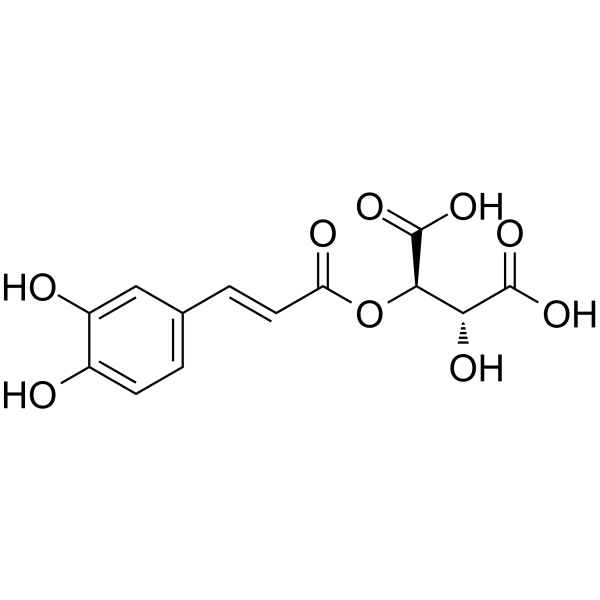
trans-Caftaric acid
|
Others
|
Cardiovascular Disease
Neurological Disease
Inflammation/Immunology
|
|
Caftaric acid (trans-Caftaric acid) is a polyphenolic antidiuretic, antioxidant and anti-apoptotic agent that can be hydrolyzed by intestinal microbial esterases. Caftaric acid exerts its antioxidant and potential anti-inflammatory effects mainly through intestinal microbial metabolism. Caftaric acid can reduce renal damage, restore electrolyte balance, renal function indicators and antioxidant enzyme activities in a rat albinism model, and further exert anti-oxidative stress and anti-inflammatory activities .
|
-
-
- HY-P2804
-
|
GADPH; G3PDH; Glyceraldehyde phosphate dehydrogenase
|
Endogenous Metabolite
|
Others
|
|
Glyceraldehyde phosphate dehydrogenase (EC 1.2.1.12) is the target of anti-thymocyte and anti-apoptotic agents. Glyceraldehyde phosphate dehydrogenase catalyzes the chain oxidation of reduced nicotinamide adenine dinucleotide by perhydroxyl radicals .
|
-

-
- HY-112624K
-
|
Dextran 5; Dextran D5; Dextran T5(MW 4500-5500)
|
Apoptosis
Autophagy
|
Others
|
|
Dextran T5 (MW 5,000) is a sulfated polysaccharide anti-apoptotic and autophagic agent. Dextran T5 (MW 5,000) has sulfated groups and interacts with cell membranes by mimicking endogenous glycosaminoglycans, inhibiting the mitochondrial apoptotic pathway and delaying DNA fragmentation to exert anti-apoptotic activity. Dextran T5 (MW 5,000) also promotes the conversion of LC3-I to LC3-II and the formation of autophagosomes to activate the autophagic pathway. Dextran T5 (MW 5,000) can prolong the survival cycle of CHO cells and increase the production of recombinant erythropoietin (EPO). The Dextran series of compounds are also natural polysaccharide drug carriers that can be connected to drugs through covalent bonding methods such as ester bonds, amide bonds or click chemistry, or self-assembled to form carriers such as nanoparticles and hydrogels. Dextran is biodegradable and biocompatible, and can achieve targeted delivery and controlled release of drugs. Dextran derivatives can prolong drug half-life, increase local concentration and reduce immune clearance activity. The Dextran series of compounds are also natural polysaccharide drug carriers that can be connected to drugs through covalent bonding methods such as ester bonds, amide bonds or click chemistry, or self-assembled to form carriers such as nanoparticles and hydrogels. Dextran is biodegradable and biocompatible, and can achieve targeted delivery and controlled release of drugs. Dextran derivatives can prolong the half-life of drugs, increase local concentrations, and reduce the activity of immune clearance .
|
-

-
- HY-N6005
-
|
|
Bacterial
Fungal
Apoptosis
Bcl-2 Family
|
Infection
Metabolic Disease
Cancer
|
|
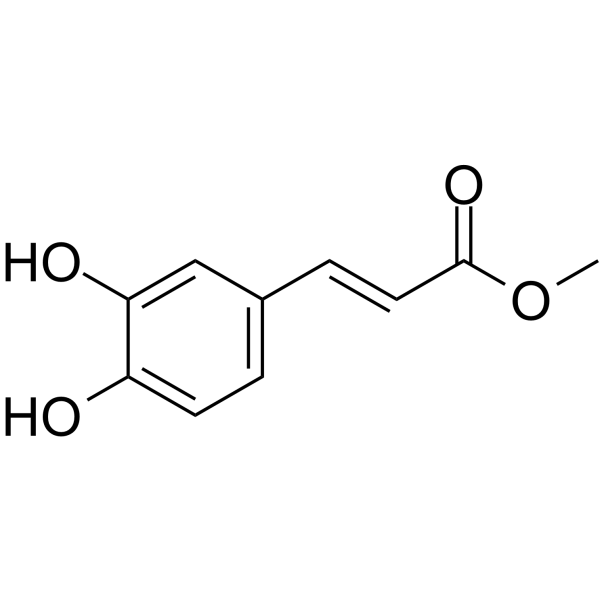
Methyl caffeate is a phenylpropanoid, antibacterial agent, and Apoptosis-inducing agent. Methyl caffeate can be isolated from the flowers of peach Prunus persica (L.). Methyl caffeate upregulates the expression of pro-apoptotic proteins Bid, Bax and p53, and downregulates the expression of anti-apoptotic protein BCL-2. Methyl caffeate downregulates SASP factors. Methyl caffeate enhances glucose-stimulated insulin secretion. Methyl caffeate inhibits the growth of Gram-positive bacteria, Gram-negative bacteria, fungi, and Mycobacterium tuberculosis strains. Methyl caffeate can be used in studies related to breast cancer, type 2 diabetes, and tuberculosis .
|
-
-
- HY-W075770
-
|
Nickel monoxide
|
Environmental Pollutants
Apoptosis
Reactive Oxygen Species (ROS)
Caspase
TGF-beta/Smad
p38 MAPK
Akt
PI3K
|
Infection
Metabolic Disease
Cancer
|
|
Nickel(II) oxide (nickel monoxide) is a chemical warfare agent that can enter the body through the respiratory tract and other routes, distributing to organs such as the lungs and testes. The nanoparticle form of nickel(II) oxide (NiO NPs) exhibits antibacterial, anti-leishmanial, anti-diabetic, and anti-cancer activities. NiO NPs can be activated by ultraviolet and visible light, generating reactive oxygen species (ROS). Nickel(II) oxide induces oxidative stress by generating reactive oxygen species, activating the TGF-β1-mediated MAPK and PI3K/AKT pathways, disrupting the MMPs/TIMPs balance, and upregulating the expression of inflammatory factors (IL-1β, IL-6) and apoptosis-related molecules (Bax, caspase-3, p53), while inhibiting the activity of the anti-apoptotic molecule Bcl-2. Nickel(II) oxide induces cytotoxicity, promotes fibrosis, triggers inflammatory responses, and causes apoptosis. Nickel(II) oxide can be applied in research on the safety assessment of nanomaterials, such as in the context of pulmonary fibrosis and reproductive system toxicity .
|
-

-
- HY-N12378
-
|
|
NF-κB
Toll-like Receptor (TLR)
PKA
Epigenetic Reader Domain
Keap1-Nrf2
Sirtuin
AMPK
Caspase
FASTK
ERK
ROCK
Apoptosis
|
Metabolic Disease
Inflammation/Immunology
Cancer
|
|
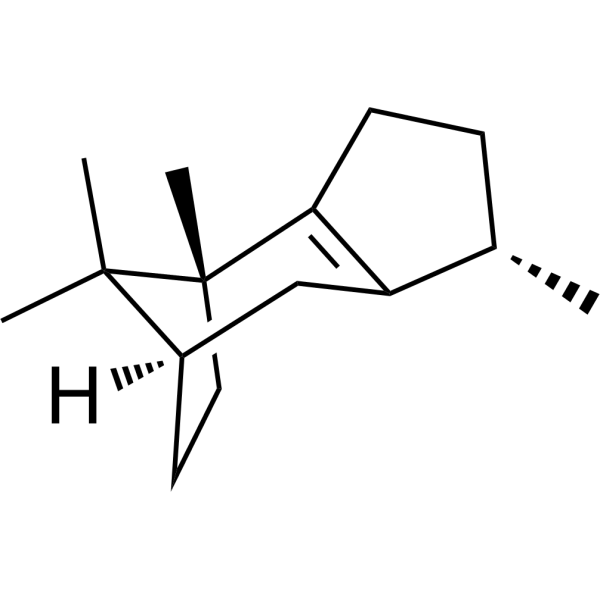
β-Patchoulene is an orally active anti-inflammatory, antioxidant, and anti-apoptotic agent. β-Patchoulene inhibits the NF-κB, TLR4, and cAMP/PKA/CREB signaling pathways; activates the Sirt1/Nrf2 and AMPK signaling pathways; and targets Fas/FasL, Caspase-3, ERK1/2, ROCK1/MLC2 for inhibition. β-Patchoulene regulates cytokine secretion, inflammatory cell infiltration, lipid peroxidation, cell polarization, gut microbiota, and lipid metabolism, restores barrier function, mitochondrial function, and cell viability, and exhibits repellent activity against Spodoptera exigua larvae. β-Patchoulene can be used in research related to various inflammatory, ischemic, fibrosis-associated diseases, as well as hepatocellular carcinoma .
|
-
-
- HY-161705
-
|
|
Apoptosis
|
Neurological Disease
|
|
Anti-apoptotic agent 1 (Compound B4) exhibits neuroprotective activity and good pharmacokinetic properties. Anti-apoptotic agent 1 inhibits apoptosis, prevents stroke recurrence in photothrombotic rat model .
|
-

-
- HY-Y0396
-
|
|
Biochemical Assay Reagents
Survivin
Bcl-2 Family
Caspase
Apoptosis
mTOR
Akt
|
Cancer
|
|
N-Hydroxyphthalimide is a blocking agent and catalyst. N-Hydroxyphthalimide promotes oxidation reactions by generating PINO free radicals and activating hydrogen atom transfer processes. N-Hydroxyphthalimide reduces the expression of anti-apoptotic proteins Survivin and Bcl-xL and activates caspase 9 and caspase 3. N-Hydroxyphthalimide induces Apoptosis. N-Hydroxyphthalimide inhibits the phosphorylation of mTOR (Ser2448, Ser2481) and Akt (Ser473). N-Hydroxyphthalimide has anticancer effects against breast and colon cancer .
|
-

-
- HY-30063
-
|
Beta-Tetralone
|
Apoptosis
MDM-2/p53
Bcl-2 Family
|
Cancer
|
|
2-Tetralone (Beta-Tetralone) is a pro-apoptosis agent. 2-Tetralone targets MDM2 E3 ubiquitin kinase and Bcl-w anti-apoptotic protein and exhibits anticancer activity .
|
-

-
- HY-18203
-
|
|
Apoptosis
Akt
mTOR
|
Cancer
|
|
HBF-0079 is a selective anti-hepatocellular carcinoma agent. HBF-0079 induces cell cycle arrest and Apoptosis. HBF-0079 modulates cell-growth and anti-apoptotic signaling through AKT and mTOR. HBF-0079 exhibits antitumor activity against hepatocellular carcinoma .
|
-

-
- HY-172551
-
|
|
Apoptosis
Cadherin
MMP
Bcl-2 Family
|
Cancer
|
|
anti-TNBC agent-9 (Compound 3as) is an anti-cancer agent for triple-negative breast cancer (TNBC). anti-TNBC agent-9 exhibits significant inhibitory activity against MDA-MB-453 cells with an IC50 value of 8.5 μM. anti-TNBC agent-9 inhibits tumor cell migration by upregulating E-cadherin and downregulating N-cadherin, matrix metalloproteinase 2 (MMP2), and MMP9. anti-TNBC agent-9 induces apoptosis by increasing the expression of the pro-apoptotic protein BAX and decreasing the expression of the anti-apoptotic protein BCL-2, thereby inhibiting tumor cell proliferation .
|
-

-
- HY-162137
-
|
|
Apoptosis
|
Inflammation/Immunology
|
|
Hepatoprotective agent-1 (compound 1b) is a hepatoprotective agenrt. Hepatoprotective agent-1 shows anti-inflammatory, antiapoptotic and antifibrotic effects .
|
-
-
- HY-Y0396R
-
|
|
Biochemical Assay Reagents
Reference Standards
Survivin
Bcl-2 Family
Caspase
Apoptosis
mTOR
Akt
|
Others
|
|
N-Hydroxyphthalimide (Standard) is the analytical standard of N-Hydroxyphthalimide (HY-Y0396). This product is intended for research and analytical applications. N-Hydroxyphthalimide is a blocking agent and catalyst. N-Hydroxyphthalimide promotes oxidation reactions by generating PINO free radicals and activating hydrogen atom transfer processes. N-Hydroxyphthalimide reduces the expression of anti-apoptotic proteins Survivin and Bcl-xL and activates caspase 9 and caspase 3. N-Hydroxyphthalimide induces Apoptosis. N-Hydroxyphthalimide inhibits the phosphorylation of mTOR (Ser2448, Ser2481) and Akt (Ser473). N-Hydroxyphthalimide has anticancer effects against breast and colon cancer .
|
-

-
- HY-123715
-
|
|
Apoptosis
|
Cancer
|
|
Anticancer agent 255 is a monocarbonylated curcumin-1,2,3-oxazole conjugate with significant anticancer activity. The IC50 values of Anticancer agent 255 in prostate cancer cells PC-3 and DU-145 are 8.8μM and 9.5μM respectively. The IC50 values of Anticancer agent 255 against breast cancer cells MCF-7, MDA-MB-231 and 4T1 are 6μM, 10μM and 6.4μM, showing good anti-cancer activity Effect. Anticancer agent 255 can induce mitochondria-mediated apoptosis in cancer cells and prevent cell cycle progression. Anticancer agent 255 down-regulated the cell proliferation marker PCNA and inhibited the activation of cell survival proteins. Anticancer agent 255 up-regulated the pro-apoptotic protein Bax and down-regulated the anti-apoptotic protein Bcl-2 .
|
-

-
- HY-W027126
-
|
|
Apoptosis
|
Metabolic Disease
|
|
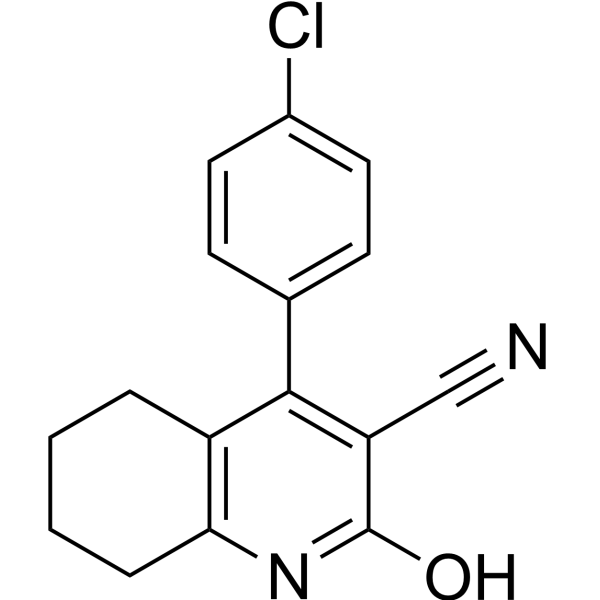
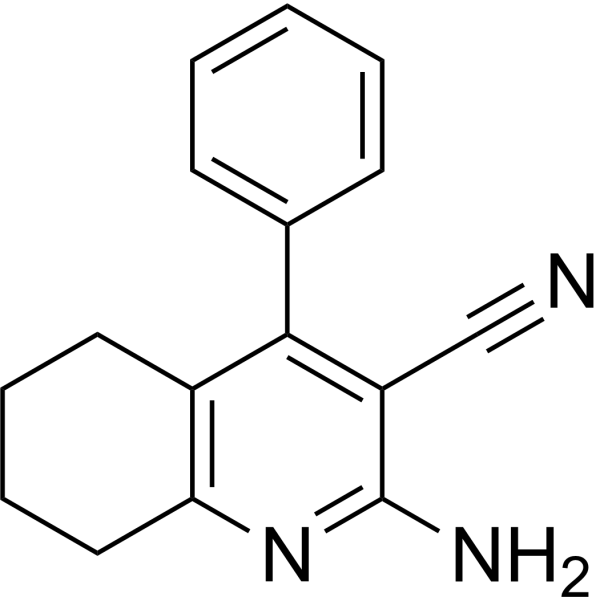
Hepatoprotective agent-2 (compound 2a), a 4-phenyl-tetrahydroquinoline derivative, displays a remarkable hepatoprotective effect. Hepatoprotective agent-2 has antiapoptotic activity. Hepatoprotective agent-2 notably prevents the chemically induced elevation of hepatic indicators associated with liver injury .
|
-
-
- HY-179052
-
|
|
Apoptosis
Autophagy
Bcl-2 Family
Caspase
Atg8/LC3
Atg7
CDK
Reactive Oxygen Species (ROS)
|
Cancer
|
|
Apoptosis inducer 50 (Compound 5e) is an apoptosis inducer as well as an autophagy inducer agent. Apoptosis inducer 50 exhibits potent and selective anti-cancer activity against triple-negative breast cancer cells and metastatic colon cancer cells. Apoptosis inducer 50 upregulates the expression of pro-apoptotic proteins (Bax, Bim, cleaved Caspase-9) and downregulates the expression of the anti-apoptotic protein (BCL-XL). Apoptosis inducer 50 upregulates key autophagy markers such as Beclin-1 and ATG5, and enhances the conversion of LC3-I to LC3-II., Apoptosis inducer 50 arrests cancer cells in the G1/S phase by upregulating the expression of p21 and p27 while downregulating Cyclin D1. Apoptosis inducer 50 increases the level of ROS .
|
-

-
- HY-N19425
-
|
|
Apoptosis
|
Metabolic Disease
|
|
Pulsatilloside A is an anti-Apoptotic agent. Pulsatilloside A can be isolated from the roots of P. chinensis. Pulsatilloside A exerts a protective effect against apoptosis induced by sodium cyanide and glucose deprivation .
|
-

-
- HY-169412
-
|
|
MDM-2/p53
CDK
Caspase
Bcl-2 Family
Reactive Oxygen Species (ROS)
p38 MAPK
ERK
JNK
|
Cancer
|
|
MAPK-IN-3 (Compound 4a) is an anti-proliferative agent that shows particularly strong inhibitory effects on KYSE 30, HCT 116, and HGC 27, with IC50 values of 0.57 μM, 3.27 μM, and 2.28 μM, respectively. MAPK-IN-3 blocks the cell cycle via a p53-dependent mechanism and induces cell apoptosis through a p53-independent mechanism. MAPK-IN-3 downregulates the expression of cell cycle-related proteins like Cyclin D1 and cyclin B1, upregulates pro-apoptotic proteins such as cleaved PARP, cleaved caspase-7, and cleaved caspase-9, and reduces the expression of anti-apoptotic proteins like Bcl-2. Additionally, MAPK-IN-3 increases the intracellular level of ROS in KYSE 30 cells and upregulates the expression of members of the MAPK signaling pathway associated with ROS, such as p-ERK, p-p38 and p-JNK .
|
-

-
- HY-170787
-
|
|
EGFR
Apoptosis
Bcl-2 Family
Caspase
|
Cancer
|
|
TZEP7 is an EGFR kinase inhibitior in cancer cells. TZEP7 exhibits cytotoxic effects against cancer cell lines and induces apoptosis. TZEP7 demonstrates downregulation of antiapoptotic Bcl-2, upregulation of pro-apoptotic Bax, and increases caspase levels. TZEP7 is promising for research of anticancer agent .
|
-

-
- HY-182586
-
|
|
Fungal
Bcl-2 Family
|
Infection
|
|
Decyl gallate is an antifungal (fungal) agent. Decyl gallate downregulates the expression of the pro-apoptotic (apoptosis) protein Bak, upregulates the expression of the anti-apoptotic protein Bcl-2, and inhibits DNA damage. Decyl gallate disrupts ALG12-mediated N-glycosylation, overactivates the UPR pathway, and simultaneously reduces fungal cell wall enzyme activity, chitin levels, mitochondrial activity, budding ability, cell viability, and host cell adhesion capacity. Decyl gallate reduces inflammatory responses induced by fungal infection and disrupts fungal membrane structure. Decyl gallate can be used in studies related to paracoccidioidomycosis and invasive fungal infections .
|
-

-
- HY-N12378A
-
|
|
AMPK
FASTK
Sirtuin
ROCK
Keap1-Nrf2
Toll-like Receptor (TLR)
Apoptosis
PKA
ERK
NF-κB
Epigenetic Reader Domain
Caspase
|
Metabolic Disease
Inflammation/Immunology
Cancer
|
|
α-Patchoulene is an orally active anti-inflammatory, antioxidant, and anti-apoptotic agent. α-Patchoulene inhibits the NF-κB, TLR4, and cAMP/PKA/CREB signaling pathways; activates the Sirt1/Nrf2 and AMPK signaling pathways; and targets Fas/FasL, Caspase-3, ERK1/2, ROCK1/MLC2 for inhibition. α-Patchoulene regulates cytokine secretion, inflammatory cell infiltration, lipid peroxidation, cell polarization, gut microbiota, and lipid metabolism, restores barrier function, mitochondrial function, and cell viability, and exhibits repellent activity against Spodoptera exigua larvae. α-Patchoulene can be used in research related to various inflammatory, ischemic, fibrosis-associated diseases, as well as hepatocellular carcinoma .
|
-

-
- HY-N17388
-
|
|
Others
|
Cardiovascular Disease
Inflammation/Immunology
|
|
5,7,5′-Trihydroxy-3′,4′-dimethoxyflavonol-3-O-α-L-rhamnopyranosyl-(1→6)-β-D-glucopyranoside is a flavonol glycoside found in the leaves of Ginkgo biloba. 5,7,5′-Trihydroxy-3′,4′-dimethoxyflavonol-3-O-α-L-rhamnopyranosyl-(1→6)-β-D-glucopyranoside exerts antioxidative and cardioprotective effects. 5,7,5′-Trihydroxy-3′,4′-dimethoxyflavonol-3-O-α-L-rhamnopyranosyl-(1→6)-β-D-glucopyranoside can be used for the research of inflammation and cardiac injury .
|
-

| Cat. No. |
Product Name |
Type |
-
- HY-112624K
-
|
Dextran 5; Dextran D5; Dextran T5(MW 4500-5500)
|
Biochemical Assay Reagents
|
|
Dextran T5 (MW 5,000) is a sulfated polysaccharide anti-apoptotic and autophagic agent. Dextran T5 (MW 5,000) has sulfated groups and interacts with cell membranes by mimicking endogenous glycosaminoglycans, inhibiting the mitochondrial apoptotic pathway and delaying DNA fragmentation to exert anti-apoptotic activity. Dextran T5 (MW 5,000) also promotes the conversion of LC3-I to LC3-II and the formation of autophagosomes to activate the autophagic pathway. Dextran T5 (MW 5,000) can prolong the survival cycle of CHO cells and increase the production of recombinant erythropoietin (EPO). The Dextran series of compounds are also natural polysaccharide drug carriers that can be connected to drugs through covalent bonding methods such as ester bonds, amide bonds or click chemistry, or self-assembled to form carriers such as nanoparticles and hydrogels. Dextran is biodegradable and biocompatible, and can achieve targeted delivery and controlled release of drugs. Dextran derivatives can prolong drug half-life, increase local concentration and reduce immune clearance activity. The Dextran series of compounds are also natural polysaccharide drug carriers that can be connected to drugs through covalent bonding methods such as ester bonds, amide bonds or click chemistry, or self-assembled to form carriers such as nanoparticles and hydrogels. Dextran is biodegradable and biocompatible, and can achieve targeted delivery and controlled release of drugs. Dextran derivatives can prolong the half-life of drugs, increase local concentrations, and reduce the activity of immune clearance .
|
-
- HY-Y0396
-
|
|
Biochemical Assay Reagents
|
|
N-Hydroxyphthalimide is a blocking agent and catalyst. N-Hydroxyphthalimide promotes oxidation reactions by generating PINO free radicals and activating hydrogen atom transfer processes. N-Hydroxyphthalimide reduces the expression of anti-apoptotic proteins Survivin and Bcl-xL and activates caspase 9 and caspase 3. N-Hydroxyphthalimide induces Apoptosis. N-Hydroxyphthalimide inhibits the phosphorylation of mTOR (Ser2448, Ser2481) and Akt (Ser473). N-Hydroxyphthalimide has anticancer effects against breast and colon cancer .
|
-
- HY-Y0396R
-
|
|
Biochemical Assay Reagents
|
|
N-Hydroxyphthalimide (Standard) is the analytical standard of N-Hydroxyphthalimide (HY-Y0396). This product is intended for research and analytical applications. N-Hydroxyphthalimide is a blocking agent and catalyst. N-Hydroxyphthalimide promotes oxidation reactions by generating PINO free radicals and activating hydrogen atom transfer processes. N-Hydroxyphthalimide reduces the expression of anti-apoptotic proteins Survivin and Bcl-xL and activates caspase 9 and caspase 3. N-Hydroxyphthalimide induces Apoptosis. N-Hydroxyphthalimide inhibits the phosphorylation of mTOR (Ser2448, Ser2481) and Akt (Ser473). N-Hydroxyphthalimide has anticancer effects against breast and colon cancer .
|
| Cat. No. |
Product Name |
Category |
Target |
Chemical Structure |
-
- HY-N0321
-
-
-
- HY-N6005
-
-
-
- HY-N12378
-
|
|
Other Terpenoids
Structural Classification
Entada phaseoloides (L.) Merr.
Terpenoids
Labiatae
Plants
Source Classification
|
NF-κB
Toll-like Receptor (TLR)
PKA
Epigenetic Reader Domain
Keap1-Nrf2
Sirtuin
AMPK
Caspase
FASTK
ERK
ROCK
Apoptosis
|
|
β-Patchoulene is an orally active anti-inflammatory, antioxidant, and anti-apoptotic agent. β-Patchoulene inhibits the NF-κB, TLR4, and cAMP/PKA/CREB signaling pathways; activates the Sirt1/Nrf2 and AMPK signaling pathways; and targets Fas/FasL, Caspase-3, ERK1/2, ROCK1/MLC2 for inhibition. β-Patchoulene regulates cytokine secretion, inflammatory cell infiltration, lipid peroxidation, cell polarization, gut microbiota, and lipid metabolism, restores barrier function, mitochondrial function, and cell viability, and exhibits repellent activity against Spodoptera exigua larvae. β-Patchoulene can be used in research related to various inflammatory, ischemic, fibrosis-associated diseases, as well as hepatocellular carcinoma .
|
-
-
- HY-N19425
-
-
-
- HY-N12378A
-
|
|
Structural Classification
Entada phaseoloides (L.) Merr.
Terpenoids
Labiatae
Sesquiterpenes
Plants
Source Classification
|
AMPK
FASTK
Sirtuin
ROCK
Keap1-Nrf2
Toll-like Receptor (TLR)
Apoptosis
PKA
ERK
NF-κB
Epigenetic Reader Domain
Caspase
|
|
α-Patchoulene is an orally active anti-inflammatory, antioxidant, and anti-apoptotic agent. α-Patchoulene inhibits the NF-κB, TLR4, and cAMP/PKA/CREB signaling pathways; activates the Sirt1/Nrf2 and AMPK signaling pathways; and targets Fas/FasL, Caspase-3, ERK1/2, ROCK1/MLC2 for inhibition. α-Patchoulene regulates cytokine secretion, inflammatory cell infiltration, lipid peroxidation, cell polarization, gut microbiota, and lipid metabolism, restores barrier function, mitochondrial function, and cell viability, and exhibits repellent activity against Spodoptera exigua larvae. α-Patchoulene can be used in research related to various inflammatory, ischemic, fibrosis-associated diseases, as well as hepatocellular carcinoma .
|
-
-
- HY-N17388
-
|
|
Structural Classification
Flavonols
Flavonoids
Ginkgoaceae
Plants
Ginkgo biloba
Source Classification
|
Others
|
|
5,7,5′-Trihydroxy-3′,4′-dimethoxyflavonol-3-O-α-L-rhamnopyranosyl-(1→6)-β-D-glucopyranoside is a flavonol glycoside found in the leaves of Ginkgo biloba. 5,7,5′-Trihydroxy-3′,4′-dimethoxyflavonol-3-O-α-L-rhamnopyranosyl-(1→6)-β-D-glucopyranoside exerts antioxidative and cardioprotective effects. 5,7,5′-Trihydroxy-3′,4′-dimethoxyflavonol-3-O-α-L-rhamnopyranosyl-(1→6)-β-D-glucopyranoside can be used for the research of inflammation and cardiac injury .
|
-
Your information is safe with us. * Required Fields.
Inquiry Information
- Product Name:
- Cat. No.:
- Quantity:
- MCE Japan Authorized Agent:








