



Atg7
Atg7 is a core autophagy-related protein with E1-like enzyme activity, responsible for activating and transferring Atg8 (LC3/GABARAP) family proteins to facilitate autophagosome formation. In addition to its role in classical autophagy, Atg7 is involved in immune regulation (such as LC3-associated phagocytosis, LAP), cell cycle control, apoptosis, and non-conventional protein secretion. It plays a crucial role in maintaining organelle homeostasis, removing damaged cellular components, and responding to cellular stress.
Loss of Atg7 can lead to neurodegenerative diseases such as Alzheimer’s disease, Parkinson’s disease, and amyotrophic lateral sclerosis. Moreover, Atg7 can both suppress tumor development and enhance tumor cell survival under extreme conditions. Atg7 also plays a significant role in infection defense and metabolic homeostasis, with its deficiency potentially increasing the risk of infections and being associated with metabolic diseases such as type 2 diabetes and fatty liver disease. Therefore, Atg7 is a potential research target for multiple diseases[1].
All Product Categories
-
Atg7 Related Products (17)
Related Products (17)

- 1
-
Xylitol
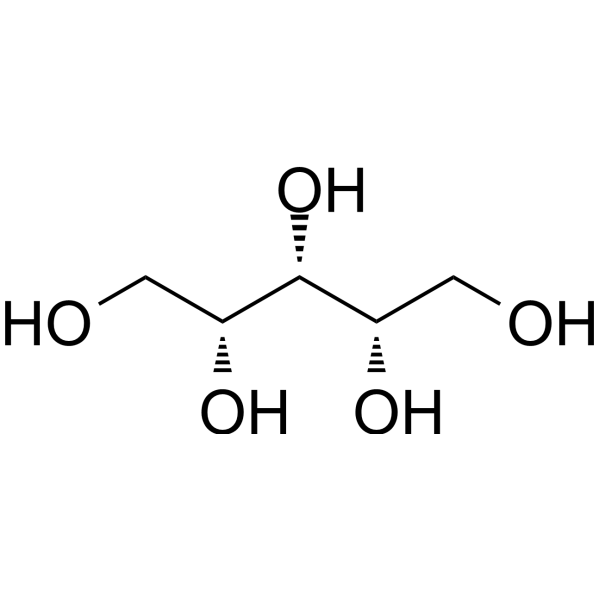 0 ImagesXylitol can be classified as a polyol and sugar alcohol, exhibiting inhibitory activity on cancer cell proliferation. It induces autophagy (Autophagy) and cell death in A549 cells by activating the autophagy signaling pathway, as evidenced by the increased expression of LC3-II and Atg5-Atg12 upon Xylitol treatment. Additionally, Xylitol inhibits acetaldehyde production by Candida species, thereby reducing their carcinogenic potential. In vivo, Xylitol induces alterations in the gut microbiota of mice, which may enhance cholesterol accumulation and upregulate hepatic ChREBP, while also slowing tumor growth in the B16F10 melanoma C57BL/6 mouse model.
-
N-Desmethyl clomipramine hydrochloride
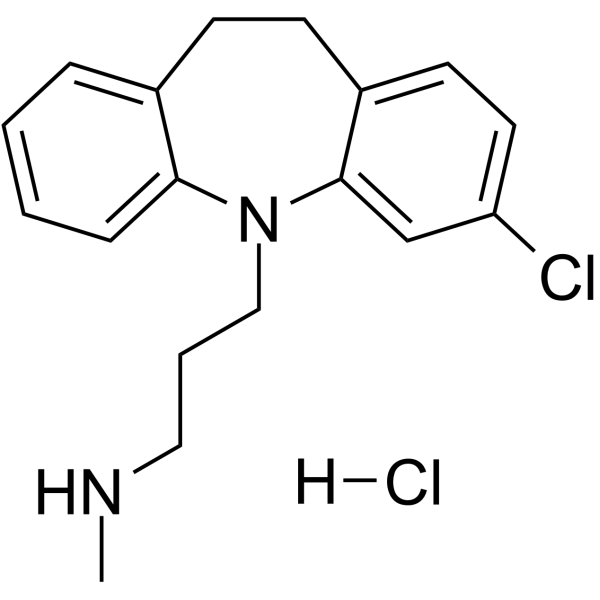 0 ImagesSynonyms: Desmethylclomipramine hydrochloride; Norclomipramine hydrochlorideN-Desmethyl clomipramine hydrochloride (Desmethylclomipramine hydrochloride; Norclomipramine hydrochloride) is the orally active major active metabolite of the tricyclic antidepressant Clomipramine (HY-B0457A), possessing multiple activities including anti-inflammatory, antioxidant, antibacterial, and antiparasitic effects. N-Desmethyl clomipramine hydrochloride blocks autophagosome-lysosome fusion, leading to the accumulation of LC3-II, p62, ATG7, WIPI2, and ATG5-12, reactivates the p53/p21 pathway, induces apoptosis through C-PARP and C-CAS3, and inhibits the proliferation, migration, and invasion of renal cancer cells. N-Desmethyl clomipramine hydrochloride inhibits LdTOPIA, inducing R-loop accumulation in the nucleus of Leishmania, ultimately causing parasite death. N-Desmethyl clomipramine hydrochloride can be used for research on depression, metastatic renal cell carcinoma, and leishmaniasis.
-
N-Desmethyl clomipramine-d3 hydrochloride
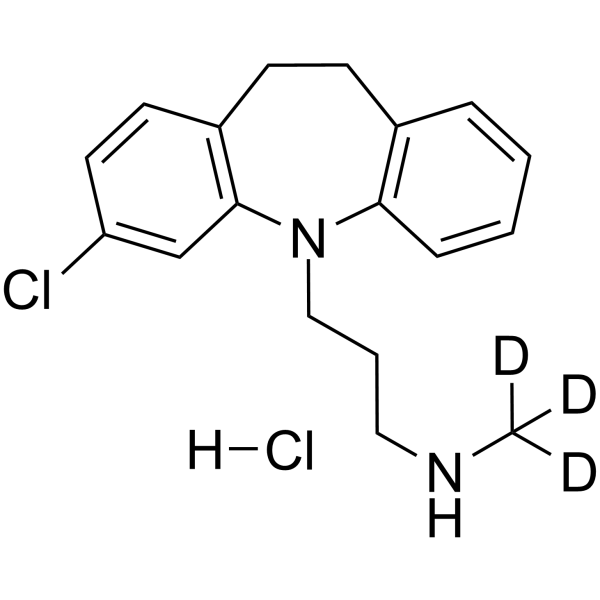 0 ImagesSynonyms: Desmethylclomipramine-d3 hydrochloride;Norclomipramine-d3 hydrochlorideN-Desmethyl clomipramine-d3 hydrochloride (Desmethylclomipramine-d3 hydrochloride; Norclomipramine-d3 hydrochloride) is the deuterated-labeled N-Desmethyl clomipramine hydrochloride (HY-12388A). N-Desmethyl clomipramine hydrochloride is the orally active major active metabolite of the tricyclic antidepressant Clomipramine (HY-B0457A), possessing multiple activities including anti-inflammatory, antioxidant, antibacterial, and antiparasitic effects. N-Desmethyl clomipramine hydrochloride blocks autophagosome-lysosome fusion, leading to the accumulation of LC3-II, p62, ATG7, WIPI2, and ATG5-12, reactivates the p53/p21 pathway, induces apoptosis through C-PARP and C-CAS3, and inhibits the proliferation, migration, and invasion of renal cancer cells. N-Desmethyl clomipramine hydrochloride inhibits LdTOPIA, inducing R-loop accumulation in the nucleus of Leishmania, ultimately causing parasite death. N-Desmethyl clomipramine hydrochloride can be used for research on depression, metastatic renal cell carcinoma, and leishmaniasis.
-
N-Desmethyl clomipramine hydrochloride (Standard)
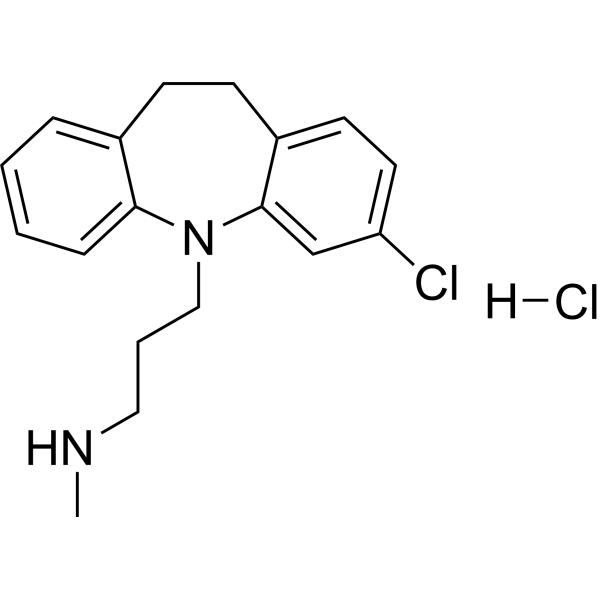 0 ImagesSynonyms: Desmethylclomipramine hydrochloride (Standard); Norclomipramine hydrochloride (Standard)N-Desmethyl clomipramine hydrochloride (Standard) (Desmethylclomipramine hydrochloride (Standard); Norclomipramine hydrochloride (Standard)) is the analytical standard of N-Desmethyl clomipramine hydrochloride (HY-12388A). This product is intended for research and analytical applications. N-Desmethyl clomipramine hydrochloride is the orally active major active metabolite of the tricyclic antidepressant Clomipramine (HY-B0457A), possessing multiple activities including anti-inflammatory, antioxidant, antibacterial, and antiparasitic effects. N-Desmethyl clomipramine hydrochloride blocks autophagosome-lysosome fusion, leading to the accumulation of LC3-II, p62, ATG7, WIPI2, and ATG5-12, reactivates the p53/p21 pathway, induces apoptosis through C-PARP and C-CAS3, and inhibits the proliferation, migration, and invasion of renal cancer cells. N-Desmethyl clomipramine hydrochloride inhibits LdTOPIA, inducing R-loop accumulation in the nucleus of Leishmania, ultimately causing parasite death. N-Desmethyl clomipramine hydrochloride can be used for research on depression, metastatic renal cell carcinoma, and leishmaniasis.
-
UE01
 0 ImagesUE01 is an orally active, selective small-molecule modulator targeting both ULK1/ERK1/2. UE01 activates hULK1 with an EC50 of 695.30 nM and a KD of 114.3 nM for ULK1; it inhibits hERK1 with an IC50 of 179.90 nM and a KD of 114 nM for ERK1; it shows weak binding to ERK2 with a KD of 2.8 mM. UE01 induces the conformational transition of ULK1 from an inactive to an active state, enhances the phosphorylation of ULK1 Ser317 and mAtg13 Ser355, and reduces the phosphorylation of ULK1 Ser757. UE01 competitively occupies the ATP-binding pocket of ERK1, inhibits ERK1 kinase activity, and reduces the activity of the ERK1/2 signaling pathway. UE01 induces complete autophagy flux and apoptosis, upregulates Atg5, Atg7, LC3-II/LC3-I, Bax, cytochrome C (Cyt c), Cleaved-Caspase 3, Cleaved-PARP1 and E-cadherin, downregulates p62, Bcl-2, MMP-2 and MMP-9, reduces the phosphorylation of Exo70 Ser250, and promotes the proteasome-dependent degradation of Cav-1, thereby inhibiting EMT-related phenotypes and extracellular matrix degradation. UE01 can be used in studies related to triple-negative breast cancer.
-
Antitumor agent-82
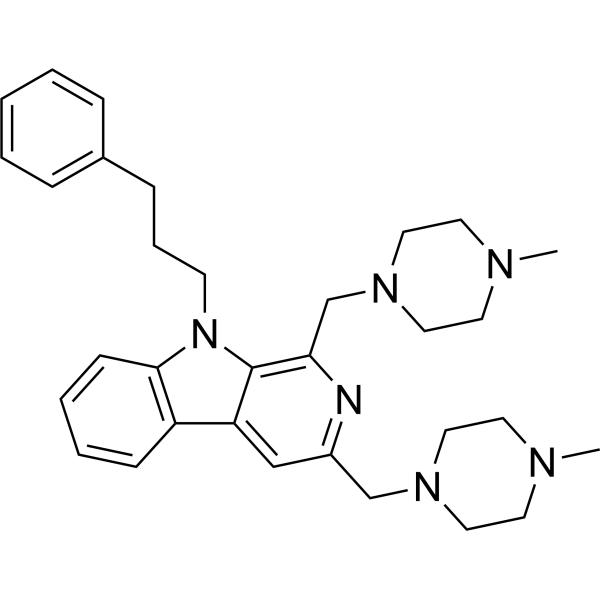 0 ImagesCat. No.: HY-151914CAS No.: 3037605-45-8Antitumor agent-82 (compound 6g) is a potent anti-tumor agent. Antitumor agent-82 shows anti-proliferative activity. Antitumor agent-82 induces cell Autophagy by the ATG5/ATG7 signaling pathway.
-
Xylitol-13C5
 0 ImagesCat. No.: HY-W768347Synonyms: Xylite-13C5Xylitol-13C5 (Xylite-13C5) is the 13C-labeled Xylitol (HY-N0538). Xylitol can be classified as a polyol and sugar alcohol, exhibiting inhibitory activity on cancer cell proliferation. It induces autophagy (Autophagy) and cell death in A549 cells by activating the autophagy signaling pathway, as evidenced by the increased expression of LC3-II and Atg5-Atg12 upon Xylitol treatment. Additionally, Xylitol inhibits acetaldehyde production by Candida species, thereby reducing their carcinogenic potential. In vivo, Xylitol induces alterations in the gut microbiota of mice, which may enhance cholesterol accumulation and upregulate hepatic ChREBP, while also slowing tumor growth in the B16F10 melanoma C57BL/6 mouse model.
-
N-Desmethyl clomipramine
 0 ImagesN-Desmethyl clomipramine (Desmethylclomipramine; Norclomipramine) is the orally active major active metabolite of the tricyclic antidepressant Clomipramine (HY-B0457A), possessing multiple activities including anti-inflammatory, antioxidant, antibacterial, and antiparasitic effects. N-Desmethyl clomipramine blocks autophagosome-lysosome fusion, leading to the accumulation of LC3-II, p62, ATG7, WIPI2, and ATG5-12, reactivates the p53/p21 pathway, induces apoptosis through C-PARP and C-CAS3, and inhibits the proliferation, migration, and invasion of renal cancer cells. N-Desmethyl clomipramine inhibits LdTOPIA, inducing R-loop accumulation in the nucleus of Leishmania, ultimately causing parasite death. N-Desmethyl clomipramine can be used for research on depression, metastatic renal cell carcinoma, and leishmaniasis.
-
Antitumor agent-192
 0 ImagesCat. No.: HY-170594CAS No.: 3105301-97-8Antitumor agent-192 (Compound 2f) is a β-carboline antitumor agent. Antitumor agent-192 induces autophagy in HCT116 cells via the ATG5/ATG7 pathway. Antitumor agent-192 has an IC50 of less than 5 μM for human tumor cell lines and significantly inhibits tumor development and reduces tumor weight in a mouse colorectal cancer model transplanted with allografts[1].
-
Apoptosis inducer 50
 0 ImagesCat. No.: HY-179052Apoptosis inducer 50 (Compound 5e) is an apoptosis inducer as well as an autophagy inducer agent. Apoptosis inducer 50 exhibits potent and selective anti-cancer activity against triple-negative breast cancer cells and metastatic colon cancer cells. Apoptosis inducer 50 upregulates the expression of pro-apoptotic proteins (Bax, Bim, cleaved Caspase-9) and downregulates the expression of the anti-apoptotic protein (BCL-XL). Apoptosis inducer 50 upregulates key autophagy markers such as Beclin-1 and ATG5, and enhances the conversion of LC3-I to LC3-II., Apoptosis inducer 50 arrests cancer cells in the G1/S phase by upregulating the expression of p21 and p27 while downregulating Cyclin D1. Apoptosis inducer 50 increases the level of ROS.
-
Antitumor agent-199
 0 ImagesCat. No.: HY-173133CAS No.: 3063469-69-9
-
Bufothionine
 0 ImagesBufothionine is an alkaloid. Bufothionine can be isolated from Cinobufacini. Bufothionine induces mitochondria-mediated Apoptosis. Bufothionine significantly reduces serum IL-6 concentration, suppresses p-Stat3tyr705, p-Stat3ser727 and Jak2 expressions. Bufothionine upregulates Atg5, Atg7 and LC3Ⅱ expressions. Bufothionine induces Autophagy. Bufothionine suppresses PIM3 expression. Bufothionine relieves symptoms of H22-tumor-bearing mice and exerts anti-inflammation activity. Bufothionine exerts anti-cancer activities against gastric cancer.
-
N-Desmethyl clomipramine-d7
 0 ImagesCat. No.: HY-12388SSynonyms: Desmethylclomipramine-d7; Norclomipramine-d7N-Desmethyl clomipramine-d7 (Desmethylclomipramine-d7; Norclomipramine-d7) is the deuterated-labeled N-Desmethyl clomipramine (HY-12388). N-Desmethyl clomipramine is the orally active major active metabolite of the tricyclic antidepressant Clomipramine (HY-B0457A), possessing multiple activities including anti-inflammatory, antioxidant, antibacterial, and antiparasitic effects. N-Desmethyl clomipramine blocks autophagosome-lysosome fusion, leading to the accumulation of LC3-II, p62, ATG7, WIPI2, and ATG5-12, reactivates the p53/p21 pathway, induces apoptosis through C-PARP and C-CAS3, and inhibits the proliferation, migration, and invasion of renal cancer cells. N-Desmethyl clomipramine inhibits LdTOPIA, inducing R-loop accumulation in the nucleus of Leishmania, ultimately causing parasite death. N-Desmethyl clomipramine can be used for research on depression, metastatic renal cell carcinoma, and leishmaniasis.
-
N-Desmethyl clomipramine-d6
 0 ImagesCat. No.: HY-12388S1Synonyms: Desmethylclomipramine-d6; Norclomipramine-d6N-Desmethyl clomipramine-d6 (Desmethylclomipramine-d6; Norclomipramine-d6) is the deuterated-labeled N-Desmethyl clomipramine (HY-12388). N-Desmethyl clomipramine (Desmethylclomipramine; Norclomipramine) is the orally active major active metabolite of the tricyclic antidepressant Clomipramine (HY-B0457A), possessing multiple activities including anti-inflammatory, antioxidant, antibacterial, and antiparasitic effects. N-Desmethyl clomipramine blocks autophagosome-lysosome fusion, leading to the accumulation of LC3-II, p62, ATG7, WIPI2, and ATG5-12, reactivates the p53/p21 pathway, induces apoptosis through C-PARP and C-CAS3, and inhibits the proliferation, migration, and invasion of renal cancer cells. N-Desmethyl clomipramine inhibits LdTOPIA, inducing R-loop accumulation in the nucleus of Leishmania, ultimately causing parasite death. N-Desmethyl clomipramine can be used for research on depression, metastatic renal cell carcinoma, and leishmaniasis.
- 1



