



FASTK
Fas activated serine/threonine kinase
FASTK/FASTKD family is mainly located in mitochondria and consists of RNA-binding proteins (including FASTK, FASTKD1-5), which finely regulate the processing, stability and translation of mitochondrial-encoded mRNA/rRNA, maintaining oxidative phosphorylation (OXPHOS) and cellular energy metabolism homeostasis; inhibition/knockdown will lead to specific mitochondrial RNA degradation, respiratory chain complex defects, ROS accumulation and energy crisis, while activation will maintain mitochondrial function. This family targets mitochondrial mRNA such as ND6 and COX3, as well as 16S rRNA, and mainly participates in mitochondrial RNA metabolism and the Fas apoptosis pathway.
Its abnormal expression is associated with mitochondrial diseases such as Leigh syndrome, hypertrophic cardiomyopathy, as well as tumors like lung cancer and pancreatic cancer (energy metabolism reprogramming); currently, it is mainly used in the research of disease biomarkers or metabolic intervention targets. Popular directions include the specific functional roles of members, RNA binding mechanisms, the role of tumor metabolism and immunity, as well as the development of targeted regulators such as PROTAC.
Its abnormal expression is associated with mitochondrial diseases such as Leigh syndrome, hypertrophic cardiomyopathy, as well as tumors like lung cancer and pancreatic cancer (energy metabolism reprogramming); currently, it is mainly used in the research of disease biomarkers or metabolic intervention targets. Popular directions include the specific functional roles of members, RNA binding mechanisms, the role of tumor metabolism and immunity, as well as the development of targeted regulators such as PROTAC.
All Product Categories
-
FASTK Related Products (3)
Related Products (3)

-
Casuarinin
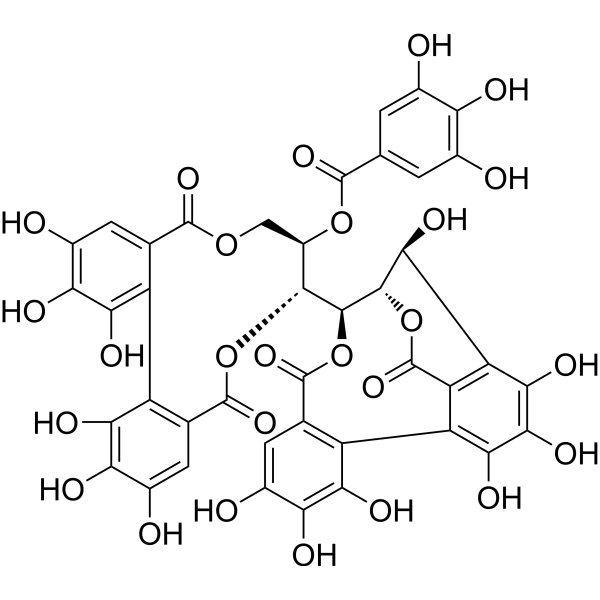 0 ImagesCasuarinin is an orally active antiproliferative, anti-inflammatory, antifungal, virucidal and gastroprotective agent. Casuarinin upregulates the expression of p21/WAF1, Fas/APO‑1, mFasL, sFasL and HSP‑70, arrests cell cycle, induces apoptosis and inhibits cancer cell proliferation. Casuarinin inhibits TNF‑α-induced phosphorylation of MAPK and activation of NF‑κB, downregulates the expression of iNOS, NF‑κB, COX‑2 and ICAM‑1, and reduces the production of proinflammatory mediators. Casuarinin attenuates ethanol-induced activation of caspase‑3 and elevation of TNF‑α, inhibits the growth of Candida albicans, and inhibits HSV‑2. Casuarinin can be used in research related to mammary adenocarcinoma, inflammatory skin diseases, gastric ulcers, candidiasis and herpes simplex virus infections.
-
β-Patchoulene
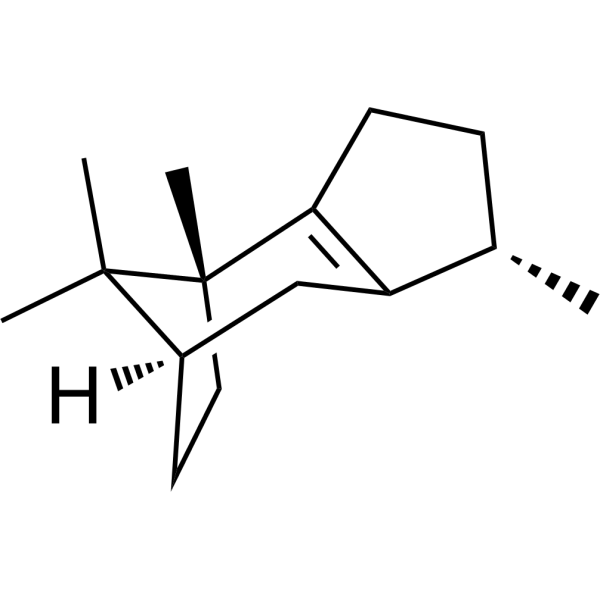 0 Imagesβ-Patchoulene is an orally active anti-inflammatory, antioxidant, and anti-apoptotic agent. β-Patchoulene inhibits the NF-κB, TLR4, and cAMP/PKA/CREB signaling pathways; activates the Sirt1/Nrf2 and AMPK signaling pathways; and targets Fas/FasL, Caspase-3, ERK1/2, ROCK1/MLC2 for inhibition. β-Patchoulene regulates cytokine secretion, inflammatory cell infiltration, lipid peroxidation, cell polarization, gut microbiota, and lipid metabolism, restores barrier function, mitochondrial function, and cell viability, and exhibits repellent activity against Spodoptera exigua larvae. β-Patchoulene can be used in research related to various inflammatory, ischemic, fibrosis-associated diseases, as well as hepatocellular carcinoma.
-
FASTK Human Pre-designed siRNA Set A
 0 ImagesCat. No.: HY-RS04756
FASTK Human Pre-designed siRNA Set A contains three designed siRNAs for FASTK gene (Human), as well as a negative control, a positive control, and a FAM-labeled negative control.



