



Caftaric acid
Based on 2 publication(s) in Google Scholar
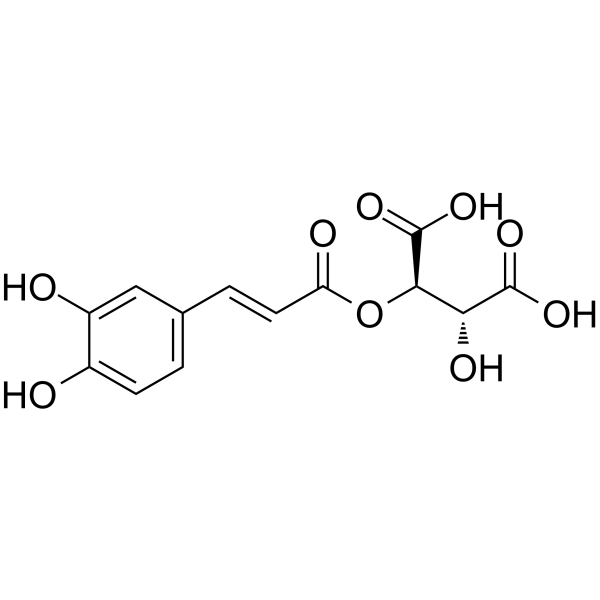
Caftaric acid (trans-Caftaric acid) is a polyphenolic antidiuretic, antioxidant and anti-apoptotic agent that can be hydrolyzed by intestinal microbial esterases. Caftaric acid exerts its antioxidant and potential anti-inflammatory effects mainly through intestinal microbial metabolism. Caftaric acid can reduce renal damage, restore electrolyte balance, renal function indicators and antioxidant enzyme activities in a rat albinism model, and further exert anti-oxidative stress and anti-inflammatory activities.
For research use only. We do not sell to patients.
- Purity : 99.96%
- CAS No.: 67879-58-7
- Formula: C13H12O9
- Molecular Weight:312.23
-
Storage:Powder -20°C, 3 years , 4°C, 2 years ; In solvent -80°C, 6 months , -20°C, 1 month

To place orders, for customer services and technical support, please contact: MedChemExpress USA
Tel: 609-228-6898 E-mail: [email protected] [email protected]


-
 Biological Activity
-
Chemical Information
-
Solvent & Solubility
- Protocols
- Purity & Documentation
- References
-
 Help & FAQs


-
HY-N0457
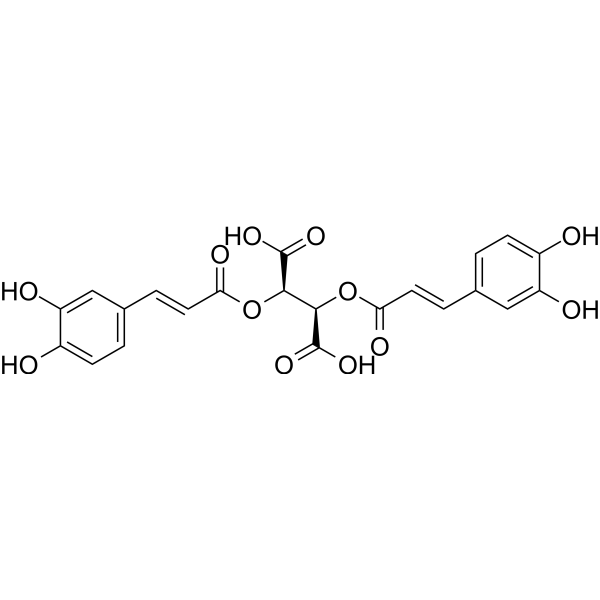
Chicoric acidROS Inducer -
HY-13930
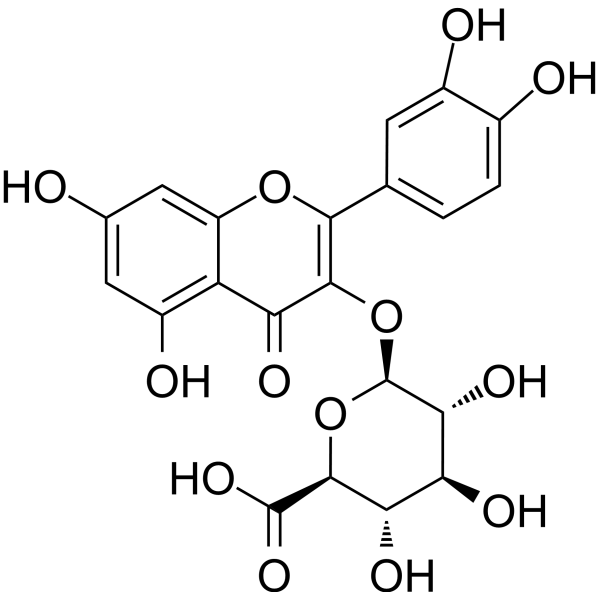
MiquelianinCBR1 Inhibitor -
HY-N0351
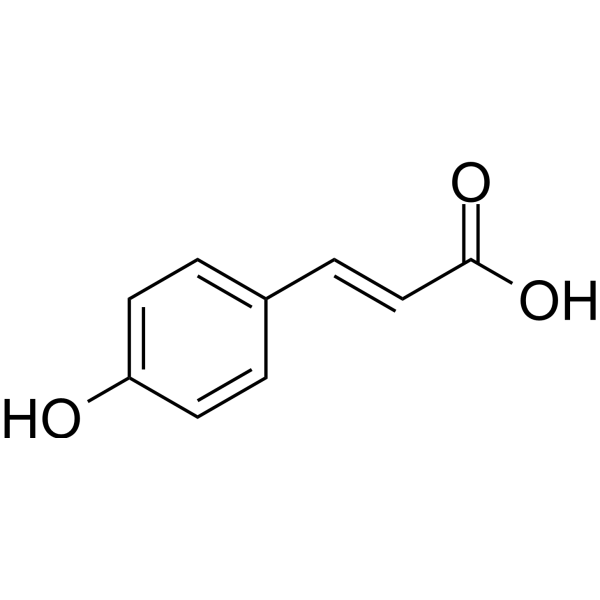
p-Coumaric acidAntibacterial agent -
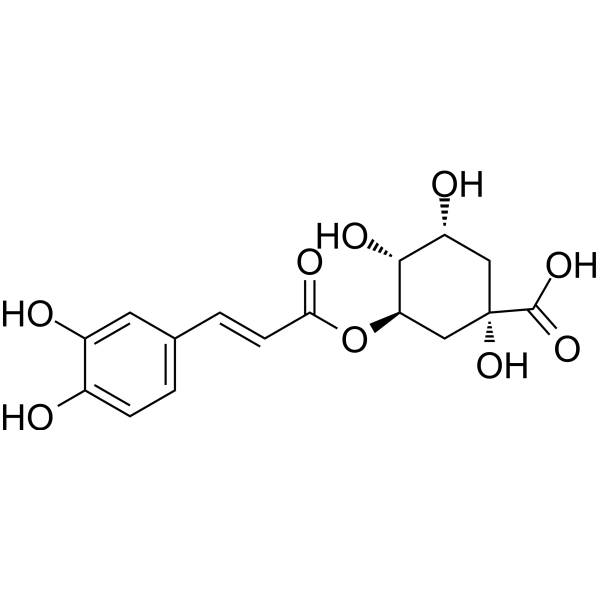
HY-N0055
Chlorogenic acidAntioxidant -
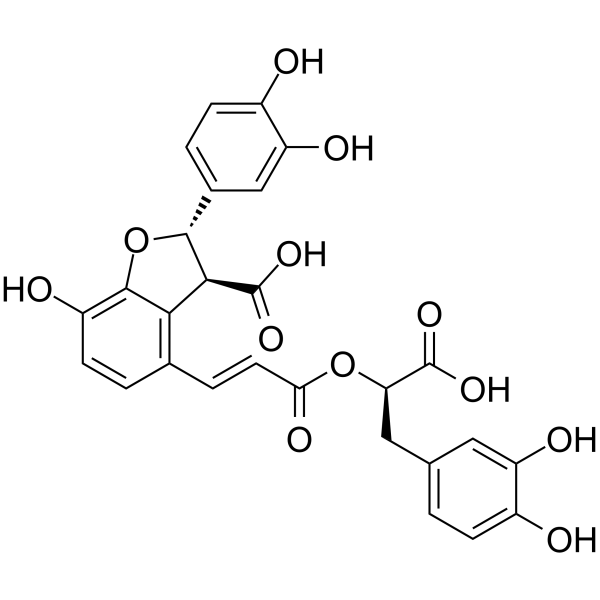
HY-N0823
Lithospermic acidNatural Product -
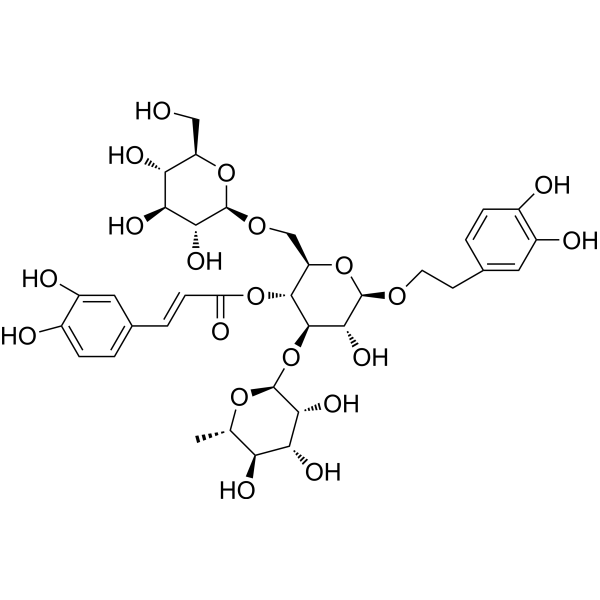
HY-N0020
EchinacosideWnt/β-catenin Signaling Inhibitor -
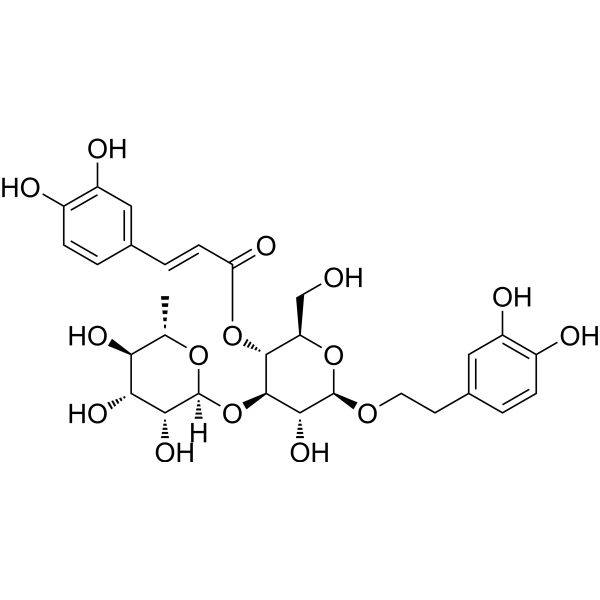
HY-N0021
VerbascosideBacterial Inhibitor -
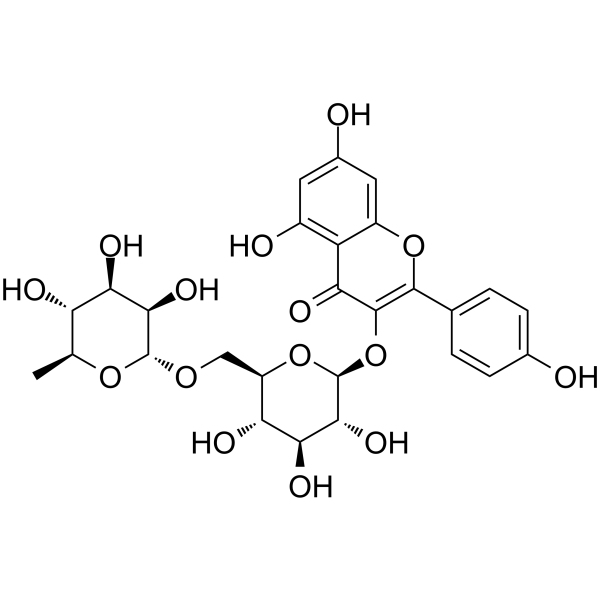
HY-N1475
NicotiflorinAntiglycation Agent -
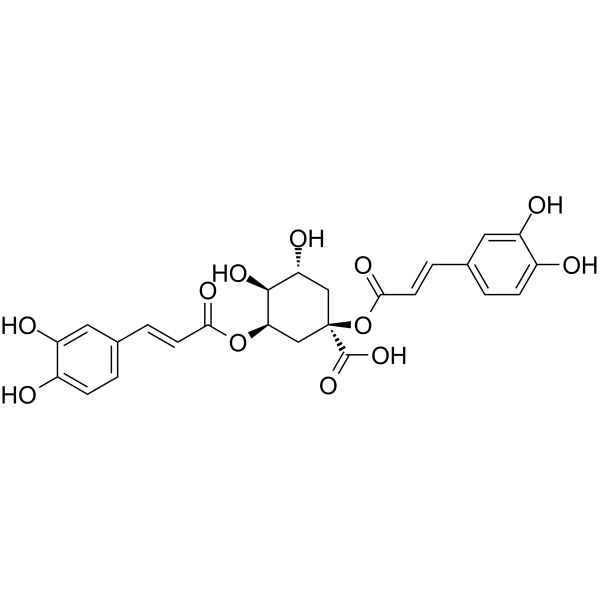
HY-N0359
CynarinAntioxidant -

HY-N0321R
Caftaric acid (Standard)Natural Product -
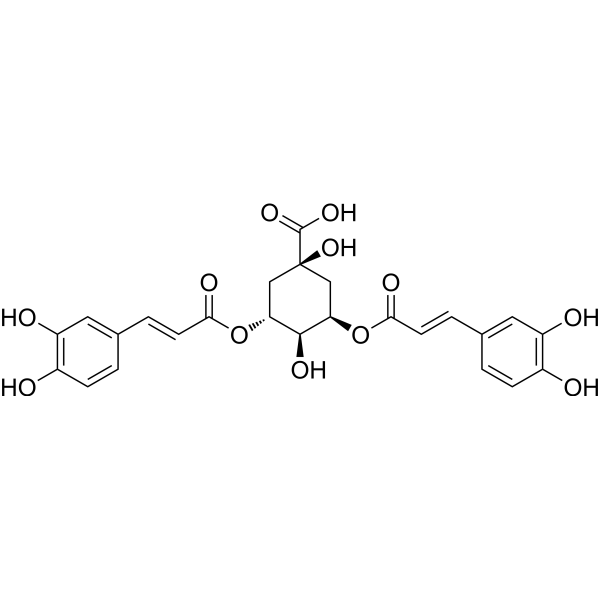
HY-N0056
Isochlorogenic acid AAntioxidant -
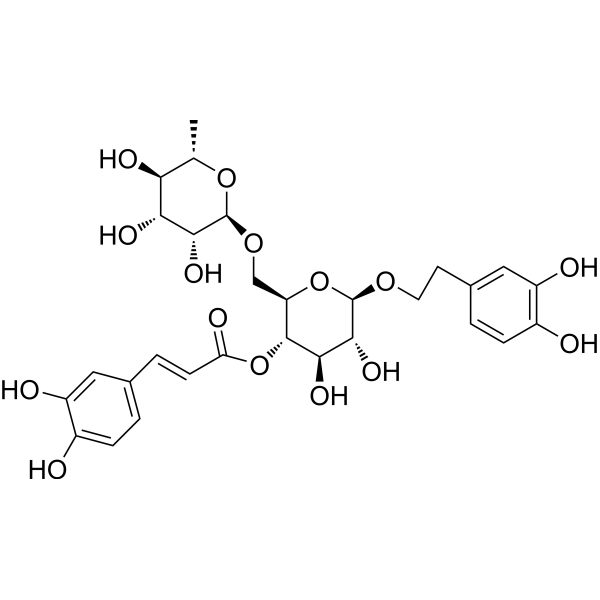
HY-N0028
Forsythiaside AAnti-Inflammatory Agent
Publications Citing Use of MedChemExpress (MCE) Caftaric acid
More

Biological Activity
Description
Cellular Effect
|
Cell Line

|
Type | Value | Description | References |
|---|---|---|---|---|
| MT2 | EC50 |
80.5 μM
Compound: 10
|
Antiviral activity against HIV LAI infected in human MT2 cells assessed as protection against virus-induced cytopathic effect
Antiviral activity against HIV LAI infected in human MT2 cells assessed as protection against virus-induced cytopathic effect
|
[PMID: 20977258] |
In Vitro
In an in vitro human fecal microbial fermentation experiment, Caftaric acid (1 μmol; 2 h) is rapidly metabolized, and no free caffeic acid or tartaric acid was detected. The main metabolites were 3-hydroxyphenylpropionic acid (3-HPP) and benzoic acid (BA). 3-HPP reached a peak value (0.24 μmol) at 2 hours[1].
In the same experiment, Caftaric acid (1 μmol; 24 h) produces benzoic acid (BA) continuously, accounting for 4-5% of the initial dose at 24 hours[1].
MedChemExpress (MCE) has not independently confirmed the accuracy of these methods. They are for reference only.
In Vivo
Caftaric acid (80 mg/kg; ip; once daily; 2 weeks) does not cause obvious renal injury or electrolyte disturbances in normal male albino Sprague Dawley rats[2].
Caftaric acid (40, 80 mg/kg; ip; once before reperfusion) alleviates renal and lung tissue damage in the Wistar rat renal ischemia-reperfusion model by reducing oxidative stress (MDA, MPO, TOS, OSI), inhibiting apoptosis (caspase-3), autophagy (LC3) and inflammation (COX-2)[3].
MedChemExpress (MCE) has not independently confirmed the accuracy of these methods. They are for reference only.
-
Animal Model:Male albino Sprague Dawley rats (120-130 g, male, 120-130 g) with lead acetate-induced nephrotoxicity[2]
-
Dosage:40 mg/kg, 80 mg/kg
-
Administration:Intraperitoneal injection, daily for 2 weeks.
-
Result:Caused significant decreases in kidney weight, serum electrolytes (sodium, potassium, chloride), antioxidant enzymes (SOD, GPx, GSH), and p53 expression, along with increases in urinary volume, renal function markers (urea, creatinine, uric acid), lipid peroxidation (MDA), and bcl-2 expression.
Co-administration dose-dependently reversed these changes, restoring electrolyte balance, renal function, antioxidant capacity, and apoptotic markers, and improving histopathological lesions (reduced necrosis, vacuolar degeneration, and cast formation in renal tubules).
-
Animal Model:Normal male albino Sprague Dawley rats (120-130 g, male, 120-130 g)[2]
-
Dosage:80 mg/kg
-
Administration:Intraperitoneal injection, daily for 2 weeks.
-
Result:Treatment alone had no significant effect on body weight, food/water intake, serum electrolytes, renal function markers (urea, creatinine, uric acid), kidney weight, or antioxidant/oxidative stress parameters (SOD, GPx, GSH, MDA) compared to the control group.
-
Animal Model:Wistar rats (210±10 g) with renal ischemia-reperfusion injury (1 h renal artery occlusion, 24 h reperfusion)[3]
-
Dosage:40 mg/kg, 80 mg/kg
-
Administration:Intraperitoneal injection, once 30 min before reperfusion.
-
Result:In the ischemia-reperfusion group, increased oxidant parameters (MDA, MPO, TOS, OSI), while decreased antioxidant parameters (SOD, TAS).
Severe immunopositivity for caspase-3 (apoptosis), LC3 (autophagy), and COX-2 (inflammation) in renal and lung tissues, with histopathological changes including renal necrosis, hyalinization, and lung hyperplasia.
Reduced oxidant levels, enhanced antioxidant capacity, diminished immunopositivity for caspase-3, LC3, and COX-2, and improved histopathological lesions in a dose-dependent manner, with the high dose (80 mg/kg) showing more pronounced effects.


Chemical Information
-
CAS No. 67879-58-7
-
Appearance Solid
-
Molecular Weight 312.23
-
Formula C13H12O9
-
Color Off-white to yellow
-
SMILES
O=C(O)[C@H](OC(/C=C/C1=CC=C(O)C(O)=C1)=O)[C@@H](O)C(O)=O
-
Synonyms
trans-Caftaric acid
-
Structure Classification
-
Initial Source
-
Shipping
Room temperature in continental US; may vary elsewhere.
-
Storage
Powder -20°C 3 years 4°C 2 years In solvent -80°C 6 months -20°C 1 month


Publications (2)
-
Journal Impact Factor
-
Most Recent
-
Antioxidants (Basel)
Bioactive Extracts and Constituents from Taraxacum mongolicum: Antioxidant, Anti-Inflammatory, Enzyme-Inhibitory, and Molecular Docking Studies. [Abstract]2026 May 29;15(6):688. PMID: 42351994 -


Solvent & Solubility
In Vitro:
H2O : 50 mg/mL (160.14 mM; Need ultrasonic)
DMSO : 50 mg/mL (160.14 mM; Need ultrasonic; Hygroscopic DMSO has a significant impact on the solubility of product, please use newly opened DMSO)
Please refer to the solubility information to select the appropriate solvent. Once prepared, please aliquot and store the solution to prevent product inactivation from repeated freeze-thaw cycles.
Storage method and period of stock solution: -80°C, 6 months; -20°C, 1 month. When stored at -80°C, please use it within 6 months. When stored at -20°C, please use it within 1 month.
* Note: If you choose water as the stock solution, please dilute it to the working solution, then filter and sterilize it with a 0.22 μm filter before use.
Please refer to the solubility information to select the appropriate solvent. Once prepared, please aliquot and store the solution to prevent product inactivation from repeated freeze-thaw cycles.
Storage method and period of stock solution: -80°C, 6 months; -20°C, 1 month. When stored at -80°C, please use it within 6 months. When stored at -20°C, please use it within 1 month.
* Note: If you choose water as the stock solution, please dilute it to the working solution, then filter and sterilize it with a 0.22 μm filter before use.
Concentration (start) × Volume (start) = Concentration (final) × Volume (final)
In Vivo:
Select the appropriate dissolution method based on your experimental animal and administration route.
- For the following dissolution methods, please ensure to first prepare a clear stock solution using an In Vitro approach and then sequentially add co-solvents:
- To ensure reliable experimental results, the clarified stock solution can be appropriately stored based on storage conditions. As for the working solution for In Vivo experiments, it is recommended to prepare freshly and use it on the same day.
- The percentages shown for the solvents indicate their volumetric ratio in the final prepared solution. If precipitation or phase separation occurs during preparation, heat and/or sonication can be used to aid dissolution.
Add each solvent one by one: 10% DMSO 40% PEG300 5% Tween-80 45% Saline
Solubility: ≥ 2.5 mg/mL (8.01 mM); Clear solution
This protocol yields a clear solution of ≥ 2.5 mg/mL (saturation unknown).
Taking 1 mL working solution as an example, add 100 μL DMSO stock solution (25.0 mg/mL) to 400 μL PEG300, and mix evenly; then add 50 μL Tween-80 and mix evenly; then add 450 μL Saline to adjust the volume to 1 mL.
Preparation of Saline: Dissolve 0.9 g sodium chloride in ddH₂O and dilute to 100 mL to obtain a clear Saline solution.
Add each solvent one by one: 10% DMSO 90% (20% SBE-β-CD in Saline)
Solubility: ≥ 2.5 mg/mL (8.01 mM); Clear solution
This protocol yields a clear solution of ≥ 2.5 mg/mL (saturation unknown).
Taking 1 mL working solution as an example, add 100 μL DMSO stock solution (25.0 mg/mL) to 900 μL 20% SBE-β-CD in Saline, and mix evenly.
Preparation of 20% SBE-β-CD in Saline (4°C, storage for one week): 2 g SBE-β-CD powder is dissolved in 10 mL Saline, completely dissolve until clear.
For the following dissolution methods, please prepare the working solution directly:
It is recommended to prepare fresh solutions and use them promptly within a short period of time.
The percentages shown for the solvents indicate their volumetric ratio in the final prepared solution. If precipitation or phase separation occurs during preparation, heat and/or sonication can be used to aid dissolution.
Add each solvent one by one: PBS
Solubility: 25 mg/mL (80.07 mM); Clear solution; Need ultrasonic
In Vivo Dissolution Calculator
Please enter the basic information of animal experiments:
-
-
-
-
Recommended: Prepare an additional quantity of animals to account for potential losses during experiments.
Working solution concentration: 0.22 mg/mL
This product has good water solubility, please refer to the measured solubility data in water/PBS/Saline for details.


Purity & Documentation
-
Data Sheet (280 KB)
-
SDS (393 KB)
- English - EN (393 KB)
- Français - FR (393 KB)
- Deutsch - DE (393 KB)
- Norwegian - NO (393 KB)
- Español - ES (393 KB)
- Swedish - SV (393 KB)
- Italian - IT (393 KB)
- Korean - KR (393 KB)
- Portuguese - PT (393 KB)
-
Handling Instructions (2659 KB)
References
[1]. Gonthier MP, et al. Microbial metabolism of caffeic acid and its esters chlorogenic and caftaric acids by human faecal microbiota in vitro. Biomed Pharmacother. 2006 Nov;60(9):536-40. [Content Brief]
[2]. Koriem KMM, Arbid MS. Role of caftaric acid in lead-associated nephrotoxicity in rats via antidiuretic, antioxidant and anti-apoptotic activities. J Complement Integr Med. 2017 Nov 17;15(2):/j/jcim.2018.15.issue-2/jcim-2017-0024/jcim-2017-0024.xml. [Content Brief]
[3]. Ekinci Akdemir FN, Güler MC, Eraslan E, Tanyeli A, Yildirim S. Caftaric acid attenuates kidney and remote organ damage induced by renal ischemia-reperfusion injury. Sci Rep. 2024 Dec 28;14(1):31385. [Content Brief]


Complete Stock Solution Preparation Table
Please refer to the solubility information to select the appropriate solvent. Once prepared, please aliquot and store the solution to prevent product inactivation from repeated freeze-thaw cycles.
Storage method and period of stock solution: -80°C, 6 months; -20°C, 1 month. When stored at -80°C, please use it within 6 months. When stored at -20°C, please use it within 1 month.
| Optional Solvent | Concentration Solvent Mass | 1 mg | 5 mg | 10 mg | 25 mg |
|---|---|---|---|---|---|
| H2O / DMSO | 1 mM | 3.2028 mL | 16.0138 mL | 32.0277 mL | 80.0692 mL |
| 5 mM | 0.6406 mL | 3.2028 mL | 6.4055 mL | 16.0138 mL | |
| 10 mM | 0.3203 mL | 1.6014 mL | 3.2028 mL | 8.0069 mL | |
| 15 mM | 0.2135 mL | 1.0676 mL | 2.1352 mL | 5.3379 mL | |
| 20 mM | 0.1601 mL | 0.8007 mL | 1.6014 mL | 4.0035 mL | |
| 25 mM | 0.1281 mL | 0.6406 mL | 1.2811 mL | 3.2028 mL | |
| 30 mM | 0.1068 mL | 0.5338 mL | 1.0676 mL | 2.6690 mL | |
| 40 mM | 0.0801 mL | 0.4003 mL | 0.8007 mL | 2.0017 mL | |
| 50 mM | 0.0641 mL | 0.3203 mL | 0.6406 mL | 1.6014 mL | |
| 60 mM | 0.0534 mL | 0.2669 mL | 0.5338 mL | 1.3345 mL | |
| 80 mM | 0.0400 mL | 0.2002 mL | 0.4003 mL | 1.0009 mL | |
| 100 mM | 0.0320 mL | 0.1601 mL | 0.3203 mL | 0.8007 mL |
* Note: If you choose water as the stock solution, please dilute it to the working solution, then filter and sterilize it with a 0.22 μm filter before use.


Caftaric acid Related Classifications
HY-N0321 Related Classifications
 Powered by Bioz