Search Result
Results for "
bcl-2 inhibition
" in MedChemExpress (MCE) Product Catalog:
| Cat. No. |
Product Name |
Target |
Research Areas |
Chemical Structure |
-
- HY-N0292
-
|
|
Cytochrome P450
PPAR
Apoptosis
|
Cardiovascular Disease
Inflammation/Immunology
Cancer
|
|
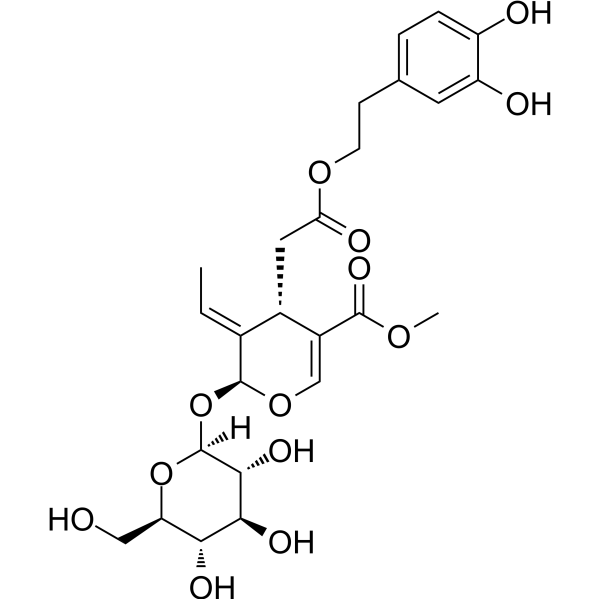
Oleuropein, found in olive leaves and oil, exerts antioxidant, anti-inflammatory and anti-atherogenic effects through direct inhibition of PPARγ transcriptional activity . Oleuropein induces apoptosis in breast cancer cells via the p53-dependent pathway and through the regulation of Bax and Bcl2 genes. Oleuropein also inhibits aromatase .
|
-
-
- HY-107738
-
Guggulsterone
Maximum Cited Publications
21 Publications Verification
Z/E-Guggulsterone
|
Apoptosis
JNK
Akt
Caspase
FXR
Autophagy
|
Cancer
|
|
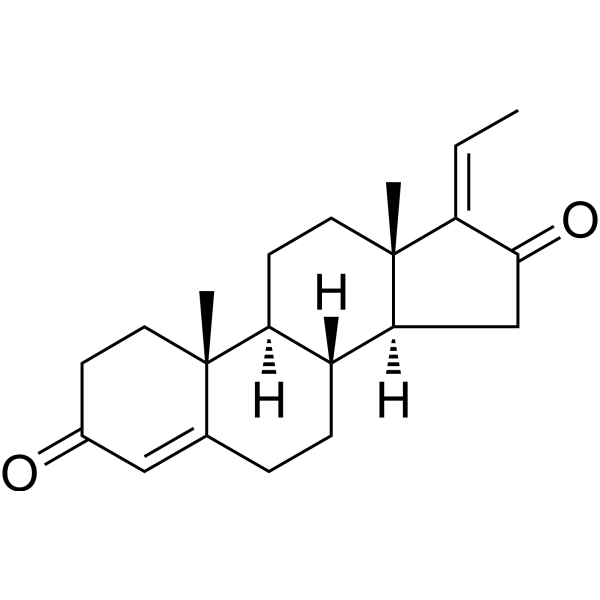
Guggulsterone is a plant sterol derived from the gum resin of the tree Commiphora wightii. Guggulsterone inhibits the growth of a wide variety of tumor cells and induces apoptosis through down regulation of antiapoptotic gene products (IAP1, xIAP, Bfl-1/A1, Bcl-2, cFLIP and survivin), modulation of cell cycle proteins (cyclin D1 and c-Myc), activation of caspases and JNK, inhibition of Akt . Guggulsterone, a farnesoid X receptor (FXR) antagonist, with IC50s of 24.06 μM and 39.05 μM for (-)-(E)-Guggulsterone (HY-N7781) and (Z)-Guggulsterone (HY-110066), respectively .
|
-
-
- HY-N3584
-
|
Chonglou Saponin VII
|
Akt
p38 MAPK
P-glycoprotein
Bcl-2 Family
Caspase
PARP
Autophagy
Apoptosis
|
Cancer
|
|
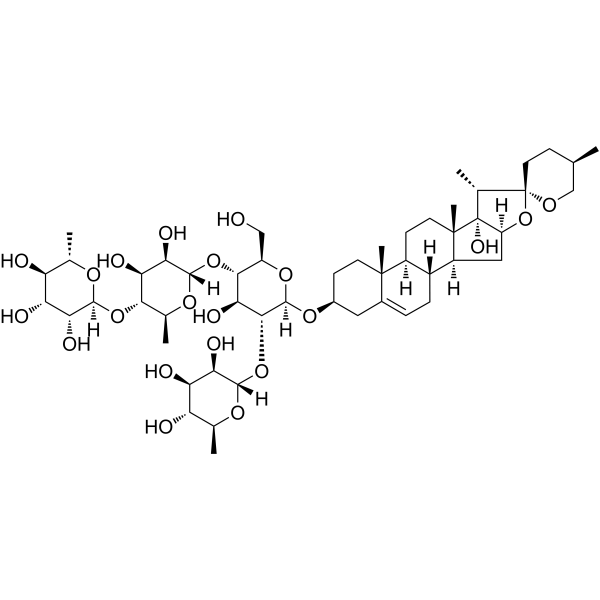
Paris saponin VII (Chonglou Saponin VII) is a steroidal saponin isolated from the roots and rhizomes of Trillium tschonoskii. Paris saponin VII-induced apoptosis in K562/ADR cells is associated with Akt/MAPK and the inhibition of P-gp. Paris saponin VII attenuates mitochondrial membrane potential, increases the expression of apoptosis-related proteins, such as Bax and cytochrome c, and decreases the protein expression levels of Bcl-2, caspase-9, caspase-3, PARP-1, and p-Akt. Paris saponin VII induces a robust autophagy in K562/ADR cells and provides a biochemical basis in the treatment of leukemia .
|
-
-
- HY-N0863
-
|
NSC-698790; Smilax saponin B
|
Bcl-2 Family
Apoptosis
Akt
c-Myc
ERK
p38 MAPK
JNK
FOXO
|
Cancer
|
|
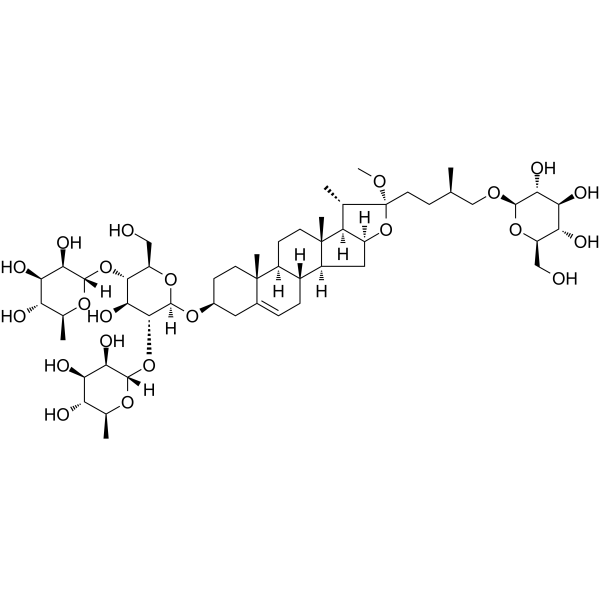
Methyl protodioscin (NSC-698790; Smilax saponin B) is a multi-target, selective, steroidal diglycoside inhibitor with antitumor activity that induces cell cycle arrest. The mechanism of action of Methyl protodioscin is complex, involving the induction of G2/M cell cycle arrest, regulation of the Bcl-2/Bax apoptotic pathway, inhibition of the Akt1/c-Myc axis and MAPK/ERK signaling, while simultaneously downregulating ADAM15 and inducing FOXO1 to reduce cholesterol synthesis. It also inhibits the JNK/c-Jun pathway, reducing the production of inflammatory factors (IL-6, TNF-α). Methyl protodioscin exhibits significant antitumor (inhibiting proliferation, migration, invasion, and inducing apoptosis), anti-inflammatory, and anti-restenosis activities. Methyl protodioscin can be used in research on lung cancer, prostate cancer, pancreatic cancer, and other tumors, as well as inflammatory diseases such as airway inflammation and enteritis .
|
-
-
- HY-B1752
-
|
LY 171555; (-)-LY 141865
|
Dopamine Receptor
Calcium Channel
Bcl-2 Family
iGluR
Apoptosis
|
Neurological Disease
|
|
Quinpirole (LY 171555; (-)-LY 141865) is a D2/D3 dopamine receptor agonist and a CaV1.3 calcium channel modulator. Quinpirole normalizes dendritic spine density in dopamine-depleted striatum, upregulates the protein expression of BCL2 and GluR2, downregulates the protein expression of BAX, and delays the onset of seizures. Quinpirole enhances learning and memory, inhibits neuronal apoptosis (apoptosis), and induces anxiety-like, stereotyped, and compulsive behaviors. Quinpirole disrupts prepulse inhibition in rhesus monkeys, enhances the activity of paraventricular thalamic neurons to promote recovery from Isoflurane anesthesia, and alters the composition of the gut microbiota in rats. Quinpirole can be used in research related to dyskinesia, pain, epilepsy, and neurological disorders including anxiety disorder, obsessive-compulsive disorder, and schizophrenia .
|
-
-
- HY-119979
-
|
Cardanol C15:1
|
Apoptosis
Reactive Oxygen Species (ROS)
Mitochondrial Metabolism
MMP
CDK
Caspase
Bcl-2 Family
PARP
MDM-2/p53
Cholinesterase (ChE)
|
Infection
Inflammation/Immunology
Cancer
|
|
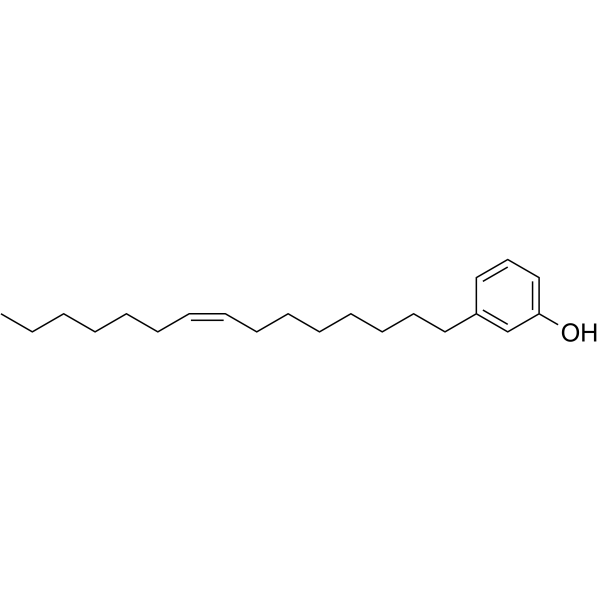
Cardanol monoene (Cardanol C15:1) is a phenolic compound which can be found in cashew nut shell liquid. Cardanol monoene can inhibit cancer cells proliferation, migration, cause S phase arrest, induce apoptosis, ROS production and mitochondrial depolarization. Cardanol monoene downregulates MMP-2, MMP-9, cyclinA1 expression, regulates CDK2, p53, Bax, cytochrome c, cleaved caspase-3, cleaved PARP, Apaf-1 expression and Bax/Bcl-2 ratio. Cardanol monoene shows weak DPPH radical scavenging activity and AChE inhibition activity. Cardanol monoene is lethal to Artemia salina nauplii. Cardanol monoene. Cardanol monoene can be used for the research of cancer, infection and inflamation .
|
-
-
- HY-N0292R
-
|
|
Cytochrome P450
Reference Standards
PPAR
Apoptosis
|
Cardiovascular Disease
Inflammation/Immunology
Cancer
|
|
Oleuropein (Standard) is the analytical standard of Oleuropein. This product is intended for research and analytical applications. Oleuropein, found in olive leaves and oil, exerts antioxidant, anti-inflammatory and anti-atherogenic effects through direct inhibition of PPARγ transcriptional activity . Oleuropein induces apoptosis in breast cancer cells via the p53-dependent pathway and through the regulation of Bax and Bcl2 genes. Oleuropein also inhibits aromatase .
|
-
-
- HY-167881
-
|
|
Bcl-2 Family
|
Cancer
|
|
MLS-0053105, a chloromaleimide, is a selective BFL-1 inhibitor with an IC50 of 0.4 µM for Bfl-1/F-Bid. MLS-0053105 shows over 10 times less potent inhibition of Bcl-W, Bcl-2, and Bcl-XL and no activity against Bcl-B and Mcl-1 .
|
-
-
- HY-153953
-
|
|
Bcl-2 Family
|
Cancer
|
|
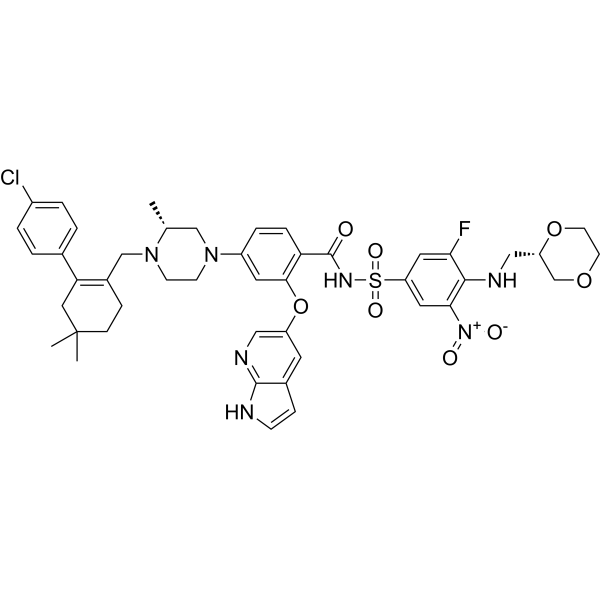
Bcl-2-IN-11 (compound 6) is a potent and selective Bcl-2 activity inhibitor, with an IC50 of 0.9 nM. Bcl-2-IN-11 shows weak inhibition of Bcl-xl (IC50 > 1000 nM). Bcl-2-IN-11 can be used for the research of a variety of cancers caused by abnormal overexpression of Bcl-2 family proteins: especially malignant hematologic diseases of acute lymphoid leukemia, etc. Bcl-2-IN-11 can also avoid toxic side effects caused by Bcl-xl inhibition, such as thrombocytopenia .
|
-
-
- HY-174404
-
|
|
Topoisomerase
Apoptosis
Bcl-2 Family
|
Cancer
|
|
Topoisomerase II inhibitor 23 is a potent topoisomerase II inhibitor (IC50 = 0.94 μM). Topoisomerase II inhibitor 23 shows high selectivity and exceptional cytotoxic activity in MCF-7, HepG2, and HCT116 cells. Topoisomerase II inhibitor 23 induces cell cycle arrest at the G1 phase, leading to inhibition of cell proliferation. Topoisomerase II inhibitor 2 induces apoptosis by up-regulating the pro-apoptotic Bax level and down-regulating the anti-apoptotic Bcl-2 level.
|
-
-
- HY-107738R
-
|
Z/E-Guggulsterone (Standard)
|
Apoptosis
JNK
Akt
Caspase
FXR
Autophagy
Reference Standards
|
Cancer
|
|
Guggulsterone (Standard) is the analytical standard of Guggulsterone (HY-107738). This product is intended for research and analytical applications. Guggulsterone is a plant sterol derived from the gum resin of the tree Commiphora wightii. Guggulsterone inhibits the growth of a wide variety of tumor cells and induces apoptosis through down regulation of antiapoptotic gene products (IAP1, xIAP, Bfl-1/A1, Bcl-2, cFLIP and survivin), modulation of cell cycle proteins (cyclin D1 and c-Myc), activation of caspases and JNK, inhibition of Akt. Guggulsterone, a farnesoid X receptor (FXR) antagonist, with IC50s of 24.06 μM and 39.05 μM for (-)-(E)-Guggulsterone (HY-N7781) and (Z)-Guggulsterone (HY-110066), respectively.
|
-
-
- HY-141876
-
|
|
Histone Methyltransferase
Notch
PI3K
Akt
Bcl-2 Family
DNA/RNA Synthesis
|
Cancer
|
|
PRT543 is an orally active selective PRMT5 inhibitor. PRT543 reduces intracellular symmetric dimethylarginine (sDMA) levels, downregulates the expression of genes related to DNA damage repair and DNA replication pathways, and induces abnormal alternative splicing. PRT543 inhibits the MYB, NOTCH1 and PI3K/AKT signaling pathways, promotes nuclear translocation of FOXO1, upregulates the pro-apoptotic protein BAX, and enhances cellular sensitivity to BCL-2 inhibition. PRT543 disrupts the normal RNA splicing process and exerts a synthetic lethal effect on myeloid tumor cells carrying splicing factor mutations. PRT543 can be used in research related to various cancers including breast cancer, ovarian cancer and acute myeloid leukemia .
|
-
-
- HY-175021
-
|
|
HDAC
Carbonic Anhydrase
Microtubule/Tubulin
PARP
Apoptosis
Bcl-2 Family
Caspase
|
Cancer
|
|
HDAC-IN-91 is a multiple inhibitor of HDAC (IC50 = 134.22 nM for HDAC1, 66.29 nM for HDAC2), carbonic anhydrase (CA) (Ki = 72.03 nM for CA IX, 50.76 nM for XII), and tubulin polymerization ( IC50 = 2.56 μM). HDAC-IN-91 inhibits PARP1 and increases the Bax/Bcl-2 ratio. HDAC-IN-91 blocks the cell cycle at the G2/M phase and induces apoptosis through a mitochondrial apoptosis activation mechanism. HDAC-IN-91 can exert potent cytotoxic activity through tubulin polymerization inhibition. HDAC-IN-91 can be used in breast, colorectal, cervical and lung cancer research .
|
-
-
- HY-176219
-
|
|
Bcl-2 Family
Apoptosis
Necroptosis
|
Cancer
|
|
Bcl-2-IN-23 (compound 5) is a selective inhibitor targeting Bcl-2. The IC50 of Bcl-2-IN-23 in HTB-140, HeLa and SW620 cells is 25.7-33.7 μM. Bcl-2-IN-23 can non-covalently competitively bind to Bcl-2 protein, significantly reduce its expression, and induce late apoptosis and necroptosis of cancer cells. Bcl-2-IN-23 enhances the sensitivity of cancer cells to apoptosis and reduces the release of IL-6 inflammatory factors by disrupting the Bcl-2-mediated mitochondrial apoptosis inhibition pathway. Bcl-2-IN-23 can be used for anti-apoptosis research of malignant tumors such as melanoma, cervical cancer, and colorectal cancer .
|
-
-
- HY-N15315
-
|
|
Apoptosis
MAP3K
NF-κB
|
Others
|
|
Triptriolide inhibits Puromycin aminonucleoside PAN (HY-15695)-induced apoptosis in mouse podocytes through regulation of Bcl-2 family proteins and inhibition of Caspase-3. Triptriolide promotes the cell survival, protects and restores the podocyte function through activation of TAK1-NF-κB signaling pathway and upregulation of podocin .
|
-
-
- HY-161786
-
|
|
Bcl-2 Family
Apoptosis
Reactive Oxygen Species (ROS)
|
Cancer
|
|
Bcl-2-IN-20 (Compound 81) is an inhibitor for Bcl-2 with IC50 <10 μM (79.1% inhibition at 9 μM). Bcl-2-IN-20 exhibits cytotoxicity in SK-MEL-28 (IC50>10 μM), A549 (IC50=6.1 μM), HepG2 (IC50>10 μM), MCF-7 (IC50=8.9 μM), HCT116 (IC50>10 μM) and HEK-293 (IC50=14.1 μM). Bcl-2-IN-20 promotes the ROS production, induces apoptosis and DNA damage .
|
-
-
- HY-N3584R
-
|
Chonglou Saponin VII (Standard)
|
Reference Standards
Akt
p38 MAPK
P-glycoprotein
Bcl-2 Family
Caspase
PARP
Autophagy
Apoptosis
|
Cancer
|
|
Paris saponin VII (Standard) is the analytical standard of Paris saponin VII. This product is intended for research and analytical applications. Paris saponin VII (Chonglou Saponin VII) is a steroidal saponin isolated from the roots and rhizomes of Trillium tschonoskii. Paris saponin VII-induced apoptosis in K562/ADR cells is associated with Akt/MAPK and the inhibition of P-gp. Paris saponin VII attenuates mitochondrial membrane potential, increases the expression of apoptosis-related proteins, such as Bax and cytochrome c, and decreases the protein expression levels of Bcl-2, caspase-9, caspase-3, PARP-1, and p-Akt. Paris saponin VII induces a robust autophagy in K562/ADR cells and provides a biochemical basis in the treatment of leukemia .
|
-
-
- HY-16958R
-
|
|
Antibiotic
Dimethylargininase (DDAH)
Reference Standards
|
Inflammation/Immunology
|
|
Paris saponin VII (Standard) is the analytical standard of Paris saponin VII. This product is intended for research and analytical applications. Paris saponin VII (Chonglou Saponin VII) is a steroidal saponin isolated from the roots and rhizomes of Trillium tschonoskii. Paris saponin VII-induced apoptosis in K562/ADR cells is associated with Akt/MAPK and the inhibition of P-gp. Paris saponin VII attenuates mitochondrial membrane potential, increases the expression of apoptosis-related proteins, such as Bax and cytochrome c, and decreases the protein expression levels of Bcl-2, caspase-9, caspase-3, PARP-1, and p-Akt. Paris saponin VII induces a robust autophagy in K562/ADR cells and provides a biochemical basis in the treatment of leukemia .
|
-
-
- HY-149622
-
|
|
Bcl-2 Family
|
Cancer
|
|
Bcl-2-IN-12 (Compound 1) is a Bcl-2 inhibitor (IC50: 6 nM). Bcl-2-IN-12 can be used for cancer research .
|
-
-
- HY-149625
-
|
|
Bcl-2 Family
|
Cancer
|
|
Bcl-2-IN-15 (Compound 13d)) is a Bcl-2 inhibitor (IC50: 363 nM). Bcl-2-IN-15 inhibits the proliferation ofNCI leukemia cancer cell line .
|
-
-
- HY-147826
-
|
|
EGFR
Apoptosis
|
Cancer
|
|
EGFR-IN-60 (Compound 7d) shows obvious inhibition of EGFR WT, EGFR T790M, EGFR L858R and JAK3 with IC50s of 83, 26, 53, and 69 nM, respectively. EGFR-IN-60 potently inhibits the growth of H1975 cells harboring EGFR T790M mutation (IC50=1.32 µM) over A431 cells overexpressing EGFR WT (IC50=4.96 µM). EGFR-IN-60 exhibits good oral absorption, potent and safe antitumor activity. EGFR-IN-60 induces cell death through apoptosis supported by increased Bax/Bcl-2 ratio .
|
-
-
- HY-182760
-
|
|
DNA Alkylator/Crosslinker
Bcl-2 Family
Caspase
Apoptosis
Topoisomerase
|
Cancer
|
|
MN33-63 is a Bcl-2 inhibitor, caspase-3 activator and DNA crosslinker with broad-spectrum anticancer activity. MN33-63 improves the water solubility of SN-38 (HY-13704), inhibits tumor growth and proliferation in a dose-dependent manner, and causes no obvious toxicity. MN33-63 relieves the inhibition of the mitochondrial apoptotic pathway, initiates the apoptosis program, inhibits Topo I activity, and promotes its degradation via the ubiquitin-proteasome and autophagy-lysosome pathways. MN33-63 induces DNA crosslinking, G2/M cell cycle arrest, inhibition of cancer cell migration, and cancer cell apoptosis through the mitochondrial pathway. MN33-63 can be used in the research of colorectal cancer, cervical cancer, hepatocellular carcinoma, lung adenocarcinoma and gastric cancer .
|
-
-
- HY-181673
-
|
|
Microtubule/Tubulin
Apoptosis
Bcl-2 Family
Caspase
PARP
|
Cancer
|
|
ICD inducer-2 is a immunogenic cell death inducer. ICD inducer-2 binds to the colchicine binding site on tubulin to inhibit tubulin polymerization. ICD inducer-2 exhibits broad-spectrum antiproliferative activity across multiple cancer cell lines. ICD inducer-2 inhibits cells migration, causes G2/M phase and induces apoptosis. ICD inducer-2 promotes infiltration of CD4+ and CD8+ T cells into the tumor microenvironment. ICD inducer-2 downregulates antiapoptotic protein Bcl-2, upregulates proapoptotic proteins Bax and Bim-1, and increases cleaved caspase 3, cleaved caspase 9, and cleaved PARP levels. ICD inducer-2 overcomes paclitaxel resistance in xenograft models and achieves tumor growth inhibition. ICD inducer-2 can be used for the research of cancer, such as lung carcinoma .
|
-
-
- HY-182759
-
|
|
DNA Alkylator/Crosslinker
Topoisomerase
Caspase
Bcl-2 Family
Apoptosis
|
Cancer
|
|
MN33-47 is a multi-target anti-tumor compound with broad-spectrum anti-proliferative activity. MN33-47 relieves the inhibition of the mitochondrial apoptosis pathway by downregulating the anti-apoptotic protein Bcl-2, while activating caspase-3 and inhibiting Topoisomerase I activity, thereby promoting its degradation through the ubiquitin-proteasome and autophagy-lysosome pathways. MN33-47 can also induce DNA cross-linking and G2/M cell cycle arrest, inhibit cancer cell migration and activate the mitochondrial apoptosis pathway, thus exerting potent anti-tumor effects. MN33-47 can improve the water solubility of SN-38 (HY-13704), and exhibits dose-dependent tumor growth inhibition effects in CT26 tumor-bearing mouse models without obvious toxic and side effects. MN33-47 can be used in related studies on colorectal adenocarcinoma, cervical adenocarcinoma, hepatocellular carcinoma, alveolar basal epithelial adenocarcinoma, gastric cancer and colon cancer .
|
-
| Cat. No. |
Product Name |
Category |
Target |
Chemical Structure |
-
- HY-N0292
-
-
-
- HY-107738
-
Guggulsterone
Maximum Cited Publications
21 Publications Verification
Z/E-Guggulsterone
|
Triterpenes
Structural Classification
Classification of Application Fields
Terpenoids
Plants
Burseraceae
Disease Research Fields
Commiphora wightii
Cancer
|
Apoptosis
JNK
Akt
Caspase
FXR
Autophagy
|
|
Guggulsterone is a plant sterol derived from the gum resin of the tree Commiphora wightii. Guggulsterone inhibits the growth of a wide variety of tumor cells and induces apoptosis through down regulation of antiapoptotic gene products (IAP1, xIAP, Bfl-1/A1, Bcl-2, cFLIP and survivin), modulation of cell cycle proteins (cyclin D1 and c-Myc), activation of caspases and JNK, inhibition of Akt . Guggulsterone, a farnesoid X receptor (FXR) antagonist, with IC50s of 24.06 μM and 39.05 μM for (-)-(E)-Guggulsterone (HY-N7781) and (Z)-Guggulsterone (HY-110066), respectively .
|
-
-
- HY-N3584
-
-
-
- HY-N0863
-
|
NSC-698790; Smilax saponin B
|
Structural Classification
other families
Classification of Application Fields
Plants
Disease Research Fields
Steroids
Source Classification
Cancer
|
Bcl-2 Family
Apoptosis
Akt
c-Myc
ERK
p38 MAPK
JNK
FOXO
|
|
Methyl protodioscin (NSC-698790; Smilax saponin B) is a multi-target, selective, steroidal diglycoside inhibitor with antitumor activity that induces cell cycle arrest. The mechanism of action of Methyl protodioscin is complex, involving the induction of G2/M cell cycle arrest, regulation of the Bcl-2/Bax apoptotic pathway, inhibition of the Akt1/c-Myc axis and MAPK/ERK signaling, while simultaneously downregulating ADAM15 and inducing FOXO1 to reduce cholesterol synthesis. It also inhibits the JNK/c-Jun pathway, reducing the production of inflammatory factors (IL-6, TNF-α). Methyl protodioscin exhibits significant antitumor (inhibiting proliferation, migration, invasion, and inducing apoptosis), anti-inflammatory, and anti-restenosis activities. Methyl protodioscin can be used in research on lung cancer, prostate cancer, pancreatic cancer, and other tumors, as well as inflammatory diseases such as airway inflammation and enteritis .
|
-
-
- HY-119979
-
|
Cardanol C15:1
|
Monophenols
Classification of Application Fields
Phenols
Plants
Anacardium occidentaleL.
Disease Research Fields
Anacardiaceae
Source Classification
Cancer
|
Apoptosis
Reactive Oxygen Species (ROS)
Mitochondrial Metabolism
MMP
CDK
Caspase
Bcl-2 Family
PARP
MDM-2/p53
Cholinesterase (ChE)
|
|
Cardanol monoene (Cardanol C15:1) is a phenolic compound which can be found in cashew nut shell liquid. Cardanol monoene can inhibit cancer cells proliferation, migration, cause S phase arrest, induce apoptosis, ROS production and mitochondrial depolarization. Cardanol monoene downregulates MMP-2, MMP-9, cyclinA1 expression, regulates CDK2, p53, Bax, cytochrome c, cleaved caspase-3, cleaved PARP, Apaf-1 expression and Bax/Bcl-2 ratio. Cardanol monoene shows weak DPPH radical scavenging activity and AChE inhibition activity. Cardanol monoene is lethal to Artemia salina nauplii. Cardanol monoene. Cardanol monoene can be used for the research of cancer, infection and inflamation .
|
-
-
- HY-N0292R
-
-
-
- HY-107738R
-
|
Z/E-Guggulsterone (Standard)
|
Triterpenes
Structural Classification
Terpenoids
Plants
Burseraceae
Commiphora wightii
|
Apoptosis
JNK
Akt
Caspase
FXR
Autophagy
Reference Standards
|
|
Guggulsterone (Standard) is the analytical standard of Guggulsterone (HY-107738). This product is intended for research and analytical applications. Guggulsterone is a plant sterol derived from the gum resin of the tree Commiphora wightii. Guggulsterone inhibits the growth of a wide variety of tumor cells and induces apoptosis through down regulation of antiapoptotic gene products (IAP1, xIAP, Bfl-1/A1, Bcl-2, cFLIP and survivin), modulation of cell cycle proteins (cyclin D1 and c-Myc), activation of caspases and JNK, inhibition of Akt. Guggulsterone, a farnesoid X receptor (FXR) antagonist, with IC50s of 24.06 μM and 39.05 μM for (-)-(E)-Guggulsterone (HY-N7781) and (Z)-Guggulsterone (HY-110066), respectively.
|
-
-
- HY-N15315
-
-
-
- HY-N3584R
-
|
Chonglou Saponin VII (Standard)
|
Structural Classification
Liliaceae
Trillium tschonoskii Maxim.
Plants
Steroids
Source Classification
|
Reference Standards
Akt
p38 MAPK
P-glycoprotein
Bcl-2 Family
Caspase
PARP
Autophagy
Apoptosis
|
|
Paris saponin VII (Standard) is the analytical standard of Paris saponin VII. This product is intended for research and analytical applications. Paris saponin VII (Chonglou Saponin VII) is a steroidal saponin isolated from the roots and rhizomes of Trillium tschonoskii. Paris saponin VII-induced apoptosis in K562/ADR cells is associated with Akt/MAPK and the inhibition of P-gp. Paris saponin VII attenuates mitochondrial membrane potential, increases the expression of apoptosis-related proteins, such as Bax and cytochrome c, and decreases the protein expression levels of Bcl-2, caspase-9, caspase-3, PARP-1, and p-Akt. Paris saponin VII induces a robust autophagy in K562/ADR cells and provides a biochemical basis in the treatment of leukemia .
|
-
Your information is safe with us. * Required Fields.
Inquiry Information
- Product Name:
- Cat. No.:
- Quantity:
- MCE Japan Authorized Agent:

