



Paris saponin VII
Based on 5 publication(s) in Google Scholar
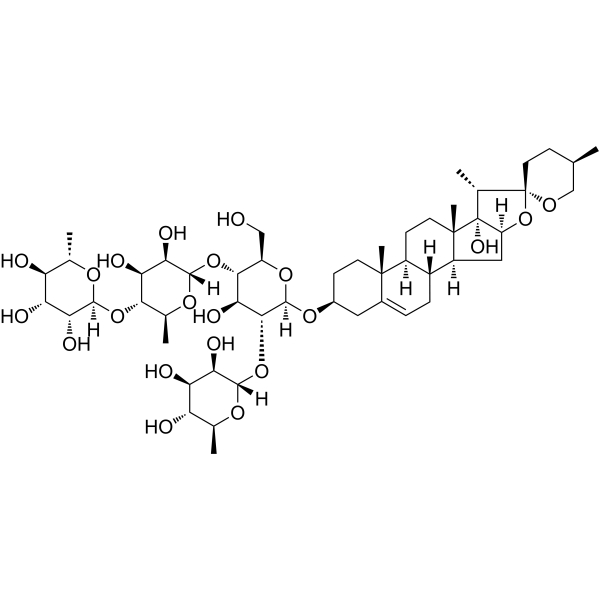
Paris saponin VII (Chonglou Saponin VII) is a steroidal saponin isolated from the roots and rhizomes of Trillium tschonoskii. Paris saponin VII-induced apoptosis in K562/ADR cells is associated with Akt/MAPK and the inhibition of P-gp. Paris saponin VII attenuates mitochondrial membrane potential, increases the expression of apoptosis-related proteins, such as Bax and cytochrome c, and decreases the protein expression levels of Bcl-2, caspase-9, caspase-3, PARP-1, and p-Akt. Paris saponin VII induces a robust autophagy in K562/ADR cells and provides a biochemical basis in the treatment of leukemia.
For research use only. We do not sell to patients.
- Purity : 99.84%
- CAS No.: 68124-04-9
- Formula: C51H82O21
- Molecular Weight:1031.18
-
Storage:
-20°C, protect from light
* In solvent : -80°C, 6 months; -20°C, 1 month (protect from light)

To place orders, for customer services and technical support, please contact: MedChemExpress USA
Tel: 609-228-6898 E-mail: [email protected] [email protected]


-
 Biological Activity
-
Chemical Information
-
Solvent & Solubility
- Purity & Documentation
- References
-
 Help & FAQs


-
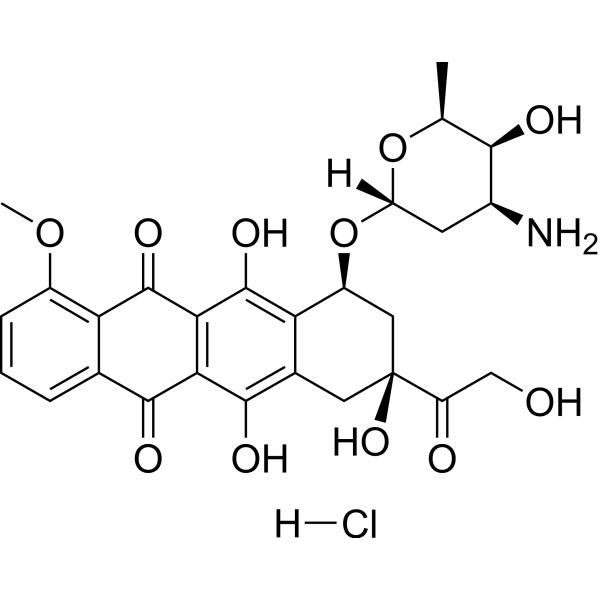
HY-15142
Doxorubicin hydrochloride -
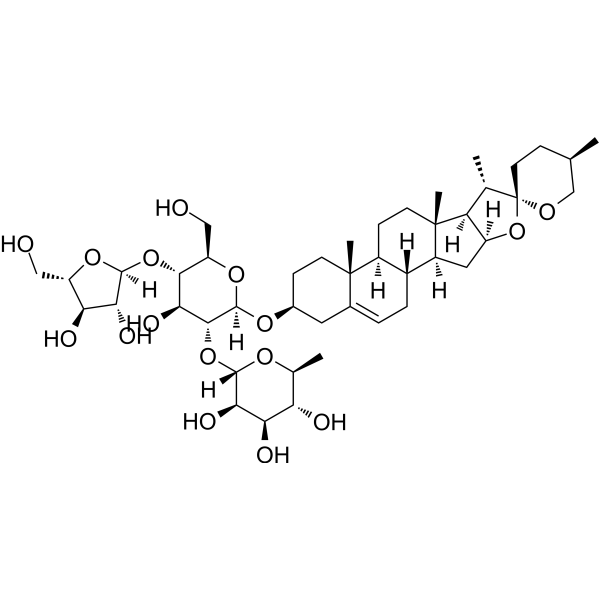
HY-N0047
Polyphyllin I -
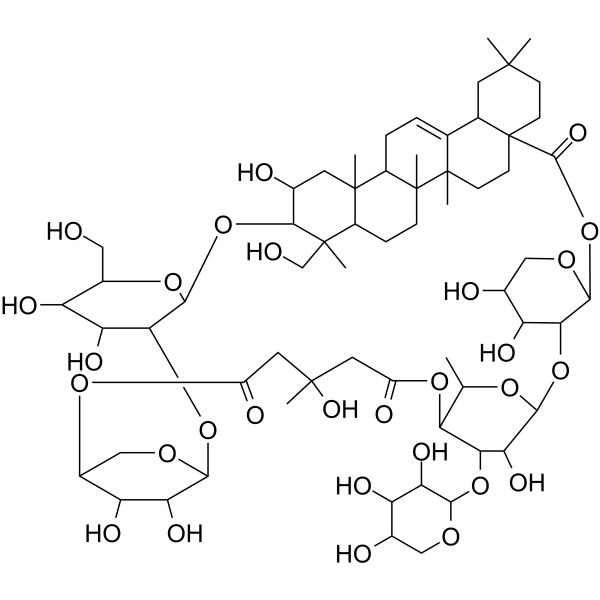
HY-N0890
Tubeimoside I -
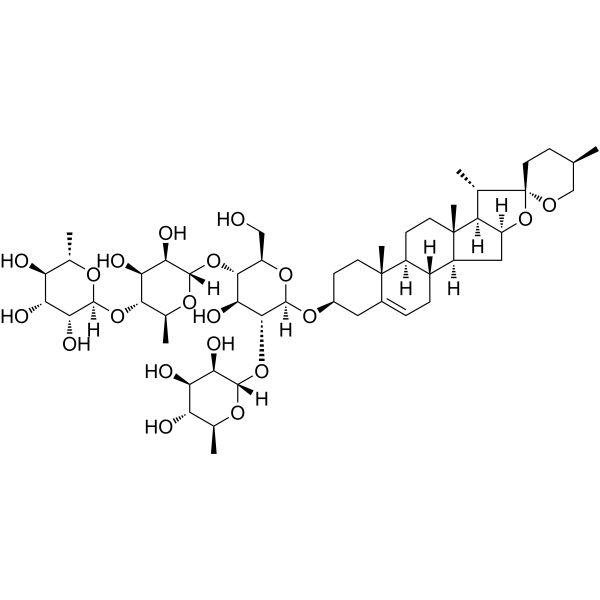
HY-N2389
Formosanin C -

HY-N3584R
Paris saponin VII (Standard) -
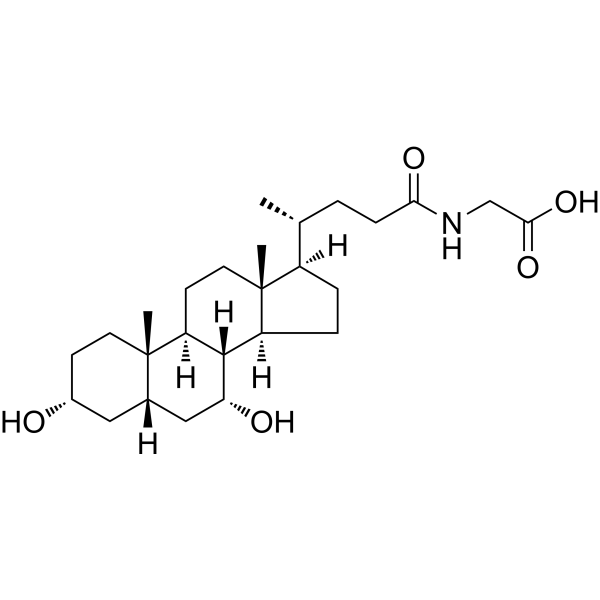
HY-N2334
Glycochenodeoxycholic acid -
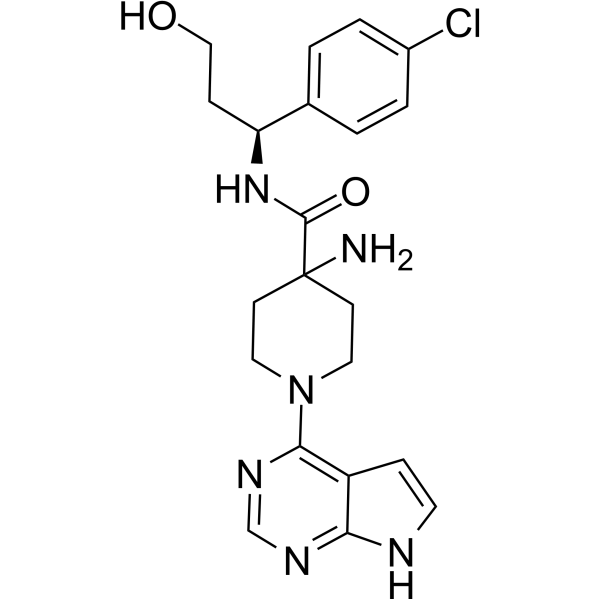
HY-15431
Capivasertib -
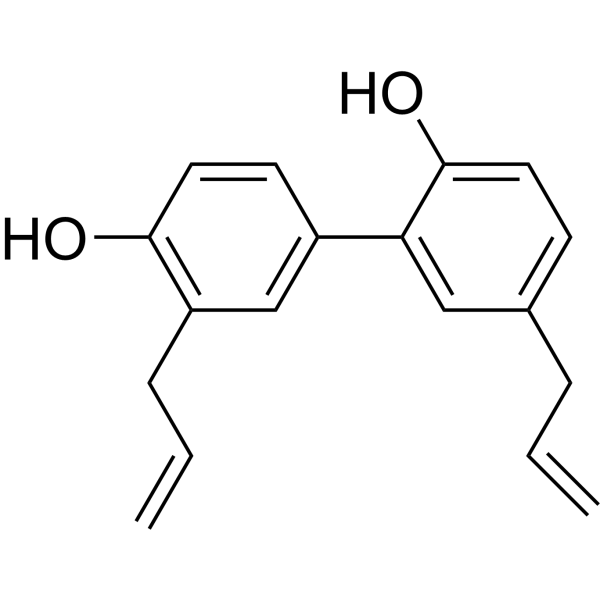
HY-N0003
Honokiol -
HY-15531
Venetoclax -
HY-10358
MK-2206 dihydrochloride -
HY-18938
Selonsertib -

HY-N2334R
Glycochenodeoxycholic acid (Standard)
Publications Citing Use of MedChemExpress (MCE) Paris saponin VII
More Customer Validation & Images

-
Cell Proliferation/Viability Assay
-
Cell Migration/Invasion Assay
-
Apoptosis Analysis
-
IF
-
WB
All Caspase Isoforms
More

Biological Activity
Description
IC50 & Target
[1]|
p38 |
Bcl-2 |
Caspase-9 |
Caspase-3 |
PARP-1 |
In Vitro
Paris saponin VII (Chonglou Saponin VII) inhibits the growth of adriamycin-resistant human leukemia cells (K562/ADR) in a dose-dependent manner. Paris saponin VII significantly suppresses cell proliferation by cell cycle arrest in the G0/G1 phase[1].
MedChemExpress (MCE) has not independently confirmed the accuracy of these methods. They are for reference only.
In Vivo
MedChemExpress (MCE) has not independently confirmed the accuracy of these methods. They are for reference only.


Chemical Information
-
CAS No. 68124-04-9
-
Appearance Solid
-
Molecular Weight 1031.18
-
Formula C51H82O21
-
Color White to off-white
-
SMILES
O[C@@]12[C@@]3([C@@]([C@@]4([H])[C@]([C@@]5(C(C[C@@H](O[C@@]6([H])[C@@H]([C@H]([C@H](O[C@@]7([H])[C@@H]([C@@H]([C@@H](O[C@@]8([H])[C@@H]([C@@H]([C@@H](O)[C@H](C)O8)O)O)[C@H](C)O7)O)O)[C@@H](CO)O6)O)O[C@@]9([H])[C@@H]([C@@H]([C@@H](O)[C@H](C)O9)O)O)CC5)=CC4)C)([H])CC3)([H])C[C@]1([H])O[C@]%10(CC[C@@H](C)CO%10)[C@H]2C)C
-
Synonyms
Chonglou Saponin VII
-
Structure Classification
-
Initial Source
-
Shipping
Room temperature in continental US; may vary elsewhere.
-
Storage
-20°C, protect from light
* In solvent : -80°C, 6 months; -20°C, 1 month (protect from light)


Publications (5)
-
Journal Impact Factor
-
Most Recent
-
Int J Biol Sci
Paris saponin VII reverses resistance to PARP inhibitors by regulating ovarian cancer tumor angiogenesis and glycolysis through the RORα/ECM1/VEGFR2 signaling axis. [Abstract]2024 Apr 15;20(7):2454-2475. PMID: 38725854 -
Cancer Cell Int
Paris saponin VII suppresses osteosarcoma progression by targeting VEGFR2 and PD-L1 to enhance anti-angiogenic and immunotherapeutic efficacy. [Abstract]2026 Apr 6;26(1):203. PMID: 41942995 -
Chem Biol Interact
Paris saponin VII restrains PD-L1 mediated immune evasion through the AKT1 and STAT3 signaling pathways. [Abstract]2025 Aug 25:417:111562. PMID: 40389195
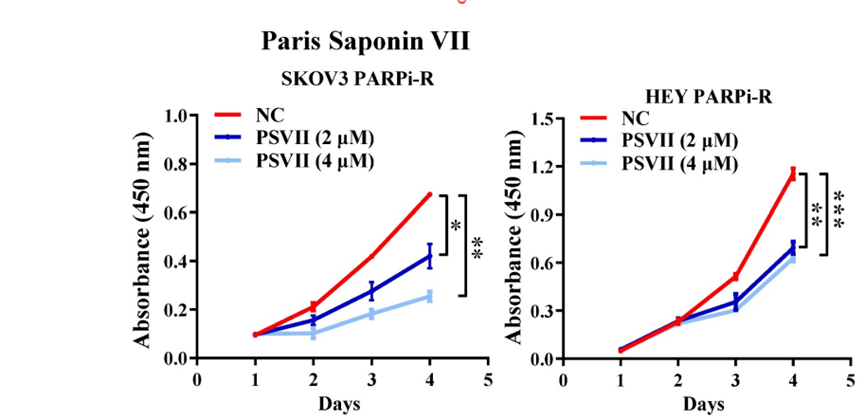
Paris saponin VII purchased from MedChemExpress. Usage Cited in: Chem Biol Interact. 2025 Aug 25:417:111562. [Abstract]
The effects of different concentrations of Paris saponin VII (PS VII) (2, 4 μM) on the proliferation rate of ovarian cancer SKOV3 PARPi-R and HEY PARPi-R cells were detected by CCK-8
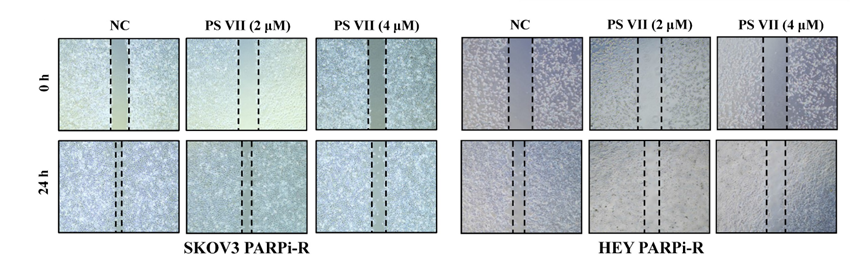
Paris saponin VII purchased from MedChemExpress. Usage Cited in: Chem Biol Interact. 2025 Aug 25:417:111562. [Abstract]
The effects of different concentrations of Paris saponin VII (PS VII) (2, 4 μM) on the migration abilities of ovarian cancer SKOV3 PARPi-R and HEY PARPi-R cells were evaluated by wound healing assays.
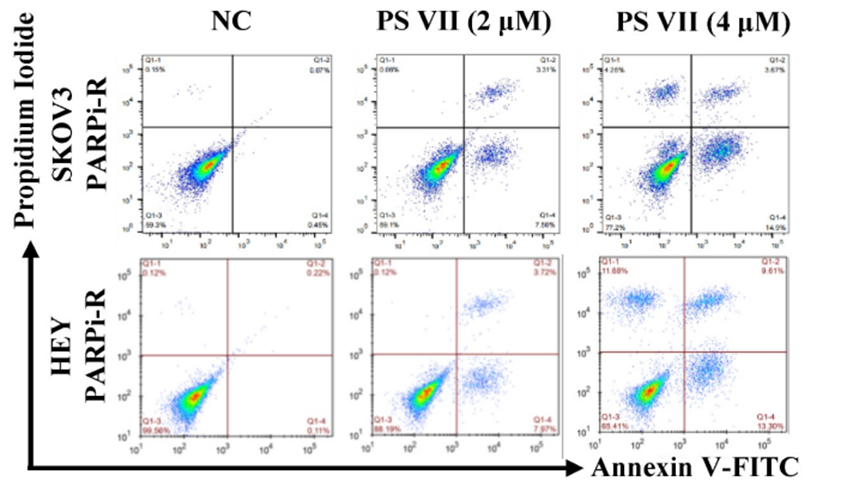
Paris saponin VII purchased from MedChemExpress. Usage Cited in: Chem Biol Interact. 2025 Aug 25:417:111562. [Abstract]
The apoptosis of ovarian cancer SKOV3 PARPi-R and HEY PARPi-R cells was determined using flow cytometry at different concentrations of Paris saponin VII (PS VII) (2, 4 μM).
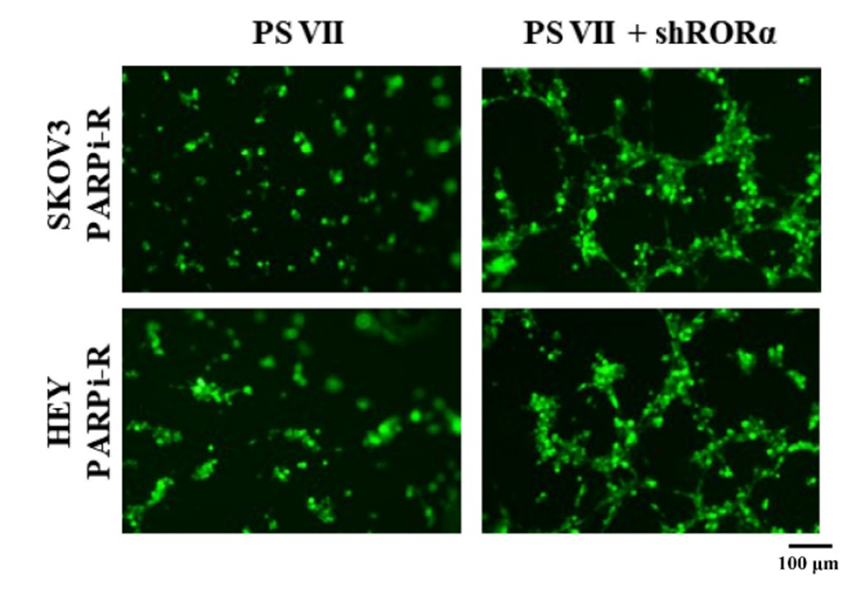
Paris saponin VII purchased from MedChemExpress. Usage Cited in: Chem Biol Interact. 2025 Aug 25:417:111562. [Abstract]
The impact of PS VII and RORα on tube formation in human umbilical vein endothelial cells (HUVECs) is examined using conditioned medium derived from PARPi-resistant ovarian cancer cells with RORα inhibition treated with Paris saponin VII (PS VII).
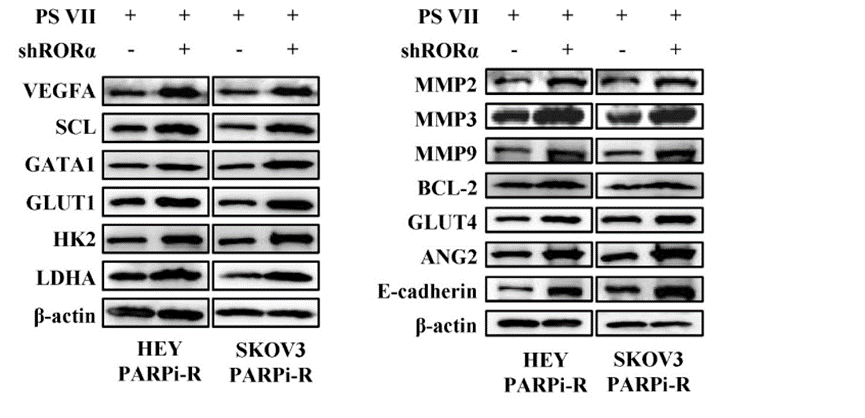
Paris saponin VII purchased from MedChemExpress. Usage Cited in: Chem Biol Interact. 2025 Aug 25:417:111562. [Abstract]
The effect of Paris saponin VII (PS VII) and RORα on glycolysis, angiogenesis, and metastasis-related proteins in PARPi-resistant ovarian cancer cells is analyzed using Western blot.
-
Biol Trace Elem Res
Mechanism of Lung Fibrosis Caused by Rare Earth Samarium Oxide Through Hippo Signaling Pathway and the Intervention of GBE. [Abstract]2025 Mar 18. PMID: 40102356 -
Burns
2021 Feb;47(1):140-149. PMID: 33279335


Solvent & Solubility
In Vitro:
DMSO : 100 mg/mL (96.98 mM; Need ultrasonic; Hygroscopic DMSO has a significant impact on the solubility of product, please use newly opened DMSO)
H2O : < 0.1 mg/mL (insoluble)
Please refer to the solubility information to select the appropriate solvent. Once prepared, please aliquot and store the solution to prevent product inactivation from repeated freeze-thaw cycles.
Storage method and period of stock solution: -80°C, 6 months; -20°C, 1 month (protect from light). When stored at -80°C, please use it within 6 months. When stored at -20°C, please use it within 1 month.
Please refer to the solubility information to select the appropriate solvent. Once prepared, please aliquot and store the solution to prevent product inactivation from repeated freeze-thaw cycles.
Storage method and period of stock solution: -80°C, 6 months; -20°C, 1 month (protect from light). When stored at -80°C, please use it within 6 months. When stored at -20°C, please use it within 1 month.
Concentration (start) × Volume (start) = Concentration (final) × Volume (final)
In Vivo:
Select the appropriate dissolution method based on your experimental animal and administration route.
- For the following dissolution methods, please ensure to first prepare a clear stock solution using an In Vitro approach and then sequentially add co-solvents:
- To ensure reliable experimental results, the clarified stock solution can be appropriately stored based on storage conditions. As for the working solution for In Vivo experiments, it is recommended to prepare freshly and use it on the same day.
- The percentages shown for the solvents indicate their volumetric ratio in the final prepared solution. If precipitation or phase separation occurs during preparation, heat and/or sonication can be used to aid dissolution.
Add each solvent one by one: 10% DMSO 40% PEG300 5% Tween-80 45% Saline
Solubility: ≥ 2.5 mg/mL (2.42 mM); Clear solution
This protocol yields a clear solution of ≥ 2.5 mg/mL (saturation unknown).
Taking 1 mL working solution as an example, add 100 μL DMSO stock solution (25.0 mg/mL) to 400 μL PEG300, and mix evenly; then add 50 μL Tween-80 and mix evenly; then add 450 μL Saline to adjust the volume to 1 mL.
Preparation of Saline: Dissolve 0.9 g sodium chloride in ddH₂O and dilute to 100 mL to obtain a clear Saline solution.
Add each solvent one by one: 10% DMSO 90% (20% SBE-β-CD in Saline)
Solubility: ≥ 2.5 mg/mL (2.42 mM); Clear solution
This protocol yields a clear solution of ≥ 2.5 mg/mL (saturation unknown).
Taking 1 mL working solution as an example, add 100 μL DMSO stock solution (25.0 mg/mL) to 900 μL 20% SBE-β-CD in Saline, and mix evenly.
Preparation of 20% SBE-β-CD in Saline (4°C, storage for one week): 2 g SBE-β-CD powder is dissolved in 10 mL Saline, completely dissolve until clear.
In Vivo Dissolution Calculator
Please enter the basic information of animal experiments:
-
-
-
-
Recommended: Prepare an additional quantity of animals to account for potential losses during experiments.
Please enter your animal formula composition:
-
%DMSO +
Recommended: Keep the proportion of DMSO in working solution below 2% if your animal is weak.
-
%+
-
+%Tween-80 + +
-
%Saline +
The co-solvents required include: DMSO, . All of co-solvents are available by MedChemExpress (MCE). , Tween 80. All of co-solvents are available by MedChemExpress (MCE).
Working solution concentration: 0.22 mg/mL
Method for preparing stock solution: mg drug dissolved in μL DMSO. Stock solution concentration: mg/mL. * In solvent : -80°C, 6 months; -20°C, 1 month (protect from light)
1. Take μL DMSO stock solution;
2. Add μL .
μL , mix evenly;
3. Then add μL Tween 80, mix evenly;
4. Then add μL
Please ensure that the stock solution in the first step is dissolved to a clear state, and add co-solvents in sequence. You can use ultrasonic heating (ultrasonic cleaner, recommended frequency 20-40 kHz), vortexing, etc. to assist dissolution.


Purity & Documentation
-
Data Sheet (277 KB)
-
SDS (252 KB)
- English - EN (252 KB)
- Français - FR (252 KB)
- Deutsch - DE (252 KB)
- Norwegian - NO (252 KB)
- Español - ES (252 KB)
- Swedish - SV (252 KB)
- Italian - IT (252 KB)
- Korean - KR (252 KB)
- Portuguese - PT (252 KB)
-
Handling Instructions (2659 KB)
References
[1]. Yan T, et al. Paris saponin VII induces cell cycle arrest and apoptosis by regulating Akt/MAPK pathway and inhibition of P-glycoprotein in K562/ADR cells. Phytother Res. 2018 May;32(5):898-907. [Content Brief]
[2]. Li Y, et al. Paris saponin VII reverses chemoresistance in breast MCF-7/ADR cells. J Ethnopharmacol. 2019 Mar 25;232:47-54. [Content Brief]


Complete Stock Solution Preparation Table
Please refer to the solubility information to select the appropriate solvent. Once prepared, please aliquot and store the solution to prevent product inactivation from repeated freeze-thaw cycles.
Storage method and period of stock solution: -80°C, 6 months; -20°C, 1 month (protect from light). When stored at -80°C, please use it within 6 months. When stored at -20°C, please use it within 1 month.
| Optional Solvent | Concentration Solvent Mass | 1 mg | 5 mg | 10 mg | 25 mg |
|---|---|---|---|---|---|
| DMSO | 1 mM | 0.9698 mL | 4.8488 mL | 9.6976 mL | 24.2441 mL |
| 5 mM | 0.1940 mL | 0.9698 mL | 1.9395 mL | 4.8488 mL | |
| 10 mM | 0.0970 mL | 0.4849 mL | 0.9698 mL | 2.4244 mL | |
| 15 mM | 0.0647 mL | 0.3233 mL | 0.6465 mL | 1.6163 mL | |
| 20 mM | 0.0485 mL | 0.2424 mL | 0.4849 mL | 1.2122 mL | |
| 25 mM | 0.0388 mL | 0.1940 mL | 0.3879 mL | 0.9698 mL | |
| 30 mM | 0.0323 mL | 0.1616 mL | 0.3233 mL | 0.8081 mL | |
| 40 mM | 0.0242 mL | 0.1212 mL | 0.2424 mL | 0.6061 mL | |
| 50 mM | 0.0194 mL | 0.0970 mL | 0.1940 mL | 0.4849 mL | |
| 60 mM | 0.0162 mL | 0.0808 mL | 0.1616 mL | 0.4041 mL | |
| 80 mM | 0.0121 mL | 0.0606 mL | 0.1212 mL | 0.3031 mL |


Paris saponin VII Related Classifications
HY-N3584 Related Classifications
 Powered by Bioz