



Formosanin C
Based on 5 publication(s) in Google Scholar
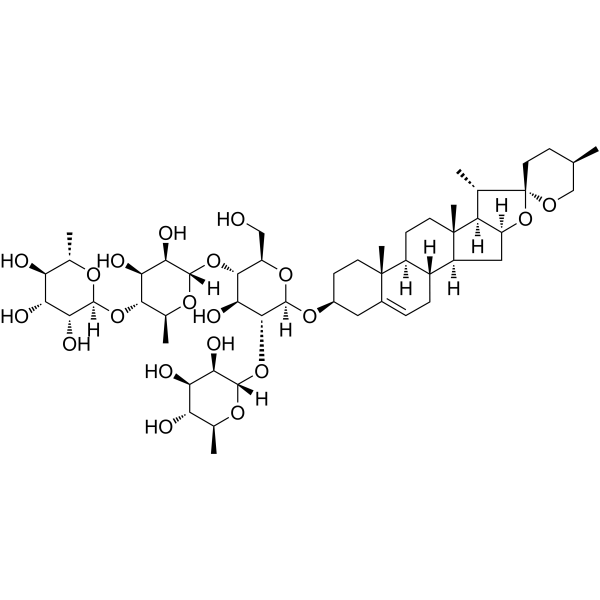
Formosanin C is a diosgenin saponin with multiple biological activities. Formosanin C possesses multiple anti-tumor mechanisms, including inducing apoptosis and autophagy, blocking the cell cycle, inhibiting metastasis and inducing ferroptosis. Formosanin C can inhibit the NF-κB signaling pathway to exert anti-inflammatory effects, and enhance the activity of immune cells. Formosanin C exhibits the inhibiting effect against C. albicans. Formosanin C can be used for the study of anti-inflammation, antifungal anti and anti-cancer (including lung cancer, liver cancer, breast cancer and colorectal cancer, etc.).
For research use only. We do not sell to patients.
- Purity : 99.28%
- CAS No.: 50773-42-7
- Formula: C51H82O20
- Molecular Weight:1015.18
-
Storage:
-20°C, protect from light
* In solvent : -80°C, 6 months; -20°C, 1 month (protect from light)

To place orders, for customer services and technical support, please contact: MedChemExpress USA
Tel: 609-228-6898 E-mail: [email protected] [email protected]


-
 Biological Activity
-
Chemical Information
-
Solvent & Solubility
- Protocols
- Purity & Documentation
- References
-
 Help & FAQs


-
HY-N0124
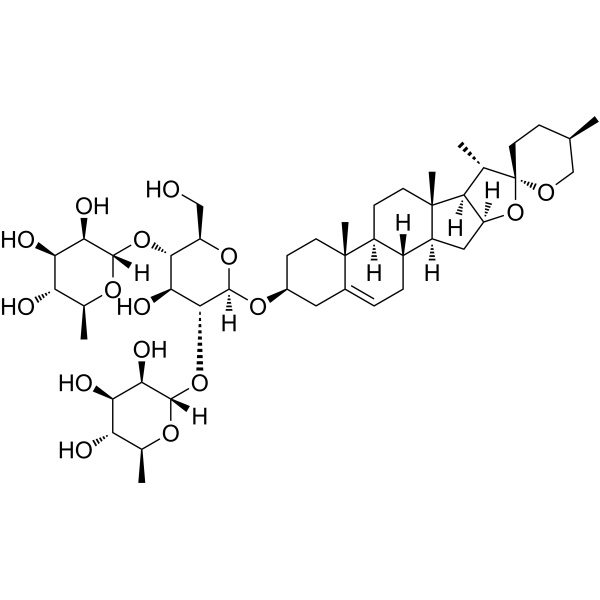
DioscinAnticancer Agent -
HY-N3201
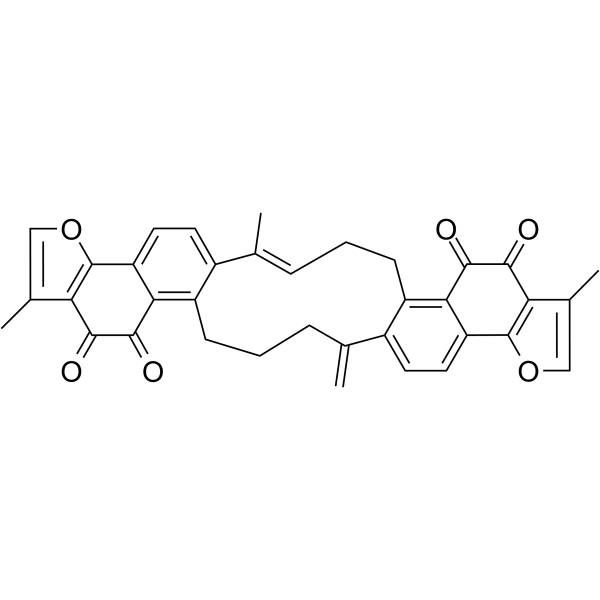
Neoprzewaquinone APIM1 Kinase Inhibitor, PRKD2 Inhibitor, IL-15Rα Inhibitor, IL-15/IL-15Rα Pathway Inhibitor, TLR4/MD2 Complex Inhibitor -
HY-N0498
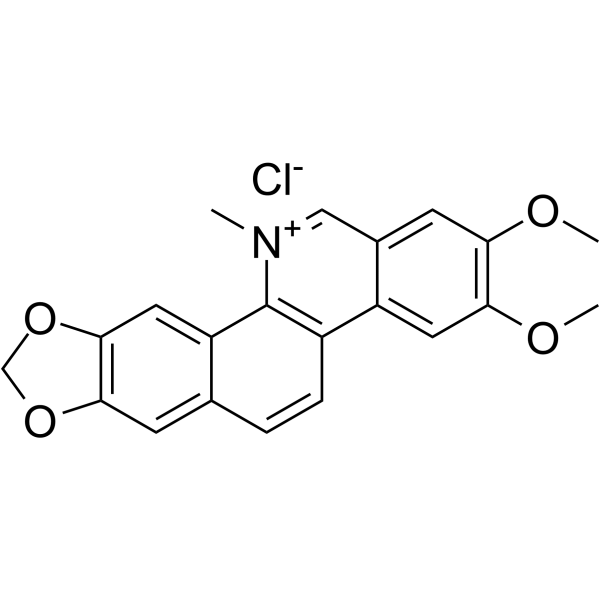
Nitidine chlorideAnti-malarial Agent -
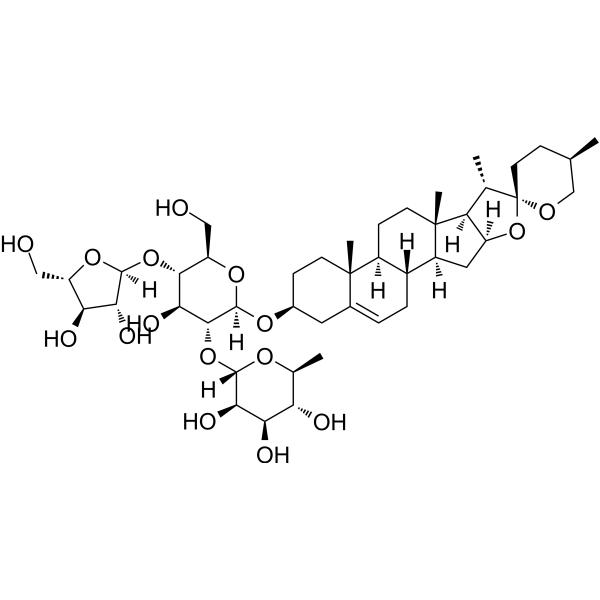
HY-N0047
Polyphyllin IAutophagy Inducer -
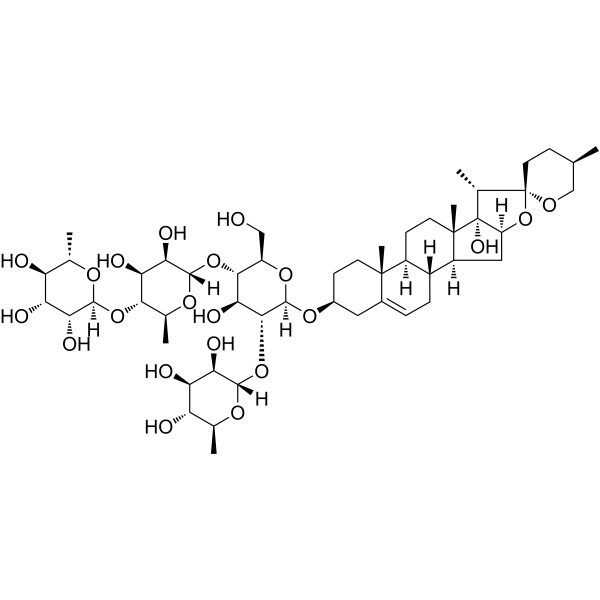
HY-N3584
Paris saponin VIICaspase Inhibitor -
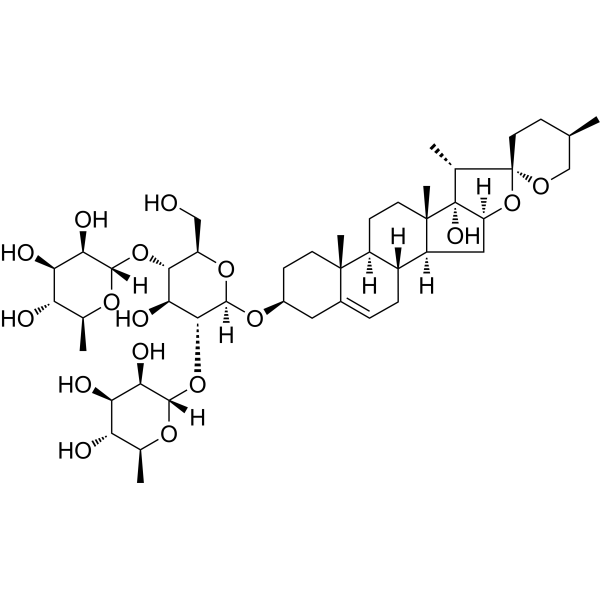
HY-N4180
Pennogenin 3-O-beta-chacotriosideAutophagy Inducer -

HY-N2389R
Formosanin C (Standard)Apoptosis Inducer -
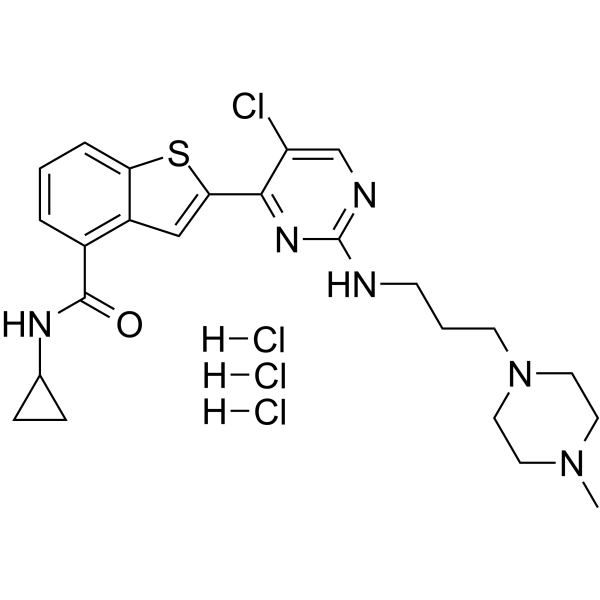
HY-B0788A
LY2409881 trihydrochlorideIKK2 Inhibitor
Publications Citing Use of MedChemExpress (MCE) Formosanin C
More Customer Validation & Images

-
Cell Proliferation/Viability Assay

-
Cell Imaging/Staining

-
IF

-
WB

-
Apoptosis Analysis


Biological Activity
Description
Cellular Effect
|
Cell Line

|
Type | Value | Description | References |
|---|---|---|---|---|
| Bel-7402 | IC50 |
4.36 μM
Compound: FC
|
Cytotoxicity against human Bel7402 cells after 24 hrs by MTT assay
Cytotoxicity against human Bel7402 cells after 24 hrs by MTT assay
|
[PMID: 27623551] |
| HEK-293T | IC50 |
1.83 μM
Compound: 23
|
Cytotoxicity against human 293T cells assessed as reduction in cell viability after 72 hrs by MTS assay
Cytotoxicity against human 293T cells assessed as reduction in cell viability after 72 hrs by MTS assay
|
[PMID: 33310292] |
| HepG2 | IC50 |
3.76 μM
Compound: FC
|
Cytotoxicity against human HepG2 cells after 24 hrs by MTT assay
Cytotoxicity against human HepG2 cells after 24 hrs by MTT assay
|
[PMID: 27623551] |
| HUVEC | IC50 |
1.83 μM
Compound: 23
|
Cytotoxicity against HUVEC assessed as reduction in cell viability after 72 hrs by MTS assay
Cytotoxicity against HUVEC assessed as reduction in cell viability after 72 hrs by MTS assay
|
[PMID: 33310292] |
In Vitro
Formosanin C (0-10 μM, 0-4 days) significantly enhances the proliferation response of GM-CFCs in human peripheral whole blood to PHA (Phytohemagglutinin) (HY-11107), and in mouse lymphocytes to Concanavalin A (HY-P2149), as well as in mouse granulocyte/macrophage progenitor cells[1].
.
Formosanin C (24-72 h) inhibits HepG2, A549 and SW480 cells growth with IC50s of 13.62 μg/mL, 4.2 μM and 0.06 μM in 24 h, respectively[2][3].
.
Formosanin C (5-10 μg/mL, 24-48 h) induces apoptosis of HepG2 cells in a concentration- and time-dependent manner[2].
.
Formosanin C (0-8 μM, 24 h) suppresses the lung cancer A549 cells population through caspase activation-mediated apoptosis[3].
Formosanin C (0-5 μg/mL, 24 h) interferes with the cell cycle process by blocking HepG2 cells at the S phase[2].
.
Formosanin C (4 μM, 0-72 h) can induce early stage autophagy progression, proceed to blockage of autophagic flux in A549 cells, increase mitochondrial membrane potential, block autophagy progression, and has no influence on CCCP (HY-100941)-induced mitophagy[3].
Formosanin C (2-4 μM, 24 h) suppresses the motility of lung cancer cells through EMT (Epithelial-Mesenchymal Transition) pathway[3].
Formosanin C (5 μM, 24 h) induces ferritinophagy and ferroptosis via a lipid ROS-dependent processin liver cancer HepG2 cells[4].
Formosanin C (0.625-5 μM, 24 h) blunts LPS (HY-D1056)-induced NO and PGE production in a dose-dependent manner, inhibits iNOS and COX-2 expression, and blocks LPS-upregulated mRNA expression and medium release of TNF-α, IL-1β, and IL-6 in macrophages[5].
Formosanin C exhibits the inhibiting effect against C. albicans (MlC =1 ug/mL, pH = 7) and inhibits biofilm formation (MlC = 25 ug/mL)[6].
MedChemExpress (MCE) has not independently confirmed the accuracy of these methods. They are for reference only.
-
Cell Line:HepG2 cells
-
Concentration:5 and 10 μg/mL
-
Incubation Time:24 and 48 h
-
Result:Observed karyorrhexis and karyopyknosis.
The nucleuses were broken into pieces at 48 h.
Observed a signal DNA ladder for advanced stage apoptosis and fragmentation for 48 h.
-
Cell Line:HepG2 cells
-
Concentration:0, 1, 3 and 5 μg/mL
-
Incubation Time:24 h
-
Result:Resulted in a significant increase in the S phase and a decrease in the G2/M phase.
-
Cell Line:A549 cells
-
Concentration:2 and 4 μM
-
Incubation Time:24 h
-
Result:Showed 71% suppression of cell migration at 4 μM.
Decreased the levels of N-cadherin and vimentin.
-
Cell Line:macrophages
-
Concentration:0.625, 1.25, 2.5 and 5 μg/mL
-
Incubation Time:24 h
-
Result:Exhibited dose-dependent inhibition of iNOS and COX-2 protein expression.
Reduced the phosphorylation levels of IKK, IκBα and p65.
Did not affect the total protein expression of IKK, IκBα and p65.
-
Cell Line:macrophages
-
Concentration:0.625, 1.25, 2.5 and 5 μg/mL
-
Incubation Time:24 h
-
Result:Significantly inhibited the expression of iNOS and COX-2 mRNA induced by LPS.
Dose-dependently reduced the mRNA levels of TNF-α, IL-1β and IL-6.
In Vivo
Formosanin C (1-5 mg/kg, i.p., once daily for 11 days or every other day for 13 days) significantly inhibited tumor growth in MH-134 cells induced mice xenograft model[1].
MedChemExpress (MCE) has not independently confirmed the accuracy of these methods. They are for reference only.
-
Animal Model:MH-134 hepatoma xenograft model established in C3H/HeN mice (male, 8 weeks old)[1]
-
Dosage:1, 2.5 and 5 mg/kg
-
Administration:Intraperitoneal injection (i.p.), once daily for 11 days or every other day for 13 days
-
Result:Significantly inhibited tumor growth, with 2.5 mg/kg dose of the most effective.
Alleviated the toxicity caused by the high dose with alternate-day administration.
- Annexin V plus membrane-impermeant dye apoptosis staining
- BrdU Incorporation Assay
- Protocol for Cell Cycle
- Research Protocol for Inflammation-related Diseases
- Liver Cancer Modeling
- Breast Cancer Modeling
- Detection of Apoptosis
- TUNEL staining for apoptotic DNA fragmentation
- Flow cytometric DNA-content cell-cycle staining
- Autophagy
- Apoptosis Solutions
- Lysosome and acidic-vesicle live-cell staining
- Ferroptosis Solutions
- Macroautophagy Solutions
- Orthotopic Cell-Line Xenograft


Chemical Information
-
CAS No. 50773-42-7
-
Appearance Solid
-
Molecular Weight 1015.18
-
Formula C51H82O20
-
Color White to off-white
-
SMILES
C[C@@]12[C@]3([H])[C@](O[C@]4(CC[C@@H](C)CO4)[C@H]3C)([H])C[C@@]1([H])[C@@]5([H])[C@]([C@@]6(C(C[C@@H](O[C@@]7([H])[C@@H]([C@H]([C@H](O[C@@]8([H])[C@@H]([C@@H]([C@@H](O[C@@]9([H])[C@@H]([C@@H]([C@@H](O)[C@H](C)O9)O)O)[C@H](C)O8)O)O)[C@@H](CO)O7)O)O[C@@]%10([H])[C@@H]([C@@H]([C@@H](O)[C@H](C)O%10)O)O)CC6)=CC5)C)([H])CC2
-
Structure Classification
-
Shipping
Room temperature in continental US; may vary elsewhere.
-
Storage
-20°C, protect from light
* In solvent : -80°C, 6 months; -20°C, 1 month (protect from light)


Publications (5)
-
Journal Impact Factor
-
Most Recent
-
Phytomedicine
Formosanin C induces autophagy-mediated cell death in hepatocellular carcinoma through activating DUSP1/AMPK/ULK1/Beclin1 signaling pathway. [Abstract]2025 Mar:138:156404. PMID: 39862789
Formosanin C purchased from MedChemExpress. Usage Cited in: Phytomedicine. 2025 Mar:138:156404. [Abstract]
Cell viability measured by CCK-8. Cells were incubated with various concentrations of FC (0, 1.25, 2.5, 5, 10, 20 μM) for 24 h.
Formosanin C purchased from MedChemExpress. Usage Cited in: Phytomedicine. 2025 Mar:138:156404. [Abstract]
Clone formation. Cells were treated with FC for 4 days treated with Formosanin C (FC) (0, 4, 8 μM).
Formosanin C purchased from MedChemExpress. Usage Cited in: Phytomedicine. 2025 Mar:138:156404. [Abstract]
EdU determination for cell proliferation treated with Formosanin C (FC) (0, 4, 8 μM).
Formosanin C purchased from MedChemExpress. Usage Cited in: Phytomedicine. 2025 Mar:138:156404. [Abstract]
Western blot analysis for Ki67, CyclinB1, CDK1, p27 and γ-H2AX treated with Formosanin C (FC) (0, 4, 8 μM).
Formosanin C purchased from MedChemExpress. Usage Cited in: Phytomedicine. 2025 Mar:138:156404. [Abstract]
Flow cytometric detection of apoptosis treated with Formosanin C (FC) (0, 4, 8 μM).

Formosanin C purchased from MedChemExpress. Usage Cited in: Phytomedicine. 2025 Mar:138:156404. [Abstract]
Migration rate was expressed as ratio of migration distance to total distance of the wound gap treated with Formosanin C (FC) (0, 4, 8 μM).
-
Phytother Res
Formosanin C Induces ROS/p38-Mediated Cell Death While Also Promoting Protective Autophagy in Pancreatic Cancer. [Abstract]2025 Oct 6. PMID: 41054182 -
Breast Cancer Res Treat
Formosanin C inhibits triple-negative breast cancer progression by suppressing the phosphorylation of STAT3 and the polarization of M2 macrophages. [Abstract]2025 May;211(1):71-89. PMID: 39953272 -
Korean J Physiol Pharmacol
Formosanin C attenuates lipopolysaccharide-induced inflammation through nuclear factor-κB inhibition in macrophages. [Abstract]2021 Sep 1;25(5):395-401. PMID: 34448457 -


Solvent & Solubility
In Vitro:
DMSO : 100 mg/mL (98.50 mM; Need ultrasonic; Hygroscopic DMSO has a significant impact on the solubility of product, please use newly opened DMSO)
Please refer to the solubility information to select the appropriate solvent. Once prepared, please aliquot and store the solution to prevent product inactivation from repeated freeze-thaw cycles.
Storage method and period of stock solution: -80°C, 6 months; -20°C, 1 month (protect from light). When stored at -80°C, please use it within 6 months. When stored at -20°C, please use it within 1 month.
Please refer to the solubility information to select the appropriate solvent. Once prepared, please aliquot and store the solution to prevent product inactivation from repeated freeze-thaw cycles.
Storage method and period of stock solution: -80°C, 6 months; -20°C, 1 month (protect from light). When stored at -80°C, please use it within 6 months. When stored at -20°C, please use it within 1 month.
Concentration (start) × Volume (start) = Concentration (final) × Volume (final)
In Vivo:
Select the appropriate dissolution method based on your experimental animal and administration route.
- For the following dissolution methods, please ensure to first prepare a clear stock solution using an In Vitro approach and then sequentially add co-solvents:
- To ensure reliable experimental results, the clarified stock solution can be appropriately stored based on storage conditions. As for the working solution for In Vivo experiments, it is recommended to prepare freshly and use it on the same day.
- The percentages shown for the solvents indicate their volumetric ratio in the final prepared solution. If precipitation or phase separation occurs during preparation, heat and/or sonication can be used to aid dissolution.
Add each solvent one by one: 10% DMSO 90% (20% SBE-β-CD in Saline)
Solubility: ≥ 2.5 mg/mL (2.46 mM); Clear solution
This protocol yields a clear solution of ≥ 2.5 mg/mL (saturation unknown).
Taking 1 mL working solution as an example, add 100 μL DMSO stock solution (25.0 mg/mL) to 900 μL 20% SBE-β-CD in Saline, and mix evenly.
Preparation of 20% SBE-β-CD in Saline (4°C, storage for one week): 2 g SBE-β-CD powder is dissolved in 10 mL Saline, completely dissolve until clear.
In Vivo Dissolution Calculator
Please enter the basic information of animal experiments:
-
-
-
-
Recommended: Prepare an additional quantity of animals to account for potential losses during experiments.
Please enter your animal formula composition:
-
%DMSO +
Recommended: Keep the proportion of DMSO in working solution below 2% if your animal is weak.
-
%+
-
+%Tween-80 + +
-
%Saline +
The co-solvents required include: DMSO, . All of co-solvents are available by MedChemExpress (MCE). , Tween 80. All of co-solvents are available by MedChemExpress (MCE).
Working solution concentration: 0.22 mg/mL
Method for preparing stock solution: mg drug dissolved in μL DMSO. Stock solution concentration: mg/mL. * In solvent : -80°C, 6 months; -20°C, 1 month (protect from light)
1. Take μL DMSO stock solution;
2. Add μL .
μL , mix evenly;
3. Then add μL Tween 80, mix evenly;
4. Then add μL
Please ensure that the stock solution in the first step is dissolved to a clear state, and add co-solvents in sequence. You can use ultrasonic heating (ultrasonic cleaner, recommended frequency 20-40 kHz), vortexing, etc. to assist dissolution.


Purity & Documentation
-
Data Sheet (298 KB)
-
SDS (393 KB)
- English - EN (393 KB)
- Français - FR (393 KB)
- Deutsch - DE (393 KB)
- Norwegian - NO (393 KB)
- Español - ES (393 KB)
- Swedish - SV (393 KB)
- Italian - IT (393 KB)
- Korean - KR (393 KB)
- Portuguese - PT (393 KB)
-
Handling Instructions (2659 KB)
References
[1]. Wu RT, et al. Formosanin-C, an immunomodulator with antitumor activity. Int J Immunopharmacol. 1990;12(7):777-86. [Content Brief]
[2]. Li Y, et al. The antitumor effect of formosanin C on HepG2 cell as revealed by 1H-NMR based metabolic profiling. Chem Biol Interact. 2014 Sep 5;220:193-9. [Content Brief]
[3]. Chu ML, et al. Formosanin C suppresses cancer cell proliferation and migration by impeding autophagy machinery. Kaohsiung J Med Sci. 2023 May;39(5):489-500. [Content Brief]
[4]. Lin PL, et al. Saponin Formosanin C-induced Ferritinophagy and Ferroptosis in Human Hepatocellular Carcinoma Cells. Antioxidants (Basel). 2020 Jul 29;9(8):682. [Content Brief]
[5]. Yin L, et al. Formosanin C attenuates lipopolysaccharide-induced inflammation through nuclear factor-κB inhibition in macrophages. Korean J Physiol Pharmacol. 2021 Sep 1;25(5):395-401. [Content Brief]
[6]. Dorsaz S, et al. Identification and Mode of Action of a Plant Natural Product Targeting Human Fungal Pathogens. Antimicrob Agents Chemother. 2017 Aug 24;61(9):e00829-17. [Content Brief]


Complete Stock Solution Preparation Table
Please refer to the solubility information to select the appropriate solvent. Once prepared, please aliquot and store the solution to prevent product inactivation from repeated freeze-thaw cycles.
Storage method and period of stock solution: -80°C, 6 months; -20°C, 1 month (protect from light). When stored at -80°C, please use it within 6 months. When stored at -20°C, please use it within 1 month.
| Optional Solvent | Concentration Solvent Mass | 1 mg | 5 mg | 10 mg | 25 mg |
|---|---|---|---|---|---|
| DMSO | 1 mM | 0.9850 mL | 4.9252 mL | 9.8505 mL | 24.6262 mL |
| 5 mM | 0.1970 mL | 0.9850 mL | 1.9701 mL | 4.9252 mL | |
| 10 mM | 0.0985 mL | 0.4925 mL | 0.9850 mL | 2.4626 mL | |
| 15 mM | 0.0657 mL | 0.3283 mL | 0.6567 mL | 1.6417 mL | |
| 20 mM | 0.0493 mL | 0.2463 mL | 0.4925 mL | 1.2313 mL | |
| 25 mM | 0.0394 mL | 0.1970 mL | 0.3940 mL | 0.9850 mL | |
| 30 mM | 0.0328 mL | 0.1642 mL | 0.3283 mL | 0.8209 mL | |
| 40 mM | 0.0246 mL | 0.1231 mL | 0.2463 mL | 0.6157 mL | |
| 50 mM | 0.0197 mL | 0.0985 mL | 0.1970 mL | 0.4925 mL | |
| 60 mM | 0.0164 mL | 0.0821 mL | 0.1642 mL | 0.4104 mL | |
| 80 mM | 0.0123 mL | 0.0616 mL | 0.1231 mL | 0.3078 mL |


Formosanin C Related Classifications
HY-N2389 Related Classifications
 Powered by Bioz