1. Search Result
Search Result
Results for "

biological+systems

" in MedChemExpress (MCE) Product Catalog:

522

Inhibitors & Agonists

2

Screening Libraries

5

Fluorescent Dyes

492

Biochemical Assay Reagents

6

Natural
Products

6

Isotope-Labeled Compounds

8

Click Chemistry

Cat. No. Product Name Target Research Areas Chemical Structure
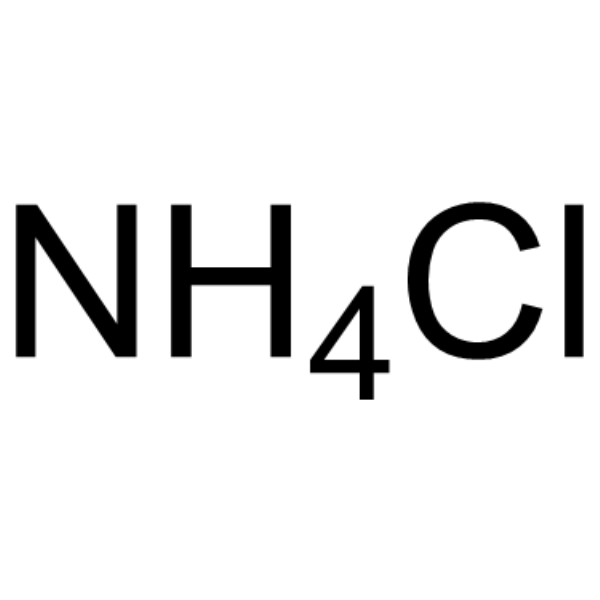
  • HY-Y1269
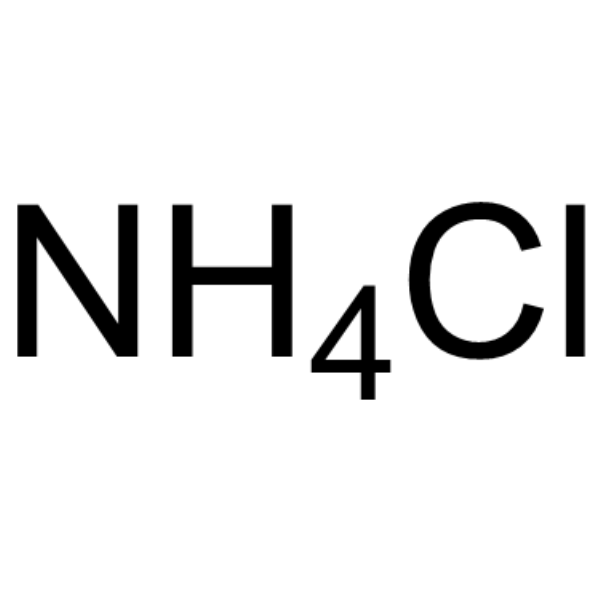
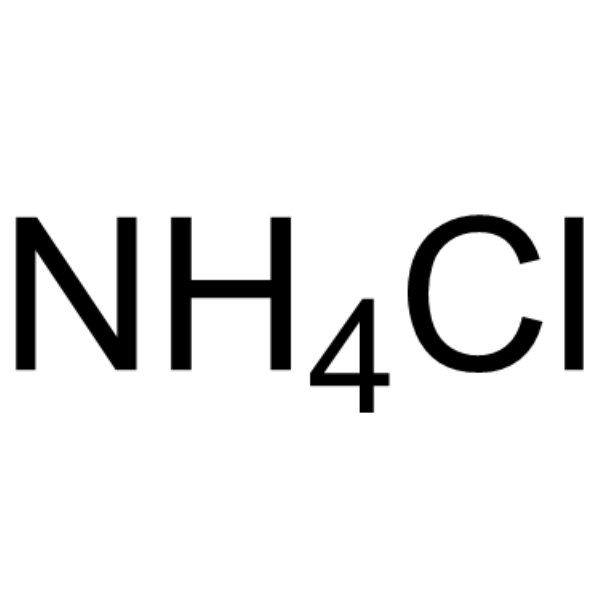
    Ammonium chloride, AR, 99.5%
    Maximum Cited Publications
    47 Publications Verification

    Environmental Pollutants Autophagy Cancer
    Ammonium chloride, as a heteropolar compound with pH value regulation, can cause intracellular alkalization and metabolic acidosis thus effecting enzymatic activity and influencing the process of biological system. Ammonium chloride is an autophagy inhibitor. Ammonium chloride is also a lysosome inhibitor .
    Ammonium chloride, AR, 99.5%
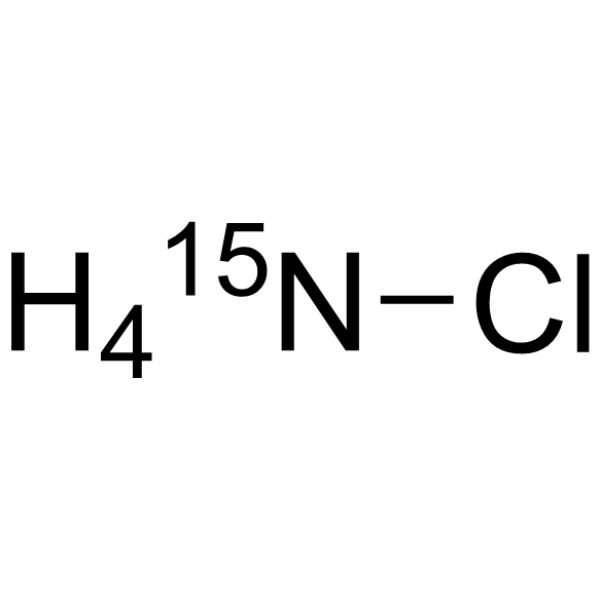
  • HY-Y1269S

    Autophagy Isotope-Labeled Compounds Cancer
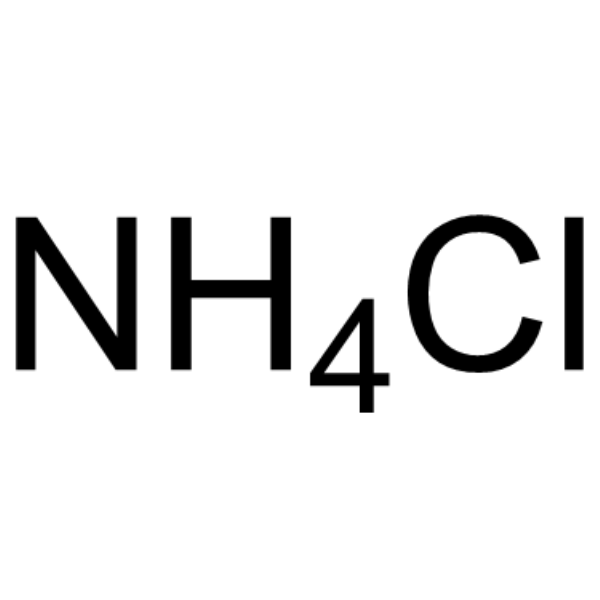
    Ammonium chloride- 15N is the 15N labeled Ammonium chloride (HY-Y1269). Ammonium chloride, as a heteropolar compound with pH value regulation, can cause intracellular alkalization and metabolic acidosis thus effecting enzymatic activity and influencing the process of biological system. Ammonium chloride is an autophagy inhibitor. Ammonium chloride is also a lysosome inhibitor .
    Ammonium chloride-15N
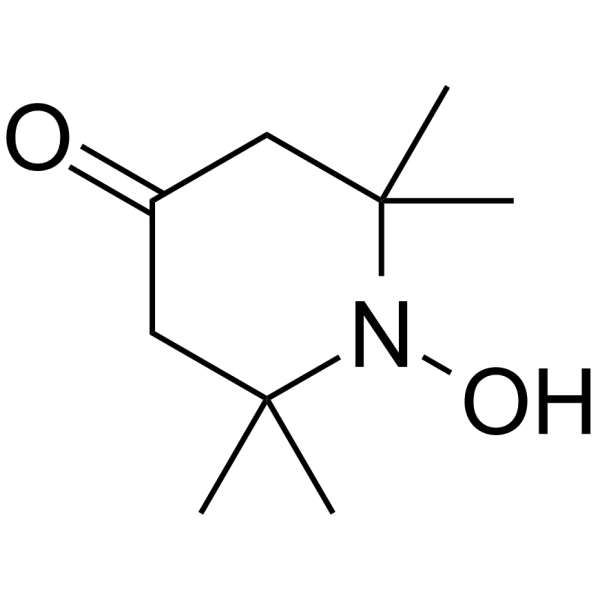
  • HY-23033
    Tempone-H
    1 Publications Verification

    Biochemical Assay Reagents Neurological Disease
    Tempone-H may be used as a spin trap in chemical and biological systems to quantify peroxynitrite and superoxide radical formation. Ferric and cupric ions are effective oxidants of Tempone-H .
    Tempone-H
  • HY-P2980

    EC 3.4.2.1

    Endogenous Metabolite Others
    Carboxypeptidase A, Bovine pancreas (EC 3.4.2.1) is a zinc-containing metalloprotease, is often used in biochemical studies. Carboxypeptidase A catalyzes the hydrolysis of the peptide bonds that are adjacent to the C-terminal end of a polypeptide chain. Carboxypeptidase A is a prototypical enzyme for metalloproteases that plays important roles in biological systems .
    Carboxypeptidase A, Bovine pancreas
  • HY-W698390

    Biochemical Assay Reagents Others
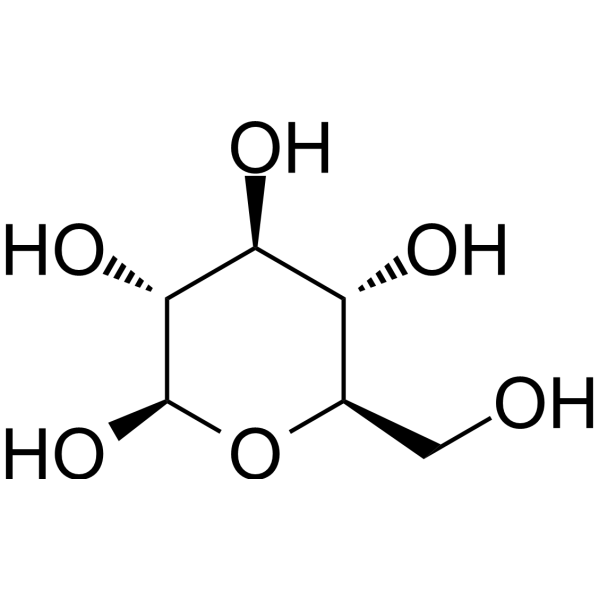
    3′-Sialyl-N-acetyllactosamine is a class of biochemical reagents used in glycobiology research. Glycobiology studies the structure, synthesis, biology, and evolution of sugars. It involves carbohydrate chemistry, enzymology of glycan formation and degradation, protein-glycan recognition, and the role of glycans in biological systems. This field is closely related to basic research, biomedicine, and biotechnology .
    3′-Sialyl-N-acetyllactosamine
  • HY-W105704

    Biochemical Assay Reagents Others
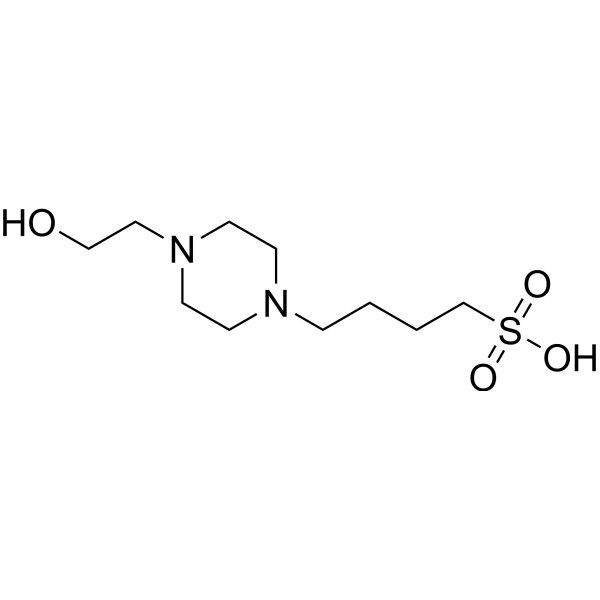
    HEPBS is a zwitterionic buffering agent with a pH range (7.6-9.0) similar to that of biological systems. HEPBS can be used in the culture of cells .
    HEPBS
  • HY-W718145

    Biochemical Assay Reagents Others
    D-Mannose,6-(dihydrogen phosphate) (sodium) is a class of biochemical reagents used in glycobiology research. Glycobiology studies the structure, synthesis, biology, and evolution of sugars. It involves carbohydrate chemistry, enzymology of glycan formation and degradation, protein-glycan recognition, and the role of glycans in biological systems. This field is closely related to basic research, biomedicine, and biotechnology .
    D-Mannose,6-dihydrogen phosphate sodium
  • HY-W441330

    Biochemical Assay Reagents Others
    L-Erythrulose is a class of biochemical reagents used in glycobiology research. Glycobiology studies the structure, synthesis, biology, and evolution of sugars. It involves carbohydrate chemistry, enzymology of glycan formation and degradation, protein-glycan recognition, and the role of glycans in biological systems. This field is closely related to basic research, biomedicine, and biotechnology .
    L-Erythrulose
  • HY-Y1269AS

    Isotope-Labeled Compounds Autophagy Cancer
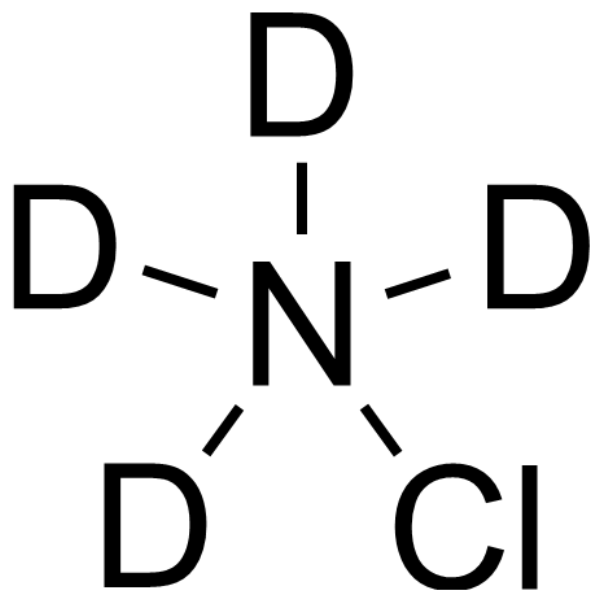
    Ammonium chloride-d4 is the deuterium labeled Ammonium chloride. Ammonium chloride, as a heteropolar compound with pH value regulation, can cause intracellular alkalization and metabolic acidosis thus effecting enzymatic activity and influencing the process of biological system. Ammonium chloride is an autophagy inhibitor. Ammonium chloride is also a lysosome inhibitor .
    Ammonium chloride-d4
  • HY-130347

    Endogenous Metabolite Others
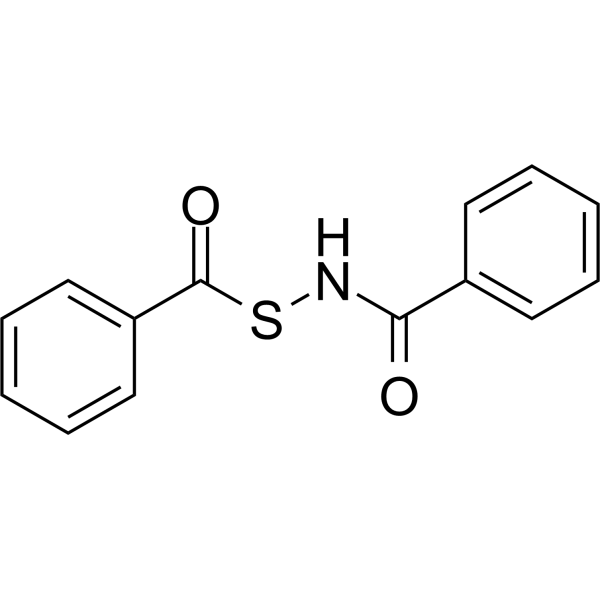
    H2S Donor 5a is a cysteine-activated H2S donor. H2S plays important roles in biological systems. H2S Donor 5a is a useful tool in H2S research .
    H2S Donor 5a
  • HY-W540687

    Biochemical Assay Reagents
    Disialyloctasaccharide is a class of biochemical reagents used in glycobiology studies. Glycobiology studies the structure, synthesis, biology, and evolution of sugars. It deals with carbohydrate chemistry, glycan formation and degradation enzymology, protein-glycan recognition, and the role of glycans in biological systems. The field is closely related to basic research, biomedicine and biotechnology .
    Disialyloctasaccharide
  • HY-W854445
    Lewis-b tetrasaccharide
    1 Publications Verification

    Biochemical Assay Reagents Others
    Lewis-b tetrasaccharide is a class of biochemical reagents used in glycobiology research. Glycobiology studies the structure, synthesis, biology, and evolution of sugars. It involves carbohydrate chemistry, enzymology of glycan formation and degradation, protein-glycan recognition, and the role of glycans in biological systems. This field is closely related to basic research, biomedicine, and biotechnology .
    Lewis-b tetrasaccharide
  • HY-W795464

    Biochemical Assay Reagents
    3-Phosphono pyruvic acid is a class of biochemical reagents used in glycobiology research. Glycobiology studies the structure, synthesis, biology, and evolution of sugars. It deals with carbohydrate chemistry, glycan formation and degradation enzymology, protein-glycan recognition, and the role of glycans in biological systems. The field is closely related to basic research, biomedicine and biotechnology .
    3-Phosphono pyruvic acid
  • HY-W556338

    Biochemical Assay Reagents
    α-D-Glucose 1-phosphate (dipotassium) is a biochemical reagent used in the study of glycobiology. Glycobiology studies the structure, synthesis, biology, and evolution of sugars. It deals with carbohydrate chemistry, glycan formation and degradation enzymology, protein-glycan recognition, and the role of glycans in biological systems. The field is closely related to basic research, biomedicine and biotechnology .
    α-D-Glucose 1-phosphate dipotassium
  • HY-A0081S

    Dopamine Receptor Neurological Disease Cancer
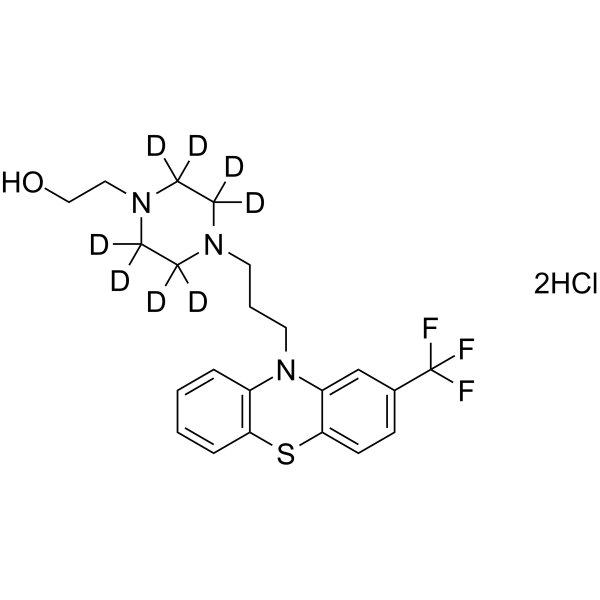
    Fluphenazine-d8 (dihydrochloride) is the deuterium labeled Fluphenazine dihydrochloride. Fluphenazine dihydrochloride is a phenothiazine-class D1DR and D2DR inhibitor; used to deliver Fluphenazine to biological systems in studies probing the effects and metabolic fates of this commonly used dopamine antagonist.
    Fluphenazine-d8 dihydrochloride
  • HY-166976

    Biochemical Assay Reagents Others
    Trifucosyllacto-N-hexaose is a class of biochemical reagents used in glycobiology research. Glycobiology studies the structure, synthesis, biology, and evolution of sugars. It involves carbohydrate chemistry, enzymology of glycan formation and degradation, protein-glycan recognition, and the role of glycans in biological systems. This field is closely related to basic research, biomedicine, and biotechnology .
    Trifucosyllacto-N-hexaose
  • HY-167291

    Biochemical Assay Reagents Others
    D-Arabinose 5-phosphate (sodium) is a class of biochemical reagents used in glycobiology research. Glycobiology studies the structure, synthesis, biology, and evolution of sugars. It involves carbohydrate chemistry, enzymology of glycan formation and degradation, protein-glycan recognition, and the role of glycans in biological systems. This field is closely related to basic research, biomedicine, and biotechnology .
    D-Arabinose 5-phosphate sodium
  • HY-W088238

    Biochemical Assay Reagents Others
    Methyl α-D-galactopyranoside is a class of biochemical reagents used in glycobiology research. Glycobiology studies the structure, synthesis, biology, and evolution of sugars. It involves carbohydrate chemistry, enzymology of glycan formation and degradation, protein-glycan recognition, and the role of glycans in biological systems. This field is closely related to basic research, biomedicine, and biotechnology .
    Methyl α-D-galactopyranoside
  • HY-145501A

    Biochemical Assay Reagents Others
    Sucrose hexasulfate (potassium) is a class of biochemical reagents used in glycobiology research. Glycobiology studies the structure, synthesis, biology, and evolution of sugars. It involves carbohydrate chemistry, enzymology of glycan formation and degradation, protein-glycan recognition, and the role of glycans in biological systems. This field is closely related to basic research, biomedicine, and biotechnology .
    Sucrose hexasulfate potassium
  • HY-W242887

    Biochemical Assay Reagents Others
    D-Gulose (50% in water) is a class of biochemical reagents used in glycobiology research. Glycobiology studies the structure, synthesis, biology, and evolution of sugars. It involves carbohydrate chemistry, enzymology of glycan formation and degradation, protein-glycan recognition, and the role of glycans in biological systems. This field is closely related to basic research, biomedicine, and biotechnology .
    D-Gulose (50% in water)
  • HY-W699750

    Biochemical Assay Reagents Others
    6-α-D-Glucopyranosyl maltotriose is a class of biochemical reagents used in glycobiology research. Glycobiology studies the structure, synthesis, biology, and evolution of sugars. It involves carbohydrate chemistry, enzymology of glycan formation and degradation, protein-glycan recognition, and the role of glycans in biological systems. This field is closely related to basic research, biomedicine, and biotechnology .
    6-α-D-Glucopyranosyl maltotriose
  • HY-W048232

    Biochemical Assay Reagents Others
    Allyl α-D-mannopyranoside is a class of biochemical reagents used in glycobiology research. Glycobiology studies the structure, synthesis, biology, and evolution of sugars. It involves carbohydrate chemistry, enzymology of glycan formation and degradation, protein-glycan recognition, and the role of glycans in biological systems. This field is closely related to basic research, biomedicine, and biotechnology .
    Allyl α-D-mannopyranoside
  • HY-172403

    Biochemical Assay Reagents Others
    Poly-L-aspartic acid is an acidic polypeptide that functions via pH-dependent conformational changes. Poly-L-aspartic acid is promising for research of pH-responsive structural transitions in biological systems .
    Poly-L-aspartic acid
  • HY-W123012

    3-(4-Azidophenyl)propiolonitrile

    Fluorescent Dye
    APN-Azide (3-(4-Azidophenyl)propiolonitrile) is a codon-active compound that can achieve specific labeling of target molecules in biological systems through its unique chemical structure. APN-Azide can be used for bioimaging and the development of molecular probes to study biological processes within cells.
    APN-Azide
  • HY-W699477

    Biochemical Assay Reagents Others
    Anthrose is a class of biochemical reagents used in glycobiology research. Glycobiology studies the structure, synthesis, biology, and evolution of sugars. It involves carbohydrate chemistry, enzymology of glycan formation and degradation, protein-glycan recognition, and the role of glycans in biological systems. This field is closely related to basic research, biomedicine, and biotechnology .
    Anthrose
  • HY-167261

    Biochemical Assay Reagents Others
    Polygalacturonic acid (potassium) is a class of biochemical reagents used in glycobiology research. Glycobiology studies the structure, synthesis, biology, and evolution of sugars. It involves carbohydrate chemistry, enzymology of glycan formation and degradation, protein-glycan recognition, and the role of glycans in biological systems. This field is closely related to basic research, biomedicine, and biotechnology .
    Polygalacturonic acid potassium
  • HY-166978

    Biochemical Assay Reagents Others
    D-Lyxosylamine is a class of biochemical reagents used in glycobiology research. Glycobiology studies the structure, synthesis, biology, and evolution of sugars. It involves carbohydrate chemistry, enzymology of glycan formation and degradation, protein-glycan recognition, and the role of glycans in biological systems. This field is closely related to basic research, biomedicine, and biotechnology .
    D-Lyxosylamine
  • HY-W708061

    Biochemical Assay Reagents
    Benoxaprofen glucuronide is a class of biochemical reagents used in the study of glycobiology. Glycobiology studies the structure, synthesis, biology, and evolution of sugars. It deals with carbohydrate chemistry, glycan formation and degradation enzymology, protein-glycan recognition, and the role of glycans in biological systems. The field is closely related to basic research, biomedicine and biotechnology .
    Benoxaprofen glucuronide
  • HY-W415791

    Biochemical Assay Reagents Others
    D-Lactal is a class of biochemical reagents used in glycobiology research. Glycobiology studies the structure, synthesis, biology, and evolution of sugars. It involves carbohydrate chemistry, enzymology of glycan formation and degradation, protein-glycan recognition, and the role of glycans in biological systems. This field is closely related to basic research, biomedicine, and biotechnology .
    D-Lactal
  • HY-W701232

    Biochemical Assay Reagents
    epi-Sancycline (hydrochloride) is a class of biochemical reagents used for glycobiology research. Glycobiology studies the structure, synthesis, biology, and evolution of sugars. It deals with carbohydrate chemistry, glycan formation and degradation enzymology, protein-glycan recognition, and the role of glycans in biological systems. The field is closely related to basic research, biomedicine and biotechnology .
    epi-Sancycline hydrochloride
  • HY-W854386

    Biochemical Assay Reagents Others
    B-Pentasaccharide is a class of biochemical reagents used in glycobiology research. Glycobiology studies the structure, synthesis, biology, and evolution of sugars. It involves carbohydrate chemistry, enzymology of glycan formation and degradation, protein-glycan recognition, and the role of glycans in biological systems. This field is closely related to basic research, biomedicine, and biotechnology .
    B-Pentasaccharide
  • HY-W699102

    Biochemical Assay Reagents Others
    Methyl fucopyranoside is a class of biochemical reagents used in glycobiology research. Glycobiology studies the structure, synthesis, biology, and evolution of sugars. It involves carbohydrate chemistry, enzymology of glycan formation and degradation, protein-glycan recognition, and the role of glycans in biological systems. This field is closely related to basic research, biomedicine, and biotechnology .
    Methyl fucopyranoside
  • HY-W698823

    Biochemical Assay Reagents Others
    Laminaribiose octaacetate is a class of biochemical reagents used in glycobiology research. Glycobiology studies the structure, synthesis, biology, and evolution of sugars. It involves carbohydrate chemistry, enzymology of glycan formation and degradation, protein-glycan recognition, and the role of glycans in biological systems. This field is closely related to basic research, biomedicine, and biotechnology .
    Laminaribiose octaacetate
  • HY-W331816

    Biochemical Assay Reagents Others
    myo-Inositol,hexaacetate is a class of biochemical reagents used in glycobiology research. Glycobiology studies the structure, synthesis, biology, and evolution of sugars. It involves carbohydrate chemistry, enzymology of glycan formation and degradation, protein-glycan recognition, and the role of glycans in biological systems. This field is closely related to basic research, biomedicine, and biotechnology .
    myo-Inositol,hexaacetate
  • HY-W701762

    Biochemical Assay Reagents Others
    D-Maltotriose peracetate is a class of biochemical reagents used in glycobiology research. Glycobiology studies the structure, synthesis, biology, and evolution of sugars. It involves carbohydrate chemistry, enzymology of glycan formation and degradation, protein-glycan recognition, and the role of glycans in biological systems. This field is closely related to basic research, biomedicine, and biotechnology .
    D-Maltotriose peracetate
  • HY-167561

    Biochemical Assay Reagents Others
    Linear B trisaccharide is a class of biochemical reagents used in glycobiology research. Glycobiology studies the structure, synthesis, biology, and evolution of sugars. It involves carbohydrate chemistry, enzymology of glycan formation and degradation, protein-glycan recognition, and the role of glycans in biological systems. This field is closely related to basic research, biomedicine, and biotechnology .
    Linear B trisaccharide
  • HY-W698721

    Biochemical Assay Reagents Others
    N-Acetylmuramic acid methyl ester is a class of biochemical reagents used in glycobiology research. Glycobiology studies the structure, synthesis, biology, and evolution of sugars. It involves carbohydrate chemistry, enzymology of glycan formation and degradation, protein-glycan recognition, and the role of glycans in biological systems. This field is closely related to basic research, biomedicine, and biotechnology .
    N-Acetylmuramic acid methyl ester
  • HY-167804

    Biochemical Assay Reagents
    Beclomethasone 21-propionate is a class of biochemical reagents for the study of glycobiology. Glycobiology studies the structure, synthesis, biology, and evolution of sugars. It deals with carbohydrate chemistry, glycan formation and degradation enzymology, protein-glycan recognition, and the role of glycans in biological systems. The field is closely related to basic research, biomedicine and biotechnology .
    Beclomethasone 21-propionate
  • HY-W739406

    Biochemical Assay Reagents Others
    D-Cellopentose heptadecaacetate is a class of biochemical reagents used in glycobiology research. Glycobiology studies the structure, synthesis, biology, and evolution of sugars. It involves carbohydrate chemistry, enzymology of glycan formation and degradation, protein-glycan recognition, and the role of glycans in biological systems. This field is closely related to basic research, biomedicine, and biotechnology .
    D-Cellopentose heptadecaacetate
  • HY-W153917

    Biochemical Assay Reagents
    Diatrizoic acid EP impurity A is an organic compound with potential effects on biological systems and specific pharmacological activities. Diatrizoic acid EP impurity A can be used as a contrast agent in imaging examinations to enhance the clarity of images such as X-rays and CT scans. Diatrizoic acid EP impurity A has also been studied for the separation and analysis of compounds.
    Diatrizoic acid EP impurity A
  • HY-W416188

    Biochemical Assay Reagents Others
    N-Carbobenzyloxy mannosamine is a class of biochemical reagents used in glycobiology research. Glycobiology studies the structure, synthesis, biology, and evolution of sugars. It involves carbohydrate chemistry, enzymology of glycan formation and degradation, protein-glycan recognition, and the role of glycans in biological systems. This field is closely related to basic research, biomedicine, and biotechnology .
    N-Carbobenzyloxy mannosamine
  • HY-W854390

    Biochemical Assay Reagents Others
    β-L-Allopyranose is a class of biochemical reagents used in glycobiology research. Glycobiology studies the structure, synthesis, biology, and evolution of sugars. It involves carbohydrate chemistry, enzymology of glycan formation and degradation, protein-glycan recognition, and the role of glycans in biological systems. This field is closely related to basic research, biomedicine, and biotechnology .
    β-L-Allopyranose
  • HY-W698432

    Biochemical Assay Reagents Others
    D-(+)-Cellohexose eicosaacetate is a class of biochemical reagents used in glycobiology research. Glycobiology studies the structure, synthesis, biology, and evolution of sugars. It involves carbohydrate chemistry, enzymology of glycan formation and degradation, protein-glycan recognition, and the role of glycans in biological systems. This field is closely related to basic research, biomedicine, and biotechnology .
    D-(+)-Cellohexose eicosaacetate
  • HY-27949

    Biochemical Assay Reagents Others
    N-Acetyllactosamine Heptaacetate is a class of biochemical reagents used in glycobiology research. Glycobiology studies the structure, synthesis, biology, and evolution of sugars. It involves carbohydrate chemistry, enzymology of glycan formation and degradation, protein-glycan recognition, and the role of glycans in biological systems. This field is closely related to basic research, biomedicine, and biotechnology .
    N-Acetyllactosamine Heptaacetate
  • HY-W142936

    Biochemical Assay Reagents Others
    Methyl D-galacturonate is a class of biochemical reagent used in glycobiology research. Glycobiology investigates the structure, synthesis, biology and evolution of sugars. It covers carbohydrate chemistry, enzymology of glycan formation and degradation, protein-glycan recognition, as well as the roles of glycans in biological systems. This field is closely related to basic research, biomedicine and biotechnology .
    Methyl D-galacturonate
  • HY-W747581

    Biochemical Assay Reagents Others
    Deoxycorticosterone 21-glucoside is a class of biochemical reagents used in glycobiology research. Glycobiology studies the structure, synthesis, biology, and evolution of sugars. It involves carbohydrate chemistry, enzymology of glycan formation and degradation, protein-glycan recognition, and the role of glycans in biological systems. This field is closely related to basic research, biomedicine, and biotechnology .
    Deoxycorticosterone 21-glucoside
  • HY-W415887

    Biochemical Assay Reagents
    6-Deoxy-L-talose is a class of biochemical reagents used in glycobiology research. Glycobiology studies the structure, synthesis, biology, and evolution of sugars. It deals with carbohydrate chemistry, glycan formation and degradation enzymology, protein-glycan recognition, and the role of glycans in biological systems. The field is closely related to basic research, biomedicine and biotechnology .
    6-Deoxy-L-talose
  • HY-163970

    Biochemical Assay Reagents Others
    Heparin disaccharide I-A (sodium)is a class of biochemical reagents used in glycobiology research. Glycobiology studies the structure, synthesis, biology, and evolution of sugars. It involves carbohydrate chemistry, enzymology of glycan formation and degradation, protein-glycan recognition, and the role of glycans in biological systems. This field is closely related to basic research, biomedicine, and biotechnology .
    Heparin disaccharide I-A sodium
  • HY-W795962

    Biochemical Assay Reagents Others
    6-Phosphogluconic acid (tricyclohexylammonium) is a class of biochemical reagents used in glycobiology research. Glycobiology studies the structure, synthesis, biology, and evolution of sugars. It involves carbohydrate chemistry, enzymology of glycan formation and degradation, protein-glycan recognition, and the role of glycans in biological systems. This field is closely related to basic research, biomedicine, and biotechnology .
    6-Phosphogluconic acid tricyclohexylammonium
  • HY-W700995

    Biochemical Assay Reagents Others
    Methyl α-L-Idopyranosiduronic Acid Sodium Salt is a class of biochemical reagents used in glycobiology research. Glycobiology studies the structure, synthesis, biology, and evolution of sugars. It involves carbohydrate chemistry, enzymology of glycan formation and degradation, protein-glycan recognition, and the role of glycans in biological systems. This field is closely related to basic research, biomedicine, and biotechnology .
    Methyl α-L-Idopyranosiduronic Acid Sodium Salt

Inquiry Online

Your information is safe with us. * Required Fields.

Salutation


Country or Region *

Applicant Name *


Organization Name *

Department *


Email Address *


Product Name *

Cat. No.


Requested quantity *

Phone Number *


Remarks

Inquiry Online

Inquiry Information

Product Name:
Cat. No.:
Quantity:
MCE Japan Authorized Agent: