1. Search Result
Search Result
Results for "

calcium ionophore

" in MedChemExpress (MCE) Product Catalog:

30

Inhibitors & Agonists

12

Natural
Products

3

Isotope-Labeled Compounds

Cat. No. Product Name Target Research Areas Chemical Structure
  • HY-13434
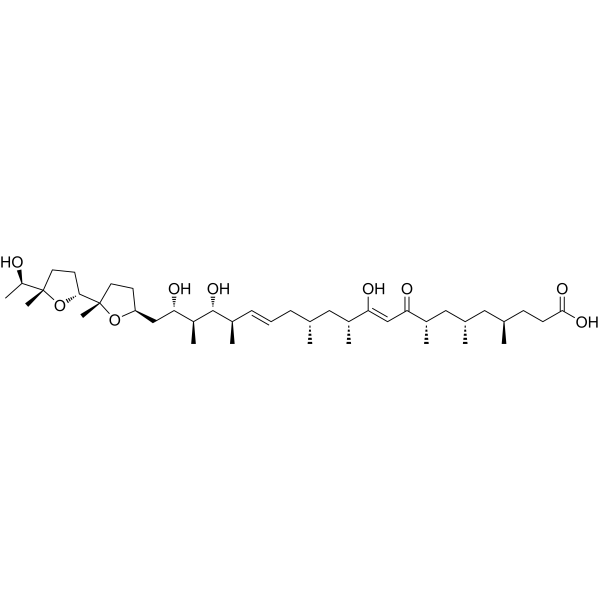
    Ionomycin
    Maximum Cited Publications
    120 Publications Verification

    SQ23377

    Calcium Channel PKC Bacterial Apoptosis Antibiotic Infection Cancer
    Ionomycin (SQ23377) is a potent, selective calcium ionophore and an antibiotic produced by Streptomyces conglobatus. Ionomycin (SQ23377) is highly specific for divalent cations (Ca>Mg>Sr=Ba). Ionomycin (SQ23377) promotes apoptosis. Ionomycin also induces the activation of protein kinase C (PKC) .
    Ionomycin
  • HY-N6687
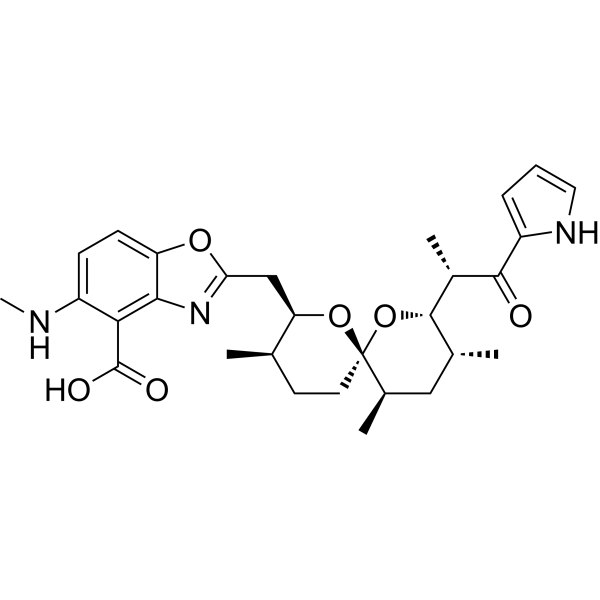
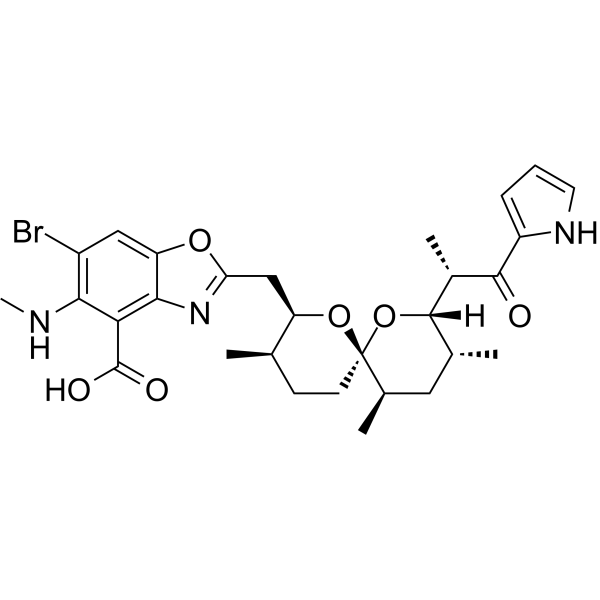
    Calcimycin
    20+ Cited Publications

    A-23187; Antibiotic A-23187

    Oxidative Phosphorylation Bacterial Fungal Apoptosis Autophagy Antibiotic Infection Inflammation/Immunology Cancer
    Calcimycin (A-23187) is an antibiotic and a unique divalent cation ionophore (like calcium and magnesium). Calcimycin induces Ca 2+-dependent cell death by increasing intracellular calcium concentration. Calcimycin inhibits the growth of Gram-positive bacteria and some fungi. Calcimycin also inhibits the activity of ATPase and uncouples oxidative phosphorylation (OXPHOS) of mammalian cells. Calcimycin induces apoptosis and autophagy .
    Calcimycin
  • HY-13434A
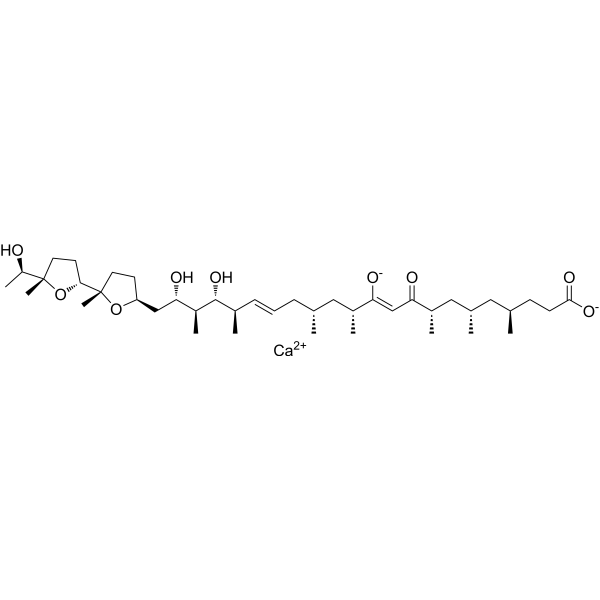
    Ionomycin calcium
    Maximum Cited Publications
    120 Publications Verification

    SQ23377 calcium

    Calcium Channel PKC Bacterial Apoptosis Antibiotic Infection Cancer
    Ionomycin calcium (SQ23377 calcium) is a potent, selective calcium ionophore and an antibiotic produced by Streptomyces conglobatus. Ionomycin calcium (SQ23377 calcium) is highly specific for divalent cations (Ca>Mg>Sr=Ba). Ionomycin (SQ23377) promotes apoptosis. Ionomycin calcium (SQ23377 calcium) also induces the activation of protein kinase C (PKC) .
    Ionomycin calcium
  • HY-108611
    AACOCF3
    4 Publications Verification

    Arachidonyl trifluoromethyl ketone

    Phospholipase Cardiovascular Disease
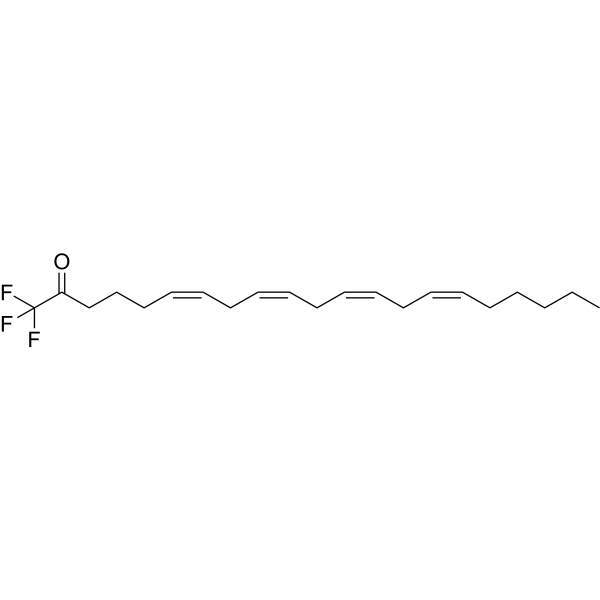
    AACOCF3 (Arachidonyl trifluoromethyl ketone) is a cell-permeant trifluoromethyl ketone analog of arachidonic acid. AACOCF3 is a potent and selective slow binding inhibitor of the 85-kDa cytosolic phospholipase A2 (cPLA2). AACOCF3 blocks production of arachidonate and 12-hydroxyeicosatetraenoic acid by calcium ionophore-challenged platelets. AACOCF3 inhibits glucose-induced insulin secretion from isolated rat islets. AACOCF3 has the potential for the research of cardiovascular disease .
    AACOCF3
  • HY-B1327
    Chlortetracycline hydrochloride
    5+ Cited Publications

    7-Chlorotetracycline hydrochloride

    Bacterial Antibiotic Parasite Infection Inflammation/Immunology
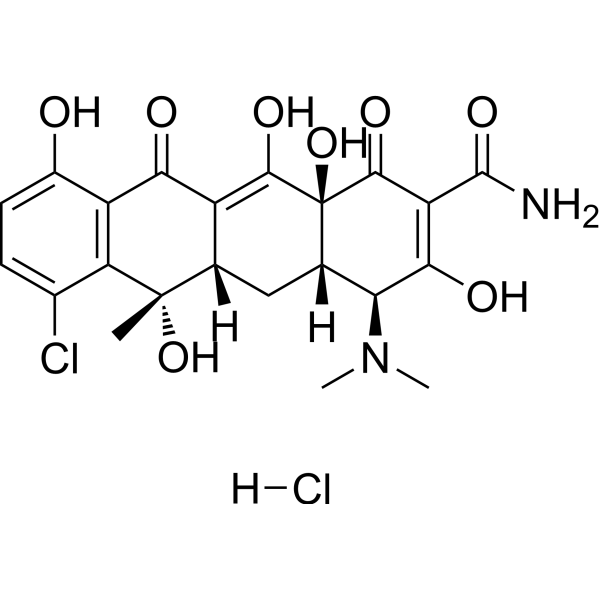
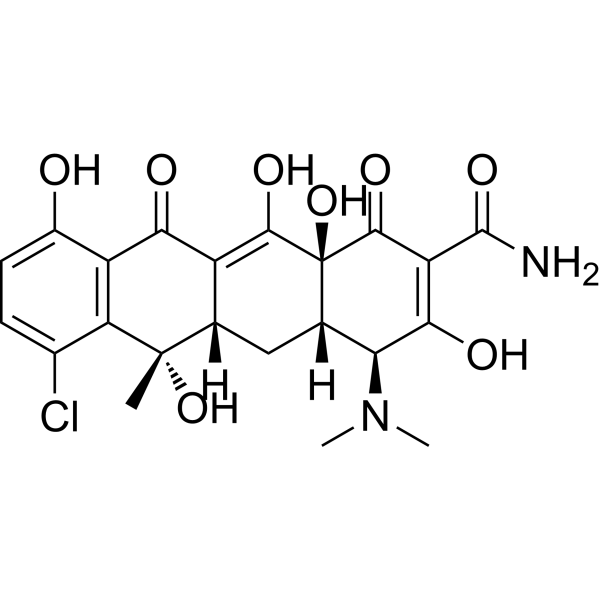
    Chlortetracycline hydrochloride (7-Chlorotetracycline hydrochloride) is an orally active, effective and selectively methanogenic bacteria inhibitor with bactericidal effects. Chlortetracycline hydrochloride is also a antibiotic that acts by inhibiting bacterial protein synthesis. Additionally, Chlortetracycline hydrochloride is a specific and potent calcium ionophore antibiotic, inhibiting binding of aminoacyl-tRNA to ribosomes .
    Chlortetracycline hydrochloride
  • HY-136460

    ETH 1001

    Calcium Channel Others
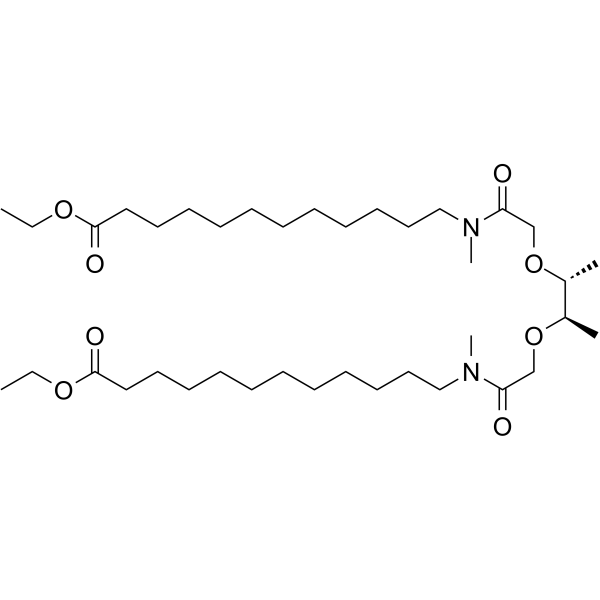
    Calcium ionophore I (ETH 1001) is a selective Ca 2+ ionophore for biological membranes. Calcium ionophore I can be used in Ca2+-selective microelectrodes that can be used for quantitative intracellular measurements of resting Ca2+-activities and of slowly changing Ca2+-levels .
    Calcium ionophore I
  • HY-B1327A

    7-Chlorotetracycline

    Bacterial Antibiotic Parasite Infection Inflammation/Immunology
    Chlortetracycline (7-Chlorotetracycline) is an orally active, effective and selectively methanogenic bacteria inhibitor with bactericidal effects. Chlortetracycline is also a antibiotic that acts by inhibiting bacterial protein synthesis. Additionally, Chlortetracycline is a specific and potent calcium ionophore antibiotic, inhibiting binding of aminoacyl-tRNA to ribosomes .
    Chlortetracycline
  • HY-112825

    Platelet-activating Factor Receptor (PAFR) Inflammation/Immunology
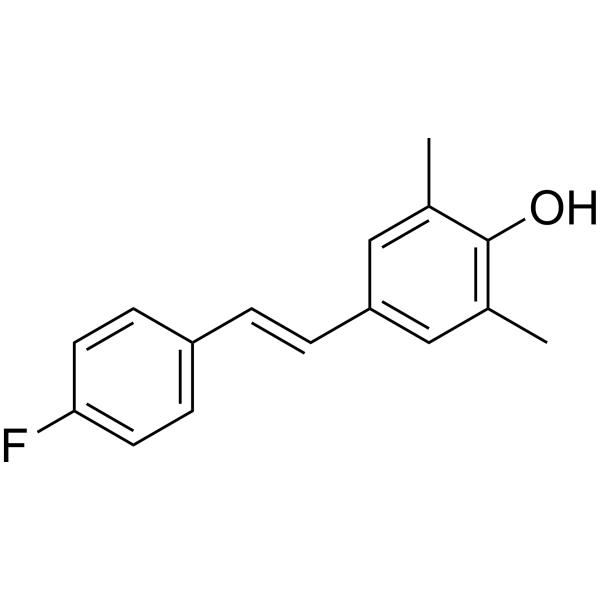
    TSI-01 is a pro-inflammatory phospholipid mediator that is rapidly synthesized by lyso-PAF acetyltransferase (lyso-PAFAT) in response to extracellular stimuli. Two types of lyso-PAFAT have been identified: lysophosphatidylcholine acyltransferase (LPCAT)1, which is mostly expressed in the lungs, and LPCAT2, which is expressed in inflammatory cells. TSI-01 is a selective inhibitor of LPCAT2 (IC50s=0.47 versus 3.02 μM for human LPCAT2 and LPCAT1, respectively). 60 μM it is shown to suppress PAF biosynthesis in mouse peritoneal macrophages stimulated with a calcium ionophore.
    TSI-01
  • HY-139728

    calcium ionophore II

    Biochemical Assay Reagents Others
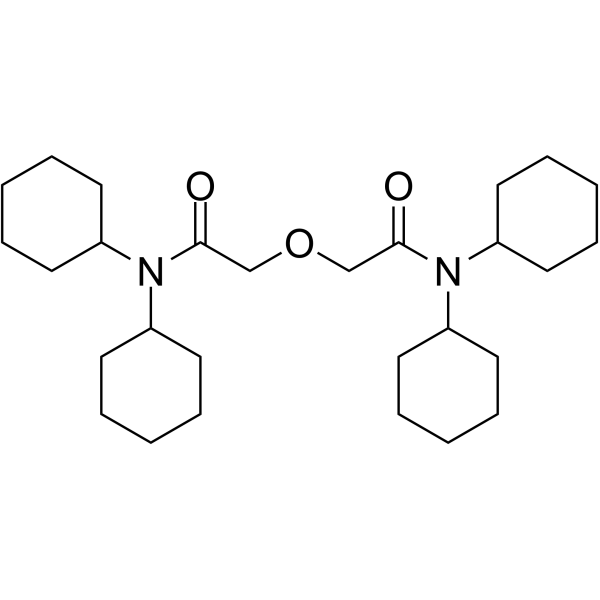
    N,N,N′,N′-Tetracyclohexyl-3-oxapentanediamide (Calcium ionophore II) is a lipophilic ionophore that can be used in preparing calcium ion-selective electrode .
    N,N,N′,N′-Tetracyclohexyl-3-oxapentanediamide
  • HY-N6694

    Calcium Channel Bacterial Apoptosis Antibiotic Infection Cancer
    4-Bromo A23187 is a halogenated analog of the highly selective calcium ionophore A-23187. 4-Bromo A23187, a calcium modulator, induces apoptosis in different cells, including HL-60 cells .
    4-Bromo A23187
  • HY-125703

    Estrogen Receptor/ERR Apoptosis Infection Inflammation/Immunology Endocrinology Cancer
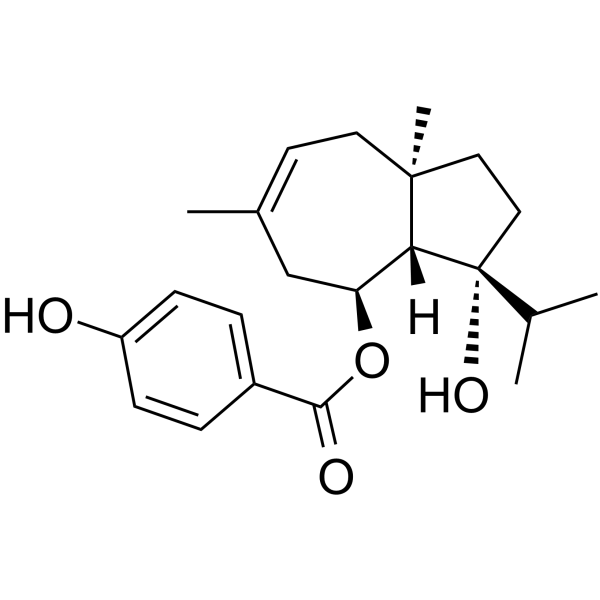
    Ferutinin, a natural terpenoid compound, is an estrogen receptor ERα agonist and estrogen ERβ-receptor agonist/antagonist with IC50s of 33.1 nM and 180.5 nM, respectively. Ferutinin acts as an electrogenic Ca 2+-ionophore that increases calcium permeability of lipid bilayer membranes, mitochondria. Ferutinin possesses estrogenic, antitumor, antibacterial and antiinflammatory activities .
    Ferutinin
  • HY-B1327S

    7-Chlorotetracycline-d6 hydrochloride

    Bacterial Antibiotic Infection
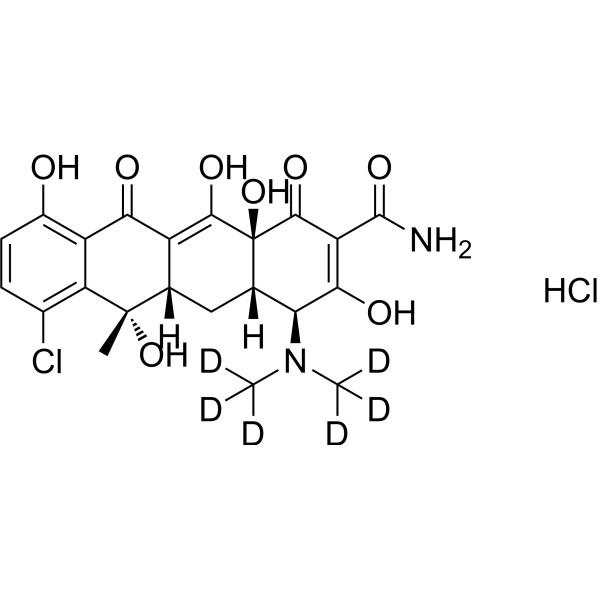
    Chlortetracycline-d6 (hydrochloride) is the deuterium labeled Chlortetracycline hydrochloride. Chlortetracycline hydrochloride (7-Chlorotetracycline hydrochloride) is a specific and potent calcium ionophore antibiotic, inhibits binding of aminoacyl-tRNA to ribosomes.
    Chlortetracycline-d6 hydrochloride
  • HY-10437

    MK-0633

    Lipoxygenase Inflammation/Immunology
    Setileuton (MK-0633) is an inhibitor for 5-lipoxygenase, that inhibits the oxidation of arachidonic acid by recombinant human 5-LO, and the production of LTB4 in calcium ionophore-stimulated human whole blood, with IC50 of 3.9 and 52 nM, respectively .
    Setileuton
  • HY-W653977

    7-Chlorotetracycline-13C,d3 hydrochloride

    Isotope-Labeled Compounds Antibiotic Bacterial Parasite Infection
    Chlortetracycline-13C,d3 hydrochloride (7-Chlorotetracycline-13C,d3 hydrochloride) is the 13C- and deuterium labeled Chlortetracycline hydrochloride (HY-B1327). Chlortetracycline hydrochloride is an orally active, selective antibiotic, that inhibits methanogenic bacteria through inhibition of bacterial protein synthesis. Chlortetracycline hydrochloride is a specific and potent calcium ionophore antibiotic, that inhibits binding of aminoacyl-tRNA to ribosomes .
    Chlortetracycline-13C,d3 hydrochloride
  • HY-W674112

    ETH 1117

    Endogenous Metabolite Others
    Magnesium ionophore I (ETH 1117) serves as the primary component for the development of calcium-magnesium selective electrodes.
    Magnesium ionophore I
  • HY-13434AR

    SQ23377 calcium (Standard)

    Reference Standards Calcium Channel PKC Bacterial Apoptosis Antibiotic Infection Cancer
    2-(1-Piperazinyl)pyrimidine (Standard) is the analytical standard of 2-(1-Piperazinyl)pyrimidine. This product is intended for research and analytical applications. 2-(1-Piperazinyl)pyrimidine is the major metabolite of Tandospirone (HY-14558) .
    Ionomycin calcium (Standard)
  • HY-N6687B

    A-23187 hemimagnesium; Antibiotic A-23187 hemimagnesium

    Oxidative Phosphorylation Antibiotic Bacterial Fungal Apoptosis Autophagy Infection Cancer
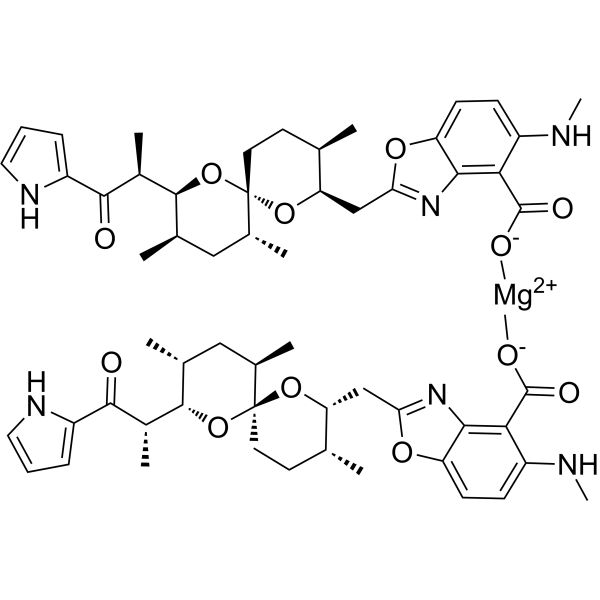
    Calcimycin (A-23187) hemimagnesium is an antibiotic and a unique divalent cation ionophore (like calcium and magnesium). Calcimycin hemimagnesium induces Ca 2+-dependent cell death by increasing intracellular calcium concentration. Calcimycin hemimagnesium inhibits the growth of Gram-positive bacteria and some fungi. Calcimycin hemimagnesium also inhibits the activity of ATPase and uncouples oxidative phosphorylation (OXPHOS) of mammalian cells. Calcimycin hemimagnesium induces apoptosis and autophagy .
    Calcimycin hemimagnesium
  • HY-139728R

    calcium ionophore II (Standard)

    Biochemical Assay Reagents Reference Standards Others
    N,N,N′,N′-Tetracyclohexyl-3-oxapentanediamide (Standard) is the analytical standard of N,N,N′,N′-Tetracyclohexyl-3-oxapentanediamide. This product is intended for research and analytical applications. N,N,N′,N′-Tetracyclohexyl-3-oxapentanediamide (Calcium ionophore II) is a lipophilic ionophore that can be used in preparing calcium ion-selective electrode .
    N,N,N′,N′-Tetracyclohexyl-3-oxapentanediamide (Standard)
  • HY-N15230

    Leukotriene Receptor Inflammation/Immunology
    Torososide B is an antiallergic compound that inhibits calcium ionophore A-induced leukotriene release from rat peritoneal mast cells .
    Torososide B
  • HY-120539

    BI-L-239

    Lipoxygenase Leukotriene Receptor Inflammation/Immunology
    Enofelast (BI-L-239), a 5-lipoxygenase (5-LO) inhibitor, exhibits an IC50 of 2.48 μM for inhibition of calcium ionophore-induced LTB4 generation .
    Enofelast
  • HY-10437A

    MK-0633 tosylate

    Lipoxygenase Inflammation/Immunology
    Setileuton tosylate is an inhibitor for 5-lipoxygenase, that inhibits the oxidation of arachidonic acid by recombinant human 5-LO, and the production of LTB4 in calcium ionophore-stimulated human whole blood, with IC50 of 3.9 and 52 nM, respectively .
    Setileuton tosylate
  • HY-N1204

    Others Others
    Soyacerebroside II is a calcium ionophoretic sphingoglycolipid that can be isolated from Soybean .
    Soyacerebroside II
  • HY-123103

    Lipoxygenase Histamine Receptor Inflammation/Immunology
    Linetastine is an orally active and potent 5-Lipoxygenase inhibitor. Linetastine shows antihistamine activity. Linetastine inhibits leukotriene production and antagonizes the effect of histamine. Linetastine inhibits the release of leukotrienes B4 and C4 from calcium ionophore-stimulated human leukocytes .
    Linetastine
  • HY-N6687R

    A-23187 (Standard); Antibiotic A-23187 (Standard)

    Oxidative Phosphorylation Reference Standards Bacterial Fungal Apoptosis Autophagy Antibiotic Infection Cancer
    Calcimycin (Standard) is the analytical standard of Calcimycin. This product is used for research and analytical applications. Calcimycin is an antibiotic and a unique divalent cation ionophore, such as calcium ions and magnesium ions. Calcimycin induces Ca 2+ -dependent cell death by increasing the intracellular calcium concentration. Calcimycin inhibits the growth of Gram-positive bacteria and some fungi, and also inhibits the activity of ATPase and uncouples the oxidative phosphorylation (OXPHOS) of mammalian cells, inducing apoptosis and autophagy.
    Calcimycin (Standard)
  • HY-N6687A

    A-23187 hemicalcium salt; Antibiotic A-23187 hemicalcium salt

    Oxidative Phosphorylation Bacterial Fungal Apoptosis Autophagy Antibiotic Infection Cancer
    Calcimycin (A-23187) hemicalcium salt is an antibiotic and a unique divalent cation ionophore (like calcium and magnesium). Calcimycin hemicalcium salt induces Ca 2+-dependent cell death by increasing intracellular calcium concentration. Calcimycin hemicalcium salt inhibits the growth of Gram-positive bacteria and some fungi. Calcimycin hemicalcium salt also inhibits the activity of ATPase and uncouples oxidative phosphorylation (OXPHOS) of mammalian cells. Calcimycin hemicalcium salt induces apoptosis and autophagy .
    Calcimycin hemicalcium salt
  • HY-145473

    15(S)-HETE-SAPE; 15(S)-Hydroxyeicosatetraenoic acid-SAPE; 1-Stearoyl-2-15(S)-HETE-sn-glycero-3-Phosphatidylethanolamine

    Endogenous Metabolite Metabolic Disease
    1-Stearoyl-2-15(S)-HETE-sn-glycero-3-PE (15(S)-HETE-SAPE) is a phospholipid containing stearic acid (HY-B2219) at the sn-1 position and 15(S)-HETE (HY-113336) at the sn-2 position. 1-Stearoyl-2-15(S)-HETE-sn-glycero-3-PE is formed by direct oxidation of 1-stearoyl-2-arachidonoyl-sn-glycero-3-PE (SAPE) by 15-LOX in human peripheral mononuclear cells activated with the calcium ionophore A23187 (HY-N6687).
    1-Stearoyl-2-15(S)-HETE-sn-glycero-3-PE
  • HY-N11725

    Fc Receptor (FcR) Inflammation/Immunology
    Phlorofucofuroeckol A is a FcεRI inhibitor with low cytotoxicity toward basophilic leukemia cells. Phlorofucofuroeckol A suppresses binding activity between IgE and FcεRI receptor. Phlorofucofuroeckol A inhibits histamine release from basophilic leukemia cells stimulated by IgE/anti-IgE or calcium ionophore A23187 (HY-N6687). Phlorofucofuroeckol A inhibits β-hexosaminidase release from basophilic leukemia cells stimulated by IgE/DNP-BSA. Phlorofucofuroeckol A can be used for the research of allergy disease .
    Phlorofucofuroeckol A
  • HY-N6687C

    A-23187 hemicalcium hemimagnesium; Antibiotic A-23187 hemicalcium hemimagnesium

    Oxidative Phosphorylation Bacterial Fungal Apoptosis Autophagy Antibiotic Infection Cancer
    Calcimycin (A-23187) hemicalcium hemimagnesium is an antibiotic and a unique divalent cation ionophore (like calcium and magnesium). Calcimycin hemicalcium hemimagnesium induces Ca 2+-dependent cell death by increasing intracellular calcium concentration. Calcimycin hemicalcium hemimagnesium inhibits the growth of Gram-positive bacteria and some fungi. Calcimycin hemicalcium hemimagnesium also inhibits the activity of ATPase and uncouples oxidative phosphorylation (OXPHOS) of mammalian cells. Calcimycin hemicalcium hemimagnesium induces apoptosis and autophagy .
    Calcimycin hemicalcium hemimagnesium
  • HY-149151

    Endogenous Metabolite PKC Glycosidase TNF Receptor Reactive Oxygen Species (ROS) Infection Inflammation/Immunology
    Variegatic acid is a secondary metabolite derived from basidiomycete fungi. Variegatic acid is a PKCβ1 inhibitor with an IC₅₀ of 36.2 μM. Variegatic acid inhibits antigen- or calcium ionophore-induced β-hexosaminidase release (IC₅₀ values of 10.4 μM and 22.2 μM, respectively) and TNF-α secretion (IC₅₀ values of 16.8 μM and 20.1 μM, respectively). Variegatic acid suppresses the enzymatic activity of calcium-activated PKCβ1 and reduces Fe(III) to Fe(II) in a pH-dependent manner, enabling the generation of hydroxyl radicals (·OH) through reaction with H₂O₂, which facilitates the degradation of lignocellulose. Variegatic acid is useful for studying biological degradation and allergic responses.
    Variegatic acid
  • HY-145473S

    15(S)-HETE-SAPE; 15(S)-Hydroxyeicosatetraenoic acid-SAPE-d11; 1-Stearoyl-2-15(S)-HETE-sn-glycero-3-Phosphatidylethanolamine-d11

    Isotope-Labeled Compounds Others Metabolic Disease
    1-Stearoyl-2-15(S)-HETE-sn-glycero-3-PE-d11 (15(S)-HETE-SAPE-d11) is deuterium labeled 1-Stearoyl-2-15(S)-HETE-sn-glycero-3-PE. 1-Stearoyl-2-15(S)-HETE-sn-glycero-3-PE is a phospholipid that contains stearic acid (HY-B2219) at the sn-1 position and 15(S)-HETE at the sn-2 position. It is formed in human peripheral monocytes activated by the calcium ionophore A23187 (HY-N6687) by direct oxidation of 1-stearoyl-2-arachidonoyl-sn-glycero-3-PE (SAPE) by 15-LO. Phosphoethanolamine (PE) HETEs (PE-HETEs), including 1-stearoyl-2-15(S)-HETE-sn-glycero-3-PE, are the main source of esterified HETE in ionophore-activated monocytes .
    1-Stearoyl-2-15(S)-HETE-sn-glycero-3-PE-d11

Inquiry Online

Your information is safe with us. * Required Fields.

Salutation


Country or Region *

Applicant Name *


Organization Name *

Department *


Email Address *


Product Name *

Cat. No.


Requested quantity *

Phone Number *


Remarks

Inquiry Online

Inquiry Information

Product Name:
Cat. No.:
Quantity:
MCE Japan Authorized Agent:

