Search Result
Results for "
caspase-3 inhibition
" in MedChemExpress (MCE) Product Catalog:
1
Isotope-Labeled Compounds
| Cat. No. |
상품명 |
Target |
연구분야 |
Chemical Structure |
-
- HY-124476
-
|
|
Caspase
Glutaminase
Apoptosis
|
Cancer
|
|
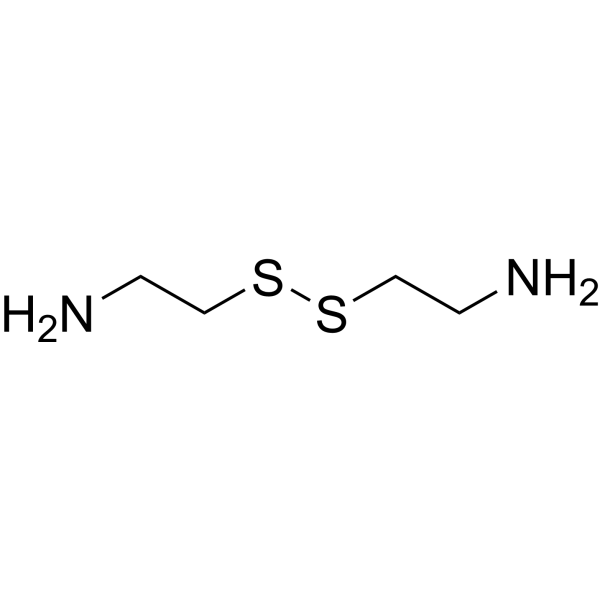
Cystamine is the disulfide form of the free thiol, cysteamine. Cystamine is an orally active transglutaminase (Tgase) inhibitor. Cystamine also has inhibition activity for caspase-3 with an IC50 value of 23.6 μM. Cystamine can be used for the research of severals diseases including Huntington's disease (HD) .
|
-
-
- HY-N3584
-
|
Chonglou Saponin VII
|
Akt
p38 MAPK
P-glycoprotein
Bcl-2 Family
Caspase
PARP
Autophagy
Apoptosis
|
Cancer
|
|
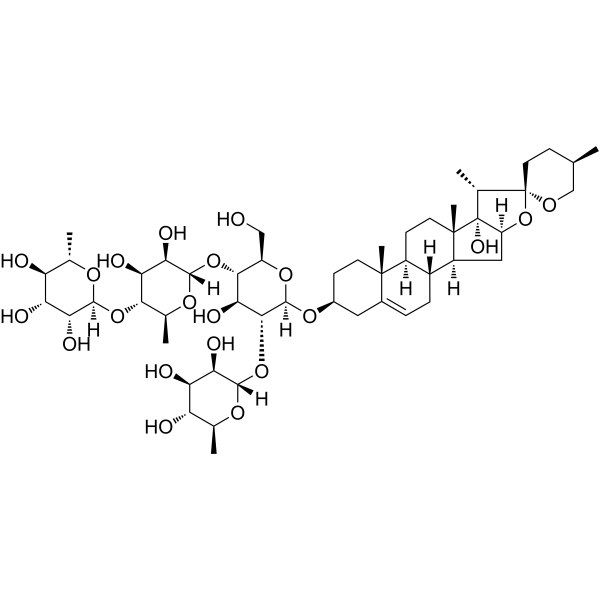
Paris saponin VII (Chonglou Saponin VII) is a steroidal saponin isolated from the roots and rhizomes of Trillium tschonoskii. Paris saponin VII-induced apoptosis in K562/ADR cells is associated with Akt/MAPK and the inhibition of P-gp. Paris saponin VII attenuates mitochondrial membrane potential, increases the expression of apoptosis-related proteins, such as Bax and cytochrome c, and decreases the protein expression levels of Bcl-2, caspase-9, caspase-3, PARP-1, and p-Akt. Paris saponin VII induces a robust autophagy in K562/ADR cells and provides a biochemical basis in the treatment of leukemia .
|
-
-
- HY-W020050
-
|
|
Caspase
Glutaminase
Apoptosis
|
Neurological Disease
Cancer
|
|
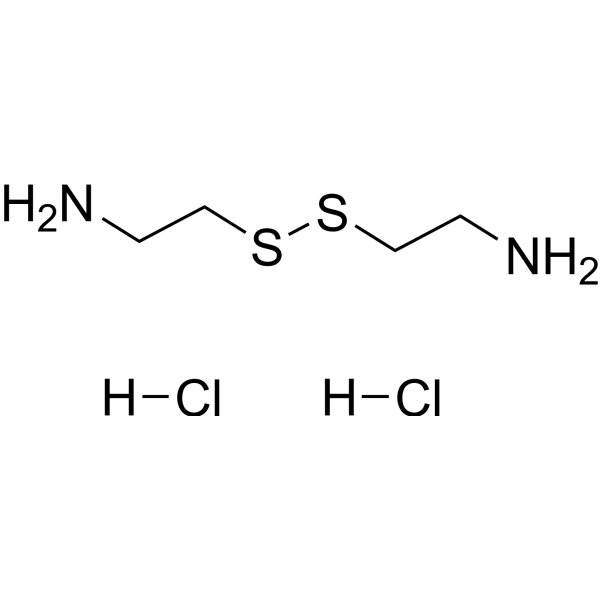
Cystamine (dihydrochloride) is the disulfide form of the free thiol, cysteamine. Cystamine is an orally active transglutaminase (Tgase) inhibitor. Cystamine also has inhibition activity for caspase-3 with an IC50 value of 23.6 μM. Cystamine can be used for the research of severals diseases including Huntington's disease (HD) .
|
-
-
- HY-P991669
-
|
AML-01
|
Caspase
Apoptosis
|
Cancer
|
|
IGN523 is an anti-CD98 antibody (hCD98, KD = 0.55 nM). IGN523 induces antibody-dependent cell-mediated cytotoxicity (ADCC) activity, lysosomal membrane permeabilization, and inhibition of essential amino acid transport, ultimately leading to caspase-3 and caspase-7-mediated apoptosis of tumor cells. IGN523 inhibits tumor growth in multiple tumor xenograft models. IGN523 is useful in the research of non-small cell lung cancer (NSCLC), acute myeloid leukemia (AML), and other cancers. .
|
-
-
- HY-119979
-
|
Cardanol C15:1
|
Apoptosis
Reactive Oxygen Species (ROS)
Mitochondrial Metabolism
MMP
CDK
Caspase
Bcl-2 Family
PARP
MDM-2/p53
Cholinesterase (ChE)
|
Infection
Inflammation/Immunology
Cancer
|
|
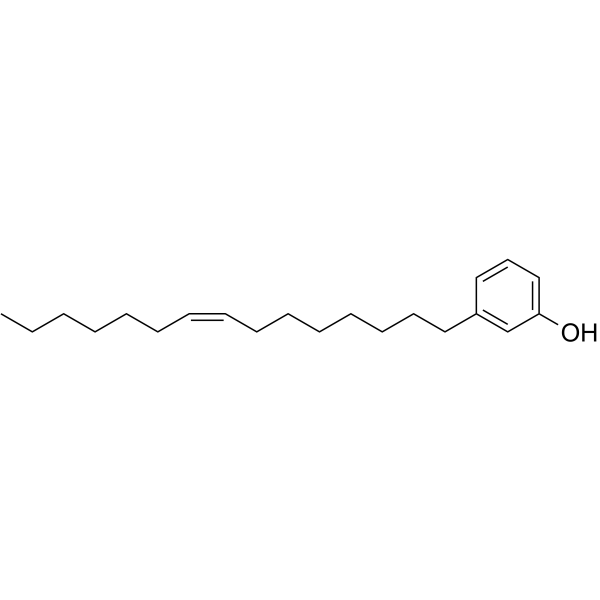
Cardanol monoene (Cardanol C15:1) is a phenolic compound which can be found in cashew nut shell liquid. Cardanol monoene can inhibit cancer cells proliferation, migration, cause S phase arrest, induce apoptosis, ROS production and mitochondrial depolarization. Cardanol monoene downregulates MMP-2, MMP-9, cyclinA1 expression, regulates CDK2, p53, Bax, cytochrome c, cleaved caspase-3, cleaved PARP, Apaf-1 expression and Bax/Bcl-2 ratio. Cardanol monoene shows weak DPPH radical scavenging activity and AChE inhibition activity. Cardanol monoene is lethal to Artemia salina nauplii. Cardanol monoene. Cardanol monoene can be used for the research of cancer, infection and inflamation .
|
-
-
- HY-13265
-
AR-42
4 Publications Verification
HDAC-42; OSU-HDAC42
|
HDAC
Autophagy
Apoptosis
|
Cancer
|
|
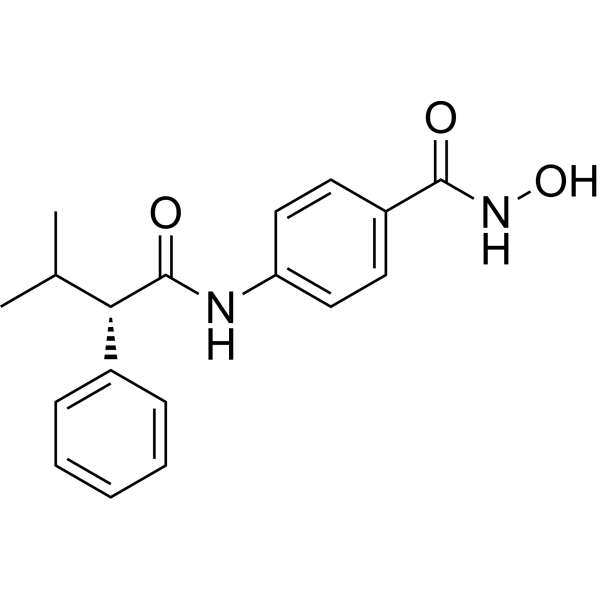
AR-42 (HDAC-42; OSU-HDAC42) is a potent, orally bioavailable pan-HDAC inhibitor (IC50=16 nM). AR-42 induces growth inhibition, cell-cycle arrest, apoptosis, and activation of caspases-3/7. AR-42 promotes hyperacetylation of H3, H4, and alpha-tubulin, and up-regulation of p21. AR-42 shows cytotoxicity against various human cancer cell lines .
|
-
-
- HY-108312A
-
|
|
Caspase
|
Neurological Disease
|
|
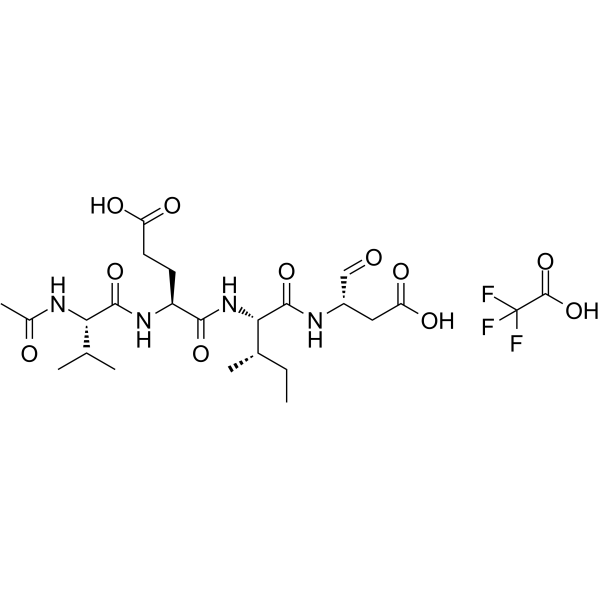
Ac-VEID-CHO (TFA) is a peptide-derived caspase inhibitor and has potency of inhibition for Caspase-6, Caspase-3 and Caspase-7 with IC50 values of 16.2 nM, 13.6 nM and 162.1 nM, respectively. Ac-VEID-CHO (TFA) can be used for the research of neurodegenerative conditions including Alzheimer’s and Huntington’s disease .
|
-
-
- HY-N12378
-
|
|
NF-κB
Toll-like Receptor (TLR)
PKA
Epigenetic Reader Domain
Keap1-Nrf2
Sirtuin
AMPK
Caspase
FASTK
ERK
ROCK
Apoptosis
|
Metabolic Disease
Inflammation/Immunology
Cancer
|
|
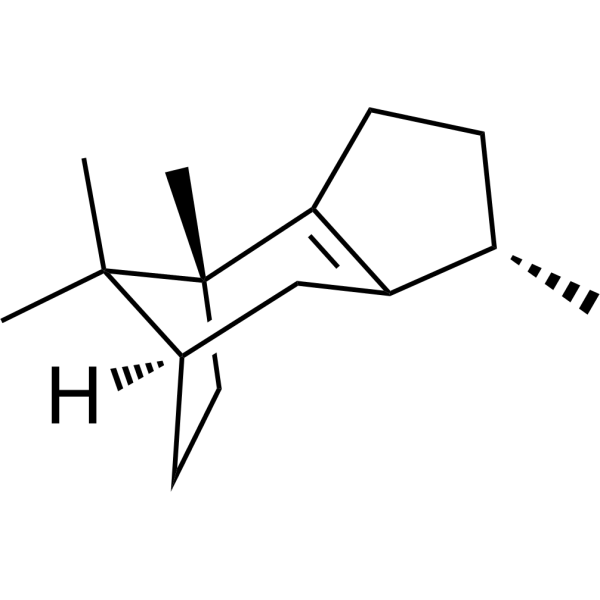
β-Patchoulene is an orally active anti-inflammatory, antioxidant, and anti-apoptotic agent. β-Patchoulene inhibits the NF-κB, TLR4, and cAMP/PKA/CREB signaling pathways; activates the Sirt1/Nrf2 and AMPK signaling pathways; and targets Fas/FasL, Caspase-3, ERK1/2, ROCK1/MLC2 for inhibition. β-Patchoulene regulates cytokine secretion, inflammatory cell infiltration, lipid peroxidation, cell polarization, gut microbiota, and lipid metabolism, restores barrier function, mitochondrial function, and cell viability, and exhibits repellent activity against Spodoptera exigua larvae. β-Patchoulene can be used in research related to various inflammatory, ischemic, fibrosis-associated diseases, as well as hepatocellular carcinoma .
|
-
-
- HY-171992
-
|
|
VEGFR
Caspase
Calcium Channel
|
Cancer
|
|
COX-2-IN-55 (compound 1) is an orally active, Celecoxib (HY-14398)-based analog with broad-spectrum anticancer activity and weak COX-2 inhibition. COX-2-IN-55 specifically inhibits SERCA2, increases caspase-3 cleavage and DR5 levels, thereby activating GRP78 and inhibiting the development of triple-negative breast cancer (TNBC). COX-2-IN-55 can also downregulate the levels of angiogenic markers VEGF-α and IL-8, inhibiting the formation of microvessels .
|
-
-
- HY-130073
-
|
|
NF-κB
Apoptosis
|
Cancer
|
|
Amorfrutin A is the inhibition of NF-κB activation, that inhibits TNF-α-induced IκBα degradation, p65 nuclear translocation, and DNA-binding activity. Amorfrutin A promotes TNF-α-induced apoptosis in HeLa cell through promotion of caspase-3 and PARP proteolysis .
|
-
-
- HY-108312
-
|
|
Caspase
|
Neurological Disease
|
|
Ac-VEID-CHO is a peptide-derived caspase inhibitor and has potency of inhibition for Caspase-6, Caspase-3 and Caspase-7 with IC50 values of 16.2 nM, 13.6 nM and 162.1 nM, respectively. Ac-VEID-CHO also inhibits VEIDase activity an IC50 value of 0.49 µM. Ac-VEID-CHO can be used for the research of neurodegenerative conditions including Alzheimer’s and Huntington’s disease .
|
-
-
- HY-N15315
-
|
|
Apoptosis
MAP3K
NF-κB
|
Others
|
|
Triptriolide inhibits Puromycin aminonucleoside PAN (HY-15695)-induced apoptosis in mouse podocytes through regulation of Bcl-2 family proteins and inhibition of Caspase-3. Triptriolide promotes the cell survival, protects and restores the podocyte function through activation of TAK1-NF-κB signaling pathway and upregulation of podocin .
|
-
-
- HY-W020050S
-
|
|
Apoptosis
Caspase
Glutaminase
|
Cancer
|
|
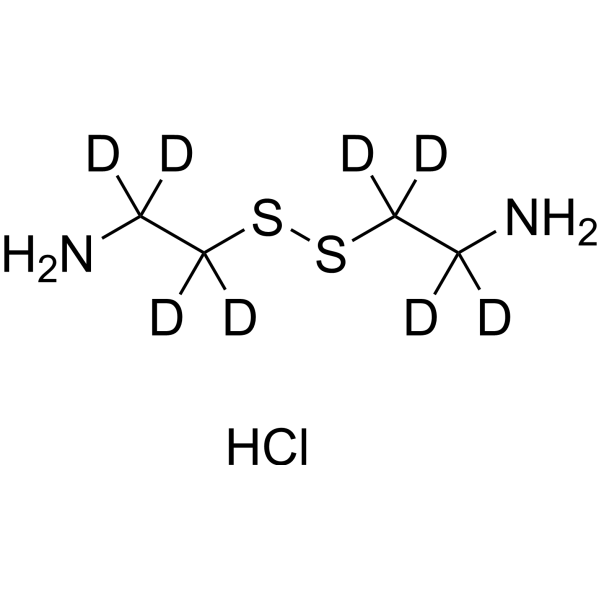
Cystamine-d8 (dihydrochloride) is the deuterium labeled Cystamine (dihydrochloride) . Cystamine (dihydrochloride) is the disulfide form of the free thiol, cysteamine. Cystamine is an orally active transglutaminase (Tgase) inhibitor. Cystamine also has inhibition activity for caspase-3 with an IC50 value of 23.6 μM. Cystamine can be used for the research of severals diseases including Huntington's disease (HD) .
|
-
-
- HY-134567A
-
|
|
Caspase
|
Others
|
|
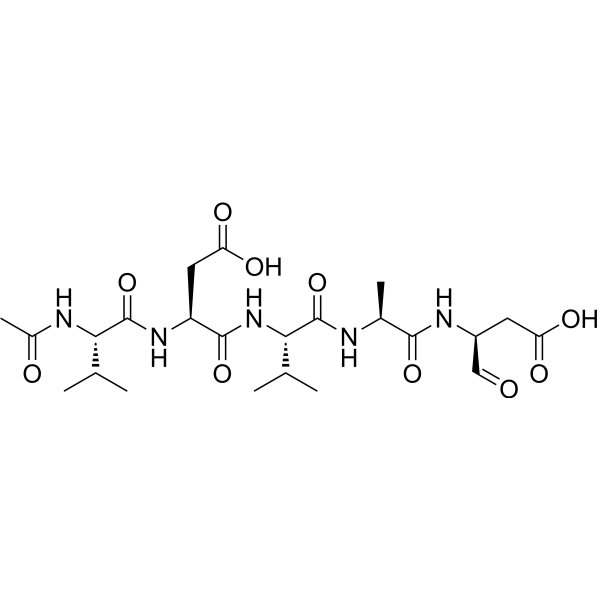
Ac-VDVAD-CHO (TFA) is a caspase-2/3 inhibitor (IC50: 46 and 15 nM) .
|
-
-
- HY-134567
-
|
|
Caspase
|
Others
|
|
Ac-VDVAD-CHO is a caspase-2/3 inhibitor (IC50: 46 and 15 nM) .
|
-
-
- HY-W415273
-
|
|
Ser/Thr Protease
HIV Protease
Caspase
|
Infection
|
|
Caspase-3-IN-2 (Compound 4d) is the inhibitor for α-Chymotrypsin. Caspase-3-IN-2 also exhibits inhibitory activity against HIV protease and caspase 3 with an inhibition rate of 57% and 51% at 100 μM .
|
-
-
- HY-N3584R
-
|
Chonglou Saponin VII (Standard)
|
Reference Standards
Akt
p38 MAPK
P-glycoprotein
Bcl-2 Family
Caspase
PARP
Autophagy
Apoptosis
|
Cancer
|
|
Paris saponin VII (Standard) is the analytical standard of Paris saponin VII. This product is intended for research and analytical applications. Paris saponin VII (Chonglou Saponin VII) is a steroidal saponin isolated from the roots and rhizomes of Trillium tschonoskii. Paris saponin VII-induced apoptosis in K562/ADR cells is associated with Akt/MAPK and the inhibition of P-gp. Paris saponin VII attenuates mitochondrial membrane potential, increases the expression of apoptosis-related proteins, such as Bax and cytochrome c, and decreases the protein expression levels of Bcl-2, caspase-9, caspase-3, PARP-1, and p-Akt. Paris saponin VII induces a robust autophagy in K562/ADR cells and provides a biochemical basis in the treatment of leukemia .
|
-
-
- HY-16958R
-
|
|
Antibiotic
Dimethylargininase (DDAH)
Reference Standards
|
Inflammation/Immunology
|
|
Paris saponin VII (Standard) is the analytical standard of Paris saponin VII. This product is intended for research and analytical applications. Paris saponin VII (Chonglou Saponin VII) is a steroidal saponin isolated from the roots and rhizomes of Trillium tschonoskii. Paris saponin VII-induced apoptosis in K562/ADR cells is associated with Akt/MAPK and the inhibition of P-gp. Paris saponin VII attenuates mitochondrial membrane potential, increases the expression of apoptosis-related proteins, such as Bax and cytochrome c, and decreases the protein expression levels of Bcl-2, caspase-9, caspase-3, PARP-1, and p-Akt. Paris saponin VII induces a robust autophagy in K562/ADR cells and provides a biochemical basis in the treatment of leukemia .
|
-
-
- HY-182760
-
|
|
DNA Alkylator/Crosslinker
Bcl-2 Family
Caspase
Apoptosis
Topoisomerase
|
Cancer
|
|
MN33-63 is a Bcl-2 inhibitor, caspase-3 activator and DNA crosslinker with broad-spectrum anticancer activity. MN33-63 improves the water solubility of SN-38 (HY-13704), inhibits tumor growth and proliferation in a dose-dependent manner, and causes no obvious toxicity. MN33-63 relieves the inhibition of the mitochondrial apoptotic pathway, initiates the apoptosis program, inhibits Topo I activity, and promotes its degradation via the ubiquitin-proteasome and autophagy-lysosome pathways. MN33-63 induces DNA crosslinking, G2/M cell cycle arrest, inhibition of cancer cell migration, and cancer cell apoptosis through the mitochondrial pathway. MN33-63 can be used in the research of colorectal cancer, cervical cancer, hepatocellular carcinoma, lung adenocarcinoma and gastric cancer .
|
-
-
- HY-N12378A
-
|
|
AMPK
FASTK
Sirtuin
ROCK
Keap1-Nrf2
Toll-like Receptor (TLR)
Apoptosis
PKA
ERK
NF-κB
Epigenetic Reader Domain
Caspase
|
Metabolic Disease
Inflammation/Immunology
Cancer
|
|
α-Patchoulene is an orally active anti-inflammatory, antioxidant, and anti-apoptotic agent. α-Patchoulene inhibits the NF-κB, TLR4, and cAMP/PKA/CREB signaling pathways; activates the Sirt1/Nrf2 and AMPK signaling pathways; and targets Fas/FasL, Caspase-3, ERK1/2, ROCK1/MLC2 for inhibition. α-Patchoulene regulates cytokine secretion, inflammatory cell infiltration, lipid peroxidation, cell polarization, gut microbiota, and lipid metabolism, restores barrier function, mitochondrial function, and cell viability, and exhibits repellent activity against Spodoptera exigua larvae. α-Patchoulene can be used in research related to various inflammatory, ischemic, fibrosis-associated diseases, as well as hepatocellular carcinoma .
|
-
-
- HY-182759
-
|
|
DNA Alkylator/Crosslinker
Topoisomerase
Caspase
Bcl-2 Family
Apoptosis
|
Cancer
|
|
MN33-47 is a multi-target anti-tumor compound with broad-spectrum anti-proliferative activity. MN33-47 relieves the inhibition of the mitochondrial apoptosis pathway by downregulating the anti-apoptotic protein Bcl-2, while activating caspase-3 and inhibiting Topoisomerase I activity, thereby promoting its degradation through the ubiquitin-proteasome and autophagy-lysosome pathways. MN33-47 can also induce DNA cross-linking and G2/M cell cycle arrest, inhibit cancer cell migration and activate the mitochondrial apoptosis pathway, thus exerting potent anti-tumor effects. MN33-47 can improve the water solubility of SN-38 (HY-13704), and exhibits dose-dependent tumor growth inhibition effects in CT26 tumor-bearing mouse models without obvious toxic and side effects. MN33-47 can be used in related studies on colorectal adenocarcinoma, cervical adenocarcinoma, hepatocellular carcinoma, alveolar basal epithelial adenocarcinoma, gastric cancer and colon cancer .
|
-
-
- HY-150108
-
|
|
mTOR
Apoptosis
Caspase
|
Cancer
|
|
RMC-4745 is a selective dual-site inhibitor of mTORC1, with a selectivity of 35 times for mTORC1 and mTORC2. RMC-4745 inhibits the proliferation of MCF-7 cells and upregulates Caspase-3/7 activity to induce cell apoptosis. RMC-4745 does not cause the upregulation of HER3 due to the inhibition of mTORC2. RMC-4745 can be used for the study of breast cancer .
|
-
-
- HY-181673
-
|
|
Microtubule/Tubulin
Apoptosis
Bcl-2 Family
Caspase
PARP
|
Cancer
|
|
ICD inducer-2 is a immunogenic cell death inducer. ICD inducer-2 binds to the colchicine binding site on tubulin to inhibit tubulin polymerization. ICD inducer-2 exhibits broad-spectrum antiproliferative activity across multiple cancer cell lines. ICD inducer-2 inhibits cells migration, causes G2/M phase and induces apoptosis. ICD inducer-2 promotes infiltration of CD4+ and CD8+ T cells into the tumor microenvironment. ICD inducer-2 downregulates antiapoptotic protein Bcl-2, upregulates proapoptotic proteins Bax and Bim-1, and increases cleaved caspase 3, cleaved caspase 9, and cleaved PARP levels. ICD inducer-2 overcomes paclitaxel resistance in xenograft models and achieves tumor growth inhibition. ICD inducer-2 can be used for the research of cancer, such as lung carcinoma .
|
-
| Cat. No. |
상품명 |
Target |
Research Area |
-
- HY-108312A
-
|
|
Caspase
|
Neurological Disease
|
|
Ac-VEID-CHO (TFA) is a peptide-derived caspase inhibitor and has potency of inhibition for Caspase-6, Caspase-3 and Caspase-7 with IC50 values of 16.2 nM, 13.6 nM and 162.1 nM, respectively. Ac-VEID-CHO (TFA) can be used for the research of neurodegenerative conditions including Alzheimer’s and Huntington’s disease .
|
-
- HY-134567A
-
|
|
Caspase
|
Others
|
|
Ac-VDVAD-CHO (TFA) is a caspase-2/3 inhibitor (IC50: 46 and 15 nM) .
|
-
- HY-134567
-
|
|
Caspase
|
Others
|
|
Ac-VDVAD-CHO is a caspase-2/3 inhibitor (IC50: 46 and 15 nM) .
|
| Cat. No. |
상품명 |
Target |
Research Area |
Image |
-
- HY-P991669
-
|
AML-01
|
Caspase
Apoptosis
|
Cancer
|
|
IGN523 is an anti-CD98 antibody (hCD98, KD = 0.55 nM). IGN523 induces antibody-dependent cell-mediated cytotoxicity (ADCC) activity, lysosomal membrane permeabilization, and inhibition of essential amino acid transport, ultimately leading to caspase-3 and caspase-7-mediated apoptosis of tumor cells. IGN523 inhibits tumor growth in multiple tumor xenograft models. IGN523 is useful in the research of non-small cell lung cancer (NSCLC), acute myeloid leukemia (AML), and other cancers. .
|
-
(5)
| Cat. No. |
상품명 |
Category |
Target |
Chemical Structure |
-
- HY-N3584
-
-
-
- HY-119979
-
|
Cardanol C15:1
|
Monophenols
Classification of Application Fields
Phenols
Plants
Anacardium occidentaleL.
Disease Research Fields
Anacardiaceae
Source Classification
Cancer
|
Apoptosis
Reactive Oxygen Species (ROS)
Mitochondrial Metabolism
MMP
CDK
Caspase
Bcl-2 Family
PARP
MDM-2/p53
Cholinesterase (ChE)
|
|
Cardanol monoene (Cardanol C15:1) is a phenolic compound which can be found in cashew nut shell liquid. Cardanol monoene can inhibit cancer cells proliferation, migration, cause S phase arrest, induce apoptosis, ROS production and mitochondrial depolarization. Cardanol monoene downregulates MMP-2, MMP-9, cyclinA1 expression, regulates CDK2, p53, Bax, cytochrome c, cleaved caspase-3, cleaved PARP, Apaf-1 expression and Bax/Bcl-2 ratio. Cardanol monoene shows weak DPPH radical scavenging activity and AChE inhibition activity. Cardanol monoene is lethal to Artemia salina nauplii. Cardanol monoene. Cardanol monoene can be used for the research of cancer, infection and inflamation .
|
-
-
- HY-N12378
-
|
|
Other Terpenoids
Structural Classification
Entada phaseoloides (L.) Merr.
Terpenoids
Labiatae
Plants
Source Classification
|
NF-κB
Toll-like Receptor (TLR)
PKA
Epigenetic Reader Domain
Keap1-Nrf2
Sirtuin
AMPK
Caspase
FASTK
ERK
ROCK
Apoptosis
|
|
β-Patchoulene is an orally active anti-inflammatory, antioxidant, and anti-apoptotic agent. β-Patchoulene inhibits the NF-κB, TLR4, and cAMP/PKA/CREB signaling pathways; activates the Sirt1/Nrf2 and AMPK signaling pathways; and targets Fas/FasL, Caspase-3, ERK1/2, ROCK1/MLC2 for inhibition. β-Patchoulene regulates cytokine secretion, inflammatory cell infiltration, lipid peroxidation, cell polarization, gut microbiota, and lipid metabolism, restores barrier function, mitochondrial function, and cell viability, and exhibits repellent activity against Spodoptera exigua larvae. β-Patchoulene can be used in research related to various inflammatory, ischemic, fibrosis-associated diseases, as well as hepatocellular carcinoma .
|
-
-
- HY-130073
-
-
-
- HY-N15315
-
-
-
- HY-N3584R
-
|
Chonglou Saponin VII (Standard)
|
Structural Classification
Liliaceae
Trillium tschonoskii Maxim.
Plants
Steroids
Source Classification
|
Reference Standards
Akt
p38 MAPK
P-glycoprotein
Bcl-2 Family
Caspase
PARP
Autophagy
Apoptosis
|
|
Paris saponin VII (Standard) is the analytical standard of Paris saponin VII. This product is intended for research and analytical applications. Paris saponin VII (Chonglou Saponin VII) is a steroidal saponin isolated from the roots and rhizomes of Trillium tschonoskii. Paris saponin VII-induced apoptosis in K562/ADR cells is associated with Akt/MAPK and the inhibition of P-gp. Paris saponin VII attenuates mitochondrial membrane potential, increases the expression of apoptosis-related proteins, such as Bax and cytochrome c, and decreases the protein expression levels of Bcl-2, caspase-9, caspase-3, PARP-1, and p-Akt. Paris saponin VII induces a robust autophagy in K562/ADR cells and provides a biochemical basis in the treatment of leukemia .
|
-
-
- HY-N12378A
-
|
|
Structural Classification
Entada phaseoloides (L.) Merr.
Terpenoids
Labiatae
Sesquiterpenes
Plants
Source Classification
|
AMPK
FASTK
Sirtuin
ROCK
Keap1-Nrf2
Toll-like Receptor (TLR)
Apoptosis
PKA
ERK
NF-κB
Epigenetic Reader Domain
Caspase
|
|
α-Patchoulene is an orally active anti-inflammatory, antioxidant, and anti-apoptotic agent. α-Patchoulene inhibits the NF-κB, TLR4, and cAMP/PKA/CREB signaling pathways; activates the Sirt1/Nrf2 and AMPK signaling pathways; and targets Fas/FasL, Caspase-3, ERK1/2, ROCK1/MLC2 for inhibition. α-Patchoulene regulates cytokine secretion, inflammatory cell infiltration, lipid peroxidation, cell polarization, gut microbiota, and lipid metabolism, restores barrier function, mitochondrial function, and cell viability, and exhibits repellent activity against Spodoptera exigua larvae. α-Patchoulene can be used in research related to various inflammatory, ischemic, fibrosis-associated diseases, as well as hepatocellular carcinoma .
|
-
| Cat. No. |
상품명 |
Chemical Structure |
-
- HY-W020050S
-
|
|
|
Cystamine-d8 (dihydrochloride) is the deuterium labeled Cystamine (dihydrochloride) . Cystamine (dihydrochloride) is the disulfide form of the free thiol, cysteamine. Cystamine is an orally active transglutaminase (Tgase) inhibitor. Cystamine also has inhibition activity for caspase-3 with an IC50 value of 23.6 μM. Cystamine can be used for the research of severals diseases including Huntington's disease (HD) .
|
-
Your information is safe with us. * Required Fields.
Inquiry Information
- 상품명:
- Cat. No.:
- 수량:
- MCE Japan Authorized Agent:

