Search Result
Results for "
citric acid cycle
" in MedChemExpress (MCE) Product Catalog:
9
Biochemical Assay Reagents
10
Isotope-Labeled Compounds
| Cat. No. |
Product Name |
Target |
Research Areas |
Chemical Structure |
-
- HY-128851
-
|
|
Endogenous Metabolite
Fatty Acid Synthase (FASN)
|
Metabolic Disease
Cancer
|
|
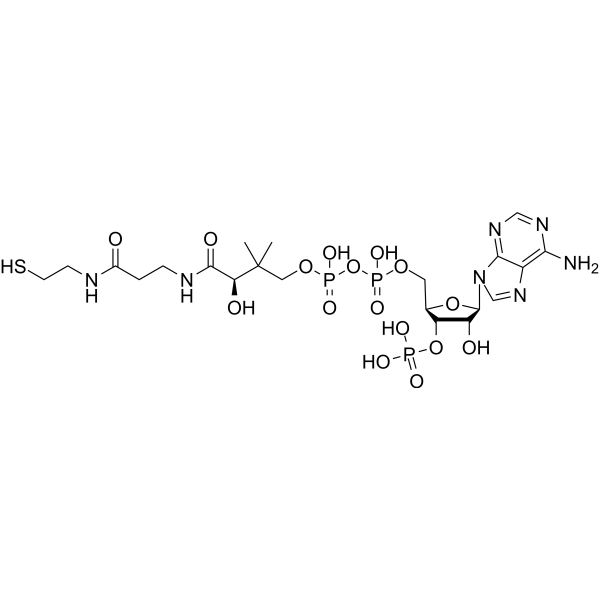
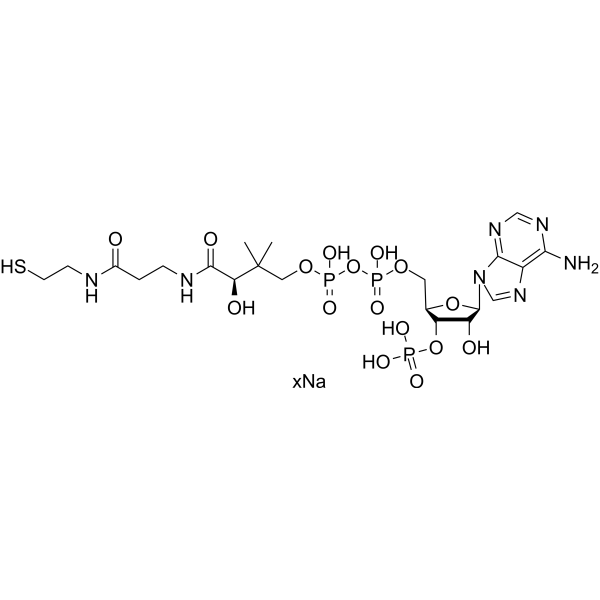
Coenzyme A (CoASH) is a ubiquitous and essential cofactor, which is an acyl group carrier and carbonyl-activating group for the citric acid cycle and fatty acid metabolism. Coenzyme A plays a central role in the oxidation of pyruvate in the citric acid cycle and the metabolism of carboxylic acids, including short- and long-chain fatty acids .
|
-
-
- HY-N1428
-
-
-
- HY-W015883
-
-
-
- HY-B2201
-
-
-
- HY-Y1311
-
|
Hydroxybutanedioic acid; E 296
|
Environmental Pollutants
Endogenous Metabolite
|
Others
|
|
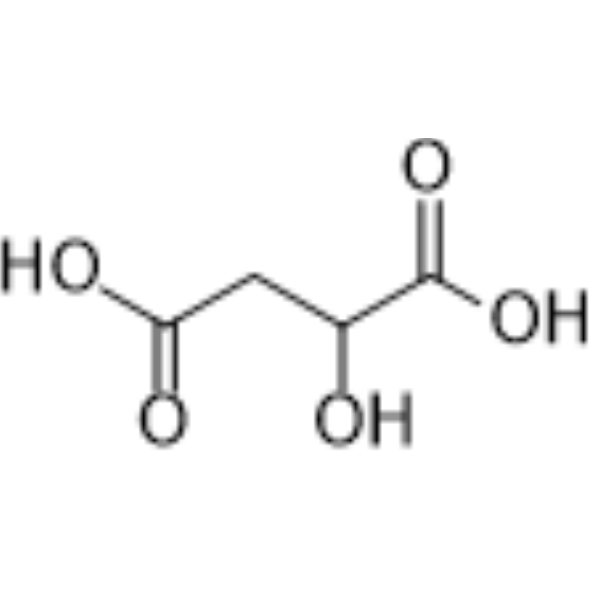
Malic acid (Hydroxybutanedioic acid) is a dicarboxylic acid that occurs naturally in fruits like apples and pears with oral activities. Malic acid plays a role in many sour or tangy foods. Malic acid is an intermediate in the citric acid cycle .
|
-
-
- HY-W009362
-
|
|
Endogenous Metabolite
|
Cardiovascular Disease
|
|
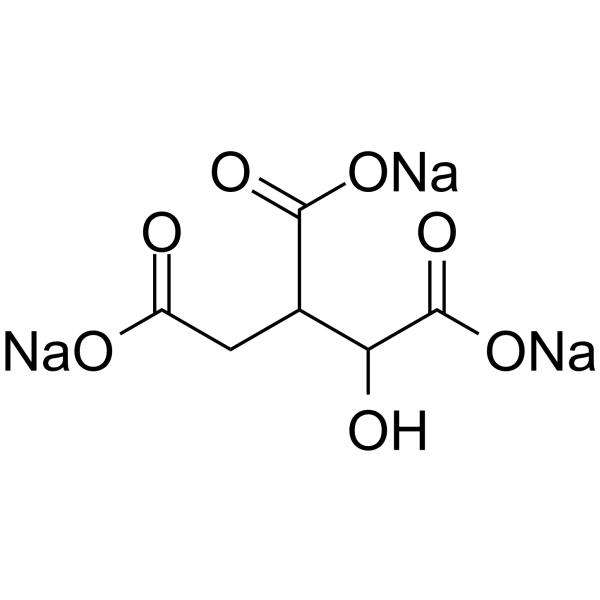
DL-Isocitric acid trisodium salt is an endogenous metabolite. DL-Isocitric acid trisodium salt is an intermediate product in the citric acid cycle. DL-Isocitric acid trisodium salt can be used as a marker for determining the composition of isocitrates in fruit products .
|
-
-
- HY-134539
-
|
|
Oxidative Phosphorylation
Mitochondrial Metabolism
DNA/RNA Synthesis
|
Metabolic Disease
Cancer
|
|
IMT1 is a first-in-class specific and noncompetitive human mitochondrial RNA polymerase (POLRMT) inhibitor. IMT1 causes a conformational change of POLRMT, which blocks substrate binding and transcription in a dose-dependent way in vitro. IMT1 reduces deoxynucleoside triphosphate levels and citric acid cycle intermediates, resulting in a marked depletion of cellular amino acid levels. IMT1 has the potential for mitochondrial transcription disorders related diseases .
|
-
-
- HY-137808
-
|
Succinyl-CoA sodium
|
Endogenous Metabolite
|
Neurological Disease
Metabolic Disease
|
|
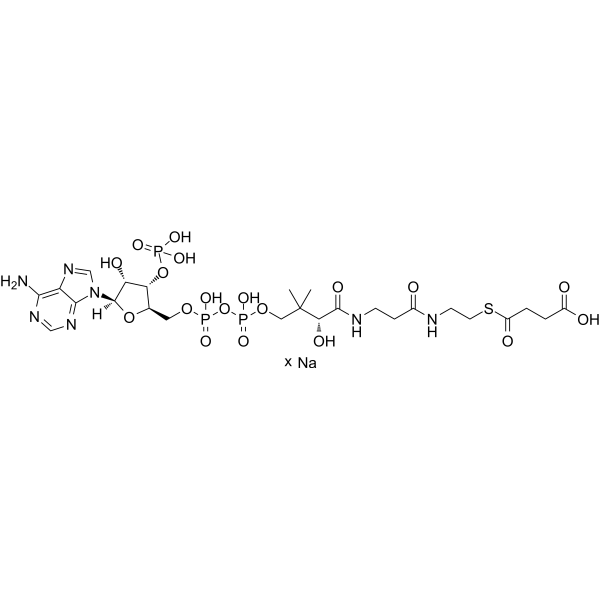
Succinyl CoA (Succinyl-coenzyme A) sodium is a pivotal intermediate metabolite in the tricarboxylic acid cycle and a key coenzyme A metabolite. Succinyl CoA sodium is biosynthesized from α-ketoglutarate or propionyl-CoA. Succinyl CoA sodium acts as a critical precursor and substrate for heme biosynthesis and gluconeogenesis. Succinyl CoA sodium insufficiency caused by cobalamin deficiency is directly linked to growth retardation, impaired heme synthesis, tissue glycine accumulation and neurological abnormalities. Succinyl CoA sodium can be used in research on metabolic, neurological, and hematological abnormalities (such as porphyria) caused by nutritional vitamin B12 deficiency (leading to a lack of Succinyl-Coenzyme A synthesis) .
|
-
-
- HY-128851B
-
|
|
Endogenous Metabolite
Fatty Acid Synthase (FASN)
|
Metabolic Disease
Cancer
|
|
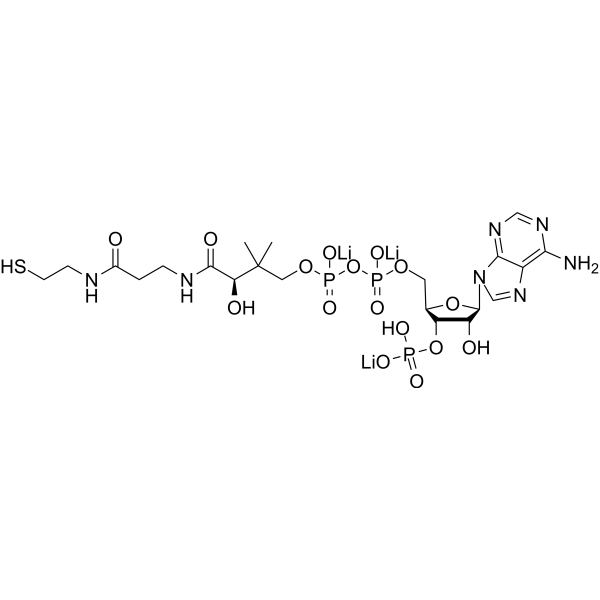
Coenzyme A (CoASH) sodium is a ubiquitous and essential cofactor, which is an acyl group carrier and carbonyl-activating group for the citric acid cycle and fatty acid metabolism. Coenzyme A plays a central role in the oxidation of pyruvate in the citric acid cycle and the metabolism of carboxylic acids, including short- and long-chain fatty acids .
|
-
-
- HY-W010382
-
|
2-Oxosuccinic acid
|
Endogenous Metabolite
Reactive Oxygen Species (ROS)
|
Metabolic Disease
|
|
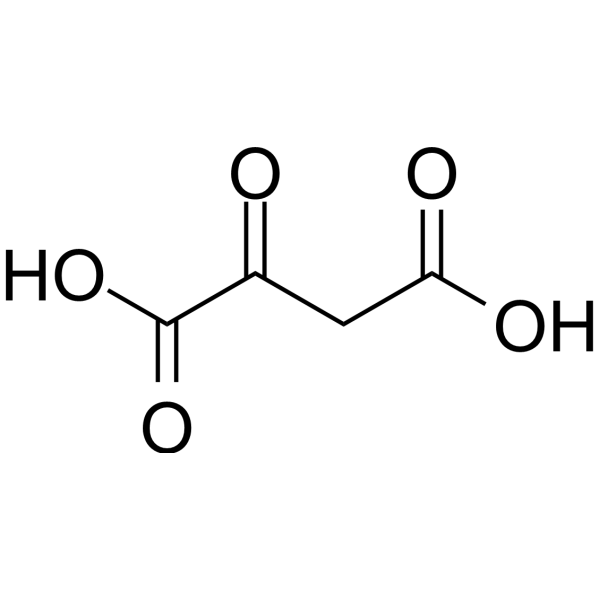
Oxaloacetic acid (2-Oxosuccinic acid) is a metabolic intermediate involved in several ways, such as citric acid cycle, gluconeogenesis, the urea cycle, the glyoxylate cycle, amino acid synthesis, and fatty acid synthesis, whereby Oxaloacetic acid facilitates the clearance of reactive oxygen species (ROS) and improves mitochondrial function .
|
-
-
- HY-N1428S1
-
-
-
- HY-N1428A
-
-
-
- HY-N1428S
-
-
-
- HY-W009156
-
-
-
- HY-128851A
-
|
|
Endogenous Metabolite
Fatty Acid Synthase (FASN)
|
Metabolic Disease
Cancer
|
|
Coenzyme A (CoASH) is a ubiquitous and essential cofactor, which is an acyl group carrier and carbonyl-activating group for the citric acid cycle and fatty acid metabolism. Coenzyme A plays a central role in the oxidation of pyruvate in the citric acid cycle and the metabolism of carboxylic acids, including short- and long-chain fatty acids .
|
-
-
- HY-P2739
-
|
|
Endogenous Metabolite
|
Others
|
|
Citrate synthase is responsible for catalyzing the first reaction of the citric acid cycle: the condensation of acetyl-CoA and oxaloacetate to form citrate. Citrate synthase is localized within eukaryotic cells in the mitochondrial matrix .
|
-
-
- HY-W015883A
-
|
|
Endogenous Metabolite
NF-κB
p38 MAPK
|
Cardiovascular Disease
Inflammation/Immunology
|
|
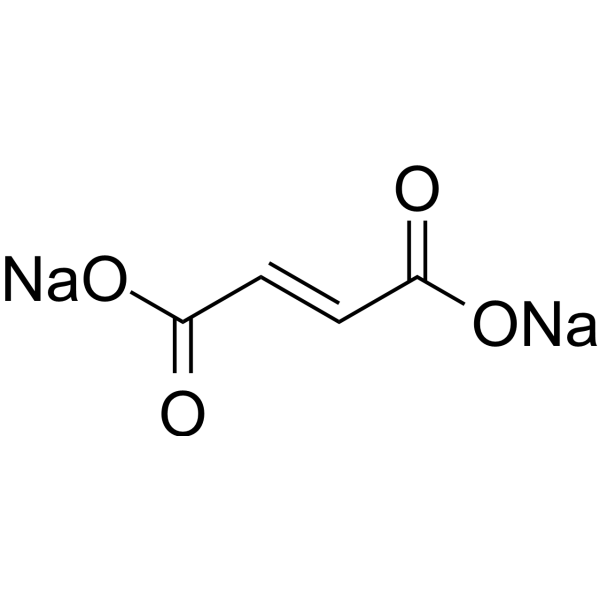
Fumaric acid disodium is an unsaturated dicarbonic acid, an intermediate product of the citric acid cycle that provides intracellular energy in the form of ATP. Fumaric acid disodium exerts anti-inflammatory effects by inhibiting the NF-κB signaling pathway dependent on p38 MAPK. Fumaric acid disodium can be used in the study of pregnancy-induced hypertension .
|
-
-
- HY-W020215
-
|
|
Mitochondrial Metabolism
Endogenous Metabolite
|
Metabolic Disease
|
|
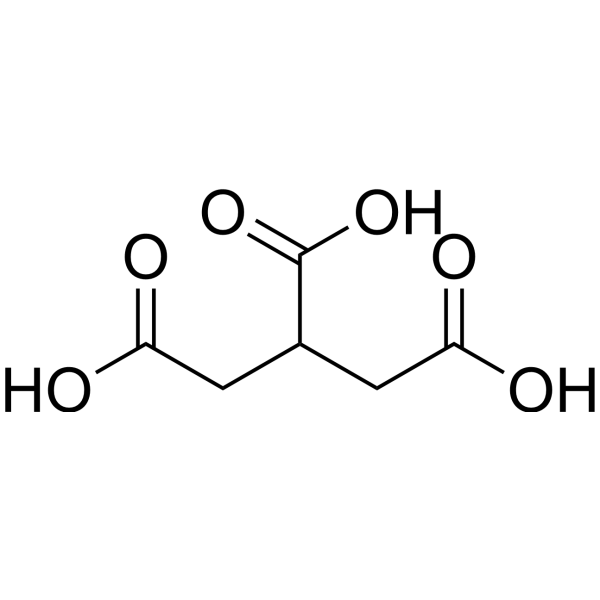
Tricarballylic acid is an orally active compound that can be produced by rumen microorganisms and has the activity of chelating magnesium. Tricarballylic acid is also a competitive inhibitor of aconitate hydratase, with a Ki value of 0.52 mM. Tricarballylic acid can inhibit the oxidation of acetate in the citric acid cycle and can be used in the research of ruminant tissue metabolism and grass tetany syndrome. In addition, Tricarballylic acid can be used to synthesize specific complexes and produce plasticizers .
|
-
-
- HY-N1428R
-
-
-
- HY-N1428S3
-
-
-
- HY-W008606
-
-
-
- HY-W017524
-
-
-
- HY-W010382S
-
|
2-Oxosuccinic acid-13C4
|
Endogenous Metabolite
Isotope-Labeled Compounds
|
Metabolic Disease
|
|
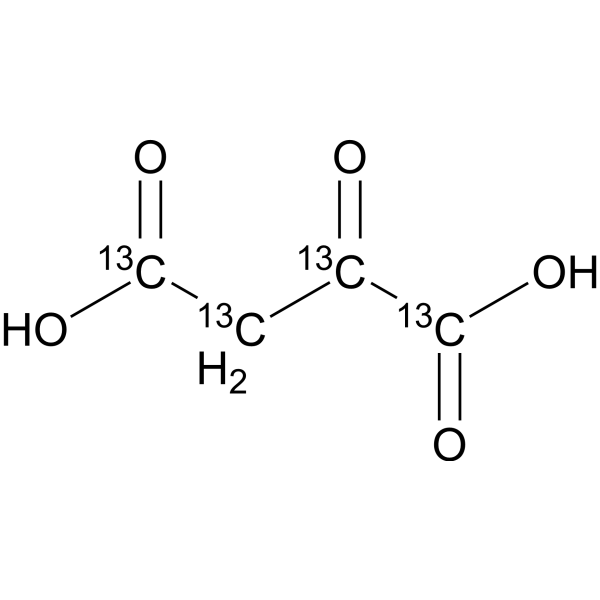
Oxaloacetic acid- 13C4 is the 13C-labeled Oxaloacetic acid. Oxaloacetic acid (2-Oxosuccinic acid) is a metabolic intermediate involved in several ways, such as citric acid cycle, gluconeogenesis, the urea cycle, the glyoxylate cycle, amino acid synthesis, and fatty acid synthesis .
|
-
-
- HY-148285
-
|
Succinyl-coenzyme A; S-(Hydrogen succinyl)coenzyme A
|
Endogenous Metabolite
|
Metabolic Disease
|
|
Succinyl CoA (Succinyl-coenzyme A) is a pivotal intermediate metabolite in the tricarboxylic acid cycle and a key coenzyme A metabolite. Succinyl CoA is biosynthesized from α-ketoglutarate or propionyl-CoA. Succinyl CoA acts as a critical precursor and substrate for heme biosynthesis and gluconeogenesis. Succinyl CoA insufficiency caused by cobalamin deficiency is directly linked to growth retardation, impaired heme synthesis, tissue glycine accumulation and neurological abnormalities. Succinyl CoA can be used in research on metabolic, neurological, and hematological abnormalities (such as porphyria) caused by nutritional vitamin B12 deficiency (leading to a lack of Succinyl-Coenzyme A synthesis) .
|
-
-
- HY-W015883S1
-
-
-
- HY-128851R
-
|
|
Reference Standards
Fatty Acid Synthase (FASN)
Endogenous Metabolite
|
Metabolic Disease
Cancer
|
|
Coenzyme A (Standard) is the analytical standard of Coenzyme A. This product is intended for research and analytical applications. Coenzyme A (CoASH) is a ubiquitous and essential cofactor, which is an acyl group carrier and carbonyl-activating group for the citric acid cycle and fatty acid metabolism. Coenzyme A plays a central role in the oxidation of pyruvate in the citric acid cycle and the metabolism of carboxylic acids, including short- and long-chain fatty acids[1].
|
-
-
- HY-W010382R
-
|
2-Oxosuccinic acid (Standard)
|
Reference Standards
Endogenous Metabolite
Reactive Oxygen Species (ROS)
|
Metabolic Disease
|
|
Oxaloacetic acid (Standard) is the analytical standard of Oxaloacetic acid. This product is intended for research and analytical applications. Oxaloacetic acid (2-Oxosuccinic acid) is a metabolic intermediate involved in several ways, such as citric acid cycle, gluconeogenesis, the urea cycle, the glyoxylate cycle, amino acid synthesis, and fatty acid synthesis, whereby Oxaloacetic acid facilitates the clearance of reactive oxygen species (ROS) and improves mitochondrial function .
|
-
-
- HY-W015883R
-
|
|
Reference Standards
Endogenous Metabolite
NF-κB
p38 MAPK
|
Metabolic Disease
Inflammation/Immunology
|
|
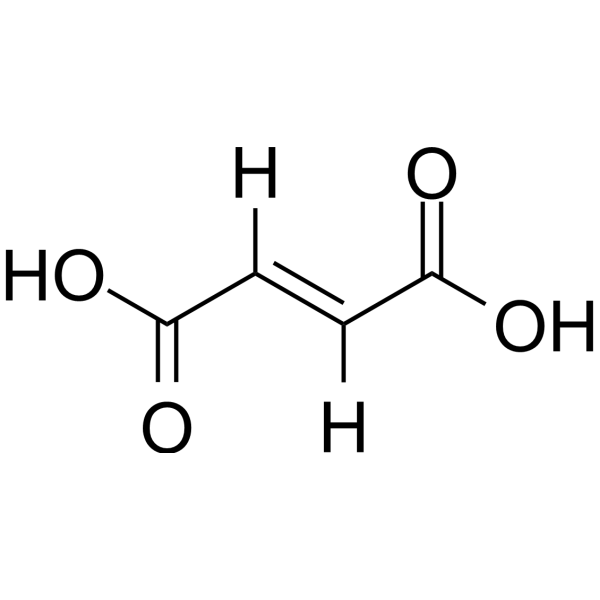
Fumaric acid (Standard) is the analytical standard of Fumaric acid. This product is intended for research and analytical applications. Fumaric acid is an unsaturated dicarbonic acid, an intermediate product of the citric acid cycle that provides intracellular energy in the form of ATP. Fumaric acid exerts anti-inflammatory effects by inhibiting the NF-κB signaling pathway dependent on p38 MAPK. Fumaric acid can be used in the study of pregnancy-induced hypertension .
|
-
-
- HY-P2993
-
|
ICDH; IDH
|
Isocitrate Dehydrogenase (IDH)
|
Metabolic Disease
Cancer
|
|
Isocitrate dehydrogenase, Porcine heart (ICDH) is a citric acid or tricarboxylic acid cycle enzyme, is often used in biochemical studies. Isocitrate dehydrogenase catalyzes the oxidative decarboxylation of isocitrate to α-ketoglutarate and reduces NAD(P) + to NAD(P)H, it plays important roles in cellular metabolism .
|
-
-
- HY-W009362R
-
|
|
Reference Standards
Endogenous Metabolite
|
Others
|
|
DL-Isocitric acid (trisodium salt) (Standard) is the analytical standard of DL-Isocitric acid (trisodium salt). This product is intended for research and analytical applications. DL-Isocitric acid trisodium salt is an endogenous metabolite. DL-Isocitric acid trisodium salt is an intermediate product in the citric acid cycle. DL-Isocitric acid trisodium salt can be used as a marker for determining the composition of isocitrates in fruit products.
|
-
-
- HY-N1428S2
-
-
-
- HY-N1428S6
-
-
-
- HY-W127841
-
-
-
- HY-N1428AR
-
|
|
Reference Standards
Endogenous Metabolite
Apoptosis
Bacterial
|
Infection
Cardiovascular Disease
Metabolic Disease
Inflammation/Immunology
Cancer
|
|
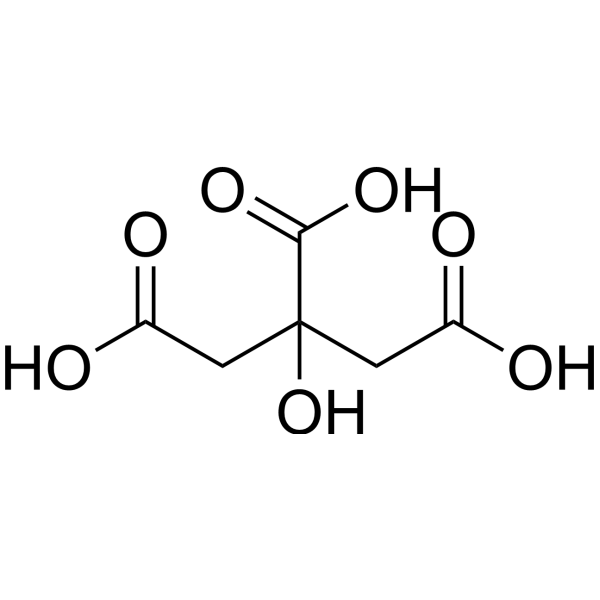
Citric acid monohydrate (Standard) is the analytical standard of Citric acid monohydrate (HY-N1428A). This product is intended for research and analytical applications. Citric acid monohydrate is a natural preservative and food tartness enhancer. Citric acid monohydrate induces apoptosis and cell cycle arrest at G2/M phase and S phase in HaCaT cells. Citric acid monohydrate cause oxidative damage of the liver by means of the decrease of antioxidative enzyme activities. Citric acid monohydrate is also an acidulant, emulsifier, sequestrant and buffering agent widely used across many industries .
|
-
-
- HY-P2993A
-
|
ICDH, Microorganism; IDH, Microorganism
|
Isocitrate Dehydrogenase (IDH)
|
Metabolic Disease
|
|
Isocitrate dehydrogenase, Microorganism (IDH) (EC 1.1.1.42) is a citric acid or tricarboxylic acid cycle enzyme, is often used in biochemical studies. Isocitrate dehydrogenase catalyzes the oxidative decarboxylation of isocitrate to α-ketoglutarate and reduces NAD(P) + to NAD(P)H, it plays important roles in cellular metabolism .
|
-
-
- HY-W009362S
-
|
|
Isotope-Labeled Compounds
Endogenous Metabolite
|
Others
|
|
DL-Isocitric acid- 13C4 (trisodium salt) is a 13C labeled DL-Isocitric acid (trisodium salt) (HY-W009362). DL-Isocitric acid trisodium salt is an endogenous metabolite. DL-Isocitric acid trisodium salt is a substrate in the citric acid cycle. DL-Isocitric acid trisodium salt can be used as a marker for determining the composition of isocitrates in fruit products, including fruit juices.
|
-
-
- HY-13451R
-
|
|
Reference Standards
Bacterial
Antibiotic
|
Infection
|
|
Citric acid (Standard) is the analytical standard of Citric acid. This product is intended for research and analytical applications. Citric acid is a natural preservative and food tartness enhancer. Citric acid induces apoptosis and cell cycle arrest at G2/M phase and S phase in HaCaT cells. Citric acid cause oxidative damage of the liver by means of the decrease of antioxidative enzyme activities. Citric acid causes renal toxicity in mice .
|
-
-
- HY-W009156R
-
|
Potassium citrate monohydrate (Standard)
|
Reference Standards
Apoptosis
Endogenous Metabolite
Bacterial
|
Infection
Cardiovascular Disease
Metabolic Disease
Inflammation/Immunology
Cancer
|
|
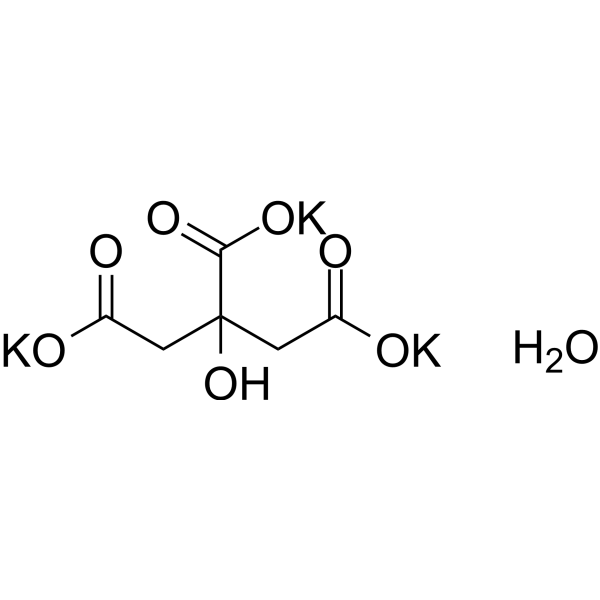
Citric acid tripotassium hydrate (Standard) (Potassium citrate monohydrate (Standard)) is the analytical standard of Citric acid tripotassium hydrate (HY-W009156). This product is intended for research and analytical applications. Citric acid tripotassium hydrate is a natural preservative and food tartness enhancer. Citric acid tripotassium hydrate induces apoptosis and cell cycle arrest at G2/M phase and S phase in HaCaT cells. Citric acid tripotassium hydrate cause oxidative damage of the liver by means of the decrease of antioxidative enzyme activities. Citric acid tripotassium hydrate is also an acidulant, emulsifier, sequestrant and buffering agent widely used across many industries .
|
-
-
- HY-N15821
-
-
-
- HY-W017524R
-
|
|
Reference Standards
Endogenous Metabolite
|
Others
|
|
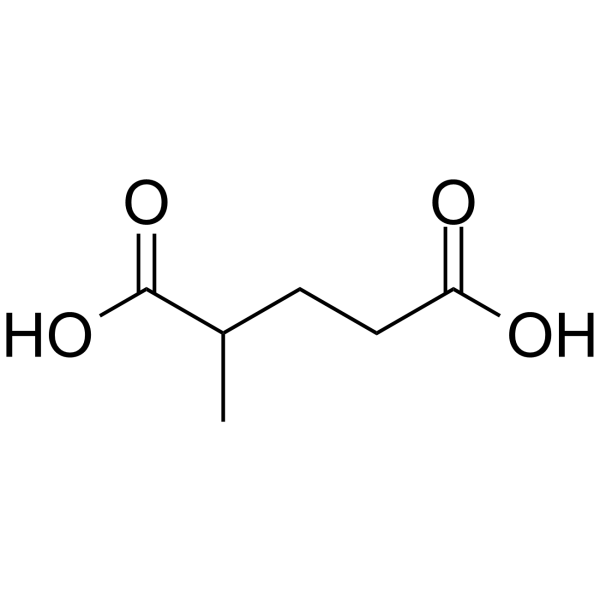
2-Methylpentanedioic acid (Standard) is the analytical standard of 2-Methylpentanedioic acid. This product is intended for research and analytical applications. 2-Methylpentanedioic acid is a metabolite of succinic acid, a citric acid cycle intermediate.
|
-
-
- HY-134098R
-
|
Adipic acid diisopropyl ester (Standard)
|
TRP Channel
Reference Standards
|
Others
|
|
Oxaloacetic acid (Standard) is the analytical standard of Oxaloacetic acid. This product is intended for research and analytical applications. Oxaloacetic acid (2-Oxosuccinic acid) is a metabolic intermediate involved in several ways, such as citric acid cycle, gluconeogenesis, the urea cycle, the glyoxylate cycle, amino acid synthesis, and fatty acid synthesis, whereby Oxaloacetic acid facilitates the clearance of reactive oxygen species (ROS) and improves mitochondrial function .
|
-
-
- HY-W693142
-
|
|
Orphan GPCR
Apoptosis
|
Cardiovascular Disease
|
|
Succinate calcium is a key intermediate product of the citric acid cycle (tricarboxylic acid cycle). Succinate calcium can act as a specific ligand for the G protein-coupled receptor GPR91. Succinate calcium can increase the amplitude of calcium transient in cardiac muscle cells and accelerate the decay rate of calcium transient. Succinate calcium can induce myocardial apoptosis .
|
-
-
- HY-Y1311G
-
|
Hydroxybutanedioic acid; E 296
|
Endogenous Metabolite
|
Others
|
|
Malic acid (GMP) is Malic acid (HY-Y1311) in GMP grade. GMP-grade small molecules can be used as auxiliary reagents in cell therapy. Malic acid (Hydroxybutanedioic acid) is a dicarboxylic acid that occurs naturally in fruits like apples and pears with oral activities. Malic acid plays a role in many sour or tangy foods. Malic acid is an intermediate in the citric acid cycle .
|
-
-
- HY-W020215R
-
|
|
Reference Standards
Mitochondrial Metabolism
Endogenous Metabolite
|
Metabolic Disease
|
|
Tricarballylic acid (Standard) is the analytical standard of Tricarballylic acid (HY-W020215). This product is intended for research and analytical applications. Tricarballylic acid is an orally active compound that can be produced by rumen microorganisms and has the activity of chelating magnesium. Tricarballylic acid is also a competitive inhibitor of aconitate hydratase, with a Ki value of 0.52 mM. Tricarballylic acid can inhibit the oxidation of acetate in the citric acid cycle and can be used in the research of ruminant tissue metabolism and grass tetany syndrome. In addition, Tricarballylic acid can be used to synthesize specific complexes and produce plasticizers .
|
-
-
- HY-W724319
-
|
Sodium citrate-d4; Trisodium citrate anhydrous-d4
|
Isotope-Labeled Compounds
Apoptosis
Bacterial
Endogenous Metabolite
|
Cardiovascular Disease
Infection
Metabolic Disease
Inflammation/Immunology
Cancer
|
|
Citric acid-d4 trisodium (Sodium citrate-d4) is the deuterium labeled Citric acid trisodium (HY-B2201). Citric acid trisodium (Sodium citrate) is a natural preservative and food tartness enhancer. Citric acid trisodium induces apoptosis and cell cycle arrest at G2/M phase and S phase in HaCaT cells. Citric acid trisodium cause oxidative damage of the liver by means of the decrease of antioxidative enzyme activities. Citric acid trisodium is also an acidulant, emulsifier, sequestrant and buffering agent widely used across many industries .
|
-
-
- HY-P2934A
-
-
-
- HY-P2994B
-
|
|
Endogenous Metabolite
|
Metabolic Disease
|
|
3-Hydroxybutyrate Dehydrogenase, Alcaligenes faecalis (EC 1.1.1.30) catalyzes the oxidation of 3-hydroxybutyrate to acetoacetate, the first step in the conversion of ketone bodies to citric acid, which is then further metabolized via the tricarboxylic acid cycle (Krebs cycle).
|
-
-
- HY-P3001A
-
|
|
Malate Dehydrogenase (MDH)
|
Metabolic Disease
|
|
Malate dehydrogenase, Yeast (EC 1.1.1.37) is an enzyme in the citric acid cycle that catalyzes the conversion of malate to oxaloacetate (requiring NAD+). Malate dehydrogenase participates in gluconeogenesis, the process of synthesizing glucose from small molecules.
|
-
-
- HY-P3001C
-
|
|
Biochemical Assay Reagents
|
Metabolic Disease
|
|
Malate dehydrogenase, Bacteria (EC 1.1.1.37), is an enzyme in the citric acid cycle that catalyzes the conversion of malate to oxaloacetate (requiring NAD+). Malate dehydrogenase also participates in gluconeogenesis, the process of synthesizing glucose from small molecules.
|
-
-
- HY-E71013
-
|
|
Endogenous Metabolite
|
Metabolic Disease
|
|
Nucleoside monophosphate kinase, Bovine (EC 2.7.4.6) is an enzymes that catalyze the exchange of phosphate groups between different nucleoside diphosphates. Nucleoside monophosphate kinase, Bovine (EC 2.7.4.6) activities maintain an equilibrium between the concentrations of different nucleoside triphosphates such as, for example, when GTP produced in the citric acid (Krebs) cycle is converted to ATP.
|
-
- HY-E70959
-
|
|
Endogenous Metabolite
|
Metabolic Disease
|
|
β-Hydroxybutyrate Dehydrogenase, Pseudomonas lemoignei (EC 1.1.1.30) is a soluble cytosolic enzyme that does not require a phospholipid allosteric activator. β-Hydroxybutyrate Dehydrogenase, Pseudomonas lemoignei is required for the utilization of ketone bodies as a source of metabolic energy. β-Hydroxybutyrate Dehydrogenase, Pseudomonas lemoignei catalyzes the oxidation of 3-hydroxybutyrate to acetoacetate, the first step in the conversion of ketone bodies to citric acid, which is then further metabolized via the tricarboxylic acid cycle (Krebs cycle).
|
-
- HY-E70947
-
|
|
Endogenous Metabolite
|
Metabolic Disease
|
|
β-Hydroxybutyrate Dehydrogenase, Rhodopseudomonas sphaeroides (EC 1.1.1.30) is a soluble cytosolic enzyme that does not require a phospholipid allosteric activator. β-Hydroxybutyrate Dehydrogenase, Rhodopseudomonas sphaeroides is required for the utilization of ketone bodies as a source of metabolic energy. β-Hydroxybutyrate Dehydrogenase, Rhodopseudomonas sphaeroides catalyzes the oxidation of 3-hydroxybutyrate to acetoacetate, the first step in the conversion of ketone bodies to citric acid, which is then further metabolized via the tricarboxylic acid cycle (Krebs cycle).
|
-
-
-
HY-L148
-
|
|
72 compounds
|
|
The TCA cycle (tricarboxylic acid cycle)—is also known as the Krebs cycle or the citric acid cycle (CAC). The TCA cycle is a series of chemical reactions that release stored energy through the oxidation of acetyl-CoA in carbohydrates, fats, and proteins.
For decades, the TCA cycle has been considered as the central pathway for cell oxidative phosphorylation to produce energy and biosynthesis. Research shows that TCA cycle is associated with many diseases, especially cancer. In colon carcinoma, liver cancer and other cancers, there are mutations that lead to the imbalance of TCA cycle metabolites, indicating that TCA cycle may be related to the occurrence of cancer. Understanding the role and molecular mechanism of TCA cycle in inhibiting or promoting cancer progression will promote the development of new metabolite-based cancer treatment methods in the future.
MCE supplies a unique collection of 72 compounds related to the TCA cycle. MCE TCA Cycle Compound Library is a useful tool for the TCA cycle related research and anti-cancer drug development. p>
|
-
-
HY-L231
-
|
|
26 compounds
|
|
The TCA cycle (tricarboxylic acid cycle)—is also known as the Krebs cycle or the citric acid cycle (CAC). The TCA cycle is a series of chemical reactions that release stored energy through the oxidation of acetyl-CoA in carbohydrates, fats, and proteins.
For decades, the TCA cycle has been considered as the central pathway for cell oxidative phosphorylation to produce energy and biosynthesis. Research shows that TCA cycle is associated with many diseases, especially cancer. In colon carcinoma, liver cancer and other cancers, there are mutations that lead to the imbalance of TCA cycle metabolites, indicating that TCA cycle may be related to the occurrence of cancer. Understanding the role and molecular mechanism of TCA cycle in inhibiting or promoting cancer progression will promote the development of new metabolite-based cancer treatment methods in the future.
MCE supplies a unique collection of 26 key intermediates of the TCA cycle, which can be utilized for TCA-related research and metabolomics identification studies.
|
-
-
HY-L182
-
|
|
285 compounds
|
|
Fatty acids (FAs) are the main components of lipids. The synthesis of fatty acids mainly involves the Triglyceride (TG) cycle and De Novo Lipogenesis (DNL). Fatty acids which exist widely in organisms are components of cell membranes and play an indispensable role in cell signaling. In addition, FFAs can be taken up from circulating plasma by all mitochondria-containing cells, and they are metabolized by β-oxidation and the citric acid cycle to release large amounts of energy in the form of ATP. Abnormal fatty acid metabolism is associated with the occurrence and development of cardiovascular diseases, diabetes, fatty liver, hyperthyroidism, and other diseases.
MCE offers a unique collection of fatty acid compounds. Fatty Acids Compound Library is an important tool for the study of energy metabolism and drug development of metabolism-related diseases.
|
| Cat. No. |
Product Name |
Type |
-
- HY-Y1311G
-
|
Hydroxybutanedioic acid; E 296
|
Fluorescent Dyes
|
|
Malic acid (GMP) is Malic acid (HY-Y1311) in GMP grade. GMP-grade small molecules can be used as auxiliary reagents in cell therapy. Malic acid (Hydroxybutanedioic acid) is a dicarboxylic acid that occurs naturally in fruits like apples and pears with oral activities. Malic acid plays a role in many sour or tangy foods. Malic acid is an intermediate in the citric acid cycle .
|
| Cat. No. |
Product Name |
Type |
-
- HY-B2201
-
|
Sodium citrate; Trisodium citrate anhydrous
|
Biochemical Assay Reagents
|
|
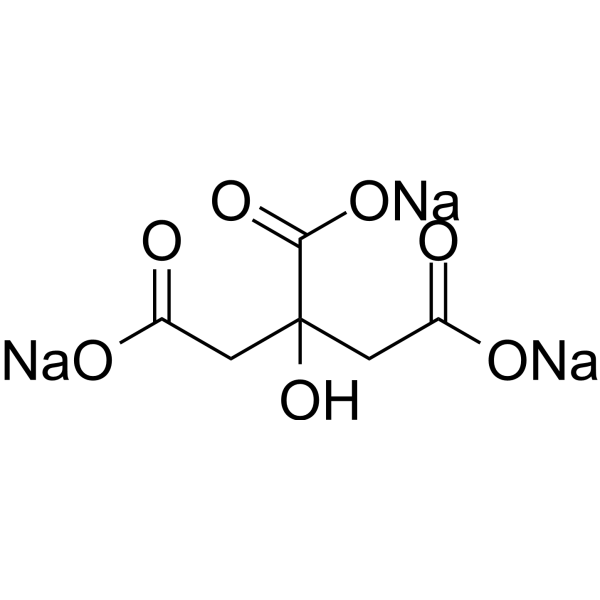
Citric acid trisodium (Sodium citrate) is a natural preservative and food tartness enhancer. Citric acid trisodium induces apoptosis and cell cycle arrest at G2/M phase and S phase in HaCaT cells. Citric acid trisodium cause oxidative damage of the liver by means of the decrease of antioxidative enzyme activities. Citric acid trisodium is also an acidulant, emulsifier, sequestrant and buffering agent widely used across many industries .
|
-
- HY-128851B
-
|
|
Biochemical Assay Reagents
|
|
Coenzyme A (CoASH) sodium is a ubiquitous and essential cofactor, which is an acyl group carrier and carbonyl-activating group for the citric acid cycle and fatty acid metabolism. Coenzyme A plays a central role in the oxidation of pyruvate in the citric acid cycle and the metabolism of carboxylic acids, including short- and long-chain fatty acids .
|
-
- HY-N1428A
-
|
|
Biochemical Assay Reagents
|
|
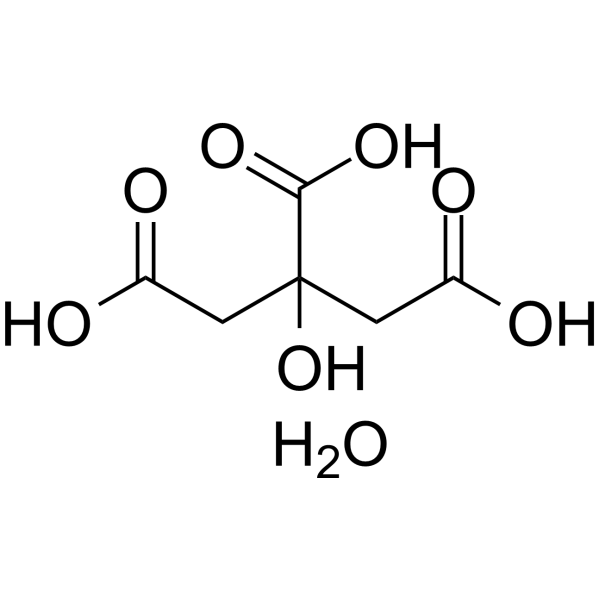
Citric acid monohydrate is a natural preservative and food tartness enhancer. Citric acid monohydrate induces apoptosis and cell cycle arrest at G2/M phase and S phase in HaCaT cells. Citric acid monohydrate cause oxidative damage of the liver by means of the decrease of antioxidative enzyme activities. Citric acid monohydrate is also an acidulant, emulsifier, sequestrant and buffering agent widely used across many industries .
|
-
- HY-128851A
-
|
|
Biochemical Assay Reagents
|
|
Coenzyme A (CoASH) is a ubiquitous and essential cofactor, which is an acyl group carrier and carbonyl-activating group for the citric acid cycle and fatty acid metabolism. Coenzyme A plays a central role in the oxidation of pyruvate in the citric acid cycle and the metabolism of carboxylic acids, including short- and long-chain fatty acids .
|
-
- HY-W015883A
-
|
|
Biochemical Assay Reagents
|
|
Fumaric acid disodium is an unsaturated dicarbonic acid, an intermediate product of the citric acid cycle that provides intracellular energy in the form of ATP. Fumaric acid disodium exerts anti-inflammatory effects by inhibiting the NF-κB signaling pathway dependent on p38 MAPK. Fumaric acid disodium can be used in the study of pregnancy-induced hypertension .
|
-
- HY-W008606
-
|
citric acid monosodium salt
|
Biochemical Assay Reagents
|
|
Sodium citrate monobasic (Citric acid monosodium salt) is a natural preservative and food tartness enhancer. Sodium citrate monobasic induces apoptosis and cell cycle arrest at G2/M phase and S phase in HaCaT cells. Sodium citrate monobasic cause oxidative damage of the liver by means of the decrease of antioxidative enzyme activities. Sodium citrate monobasic is also an acidulant, emulsifier, sequestrant and buffering agent widely used across many industries .
|
-
- HY-W127841
-
|
|
Biochemical Assay Reagents
|
|
Citric acid-2,4- 13C2 is the 13C-labeled Citric acid (HY-N1428). Citric acid is a natural preservative and food tartness enhancer. Citric acid induces apoptosis and cell cycle arrest at G2/M phase and S phase in HaCaT cells. Citric acid cause oxidative damage of the liver by means of the decrease of antioxidative enzyme activities. Citric acid is also an acidulant, emulsifier, sequestrant and buffering agent widely used across many industries .
|
-
- HY-N1428AR
-
|
|
Biochemical Assay Reagents
|
|
Citric acid monohydrate (Standard) is the analytical standard of Citric acid monohydrate (HY-N1428A). This product is intended for research and analytical applications. Citric acid monohydrate is a natural preservative and food tartness enhancer. Citric acid monohydrate induces apoptosis and cell cycle arrest at G2/M phase and S phase in HaCaT cells. Citric acid monohydrate cause oxidative damage of the liver by means of the decrease of antioxidative enzyme activities. Citric acid monohydrate is also an acidulant, emulsifier, sequestrant and buffering agent widely used across many industries .
|
-
- HY-Y1311G
-
|
Hydroxybutanedioic acid; E 296
|
Biochemical Assay Reagents
|
|
Malic acid (GMP) is Malic acid (HY-Y1311) in GMP grade. GMP-grade small molecules can be used as auxiliary reagents in cell therapy. Malic acid (Hydroxybutanedioic acid) is a dicarboxylic acid that occurs naturally in fruits like apples and pears with oral activities. Malic acid plays a role in many sour or tangy foods. Malic acid is an intermediate in the citric acid cycle .
|
| Cat. No. |
Product Name |
Category |
Target |
Chemical Structure |
| Cat. No. |
Product Name |
Chemical Structure |
-
- HY-N1428S1
-
|
|
|
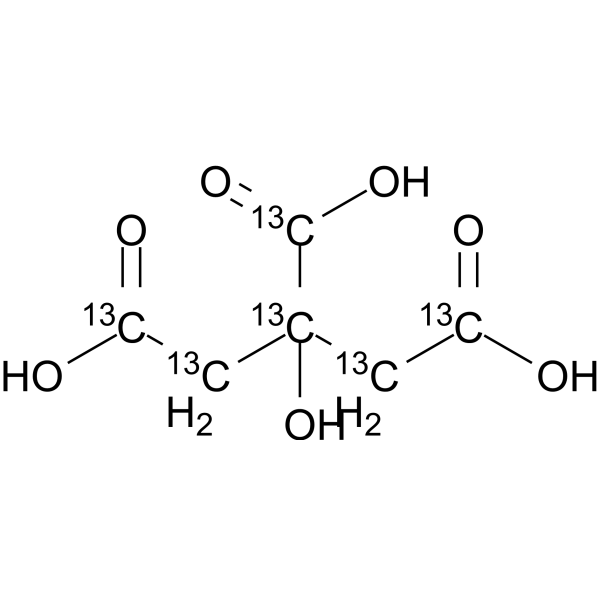
Citric acid- 13C6 is the 13C-labeled Citric acid (HY-N1428). Citric acid is a natural preservative and food tartness enhancer. Citric acid induces apoptosis and cell cycle arrest at G2/M phase and S phase in HaCaT cells. Citric acid cause oxidative damage of the liver by means of the decrease of antioxidative enzyme activities. Citric acid is also an acidulant, emulsifier, sequestrant and buffering agent widely used across many industries .
|
-
-
- HY-N1428S
-
|
|
|
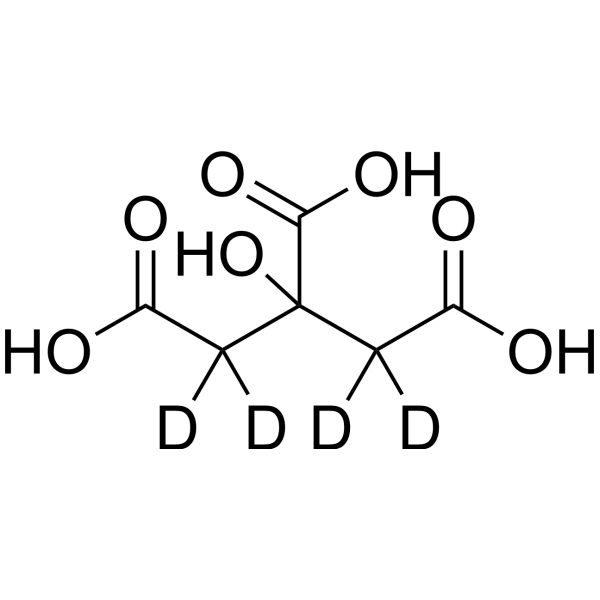
Citric acid-d4 is the deuterium labeled Citric acid (HY-N1428). Citric acid is a natural preservative and food tartness enhancer. Citric acid induces apoptosis and cell cycle arrest at G2/M phase and S phase in HaCaT cells. Citric acid cause oxidative damage of the liver by means of the decrease of antioxidative enzyme activities. Citric acid is also an acidulant, emulsifier, sequestrant and buffering agent widely used across many industries .
|
-
-
- HY-N1428S3
-
|
|
|
Citric acid- 13C3 is the 13C-labeled Citric acid (HY-N1428). Citric acid is a natural preservative and food tartness enhancer. Citric acid induces apoptosis and cell cycle arrest at G2/M phase and S phase in HaCaT cells. Citric acid cause oxidative damage of the liver by means of the decrease of antioxidative enzyme activities. Citric acid is also an acidulant, emulsifier, sequestrant and buffering agent widely used across many industries .
|
-
-
- HY-W010382S
-
1 Publications Verification
|
|
Oxaloacetic acid- 13C4 is the 13C-labeled Oxaloacetic acid. Oxaloacetic acid (2-Oxosuccinic acid) is a metabolic intermediate involved in several ways, such as citric acid cycle, gluconeogenesis, the urea cycle, the glyoxylate cycle, amino acid synthesis, and fatty acid synthesis .
|
-
-
- HY-W015883S1
-
|
|
|
Fumaric acid- 13C2 is the 13C-labeled Fumaric acid (HY-W015883). Fumaric acid is an unsaturated dicarbonic acid, an intermediate product of the citric acid cycle that provides intracellular energy in the form of ATP. Fumaric acid exerts anti-inflammatory effects by inhibiting the NF-κB signaling pathway dependent on p38 MAPK. Fumaric acid can be used in the study of pregnancy-induced hypertension .
|
-
-
- HY-N1428S2
-
|
|
|
Citric acid- 13C2 is the 13C-labeled Citric acid (HY-N1428). Citric acid is a natural preservative and food tartness enhancer. Citric acid induces apoptosis and cell cycle arrest at G2/M phase and S phase in HaCaT cells. Citric acid cause oxidative damage of the liver by means of the decrease of antioxidative enzyme activities. Citric acid is also an acidulant, emulsifier, sequestrant and buffering agent widely used across many industries .
|
-
-
- HY-N1428S6
-
|
|
|
Citric acid-d4-1 is deuterated labeled Citric acid (HY-N1428). Citric acid is a natural preservative and food tartness enhancer. Citric acid induces apoptosis and cell cycle arrest at G2/M phase and S phase in HaCaT cells. Citric acid cause oxidative damage of the liver by means of the decrease of antioxidative enzyme activities. Citric acid is also an acidulant, emulsifier, sequestrant and buffering agent widely used across many industries .
|
-
-
- HY-W127841
-
|
|
|
Citric acid-2,4- 13C2 is the 13C-labeled Citric acid (HY-N1428). Citric acid is a natural preservative and food tartness enhancer. Citric acid induces apoptosis and cell cycle arrest at G2/M phase and S phase in HaCaT cells. Citric acid cause oxidative damage of the liver by means of the decrease of antioxidative enzyme activities. Citric acid is also an acidulant, emulsifier, sequestrant and buffering agent widely used across many industries .
|
-
-
- HY-W009362S
-
|
|
|
DL-Isocitric acid- 13C4 (trisodium salt) is a 13C labeled DL-Isocitric acid (trisodium salt) (HY-W009362). DL-Isocitric acid trisodium salt is an endogenous metabolite. DL-Isocitric acid trisodium salt is a substrate in the citric acid cycle. DL-Isocitric acid trisodium salt can be used as a marker for determining the composition of isocitrates in fruit products, including fruit juices.
|
-
-
- HY-W724319
-
|
|
|
Citric acid-d4 trisodium (Sodium citrate-d4) is the deuterium labeled Citric acid trisodium (HY-B2201). Citric acid trisodium (Sodium citrate) is a natural preservative and food tartness enhancer. Citric acid trisodium induces apoptosis and cell cycle arrest at G2/M phase and S phase in HaCaT cells. Citric acid trisodium cause oxidative damage of the liver by means of the decrease of antioxidative enzyme activities. Citric acid trisodium is also an acidulant, emulsifier, sequestrant and buffering agent widely used across many industries .
|
-
| Cat. No. |
Product Name |
Target |
Research Areas |
Chemical Structure |
-
- HY-Y1311G
-
|
Hydroxybutanedioic acid; E 296
|
Endogenous Metabolite
|
Others
|
|
Malic acid (GMP) is Malic acid (HY-Y1311) in GMP grade. GMP-grade small molecules can be used as auxiliary reagents in cell therapy. Malic acid (Hydroxybutanedioic acid) is a dicarboxylic acid that occurs naturally in fruits like apples and pears with oral activities. Malic acid plays a role in many sour or tangy foods. Malic acid is an intermediate in the citric acid cycle .
|
-
Your information is safe with us. * Required Fields.
Inquiry Information
- Product Name:
- Cat. No.:
- Quantity:
- MCE Japan Authorized Agent:

