



Tricarballylic acid
Based on 1 publication(s) in Google Scholar
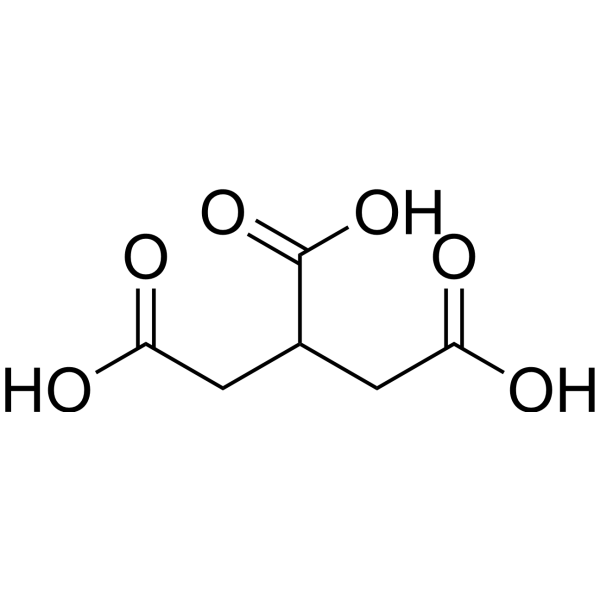
Tricarballylic acid is an orally active compound that can be produced by rumen microorganisms and has the activity of chelating magnesium. Tricarballylic acid is also a competitive inhibitor of aconitate hydratase, with a Ki value of 0.52 mM. Tricarballylic acid can inhibit the oxidation of acetate in the citric acid cycle and can be used in the research of ruminant tissue metabolism and grass tetany syndrome. In addition, Tricarballylic acid can be used to synthesize specific complexes and produce plasticizers.
For research use only. We do not sell to patients.
- Purity : 98.0%
- CAS No.: 99-14-9
- Formula: C6H8O6
- Molecular Weight:176.12
-
Storage:Powder -20°C, 3 years , 4°C, 2 years ; In solvent -80°C, 6 months , -20°C, 1 month

To place orders, for customer services and technical support, please contact: MedChemExpress USA
Tel: 609-228-6898 E-mail: [email protected] [email protected]


-
 Biological Activity
-
Chemical Information
-
Solvent & Solubility
- Purity & Documentation
- References
-
 Help & FAQs


-
HY-B2156
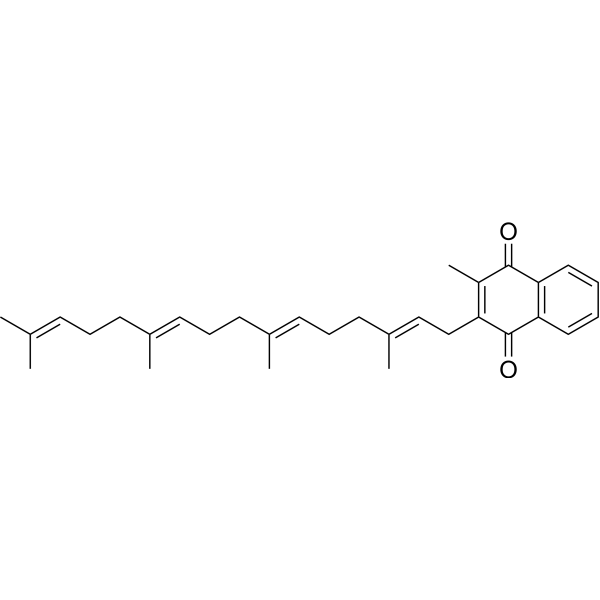
Menaquinone-4Endogenous Metabolite -
HY-15453
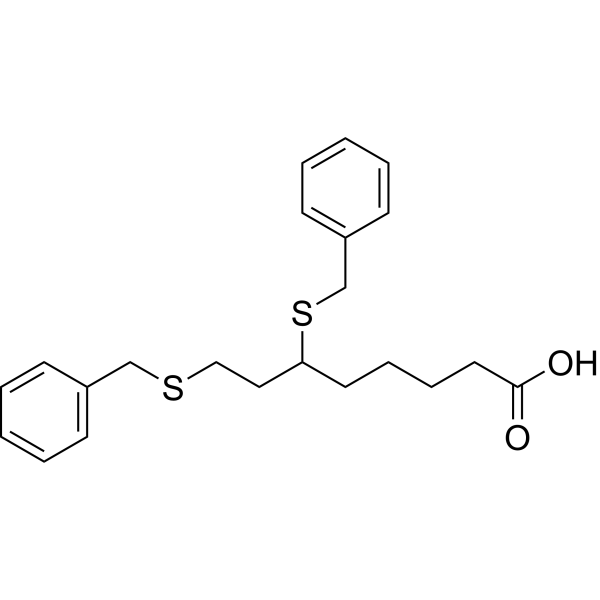
DevimistatMitochondrial Metabolism Inhibitor -
HY-101047
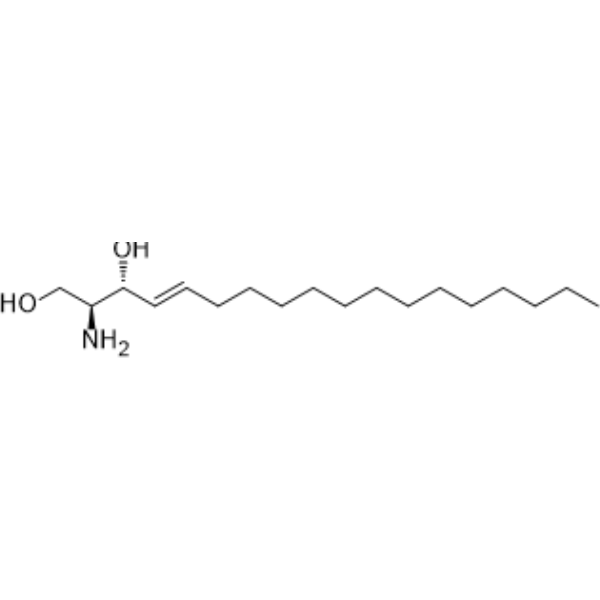
D-erythro-SphingosinePKC Inhibitor -
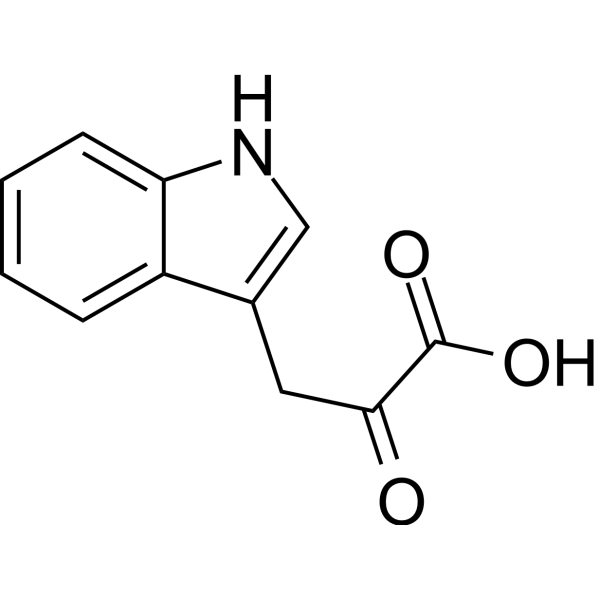
HY-W028393
Indole-3-pyruvic acidAHR Agonist -
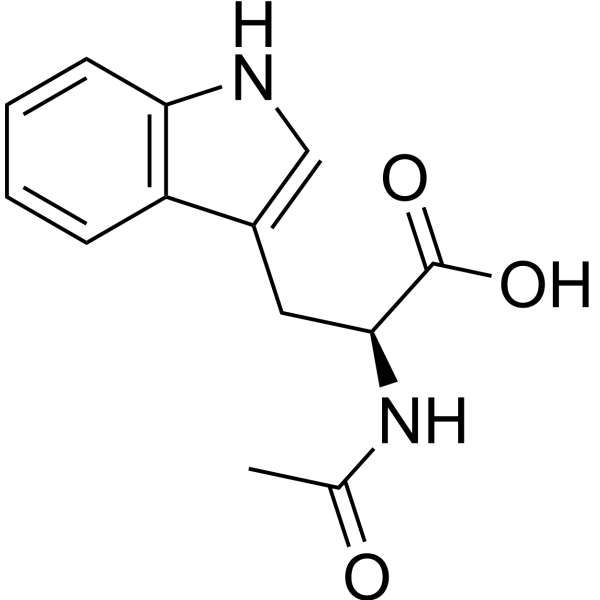
HY-W011978
N-Acetyl-L-tryptophanEndogenous Metabolite -
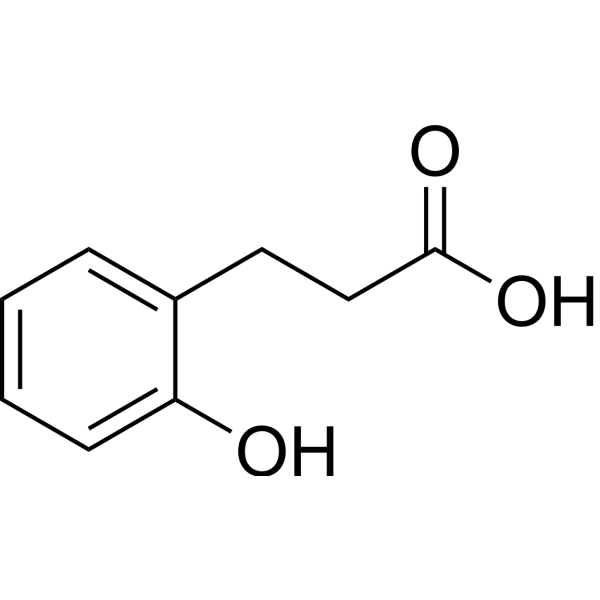
HY-W017158
Melilotic acidOrally Active Compound -
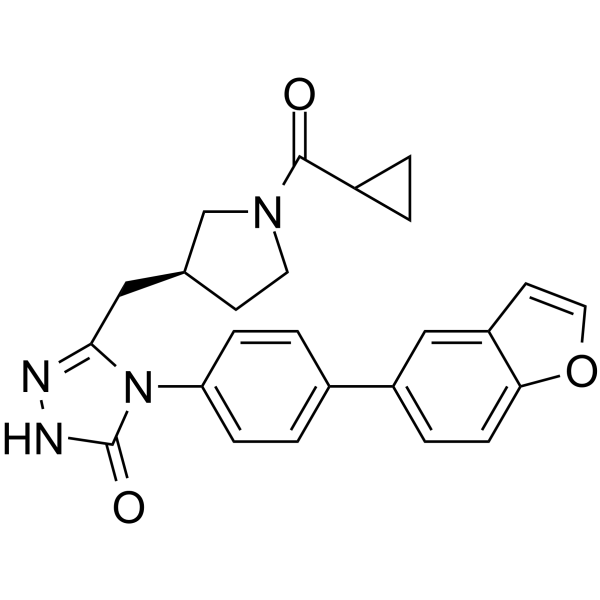
HY-12325
GSK2194069FASN Inhibitor -
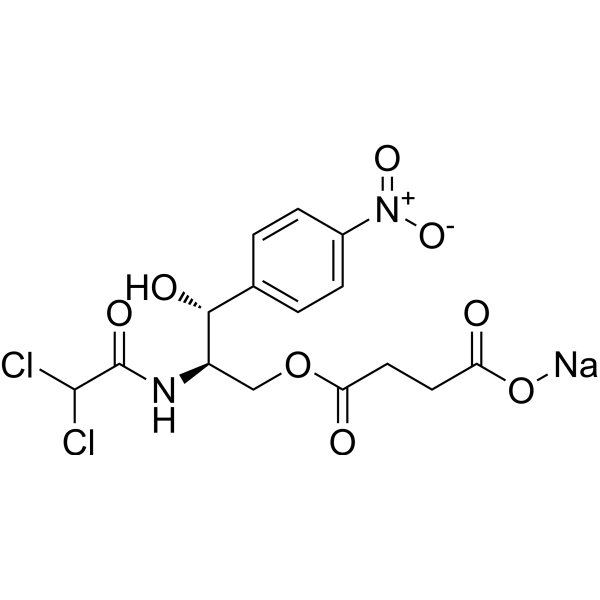
HY-N7114A
Chloramphenicol succinate sodiumChloramphenicol Prodrug -

HY-W020215R
Tricarballylic acid (Standard)Standard of Tricarballylic acid -
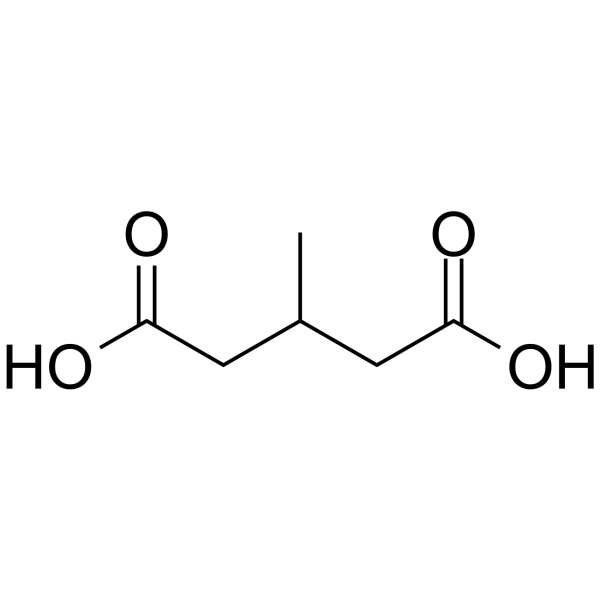
HY-113410
3-Methylglutaric acidNa+/K+ ATPase Inhibitor -
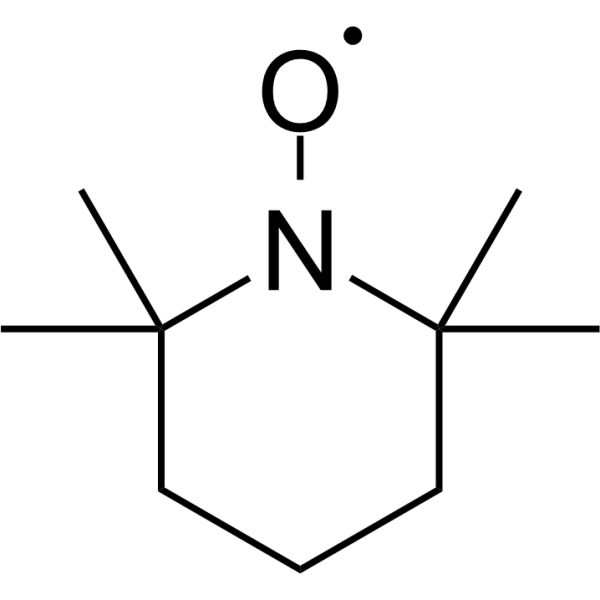
HY-W001187
TempoNitroxide Radical -

HY-113410R
3-Methylglutaric acid (Standard)Na+/K+ ATPase Inhibitor
Publications Citing Use of MedChemExpress (MCE) Tricarballylic acid
MoreAll Endogenous Metabolite Isoforms
More

Biological Activity
Description
IC50 & Target
[1]|
Microbial Metabolite |
In Vitro
Tricarballylic acid (0-8 mM; 0.5-1 h) can inhibit the oxidation of [14C]acetate in sheep liver slices and rat hepatocytes[1].
MedChemExpress (MCE) has not independently confirmed the accuracy of these methods. They are for reference only. .
In Vivo
MedChemExpress (MCE) has not independently confirmed the accuracy of these methods. They are for reference only.


Chemical Information
-
CAS No. 99-14-9
-
Appearance Solid
-
Molecular Weight 176.12
-
Formula C6H8O6
-
Color White to off-white
-
SMILES
O=C(CC(C(O)=O)CC(O)=O)O
-
Structure Classification
-
Initial Source
-
Shipping
Room temperature in continental US; may vary elsewhere.
-
Storage
Powder -20°C 3 years 4°C 2 years In solvent -80°C 6 months -20°C 1 month


Publications (1)
-
Journal Impact Factor
-
Most Recent
-
Redox Biol
Unveiling a novel function of Aconitase-2: attenuating lung ischemia-reperfusion injury via inhibition of pulmonary endothelial apoptosis. [Abstract]2026 Mar:90:104016. PMID: 41637882


Solvent & Solubility
In Vitro:
DMSO : 250 mg/mL (1419.49 mM; Need ultrasonic; Hygroscopic DMSO has a significant impact on the solubility of product, please use newly opened DMSO)
Please refer to the solubility information to select the appropriate solvent. Once prepared, please aliquot and store the solution to prevent product inactivation from repeated freeze-thaw cycles.
Storage method and period of stock solution: -80°C, 6 months; -20°C, 1 month. When stored at -80°C, please use it within 6 months. When stored at -20°C, please use it within 1 month.
Please refer to the solubility information to select the appropriate solvent. Once prepared, please aliquot and store the solution to prevent product inactivation from repeated freeze-thaw cycles.
Storage method and period of stock solution: -80°C, 6 months; -20°C, 1 month. When stored at -80°C, please use it within 6 months. When stored at -20°C, please use it within 1 month.
Concentration (start) × Volume (start) = Concentration (final) × Volume (final)
In Vivo:
Select the appropriate dissolution method based on your experimental animal and administration route.
- For the following dissolution methods, please ensure to first prepare a clear stock solution using an In Vitro approach and then sequentially add co-solvents:
- To ensure reliable experimental results, the clarified stock solution can be appropriately stored based on storage conditions. As for the working solution for In Vivo experiments, it is recommended to prepare freshly and use it on the same day.
- The percentages shown for the solvents indicate their volumetric ratio in the final prepared solution. If precipitation or phase separation occurs during preparation, heat and/or sonication can be used to aid dissolution.
Add each solvent one by one: 10% DMSO 40% PEG300 5% Tween-80 45% Saline
Solubility: ≥ 2.08 mg/mL (11.81 mM); Clear solution
This protocol yields a clear solution of ≥ 2.08 mg/mL (saturation unknown).
Taking 1 mL working solution as an example, add 100 μL DMSO stock solution (20.8 mg/mL) to 400 μL PEG300, and mix evenly; then add 50 μL Tween-80 and mix evenly; then add 450 μL Saline to adjust the volume to 1 mL.
Preparation of Saline: Dissolve 0.9 g sodium chloride in ddH₂O and dilute to 100 mL to obtain a clear Saline solution.
Add each solvent one by one: 10% DMSO 90% (20% SBE-β-CD in Saline)
Solubility: ≥ 2.08 mg/mL (11.81 mM); Clear solution
This protocol yields a clear solution of ≥ 2.08 mg/mL (saturation unknown).
Taking 1 mL working solution as an example, add 100 μL DMSO stock solution (20.8 mg/mL) to 900 μL 20% SBE-β-CD in Saline, and mix evenly.
Preparation of 20% SBE-β-CD in Saline (4°C, storage for one week): 2 g SBE-β-CD powder is dissolved in 10 mL Saline, completely dissolve until clear.
In Vivo Dissolution Calculator
Please enter the basic information of animal experiments:
-
-
-
-
Recommended: Prepare an additional quantity of animals to account for potential losses during experiments.
Please enter your animal formula composition:
-
%DMSO +
Recommended: Keep the proportion of DMSO in working solution below 2% if your animal is weak.
-
%+
-
+%Tween-80 + +
-
%Saline +
The co-solvents required include: DMSO, . All of co-solvents are available by MedChemExpress (MCE). , Tween 80. All of co-solvents are available by MedChemExpress (MCE).
Working solution concentration: 0.22 mg/mL
Method for preparing stock solution: mg drug dissolved in μL DMSO. Stock solution concentration: mg/mL.
1. Take μL DMSO stock solution;
2. Add μL .
μL , mix evenly;
3. Then add μL Tween 80, mix evenly;
4. Then add μL
Please ensure that the stock solution in the first step is dissolved to a clear state, and add co-solvents in sequence. You can use ultrasonic heating (ultrasonic cleaner, recommended frequency 20-40 kHz), vortexing, etc. to assist dissolution.


Purity & Documentation
-
Data Sheet (274 KB)
-
SDS (394 KB)
- English - EN (394 KB)
- Français - FR (394 KB)
- Deutsch - DE (394 KB)
- Norwegian - NO (394 KB)
- Español - ES (394 KB)
- Swedish - SV (394 KB)
- Italian - IT (394 KB)
- Korean - KR (394 KB)
- Portuguese - PT (394 KB)
-
Handling Instructions (2659 KB)
References
[1]. Russell JB, et al. Production of tricarballylic acid by rumen microorganisms and its potential toxicity in ruminant tissue metabolism. Br J Nutr. 1986 Jul;56(1):153-62. [Content Brief]
[2]. Schwartz R, et al. Effect of tricarballylic acid, a nonmetabolizable rumen fermentation product of trans-aconitic acid, on Mg, Ca and Zn utilization of rats. J Nutr. 1988 Feb;118(2):183-8. [Content Brief]


Complete Stock Solution Preparation Table
Please refer to the solubility information to select the appropriate solvent. Once prepared, please aliquot and store the solution to prevent product inactivation from repeated freeze-thaw cycles.
Storage method and period of stock solution: -80°C, 6 months; -20°C, 1 month. When stored at -80°C, please use it within 6 months. When stored at -20°C, please use it within 1 month.
| Optional Solvent | Concentration Solvent Mass | 1 mg | 5 mg | 10 mg | 25 mg |
|---|---|---|---|---|---|
| DMSO | 1 mM | 5.6779 mL | 28.3897 mL | 56.7795 mL | 141.9487 mL |
| 5 mM | 1.1356 mL | 5.6779 mL | 11.3559 mL | 28.3897 mL | |
| 10 mM | 0.5678 mL | 2.8390 mL | 5.6779 mL | 14.1949 mL | |
| 15 mM | 0.3785 mL | 1.8926 mL | 3.7853 mL | 9.4632 mL | |
| 20 mM | 0.2839 mL | 1.4195 mL | 2.8390 mL | 7.0974 mL | |
| 25 mM | 0.2271 mL | 1.1356 mL | 2.2712 mL | 5.6779 mL | |
| 30 mM | 0.1893 mL | 0.9463 mL | 1.8926 mL | 4.7316 mL | |
| 40 mM | 0.1419 mL | 0.7097 mL | 1.4195 mL | 3.5487 mL | |
| 50 mM | 0.1136 mL | 0.5678 mL | 1.1356 mL | 2.8390 mL | |
| 60 mM | 0.0946 mL | 0.4732 mL | 0.9463 mL | 2.3658 mL | |
| 80 mM | 0.0710 mL | 0.3549 mL | 0.7097 mL | 1.7744 mL | |
| 100 mM | 0.0568 mL | 0.2839 mL | 0.5678 mL | 1.4195 mL |


Tricarballylic acid Related Classifications
HY-W020215 Related Classifications
 Powered by Bioz