Search Result
Results for "
color change
" in MedChemExpress (MCE) Product Catalog:
11
Biochemical Assay Reagents
| Cat. No. |
Product Name |
Target |
Research Areas |
Chemical Structure |
-
- HY-108913
-
|
|
Beta-lactamase
Antibiotic
Bacterial
|
Infection
|
|
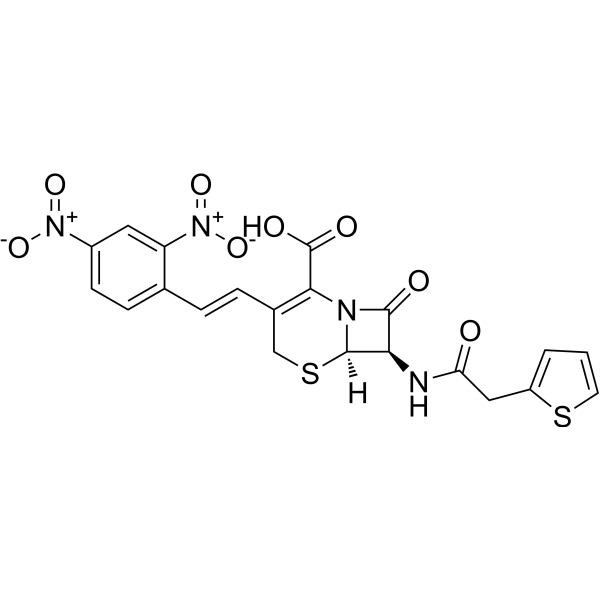
Nitrocefin is a highly activated, chromogenic cephalosporin derivative. Nitrocefin is a chromogenic β-lactamase substrate. Nitrocefin undergoes a distinctive color change from yellow to red as the amide bond in the β-lactam ring is hydrolyzed by β-lactamase. Nitrocefin is used in competitive inhibition studies in developmental work on β-lactamase-resistant antibiotics .
|
-
-
- HY-D0169
-
-
-
- HY-118462
-
|
Coelenterazine 400a; Bisdeoxycoelenterazine
|
Fluorescent Dye
|
Others
|
|
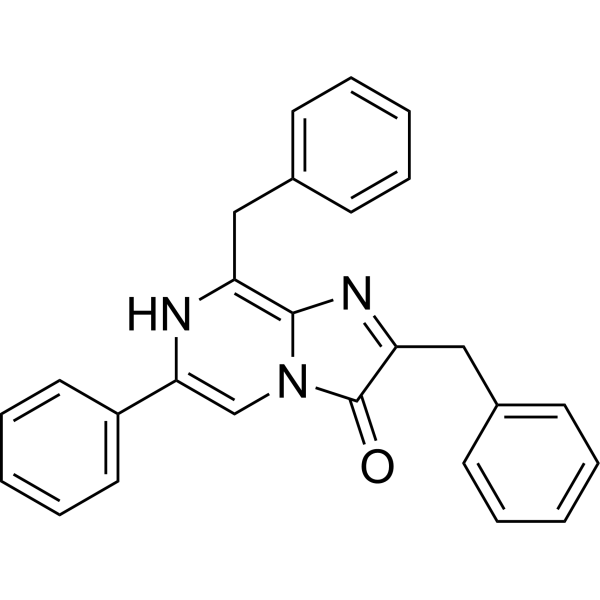
Coelenteramine 400a (Coelenterazine 400a), a derivative of Coelenterazine, is a Renilla luciferase (RLuc) substrate. In the presence of Coelenteramine 400a, RLuc can emit blue light at 395 nm . Coelenterazine 400a will causes color change in the bioluminescence reaction of Rluc by replacing the sulfur and oxygen heteroatoms of the methylene bridge. Coelenterazine 400a provides higher signal resolution and can be used in the research of bioluminescence resonance energy transfer (BRET) .
|
-
-
- HY-D0018
-
|
Dichlorophenylindophenol sodium; DCPIP sodium; Indochlorophenol sodium
|
Biochemical Assay Reagents
|
Others
|
|
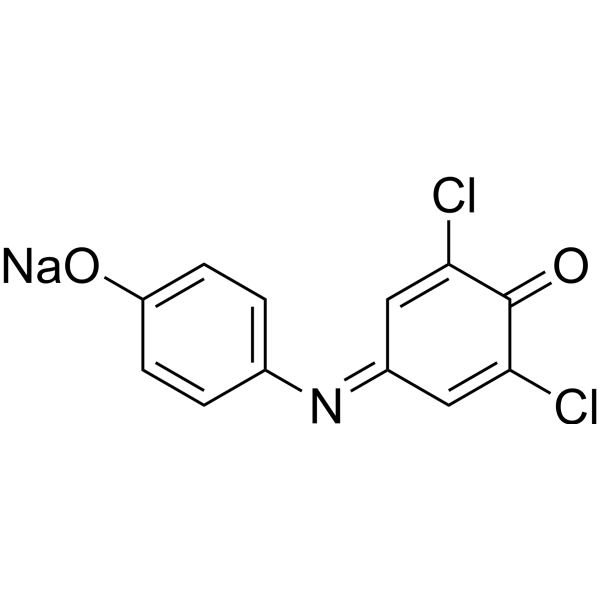
DCIP sodium is a blue dye commonly used in various biochemical and biotechnological applications as an indicator of redox reactions. DCIP sodium has unique chemical properties that change color according to the oxidation state of the substance being tested. It is commonly used in enzyme assays, such as measuring the activity of succinate dehydrogenase, or in protein quantification methods, such as the Lowry assay.
|
-
-
- HY-W014449
-
|
|
Biochemical Assay Reagents
|
Others
|
|
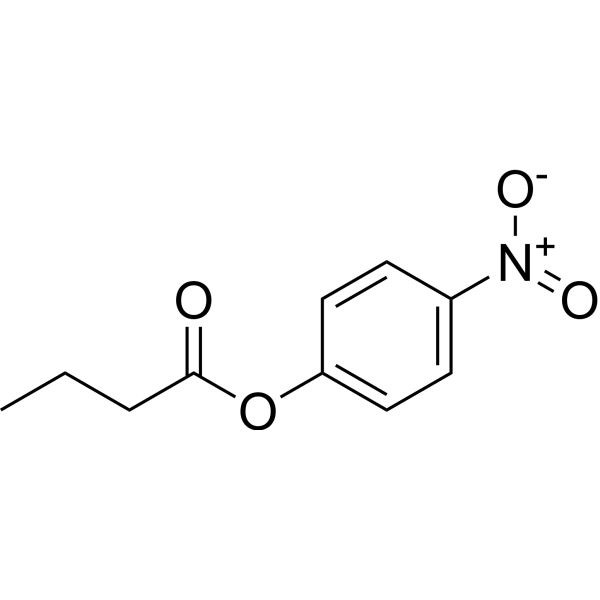
4-Nitrophenyl butyrate consists of butyric acid chains esterified with 4-nitrophenol groups, thus giving it a yellow color. This compound is commonly used as a substrate in enzyme assays to measure esterase and lipase activity. When these enzymes cleave the ester bond, the nitrophenol group is released and the color changes from yellow to orange. Thus, the rate of color change can be used to determine enzyme activity. In addition, 4-Nitrophenyl butyrate can also be used as organic synthesis reagent and dye intermediate.
|
-
-
- HY-D1224
-
|
CPRG
|
Biochemical Assay Reagents
|
Others
|
|
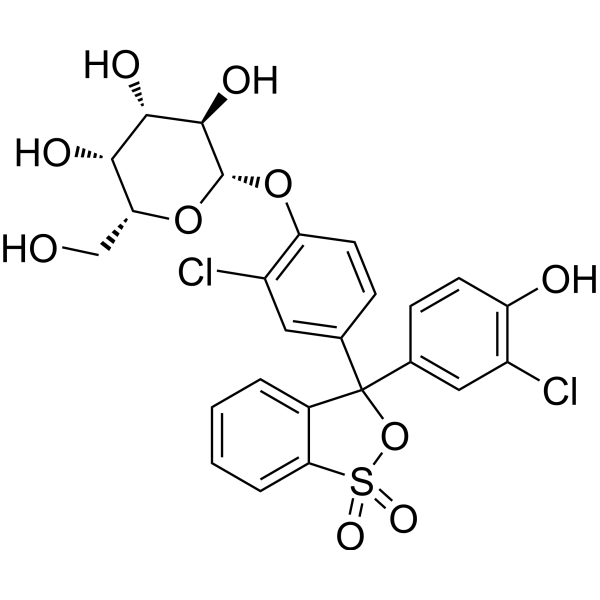
Chlorophenol red-β-D-galactopyranoside (CPRG) is an efficient and sensitive chromogenic substrate for β-galactosidase (HY-P2869), widely used in colorimetric assays. Chlorophenol red-β-D-galactopyranoside itself appears pale yellow. When it is specifically hydrolyzed by β-galactosidase, it releases chlorophenol red. The released chlorophenol red turns purple-red under alkaline or neutral pH conditions. This color change from yellow to red can be quantitatively detected at wavelengths of 540-572 nm using visible spectrophotometry .
|
-
-
- HY-W110798
-
|
|
Environmental Pollutants
Biochemical Assay Reagents
|
Others
|
|
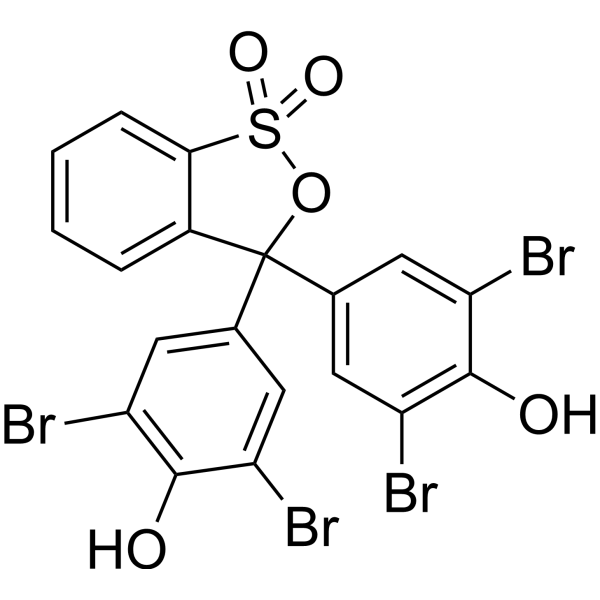
Bromophenol blue indicator (3.0-4.6) is a synthetic dye commonly used as an acid-base indicator with a transition range of pH 3.0-4.6. Bromophenol blue indicator (3.0-4.6) is water soluble and changes color from yellow to blue as the pH of the solution changes from acidic to basic. Its unique chemical properties make it an important ingredient in a variety of scientific applications, especially in biochemistry and molecular biology. In addition, it can be used as a stain in microbiology and histology. However, Bromophenol blue indicator (3.0-4.6) has potential irritating and staining properties.
|
-
-
- HY-151644
-
|
|
Fluorescent Dye
|
Others
|
|
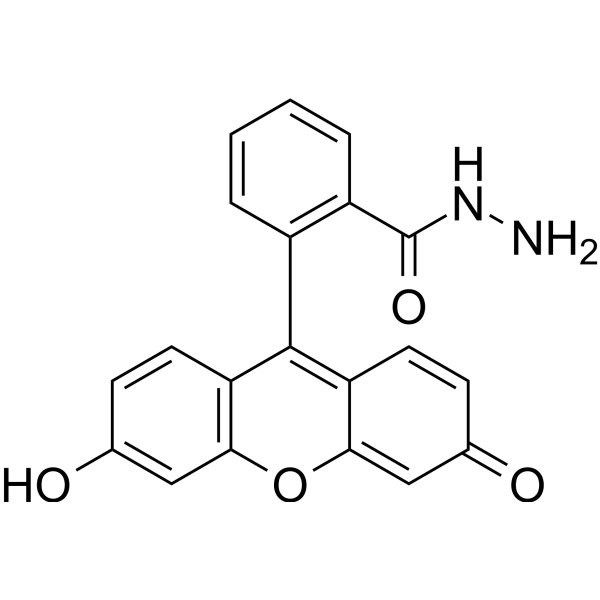
Fluorescein hydrazide is a sensitive fluorescent probe for Hg 2+ and Co 2+ that induces obvious color changes and fluorescence changes. Fluorescein hydrazide can be prepared by the reaction of fluorescein and hydrazine. Fluorescein hydrazide exhibits an excitation wavelength of 508 nM and an emission wavelength of 531 nM [2][3].
|
-
-
- HY-169798
-
|
|
Fluorescent Dye
VSV
|
Infection
|
1,9-Dimethylmethylene blue is a photosensitizer, virus inactivator and hemoglobin oxidant derived from methylene blue. When activated, 1,9-Dimethylmethylene blue generates reactive oxygen species including singlet oxygen, and acts as a metachromatic dye. When activated in monomeric or dimeric form, 1,9-Dimethylmethylene blue induces photoinactivation of R17 phage and vesicular stomatitis virus and oxidizes hemoglobin via non-singlet oxygen reactive oxygen species or singlet oxygen-mediated pathways, respectively. The monomeric form, with higher nucleic acid affinity, achieves virus inactivation under specific conditions without forming methemoglobin. 1,9-Dimethylmethylene blue binds to substances such as glycosaminoglycans to produce color changes. Although it is susceptible to interference from non-glycosaminoglycan components in urine, it is still applicable to spectrophotometric analysis for glycosaminoglycan quantification. With these unique photochemical and binding properties, 1,9-Dimethylmethylene blue is widely used in studies of viral infections and related biochemical analyses .
|
-
-
- HY-W110794
-
|
|
Environmental Pollutants
Biochemical Assay Reagents
|
Others
|
|
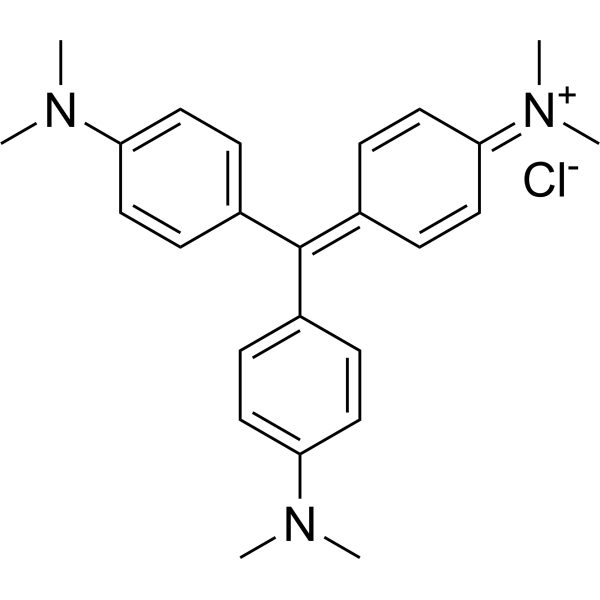
Crystal violet, IND (0.0-2.0) is a specialized indicator suitable for strongly acidic systems, which reflects changes in pH within the range of 0.0-2.0 through color changes. Crystal violet, IND (0.0-2.0) is widely used in acid-base titration, chemical analysis, and industrial testing fields .
|
-
-
- HY-D0169A
-
|
Phenolsulfonephthalein sodium salt
|
Fluorescent Dye
Glutathione Peroxidase
|
Others
|
|
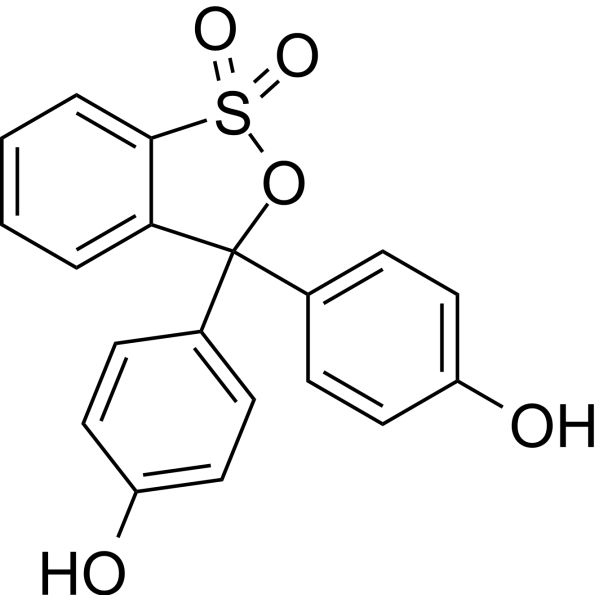
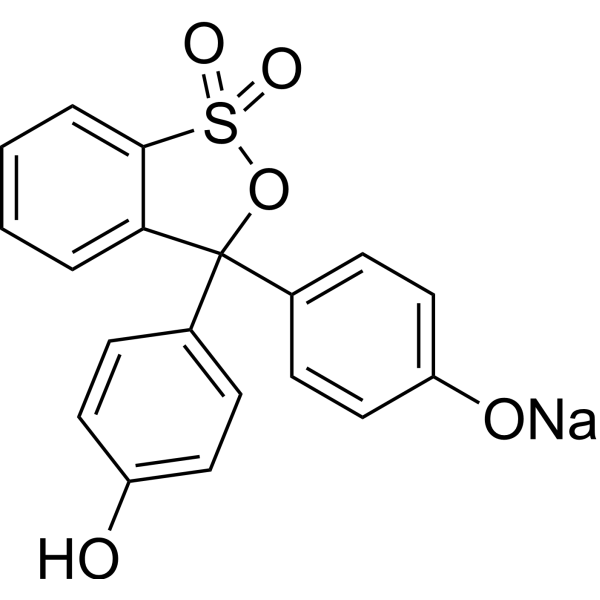
Phenol red (Phenolsulfonephthalein) sodium salt is a pH indicator dye. Phenol Red sodium salt is also an antagonist of rat P2X1R. Phenol Red sodium salt enhances the halogenating activity of myeloperoxidase. Phenol Red sodium salt shows a distinct color change from pink to yellow in a positive pH reaction .
|
-
-
- HY-W110910
-
|
|
Biochemical Assay Reagents
|
Infection
|
|
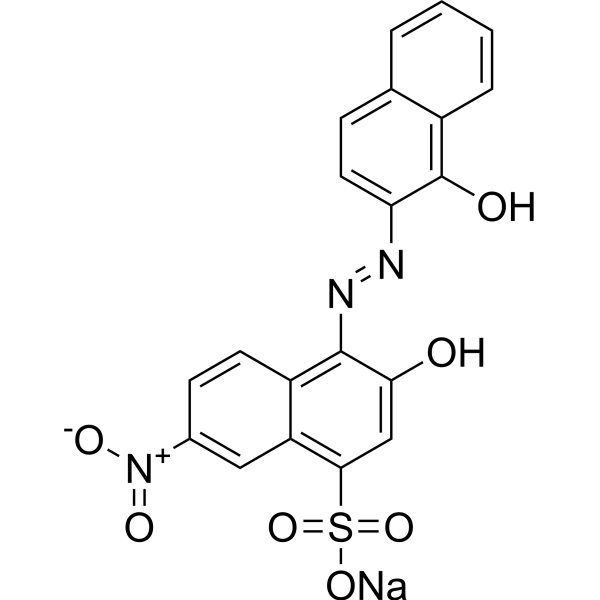
Eriochrome black T, Indicator is a complexing agent for metal ions (e.g., Ca 2+, Mg 2+) and is used as an indicator in complexometric titrations. Eriochrome black T, Indicator forms colored complexes with metal ions through covalent coordination bonds, and indicates the endpoint of the titration by color change. Eriochrome black T, Indicator can be used as an anionic azo dye in photocatalytic degradation studies to evaluate the performance of photocatalysts. The reaction solution of Eriochrome black T, Indicator combined with Mg 2+ is initially purple. During loop-mediated isothermal amplification (LAMP), the color changes from purple to sky blue due to the consumption of Mg 2+ by the formation of magnesium pyrophosphate, indicating a positive reaction. The optimal concentration of Eriochrome black T, Indicator in LAMP is 60 μM, and the detection limit for Mycobacterium tuberculosis is 1 pg DNA/reaction .
|
-
-
- HY-W133919
-
|
|
Environmental Pollutants
Biochemical Assay Reagents
|
Others
|
|
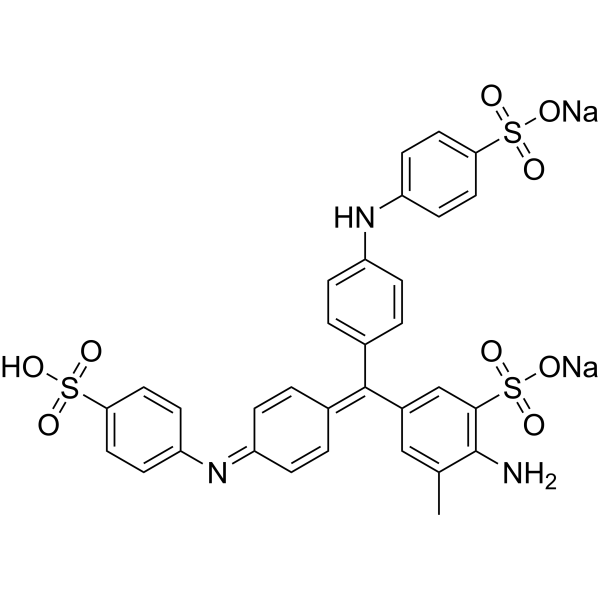
Aniline Blue sodium is a water-soluble dye commonly used as a biological stain for the detection of nucleic acids and proteins in various laboratory procedures such as electrophoresis and microscopy. Aniline Blue sodium has unique chemical properties that allow it to bind to specific cellular components, producing a color change that facilitates their visualization and analysis.
|
-
-
- HY-W087928
-
|
|
Biochemical Assay Reagents
|
Others
|
|
Bromocresol purple is a pH indicator, whose color changes from yellow to purple when the pH increases from 5.2 to 6.8. Bromocresol purple can be used for detecting yeast cells with plasma membrane damage and measuring serum albumin concentrations .
|
-
-
- HY-D1137
-
|
|
Fluorescent Dye
|
|
|
C.I. Pigment yellow 110 is the most important colorant used to add color or change the color of something and is chemically essentially unaffected by the carrier or medium into which it is incorporated. It can be widely used in textile, medicine, food, cosmetics, plastics, paint, ink, photography and paper industries.
|
-
-
- HY-128369
-
|
Metanil Yellow
|
Environmental Pollutants
Cytochrome P450
|
Others
|
|
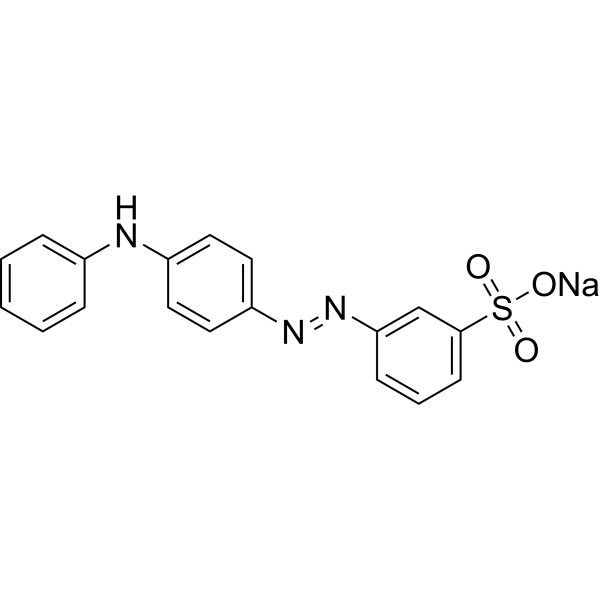
Acid Yellow 36 (Metanil Yellow) is an azo dye and a pH indicator. Acid Yellow 36 changes its color from red at pH 1.2 to yellow at pH 2.3. Acid Yellow 36 is used in the leather, paper and textile industries. Acid Yellow 36 acts as a bifunctional inducer of specific isozymes of P-450 and cytosolic enzymes .
|
-
-
- HY-D0429
-
|
|
Fluorescent Dye
|
|
|
C.I. Pigment red 5 is the most important colorant used to add color or change the color of something and is chemically essentially unaffected by the carrier or medium into which it is incorporated. It can be widely used in textile, medicine, food, cosmetics, plastics, paint, ink, photography and paper industries.
|
-
-
- HY-D0812
-
|
|
Fluorescent Dye
Biochemical Assay Reagents
|
Others
|
|
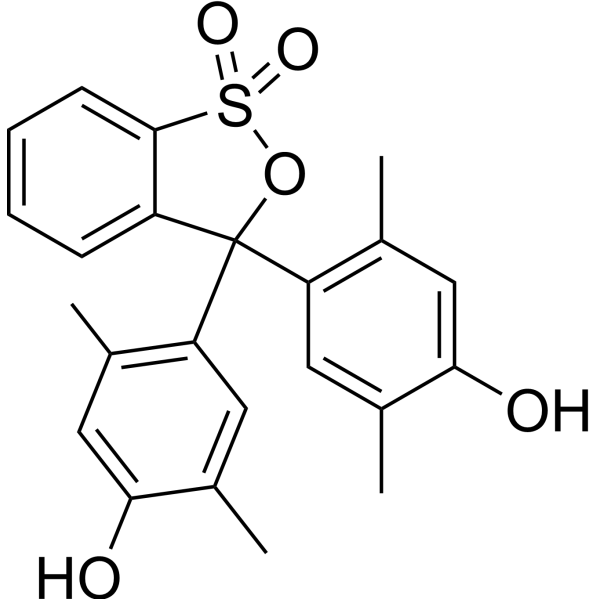
Xylenol Blue is a sulfonephthalein dye. It exhibits observable color changes in response to variations in pH. Xylenol Blue undergoes two distinct color transitions across two specific pH ranges: an acidic range and an alkaline range. In a neutral solution, Xylenol Blue appears yellow (at pH 8); in a strongly acidic medium, its color shifts to red (at pH 2.8); and in an alkaline medium, the yellow hue transitions to blue (at pH 9.6) .
|
-
-
- HY-128545
-
|
Nitrazine paper; Phenaphthazine
|
Biochemical Assay Reagents
|
Others
|
|
Nitrazine yellow (Nitrazine paper; Phenaphthazine) is a pH indicator. The color of Nitrazine yellow changes from yellow to blue in the pH range from 6.0 to 7.0. Nitrazine yellow is a kind of biological materials or organic compounds that are widely used in life science research .
|
-
-
- HY-D0228
-
|
Azo Violet; Magneson I
|
Fluorescent Dye
|
Others
|
|
4-(4-Nitrophenylazo)resorcinol (Azo Violet) is an azo purple dye used experimentally as a pH indicator, showing yellow when the pH value is lower than 11 and purple when the pH value is higher than 13. In slightly alkaline or alkaline environments, it also turns dark blue in the presence of magnesium salts. Azo Violet can also be used to test for the presence of ammonium ions. The color of the ammonium chloride or ammonium hydroxide solution will change depending on the concentration of azo violet used .
|
-
-
- HY-D0531
-
|
|
Fluorescent Dye
|
|
|
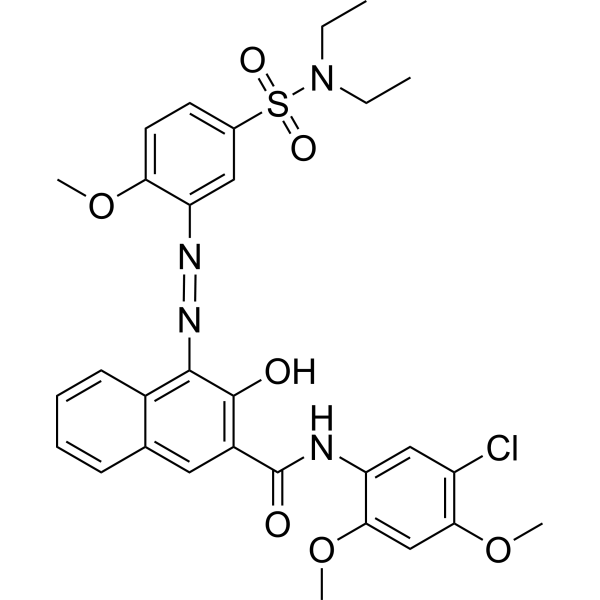
C.I. Pigment red 123 is the most important colorant used to add color or change the color of something and is chemically essentially unaffected by the carrier or medium into which it is incorporated. It can be widely used in textile, medicine, food, cosmetics, plastics, paint, ink, photography and paper industries.
|
-
-
- HY-D0960
-
|
|
Fluorescent Dye
|
|
|
C.I. Solvent Blue 43 is the most important colorant used to add color or change the color of something and is chemically essentially unaffected by the carrier or medium into which it is incorporated. It can be widely used in textile, medicine, food, cosmetics, plastics, paint, ink, photography and paper industries.
|
-
-
- HY-N8502
-
|
|
Fluorescent Dye
|
Cancer
|
|
Urdamycin A (Compound 3b) is an angucycline antibiotic that can be isolated from Streptomyces fradiae. Urdamycin A is an orange indicator with a change of the color to ultramarine blue at pH 7.7. Urdamycin A has anticancer activity with IC50s of 2.4 and 0.55 μg/mL in proliferation and stem cell assays, respectively .
|
-
-
- HY-143618
-
|
|
Biochemical Assay Reagents
|
Cancer
|
|
photoCORM-2 (compound 3) is a single carbon monoxide releasing molecule (CORM). photoCORM-2 exhibits good cellular uptake and real-time monitoring ability of CO uncaging by a color change approach. photoCORM-2 has anti-tumor activity .
|
-
-
- HY-D0405
-
|
|
Fluorescent Dye
|
|
|
C.I. Pigment yellow 74 is the most important colorant used to add color or change the color of something and is chemically essentially unaffected by the carrier or medium into which it is incorporated. It can be widely used in textile, medicine, food, cosmetics, plastics, paint, ink, photography and paper industries.
|
-
-
- HY-D0457
-
|
|
Fluorescent Dye
|
|
|
C.I. Solvent red 179 is the most important colorant used to add color or change the color of something and is chemically essentially unaffected by the carrier or medium into which it is incorporated. It can be widely used in textile, medicine, food, cosmetics, plastics, paint, ink, photography and paper industries.
|
-
-
- HY-118462A
-
|
Coelenterazine 400a hydrochloride; Bisdeoxycoelenterazine hydrochloride
|
Fluorescent Dye
|
Others
|
|
Coelenteramine (Coelenterazine) 400a hydrochloride, a derivative of Coelenterazine, is a Renilla luciferase (RLuc) substrate. In the presence of Coelenteramine 400a hydrochloride, RLuc can emit blue light at 395 nm . Coelenteramine 400a hydrochloride will causes color change in the bioluminescence reaction of Rluc by replacing the sulfur and oxygen heteroatoms of the methylene bridge. Coelenteramine 400a hydrochloride provides higher signal resolution and can be used in the research of bioluminescence resonance energy transfer (BRET) .
|
-
-
- HY-D0488
-
|
|
Fluorescent Dye
|
|
|
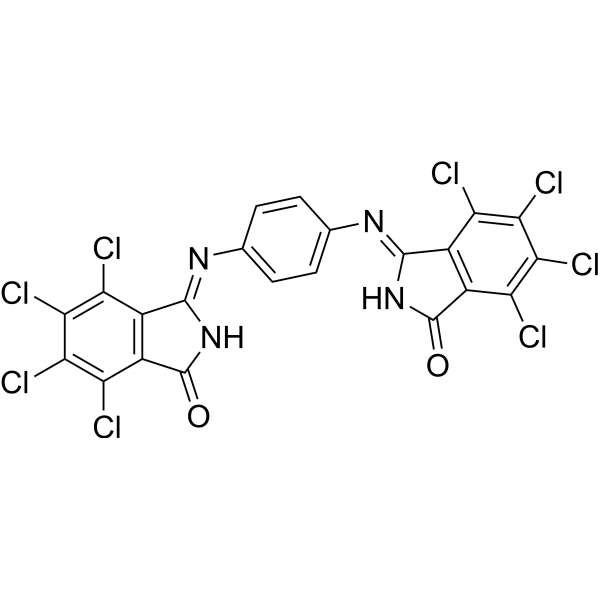
C.I. Pigment orange 36 is the most important colorant used to add color or change the color of something and is chemically essentially unaffected by the carrier or medium into which it is incorporated. It can be widely used in textile, medicine, food, cosmetics, plastics, paint, ink, photography and paper industries.
|
-
-
- HY-D0686
-
|
|
Fluorescent Dye
|
|
|
C.I. Pigment red 221 is the most important colorant used to add color or change the color of something and is chemically essentially unaffected by the carrier or medium into which it is incorporated. It can be widely used in textile, medicine, food, cosmetics, plastics, paint, ink, photography and paper industries.
|
-
-
- HY-D0450
-
|
|
Fluorescent Dye
|
|
|
C.I. Pigment red 112 is the most important colorant used to add color or change the color of something and is chemically essentially unaffected by the carrier or medium into which it is incorporated. It can be widely used in textile, medicine, food, cosmetics, plastics, paint, ink, photography and paper industries.
|
-
-
- HY-D0486
-
|
|
Fluorescent Dye
|
|
|
C.I. Pigment violet 32 is the most important colorant used to add color or change the color of something and is chemically essentially unaffected by the carrier or medium into which it is incorporated. It can be widely used in textile, medicine, food, cosmetics, plastics, paint, ink, photography and paper industries.
|
-
-
- HY-D0442
-
|
|
Fluorescent Dye
|
|
|
C.I. Pigment red 14 is the most important colorant used to add color or change the color of something and is chemically essentially unaffected by the carrier or medium into which it is incorporated. It can be widely used in textile, medicine, food, cosmetics, plastics, paint, ink, photography and paper industries.
|
-
-
- HY-D0510
-
|
|
Fluorescent Dye
|
|
|
C.I. Pigment orange 34 is the most important colorant used to add color or change the color of something and is chemically essentially unaffected by the carrier or medium into which it is incorporated. It can be widely used in textile, medicine, food, cosmetics, plastics, paint, ink, photography and paper industries.
|
-
-
- HY-D0725
-
|
|
Fluorescent Dye
|
|
|
C.I. Pigment yellow 180 is the most important colorant used to add color or change the color of something and is chemically essentially unaffected by the carrier or medium into which it is incorporated. It can be widely used in textile, medicine, food, cosmetics, plastics, paint, ink, photography and paper industries.
|
-
-
- HY-D0445
-
|
|
Fluorescent Dye
|
|
|
C.I. Pigment orange 16 is the most important colorant used to add color or change the color of something and is chemically essentially unaffected by the carrier or medium into which it is incorporated. It can be widely used in textile, medicine, food, cosmetics, plastics, paint, ink, photography and paper industries.
|
-
-
- HY-D0489
-
|
|
Fluorescent Dye
|
|
|
C.I. Pigment orange 38 is the most important colorant used to add color or change the color of something and is chemically essentially unaffected by the carrier or medium into which it is incorporated. It can be widely used in textile, medicine, food, cosmetics, plastics, paint, ink, photography and paper industries.
|
-
-
- HY-D0459
-
|
|
Fluorescent Dye
|
|
|
C.I. Pigment brown 25 is the most important colorant used to add color or change the color of something and is chemically essentially unaffected by the carrier or medium into which it is incorporated. It can be widely used in textile, medicine, food, cosmetics, plastics, paint, ink, photography and paper industries.
|
-
-
- HY-D0426
-
|
|
Fluorescent Dye
|
|
|
C.I. Pigment red 8 is the most important colorant used to add color or change the color of something and is chemically essentially unaffected by the carrier or medium into which it is incorporated. It can be widely used in textile, medicine, food, cosmetics, plastics, paint, ink, photography and paper industries.
|
-
-
- HY-D0428
-
|
|
Fluorescent Dye
|
|
|
C.I. Pigment red 9 is the most important colorant used to add color or change the color of something and is chemically essentially unaffected by the carrier or medium into which it is incorporated. It can be widely used in textile, medicine, food, cosmetics, plastics, paint, ink, photography and paper industries.
|
-
-
- HY-D0460
-
|
Pigment red 48 calcium salt
|
Fluorescent Dye
|
|
|
C.I. Pigment red 48 is the most important colorant used to add color or change the color of something and is chemically essentially unaffected by the carrier or medium into which it is incorporated. It can be widely used in textile, medicine, food, cosmetics, plastics, paint, ink, photography and paper industries.
|
-
-
- HY-D0394
-
|
|
Fluorescent Dye
|
|
|
C.I. Pigment red 2 is the most important colorant used to add color or change the color of something and is chemically essentially unaffected by the carrier or medium into which it is incorporated. It can be widely used in textile, medicine, food, cosmetics, plastics, paint, ink, photography and paper industries.
|
-
-
- HY-D0519
-
|
|
Fluorescent Dye
|
|
|
C.I. Pigment red 52:1 is the most important colorant used to add color or change the color of something and is chemically essentially unaffected by the carrier or medium into which it is incorporated. It can be widely used in textile, medicine, food, cosmetics, plastics, paint, ink, photography and paper industries.
|
-
-
- HY-W110789
-
|
|
Biochemical Assay Reagents
|
Others
|
|
Ethyl Orange (sodium), indicator grade is an organic azo compound that can be used as a pH indicator from pH 3.0 to pH 4.8, changing color from red to orange.
|
-
-
- HY-W110790
-
|
|
Biochemical Assay Reagents
|
Others
|
|
Bromocresol purple sodium is a pH indicator, whose color changes from yellow to purple when the pH increases from 5.2 to 6.8. Bromocresol purple sodium can be used for detecting yeast cells with plasma membrane damage and measuring serum albumin concentrations .
|
-
-
- HY-W087913
-
|
|
Biochemical Assay Reagents
|
Others
|
|
alpha-Naphtholphthalein is an indicator that is light yellow at pH 6 and gradually shows a clear color change with increasing pH to light green-green-blue. alpha-Naphtholphthalein can be impregnated into cotton-blend fabrics and used to develop medical supplies for wound pH monitoring, such as medical gauze, hospital gowns and compression bandages .
|
-
-
- HY-124324
-
|
p-Nitopheyl β-D-cellotioside
|
Fluorescent Dye
|
Others
|
|
4-Nitrophenyl β-D-cellotrioside (p-Nitopheyl β-D-cellotioside) is a chromogenic substrate for endoglucanases and cellulose biohydrolases. As a fluorescent dye, nitrophenyl β-D-Cellotrioside can be hydrolyzed by enzymes to release 4-nitrophenol, producing a yellow color. The activity of the enzyme can be quantitatively analyzed by monitoring the change in absorbance at 405 nm .
|
-
-
- HY-108913R
-
|
|
Beta-lactamase
Reference Standards
Antibiotic
|
Infection
|
|
Nitrocefin (Standard) is the analytical standard of Nitrocefin. This product is intended for research and analytical applications. Nitrocefin is a chromogenic β-lactamase substrate that undergoes a distinctive color change from yellow to red as the amide bond in the β-lactam ring is hydrolyzed by β-lactamase. Nitrocefin is used in competitive inhibition studies in developmental work on β-lactamase-resistant antibiotics .
|
-
-
- HY-D1224A
-
|
CPRG sodium
|
Biochemical Assay Reagents
|
Others
|
|
Chlorophenol red-β-D-galactopyranoside (CPRG) sodium is an efficient and sensitive chromogenic substrate for β-galactosidase (HY-P2869), widely used in colorimetric assays. Chlorophenol red-β-D-galactopyranoside sodium itself appears pale yellow. When it is specifically hydrolyzed by β-galactosidase, it releases chlorophenol red. The released chlorophenol red turns purple-red under alkaline or neutral pH conditions. This color change from yellow to red can be quantitatively detected at wavelengths of 540-572 nm using visible spectrophotometry .
|
-
-
- HY-143617
-
|
|
Photosensitizer
|
Cancer
|
|
photoCORM-1 (compound 8) is a combinatorial carbon monoxide releasing molecule (CORM). photoCORM-1 exhibits good cellular uptake and real-time monitoring ability of CO uncaging by a color change approach. photoCORM-1 has anti-tumor antivity .
|
-
-
- HY-D0493
-
|
|
Fluorescent Dye
|
|
|
C.I. Pigment yellow 62 is the most important colorant used to add color or change the color of something and is chemically essentially unaffected by the carrier or medium into which it is incorporated. It can be widely used in textile, medicine, food, cosmetics, plastics, paint, ink, photography and paper industries.
|
-
- HY-D0408
-
|
|
Fluorescent Dye
|
|
|
C.I. Pigment red 38 is the most important colorant used to add color or change the color of something and is chemically essentially unaffected by the carrier or medium into which it is incorporated. It can be widely used in textile, medicine, food, cosmetics, plastics, paint, ink, photography and paper industries.
|
-
- HY-D0392
-
|
|
Fluorescent Dye
|
|
|
C. I. Pigment yellow 16 is the most important colorant used to add color or change the color of something and is chemically essentially unaffected by the carrier or medium into which it is incorporated. It can be widely used in textile, medicine, food, cosmetics, plastics, paint, ink, photography and paper industries.
|
-
- HY-D0433
-
|
Navy Blue G
|
Fluorescent Dye
|
|
|
C.I. Vat Blue 16 is the most important colorant used to add color or change the color of something and is chemically essentially unaffected by the carrier or medium into which it is incorporated. It can be widely used in textile, medicine, food, cosmetics, plastics, paint, ink, photography and paper industries.
|
-
- HY-D0431
-
|
|
Fluorescent Dye
|
|
|
C.I. Pigment blue 56 is the most important colorant used to add color or change the color of something and is chemically essentially unaffected by the carrier or medium into which it is incorporated. It can be widely used in textile, medicine, food, cosmetics, plastics, paint, ink, photography and paper industries.
|
-
- HY-D0415
-
|
|
Fluorescent Dye
|
|
|
C.I. Vat blue 22 is the most important colorant used to add color or change the color of something and is chemically essentially unaffected by the carrier or medium into which it is incorporated. It can be widely used in textile, medicine, food, cosmetics, plastics, paint, ink, photography and paper industries.
|
-
- HY-D0441
-
|
|
Fluorescent Dye
|
|
|
C.I. Pigment red 23 is the most important colorant used to add color or change the color of something and is chemically essentially unaffected by the carrier or medium into which it is incorporated. It can be widely used in textile, medicine, food, cosmetics, plastics, paint, ink, photography and paper industries.
|
-
- HY-D0427
-
|
|
Fluorescent Dye
|
|
|
C.I. Pigment red 12 is the most important colorant used to add color or change the color of something and is chemically essentially unaffected by the carrier or medium into which it is incorporated. It can be widely used in textile, medicine, food, cosmetics, plastics, paint, ink, photography and paper industries.
|
-
- HY-W111168
-
|
|
Biochemical Assay Reagents
|
Others
|
|
Acid chrome blue K is a metal indicator. The solution color of the LAMP (Loop-mediated isothermal amplification) reaction with ACBK (Acid chrome blue K) changes from red to blue based on a decrease in the Mg 2+ concentration in the reaction solution .
|
-
- HY-142955
-
|
|
Biochemical Assay Reagents
|
Cancer
|
|
Dual photoCORM 1 (compound 5) is metal-free, photochemically active dual CORM. Dual photoCORM 1 exhibits good cellular uptake and real-time monitoring ability of CO uncaging by a color change approach in cancerous B16F10 cells .
|
-
- HY-D0018R
-
|
Dichlorophenylindophenol sodium (Standard); DCPIP sodium (Standard); Indochlorophenol sodium (Standard)
|
Biochemical Assay Reagents
Reference Standards
|
Others
|
|
DCIP (sodium) (Standard) is the analytical standard of DCIP (sodium). This product is intended for research and analytical applications. DCIP sodium is a blue dye commonly used in various biochemical and biotechnological applications as an indicator of redox reactions. DCIP sodium has unique chemical properties that change color according to the oxidation state of the substance being tested. It is commonly used in enzyme assays, such as measuring the activity of succinate dehydrogenase, or in protein quantification methods, such as the Lowry assay.
|
-
- HY-D3251
-
|
|
Fluorescent Dye
|
Cancer
|
|
LCP is a fluorescent probe applicable for subcellular localization. LCP responds to polarity changes in the cellular microenvironment via fluorescence resonance energy transfer, emitting blue fluorescence in low-polarity environments and red fluorescence in high-polarity environments. LCP enables dual-color visualization of dynamic changes in lysosomes and cytoplasmic membranes during drug-induced cell apoptosis, and monitors cell viability through localization and emission color changes. LCP can be used in cancer research .
|
-
- HY-D3244
-
|
|
Fluorescent Dye
|
Others
|
|
RDDB is a rhodamine-based turn-on fluorescent and colorimetric chemosensor selective for Mn 2+, with a limit of detection of 5×10 -8 M (excitation wavelength: 480-550 nm; fluorescence signal collection range: >590 nm). In the presence of Mn 2+, RDDB undergoes a spirolactam ring-opening reaction of its rhodamine hydrazide moiety, resulting in turn-on fluorescence and a color change. RDDB can be used for intracellular Mn 2+ imaging .
|
-
| Cat. No. |
Product Name |
Type |
-
- HY-D0169
-
|
Phenolsulfonephthalein
|
Fluorescent Dyes
|
|
Phenol red (Phenolsulfonephthalein) is a pH indicator dye, relying on a distinct color change from pink to yellow in case of a positive reaction .
|
-
- HY-118462
-
|
Coelenterazine 400a; Bisdeoxycoelenterazine
|
Fluorescent Dyes
|
|
Coelenteramine 400a (Coelenterazine 400a), a derivative of Coelenterazine, is a Renilla luciferase (RLuc) substrate. In the presence of Coelenteramine 400a, RLuc can emit blue light at 395 nm . Coelenterazine 400a will causes color change in the bioluminescence reaction of Rluc by replacing the sulfur and oxygen heteroatoms of the methylene bridge. Coelenterazine 400a provides higher signal resolution and can be used in the research of bioluminescence resonance energy transfer (BRET) .
|
-
- HY-D0018
-
|
Dichlorophenylindophenol sodium; DCPIP sodium; Indochlorophenol sodium
|
Fluorescent Dyes
|
|
DCIP sodium is a blue dye commonly used in various biochemical and biotechnological applications as an indicator of redox reactions. DCIP sodium has unique chemical properties that change color according to the oxidation state of the substance being tested. It is commonly used in enzyme assays, such as measuring the activity of succinate dehydrogenase, or in protein quantification methods, such as the Lowry assay.
|
-
- HY-D1224
-
|
CPRG
|
Fluorescent Dyes
|
|
Chlorophenol red-β-D-galactopyranoside (CPRG) is an efficient and sensitive chromogenic substrate for β-galactosidase (HY-P2869), widely used in colorimetric assays. Chlorophenol red-β-D-galactopyranoside itself appears pale yellow. When it is specifically hydrolyzed by β-galactosidase, it releases chlorophenol red. The released chlorophenol red turns purple-red under alkaline or neutral pH conditions. This color change from yellow to red can be quantitatively detected at wavelengths of 540-572 nm using visible spectrophotometry .
|
-
- HY-151644
-
|
|
Fluorescent Dyes
|
|
Fluorescein hydrazide is a sensitive fluorescent probe for Hg 2+ and Co 2+ that induces obvious color changes and fluorescence changes. Fluorescein hydrazide can be prepared by the reaction of fluorescein and hydrazine. Fluorescein hydrazide exhibits an excitation wavelength of 508 nM and an emission wavelength of 531 nM [2][3].
|
-
- HY-D0169A
-
|
Phenolsulfonephthalein sodium salt
|
Fluorescent Dyes
|
|
Phenol red (Phenolsulfonephthalein) sodium salt is a pH indicator dye. Phenol Red sodium salt is also an antagonist of rat P2X1R. Phenol Red sodium salt enhances the halogenating activity of myeloperoxidase. Phenol Red sodium salt shows a distinct color change from pink to yellow in a positive pH reaction .
|
-
- HY-W133919
-
|
|
Fluorescent Dyes
|
|
Aniline Blue sodium is a water-soluble dye commonly used as a biological stain for the detection of nucleic acids and proteins in various laboratory procedures such as electrophoresis and microscopy. Aniline Blue sodium has unique chemical properties that allow it to bind to specific cellular components, producing a color change that facilitates their visualization and analysis.
|
-
- HY-D1137
-
|
|
Fluorescent Dyes
|
|
C.I. Pigment yellow 110 is the most important colorant used to add color or change the color of something and is chemically essentially unaffected by the carrier or medium into which it is incorporated. It can be widely used in textile, medicine, food, cosmetics, plastics, paint, ink, photography and paper industries.
|
-
- HY-128369
-
|
Metanil Yellow
|
Fluorescent Dyes
|
|
Acid Yellow 36 (Metanil Yellow) is an azo dye and a pH indicator. Acid Yellow 36 changes its color from red at pH 1.2 to yellow at pH 2.3. Acid Yellow 36 is used in the leather, paper and textile industries. Acid Yellow 36 acts as a bifunctional inducer of specific isozymes of P-450 and cytosolic enzymes .
|
-
- HY-D0429
-
|
|
Fluorescent Dyes
|
|
C.I. Pigment red 5 is the most important colorant used to add color or change the color of something and is chemically essentially unaffected by the carrier or medium into which it is incorporated. It can be widely used in textile, medicine, food, cosmetics, plastics, paint, ink, photography and paper industries.
|
-
- HY-D0812
-
|
|
Fluorescent Dyes
|
|
Xylenol Blue is a sulfonephthalein dye. It exhibits observable color changes in response to variations in pH. Xylenol Blue undergoes two distinct color transitions across two specific pH ranges: an acidic range and an alkaline range. In a neutral solution, Xylenol Blue appears yellow (at pH 8); in a strongly acidic medium, its color shifts to red (at pH 2.8); and in an alkaline medium, the yellow hue transitions to blue (at pH 9.6) .
|
-
- HY-D0228
-
|
Azo Violet; Magneson I
|
Fluorescent Dyes
|
|
4-(4-Nitrophenylazo)resorcinol (Azo Violet) is an azo purple dye used experimentally as a pH indicator, showing yellow when the pH value is lower than 11 and purple when the pH value is higher than 13. In slightly alkaline or alkaline environments, it also turns dark blue in the presence of magnesium salts. Azo Violet can also be used to test for the presence of ammonium ions. The color of the ammonium chloride or ammonium hydroxide solution will change depending on the concentration of azo violet used .
|
-
- HY-D0531
-
|
|
Fluorescent Dyes
|
|
C.I. Pigment red 123 is the most important colorant used to add color or change the color of something and is chemically essentially unaffected by the carrier or medium into which it is incorporated. It can be widely used in textile, medicine, food, cosmetics, plastics, paint, ink, photography and paper industries.
|
-
- HY-D0960
-
|
|
Fluorescent Dyes
|
|
C.I. Solvent Blue 43 is the most important colorant used to add color or change the color of something and is chemically essentially unaffected by the carrier or medium into which it is incorporated. It can be widely used in textile, medicine, food, cosmetics, plastics, paint, ink, photography and paper industries.
|
-
- HY-D0405
-
|
|
Fluorescent Dyes
|
|
C.I. Pigment yellow 74 is the most important colorant used to add color or change the color of something and is chemically essentially unaffected by the carrier or medium into which it is incorporated. It can be widely used in textile, medicine, food, cosmetics, plastics, paint, ink, photography and paper industries.
|
-
- HY-D0457
-
|
|
Fluorescent Dyes
|
|
C.I. Solvent red 179 is the most important colorant used to add color or change the color of something and is chemically essentially unaffected by the carrier or medium into which it is incorporated. It can be widely used in textile, medicine, food, cosmetics, plastics, paint, ink, photography and paper industries.
|
-
- HY-D0488
-
|
|
Fluorescent Dyes
|
|
C.I. Pigment orange 36 is the most important colorant used to add color or change the color of something and is chemically essentially unaffected by the carrier or medium into which it is incorporated. It can be widely used in textile, medicine, food, cosmetics, plastics, paint, ink, photography and paper industries.
|
-
- HY-D0686
-
|
|
Fluorescent Dyes
|
|
C.I. Pigment red 221 is the most important colorant used to add color or change the color of something and is chemically essentially unaffected by the carrier or medium into which it is incorporated. It can be widely used in textile, medicine, food, cosmetics, plastics, paint, ink, photography and paper industries.
|
-
- HY-D0450
-
|
|
Fluorescent Dyes
|
|
C.I. Pigment red 112 is the most important colorant used to add color or change the color of something and is chemically essentially unaffected by the carrier or medium into which it is incorporated. It can be widely used in textile, medicine, food, cosmetics, plastics, paint, ink, photography and paper industries.
|
-
- HY-D0486
-
|
|
Fluorescent Dyes
|
|
C.I. Pigment violet 32 is the most important colorant used to add color or change the color of something and is chemically essentially unaffected by the carrier or medium into which it is incorporated. It can be widely used in textile, medicine, food, cosmetics, plastics, paint, ink, photography and paper industries.
|
-
- HY-D0442
-
|
|
Fluorescent Dyes
|
|
C.I. Pigment red 14 is the most important colorant used to add color or change the color of something and is chemically essentially unaffected by the carrier or medium into which it is incorporated. It can be widely used in textile, medicine, food, cosmetics, plastics, paint, ink, photography and paper industries.
|
-
- HY-D0510
-
|
|
Fluorescent Dyes
|
|
C.I. Pigment orange 34 is the most important colorant used to add color or change the color of something and is chemically essentially unaffected by the carrier or medium into which it is incorporated. It can be widely used in textile, medicine, food, cosmetics, plastics, paint, ink, photography and paper industries.
|
-
- HY-D0725
-
|
|
Fluorescent Dyes
|
|
C.I. Pigment yellow 180 is the most important colorant used to add color or change the color of something and is chemically essentially unaffected by the carrier or medium into which it is incorporated. It can be widely used in textile, medicine, food, cosmetics, plastics, paint, ink, photography and paper industries.
|
-
- HY-D0445
-
|
|
Fluorescent Dyes
|
|
C.I. Pigment orange 16 is the most important colorant used to add color or change the color of something and is chemically essentially unaffected by the carrier or medium into which it is incorporated. It can be widely used in textile, medicine, food, cosmetics, plastics, paint, ink, photography and paper industries.
|
-
- HY-D0489
-
|
|
Fluorescent Dyes
|
|
C.I. Pigment orange 38 is the most important colorant used to add color or change the color of something and is chemically essentially unaffected by the carrier or medium into which it is incorporated. It can be widely used in textile, medicine, food, cosmetics, plastics, paint, ink, photography and paper industries.
|
-
- HY-D0459
-
|
|
Fluorescent Dyes
|
|
C.I. Pigment brown 25 is the most important colorant used to add color or change the color of something and is chemically essentially unaffected by the carrier or medium into which it is incorporated. It can be widely used in textile, medicine, food, cosmetics, plastics, paint, ink, photography and paper industries.
|
-
- HY-D0426
-
|
|
Fluorescent Dyes
|
|
C.I. Pigment red 8 is the most important colorant used to add color or change the color of something and is chemically essentially unaffected by the carrier or medium into which it is incorporated. It can be widely used in textile, medicine, food, cosmetics, plastics, paint, ink, photography and paper industries.
|
-
- HY-D0428
-
|
|
Fluorescent Dyes
|
|
C.I. Pigment red 9 is the most important colorant used to add color or change the color of something and is chemically essentially unaffected by the carrier or medium into which it is incorporated. It can be widely used in textile, medicine, food, cosmetics, plastics, paint, ink, photography and paper industries.
|
-
- HY-D0460
-
|
Pigment red 48 calcium salt
|
Fluorescent Dyes
|
|
C.I. Pigment red 48 is the most important colorant used to add color or change the color of something and is chemically essentially unaffected by the carrier or medium into which it is incorporated. It can be widely used in textile, medicine, food, cosmetics, plastics, paint, ink, photography and paper industries.
|
-
- HY-D0394
-
|
|
Fluorescent Dyes
|
|
C.I. Pigment red 2 is the most important colorant used to add color or change the color of something and is chemically essentially unaffected by the carrier or medium into which it is incorporated. It can be widely used in textile, medicine, food, cosmetics, plastics, paint, ink, photography and paper industries.
|
-
- HY-D0519
-
|
|
Fluorescent Dyes
|
|
C.I. Pigment red 52:1 is the most important colorant used to add color or change the color of something and is chemically essentially unaffected by the carrier or medium into which it is incorporated. It can be widely used in textile, medicine, food, cosmetics, plastics, paint, ink, photography and paper industries.
|
-
- HY-124324
-
|
p-Nitopheyl β-D-cellotioside
|
Fluorescent Dyes
|
|
4-Nitrophenyl β-D-cellotrioside (p-Nitopheyl β-D-cellotioside) is a chromogenic substrate for endoglucanases and cellulose biohydrolases. As a fluorescent dye, nitrophenyl β-D-Cellotrioside can be hydrolyzed by enzymes to release 4-nitrophenol, producing a yellow color. The activity of the enzyme can be quantitatively analyzed by monitoring the change in absorbance at 405 nm .
|
-
- HY-D0493
-
|
|
Fluorescent Dyes
|
|
C.I. Pigment yellow 62 is the most important colorant used to add color or change the color of something and is chemically essentially unaffected by the carrier or medium into which it is incorporated. It can be widely used in textile, medicine, food, cosmetics, plastics, paint, ink, photography and paper industries.
|
-
- HY-D0408
-
|
|
Fluorescent Dyes
|
|
C.I. Pigment red 38 is the most important colorant used to add color or change the color of something and is chemically essentially unaffected by the carrier or medium into which it is incorporated. It can be widely used in textile, medicine, food, cosmetics, plastics, paint, ink, photography and paper industries.
|
-
- HY-D0392
-
|
|
Fluorescent Dyes
|
|
C. I. Pigment yellow 16 is the most important colorant used to add color or change the color of something and is chemically essentially unaffected by the carrier or medium into which it is incorporated. It can be widely used in textile, medicine, food, cosmetics, plastics, paint, ink, photography and paper industries.
|
-
- HY-D0433
-
|
Navy Blue G
|
Fluorescent Dyes
|
|
C.I. Vat Blue 16 is the most important colorant used to add color or change the color of something and is chemically essentially unaffected by the carrier or medium into which it is incorporated. It can be widely used in textile, medicine, food, cosmetics, plastics, paint, ink, photography and paper industries.
|
-
- HY-D0431
-
|
|
Fluorescent Dyes
|
|
C.I. Pigment blue 56 is the most important colorant used to add color or change the color of something and is chemically essentially unaffected by the carrier or medium into which it is incorporated. It can be widely used in textile, medicine, food, cosmetics, plastics, paint, ink, photography and paper industries.
|
-
- HY-D0415
-
|
|
Fluorescent Dyes
|
|
C.I. Vat blue 22 is the most important colorant used to add color or change the color of something and is chemically essentially unaffected by the carrier or medium into which it is incorporated. It can be widely used in textile, medicine, food, cosmetics, plastics, paint, ink, photography and paper industries.
|
-
- HY-D0441
-
|
|
Fluorescent Dyes
|
|
C.I. Pigment red 23 is the most important colorant used to add color or change the color of something and is chemically essentially unaffected by the carrier or medium into which it is incorporated. It can be widely used in textile, medicine, food, cosmetics, plastics, paint, ink, photography and paper industries.
|
-
- HY-D0427
-
|
|
Fluorescent Dyes
|
|
C.I. Pigment red 12 is the most important colorant used to add color or change the color of something and is chemically essentially unaffected by the carrier or medium into which it is incorporated. It can be widely used in textile, medicine, food, cosmetics, plastics, paint, ink, photography and paper industries.
|
-
- HY-D0018R
-
|
Dichlorophenylindophenol sodium (Standard); DCPIP sodium (Standard); Indochlorophenol sodium (Standard)
|
Fluorescent Dyes
|
|
DCIP (sodium) (Standard) is the analytical standard of DCIP (sodium). This product is intended for research and analytical applications. DCIP sodium is a blue dye commonly used in various biochemical and biotechnological applications as an indicator of redox reactions. DCIP sodium has unique chemical properties that change color according to the oxidation state of the substance being tested. It is commonly used in enzyme assays, such as measuring the activity of succinate dehydrogenase, or in protein quantification methods, such as the Lowry assay.
|
-
- HY-D3251
-
|
|
Fluorescent Dyes
|
|
LCP is a fluorescent probe applicable for subcellular localization. LCP responds to polarity changes in the cellular microenvironment via fluorescence resonance energy transfer, emitting blue fluorescence in low-polarity environments and red fluorescence in high-polarity environments. LCP enables dual-color visualization of dynamic changes in lysosomes and cytoplasmic membranes during drug-induced cell apoptosis, and monitors cell viability through localization and emission color changes. LCP can be used in cancer research .
|
-
- HY-D3244
-
|
|
Fluorescent Dyes
|
|
RDDB is a rhodamine-based turn-on fluorescent and colorimetric chemosensor selective for Mn 2+, with a limit of detection of 5×10 -8 M (excitation wavelength: 480-550 nm; fluorescence signal collection range: >590 nm). In the presence of Mn 2+, RDDB undergoes a spirolactam ring-opening reaction of its rhodamine hydrazide moiety, resulting in turn-on fluorescence and a color change. RDDB can be used for intracellular Mn 2+ imaging .
|
| Cat. No. |
Product Name |
Type |
-
- HY-W014449
-
|
|
Biochemical Assay Reagents
|
|
4-Nitrophenyl butyrate consists of butyric acid chains esterified with 4-nitrophenol groups, thus giving it a yellow color. This compound is commonly used as a substrate in enzyme assays to measure esterase and lipase activity. When these enzymes cleave the ester bond, the nitrophenol group is released and the color changes from yellow to orange. Thus, the rate of color change can be used to determine enzyme activity. In addition, 4-Nitrophenyl butyrate can also be used as organic synthesis reagent and dye intermediate.
|
-
- HY-W110798
-
|
|
Biochemical Assay Reagents
|
|
Bromophenol blue indicator (3.0-4.6) is a synthetic dye commonly used as an acid-base indicator with a transition range of pH 3.0-4.6. Bromophenol blue indicator (3.0-4.6) is water soluble and changes color from yellow to blue as the pH of the solution changes from acidic to basic. Its unique chemical properties make it an important ingredient in a variety of scientific applications, especially in biochemistry and molecular biology. In addition, it can be used as a stain in microbiology and histology. However, Bromophenol blue indicator (3.0-4.6) has potential irritating and staining properties.
|
-
- HY-W110794
-
|
|
Biochemical Assay Reagents
|
|
Crystal violet, IND (0.0-2.0) is a specialized indicator suitable for strongly acidic systems, which reflects changes in pH within the range of 0.0-2.0 through color changes. Crystal violet, IND (0.0-2.0) is widely used in acid-base titration, chemical analysis, and industrial testing fields .
|
-
- HY-W110910
-
|
|
Biochemical Assay Reagents
|
|
Eriochrome black T, Indicator is a complexing agent for metal ions (e.g., Ca 2+, Mg 2+) and is used as an indicator in complexometric titrations. Eriochrome black T, Indicator forms colored complexes with metal ions through covalent coordination bonds, and indicates the endpoint of the titration by color change. Eriochrome black T, Indicator can be used as an anionic azo dye in photocatalytic degradation studies to evaluate the performance of photocatalysts. The reaction solution of Eriochrome black T, Indicator combined with Mg 2+ is initially purple. During loop-mediated isothermal amplification (LAMP), the color changes from purple to sky blue due to the consumption of Mg 2+ by the formation of magnesium pyrophosphate, indicating a positive reaction. The optimal concentration of Eriochrome black T, Indicator in LAMP is 60 μM, and the detection limit for Mycobacterium tuberculosis is 1 pg DNA/reaction .
|
-
- HY-W087928
-
|
|
Biochemical Assay Reagents
|
|
Bromocresol purple is a pH indicator, whose color changes from yellow to purple when the pH increases from 5.2 to 6.8. Bromocresol purple can be used for detecting yeast cells with plasma membrane damage and measuring serum albumin concentrations .
|
-
- HY-128545
-
|
Nitrazine paper; Phenaphthazine
|
Biochemical Assay Reagents
|
|
Nitrazine yellow (Nitrazine paper; Phenaphthazine) is a pH indicator. The color of Nitrazine yellow changes from yellow to blue in the pH range from 6.0 to 7.0. Nitrazine yellow is a kind of biological materials or organic compounds that are widely used in life science research .
|
-
- HY-W110789
-
|
|
Biochemical Assay Reagents
|
|
Ethyl Orange (sodium), indicator grade is an organic azo compound that can be used as a pH indicator from pH 3.0 to pH 4.8, changing color from red to orange.
|
-
- HY-W110790
-
|
|
Biochemical Assay Reagents
|
|
Bromocresol purple sodium is a pH indicator, whose color changes from yellow to purple when the pH increases from 5.2 to 6.8. Bromocresol purple sodium can be used for detecting yeast cells with plasma membrane damage and measuring serum albumin concentrations .
|
-
- HY-W087913
-
|
|
Biochemical Assay Reagents
|
|
alpha-Naphtholphthalein is an indicator that is light yellow at pH 6 and gradually shows a clear color change with increasing pH to light green-green-blue. alpha-Naphtholphthalein can be impregnated into cotton-blend fabrics and used to develop medical supplies for wound pH monitoring, such as medical gauze, hospital gowns and compression bandages .
|
-
- HY-D1224A
-
|
CPRG sodium
|
Biochemical Assay Reagents
|
|
Chlorophenol red-β-D-galactopyranoside (CPRG) sodium is an efficient and sensitive chromogenic substrate for β-galactosidase (HY-P2869), widely used in colorimetric assays. Chlorophenol red-β-D-galactopyranoside sodium itself appears pale yellow. When it is specifically hydrolyzed by β-galactosidase, it releases chlorophenol red. The released chlorophenol red turns purple-red under alkaline or neutral pH conditions. This color change from yellow to red can be quantitatively detected at wavelengths of 540-572 nm using visible spectrophotometry .
|
-
- HY-W111168
-
|
|
Biochemical Assay Reagents
|
|
Acid chrome blue K is a metal indicator. The solution color of the LAMP (Loop-mediated isothermal amplification) reaction with ACBK (Acid chrome blue K) changes from red to blue based on a decrease in the Mg 2+ concentration in the reaction solution .
|
-
- HY-K0613
-
|
|
|
MCE Oil Red O Staining Kit for Cultured Cells consists of Oil Red O staining solution and hematoxylin. It is used to demonstrate fat degeneration and abnormal lipid deposition in cultured cells, particularly when multiple neutral fat droplets are present within the cells. This kit helps in identifying lipid changes and their nature in cultured cells. It is important to note that samples should not be fixed with ethanol-containing fixatives, as ethanol may interfere with lipid staining. The positive staining result for fat typically appears orange-yellow to red, with the exact color depending on the lipid concentration.
|
| Cat. No. |
Product Name |
Category |
Target |
Chemical Structure |
-
- HY-N8502
-
|
|
Microorganisms
Antibiotics
Source Classification
|
Fluorescent Dye
|
|
Urdamycin A (Compound 3b) is an angucycline antibiotic that can be isolated from Streptomyces fradiae. Urdamycin A is an orange indicator with a change of the color to ultramarine blue at pH 7.7. Urdamycin A has anticancer activity with IC50s of 2.4 and 0.55 μg/mL in proliferation and stem cell assays, respectively .
|
-
Your information is safe with us. * Required Fields.
Inquiry Information
- Product Name:
- Cat. No.:
- Quantity:
- MCE Japan Authorized Agent:

