



Coelenteramine 400a

Based on 1 Customer Validation
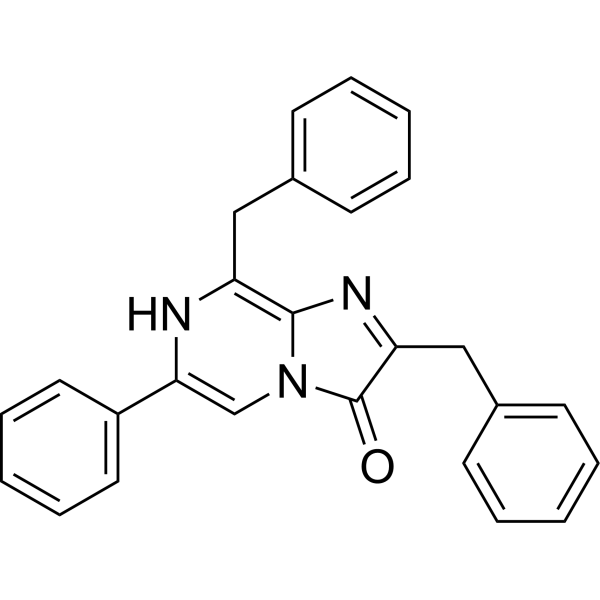
Coelenteramine 400a (Coelenterazine 400a), a derivative of Coelenterazine, is a Renilla luciferase (RLuc) substrate. In the presence of Coelenteramine 400a, RLuc can emit blue light at 395 nm. Coelenterazine 400a will causes color change in the bioluminescence reaction of Rluc by replacing the sulfur and oxygen heteroatoms of the methylene bridge. Coelenterazine 400a provides higher signal resolution and can be used in the research of bioluminescence resonance energy transfer (BRET).
For research use only. We do not sell to patients.
- Purity : 99.70%
- CAS No.: 70217-82-2
- Formula: C26H21N3O
- Molecular Weight:391.46
-
Storage:
-20°C, protect from light
* The compound is unstable in solutions, freshly prepared is recommended.

To place orders, for customer services and technical support, please contact: MedChemExpress USA
Tel: 609-228-6898 E-mail: [email protected] [email protected]


-
 Biological Activity
-
Chemical Information
-
Solvent & Solubility
- Purity & Documentation
- References
-
 Help & FAQs


-
HY-D0814
DAPI dihydrochlorideFluorescent DNA Stain -
HY-50767
PalbociclibCDK4/6 Inhibitor -
HY-10219
RapamycinmTOR Inhibitor -
HY-100354
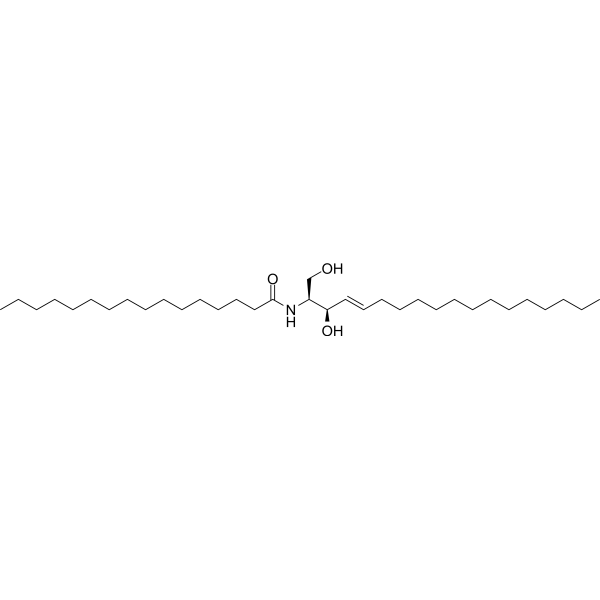
C16-Ceramide (d18:1/16:0)p53 Activator -

HY-P9907
TrastuzumabHER2 Blocking Antibody -
HY-118262
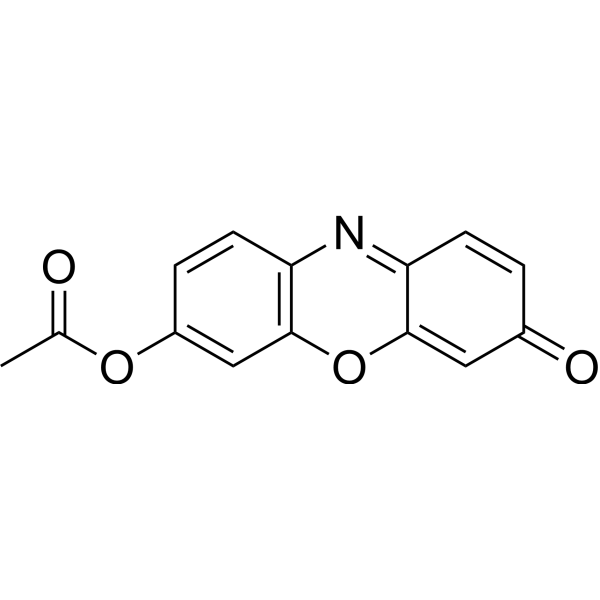
Resorufin acetateFluorescent Dyes -
HY-15558A
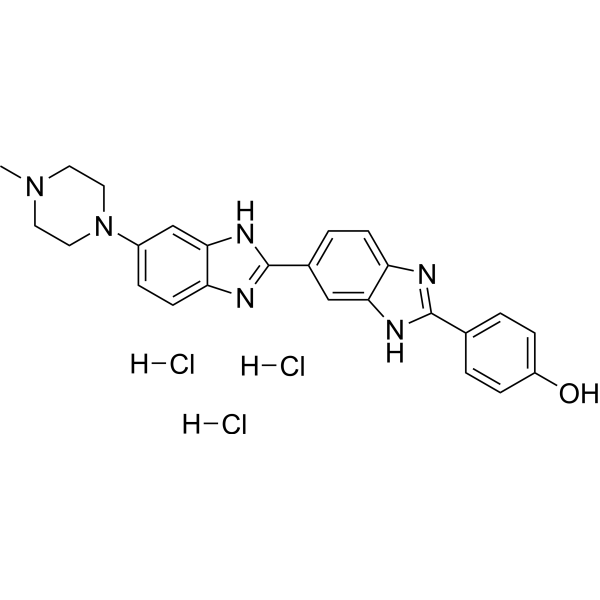
Hoechst 33258 trihydrochlorideDNA Staining -
HY-123645
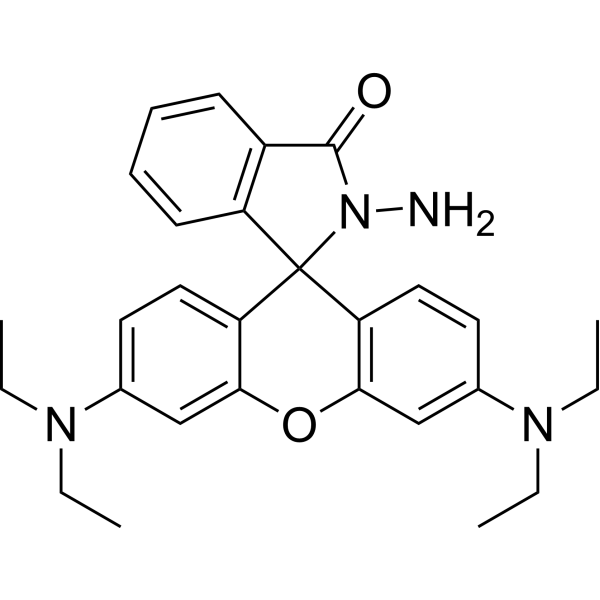
Rhodamine B hydrazideFluorescent Probe -
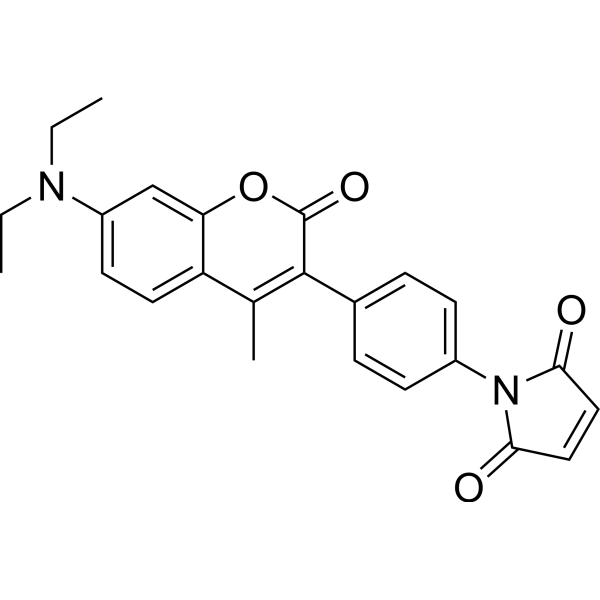
HY-D0069
CPMFluorescent Dye -
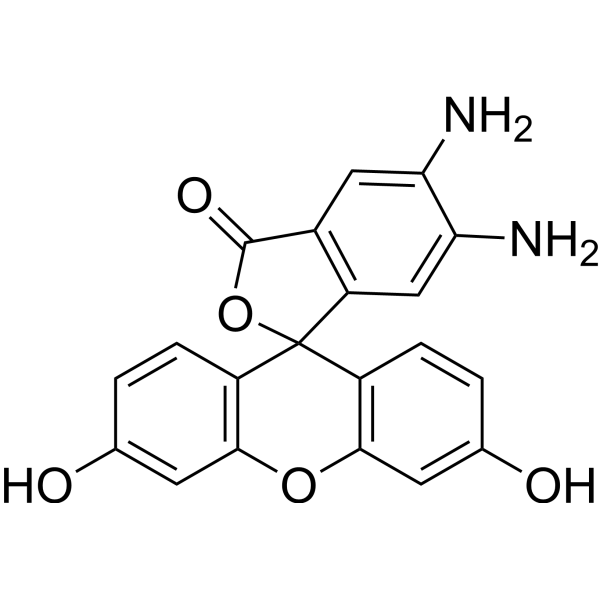
HY-D0076
4,5-DiaminofluoresceinNO Fluorescent Detector -
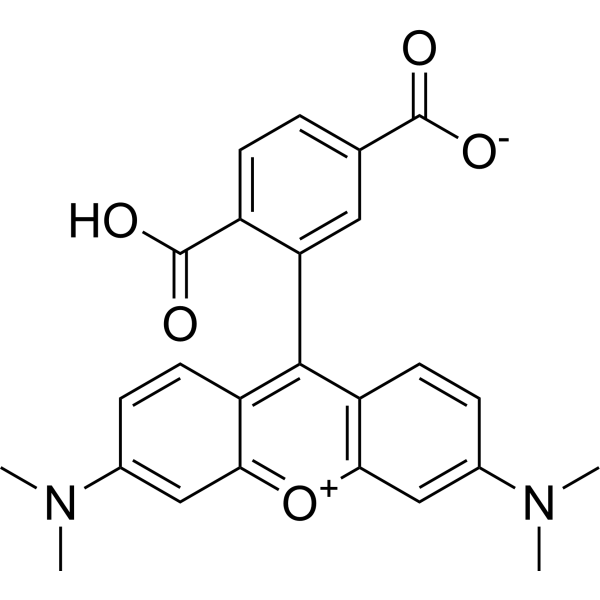
HY-15943
6-TAMRAFluorescent Dye -

HY-DY1081
DAPI dihydrochloride (solution)Fluorescent DNA Stain


Biological Activity
Description
In Vitro
Guidelines (The following is our recommended protocol. This protocol is provided for reference only and should be modified according to your specific needs).
Luminescence reaction[4]
1. Solution preparation:
1) Prepare 10 μL of 1.0-2.0 mM Coelenteramine 400a solution.
2) Prepare 10 μL of 2.01 mg/mL Renilla luciferase (RLuc8.6-53) solution.
3) Mix the above two solutions with 200 μL buffer.
2. Specific staining steps:
1) Record the bioluminescence spectrum of the mixed solution using a multi-channel spectrometer equipped with a liquid nitrogen-cooled CCD detector. The absolute spectral sensitivity of the spectrometer must be calibrated in advance using a 500 W spectral irradiance standard lamp.
2) A custom-made photometer equipped with a photomultiplier tube (PMT, H11890-01, Hamamatsu Photonics, Japan) was used to measure the relevant parameters of the bioluminescence reaction. The absolute response of the photometer is determined by plotting a linear graph of the relative counts measured by the photometer and the absolute counts measured by the integrating sphere.
3) In a test tube, 5-15 μL of a 10 nM solution of Coelenteramine 400a is pre-placed in the photometer, and then 150 μL of a 20 μg/mL luciferase solution (in 0.1 M GTA buffer, pH 6.0, 7.0, and 8.0) is injected to start the reaction. The reaction is monitored until the luminescence reaction is complete, and the quantum yield of the bioluminescence reaction is calculated from the total number of photons obtained and the number of luciferin molecules.
4) The Michaelis constant (Km) of the substrate Coelenteramine 400a is calculated using the Lineweaver-Burk plot. The catalytic constant (kcat) is calculated. The fluorescence spectrum and absolute fluorescence quantum yield of the corresponding oxidation product, Coelenteramide 400a (CTMD 400a), were measured using Quantaurus-QY with the excitation light set to 300 nm. The concentration of CTMD 400a solution in DMSO was 20 μM during the measurement.
MedChemExpress (MCE) has not independently confirmed the accuracy of these methods. They are for reference only.


Chemical Information
-
CAS No. 70217-82-2
-
Appearance Solid
-
Molecular Weight 391.46
-
Formula C26H21N3O
-
Color Yellow to brown
-
SMILES
O=C1C(CC2=CC=CC=C2)=NC3=C(NC(C4=CC=CC=C4)=CN31)CC5=CC=CC=C5
-
Synonyms
Coelenterazine 400a; Bisdeoxycoelenterazine
-
Shipping
Room temperature in continental US; may vary elsewhere.
-
Storage
-20°C, protect from light
* The compound is unstable in solutions, freshly prepared is recommended.


Solvent & Solubility
In Vitro:
Ethanol : 1 mg/mL (2.55 mM; ultrasonic and warming and heat to 60°C; DMSO can inactivate Coelenteramine 400a's activity)
Please refer to the solubility information to select the appropriate solvent. The compound is unstable in solutions, freshly prepared is recommended.
Please refer to the solubility information to select the appropriate solvent. The compound is unstable in solutions, freshly prepared is recommended.
Concentration (start) × Volume (start) = Concentration (final) × Volume (final)


Purity & Documentation
-
Data Sheet (291 KB)
-
SDS (394 KB)
- English - EN (394 KB)
- Français - FR (394 KB)
- Deutsch - DE (394 KB)
- Norwegian - NO (394 KB)
- Español - ES (394 KB)
- Swedish - SV (394 KB)
- Italian - IT (394 KB)
- Korean - KR (394 KB)
- Portuguese - PT (394 KB)
-
Handling Instructions (2659 KB)
References
[1]. Levi J, et, al. Bisdeoxycoelenterazine derivatives for improvement of bioluminescence resonance energy transfer assays. J Am Chem Soc. 2007 Oct 3;129(39):11900-1. [Content Brief]
[2]. Bertrand L, et, al. The BRET2/arrestin assay in stable recombinant cells: a platform to screen for compounds that interact with G protein-coupled receptors (GPCRS). J Recept Signal Transduct Res. Feb-Nov 2002;22(1-4):533-41. [Content Brief]


Complete Stock Solution Preparation Table
Please refer to the solubility information to select the appropriate solvent. The compound is unstable in solutions, freshly prepared is recommended.
| Optional Solvent | Concentration Solvent Mass | 1 mg | 5 mg | 10 mg | 25 mg |
|---|---|---|---|---|---|
| Ethanol | 1 mM | 2.5545 mL | 12.7727 mL | 25.5454 mL | 63.8635 mL |


Coelenteramine 400a Related Classifications
HY-118462 Related Classifications
 Powered by Bioz