



VSV
Vesicular Stomatitis Virus
Vesicular stomatitis virus (VSV), which belongs to the Vesiculovirus genus of the family Rhabdoviridae, is a well studied livestock pathogen and prototypic non-segmented, negative-sense RNA virus. Although VSV is responsible for causing economically significant outbreaks of vesicular stomatitis in cattle, horses, and swine, the virus also represents a valuable research tool for molecular biologists and virologists. Many properties of VSV make it a valuable tool for molecular virology research—such as its ability to express heterologous glycoproteins and replicate to high titers—also make it an excellent vaccine platform. In addition, the apparent seroprevalence of VSV antibodies is generally low within the human population, so there is little pre-existing immunity to the vector, and because the VSV replication cycle takes place exclusively in the cytoplasm of host cells, there is no potential for viral sequences to integrate into the host genome. As a result, recombinant VSV has emerged as a viable vaccine vector, and many recombinant VSV-based vaccines have demonstrated safety and immunogenicity in multiple pre-clinical and clinical trials.
All Product Categories
-
VSV 관련 제품 (25)
관련 제품 (25)

- 1
- 2
-
UNC0638
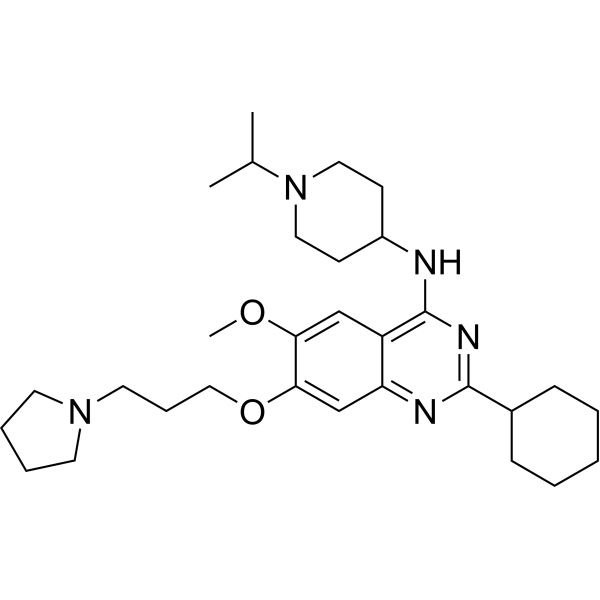 0 ImagesUNC0638, a chemical probe, selectively inhibits G9a and GLP histone methyltransferases with IC50 of 15 nM and 19 nM, respectively. UNC0638 inhibits TNBC cell invasion and migration in vitro. UNC0638 is also an inhibitor of EHMT1/2 and induces fetal hemoglobin (HbF) expression in human erythroid progenitor cell culture. In addition, UNC0638 has anti-FMDV (foot-and-mouth disease virus) and anti-VSV (vesicular stomatitis virus) activities, with excellent potency and selectivity against multiple epigenetic and non-epigenetic targets.
-
ZCL278
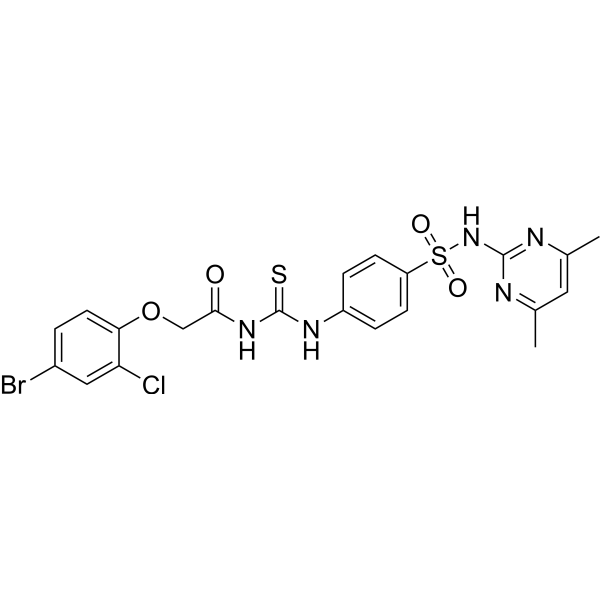 0 ImagesZCL278 is a selective Cdc42 inhibitor with Kds of 6.4 μM in fluorescence titration and 11.4 μM in surface plasmon resonance (SPR) measurement. ZCL278 is able to disrupt the Cdc42-ITSN interaction as well as GTP/GDP binding. ZCL278 has inhibitory effects on various enveloped viruses, but is ineffective against non-enveloped viruses. ZCL278 can be used for the studies of arsenic neurotoxicity and HER2-positive gastric cancer (GC).
-
Diphyllin
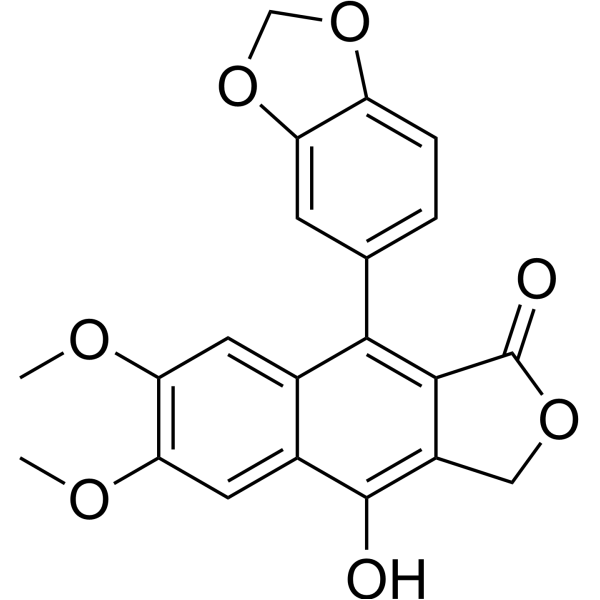 0 ImagesDiphyllin is an orally active V-ATPase inhibitor (IC50=17 nM) and HIV-1 inhibitor (IC50=0.38 μM). Diphyllin blocks the acidification of osteoclast lysosomes and bone resorption lacunas (IC50=0.6 nM for acid influx inhibition), thereby inhibiting bone resorption. Diphyllin can effectively inhibit osteoclast-mediated bone resorption and has no effect on osteoblastic bone formation. Diphyllin can be used in the research of bone metabolism-related diseases and has the potential to inhibit diseases related to excessive bone resorption.
-
Hypocrellin A
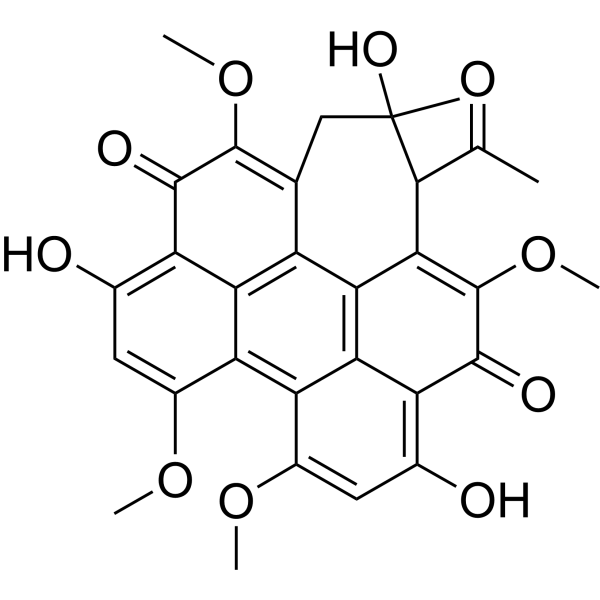 0 ImagesHypocrellin A is a PKC inhibitor that exerts antidiabetic activity by reversing the effects of high glucose on endothelin (ET-1) expression. Hypocrellin A is also a photosensitizer for photodynamic therapy (PDT) with anticancer, antibacterial and antiviral activities, especially against human immunodeficiency virus (HIV). In addition, Hypocrellin-A also possesses anti-Leishmania activity (IC50=0.27 μg/ml).
-
3-Indoleacetonitrile
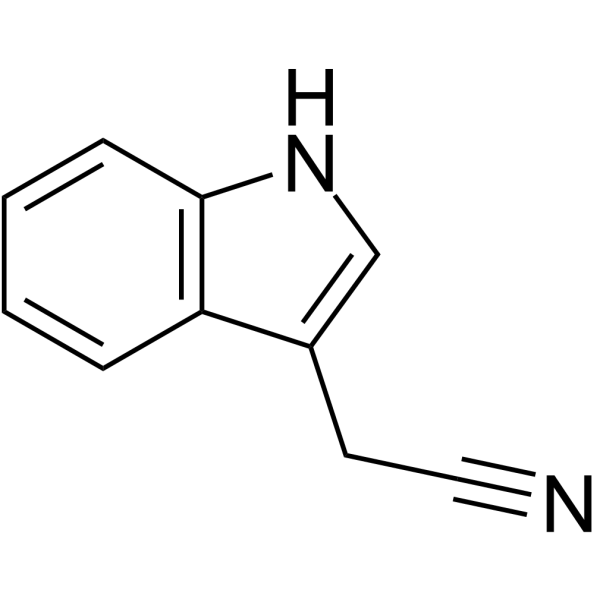 0 Images3-Indoleacetonitrile is an indole derivative with anti-influenza activity. 3-Indoleacetonitrile is a plant hormone produced by cruxiferous vegetables. 3-Indoleacetonitrile exerts profound antiviral activity against a broad spectrum of influenza A viruses, HSV-1 and VSV viruses in vitro. 3-Indoleacetonitrile diminishes lung virus titers and alleviates lung lesions in vivo. 3-Indoleacetonitrile induces an increase in mitochondrial antiviral-signaling (MAVS) protein levels. 3-Indoleacetonitrile can be used in research for combating viral infections including COVID-19, HSV-1, and VSV.
-
3-Indoleacetonitrile (Standard)
 0 Images3-Indoleacetonitrile (Standard) is the analytical standard of 3-Indoleacetonitrile. This product is intended for research and analytical applications. 3-Indoleacetonitrile is an indole derivative with anti-influenza activity. 3-Indoleacetonitrile is a plant hormone produced by cruxiferous vegetables. 3-Indoleacetonitrile exerts profound antiviral activity against a broad spectrum of influenza A viruses, HSV-1 and VSV viruses in vitro. 3-Indoleacetonitrile diminishes lung virus titers and alleviates lung lesions in vivo. 3-Indoleacetonitrile induces an increase in mitochondrial antiviral-signaling (MAVS) protein levels. 3-Indoleacetonitrile can be used in research for combating viral infections including COVID-19, HSV-1, and VSV.
-
Procumbenoside I
 0 ImagesCat. No.: HY-N21657CAS No.: 2243471-10-3Procumbenoside I is a naturally derived broad-spectrum antiviral agent targeting the SFTSV glycoprotein Gn. Procumbenoside I binds to the conserved B domain of SFTSV Gn, blocking the binding and internalization steps during viral entry. Procumbenoside I inhibits the entry of VSV, H5N1, and SARS-CoV-2 pseudoviral particles, while exhibiting antiviral activity against bunyaviruses such as LCMV and WELV. Procumbenoside I protects mice against lethal SFTSV challenge, reducing mortality and alleviating pathological damage. Procumbenoside I is useful for research related to viral infections.
-
1,9-Dimethylmethylene blue
 0 Images1,9-Dimethylmethylene blue is a photosensitizer, virus inactivator and hemoglobin oxidant derived from methylene blue. When activated, 1,9-Dimethylmethylene blue generates reactive oxygen species including singlet oxygen, and acts as a metachromatic dye. When activated in monomeric or dimeric form, 1,9-Dimethylmethylene blue induces photoinactivation of R17 phage and vesicular stomatitis virus and oxidizes hemoglobin via non-singlet oxygen reactive oxygen species or singlet oxygen-mediated pathways, respectively. The monomeric form, with higher nucleic acid affinity, achieves virus inactivation under specific conditions without forming methemoglobin. 1,9-Dimethylmethylene blue binds to substances such as glycosaminoglycans to produce color changes. Although it is susceptible to interference from non-glycosaminoglycan components in urine, it is still applicable to spectrophotometric analysis for glycosaminoglycan quantification. With these unique photochemical and binding properties, 1,9-Dimethylmethylene blue is widely used in studies of viral infections and related biochemical analyses.
-
UNC2881
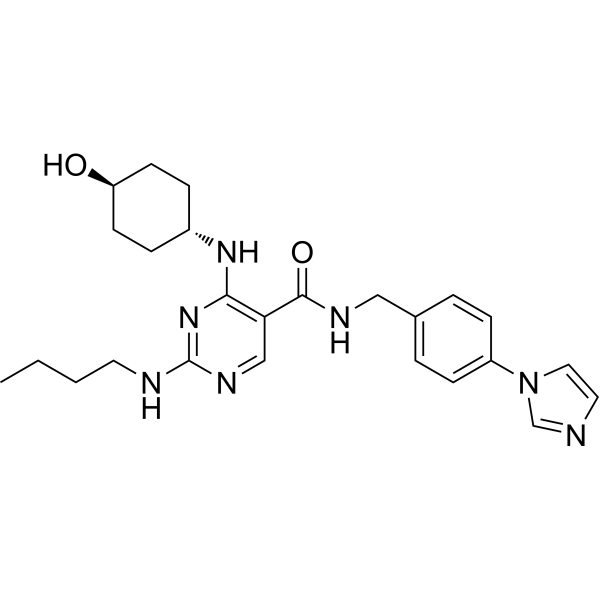 0 ImagesUNC2881 is an orally active and specific Mer kinase inhibitor, inhibits steady-state Mer kinase phosphorylation with an IC50 value of 22 nM. UNC2881 shows additional inhibition against Axl and Tyro with IC50s of 360 nM and 250 nM, respectively. UNC2881 potently inhibits collagen-induced platelet aggregation, can be used for pathologic thrombosis research.
-
Pitstop 2d
 0 ImagesCat. No.: HY-186018Purity: 99.67%Pitstop 2d is a clathrin (Clathrin) terminal domain (TD) inhibitor with an IC50 of 1.7 μM. Pitstop 2d occupies the Clathrin box binding site within the clathrin TD, blocking the binding of endocytic protein ligands such as Epsin to clathrin. Pitstop 2d inhibits clathrin-mediated endocytosis (Endocytosis) and the cellular entry of vesicular stomatitis virus (VSV). Pitstop 2d has low cytotoxicity, does not disrupt the nuclear permeability barrier, and does not inhibit clathrin-independent endocytosis. Pitstop 2d can be used in studies related to endocytosis and vesicular stomatitis virus infection.
-
Mesoporphyrin IX dihydrochloride
 0 ImagesCat. No.: HY-W073074CAS No.: 68938-72-7Mesoporphyrin IX (dihydrochloride) is a photosensitizer that can be used to modify liposomes. Mesoporphyrin IX (dihydrochloride) can insert into lipid vesicles and disrupt the viral membrane structure in vesicular stomatitis virus (VSV), inducing cross-linking of VSV glycoproteins, thereby inhibiting viral activity.
-
RBN012811
 0 ImagesRBN012811 is a highly selective PROTAC-based PARP14 degrader. RBN012811 forms a ternary complex with cereblon by binding to the NAD+ site of PARP14, and mediates the specific degradation of PARP14 via the ubiquitin-proteasome pathway (IC50=10 nM). RBN012811 effectively depletes endogenous PARP14 in various cell lines and primary human macrophages, thereby downregulating IL-10 production and IFN-β mRNA levels, increasing phosphorylated STAT1 levels to enhance inflammatory signaling, and inhibiting interferon-induced ADPr condensate formation. RBN012811 also modulates viral replication, exhibiting increased HSV1 replication while reducing VSV replication. RBN012811 has important application value in research related to cancer and viral infections.
-
VSV-G tag Peptide
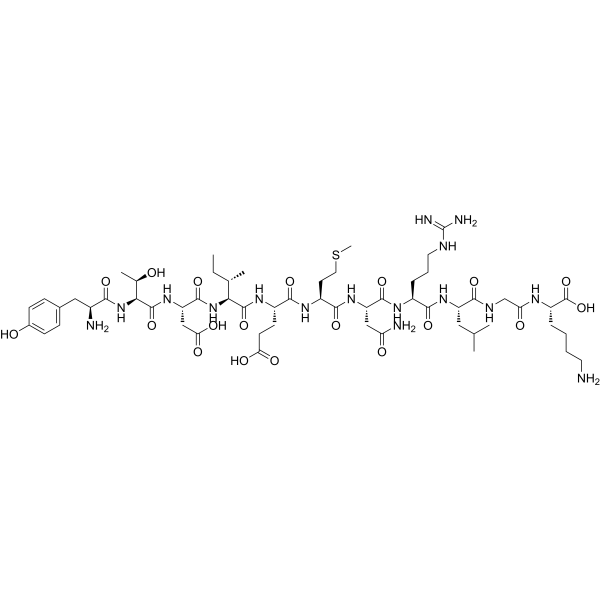 0 ImagesVSV-G tag Peptide is a 11 amino acid peptide derived from the Vesicular Stomatitis viral glycoprotein. VSV-G tag Peptide can integrate into the cell membranes of animal cells, induce cell fusion, and significantly enhance the efficiency of DNA transfection into animal cells. VSV-G tag Peptide can be used for research on drug delivery.
-
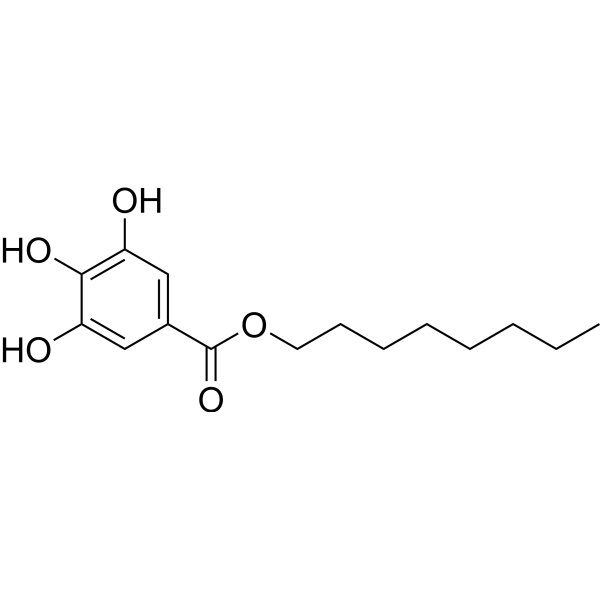
Octyl gallate (Standard)
 0 ImagesSynonyms: n-Octyl gallate (Standard); Stabilizer GA 8 (Standard)Octyl gallate (Standard) is the analytical standard of Octyl gallate. This product is intended for research and analytical applications. Octyl gallate (Progallin O) is widely used as a food additive, with antimicrobial and antioxidant activity. Octyl gallate (Progallin O) shows selective and sensitive fluorescent property. Octyl gallate shows a marked antiviral effect against HSV-1, vesicular stomatitis virus (VSV) and poliovirus.
-
9-Methylstreptimidone
 0 ImagesCat. No.: HY-134090CAS No.: 51867-94-8Synonyms: Antibiotic TS 885; NSC 2489589-Methylstreptimidone is a microbial metabolite originally isolated from Streptomyces sp. S-885 that has antifungal and antiviral activities. It is active against several fungi, including S. sake, S. fragilis, R. rubra, T. rubra, and C. albidus (MICs=4-20 μg/mL) and has antiviral activity against poliovirus, vesicular stomatitis virus (VSV), and Newcastle disease virus (NDV) in vitro (MIC=0.02 μg/mL for all). 9-Methylstreptimidone increases survival in mouse models of infection with influenza A2 (H2N2) or C. albicans when administered prior to infection.
-
3-Indoleacetonitrile-d4
 0 ImagesCat. No.: HY-Y0136S1CAS No.: 927182-31-83-Indoleacetonitrile-d4 is deuterium labeled 3-Indoleacetonitrile (HY-Y0136). 3-Indoleacetonitrile is an indole derivative with anti-influenza activity. 3-Indoleacetonitrile is a plant hormone produced by cruxiferous vegetables. 3-Indoleacetonitrile exerts profound antiviral activity against a broad spectrum of influenza A viruses, HSV-1 and VSV viruses in vitro. 3-Indoleacetonitrile diminishes lung virus titers and alleviates lung lesions in vivo. 3-Indoleacetonitrile induces an increase in mitochondrial antiviral-signaling (MAVS) protein levels. 3-Indoleacetonitrile can be used in research for combating viral infections including COVID-19, HSV-1, and VSV.
-
Hypocrellin A (Standard)
 0 ImagesCat. No.: HY-N2575RCAS No.: 77029-83-5Hypocrellin A (Standard) is the analytical standard of Hypocrellin A. This product is intended for research and analytical applications. Hypocrellin A is a PKC inhibitor that exerts antidiabetic activity by reversing the effects of high glucose on endothelin (ET-1) expression. Hypocrellin A is also a photosensitizer for photodynamic therapy (PDT) with anticancer, antibacterial and antiviral activities, especially against human immunodeficiency virus (HIV). In addition, Hypocrellin-A also possesses anti-Leishmania activity (IC50=0.27 μg/ml)[1][2][3][4][5][6][7][8][9].
-
Justicidin C
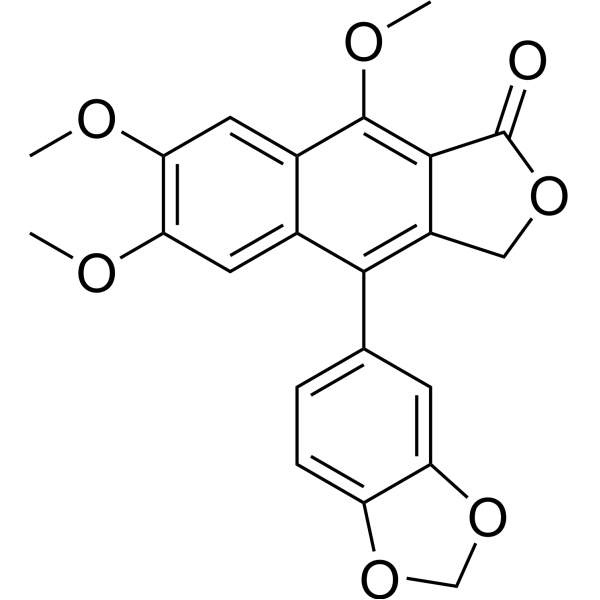 0 ImagesCat. No.: HY-N11056CAS No.: 17803-12-2
- 1
- 2



