



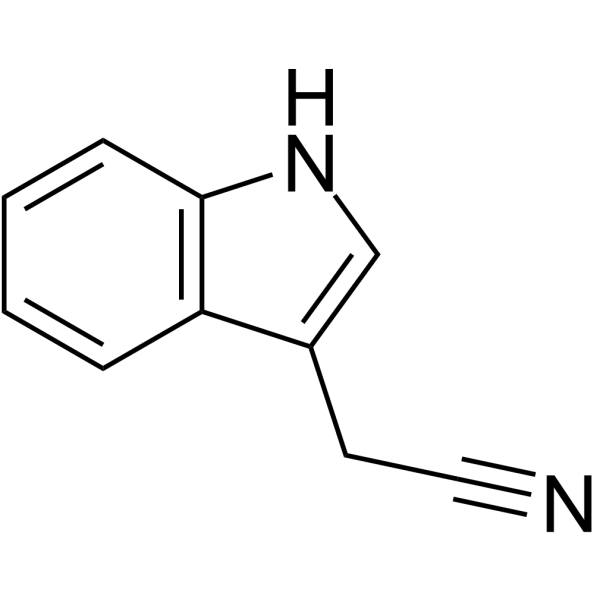
3-Indoleacetonitrile
Based on 2 publication(s) in Google Scholar
3-Indoleacetonitrile is an indole derivative with anti-influenza activity. 3-Indoleacetonitrile is a plant hormone produced by cruxiferous vegetables. 3-Indoleacetonitrile exerts profound antiviral activity against a broad spectrum of influenza A viruses, HSV-1 and VSV viruses in vitro. 3-Indoleacetonitrile diminishes lung virus titers and alleviates lung lesions in vivo. 3-Indoleacetonitrile induces an increase in mitochondrial antiviral-signaling (MAVS) protein levels. 3-Indoleacetonitrile can be used in research for combating viral infections including COVID-19, HSV-1, and VSV.
For research use only. We do not sell to patients.
- Purity : 99.92%
- CAS No.: 771-51-7
- Formula: C10H8N2
- Molecular Weight:156.19
-
Storage:Pure form -20°C, 3 years , 4°C, 2 years ; In solvent -80°C, 2 years , -20°C, 1 year

To place orders, for customer services and technical support, please contact: MedChemExpress USA
Tel: 609-228-6898 E-mail: [email protected] [email protected]


-
 Biological Activity
-
Chemical Information
-
Solvent & Solubility
- Protocols
- Purity & Documentation
- References
-
 Help & FAQs


-
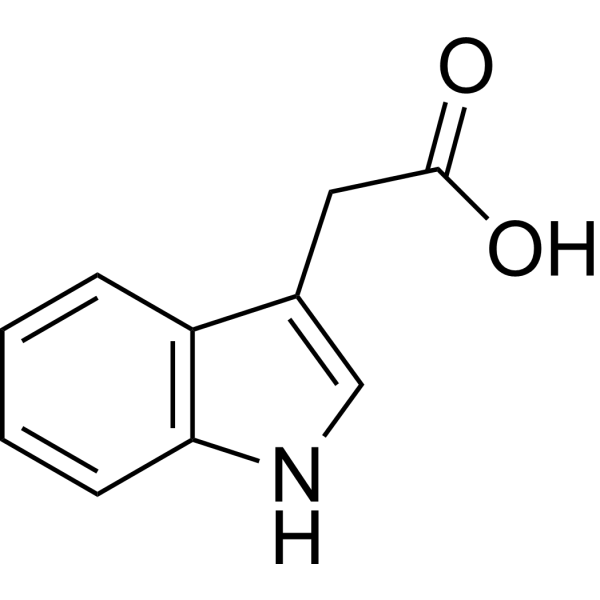
HY-18569
3-Indoleacetic acidPlant Growth Regulator -
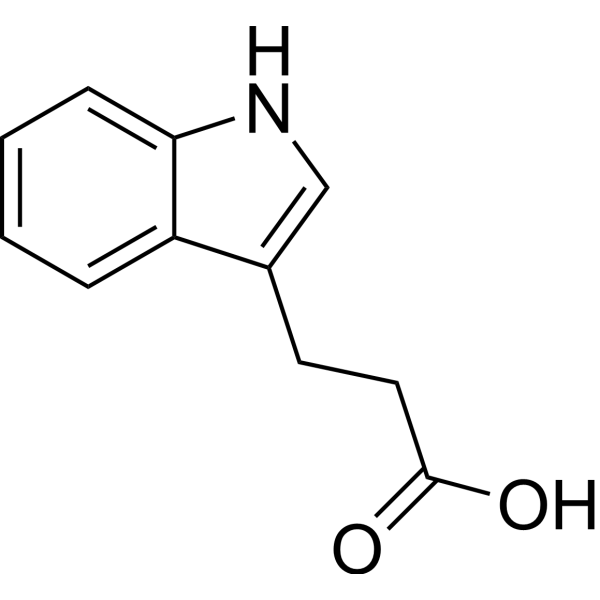
HY-W015229
3-Indolepropionic acid -
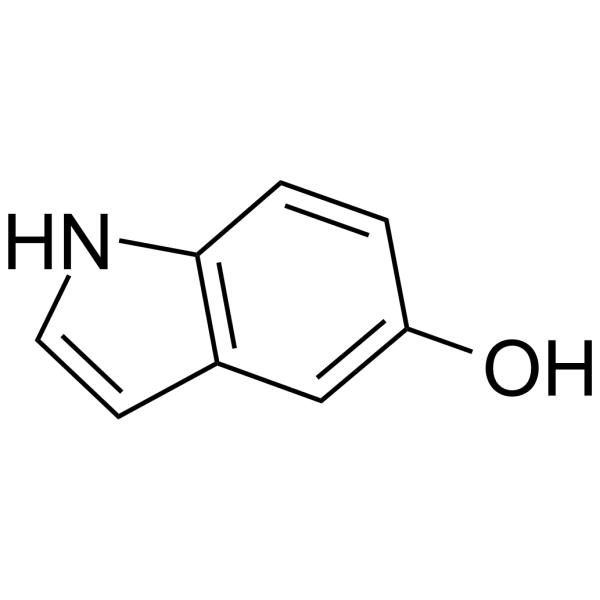
HY-W001160
5-HydroxyindoleTryptophan Metabolite -
HY-W007376
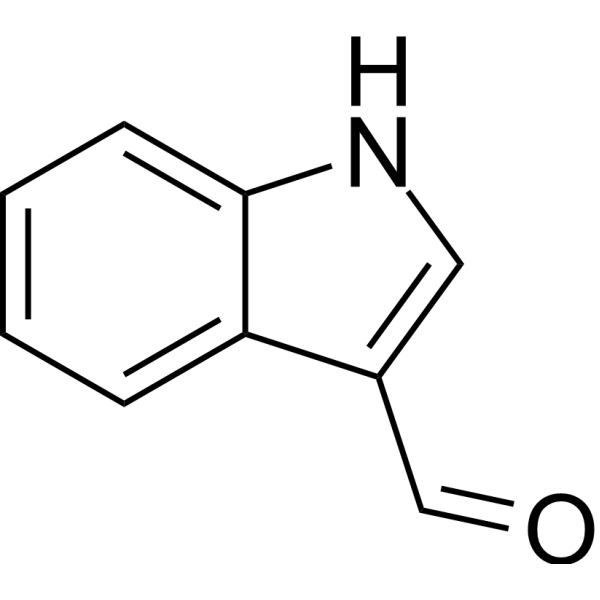
Indole-3-carboxaldehydeEndogenous Metabolite -
HY-10159
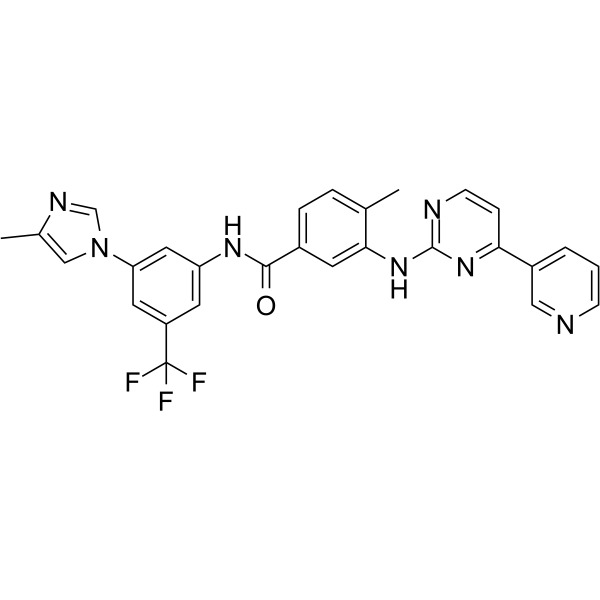
NilotinibBcr-Abl Inhibitor -
HY-113099
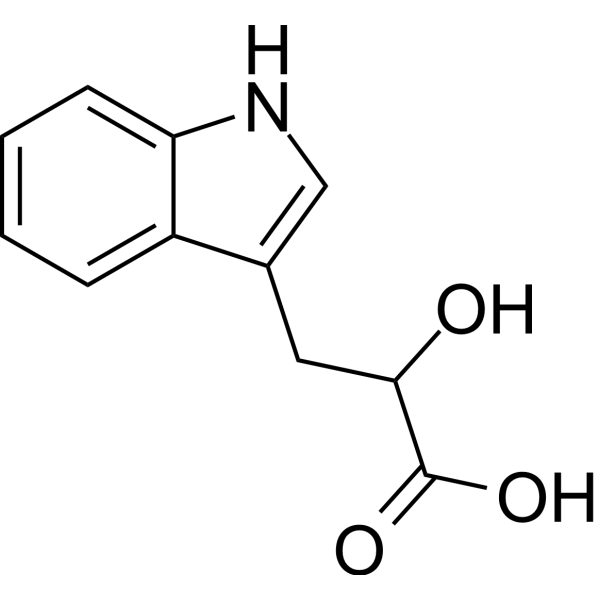
Indolelactic acidTryptophan Catabolite -
HY-12695
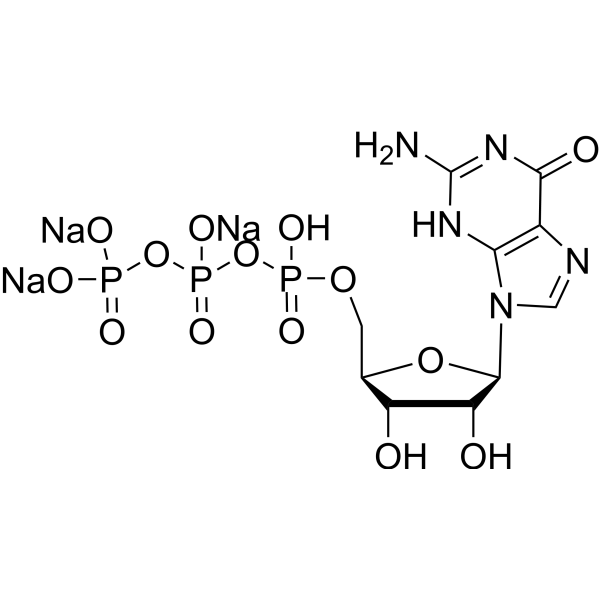
Guanosine triphosphate trisodiumCellular Metabolism Regulator -
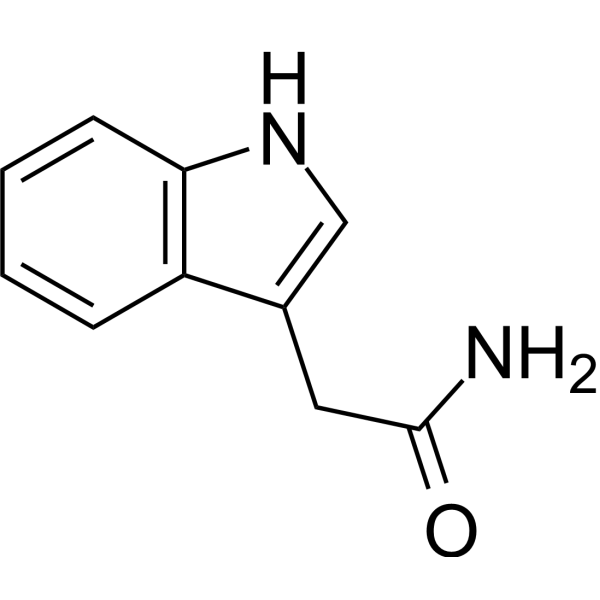
HY-W016784
Indole-3-acetamideEndogenous Metabolite -
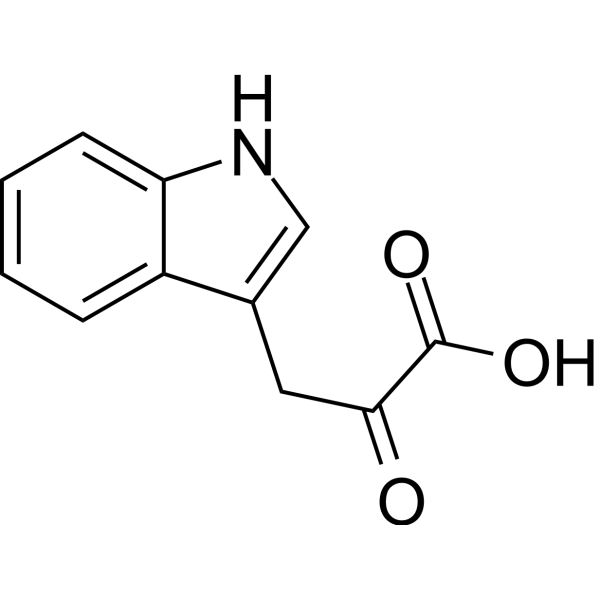
HY-W028393
Indole-3-pyruvic acidAHR Agonist -
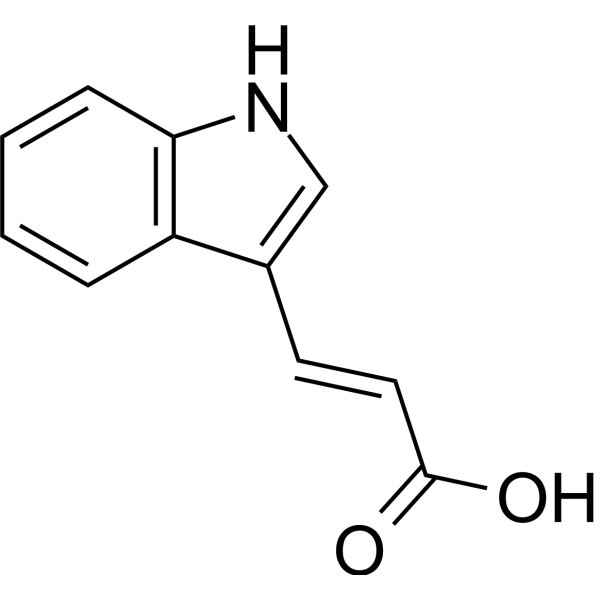
HY-W015273
3-Indoleacrylic acidAntialgal Agent -

HY-Y0136R
3-Indoleacetonitrile (Standard)Antiviral Agent -
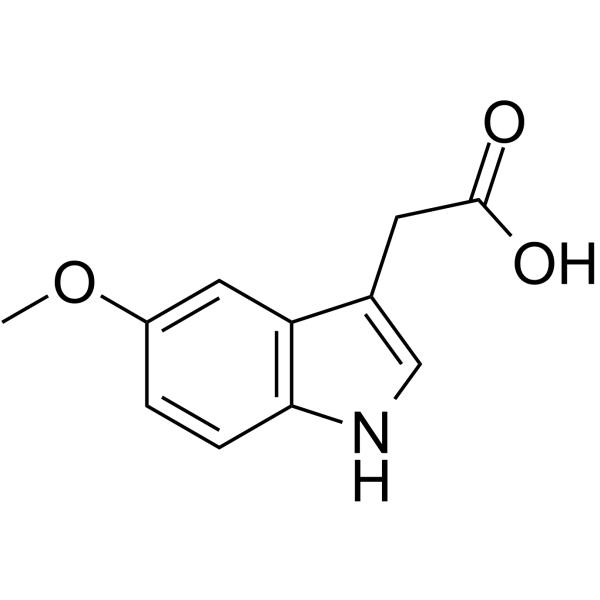
HY-W007566
5-Methoxyindole-3-acetic acidMetabolite Of Melatonin
Publications Citing Use of MedChemExpress (MCE) 3-Indoleacetonitrile
MoreAll Endogenous Metabolite Isoforms
More

Biological Activity
Description
IC50 & Target
|
Human Endogenous Metabolite |
In Vitro
3-Indoleacetonitrile (0-1.5 mM, 24 h) results in significant decrease in GFP fluorescence and inhibited viral proliferation in A549 cells infected with H5N6-GFP virus at an MOI of 0.005[1].
3-Indoleacetonitrile (350 μM, 12-36 h) reduces PR8 PB2 and NP protein levels in A549 cells compared to Arbidol[1].
3-Indoleacetonitrile (350 μM, 24 h) exerts potent anti-influenza activity in MDCK cells[1].
3-Indoleacetonitrile (0-350 μM, 9 h) reduces viral NP and PB2 proteins dose-dependently in A549 infected with H5N6[1].
3-Indoleacetonitrile (0-350 μM, 9 h) impairs PB2 and NP synthesis of PR8, H1N1, H3N2, and California09 H1N1 strains infected A549 cells[1].
3-Indoleacetonitrile (320-640 μM, 24 h) significantly decreases the densities of GFP fluorescence of VSV or HSV-1 and inhibits viral proliferation in Vero E6 and 293T cells[2].
3-Indoleacetonitrile (0-1.28 mM, 24 h) has EC50 of 86.38 μM in Caco-2 and EC50 of 38.79 μM Huh7.0 cells infected with SARS-CoV-2 at MOI of 1[2].
3-Indoleacetonitrile (0-640 μM, 12 h) activates the IFN signaling pathway in 293T cells co-transfected with pGL4-IFN-β and pRL-TK[2].
3-Indoleacetonitrile (680 μM, 0-24 h) results in dramatically higher ISRE- and NF-κB –responsive luciferase activity in 293T cells[2].
3-Indoleacetonitrile (0-50 μM, 12 h) induces a dose-dependent increase in LC3-II and SQSTM1 protein levels in Vero E6 cells[2].
MedChemExpress (MCE) has not independently confirmed the accuracy of these methods. They are for reference only. Further protocols information, click here.
-
Cell Line:Vero E6 or 293T cells
-
Concentration:320 μM (for Vero E6) or 640 μM (for 293T)
-
Incubation Time:24 h
-
Result:Showed unapparent cytotoxicity in both cell lines up to indicated concentrations.
-
Cell Line:Caco-2, Huh7.0
-
Concentration:80, 160, 320, 640, and 1280 μM for Caco-2 cells; 20, 40, 80, 160, and 320 μM for Huh7.0 cells
-
Incubation Time:24 h
-
Result:Showed obvious decrease in densities of FITC fluorescence in both cell lines.
In Vivo
3-Indoleacetonitrile (20 mg/kg, tail i.v., two doses with the second dose administered 1/3/5/7/9 dpi.) results in less weight loss and increased survival rate of H5N6-infected mice to 45.45% and PR8-infected mice to 50%[1].
MedChemExpress (MCE) has not independently confirmed the accuracy of these methods. They are for reference only.
-
Animal Model:Eight-week-old SPF BALB/c female mice inoculated with 50 μL of 2 LD50 H5N6 viruses[1]
-
Dosage:20 mg/kg
-
Administration:Intravenous injection (i.v.) on tail, two doses with the second dose administered 1/3/5/7/9 dpi.
-
Result:Significantly reduced the viral load in the lungs of mice.
Reduced lung lesions caused by viral infection.
Was able to restrict influenza replication in mice.


Chemical Information
-
CAS No. 771-51-7
-
Appearance <33°C Solid,>36°C Liquid
-
Molecular Weight 156.19
-
Formula C10H8N2
-
Color Light yellow to brown
-
SMILES
N#CCC1=CNC2=C1C=CC=C2
-
Structure Classification
-
Initial Source
-
Shipping
Room temperature in continental US; may vary elsewhere.
-
Storage
Pure form -20°C 3 years 4°C 2 years In solvent -80°C 2 years -20°C 1 year


Publications (2)
-
Journal Impact Factor
-
Most Recent
-
Phytomedicine
Tryptanthrin suppresses multiple inflammasome activation to regulate NASH progression by targeting ASC protein. [Abstract]2024 Aug:131:155758. PMID: 38843643 -
Pest Manag Sci
The native rice leaf folder can enhance rice resistance against the invasive fall armyworm by inducing the jasmonate-mediated tryptophan metabolism pathway. [Abstract]2026 May;82(5):5026-5039. PMID: 41635108


Solvent & Solubility
In Vitro:
DMSO : ≥ 100 mg/mL (640.25 mM; Hygroscopic DMSO has a significant impact on the solubility of product, please use newly opened DMSO)
H2O : 1 mg/mL (6.40 mM; Need ultrasonic)
* "≥" means soluble, but saturation unknown.
Please refer to the solubility information to select the appropriate solvent. Once prepared, please aliquot and store the solution to prevent product inactivation from repeated freeze-thaw cycles.
Storage method and period of stock solution: -80°C, 2 years; -20°C, 1 year. When stored at -80°C, please use it within 2 years. When stored at -20°C, please use it within 1 year.
* Note: If you choose water as the stock solution, please dilute it to the working solution, then filter and sterilize it with a 0.22 μm filter before use.
Please refer to the solubility information to select the appropriate solvent. Once prepared, please aliquot and store the solution to prevent product inactivation from repeated freeze-thaw cycles.
Storage method and period of stock solution: -80°C, 2 years; -20°C, 1 year. When stored at -80°C, please use it within 2 years. When stored at -20°C, please use it within 1 year.
* Note: If you choose water as the stock solution, please dilute it to the working solution, then filter and sterilize it with a 0.22 μm filter before use.
Concentration (start) × Volume (start) = Concentration (final) × Volume (final)
In Vivo:
Select the appropriate dissolution method based on your experimental animal and administration route.
- For the following dissolution methods, please ensure to first prepare a clear stock solution using an In Vitro approach and then sequentially add co-solvents:
- To ensure reliable experimental results, the clarified stock solution can be appropriately stored based on storage conditions. As for the working solution for In Vivo experiments, it is recommended to prepare freshly and use it on the same day.
- The percentages shown for the solvents indicate their volumetric ratio in the final prepared solution. If precipitation or phase separation occurs during preparation, heat and/or sonication can be used to aid dissolution.
Add each solvent one by one: 10% DMSO 40% PEG300 5% Tween-80 45% Saline
Solubility: ≥ 2.5 mg/mL (16.01 mM); Clear solution
This protocol yields a clear solution of ≥ 2.5 mg/mL (saturation unknown).
Taking 1 mL working solution as an example, add 100 μL DMSO stock solution (25.0 mg/mL) to 400 μL PEG300, and mix evenly; then add 50 μL Tween-80 and mix evenly; then add 450 μL Saline to adjust the volume to 1 mL.
Preparation of Saline: Dissolve 0.9 g sodium chloride in ddH₂O and dilute to 100 mL to obtain a clear Saline solution.
Add each solvent one by one: 10% DMSO 90% (20% SBE-β-CD in Saline)
Solubility: ≥ 2.5 mg/mL (16.01 mM); Clear solution
This protocol yields a clear solution of ≥ 2.5 mg/mL (saturation unknown).
Taking 1 mL working solution as an example, add 100 μL DMSO stock solution (25.0 mg/mL) to 900 μL 20% SBE-β-CD in Saline, and mix evenly.
Preparation of 20% SBE-β-CD in Saline (4°C, storage for one week): 2 g SBE-β-CD powder is dissolved in 10 mL Saline, completely dissolve until clear.
In Vivo Dissolution Calculator
Please enter the basic information of animal experiments:
-
-
-
-
Recommended: Prepare an additional quantity of animals to account for potential losses during experiments.
Please enter your animal formula composition:
-
%DMSO +
Recommended: Keep the proportion of DMSO in working solution below 2% if your animal is weak.
-
%+
-
+%Tween-80 + +
-
%Saline +
The co-solvents required include: DMSO, . All of co-solvents are available by MedChemExpress (MCE). , Tween 80. All of co-solvents are available by MedChemExpress (MCE).
Working solution concentration: 0.22 mg/mL
Method for preparing stock solution: mg drug dissolved in μL DMSO. Stock solution concentration: mg/mL.
1. Take μL DMSO stock solution;
2. Add μL .
μL , mix evenly;
3. Then add μL Tween 80, mix evenly;
4. Then add μL
Please ensure that the stock solution in the first step is dissolved to a clear state, and add co-solvents in sequence. You can use ultrasonic heating (ultrasonic cleaner, recommended frequency 20-40 kHz), vortexing, etc. to assist dissolution.

Protocols
-
Research Protocol for Infectious Diseases
Infectious-disease experiments test how pathogens interact with host barriers, innate immune receptors, inflammatory signaling, pathogen replication, and tissue injury; pattern-recognition receptors such as TLRs, RIG-I-like receptors, NOD-like receptors, and inflammasomes detect microbial molecules and activate NF-κB, interferon, and cytokine responses. The central hypothesis is that infection severity reflects the balance between pathogen burden and host response: protective inflammation restricts pathogen growth, whereas excessive or mislocalized inflammation contributes to tissue damage and disease phenotype. Unresolved questions include which host pathways are protective versus pathogenic, why some infection models fail to translate to human disease, and which combined readouts best predict clinically relevant infection outcomes.
-
Research Protocol for Endocrine Diseases
Endocrine diseases often arise from disrupted hormone production, hormone signaling, or target-tissue responsiveness; for diabetes-focused endocrine disease models, insulin signaling regulates glucose uptake, hepatic glucose output, lipid metabolism, and β-cell compensation. Type 2 diabetes develops through interacting defects in insulin resistance, β-cell dysfunction, adipose inflammation, hepatic glucose overproduction, altered incretin signaling, and ectopic lipid metabolism. A major unresolved question is whether endocrine dysfunction is driven primarily by target-tissue insulin resistance, intrinsic β-cell failure, immune/inflammatory stress, or combined multi-organ failure that differs by disease stage.


Purity & Documentation
-
Data Sheet (293 KB)
-
SDS (480 KB)
- English - EN (480 KB)
- Français - FR (480 KB)
- Deutsch - DE (480 KB)
- Norwegian - NO (480 KB)
- Español - ES (480 KB)
- Swedish - SV (480 KB)
- Italian - IT (480 KB)
- Korean - KR (480 KB)
- Portuguese - PT (480 KB)
-
Handling Instructions (2659 KB)
References
[1]. Zhao, X., et al., (2021). 3-Indoleacetonitrile Is Highly Effective in Treating Influenza A Virus Infection In Vitro and In Vivo. Viruses, 13(8), 1433. [Content Brief]
[2]. Hui, X., et al., (2023). In vitro and in vivo effects of 3-indoleacetonitrile-A potential new broad-spectrum therapeutic agent for SARS-CoV-2 infection. Antiviral research, 209, 105465. [Content Brief]


Complete Stock Solution Preparation Table
Please refer to the solubility information to select the appropriate solvent. Once prepared, please aliquot and store the solution to prevent product inactivation from repeated freeze-thaw cycles.
Storage method and period of stock solution: -80°C, 2 years; -20°C, 1 year. When stored at -80°C, please use it within 2 years. When stored at -20°C, please use it within 1 year.
| Optional Solvent | Concentration Solvent Mass | 1 mg | 5 mg | 10 mg | 25 mg |
|---|---|---|---|---|---|
| H2O / DMSO | 1 mM | 6.4025 mL | 32.0123 mL | 64.0246 mL | 160.0615 mL |
| 5 mM | 1.2805 mL | 6.4025 mL | 12.8049 mL | 32.0123 mL | |
| DMSO | 10 mM | 0.6402 mL | 3.2012 mL | 6.4025 mL | 16.0061 mL |
| 15 mM | 0.4268 mL | 2.1342 mL | 4.2683 mL | 10.6708 mL | |
| 20 mM | 0.3201 mL | 1.6006 mL | 3.2012 mL | 8.0031 mL | |
| 25 mM | 0.2561 mL | 1.2805 mL | 2.5610 mL | 6.4025 mL | |
| 30 mM | 0.2134 mL | 1.0671 mL | 2.1342 mL | 5.3354 mL | |
| 40 mM | 0.1601 mL | 0.8003 mL | 1.6006 mL | 4.0015 mL | |
| 50 mM | 0.1280 mL | 0.6402 mL | 1.2805 mL | 3.2012 mL | |
| 60 mM | 0.1067 mL | 0.5335 mL | 1.0671 mL | 2.6677 mL | |
| 80 mM | 0.0800 mL | 0.4002 mL | 0.8003 mL | 2.0008 mL | |
| 100 mM | 0.0640 mL | 0.3201 mL | 0.6402 mL | 1.6006 mL |
* Note: If you choose water as the stock solution, please dilute it to the working solution, then filter and sterilize it with a 0.22 μm filter before use.


3-Indoleacetonitrile Related Classifications
HY-Y0136 Related Classifications
 Powered by Bioz