
1. Search Result
Search Result
Results for "

hydrophobic ligands

" in MedChemExpress (MCE) Product Catalog:

25

Inhibitors & Agonists

3

Screening Libraries

1

Fluorescent Dyes

2

Biochemical Assay Reagents

3

Peptides

7

MCE Kits

2

Natural
Products

Cat. No. 상품명 Target 연구분야 Chemical Structure
  • HY-NP008

    Lipocalin Family Inflammation/Immunology
    β-Lactoglobulin, a major whey protein, is a small globular protein from the lipocalin family. β-Lactoglobulin is an important source of the essential and branched-chain amino acids (leucine, isoleucine, and valine). β-Lactoglobulin shows antioxidant properties, because it contains two disulfide bonds and one free thiol group. β-Lactoglobulin is a ligand transport agent. β-Lactoglobulin is one of the major allergens in milk and can be utilized in the research for developing safe hypoallergenic dairy products .
    β-Lactoglobulin
  • HY-D1605
    BODIPY FL L-Cystine
    1 Publications Verification

    Fluorescent Dye Others
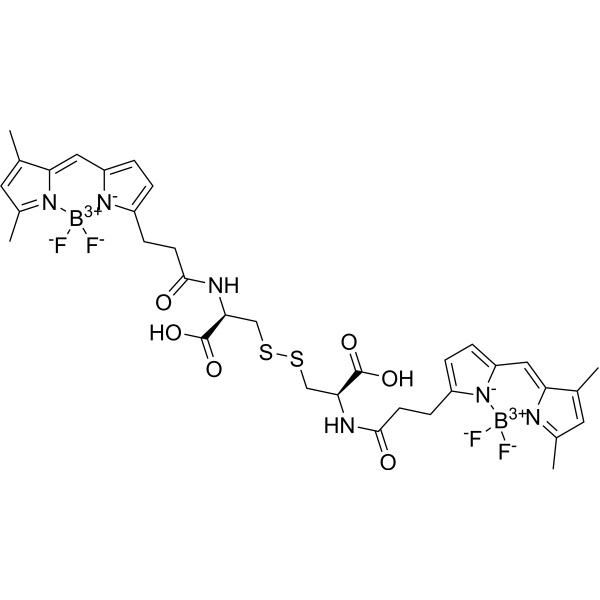
    BODIPY FL L-Cystine is a thiol-reactive, green-fluorescent dye. BODIPY FL L-Cystine can be the labeling of membrane proteins, proteins with hydrophobic binding sites, or hydrophobic ligands. (λex=504 nm, λem=511 nm) .
    BODIPY FL L-Cystine
  • HY-W145665

    Biochemical Assay Reagents Endogenous Metabolite Others
    Amylose is not a typical small-molecule ligand with a specific traditional receptor-binding target. It is a polysaccharide. In food science and biological systems, amylose can interact with proteins and free fatty acids through non-covalent forces like hydrophobic interactions and electrostatic interactions. For example, it can form a ternary complex with them, which is related to the structure and digestion of starch. It is widely studied in the fields of food science, carbohydrate metabolism, and is also relevant in research on controlling glycemic responses, as it affects starch digestion rate .
    Amylose
  • HY-W009123

    cis-13-Docosenamide

    Endogenous Metabolite Bacterial Infection Neurological Disease
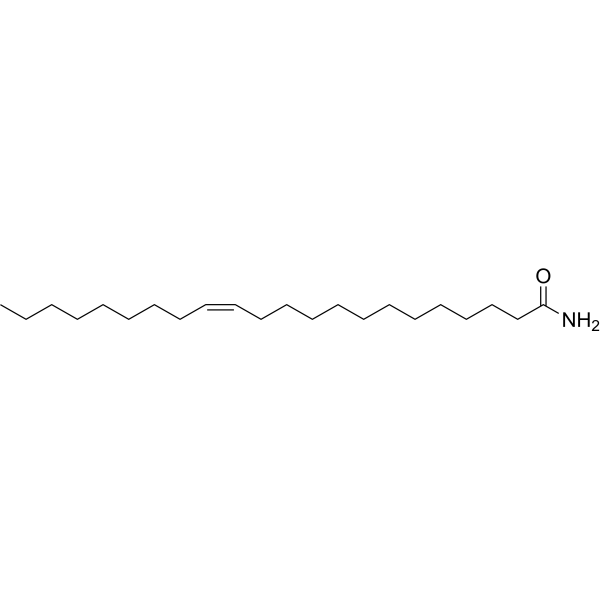
    Erucamide is an orally active, blood-brain barrier-permeable TMEM19 ligand and T3SS inhibitor. Erucamide exerts retinal neuroprotective effects in mouse models of retinal degeneration. Erucamide attenuates depression- and anxiety-like behaviors in mice.\n\nErucamide binds to the conserved hydrophobic pocket in HrcC, disrupts its outer membrane localization, and blocks T3SS-mediated effector protein secretion in Gram-negative pathogenic bacteria. Erucamide enhances the antimicrobial immunity of plants against pathogenic bacteria. Erucamide can be used in research related to retinitis pigmentosa, anxiety and depression, bacterial wilt, and bacterial blight .
    Erucamide
  • HY-120210

    ROR Inflammation/Immunology Cancer
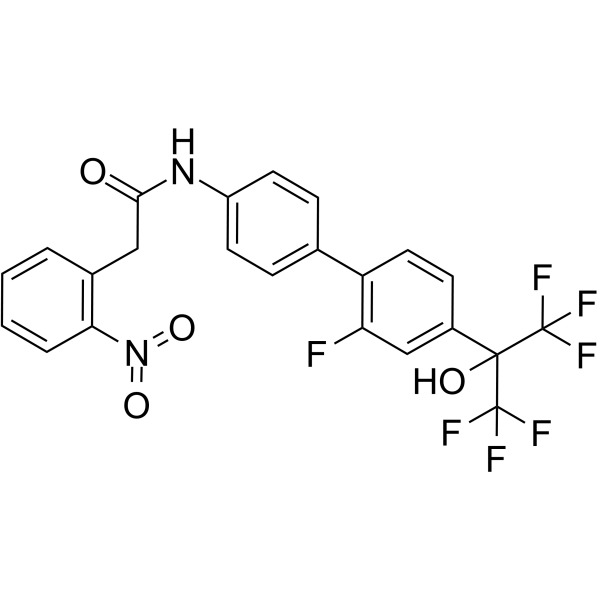
    XY018 is a potent ROR-γ-selective antagonist. XY018 inhibits ROR-γ constitutive activity in 293T cells with high potency (EC50, 190 nM). XY018 binds to the ROR-γ hydrophobic ligand binding domain (LBD) .
    XY018
  • HY-121900

    PPAR Metabolic Disease Endocrinology
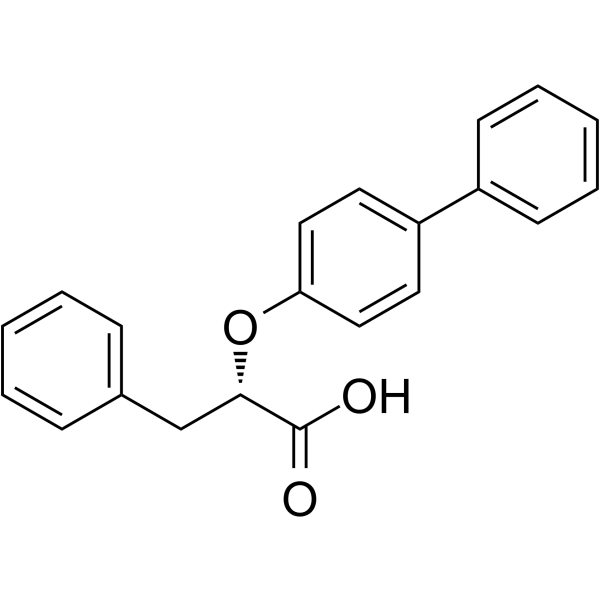
    LT175, a dual PPARα/γ ligand, is an orally active partial agonist against PPARγ(hPPARα:EC50=0.22 μm; mPPARα:EC50=0.26 μm; hPPARγ:EC50=0.48 μm). LT175 interacts with PPARγ and affects the recruitment of the coregulators cyclic-AMP response element-binding protein-binding protein and nuclear corepressor 1 (NCoR1). LT175 interacts with PPARγ in a hydrophobic region called “diphenyl pocket”. LT175 has potent insulin-sensitizing effects and reduced adipogenic properties .
    LT175
  • HY-33821

    LXR Others
    LXRβ ligand 1 is a LXR β ligand-binding domain agonist, with an EC50 of 57 μM and a Ki of 28 μM against human LXR β. LXRβ ligand 1 forms hydrogen bonds with His435, stabilizes the His-Trp activation switch, and locks the ligand-binding domain in an agonist conformation; its tert-butyl moiety occupies a hydrophobic subpocket, while its phenyl moiety forms a π-π stacking interaction with Phe329. LXRβ ligand 1 serves as a structural unit for the development of LXRβ modulators .
    LXRβ ligand 1
  • HY-P5325A

    Bcl-2 Family Others
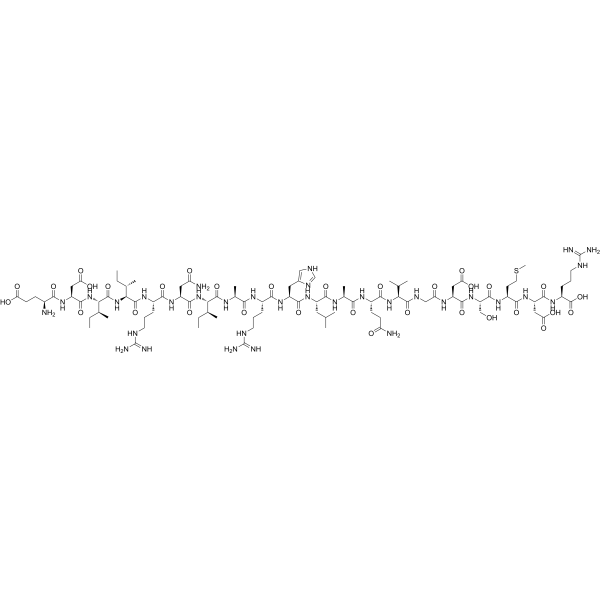
    Bid BH3 (80-99) acetate is a biological active peptide. (BID is a pro-apoptotic member of the 'BH3-only' (BOPS) subset of the BCL-2 family of proteins that constitute a critical control point in apoptosis. Bid is the first of the BOPs reported to bind and activate Bcl-2, Bax, and Bak. Bid serves as a death-inducing ligand that moves from the cytosol to the mitochondrial membrane to inactivate Bcl-2 or to activate Bax.Pyroglutamyl (pGlu) peptides may spontaneously form when either Glutamine (Q) or Glutamic acid (E) is located at the sequence N-terminus. The conversion of Q or E to pGlu is a natural occurrence and in general it is believed that the hydrophobic γ-lactam ring of pGlu may play a role in peptide stability against gastrointestinal proteases. Pyroglutamyl peptides are therefore considered a normal subset of such peptides and are included as part of the peptide purity during HPLC analysis.)
    Bid BH3 (80-99) acetate
  • HY-P5325

    Bcl-2 Family Others
    Bid BH3 (80-99) is a biological active peptide. (BID is a pro-apoptotic member of the 'BH3-only' (BOPS) subset of the BCL-2 family of proteins that constitute a critical control point in apoptosis. Bid is the first of the BOPs reported to bind and activate Bcl-2, Bax, and Bak. Bid serves as a death-inducing ligand that moves from the cytosol to the mitochondrial membrane to inactivate Bcl-2 or to activate Bax.Pyroglutamyl (pGlu) peptides may spontaneously form when either Glutamine (Q) or Glutamic acid (E) is located at the sequence N-terminus. The conversion of Q or E to pGlu is a natural occurrence and in general it is believed that the hydrophobic γ-lactam ring of pGlu may play a role in peptide stability against gastrointestinal proteases. Pyroglutamyl peptides are therefore considered a normal subset of such peptides and are included as part of the peptide purity during HPLC analysis.)
    Bid BH3 (80-99)
  • HY-172533

    STING Cancer
    3’,5’-DiOA-dC is a hydrophobic nucleotide lipid and a ligand for the STING agonist c-di-GMP (CDG). 3’,5’-DiOA-dC can assemble with CDG and form stable cyclic dinucleotide nanoparticles via various supramolecular forces driven by molecular recognition. 3’,5’-DiOA-dC can decrease tumor weight and volume, increase CD8 T cell, neutrophils as well as NK cell counts in tumor microenvironment in combination with CDG. 3’,5’-DiOA-dC also increases the levels of TNF-α and IFN-γ in murine melanoma model .
    3′,5′-DiOA-dC
  • HY-161972

    HyT Ferroptosis Glutathione Peroxidase Cancer
    ZX782 is a HyT GPX4 degrader and a ferroptosis inducer, which induces GPX4 degradation and significantly increases lipid ROS accumulation in HT1080 cells. ZX782 can be used to treat AD by reducing the size and/or number of brain amyloid plaques and by inhibiting the spread of IL-1beta-positive microglial-like cells around amyloid plaques. ZX782 is labeled with hydrophobic benzyl alcohol (HBA) and appears bright blue under acidic conditions, which can be used for quantitative determination . ZX782 is composed of target protein ligand (red part) ML-210 (HY-100003), PROTAC linker (black part) Bromo-PEG2-CH2-Boc (HY-141371) and Hty molecule (blue part) Adamantan-1-ylmethanamine (HY-W037848). The conjugate consisting of Hyt and linker parts is Adamantan-C-amide-PEG2-C-Br (HY-161974), and the activity control of the target protein ligand is Hydroxyl-ML-210 (HY-161973).
    ZX782
  • HY-181171

    Estrogen Receptor/ERR Cancer
    HIT-2 is an estrogen receptor alpha (ERα) inhibitor that can bind to the ERα ligand binding domain. HIT-2 forms stable interactions including hydrogen bonds, π-π stacking, and hydrophobic contacts to disrupt ERα-driven signaling. HIT-2 exhibits antineoplastic activity against breast cancer. HIT-2 can be used for the research of breast cancer .
    HIT-2
  • HY-W100829

    Drug Intermediate Others
    FPPS ligand 3 (compound 2) is a farnesyl pyrophosphate synthase (FPPS) ligand. FPPS ligand 3 binds to the hydrophobic base region of the FPPS pocket. FPPS ligand 3 can be used to design and synthesize FPPS inhibitors .
    FPPS ligand 3
  • HY-182344

    Ligands for Target Protein for PROTAC Mixed Lineage Kinase Cancer
    MLKL ligand-2 is a mixed lineage kinase domain-like pseudokinase (MLKL) PROTAC ligand with a KD of 9.408 μM. MLKL ligand-2 forms hydrogen bond networks and hydrophobic interactions with specific MLKL residues, and stabilizes MLKL in hepatic cells. MLKL ligand-2 can be used to synthesize PROTAC MLKL Degrader-3 (HY-182343) .
    MLKL ligand-2
  • HY-182306

    VEGFR Cardiovascular Disease
    VEGFR-2 ligand-1, Sorafenib (HY-10201) derivative, is a vascular endothelial growth factor receptor 2 (VEGFR2) ligand. VEGFR-2 ligand-1 binds to the ATP-binding pocket of VEGFR2, forms hydrophobic contacts and hydrogen bonds with key binding-site residues. VEGFR-2 ligand-1 can be used for the research angiogenesis-related pathologies .
    VEGFR-2 ligand-2
  • HY-182057

    HyT Anaplastic lymphoma kinase (ALK) Cancer
    ALK degrader 4 is a ALK HyT degrader with an IC50 of 0.74 nM. ALK degrader 4 inhibits ALK kinase activity, increases the solvent-accessible surface area of hydrophobic residues near the ALK binding pocket, promotes ALK to form a partially unfolded conformation, and induces proteasomal degradation of ALK. ALK degrader 4 inhibits cancer cell proliferation. ALK degrader 4 can be used in research related to non-small cell lung cancer (ALK ligand: Brigatinib (HY-12857); hydrophobic tag: Norbornene (HY-W013021)) .
    ALK degrader 4
  • HY-182087

    HyT Anaplastic lymphoma kinase (ALK) Cancer
    ALK degrader 3 is a ALK HyT degrader with an IC50 of 1.2 nM. ALK degrader 3 inhibits ALK kinase activity, increases the solvent-accessible surface area of hydrophobic residues near the ALK binding pocket, promotes ALK to form a partially unfolded conformation, and drives ALK degradation via the proteasomal pathway. ALK degrader 3 inhibits the proliferation of tumor cells. ALK degrader 3 can be used for the research of non-small cell lung cancer. (ALK ligand: Brigatinib (HY-12857); hydrophobic tag: Tetraasterane (HY-W1139353)) .
    ALK degrader 3
  • HY-118260

    Adrenergic Receptor Endocrinology
    Phendioxan is a compound with binding activity at the α(1)-adrenaline receptor subtype. The facilitated membrane diffusion of phendioxan is thought to be associated with improved α(1d)-AR affinity. Docking simulations of phendioxan at biological targets supported the stoichiometric analysis and revealed the importance of polar, electrostatic, hydrophobic, and shape effects of its phenoxy terminal orthogonal substituents on ligand binding .
    Phendioxan
  • HY-181907

    HyT Keap1-Nrf2 HSP Inflammation/Immunology
    NBE5 is an orally active hydrophobic tag-targeting (Hyt) degrader (HyTTD) that targets Keap1. NBE5 mimics protein misfolding and recruits the molecular chaperone Hsp90, while achieving targeted degradation of Keap1 through both the ubiquitin-proteasome system and the autophagy-lysosome system. Consequently, NBE5 relieves the inhibition of the transcription factor Nrf2 by Keap1, potently activates the Nrf2-mediated endogenous antioxidant pathway, and upregulates the expression of downstream antioxidant proteins such as HO-1 and GCLM. NBE5 effectively alleviates oxidative stress and inflammatory damage, and exhibits excellent in vivo activity in a mouse model of acute colitis induced by DSS (HY-116282C) .
    NBE5 consists of a hydrophobic tag (HY-W022007), a Keap1-Nrf2 ligand (HY-14909), and a linker (HY-W014831).
    NBE5
  • HY-135629

    Casein Kinase Neurological Disease
    PF-5236216 is a brain-penetrant CK1δ/CK1ε inhibitor with IC50 values of 8 and 36 nM. PF-5236216 inhibits CK1δ and CK1ε-mediated PER3 nuclear translocation. PF-5236216 forms an H-bond with the backbone NH of Leu85, hydrophobic stacking with Met82, and a water-mediated H-bond with Lys38 of CK1δ. PF-5236216 can be used as a tool ligand for CNS PET studies .
    PF-5236216
  • HY-N19818

    Phosphatase NF-κB Pregnane X Receptor (PXR) Cancer
    Glycybridin C is a Protein tyrosine phosphatase 1B (PTP1B) inhibitor and pregnane X receptor (PXR) ligand. Glycybridin C inhibits insulin and leptin signaling pathway negative regulation, LPS (HY-D1056)-induced NF-κB transcriptional activity. Glycybridin C forms hydrophobic and π-π stacking interactions with Met243, Phe288, Tyr306, and His407 residues of PXR. Glycybridin C can be used for the research of hepatocellular carcinoma, colorectal adenocarcinoma, breast carcinoma .
    Glycybridin C
  • HY-182796

    HyT JNK Cancer
    JNK1 degrader-1 is a JNK1 HyT degrader. JNK1 degrader-1 can induce JNK1 degradation through the HyT-mediated ubiquitin-proteasome system and autophagy-lysosome pathway. JNK1 degrader-1 inhibits TGF-β1-induced epithelial-mesenchymal transition (EMT). JNK1 degrader-1 can be used for research on fibrotic diseases and cancer metastasis. (Pink: JNK1 ligand (HY-183006); Blue: Hyt hydrophobic group (HY-W037848); Black: Linker (HY-B1008)) .
    JNK1 degrader-1
  • HY-181460

    HyT PARP Cancer
    PARP1 degrader-2 (Compound 11e) is a potent, selective PARP1 HYT degrader (DC50: 2.16 μM). PARP1 degrader-2 selectively binds to and degrades PARP1 but not PARP2. PARP1 degrader-2 mediates the degradation of PARP1 via the ubiquitin-proteasome system (UPS). PARP1 degrader-2 exhibits anticancer activity against triple-negative breast cancer and colon cancer (hydrophobic tag: (HY-W022007); PARP1 ligand: (HY-75706); Linker: (HY-W015300)) .
    PARP1 degrader-2
  • HY-18314B

    Orphan Nuclear Receptor Ferroptosis Cardiovascular Disease
    (Z)-GW 441756 is a hepatocyte nuclear factor 4α (HNF4α) activator, with an EC50 of 9.2 μM and a Ka of 4.6 μM in human systems. (Z)-GW 441756 directly interacts with the ligand-binding domain of HNF4α via persistent hydrogen bonds and hydrophobic interactions within the binding pocket. (Z)-GW 441756 reduces the accumulation of triglycerides and total cholesterol. (Z)-GW 441756 inhibits ferroptosis through a non-antioxidant mechanism. (Z)-GW 441756 decreases plasma triglyceride and total cholesterol levels in animal models of hyperlipidemia. (Z)-GW 441756 can be used in studies related to hyperlipidemia .
    (Z)-GW 441756
  • HY-P11580

    Toll-like Receptor (TLR) Bacterial Infection
    Pap12-6-10 is an MD-2 ligand that binds to the hydrophobic pocket of MD-2 to inhibit the dimerization of the TLR4/MD-2 complex and downstream inflammatory signal transduction. Pap12-6-10 also binds to LPS to permeabilize bacterial cell membranes and induce oxidative stress, leading to bacterial death. Pap12-6-10 regulates LPS-induced inflammatory responses through the TLR4 signaling pathway and exhibits antibacterial activity against multidrug-resistant Gram-negative bacteria. Pap12-6-10 shows low tendency to induce drug resistance and low preclinical cytotoxicity, and it prevents organ damage in a mouse model of sepsis. Pap12-6-10 can be used for research related to Gram-negative sepsis and carbapenem-resistant Acinetobacter baumannii infections .
    Pap12-6-10

온라인 문의

Your information is safe with us. * Required Fields.

호칭


Country or Region *

고객명 *


회사명 *

Department *


메일주소 *


상품명 *

Cat. No.


Requested quantity *

전화번호 *


비고

온라인 문의

Inquiry Information

상품명:
Cat. No.:
수량:
MCE Japan Authorized Agent:

