1. Search Result
Search Result
Results for "

luciferase assays

" in MedChemExpress (MCE) Product Catalog:

31

Inhibitors & Agonists

3

Fluorescent Dyes

1

Biochemical Assay Reagents

1

Peptides

1

MCE Kits

3

Natural
Products

1

Oligonucleotides

Cat. No. Product Name Target Research Areas Chemical Structure
  • HY-12591B
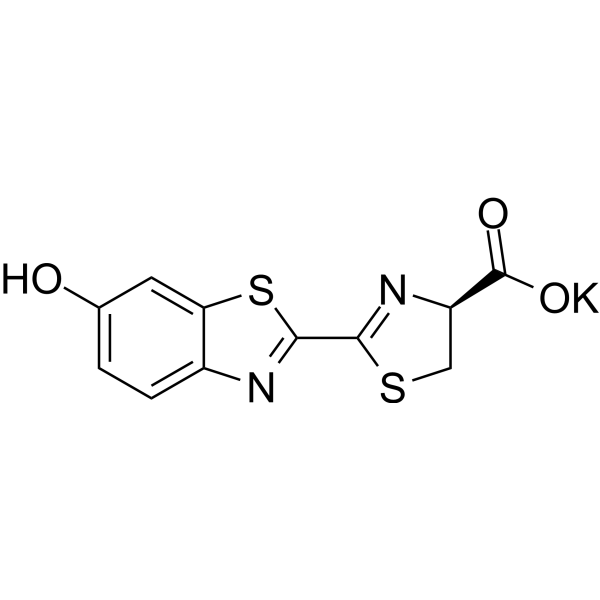
    D-Luciferin potassium
    Maximum Cited Publications
    110 Publications Verification

    D-(-)-Luciferin potassium; Firefly luciferin potassium; Beetle Luciferin potassium

    Fluorescent Dye Others
    D-luciferin potassium is the natural substrate of the enzyme luciferase (Luc) that catalyzes the production of the typical yellowgreen light of fireflies. The 560 nm chemiluminescence from this reaction peaks within seconds, with light output that is proportional to luciferase concentration when the substrate luciferin is present in excess. The luciferase (luc) gene is a popular reporter gene for research and agent screening. Chemiluminescent techniques are virtually background-free, making the luc reporter gene ideal for detecting low-level gene expression. As little as 0.02 pg of luciferase can be reliably measured in a standard scintillation counter. In addition to its role as a reporter of gene expression, luciferase is commonly used in an extremely sensitive assay for ATP . We offer the firefly luciferase (HY-P1004A), luciferin free acid (HY-12591A), as well as its water-soluble sodium salts (HY-12591) and potassium salts (HY-12591B) .
    D-Luciferin potassium
  • HY-12591
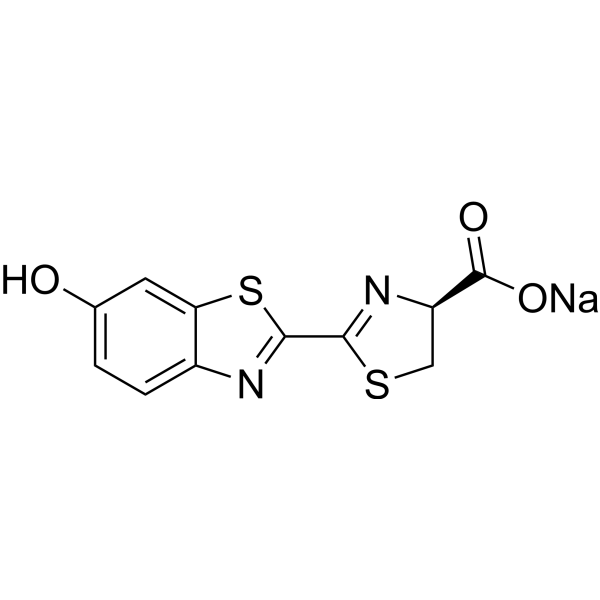
    D-Luciferin sodium
    Maximum Cited Publications
    110 Publications Verification

    D-(-)-Luciferin sodium; Firefly luciferin sodium; Beetle Luciferin sodium

    Fluorescent Dye Others
    D-luciferin sodium is the natural substrate of the enzyme luciferase (Luc) that catalyzes the production of the typical yellowgreen light of fireflies. The 560 nm chemiluminescence from this reaction peaks within seconds, with light output that is proportional to luciferase concentration when the substrate luciferin is present in excess. The luciferase (luc) gene is a popular reporter gene for research and agent screening. Chemiluminescent techniques are virtually background-free, making the luc reporter gene ideal for detecting low-level gene expression. As little as 0.02 pg of luciferase can be reliably measured in a standard scintillation counter. In addition to its role as a reporter of gene expression, luciferase is commonly used in an extremely sensitive assay for ATP . We of er the firefly luciferase (HY-P1004A), luciferin free acid (HY-12591A), as well as its water-soluble sodium salts (HY-12591) and potassium salts (HY-12591B) .
    D-Luciferin sodium
  • HY-12591A
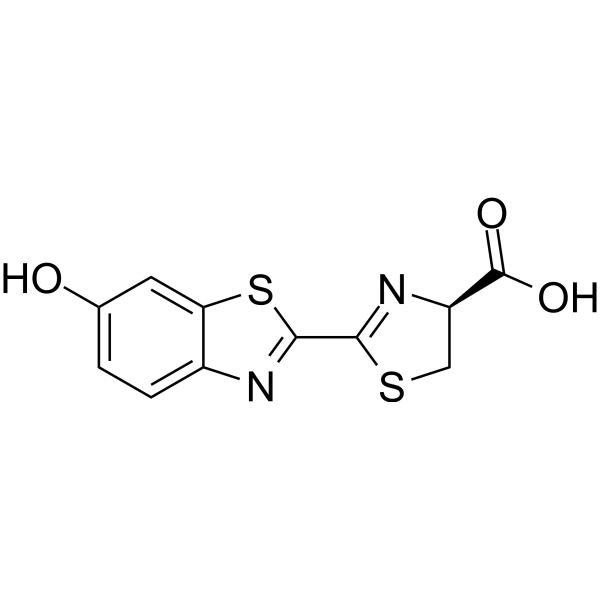
    D-Luciferin
    Maximum Cited Publications
    110 Publications Verification

    D-(-)-Luciferin; Firefly luciferin; Beetle Luciferin

    Fluorescent Dye Others
    D-luciferin is the natural substrate of the enzyme luciferase (Luc) that catalyzes the production of the typical yellowgreen light of fireflies. The 560 nm chemiluminescence from this reaction peaks within seconds, with light output that is proportional to luciferase concentration when the substrate luciferin is present in excess. The luciferase (luc) gene is a popular reporter gene for research and agent screening. Chemiluminescent techniques are virtually background-free, making the luc reporter gene ideal for detecting low-level gene expression. As little as 0.02 pg of luciferase can be reliably measured in a standard scintillation counter. In addition to its role as a reporter of gene expression, luciferase is commonly used in an extremely sensitive assay for ATP . We of er the firefly luciferase (HY-P1004A), luciferin free acid (HY-12591A), as well as its water-soluble sodium salts (HY-12591) and potassium salts (HY-12591B) .
    D-Luciferin
  • HY-11035
    WAY-262611
    10+ Cited Publications

    β-catenin Wnt Cancer
    WAY-262611 is a Wnt/β-Catenin agonist that increases bone formation rate with an EC50 of 0.63 μM in TCF-Luciferase assay. WAY-262611 is also a Dkk1 inhibitor .
    WAY-262611
  • HY-111429
    YAP/TAZ inhibitor-1
    5+ Cited Publications

    YAP Cancer
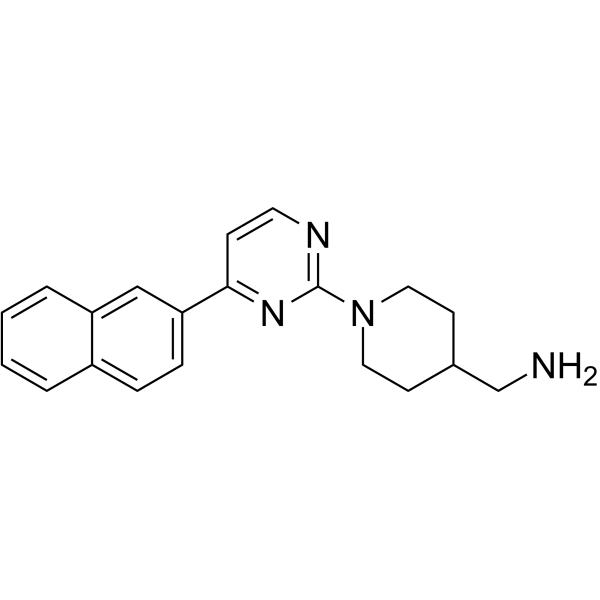
    YAP/TAZ inhibitor-1 is a YAP/TAZ inhibitor extracted from patent WO2017058716A1, Compound 1, has an IC50 of <0.100 μΜ in firefly luciferase assay .
    YAP/TAZ inhibitor-1
  • HY-N2078

    Neodiosgenin

    LXR Reactive Oxygen Species (ROS) Apoptosis Fatty Acid Synthase (FASN) Metabolic Disease
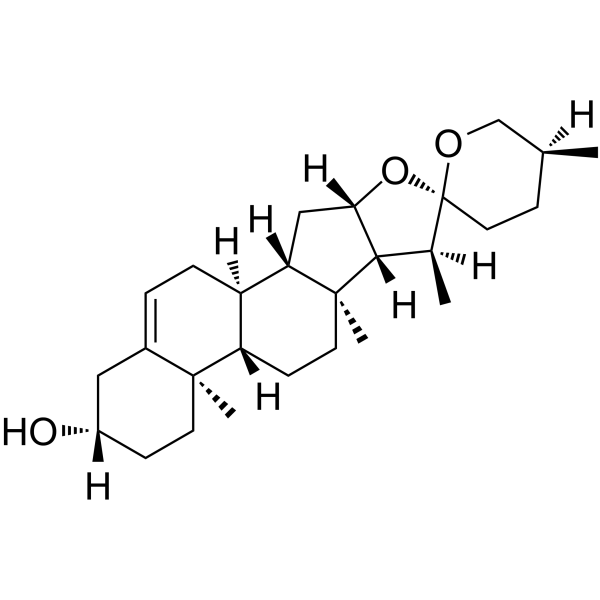
    Yamogenin (Neodiosgenin) is a diastereomer of diosgenin. Yamogenin antagonizes the activation of the liver X receptor (LXR) in luciferase ligand assay. Yamogenin inhibits triacylglyceride (TG) accumulation through the suppression of gene expression of fatty acid synthesis in HepG2 hepatocytes. Yamogenin is a steroidal saponin that can be obtained from plant species with in vitro cytotoxicity, antioxidant, and antimicrobial properties. Yamogenin induces cell death via the extrinsic and intrinsic way of apoptosis. Yamogenin inhibits protein denaturation with an IC50 of 1421.92 μg/mL. Yamogenin can be studied in research on gastric cancer .
    Yamogenin
  • HY-161672

    IRE1 Cancer
    G-5758 is a selective and orally effective IRE1α inhibitor with an IC50 of 38 nM (detected by the XBP1s luciferase reporter cell assay). G-5758 is still well tolerated in rats at oral doses up to 500 mg/kg. G-5758 can be used in the research of multiple myeloma .
    G-5758
  • HY-169792

    FXR Aminotransferases (Transaminases) Metabolic Disease Inflammation/Immunology
    HPG1860 is an orally active, highly selective and potent FXR agonist, with an EC50 of 18 nM (FXR-luciferase reporter assay). HPG1860 has EC50 values >30.0 μM for TGR5 and 13 other related nuclear receptors (cAMP biological assay). HPG1860 can be used for the research of non-alcoholic steatohepatitis (NASH) .
    HPG1860
  • HY-148443

    Eukaryotic Initiation Factor (eIF) Cancer
    eIF4A3-IN-9 is a Rocaglate analog. eIF4A3-IN-9 interferes with the assembly of the eIF4F translation complex, with EC50 values of 29 and 450 nM against myc-LUC and tub-LUC, respectively. eIF4A3-IN-9 can be used for the research of tumor pathogenesis .
    eIF4A3-IN-9
  • HY-100469

    LXR Inflammation/Immunology
    LXRβ agonist-2 is an orally active and selective LXRβ agonist. LXRβ agonist-2 increases high-density lipoprotein cholesterol levels without elevating plasma triglyceride levels. LXRβ agonist-2 decreases lipid accumulation area in the aortic arch. LXRβ agonist-2 can be used for the research of atherosclerosis .
    LXRβ agonist-2
  • HY-170496

    Wnt Cancer
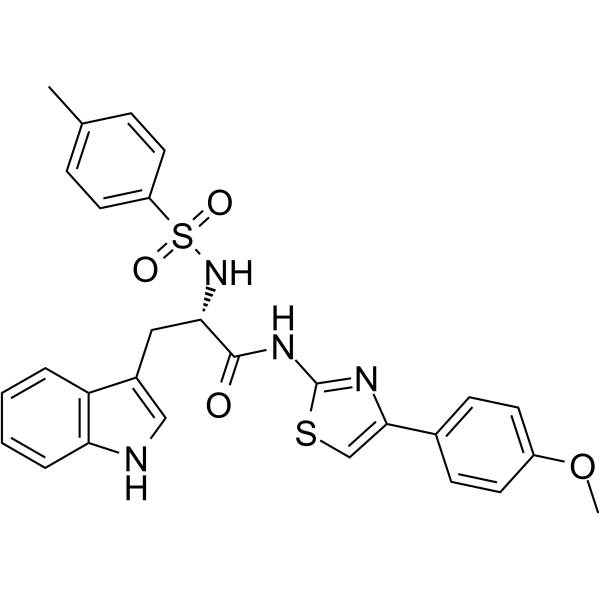
    Fluc-IN-1 (Compound 3) is an inhibitor for firefly luciferase with an IC50 of 25 nM. Fluc-IN-1 inhibits WNT/β-catenin signaling pathway with an IC50 of 33 nM (measuring by TOPFlash assay) .
    Fluc-IN-1
  • HY-136431

    Aminoacyl-tRNA Synthetase Cancer
    BC-DXI-843 is a potent and specific AIMP2-DX2 inhibitor with an IC50 of 0.92 μM, more than 100-fold selectivity over AIMP2 (IC50 >100 μM) in a luciferase assay. BC-DXI-843 acts as a promising lead targeting AIMP2-DX2 in lung cancer .
    BC-DXI-843
  • HY-160686

    VEGFR Others
    GSK248233A is a dual inhibitor of Fluc and VEGFR2 with IC50 of 1.03 μM and 2 nM, respectively. GSK248233A also shows activity against the AGC family. GSK248233A acts as a protein kinase inhibitor across ATP-dependent and -independent luciferases with potential implications for Fluc reporter assays .
    GSK248233A
  • HY-153114

    FXR Inflammation/Immunology
    HEC96719 is a selective and orally active tricyclic farnesoid X receptor (FXR) agonist with EC50 values of 1.37 and 1.55 nM by time-resolved fluorescence energy transfer (TR-FRET) and luciferase reporter assays, respectively. HEC96719 significantly improves non-alcoholic steatohepatitis (NASH) and liver fibrosis with favorable tissue distribution in liver and intestine. HEC96719 can be used for the research of non-alcoholic steatohepatitis .
    HEC96719
  • HY-153230

    Liposome Biochemical Assay Reagents Others
    Firefly luciferase circRNA-LNP is a lipid nanoparticle (LNP) containing Firefly luciferase circRNA, suitable for assays of RNA delivery, translation efficiency, cell viability, etc. Luciferase is commonly used as a bioluminescent reporter gene for gene regulation and function studies. Firefly Luciferase circRNA will express firefly luciferase protein after entering the cells, which is often used for promoter activity detection or dual fluorescent molecular complementation experiments. Common luciferase are firefly luciferase and sea kidney luciferase .
    Firefly luciferase circRNA-LNP
  • HY-161817

    G protein-coupled Bile Acid Receptor 1 Others
    TGR5 agonist 5 (compound K91) is a potent agonist of TGR5, with EC50s of 19 μM and 30 μM in CRE-Luciferase assay anf cAMP accumulation assay, respectively .
    TGR5 agonist 5
  • HY-160685

    VEGFR Others
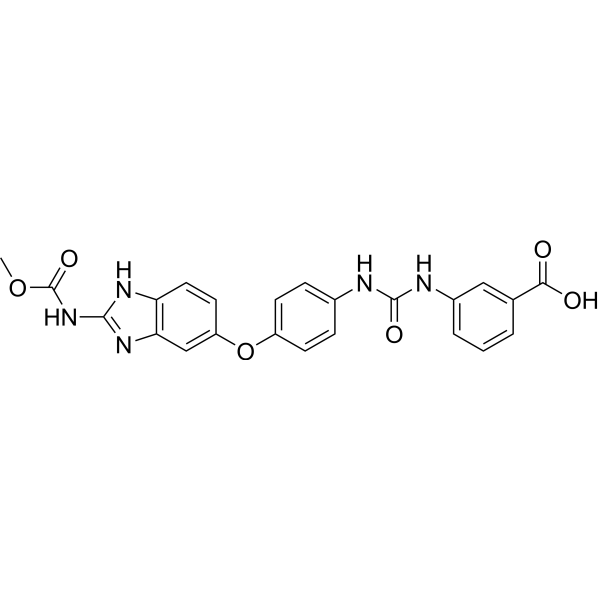
    GW809897X is a dual inhibitor of Fluc and VEGFR with IC50 of 0.58 μM and 65 nM, respectively. GW809897X is a protein kinase inhibitor across ATP-dependent and -independent luciferases with potential impact on Fluc reporter assays .
    GW809897X
  • HY-160684

    VEGFR Others
    GW701427A is a dual inhibitor of Fluc and VEGFR2 with IC50 of 0.12 μM and 603 nM, respectively. GW701427A acts as a protein kinase inhibitor across ATP-dependent and -independent luciferases with potential implications for Fluc reporter assays .
    GW701427A
  • HY-139855

    HIF/HIF Prolyl-Hydroxylase Metabolic Disease
    ZG-2033 (Compound 26) is an orally active HIF-2α agonist that demonstrates nanomolar activity in luciferase reporter gene assays (EC50 = 490 nM). ZG-2033 has the effect of alleviating anemia and exhibits synergistic action with AKB-6548 (HY-101277) in anemia, and can be used in the study of renal anemia .
    ZG-2033
  • HY-163732

    YAP Cancer
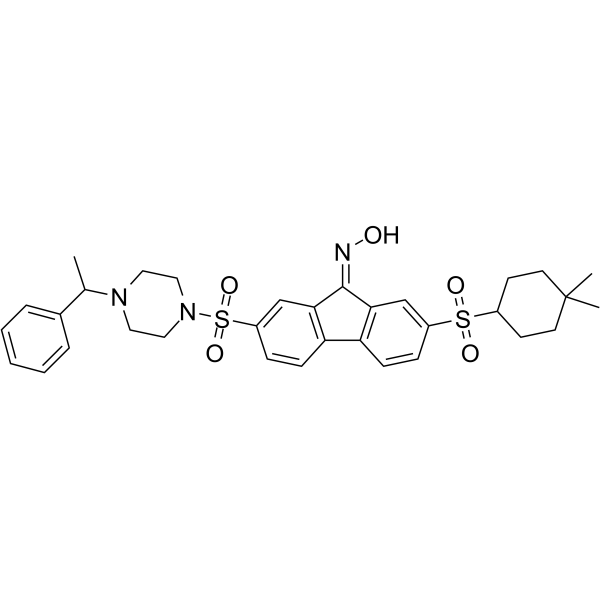
    TEAD-IN-16 (compound BC-011) is a potent inhibitor of TEAD, with the IC50 of 72.43 μM. TEAD-IN-16 plays an important role in cancer research .
    TEAD-IN-16
  • HY-160687

    VEGFR Others
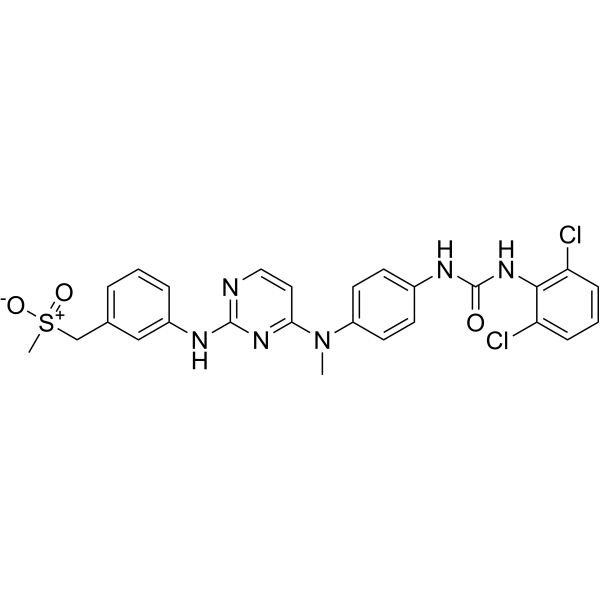
    GW549390X is a dual inhibitor of Fluc and VEGFR2 with IC50 of 0.26 μM and 1.2 μM, respectively. GW549390X can bind to the ATP pocket of FLuc through the aniline side chain and is an ATP-competitive inhibitor of Fluc. GW549390X acts as a protein kinase inhibitor across ATP-dependent and -independent luciferases, with potential implications for Fluc reporter assays .
    GW549390X
  • HY-160691

    Aurora Kinase Others
    GW814408X is a kinase chemical genome group (KCGS) compound that inhibits the AURKC kinase involved in cell cycle progression, checkpoint regulation, and cell division. GW814408X exhibits cell line-dependent toxicity, e.g., cytotoxic effects on HeLa cells. GW814408X acts as a protein kinase inhibitor across ATP-dependent and -independent luciferases with potential implications for Fluc reporter assays .
    GW814408X
  • HY-134997

    4-oxo DHA

    PPAR Cancer
    4-oxo Docosahexaenoic acid (4-oxo DHA) is a putative metabolite of Docosahexaenoic acid (HY-B2167) with antiproliferative and PPARγ agonist activity. It inhibits the growth of several triple negative breast cancer cell lines (MCF-10F, trMCF, bsMCF, MDA-MB-231, and BT549) at 50-100 μM, however it increased proliferation of MCF-7 cells. 4-oxo DHA binds covalently to PPARγ and activates gene transcription in luciferase reporter assays and in dendritic cells with EC50 values of approximately 8-16 μM.
    4-Oxo Docosahexaenoic Acid
  • HY-N2078R

    Neodiosgenin (Standard)

    Reference Standards LXR Apoptosis Fatty Acid Synthase (FASN) Reactive Oxygen Species (ROS) Metabolic Disease
    Yamogenin (Standard) is the analytical standard of Yamogenin. This product is intended for research and analytical applications. Yamogenin (Neodiosgenin) is a diastereomer of diosgenin. Yamogenin antagonizes the activation of the liver X receptor (LXR) in luciferase ligand assay. Yamogenin inhibits triacylglyceride (TG) accumulation through the suppression of gene expression of fatty acid synthesis in HepG2 hepatocytes. Yamogenin is a steroidal saponin that can be obtained from plant species with in vitro cytotoxicity, antioxidant, and antimicrobial properties. Yamogenin induces cell death via the extrinsic and intrinsic way of apoptosis. Yamogenin inhibits protein denaturation with an IC50 of 1421.92 μg/mL. Yamogenin can be studied in research on gastric cancer .
    Yamogenin (Standard)
  • HY-183145

    ROR Inflammation/Immunology
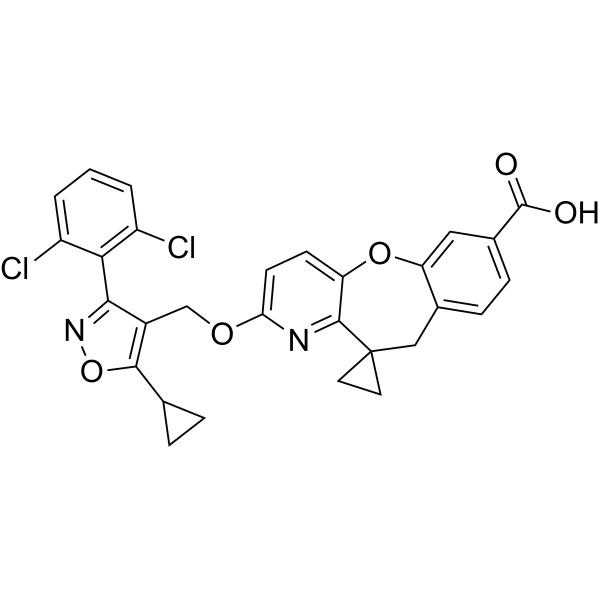
    RORγ-IN-4 is a RORγ inhibitor with an EC50 of 0.014 μM. RORγ-IN-4 can be used for the research of inflammation .
    RORγ-IN-4
  • HY-182026

    FXR G protein-coupled Bile Acid Receptor 1 TNF Receptor Reactive Oxygen Species (ROS) Inflammation/Immunology
    FXR agonist 17 is an orally active, steroidal FXR agonist with EC50 values of 42.2 nM (TR-FRET) and 176.4 nM (luciferase reporter assay), respectively. FXR agonist 17 activates TGR5 (EC50 = 2.6 μM) but does not activate hMRGPRX4. FXR agonist 17 exerts anti-inflammatory, hepatoprotective and antifibrotic effects, improves the non-alcoholic steatohepatitis (NAFLD) activity score and reduces the severity of liver fibrosis. FXR agonist 17 can be used for the research of NAFLD, cholestatic liver disease and liver fibrosis .
    FXR agonist 17
  • HY-153500

    Hedgehog Others
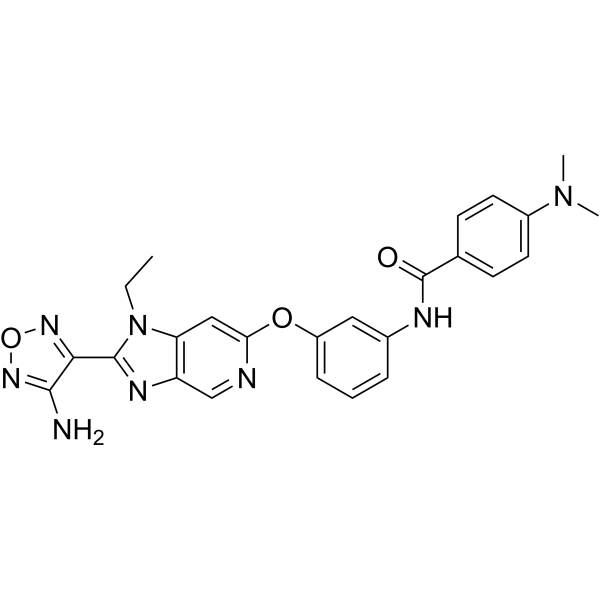
    Hedgehog IN-4 is a benzamide derivative and also an inhibitor of the Hedgehog signaling pathway, with an IC50 of 0.050 nM .
    Hedgehog IN-4
  • HY-186021

    PROTACs YAP Cancer
    PROTAC TEAD degrader-2 (Compound 31) is an efficient TEAD1 PROTAC degrader with a DC50 of 0.6 nM. PROTAC TEAD degrader-2 inhibits the YAP/TAZ-TEAD interaction, with a IC50 of 1.8 nM. PROTAC TEAD degrader-2 exhibits significant selective inhibitory activity against YAP-dependent cancer cells and effectively suppresses the transcriptional activity mediated by YAP. PROTAC TEAD degrader-2 can be used for research on mesothelioma and glioma .
    PROTAC TEAD degrader-2
  • HY-181894

    PPAR Cardiovascular Disease Metabolic Disease
    XYQ3-B11 is a potent PPARα agonist with an EC50 of 8.33 μM. XYQ3-B11 activates PPARα. XYQ3-B11 can be used for the research of dyslipidemia .
    XYQ3-B11
  • HY-182547

    Anaplastic lymphoma kinase (ALK) Cancer
    LY580276 is an ATP-competitive ALK5 inhibitor with an IC50 of 175 nM. LY580276 inhibits transforming growth factor-β-induced epithelial-mesenchymal transition. LY580276 can be used for cancer research .
    LY580276
  • HY-P11625

    RXFP Receptor Cardiovascular Disease
    R9-13 is a fatty acid-conjugated relaxin and an agonist of LGR7 (RXFP1). R9-13 induces sustained pubic symphysis elongation in estrogen-pretreated mice. R9-13 exhibits long-acting pharmacokinetic profiles in rodents, with in vivo activity lasting up to one week after administration. R9-13 can be used in studies related to acute heart failure .
    R9-13

Inquiry Online

Your information is safe with us. * Required Fields.

Salutation


Country or Region *

Applicant Name *


Organization Name *

Department *


Email Address *


Product Name *

Cat. No.


Requested quantity *

Phone Number *


Remarks

Inquiry Online

Inquiry Information

Product Name:
Cat. No.:
Quantity:
MCE Japan Authorized Agent:

