Search Result
Results for "
mRNA+delivery
" in MedChemExpress (MCE) Product Catalog:
14
Biochemical Assay Reagents
| Cat. No. |
Product Name |
Target |
Research Areas |
Chemical Structure |
-
- HY-145405
-
C12-200
Maximum Cited Publications
16 Publications Verification
|
Liposome
|
Others
|
|
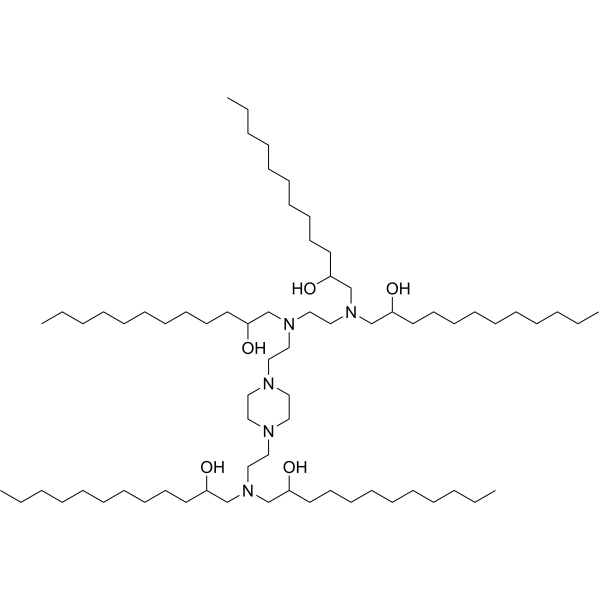
C12-200 is a type of ionizable cationic lipid and helper lipid commonly used for mRNA delivery. In the hemophilia B mouse model, mRNA encoding human erythropoietin (EPO) and coagulation factor IX (FIX) can be successfully delivered and expressed using C12-200. C12-200 is utilized in research related to hemophilia B .
|
-
-
- HY-138171
-
Lipid 5
3 Publications Verification
|
Liposome
|
Others
|
|
Lipid 5 is an amino lipid that affords efficient mRNA delivery in rodent and primate models. Lipid 5 shows optimal pharmacokinetics and non-toxic side effects .
|
-

-
- HY-148842
-
|
|
Liposome
|
Others
|
|
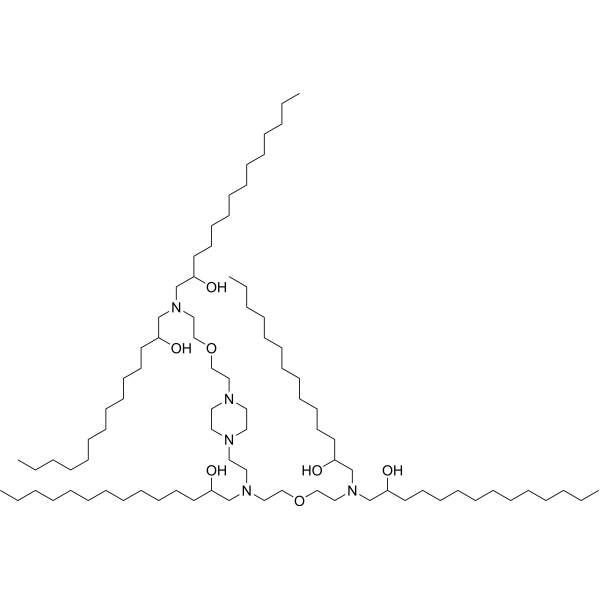
C14-4 is an ionizable lipid utilized for the synthesis of lipid nanoparticles (LNPs). C14-4 enhances mRNA delivery, enabling the effective transport of mRNA to primary human T cells, which in turn induces functional protein expression. C14-4 demonstrates high transfection efficiency while maintaining low cytotoxicity .
|
-
-
- HY-151507
-
306Oi10
1 Publications Verification
|
Liposome
|
Others
|
|
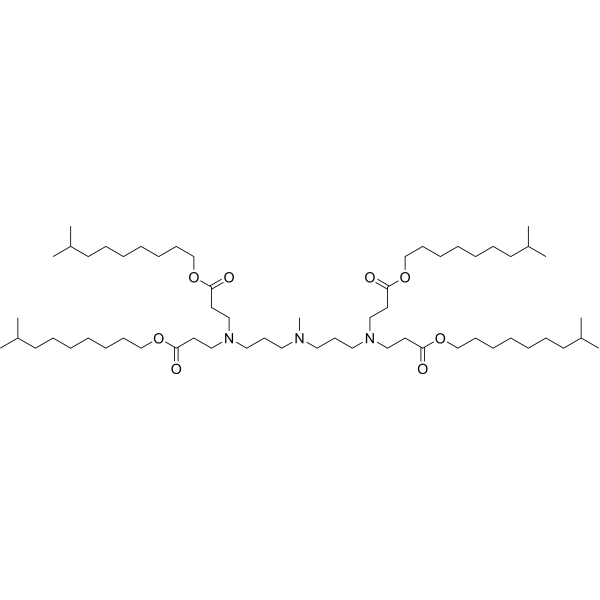
306Oi10 is a branched ionizable lipid that can be used to construct lipid nanoparticles (LNPs) for delivering messenger RNA. The surface ionization of lipid nanoparticles is related to the effectiveness of mRNA delivery. The tail of 306Oi10 has a one-carbon branch, which provides it with stronger surface ionization compared to lipids with linear tails, thereby enhancing its mRNA delivery efficacy. 306Oi10 can be used in research related to mRNA delivery .
|
-
-
- HY-167036
-
|
|
Biochemical Assay Reagents
|
Others
|
|
DMG-PEG2000-Mal is a pegylated lipid with a molecular weight of 2000. DMG-PEG-Mal serves as a component of lipid nanoparticles for mRNA delivery .
|
-

-
- HY-171306
-
|
|
Liposome
|
Others
|
|
MK16 is a lipid material that can be used to construct blood-brain barrier penetrable lipid nanoparticles for mRNA delivery. MK16 facilitates blood-brain barrier crossing via γ-secretase-mediated and caveolae-mediated transcytosis. MK16 can be used for drug delivery research .
|
-

-
- HY-142977
-
|
|
Drug Intermediate
|
Others
|
|
6-Oxohexyl 2-hexyldecanoate, 80% (ELSD) is an intermediate in the synthesis of ALC-0315. 6-Oxohexyl 2-hexyldecanoate, 80% (ELSD) can be used in research on drug delivery, such as mRNA delivery .
|
-

-
- HY-145795
-
|
|
Liposome
|
Others
|
|
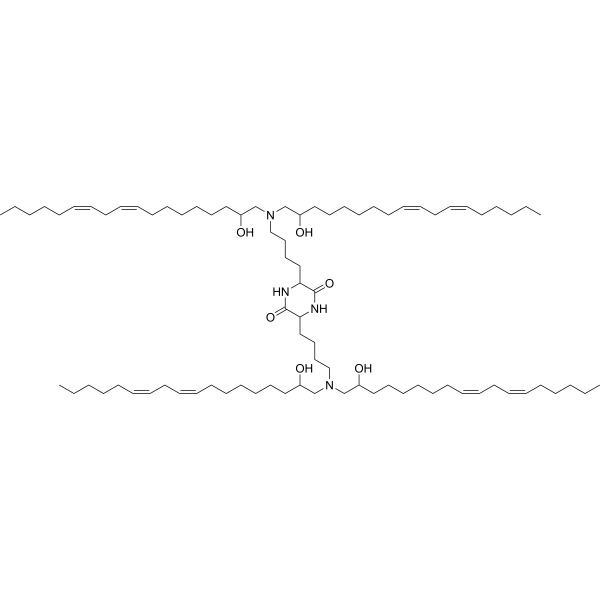
OF-02 is an ionizable lipid for mRNA delivery and a key component of lipid nanoparticles (LNPs). OF-02 is protonated in the acidic endosomal environment to promote endosomal escape of mRNA and efficiently induce protein expression in target cells. OF-02 relies on the pH-responsive membrane fusion properties to form a complex with mRNA and destroy the endosomal membrane structure to achieve mRNA release in the cytoplasm. OF-02 is mainly used in the development of mRNA vaccines, gene editing, and protein replacement therapy[1][2][3].
|
-
-
- HY-N16040
-
|
|
Liposome
|
Others
|
|
DMG-pSar25 is a double lipid-tailed polysarcosine lipid with 25 sarcosine moieties, serving as a PEG lipid substitute in lipid nanoparticle formulations for mRNA delivery. DMG-pSar25 supports mRNA delivery in lipid nanoparticle formulations .
|
-

-
- HY-148049
-
|
|
Liposome
|
Others
|
|
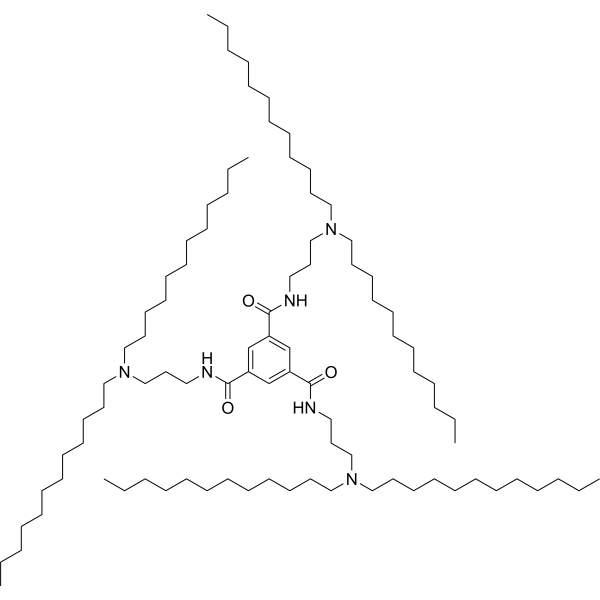
TT3 is an ionizable lipid-like material and a lipid nanoparticle (LLNs)-based mRNA delivery vector. TT3 exhibits liver and spleen specificity and excellent delivery efficiency .
|
-
-
- HY-159726
-
|
|
Liposome
|
Others
|
|
C10-200 is an ionizable cationic lipid that can be used to generate lipid nanoparticles (LNPs). C10-200 is used in the study of mRNA delivery .
|
-

-
- HY-151509
-
|
|
Liposome
|
Cancer
|
|
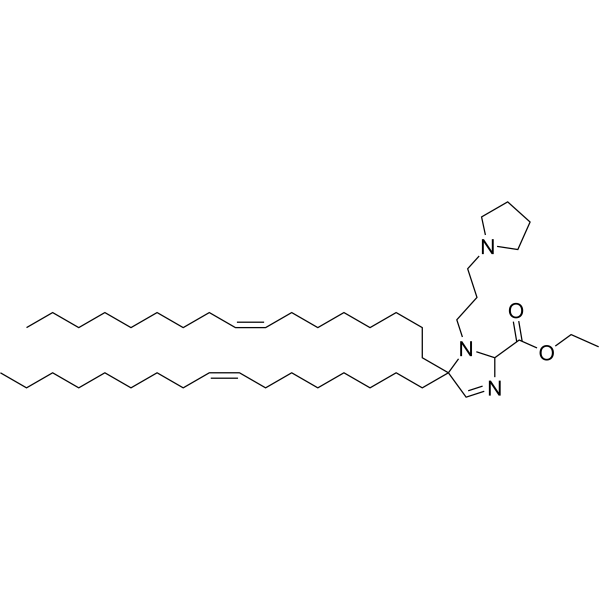
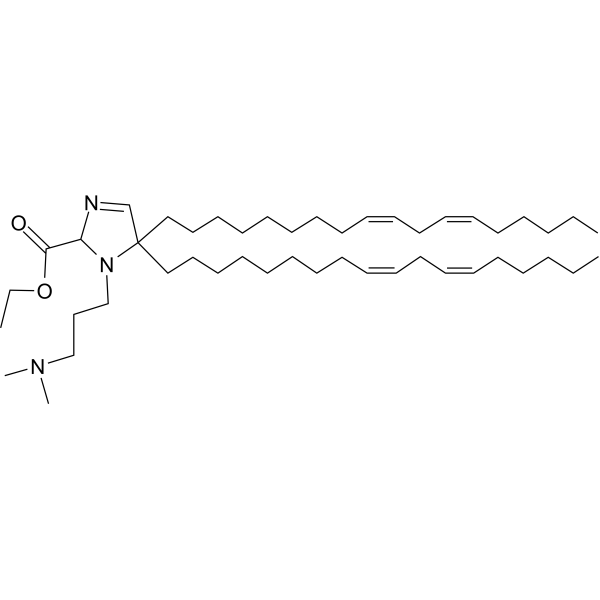
A2-Iso5-2DC18 is a dihydroimidazole-linked lipid, served as potent mRNA delivery vehicle. A2-Iso5-2DC18 can be used for antitumor research, including B16F10 melanoma. .
|
-
-
- HY-153879
-
|
|
Liposome
Toll-like Receptor (TLR)
|
Infection
Inflammation/Immunology
|
|
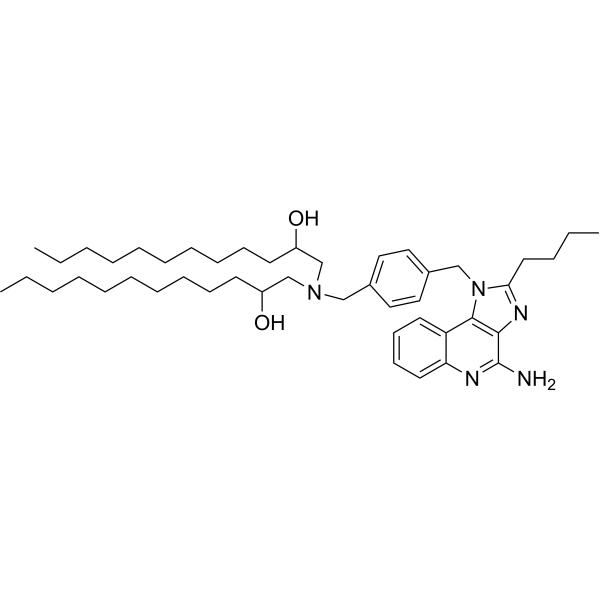
C12-TLRa is an ionized adjuvant lipid. C12-TLRa targets TLR7/8 receptors in endosomes. C12-TLRa enhances mRNA delivery as a structural component of LNPs. C12-TLRa enhances innate immune responses. C12-TLRa can be used for the research of SARS-CoV-2 mRNA vaccine .
|
-
-
- HY-170704
-
|
|
Liposome
|
Metabolic Disease
Cancer
|
|
DSPE-PEG2000-TCO is a click chemistry coupling partner. DSPE-PEG2000-TCO undergoes a reverse electron-demand Diels-Alder click reaction to form a covalent linkage with tetrazine-modified Cetuximab (HY-P9905). DSPE-PEG2000-TCO maintains the stability of lipid nanoparticles (LNPs) and has high mRNA encapsulation efficiency, which supports cellular uptake and mRNA transfection. DSPE-PEG2000-TCO is used to prepare EGFR-targeted and APN-targeted mRNA-loaded LNPs, mediating receptor-dependent endocytosis, mRNA delivery, and intestinal epithelial transcytosis .
|
-

-
- HY-W590683
-
|
|
Liposome
|
Others
|
|
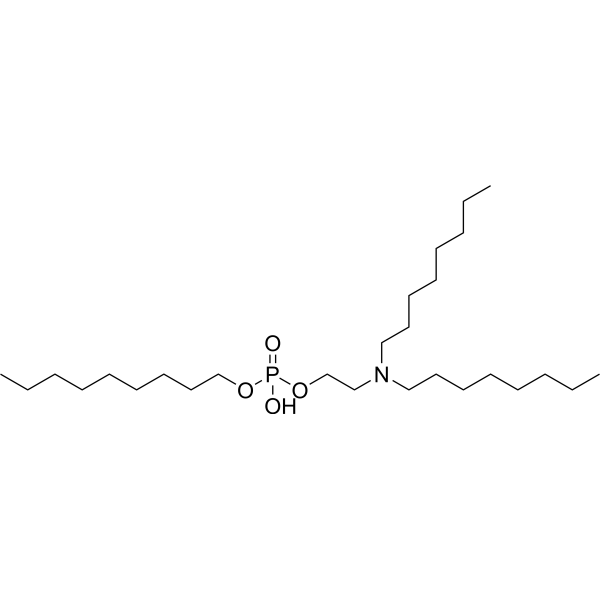
9A1P9 is a multi-tail ionizable cationic phospholipid. 9A1P9 induces membrane destabilization. 9A1P9 can be used for mRNA delivery t .
|
-
-
- HY-153372
-
|
|
Liposome
|
Others
|
|
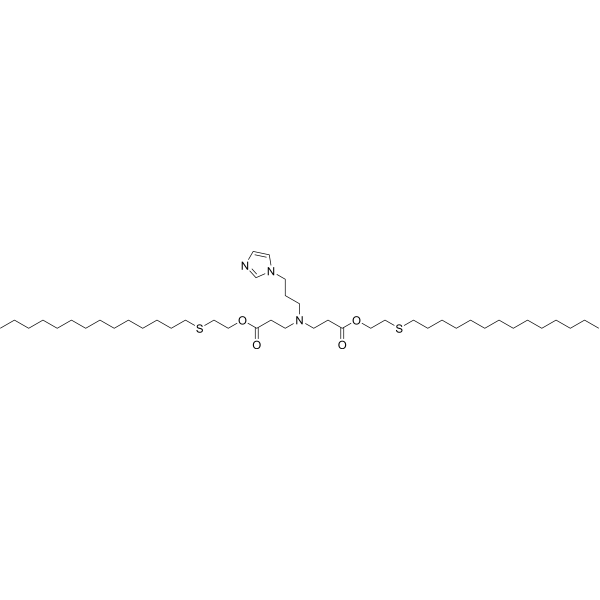
93-O17S is an ionizable lipid. 93-O17S is involved in the construction of LNP. 93-O17S can achieve mRNA delivery to the spleen .
|
-
-
- HY-164190
-
|
|
DNA/RNA Synthesis
|
Others
|
|
m7(3'Ma-Biotin)Gppp(2'OMe)ApG ammonium is a Biotin-labled cap analogue that can be used for mRNA synthesis. The efficiency of mRNA delivery can be determined by the detection of Biotin by flow cytometry, which can be used to track mRNA in cells and in living animals and to screen delivery lipid ratios.
|
-

-
- HY-151511
-
|
|
Liposome
|
Cancer
|
|
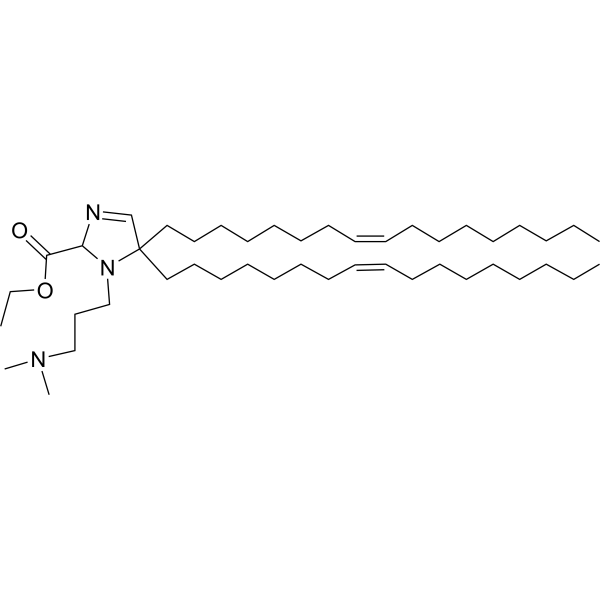
A12-Iso5-2DC18, an ionizable cationic lipid, is a potent mRNA delivery lipid vehicle .
|
-
-
- HY-143700
-
|
|
Biochemical Assay Reagents
|
Others
|
|
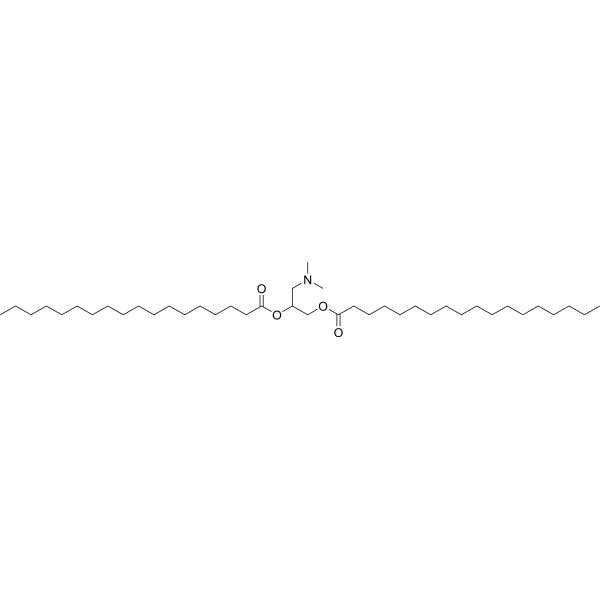
18:0 DAP is a cationic or ionizable lipid with no unsaturated bonds in its hydrocarbon chain. The mRNA encapsulation efficiency of 18:0 DAP is 0%. 18:0 DAP cannot form functional lipid nanoparticles suitable for mRNA delivery .
|
-
-
- HY-156448
-
80-O14B
1 Publications Verification
|
Liposome
|
Cancer
|
|
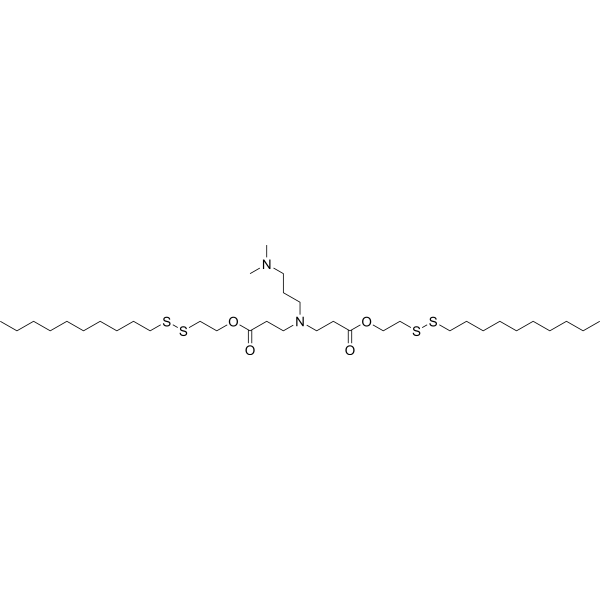
80-O14B is a cationic lipid-like compound. 80-O14B can be used in mRNA delivery studies .
|
-
-
- HY-151512
-
-
-
- HY-145798
-
|
|
Liposome
|
Others
|
|
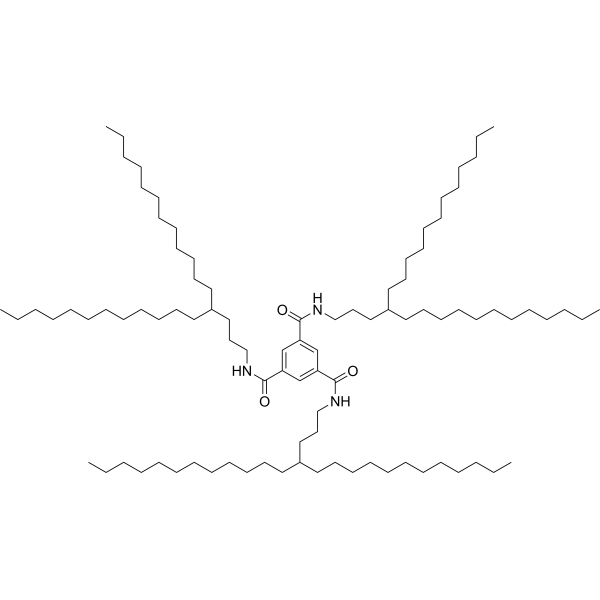
N1,N3,N5-Tris(4-dodecylhexadecyl)benzene-1,3,5-tricarboxamide is an analogue of TT3 (HY-148049). TT3 is an ionizable lipid-like materials for mRNA delivery .
|
-
-
- HY-171898
-
|
|
Liposome
|
Inflammation/Immunology
Cancer
|
|
Lipid I97 is an ionizable lipid derived from vitamin B5 (pKa = 6.23). Lipid I97 can be used to generate lipid nanoparticles (LNPs) for mRNA delivery in vivo. Lipid I97 can be studied in research for enhancing mRNA transfection efficiency and long-term stability as well as formulation of mRNA vaccines .
|
-

-
- HY-171896
-
|
|
Liposome
|
Inflammation/Immunology
Cancer
|
|
A28-C6B2 is an ionizable cationic lipid with a pKa of 6.43, and can be used to generate lipid nanoparticles (LNPs) for mRNA delivery in vivo. A28-C6B2 can be studied in research for enhancing the selective delivery of mRNA to the spleen, particularly to antigen-presenting cells .
|
-

-
- HY-164189
-
|
|
DNA/RNA Synthesis
|
Others
|
|
m7(3'Ma-Cy3)Gppp(2'OMe)ApG ammonium is a Cy3-labled cap analogue that can be used for mRNA synthesis. The efficiency of mRNA delivery can be determined by the detection of Cy3 by flow cytometry, which can be used to track mRNA in cells and in living animals and to screen delivery lipid ratios.
|
-

-
- HY-153138
-
-
-
- HY-159735
-
|
|
Liposome
|
Others
|
|
Lipid 23 is an ionizable cationic amino lipid that can be used to generate lipid nanoparticles (LNP). Lipid 23 can be used for mRNA delivery .
|
-

-
- HY-168776
-
|
|
Biochemical Assay Reagents
|
Others
|
|
(S)-C12-200 is the (S)-isomer of C12-200 (HY-145405), an ionizable cationic lipid and helper lipid. (S)-C12-200 can be utilized in the formation of lipid nanoparticles and mRNA delivery .
|
-

-
- HY-151513
-
|
|
Others
|
Cancer
|
|
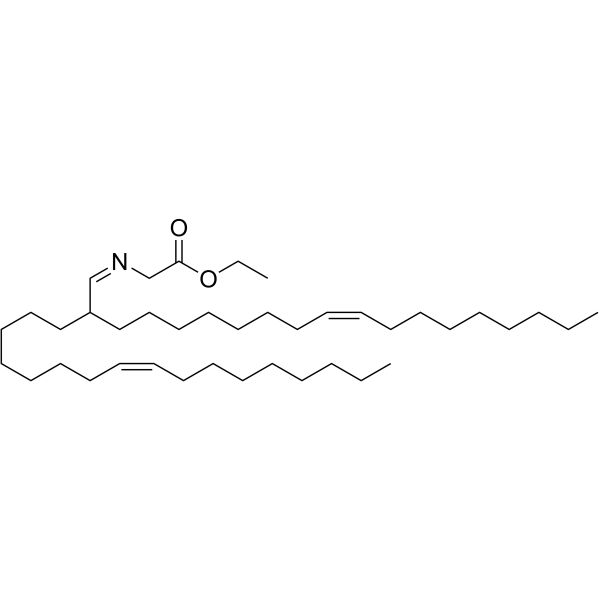
Iso5-2DC18 is a lipid that can be used for the synthesis of amine containing lipids. These amine containing lipids can be used for mRNA delivery, activate the stimulator of interferon genes (STING) pathway, and exhibit anti-tumor immunity .
|
-
-
- HY-177344
-
|
|
Biochemical Assay Reagents
|
Cancer
|
|
IAJD-97 is a single-component ionizable amphiphilic Janus dendrimer carrier targeting mRNA delivery, which self-assembles into dendrimersomes (DNPs) via pH-responsive mechanisms to efficiently encapsulate and protect mRNA, while facilitating cellular uptake and endosomal escape through ionizable amine groups. IAJD-97 is promising for research of cancers .
|
-

-
- HY-171897
-
|
|
Liposome
|
Inflammation/Immunology
Cancer
|
|
E10i-494 is an ionizable cationic branched endosomal disruptor (BEND) lipid. E10i-494 can be used to generate lipid nanoparticles (LNPs) for mRNA delivery in vitro. E10i-494 can enhance transfection efficiency .
|
-

-
- HY-P11453
-
|
|
Biochemical Assay Reagents
|
Cancer
|
|
R9H6 is a peptide containing nine arginine peptides and six histidine peptides. The LP(R9H6)m nanocomplex containing R9H6 exhibits high efficiency in mRNA delivery. R9H6 can be used in the research of anaplastic thyroid cancer .
|
-

-
- HY-164191
-
|
|
DNA/RNA Synthesis
|
Others
|
|
m7(3'Ma-Peg5-FAM)Gppp(2'OMe)ApG ammonium is a FAM-labled cap analogue that can be used for mRNA synthesis. The efficiency of mRNA delivery can be determined by the detection of FAM by flow cytometry, which can be used to track mRNA in cells and in living animals and to screen delivery lipid ratios.
|
-

-
- HY-172329
-
|
|
Liposome
|
Others
|
|
Q1-ALC-0315 iodide is a cationic quaternary ammonium lipid derivative of the ionizable cationic lipid ALC-0315 (HY-138170). Q1-ALC-0315-based LNPs can be used for lung-targeted mRNA delivery, which demonstrates high-performing firefly luciferase protein expression in the lungs .
|
-

-
- HY-164188
-
|
|
DNA/RNA Synthesis
|
Others
|
|
m7(3'Ma-Cy5)Gppp(2'OMe)ApG ammonium is a Cy5-labled cap analogue that can be used for mRNA synthesis. The efficiency of mRNA delivery can be determined by the detection of Cy5 by flow cytometry, which can be used to track mRNA in cells and in living animals and to screen delivery lipid ratios.
|
-

-
- HY-164187
-
|
|
DNA/RNA Synthesis
|
Others
|
|
m7(3'Ma-Cy7)Gppp(2'OMe)ApG ammonium is a Cy7-labled cap analogue that can be used for mRNA synthesis. The efficiency of mRNA delivery can be determined by the detection of Cy7 by flow cytometry, which can be used to track mRNA in cells and in living animals and to screen delivery lipid ratios.
|
-

-
- HY-169480
-
|
|
Liposome
|
Infection
Cancer
|
|
Lipid C2 is an ionizable cationic lipid that has been used in the formation of lipid nanoparticles (LNP) for mRNA delivery in vivo. LNPs containing Lipid C2 and encapsulating an mRNA reporter selectively accumulate in the liver and spleen but not the heart, lungs, or kidneys in mice. LNP containing Lipid C2 and encapsulating mRNA encoding the Epstein-Barr virus (EBV) protein latent membrane protein 2 (LMP-2), in combination with an anti-programmed cell death protein 1 (PD-1) antibody, decrease tumor volume and reverse T cell exhaustion, as well as increase the percentage of CD3 +CD8 + central and CD3 +CD8 + effector memory T cells and decrease the percentage of CD3 + T cells expressing Pd-1, in the spleen in a CT26 murine EBV-infected colon cancer model .
|
-

-
- HY-W1130452
-
|
|
Liposome
|
Cancer
|
|
Lipid C16-C is an ionizable cationic lipid that can be used to prepare lipid nanoparticles (LNPs) for mRNA delivery. Lipid C16-C mediates ApoE-independent macropinocytosis-based mRNA delivery to macrophages, with endosomal acidification enabling endosomal escape and release of mRNA cargo into the cytosol .
|
-

-
- HY-175049
-
|
|
Endogenous Metabolite
|
Others
|
|
ALC-0315 N-oxide is an impurity of ALC-0315 ( HY-138170). ALC-0315 is an ionisable aminolipid for mRNA delivery .
|
-

-
- HY-W1130459
-
|
|
Liposome
|
Cancer
|
|
(R)-C12-200 is the (R)-isomer of C12-200 (HY-145405), an ionizable cationic lipid and helper lipid. (R)-C12-200 enables functional mRNA delivery to head and neck squamous cell carcinoma xenograft tumor cells in NU/J immunocompromised mice, with minimal off-target delivery to liver or spleen. (R)-C12-200 can be utilized in the formation of lipid nanoparticles and mRNA delivery .
|
-

-
- HY-175409
-
|
|
Liposome
|
Cancer
|
|
Lipid 35 hydrochloride is an ionizable lipid that can be used for the generation of lipid nanoparticles (LNPs). Lipid 35 hydrochloride can be used for lung-specific mRNA delivery for metastatic lung tumors research .
|
-

-
- HY-W1130458
-
|
|
Liposome
|
Inflammation/Immunology
|
|
503O8,12 is an ionizable cationic lipidoid that enables mRNA delivery to the spleen and lungs in mice when formulated into lipid nanoparticles with neutral helper lipid DOPE[1].
|
-

-
- HY-171784
-
|
|
Liposome
|
Cancer
|
|
Lipid PPz-2R1 is a lung-targeted lipid. Lipid PPz-2R1 is formulated into lipid nanoparticles (LNPs) for mRNA delivery. Lipid PPz-2R1 can be used for in situ lung cancer research .
|
-

-
- HY-185284
-
|
|
Liposome
|
Others
|
|
MeDZ lipid is a zwitterion-type ionizable endosomal membrane destabilizer and anti-inflammatory agent that promotes endosomal escape. When incorporated into LNP formulations, MeDZ lipid enhances mRNA expression in lymph node antigen-presenting cells and promotes cytotoxic T cell activation. MeDZ lipid is compatible with existing targeted nanoparticle formulations to improve mRNA delivery efficiency .
|
-

-
- HY-169478
-
|
|
Liposome
|
Cancer
|
|
Lipid N2-3L is an ionizable cationic lipid (pKa = 8.99) that can be used to generate supramolecular lipid nanoparticles (SMLNPs) for mRNA delivery. Lipid nanoparticles formed by encapsulating a luciferase reporter gene with Lipid N2-3L were detected to accumulate in the lymph nodes of mice, indicating that they can effectively enter the mouse immune system. Lipid nanoparticles formed by encapsulating ovalbumin mRNA and the TLR7/8 agonist Resiquimod (HY-13740) with Lipid N2-3L were able to reduce tumor volume and increase survival in the MC-38-OVA mouse colon cancer model. Lipid N2-3L can be used in the research of drug delivery for cancer-related therapies .
|
-

| Cat. No. |
Product Name |
Type |
-
- HY-145405
-
C12-200
Maximum Cited Publications
16 Publications Verification
|
Biochemical Assay Reagents
|
|
C12-200 is a type of ionizable cationic lipid and helper lipid commonly used for mRNA delivery. In the hemophilia B mouse model, mRNA encoding human erythropoietin (EPO) and coagulation factor IX (FIX) can be successfully delivered and expressed using C12-200. C12-200 is utilized in research related to hemophilia B .
|
-
- HY-138171
-
Lipid 5
3 Publications Verification
|
Biochemical Assay Reagents
|
|
Lipid 5 is an amino lipid that affords efficient mRNA delivery in rodent and primate models. Lipid 5 shows optimal pharmacokinetics and non-toxic side effects .
|
-
- HY-148842
-
|
|
Biochemical Assay Reagents
|
|
C14-4 is an ionizable lipid utilized for the synthesis of lipid nanoparticles (LNPs). C14-4 enhances mRNA delivery, enabling the effective transport of mRNA to primary human T cells, which in turn induces functional protein expression. C14-4 demonstrates high transfection efficiency while maintaining low cytotoxicity .
|
-
- HY-151507
-
306Oi10
1 Publications Verification
|
Biochemical Assay Reagents
|
|
306Oi10 is a branched ionizable lipid that can be used to construct lipid nanoparticles (LNPs) for delivering messenger RNA. The surface ionization of lipid nanoparticles is related to the effectiveness of mRNA delivery. The tail of 306Oi10 has a one-carbon branch, which provides it with stronger surface ionization compared to lipids with linear tails, thereby enhancing its mRNA delivery efficacy. 306Oi10 can be used in research related to mRNA delivery .
|
-
- HY-167036
-
|
|
Biochemical Assay Reagents
|
|
DMG-PEG2000-Mal is a pegylated lipid with a molecular weight of 2000. DMG-PEG-Mal serves as a component of lipid nanoparticles for mRNA delivery .
|
-
- HY-142977
-
|
|
Biochemical Assay Reagents
|
|
6-Oxohexyl 2-hexyldecanoate, 80% (ELSD) is an intermediate in the synthesis of ALC-0315. 6-Oxohexyl 2-hexyldecanoate, 80% (ELSD) can be used in research on drug delivery, such as mRNA delivery .
|
-
- HY-145795
-
|
|
Biochemical Assay Reagents
|
|
OF-02 is an ionizable lipid for mRNA delivery and a key component of lipid nanoparticles (LNPs). OF-02 is protonated in the acidic endosomal environment to promote endosomal escape of mRNA and efficiently induce protein expression in target cells. OF-02 relies on the pH-responsive membrane fusion properties to form a complex with mRNA and destroy the endosomal membrane structure to achieve mRNA release in the cytoplasm. OF-02 is mainly used in the development of mRNA vaccines, gene editing, and protein replacement therapy[1][2][3].
|
-
- HY-148049
-
|
|
Biochemical Assay Reagents
|
|
TT3 is an ionizable lipid-like material and a lipid nanoparticle (LLNs)-based mRNA delivery vector. TT3 exhibits liver and spleen specificity and excellent delivery efficiency .
|
-
- HY-153372
-
|
|
Biochemical Assay Reagents
|
|
93-O17S is an ionizable lipid. 93-O17S is involved in the construction of LNP. 93-O17S can achieve mRNA delivery to the spleen .
|
-
- HY-151511
-
-
- HY-143700
-
|
|
Biochemical Assay Reagents
|
|
18:0 DAP is a cationic or ionizable lipid with no unsaturated bonds in its hydrocarbon chain. The mRNA encapsulation efficiency of 18:0 DAP is 0%. 18:0 DAP cannot form functional lipid nanoparticles suitable for mRNA delivery .
|
-
- HY-156448
-
-
- HY-151512
-
|
|
Biochemical Assay Reagents
|
|
A12-Iso5-4DC19 is an ionizable cationic lipid. A12-Iso5-4DC19 can facilitate mRNA delivery and be used for the research of RNA vaccines .
|
-
- HY-145798
-
|
|
Biochemical Assay Reagents
|
|
N1,N3,N5-Tris(4-dodecylhexadecyl)benzene-1,3,5-tricarboxamide is an analogue of TT3 (HY-148049). TT3 is an ionizable lipid-like materials for mRNA delivery .
|
| Cat. No. |
Product Name |
Target |
Research Area |
-
- HY-P11453
-
|
|
Biochemical Assay Reagents
|
Cancer
|
|
R9H6 is a peptide containing nine arginine peptides and six histidine peptides. The LP(R9H6)m nanocomplex containing R9H6 exhibits high efficiency in mRNA delivery. R9H6 can be used in the research of anaplastic thyroid cancer .
|
| Cat. No. |
Product Name |
Category |
Target |
Chemical Structure |
-
- HY-N16040
-
|
|
Structural Classification
Lipid
|
Liposome
|
|
DMG-pSar25 is a double lipid-tailed polysarcosine lipid with 25 sarcosine moieties, serving as a PEG lipid substitute in lipid nanoparticle formulations for mRNA delivery. DMG-pSar25 supports mRNA delivery in lipid nanoparticle formulations .
|
-
| Cat. No. |
Product Name |
|
Classification |
-
- HY-145405
-
C12-200
Maximum Cited Publications
16 Publications Verification
|
|
Cationic Lipids
|
|
C12-200 is a type of ionizable cationic lipid and helper lipid commonly used for mRNA delivery. In the hemophilia B mouse model, mRNA encoding human erythropoietin (EPO) and coagulation factor IX (FIX) can be successfully delivered and expressed using C12-200. C12-200 is utilized in research related to hemophilia B .
|
-
- HY-138171
-
Lipid 5
3 Publications Verification
|
|
Cationic Lipids
|
|
Lipid 5 is an amino lipid that affords efficient mRNA delivery in rodent and primate models. Lipid 5 shows optimal pharmacokinetics and non-toxic side effects .
|
-
- HY-148842
-
|
|
|
Cationic Lipids
Cationic Lipids
|
|
C14-4 is an ionizable lipid utilized for the synthesis of lipid nanoparticles (LNPs). C14-4 enhances mRNA delivery, enabling the effective transport of mRNA to primary human T cells, which in turn induces functional protein expression. C14-4 demonstrates high transfection efficiency while maintaining low cytotoxicity .
|
-
- HY-151507
-
306Oi10
1 Publications Verification
|
|
Cationic Lipids
|
|
306Oi10 is a branched ionizable lipid that can be used to construct lipid nanoparticles (LNPs) for delivering messenger RNA. The surface ionization of lipid nanoparticles is related to the effectiveness of mRNA delivery. The tail of 306Oi10 has a one-carbon branch, which provides it with stronger surface ionization compared to lipids with linear tails, thereby enhancing its mRNA delivery efficacy. 306Oi10 can be used in research related to mRNA delivery .
|
-
- HY-167036
-
|
|
|
Pegylated Lipids
|
|
DMG-PEG2000-Mal is a pegylated lipid with a molecular weight of 2000. DMG-PEG-Mal serves as a component of lipid nanoparticles for mRNA delivery .
|
-
- HY-171306
-
|
|
|
Cationic Lipids
|
|
MK16 is a lipid material that can be used to construct blood-brain barrier penetrable lipid nanoparticles for mRNA delivery. MK16 facilitates blood-brain barrier crossing via γ-secretase-mediated and caveolae-mediated transcytosis. MK16 can be used for drug delivery research .
|
-
- HY-142977
-
|
|
|
Phospholipids
|
|
6-Oxohexyl 2-hexyldecanoate, 80% (ELSD) is an intermediate in the synthesis of ALC-0315. 6-Oxohexyl 2-hexyldecanoate, 80% (ELSD) can be used in research on drug delivery, such as mRNA delivery .
|
-
- HY-145795
-
|
|
|
Cationic Lipids
|
|
OF-02 is an ionizable lipid for mRNA delivery and a key component of lipid nanoparticles (LNPs). OF-02 is protonated in the acidic endosomal environment to promote endosomal escape of mRNA and efficiently induce protein expression in target cells. OF-02 relies on the pH-responsive membrane fusion properties to form a complex with mRNA and destroy the endosomal membrane structure to achieve mRNA release in the cytoplasm. OF-02 is mainly used in the development of mRNA vaccines, gene editing, and protein replacement therapy[1][2][3].
|
-
- HY-148049
-
|
|
|
Cationic Lipids
|
|
TT3 is an ionizable lipid-like material and a lipid nanoparticle (LLNs)-based mRNA delivery vector. TT3 exhibits liver and spleen specificity and excellent delivery efficiency .
|
-
- HY-159726
-
|
|
|
Cationic Lipids
|
|
C10-200 is an ionizable cationic lipid that can be used to generate lipid nanoparticles (LNPs). C10-200 is used in the study of mRNA delivery .
|
-
- HY-151509
-
|
|
|
Cationic Lipids
|
|
A2-Iso5-2DC18 is a dihydroimidazole-linked lipid, served as potent mRNA delivery vehicle. A2-Iso5-2DC18 can be used for antitumor research, including B16F10 melanoma. .
|
-
- HY-153879
-
|
|
|
Cationic Lipids
|
|
C12-TLRa is an ionized adjuvant lipid. C12-TLRa targets TLR7/8 receptors in endosomes. C12-TLRa enhances mRNA delivery as a structural component of LNPs. C12-TLRa enhances innate immune responses. C12-TLRa can be used for the research of SARS-CoV-2 mRNA vaccine .
|
-
- HY-W590683
-
|
|
|
Cationic Lipids
|
|
9A1P9 is a multi-tail ionizable cationic phospholipid. 9A1P9 induces membrane destabilization. 9A1P9 can be used for mRNA delivery t .
|
-
- HY-153372
-
|
|
|
Cationic Lipids
|
|
93-O17S is an ionizable lipid. 93-O17S is involved in the construction of LNP. 93-O17S can achieve mRNA delivery to the spleen .
|
-
- HY-164190
-
|
|
|
Cap Analogs
|
|
m7(3'Ma-Biotin)Gppp(2'OMe)ApG ammonium is a Biotin-labled cap analogue that can be used for mRNA synthesis. The efficiency of mRNA delivery can be determined by the detection of Biotin by flow cytometry, which can be used to track mRNA in cells and in living animals and to screen delivery lipid ratios.
|
-
- HY-151511
-
|
|
|
Cationic Lipids
|
|
A12-Iso5-2DC18, an ionizable cationic lipid, is a potent mRNA delivery lipid vehicle .
|
-
- HY-143700
-
|
|
|
Cationic Lipids
|
|
18:0 DAP is a cationic or ionizable lipid with no unsaturated bonds in its hydrocarbon chain. The mRNA encapsulation efficiency of 18:0 DAP is 0%. 18:0 DAP cannot form functional lipid nanoparticles suitable for mRNA delivery .
|
-
- HY-156448
-
80-O14B
1 Publications Verification
|
|
Cationic Lipids
|
|
80-O14B is a cationic lipid-like compound. 80-O14B can be used in mRNA delivery studies .
|
-
- HY-151512
-
|
|
|
Cationic Lipids
|
|
A12-Iso5-4DC19 is an ionizable cationic lipid. A12-Iso5-4DC19 can facilitate mRNA delivery and be used for the research of RNA vaccines .
|
-
- HY-145798
-
|
|
|
Cationic Lipids
|
|
N1,N3,N5-Tris(4-dodecylhexadecyl)benzene-1,3,5-tricarboxamide is an analogue of TT3 (HY-148049). TT3 is an ionizable lipid-like materials for mRNA delivery .
|
-
- HY-171898
-
|
|
|
Cationic Lipids
|
|
Lipid I97 is an ionizable lipid derived from vitamin B5 (pKa = 6.23). Lipid I97 can be used to generate lipid nanoparticles (LNPs) for mRNA delivery in vivo. Lipid I97 can be studied in research for enhancing mRNA transfection efficiency and long-term stability as well as formulation of mRNA vaccines .
|
-
- HY-171896
-
|
|
|
Cationic Lipids
|
|
A28-C6B2 is an ionizable cationic lipid with a pKa of 6.43, and can be used to generate lipid nanoparticles (LNPs) for mRNA delivery in vivo. A28-C6B2 can be studied in research for enhancing the selective delivery of mRNA to the spleen, particularly to antigen-presenting cells .
|
-
- HY-164189
-
|
|
|
Cap Analogs
|
|
m7(3'Ma-Cy3)Gppp(2'OMe)ApG ammonium is a Cy3-labled cap analogue that can be used for mRNA synthesis. The efficiency of mRNA delivery can be determined by the detection of Cy3 by flow cytometry, which can be used to track mRNA in cells and in living animals and to screen delivery lipid ratios.
|
-
- HY-153138
-
|
|
|
Cationic Lipids
|
|
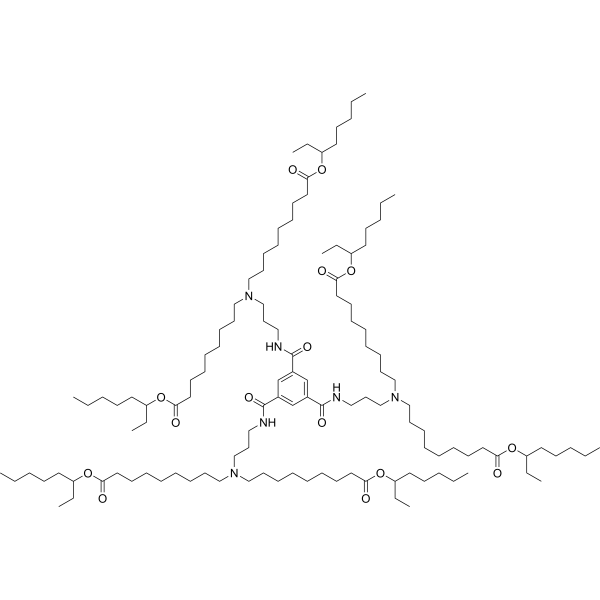
FTT5 LLNs are functionalized lipid-like nanoparticles for in vivo mRNA delivery and base editing .
|
-
- HY-159735
-
|
|
|
Cationic Lipids
|
|
Lipid 23 is an ionizable cationic amino lipid that can be used to generate lipid nanoparticles (LNP). Lipid 23 can be used for mRNA delivery .
|
-
- HY-168776
-
|
|
|
Cationic Lipids
|
|
(S)-C12-200 is the (S)-isomer of C12-200 (HY-145405), an ionizable cationic lipid and helper lipid. (S)-C12-200 can be utilized in the formation of lipid nanoparticles and mRNA delivery .
|
-
- HY-171897
-
|
|
|
Cationic Lipids
|
|
E10i-494 is an ionizable cationic branched endosomal disruptor (BEND) lipid. E10i-494 can be used to generate lipid nanoparticles (LNPs) for mRNA delivery in vitro. E10i-494 can enhance transfection efficiency .
|
-
- HY-164191
-
|
|
|
Cap Analogs
|
|
m7(3'Ma-Peg5-FAM)Gppp(2'OMe)ApG ammonium is a FAM-labled cap analogue that can be used for mRNA synthesis. The efficiency of mRNA delivery can be determined by the detection of FAM by flow cytometry, which can be used to track mRNA in cells and in living animals and to screen delivery lipid ratios.
|
-
- HY-172329
-
|
|
|
Cationic Lipids
|
|
Q1-ALC-0315 iodide is a cationic quaternary ammonium lipid derivative of the ionizable cationic lipid ALC-0315 (HY-138170). Q1-ALC-0315-based LNPs can be used for lung-targeted mRNA delivery, which demonstrates high-performing firefly luciferase protein expression in the lungs .
|
-
- HY-164188
-
|
|
|
Cap Analogs
|
|
m7(3'Ma-Cy5)Gppp(2'OMe)ApG ammonium is a Cy5-labled cap analogue that can be used for mRNA synthesis. The efficiency of mRNA delivery can be determined by the detection of Cy5 by flow cytometry, which can be used to track mRNA in cells and in living animals and to screen delivery lipid ratios.
|
-
- HY-164187
-
|
|
|
Cap Analogs
|
|
m7(3'Ma-Cy7)Gppp(2'OMe)ApG ammonium is a Cy7-labled cap analogue that can be used for mRNA synthesis. The efficiency of mRNA delivery can be determined by the detection of Cy7 by flow cytometry, which can be used to track mRNA in cells and in living animals and to screen delivery lipid ratios.
|
-
- HY-169480
-
|
|
|
Cationic Lipids
|
|
Lipid C2 is an ionizable cationic lipid that has been used in the formation of lipid nanoparticles (LNP) for mRNA delivery in vivo. LNPs containing Lipid C2 and encapsulating an mRNA reporter selectively accumulate in the liver and spleen but not the heart, lungs, or kidneys in mice. LNP containing Lipid C2 and encapsulating mRNA encoding the Epstein-Barr virus (EBV) protein latent membrane protein 2 (LMP-2), in combination with an anti-programmed cell death protein 1 (PD-1) antibody, decrease tumor volume and reverse T cell exhaustion, as well as increase the percentage of CD3 +CD8 + central and CD3 +CD8 + effector memory T cells and decrease the percentage of CD3 + T cells expressing Pd-1, in the spleen in a CT26 murine EBV-infected colon cancer model .
|
-
- HY-175409
-
|
|
|
Cationic Lipids
|
|
Lipid 35 hydrochloride is an ionizable lipid that can be used for the generation of lipid nanoparticles (LNPs). Lipid 35 hydrochloride can be used for lung-specific mRNA delivery for metastatic lung tumors research .
|
-
- HY-185284
-
|
|
|
Cationic Lipids
|
|
MeDZ lipid is a zwitterion-type ionizable endosomal membrane destabilizer and anti-inflammatory agent that promotes endosomal escape. When incorporated into LNP formulations, MeDZ lipid enhances mRNA expression in lymph node antigen-presenting cells and promotes cytotoxic T cell activation. MeDZ lipid is compatible with existing targeted nanoparticle formulations to improve mRNA delivery efficiency .
|
-
- HY-169478
-
|
|
|
Cationic Lipids
|
|
Lipid N2-3L is an ionizable cationic lipid (pKa = 8.99) that can be used to generate supramolecular lipid nanoparticles (SMLNPs) for mRNA delivery. Lipid nanoparticles formed by encapsulating a luciferase reporter gene with Lipid N2-3L were detected to accumulate in the lymph nodes of mice, indicating that they can effectively enter the mouse immune system. Lipid nanoparticles formed by encapsulating ovalbumin mRNA and the TLR7/8 agonist Resiquimod (HY-13740) with Lipid N2-3L were able to reduce tumor volume and increase survival in the MC-38-OVA mouse colon cancer model. Lipid N2-3L can be used in the research of drug delivery for cancer-related therapies .
|
Your information is safe with us. * Required Fields.
Inquiry Information
- Product Name:
- Cat. No.:
- Quantity:
- MCE Japan Authorized Agent:








