Search Result
Results for "
met+inhibitor
" in MedChemExpress (MCE) Product Catalog:
5
Isotope-Labeled Compounds
| Cat. No. |
Product Name |
Target |
Research Areas |
Chemical Structure |
-
- HY-50878
-
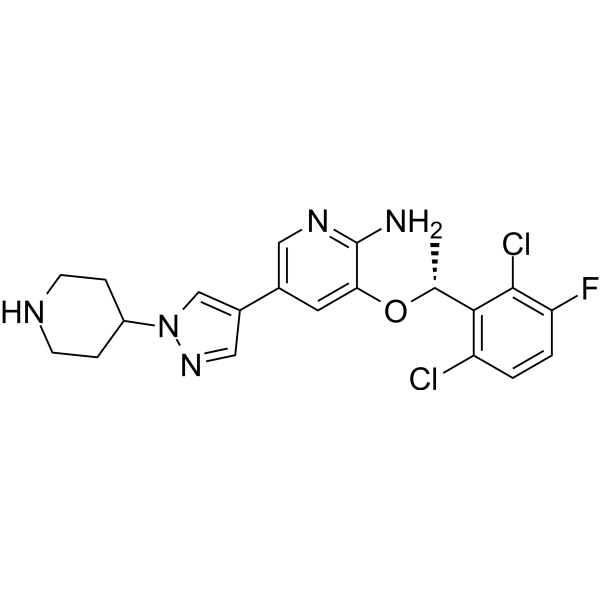
Crizotinib
Maximum Cited Publications
86 Publications Verification
PF-02341066
|
Ligands for Target Protein for PROTAC
Anaplastic lymphoma kinase (ALK)
c-Met/HGFR
ROS Kinase
|
Cancer
|
|
Crizotinib (PF-02341066) is an orally bioavailable, ATP-competitive ALK and c-Met inhibitor with IC50s of 20 and 8 nM, respectively. Crizotinib inhibits tyrosine phosphorylation of NPM-ALK and tyrosine phosphorylation of c-Met with IC50s of 24 and 11 nM in cell-based assays, respectively. Crizotinib is also a ROS1 inhibitor. Crizotinib has effective tumor growth inhibition .
|
-
-
- HY-15959
-
|
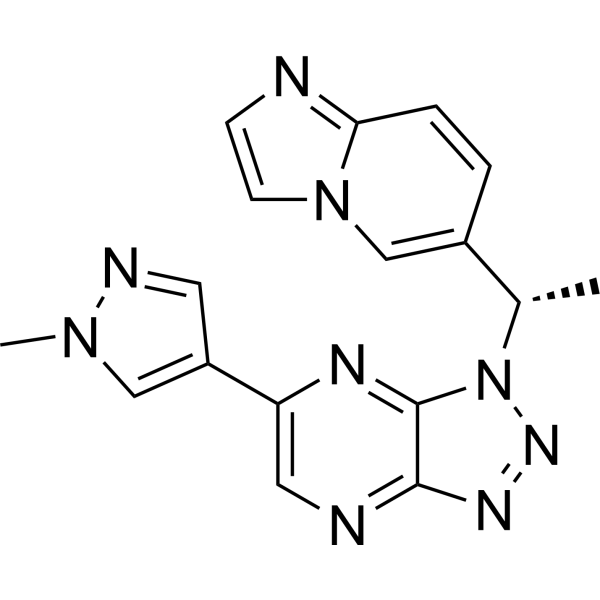
Volitinib; HMPL-504; AZD-6094
|
c-Met/HGFR
|
Cancer
|
|
Savolitinib (AZD-6094) is a potent, highly selective, and orally bioavailable c-Met inhibitor with IC50 s of 5 nM and 3 nM for c-Met and p-Met, respectively. Savolitinib (AZD-6094) selectively binds to and inhibits the activation of c-Met in an ATP-competitive manner, and disrupts c-Met signal transduction pathways. Antineoplastic activity .
|
-
-
- HY-14721
-
|
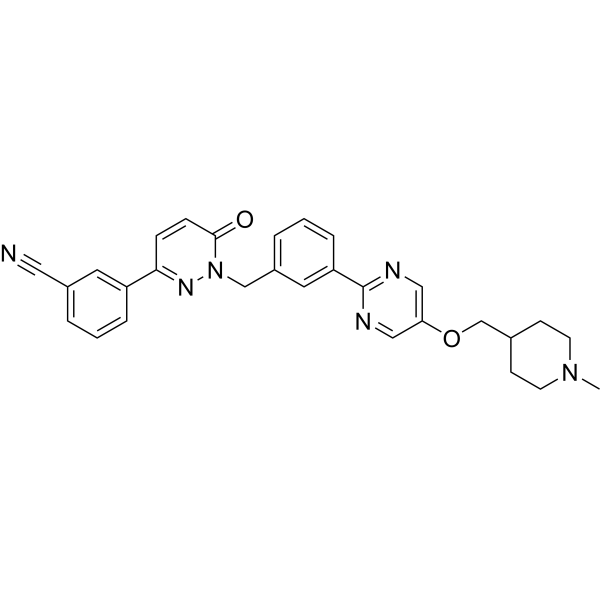
EMD-1214063
|
c-Met/HGFR
Autophagy
|
Cancer
|
|
Tepotinib (EMD-1214063) is an orally active and highly selective, reversible, ATP-competitive c-Met inhibitor with an IC50 of 3 nM, >200-fold selective for c-Met than IRAK4, TrkA, Axl, IRAK1, and Mer. Tepotinib inhibits c-Met phosphorylation and induces autophagy. Tepotinib has antitumor effects .
|
-
-
- HY-103714
-
-
-
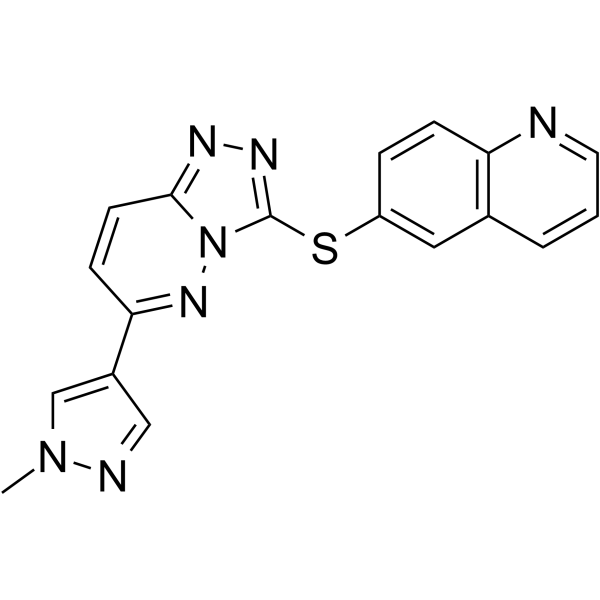
- HY-50878A
-
|
PF-02341066 hydrochloride
|
Anaplastic lymphoma kinase (ALK)
c-Met/HGFR
ROS Kinase
Autophagy
|
Cancer
|
|
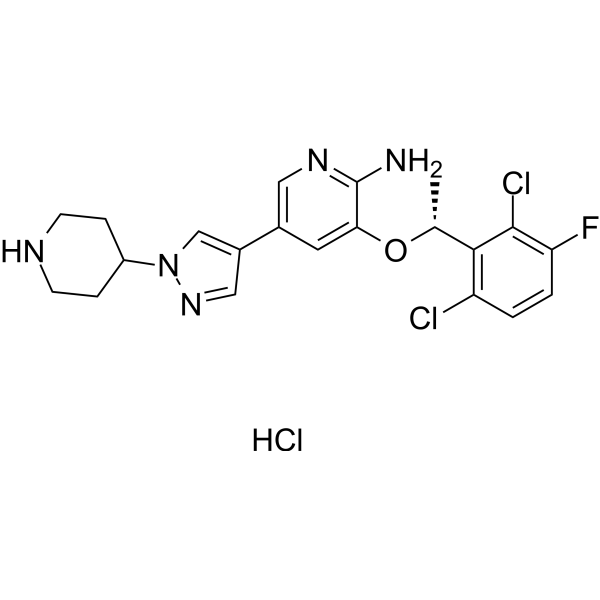
Crizotinib hydrochloride (PF-02341066 hydrochloride) is an orally bioavailable, selective, and ATP-competitive dual ALK and c-Met inhibitor with IC50s of 20 and 8 nM, respectively. Crizotinib hydrochloride (PF-02341066 hydrochloride) inhibits tyrosine phosphorylation of NPM-ALK and tyrosine phosphorylation of c-Met with IC50s of 24 and 11 nM in cell-based assays, respectively. It is also a ROS proto-oncogene 1 (ROS1) inhibitor. Crizotinib hydrochloride (PF-02341066 hydrochloride) has effective tumor growth inhibition .
|
-
-
- HY-15514
-
|
LY2801653
|
c-Met/HGFR
FLT3
ROS Kinase
Discoidin Domain Receptor
|
Cancer
|
|
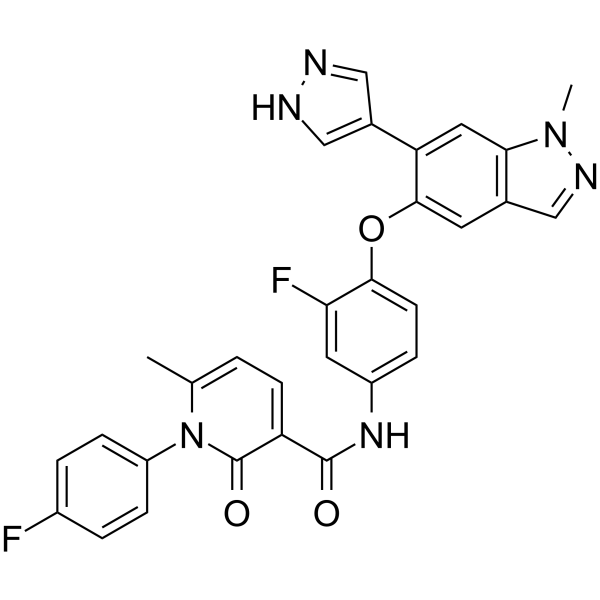
Merestinib (LY2801653) is a potent, orally bioavailable c-Met inhibitor (Ki=2 nM) with anti-tumor activities. Merestinib (LY2801653) also has potent activity against MST1R (IC50=11 nM), FLT3 (IC50=7 nM), AXL (IC50=2 nM), MERTK (IC50=10 nM), TEK (IC50=63 nM), ROS1, DDR1/2 (IC50=0.1/7 nM) and MKNK1/2 (IC50=7 nM) .
|
-
-
- HY-12014
-
-
-
- HY-10497
-
|
|
c-Met/HGFR
VEGFR
|
Cancer
|
|
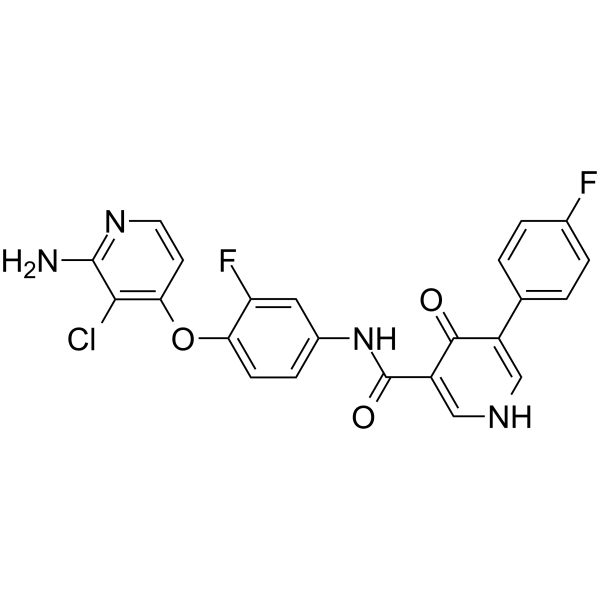
BMS-794833 is a VEGFR2 and Met inhibitor extracted from patent WO2009094417, compound example 1; has IC50s of 15 and 1.7 nM, respectively.
|
-
-
- HY-12019
-
|
|
c-Met/HGFR
|
Cancer
|
|
SGX523 is a exquisitely selective and ATP-competitive MET inhibitor. SGX523 potently inhibits MET with an IC50 of 4 nM and is >1,000-fold selective versus other protein kinases. Antitumor activity .
|
-
-
- HY-103714A
-
-
-
- HY-18711A
-
|
Metatinib anhydrous; c-Met inhibitor 2
|
c-Met/HGFR
VEGFR
|
Cancer
|
|
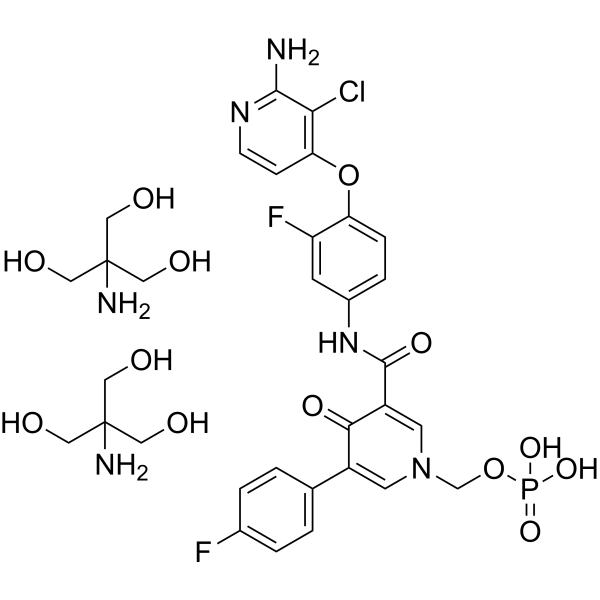
SCR-1481B1 (Metatinib anhydrous) is a potent compound that has activity against cancers dependent upon Met activation and also has activity against cancers as a VEGFR inhibitor.
|
-
-
- HY-116000
-
|
Gumarontinib; SCC244
|
c-Met/HGFR
|
Cancer
|
|
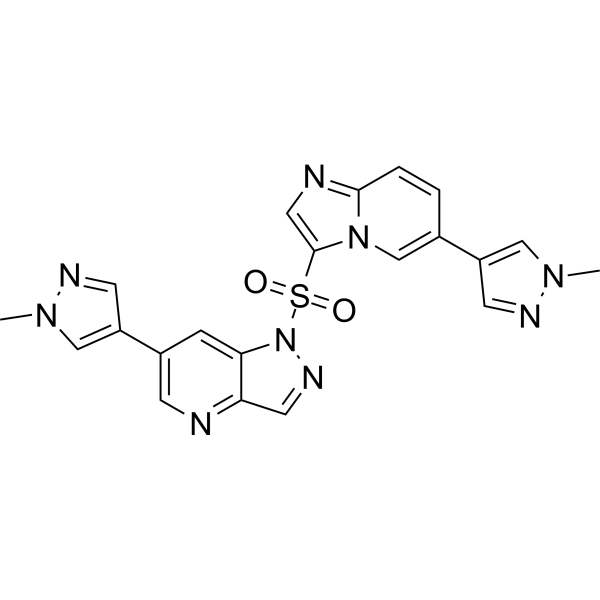
Glumetinib (SCC244) is a highly selective, orally bioavailable, ATP-competitive c-Met inhibitor with an IC50 of 0.42 nM. Glumetinib has greater than 2400-fold selectivity for c-Met over those 312 kinases evaluated, including the c-Met family member RON and highly homologous kinases Axl, Mer, TyrO3. Antitumor activity .
|
-
-
- HY-15735
-
|
|
c-Met/HGFR
|
Cancer
|
|
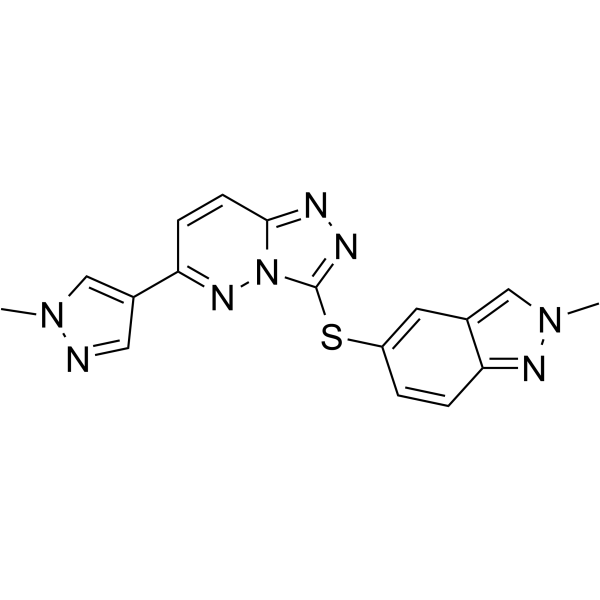
c-Met inhibitor 1 is an orally active c-Met inhibitor. c-Met inhibitor 1 can inhibit c-Met phosphorylation with an IC50 of 0.010 μM. c-Met inhibitor 1 has antitumor activity and can be used for the research of tumors such as gastric cancer, pancreatic cancer and malignant glioma .
|
-
-
- HY-14723
-
|
|
c-Met/HGFR
|
Cancer
|
|
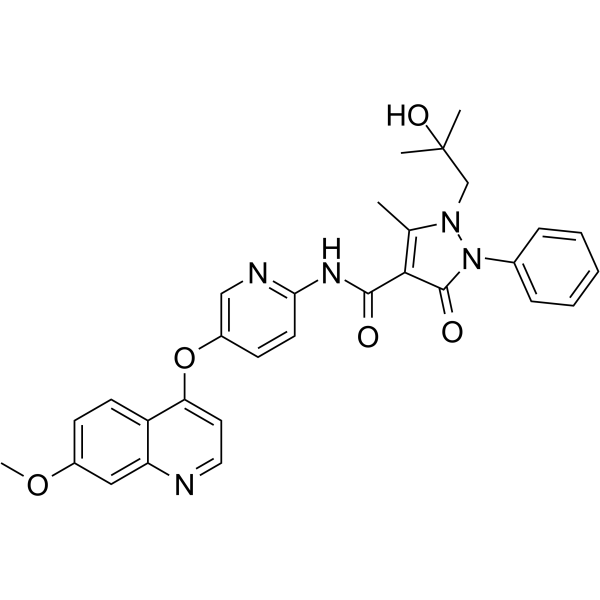
AMG-458 is a potent, selective and orally bioavailable c-Met inhibitor, with Ki values of 1.2 nM and 2.0 nM for human and mouse c-Met, respectively .
|
-
-
- HY-15514A
-
|
LY2801653 dihydrochloride
|
c-Met/HGFR
FLT3
ROS Kinase
Discoidin Domain Receptor
|
Cancer
|
|
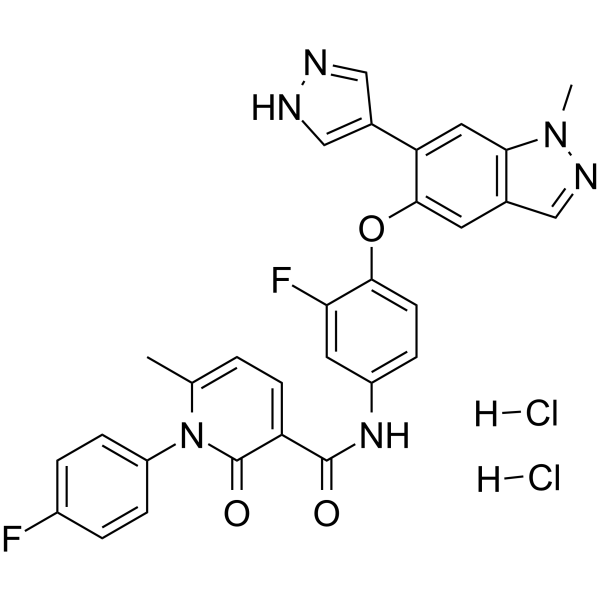
Merestinib dihydrochloride (LY2801653 dihydrochloride) is a potent, orally bioavailable c-Met inhibitor (Ki=2 nM) with anti-tumor activities. Merestinib dihydrochloride also has potent activity against MST1R (IC50=11 nM), FLT3 (IC50=7 nM), AXL (IC50=2 nM), MERTK (IC50=10 nM), TEK (IC50=63 nM), ROS1, DDR1/2 (IC50=0.1/7 nM) and MKNK1/2 (IC50=7 nM) .
|
-
-
- HY-14721R
-
|
EMD-1214063 (Standard)
|
Reference Standards
c-Met/HGFR
Autophagy
|
Cancer
|
|
Tepotinib (Standard) is the analytical standard of Tepotinib. This product is intended for research and analytical applications. Tepotinib (EMD-1214063) is an orally active and highly selective, reversible, ATP-competitive c-Met inhibitor with an IC50 of 3 nM, >200-fold selective for c-Met than IRAK4, TrkA, Axl, IRAK1, and Mer. Tepotinib inhibits c-Met phosphorylation. Tepotinib has antitumor effects .
|
-

-
- HY-50703
-
MK-2461
1 Publications Verification
|
c-Met/HGFR
|
Cancer
|
|
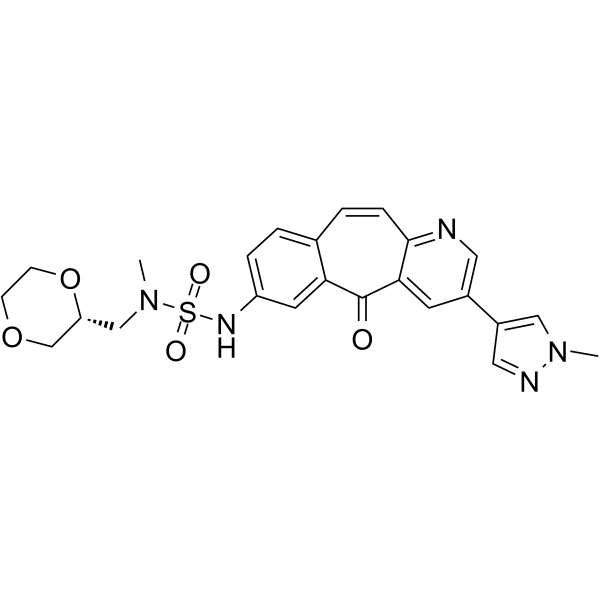
MK-2461 is an ATP-competitive, selective and orally active wild-type and mutant c-Met inhibitor (IC50s: 0.4-2.5 nM). MK-2461 also inhibits Ron (IC50 of 7 nM) and Flt1 (IC50 of 10 nM), MK-2461 shows selective for c-MET over other kinases (lC50s = 22-7800 nM). MK-2461 can be used for the study of cancer, such as gastric cancer .
|
-
-
- HY-160506
-
|
|
PROTACs
c-Met/HGFR
Apoptosis
|
Cancer
|
|
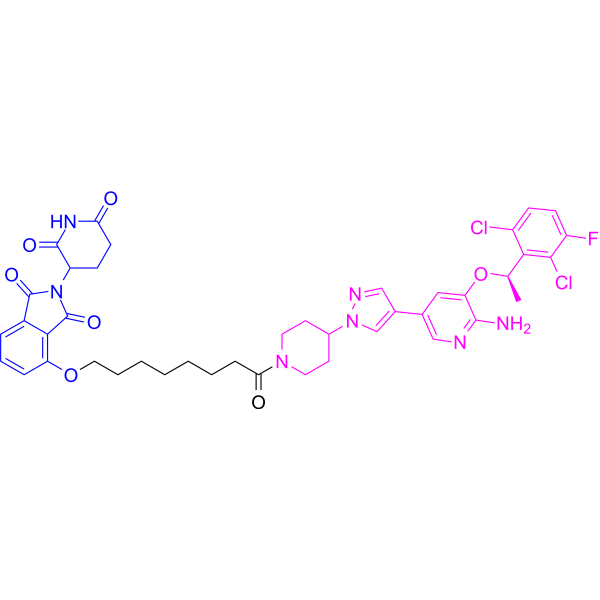
PRO-6E is an oral active PROTAC based on Cereblon ligand, and induces the degradation of MET with maximum degradation of 81.9% at 1 μM in MKN-45 cells. PRO-6E inhibits tumor growth in vivo and in vitro. PRO-6E induces cell apoptosis and induces cell arrest (Sturcture Note:(Blue: Cereblon ligand (HY-103596), Black: linker;Pink: ALK/c-Met inhibitor Crizotinib (HY-50878)) .
|
-
-
- HY-P1415A
-
-
-
- HY-15456
-
|
|
c-Met/HGFR
|
Cancer
|
|
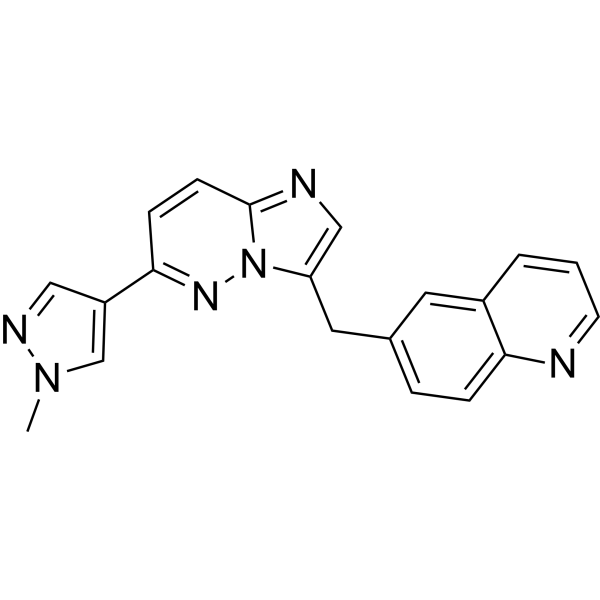
NVP-BVU972 is an selective and potent Met inhibitor, with an IC50 of 14 nM. NVP-BVU972 also exhibits good anti-proliferative activity against Met with drug-resistant mutations and inhibits phosphorylation. NVP-BVU972 can be used in study of cancer .
|
-
-
- HY-147040
-
|
|
c-Met/HGFR
Apoptosis
|
Cancer
|
|
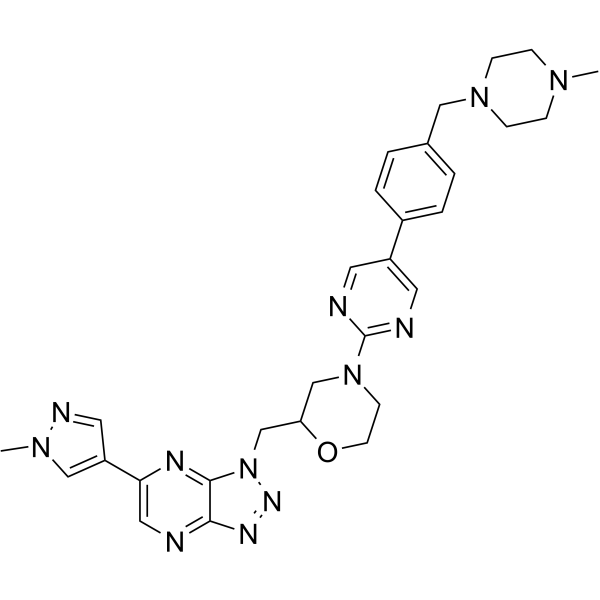
ABN401 is an orally active and selective ATP-competitive c-MET inhibitor with an IC50 of 10 nM. ABN401 is cytotoxic to MET-addicted cancer cells with the IC50 of 2-43 nM. ABN401 has bioavailability in rats and dogs of 42.1-56.2% and 27.4-37.7%, respectively. ABN401 has antitumor activity .
|
-
-
- HY-124761
-
|
|
Polo-like Kinase (PLK)
Autophagy
Mitosis
|
Cancer
|
|
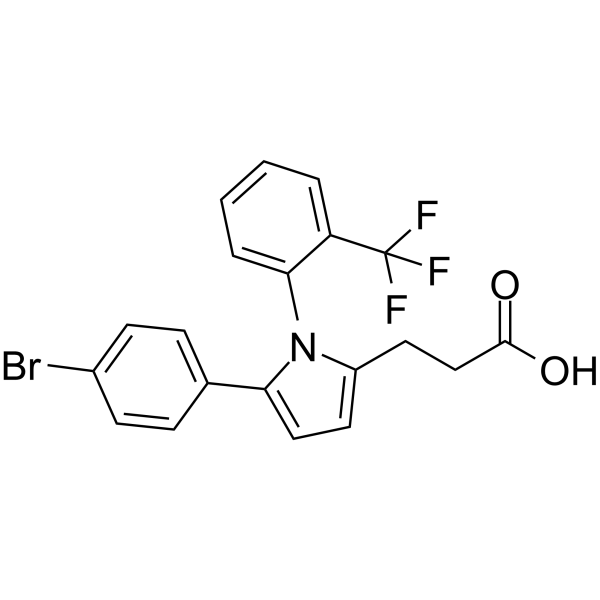
Poloppin is a potent, cell penetrant inhibitor of the mitotic Polo-like kinase (PLK) (IC50=26.9 μM) and prevents the protein-protein interaction via the Polo-box domain (PBD) (Kd= 29.5 μM). Poloppin selectively kills cells expressing mutant KRAS, enhancing death in mitosis. Poloppin is used for the study of KRAS-mutant cancers as single agents, or in combination with c-MET inhibitors .
|
-
-
- HY-50878S
-
|
PF-02341066-d5
|
Anaplastic lymphoma kinase (ALK)
c-Met/HGFR
ROS Kinase
Autophagy
|
Cancer
|
|
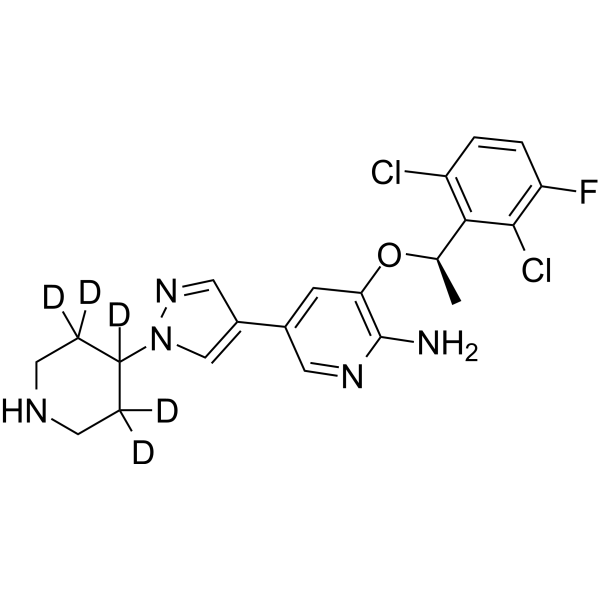
Crizotinib-d5 is the deuterium labeled Crizotinib. Crizotinib (PF-02341066) is an orally bioavailable, ATP-competitive ALK and c-Met inhibitor with IC50s of 20 and 8 nM, respectively. Crizotinib inhibits tyrosine phosphorylation of NPM-ALK and tyrosine phosphorylation of c-Met with IC50s of 24 and 11 nM in cell-based assays, respectively. Crizotinib is also a ROS1 inhibitor. Crizotinib has effective tumor growth inhibition .
|
-
-
- HY-126320
-
|
|
EGFR
c-Met/HGFR
|
Cancer
|
|
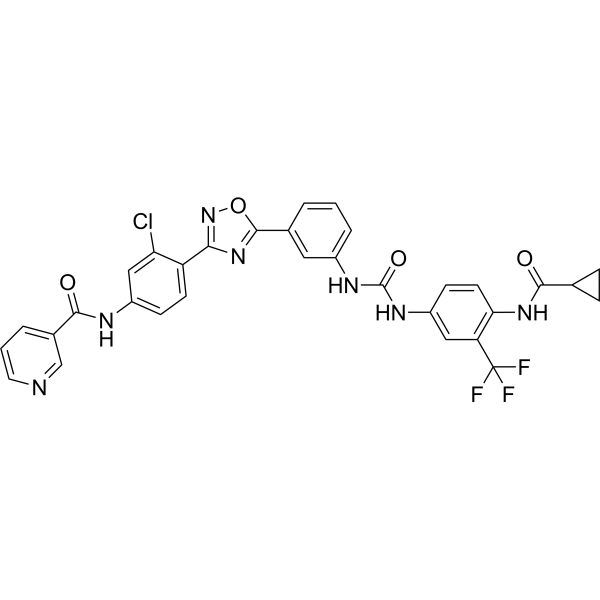
EGFR-IN-8 is a dual EGFR and c-Met inhibitor, compound 48. EGFR-IN-8 can be a promising candidate for further development to target EGFR TKI-resistant NSCLC .
|
-
-
- HY-14721A
-
|
EMD-1214063 hydrochloride
|
c-Met/HGFR
Autophagy
|
Cancer
|
|
Tepotinib (EMD-1214063) hydrochloride is an orally active and highly selective, reversible, ATP-competitive c-Met inhibitor with an IC50 of 3 nM, >200-fold selective for c-Met than IRAK4, TrkA, Axl, IRAK1, and Mer. Tepotinib hydrochloride inhibits c-Met phosphorylation and induces autophagy. Tepotinib hydrochloride has antitumor effects .
|
-

-
- HY-133083
-
BAY-474
1 Publications Verification
|
c-Met/HGFR
|
Cancer
|
|
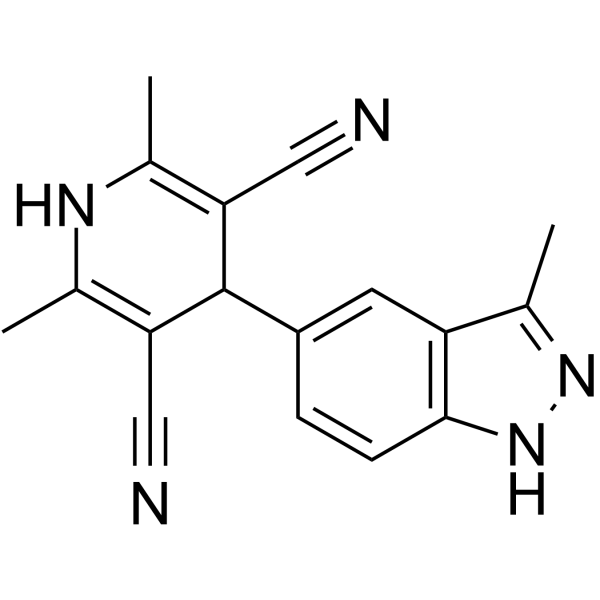
BAY-474 is a tyrosine-protein kinase c-Met inhibitor. BAY-474 acts as an epigenetics probe .
|
-
-
- HY-18711
-
|
Metatinib free base; c-Met inhibitor 2 free base
|
c-Met/HGFR
VEGFR
|
Cancer
|
|
SCR-1481B1 free base, also known as Metatinib free base, is a small molecule receptor kinase inhibitor that targets both c-MET and vascular endothelial growth factor receptor 2 (VEGFR2) .
|
-

-
- HY-174387
-
|
|
c-Met/HGFR
|
Cancer
|
|
KIN-8741 is a highly selective Type IIb c-Met inhibitor. KIN-8741 has broad activity against c-Met kinase mutations. KIN-8741 shows antitumor activity in MET gene amplified and exon 14 deleted non-small cell lung cancer models. KIN-8741 can be used in the research of c-Met driven cancers, especially advanced tumors carrying MET exon 14 jump mutations, acquired drug resistance mutations, etc .
|
-

-
- HY-P1415
-
-
-
- HY-151905
-
|
|
c-Met/HGFR
|
Cancer
|
|
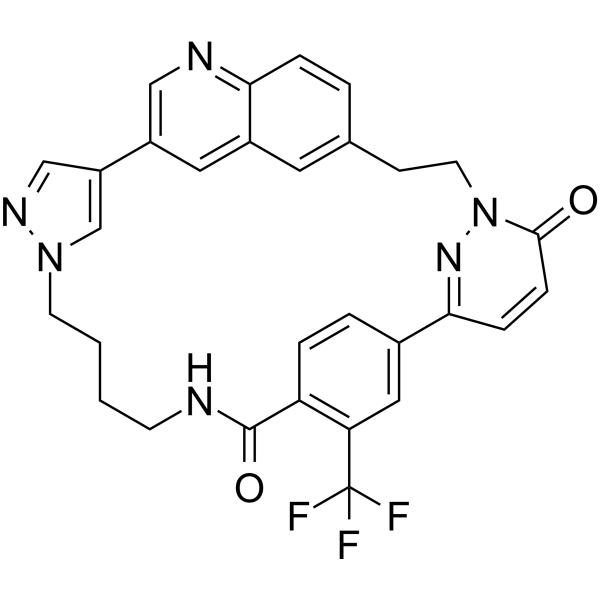
D6808 is a highly selective and potent c‑Met inhibitor with an IC50 value of 2.9 nM. D6808 induces cell apoptosis and cell cycle arrest. D6808 can be used for the research of NSCLC and gastric cancers .
|
-
-
- HY-123262
-
|
|
c-Met/HGFR
VEGFR
|
Cancer
|
|
SU11606 is a Met inhibitor, with an average IC50 of 0.17 μM. SU11606 shows inhibitory activity on Ron, FLK-1, with IC50s of 2.5 μM and 0.18 μM, respectively. SU11606 can be used in the research of tumors .
|
-

-
- HY-50878AS
-
|
PF-02341066-d9 hydrochloride
|
c-Met/HGFR
Autophagy
Anaplastic lymphoma kinase (ALK)
ROS Kinase
Isotope-Labeled Compounds
|
Cancer
|
|
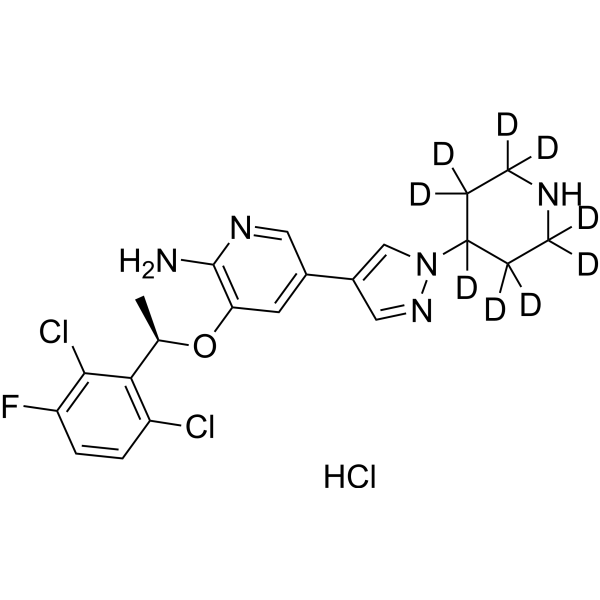
Crizotinib-d9 hydrochloride is deuterated labeled Crizotinib hydrochloride (HY-50878A). Crizotinib hydrochloride (PF-02341066 hydrochloride) is an orally bioavailable, selective, and ATP-competitive dual ALK and c-Met inhibitor with IC50s of 20 and 8 nM, respectively. Crizotinib hydrochloride (PF-02341066 hydrochloride) inhibits tyrosine phosphorylation of NPM-ALK and tyrosine phosphorylation of c-Met with IC50s of 24 and 11 nM in cell-based assays, respectively. It is also a ROS proto-oncogene 1 (ROS1) inhibitor. Crizotinib hydrochloride (PF-02341066 hydrochloride) has effective tumor growth inhibition .
|
-
-
- HY-120908
-
|
|
c-Met/HGFR
|
Cancer
|
|
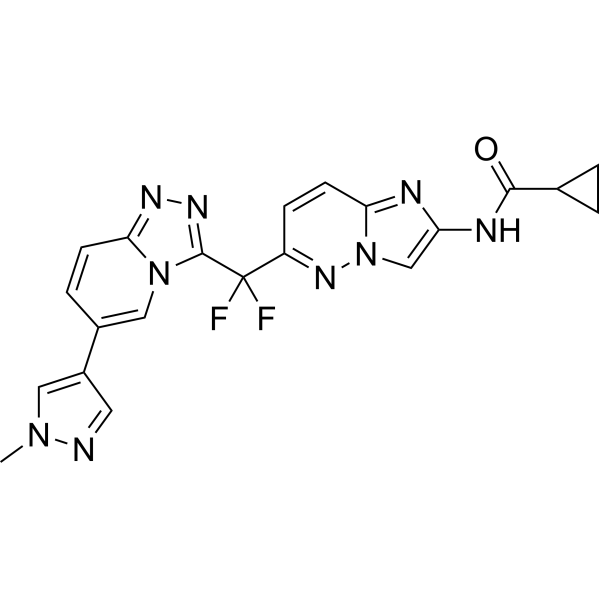
c-Met-IN-16 is a c-Met inhibitor that can be used for cancer research .
|
-
-
- HY-162773
-
|
|
c-Met/HGFR
|
Cancer
|
|
MET-IN-1 (Compound 13) is an orally active MET inhibitor. MET-IN-1 has antitumor activity .
|
-

-
- HY-101773
-
|
|
c-Met/HGFR
|
Cancer
|
|
c-Met-IN-2 is a potent, selective and orally available c-Met inhibitor, with an IC50 of 0.6 nM, with antitumor activity.
|
-
-
- HY-101031
-
|
|
c-Met/HGFR
|
Cancer
|
|
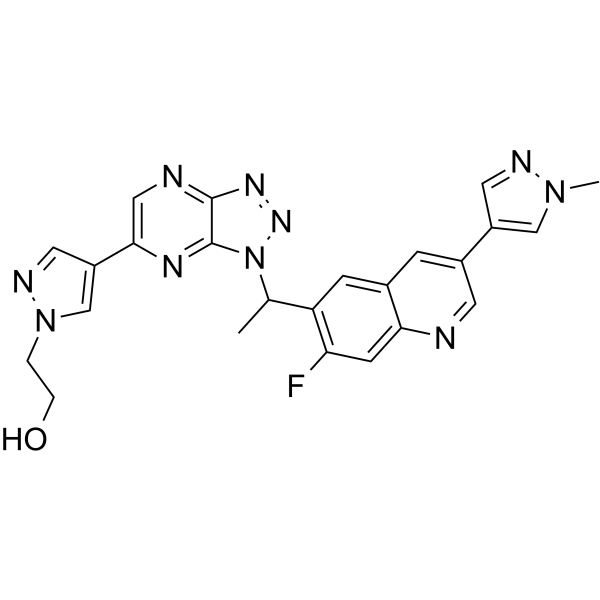
c-met-IN-1 (compound 16) is a potent and selective c-Met inhibitor, with IC50 of 1.1 nM, with antitumor activity. .
|
-
-
- HY-157302
-
|
|
c-Met/HGFR
|
Cancer
|
|
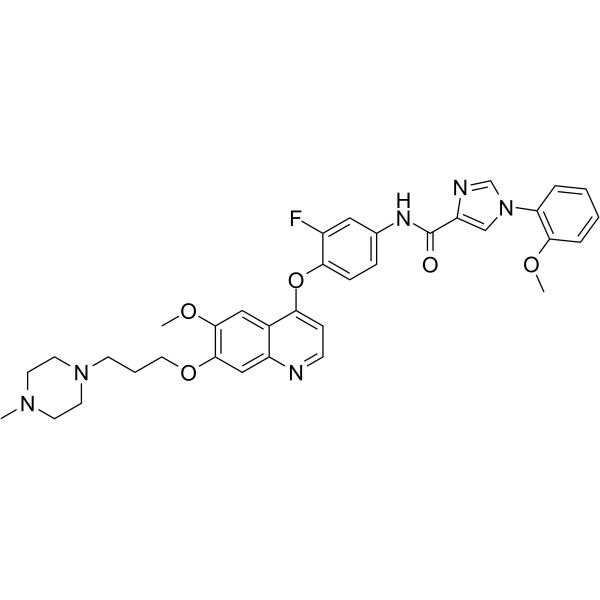
c-Met-IN-21 (compound 54) is a c-met inhibitor with an IC50 value of 0.45? nM, and shows anti-tumor efficacy in vivo .
|
-
-
- HY-116592
-
|
|
c-Met/HGFR
|
Cancer
|
|
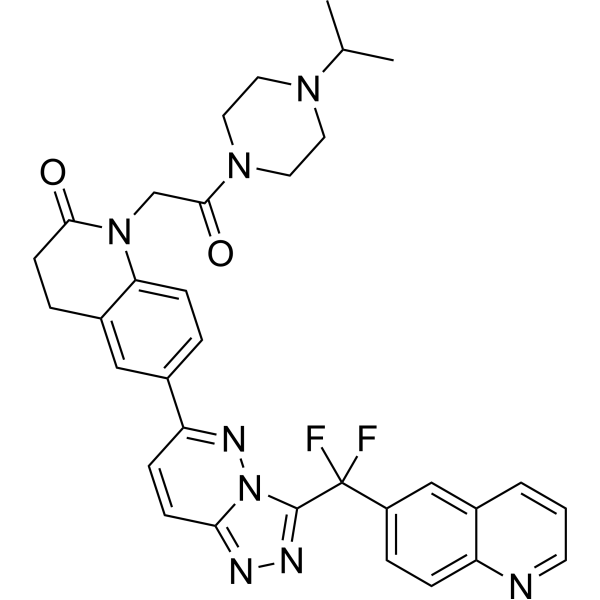
SOMCL-863 is a selective and orally active c-Met inhibitor with antitumor activity in vitro and in vivo. SOMCL-863 can be utilized in cancer research .
|
-

-
- HY-157519
-
|
|
Apoptosis
c-Met/HGFR
|
Cancer
|
|
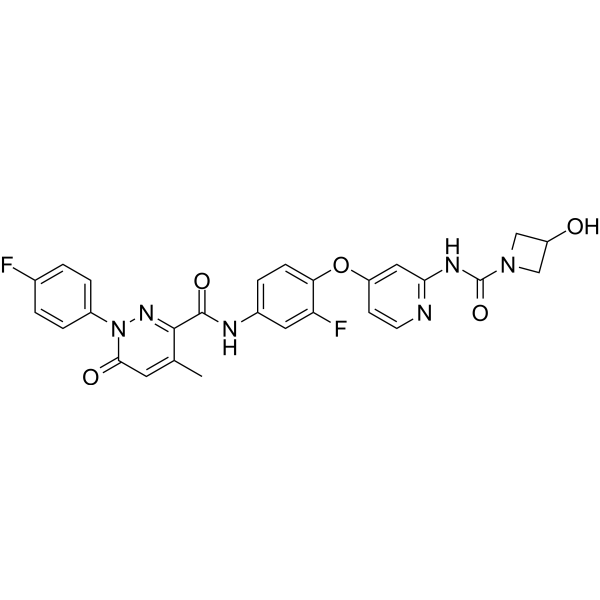
LAH-1 is a c-Met inhibitor with oral activity and membrane permeability with an IC50 of 49 nM. LAH-1 has anticancer activity and can induce apoptosis, migration, and invasion .
|
-
-
- HY-164394
-
|
|
c-Met/HGFR
|
Cancer
|
|
EMD 1204831 is a potent and highly selective c-Met inhibitor which selectively suppresses the c-Met receptor tyrosine kinase activity with an IC50 of 9 nM. EMD 1204831 can be utilized in cancer research .
|
-

-
- HY-146884
-
|
|
c-Met/HGFR
VEGFR
|
Cancer
|
|
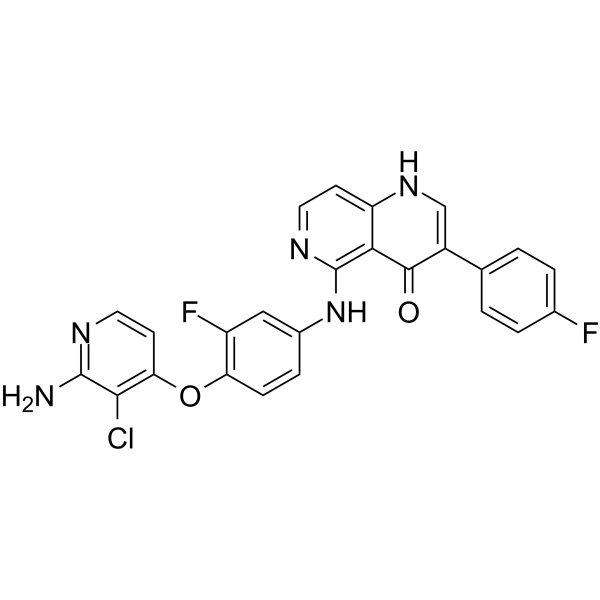
MET kinase-IN-3 (compound 8) is an orally active and potent MET inhibitor, with an IC50 of 9.8 nM. MET kinase-IN-3 shows good and broad-spectrum antiproliferative activity against cancer cell lines .
|
-
-
- HY-143463
-
|
|
c-Met/HGFR
|
Cancer
|
|
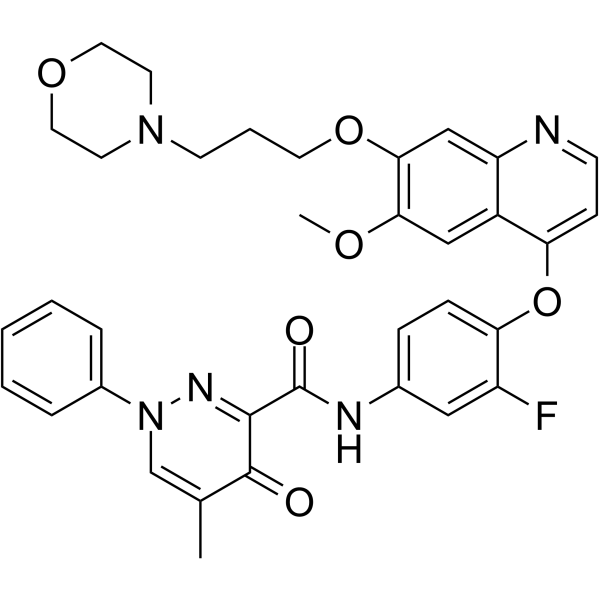
AC-386 is a highly potent c-Met inhibitor with IC50 value of 7.42 nM. AC-386 has antiproliferative activities against certain cancer cell lines. AC-386 can be used for researching anti-cancer resistance .
|
-
-
- HY-14510
-
|
|
c-Met/HGFR
|
Cardiovascular Disease
Cancer
|
|
PF 04254644 is an orally active c-Met inhibitor. PF 04254644 inhibits mesenchymal transfer factor/hepatocyte growth factor receptor. PF 04254644 induces myocardial degeneration in rats. PF 04254644 may be used in research on cardiovascular disease and cancer .
|
-

-
- HY-50683S
-
|
|
c-Met/HGFR
|
Cancer
|
|
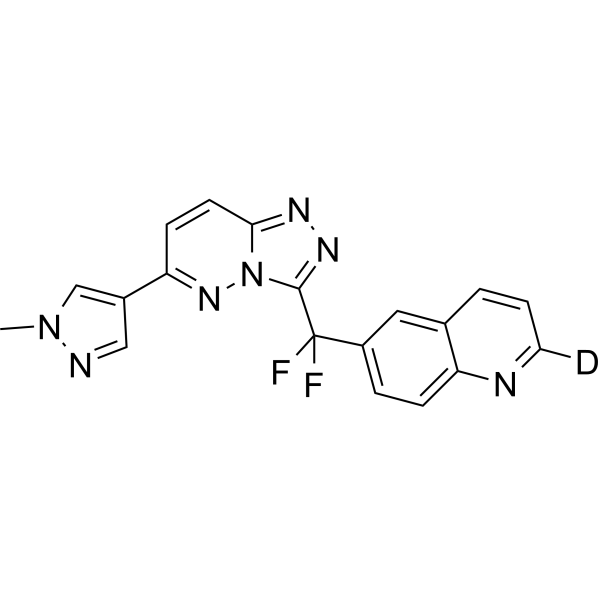
JNJ-38877605-d1 (compound DO-2) is a highly selective MNNG HOS transforming (MET) inhibitor. JNJ-38877605-d1 is thought to diminish the formation of the Aldehyde Oxidase 1 inactive metabolite M3 .
|
-
-
- HY-150576
-
|
|
c-Met/HGFR
|
Cancer
|
|
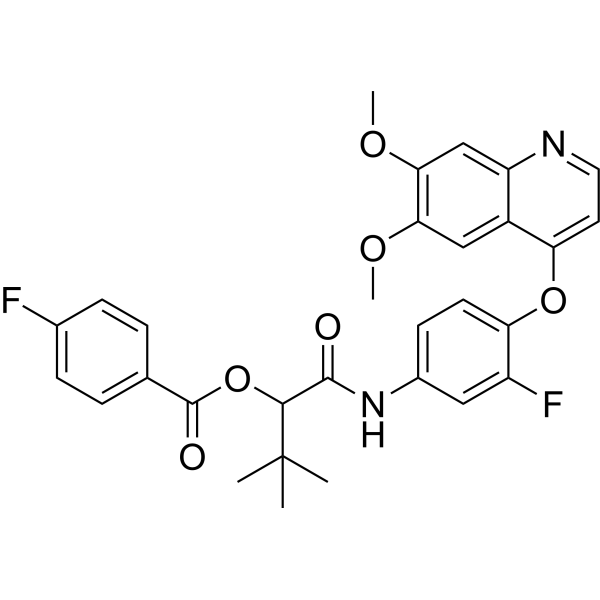
c-Met-IN-13 is a potent c-Met inhibitor with an IC50 value of 2.43 nM. c-Met-IN-13 shows excellent cytotoxicity for cancer cells. c-Met-IN-13 shows antiproliferative activity in a concentration- and time- dependent manner. c-Met-IN-13 has the potential for the research of cancer .
|
-
-
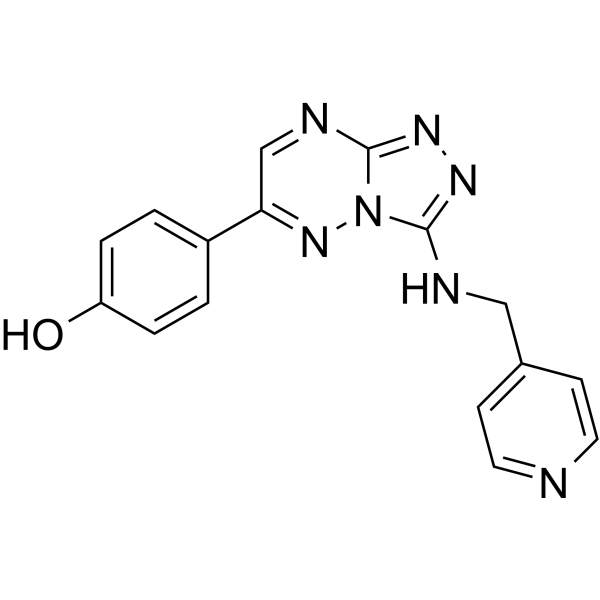
- HY-161353
-
|
|
P-glycoprotein
c-Met/HGFR
|
Cancer
|
|
c-Met-IN-23 (Compound 12g) is a c-Met inhibitor (IC50 = 0.052 μM for c-Met). c-Met-IN-23 also inhibits MDR1 and MRP1/2 pumps in the cancerous HepG2 and BxPC3 cells. c-Met-IN-23 is an anticancer agent .
|
-
-
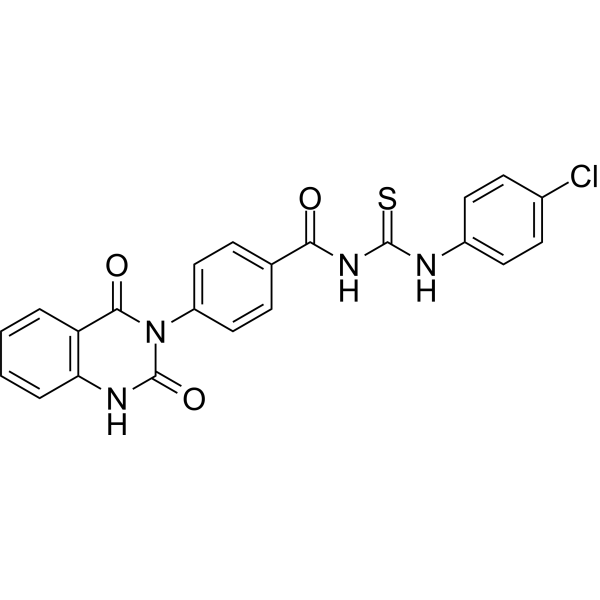
- HY-149675
-
|
|
VEGFR
c-Met/HGFR
|
Cancer
|
|
VEGFR-2/c-Met-IN-2 (compound 3e) is a VEGFR-2/c-Met inhibitor, with IC50 values of 83 and 48 nM, respectively. VEGFR-2/c-Met-IN-2 exhibits cytotoxic activity against HCT-116 cell line (IC50: 3.403 µM) .
|
-
-
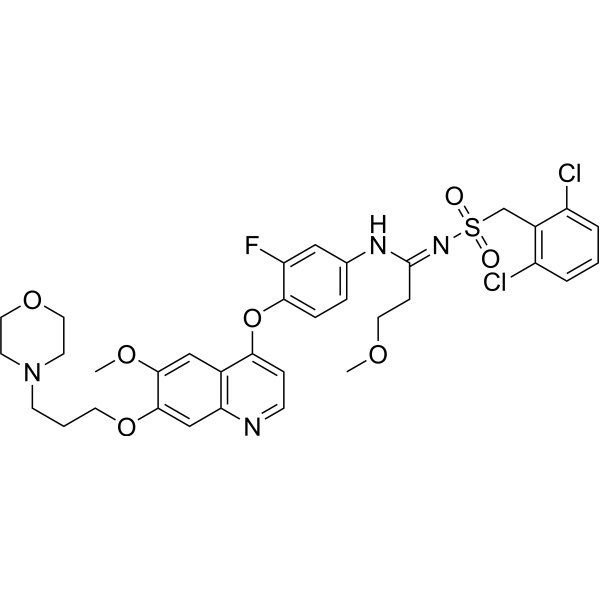
- HY-156098
-
|
|
c-Met/HGFR
|
Cancer
|
|
c-Met-IN-19 (Compound 21j) is a c-Met inhibitor (IC50: 1.99 nM). c-Met-IN-19 shows cytotoxicity against A549, HT-29, SGC-7901, MDA-MB-231 cells with IC50s of 0.25, 0.36, 0.98, 0.76 μM .
|
-
-
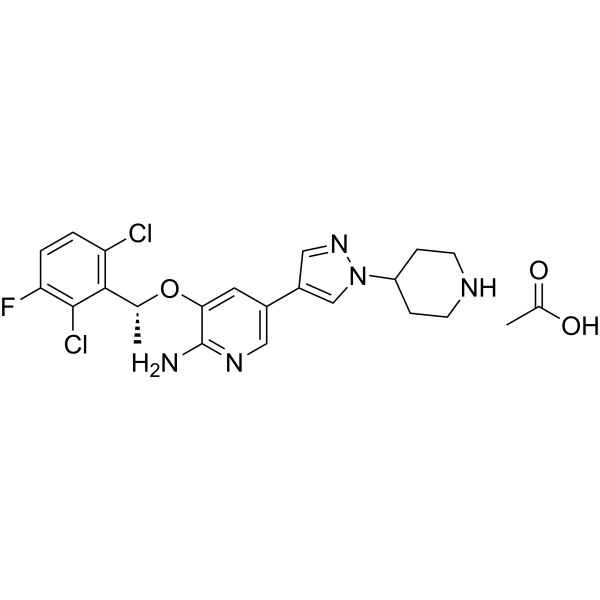
- HY-50878B
-
|
PF-02341066 acetate
|
Anaplastic lymphoma kinase (ALK)
ROS Kinase
c-Met/HGFR
|
Cancer
|
|
Crizotinib (PF-02341066) acetate is an orally bioavailable, ATP-competitive ALK and c-Met inhibitor with IC50s of 20 and 8 nM, respectively. Crizotinib acetate inhibits tyrosine phosphorylation of NPM-ALK and tyrosine phosphorylation of c-Met with IC50s of 24 and 11 nM in cell-based assays, respectively. Crizotinib acetate is also a ROS1 inhibitor. Crizotinib acetate has effective tumor growth inhibition .
|
-
-
- HY-124267
-
|
SOMG-833
|
c-Met/HGFR
|
Cancer
|
|
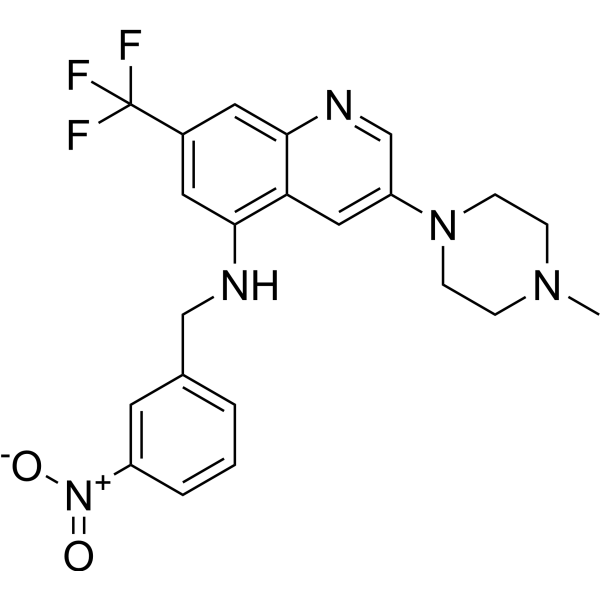
Zgwatinib (SOMG-833) is a potent, selective, and ATP-competitive c-MET inhibitor, with an IC50 of 0.93 nM against c-MET, over 10,000-fold more potent compared with 19 tyrosine kinases (including c-MET family members and highly homologous kinases). Zgwatinib potently inhibits c-MET-driven cell proliferation. Zgwatinib as a potential candidate agent for c-MET-driven human cancers research .
|
-
- HY-50878R
-
|
PF-02341066 (Standard)
|
Reference Standards
Anaplastic lymphoma kinase (ALK)
c-Met/HGFR
ROS Kinase
Autophagy
|
Cancer
|
|
Crizotinib (Standard) is the analytical standard of Crizotinib. This product is intended for research and analytical applications. Crizotinib (PF-02341066) is an orally bioavailable, ATP-competitive ALK and c-Met inhibitor with IC50s of 20 and 8 nM, respectively. Crizotinib inhibits tyrosine phosphorylation of NPM-ALK and tyrosine phosphorylation of c-Met with IC50s of 24 and 11 nM in cell-based assays, respectively. Crizotinib is also a ROS1 inhibitor. Crizotinib has effective tumor growth inhibition .
|
-

- HY-50878S2
-
|
PF-02341066-d9
|
Isotope-Labeled Compounds
|
Cancer
|
|
Crizotinib-d9 (PF-02341066-d9) is deuterium labeled Crizotinib. Crizotinib (PF-02341066) is an orally bioavailable, ATP-competitive ALK and c-Met inhibitor with IC50s of 20 and 8 nM, respectively. Crizotinib inhibits tyrosine phosphorylation of NPM-ALK and tyrosine phosphorylation of c-Met with IC50s of 24 and 11 nM in cell-based assays, respectively. Crizotinib is also a ROS1 inhibitor. Crizotinib has effective tumor growth inhibition .
|
-

- HY-50878S1
-
|
PF-02341066-d8
|
Isotope-Labeled Compounds
ROS Kinase
Autophagy
c-Met/HGFR
Anaplastic lymphoma kinase (ALK)
|
Cancer
|
|
Crizotinib-d8 (PF-02341066-d8) is deuterium labeled Crizotinib. Crizotinib (PF-02341066) is an orally bioavailable, ATP-competitive ALK and c-Met inhibitor with IC50s of 20 and 8 nM, respectively. Crizotinib inhibits tyrosine phosphorylation of NPM-ALK and tyrosine phosphorylation of c-Met with IC50s of 24 and 11 nM in cell-based assays, respectively. Crizotinib is also a ROS1 inhibitor. Crizotinib has effective tumor growth inhibition .
|
-

- HY-149880
-
|
|
c-Met/HGFR
|
Cancer
|
|
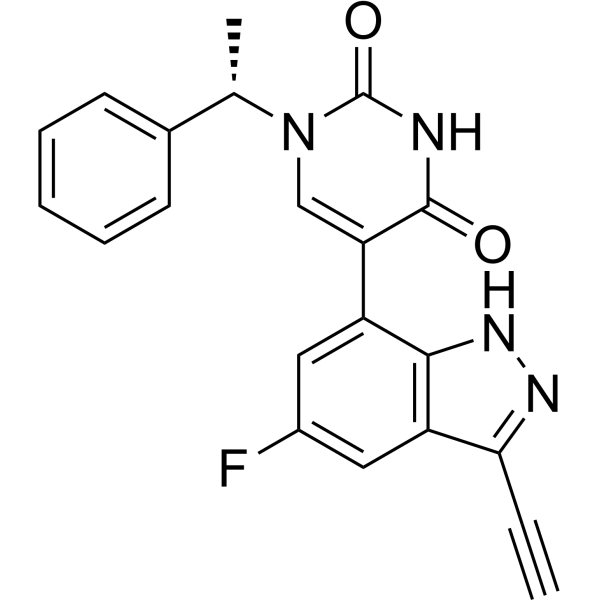
c-Met-IN-18 is ATP competitive type-III c-MET inhibitor of WT and D1228V mutant c-MET. c-Met-IN-18 has inhibitory for WT/D1228V with an IC50 value of 0.013/0.20 e.c-Met-IN-18 can be used for the research of c-MET driven cancers . c-Met-IN-18 is a click chemistry reagent, it contains an Alkyne group and can undergo copper-catalyzed azide-alkyne cycloaddition (CuAAc) with molecules containing Azide groups.
|
-
- HY-164411
-
|
|
c-Met/HGFR
|
Cancer
|
|
KRC-00715 is an effective oral c-Met inhibitor with an IC50 of 9.0 nM, demonstrating high selectivity in gastric cancer cells. KRC-00715 specifically inhibits the growth of c-Met-highly expressed cell lines by inducing G1/S phase arrest, leading to a reduction in downstream signaling pathways, including Akt and Erk, as well as c-Met activity. KRC-00715, in the gastric cancer cell line Hs746, is characterized by an IC50 of 39 nM, and it selectively inhibits the proliferation of c-Met-highly expressed cell lines. KRC-00715 reduces tumor size in Hs746T xenograft mouse models .
|
-

- HY-164100
-
|
|
c-Met/HGFR
|
Cancer
|
|
Antimetastatic agent-1 (Compound A-23) is a MET inhibitor. Antimetastatic agent-1 can inhibit cancer metastasis .
|
-

- HY-103714AR
-
|
X-396 dihydrochloride (Standard)
|
Reference Standards
Anaplastic lymphoma kinase (ALK)
c-Met/HGFR
|
Cancer
|
|
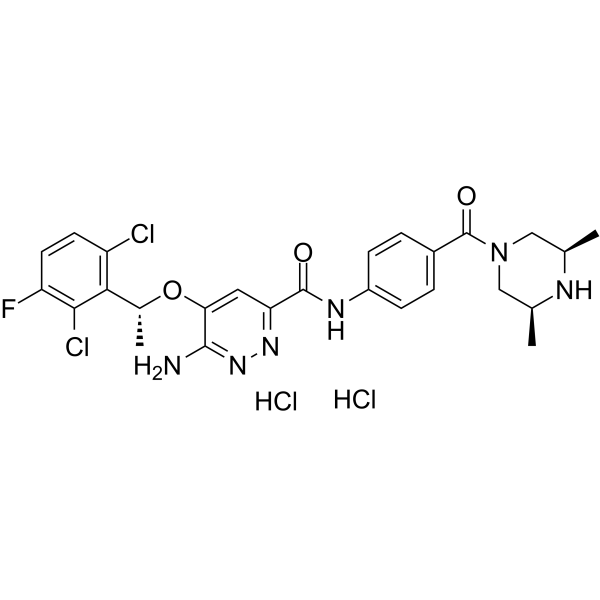
Ensartinib dihydrochloride (Standard) is the analytical standard of Ensartinib dihydrochloride (HY-103714A). This product is intended for research and analytical applications. Ensartinib dihydrochloride (X-396 dihydrochloride) is a BBB-permeable and dual ALK/MET inhibitor with IC50s of <0.4 nM and 0.74 nM, respectively.
|
-

- HY-10497R
-
|
|
Reference Standards
c-Met/HGFR
VEGFR
|
Cancer
|
|
BMS-794833 (Standard) is the analytical standard of BMS-794833 (HY-10497). This product is intended for research and analytical applications. BMS-794833 is a VEGFR2 and Met inhibitor extracted from patent WO2009094417, compound example 1; has IC50s of 15 and 1.7 nM, respectively.
|
-

- HY-183749
-
|
|
c-Met/HGFR
Apoptosis
|
Cancer
|
|
c-Met-IN-29 is an orally active c-Met inhibitor with an IC50 of 1.6 nM. c-Met-IN-29 binds to and functionally modulates c-Met protein, inhibiting tumor cell proliferation, migration and apoptosis. c-Met-IN-29 exhibits anti-tumor activity both in vitro and in vivo. c-Met-IN-29 can be used for the research of non-small cell lung cancer .
|
-

- HY-181776
-
|
|
c-Met/HGFR
VEGFR
EGFR
|
Cancer
|
|
c-Met-IN-31 is a c-Met inhibitor with an IC50 value of 0.021 μM. c-Met-IN-31 also inhibits VEGFR-2 and EGFR activities, with IC50 values of 0.32 μM and 9.3 μM, respectively. c-Met-IN-31 inhibits cancer cell proliferation. c-Met-IN-31 suppresses neovascularization in the chick chorioallantoic membrane (CAM) assay, exhibiting in vivo anti-angiogenic activity. c-Met-IN-31 can be used in research related to breast cancer and lung cancer .
|
-

| Cat. No. |
Product Name |
Target |
Research Area |
| Cat. No. |
Product Name |
Chemical Structure |
-
- HY-50878S
-
|
|
|
Crizotinib-d5 is the deuterium labeled Crizotinib. Crizotinib (PF-02341066) is an orally bioavailable, ATP-competitive ALK and c-Met inhibitor with IC50s of 20 and 8 nM, respectively. Crizotinib inhibits tyrosine phosphorylation of NPM-ALK and tyrosine phosphorylation of c-Met with IC50s of 24 and 11 nM in cell-based assays, respectively. Crizotinib is also a ROS1 inhibitor. Crizotinib has effective tumor growth inhibition .
|
-
-
- HY-50878AS
-
|
|
|
Crizotinib-d9 hydrochloride is deuterated labeled Crizotinib hydrochloride (HY-50878A). Crizotinib hydrochloride (PF-02341066 hydrochloride) is an orally bioavailable, selective, and ATP-competitive dual ALK and c-Met inhibitor with IC50s of 20 and 8 nM, respectively. Crizotinib hydrochloride (PF-02341066 hydrochloride) inhibits tyrosine phosphorylation of NPM-ALK and tyrosine phosphorylation of c-Met with IC50s of 24 and 11 nM in cell-based assays, respectively. It is also a ROS proto-oncogene 1 (ROS1) inhibitor. Crizotinib hydrochloride (PF-02341066 hydrochloride) has effective tumor growth inhibition .
|
-
-
- HY-50683S
-
|
|
|
JNJ-38877605-d1 (compound DO-2) is a highly selective MNNG HOS transforming (MET) inhibitor. JNJ-38877605-d1 is thought to diminish the formation of the Aldehyde Oxidase 1 inactive metabolite M3 .
|
-
-
- HY-50878S2
-
|
|
|
Crizotinib-d9 (PF-02341066-d9) is deuterium labeled Crizotinib. Crizotinib (PF-02341066) is an orally bioavailable, ATP-competitive ALK and c-Met inhibitor with IC50s of 20 and 8 nM, respectively. Crizotinib inhibits tyrosine phosphorylation of NPM-ALK and tyrosine phosphorylation of c-Met with IC50s of 24 and 11 nM in cell-based assays, respectively. Crizotinib is also a ROS1 inhibitor. Crizotinib has effective tumor growth inhibition .
|
-
-
- HY-50878S1
-
|
|
|
Crizotinib-d8 (PF-02341066-d8) is deuterium labeled Crizotinib. Crizotinib (PF-02341066) is an orally bioavailable, ATP-competitive ALK and c-Met inhibitor with IC50s of 20 and 8 nM, respectively. Crizotinib inhibits tyrosine phosphorylation of NPM-ALK and tyrosine phosphorylation of c-Met with IC50s of 24 and 11 nM in cell-based assays, respectively. Crizotinib is also a ROS1 inhibitor. Crizotinib has effective tumor growth inhibition .
|
-
| Cat. No. |
Product Name |
|
Classification |
-
- HY-149880
-
|
|
|
Alkynes
|
|
c-Met-IN-18 is ATP competitive type-III c-MET inhibitor of WT and D1228V mutant c-MET. c-Met-IN-18 has inhibitory for WT/D1228V with an IC50 value of 0.013/0.20 e.c-Met-IN-18 can be used for the research of c-MET driven cancers . c-Met-IN-18 is a click chemistry reagent, it contains an Alkyne group and can undergo copper-catalyzed azide-alkyne cycloaddition (CuAAc) with molecules containing Azide groups.
|
Your information is safe with us. * Required Fields.
Inquiry Information
- Product Name:
- Cat. No.:
- Quantity:
- MCE Japan Authorized Agent:








