



Merestinib
Based on 6 publication(s) in Google Scholar
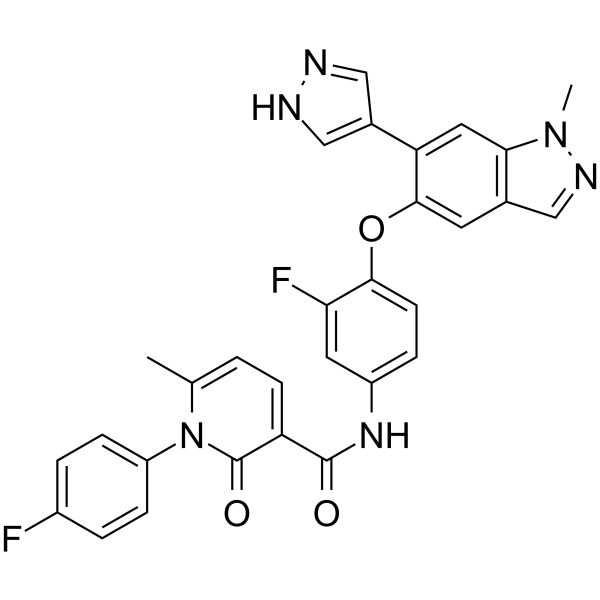
Merestinib (LY2801653) is a potent, orally bioavailable c-Met inhibitor (Ki=2 nM) with anti-tumor activities. Merestinib (LY2801653) also has potent activity against MST1R (IC50=11 nM), FLT3 (IC50=7 nM), AXL (IC50=2 nM), MERTK (IC50=10 nM), TEK (IC50=63 nM), ROS1, DDR1/2 (IC50=0.1/7 nM) and MKNK1/2 (IC50=7 nM).
For research use only. We do not sell to patients.
- Purity : 98.00%
- CAS No.: 1206799-15-6
- Formula: C30H22F2N6O3
- Molecular Weight:552.53
-
Storage:Powder -20°C, 3 years , 4°C, 2 years ; In solvent -80°C, 2 years , -20°C, 1 year

To place orders, for customer services and technical support, please contact: MedChemExpress USA
Tel: 609-228-6898 E-mail: [email protected] [email protected]


-
 Biological Activity
-
Chemical Information
-
Solvent & Solubility
- Purity & Documentation
- References
-
 Help & FAQs


-
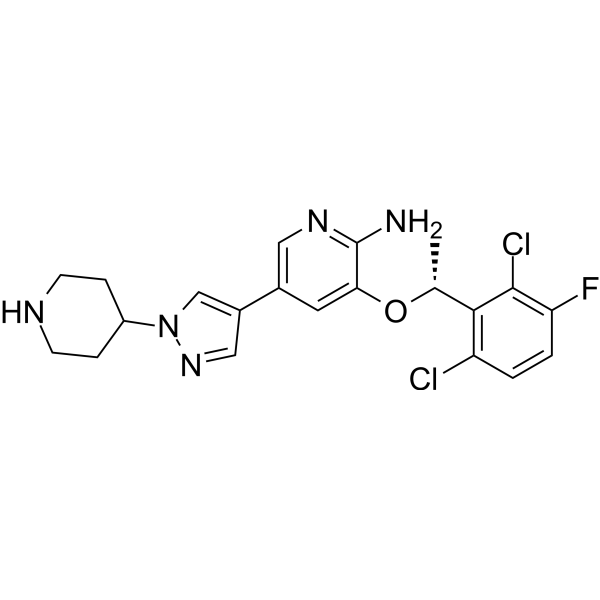
HY-50878
CrizotinibALK/c-Met/ROS1 Inhibitor -
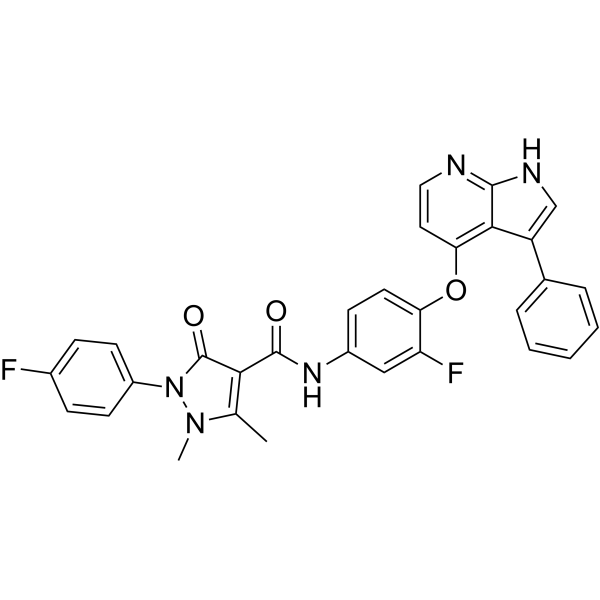
HY-100509
NPS-1034AXL/MET Inhibitor -
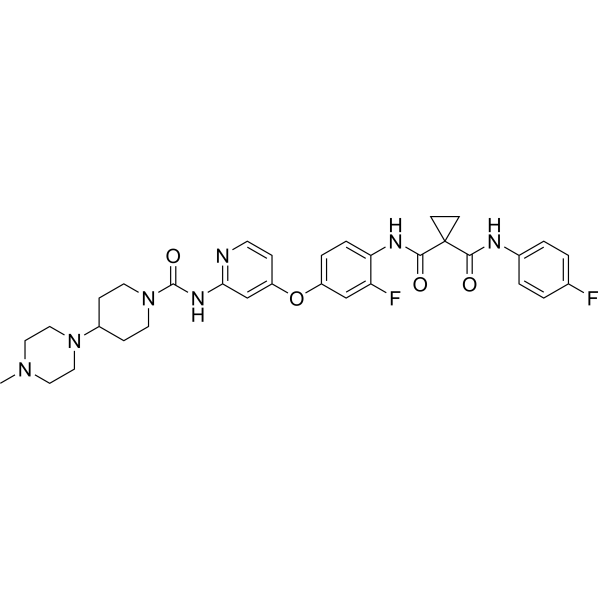
HY-13068
Golvatinib -
HY-13629
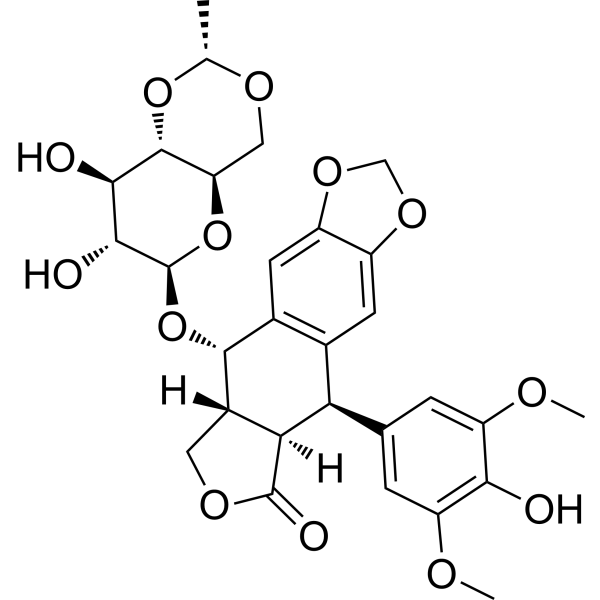
EtoposideTopoisomerase II Inhibitor -
HY-13404
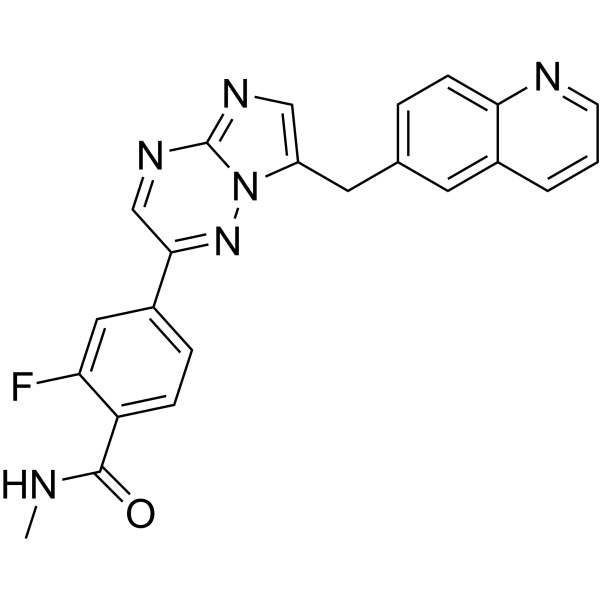
Capmatinibc-MET Kinase Inhibitor -
HY-16749
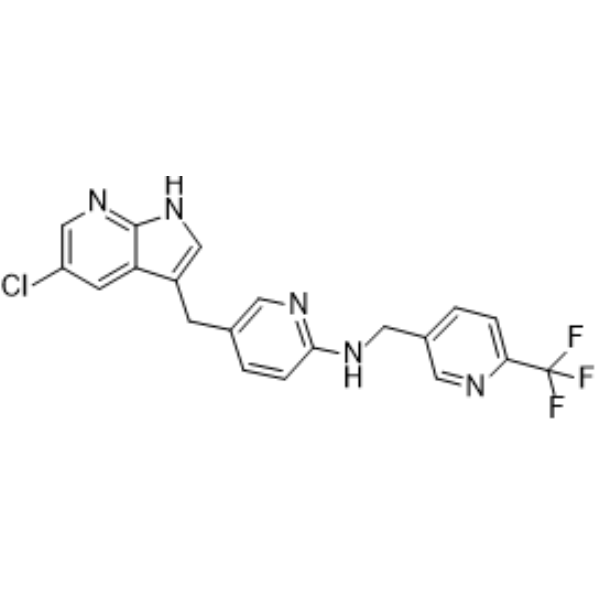
PexidartinibCSF1R/c-Kit Inhibitor -
HY-10681
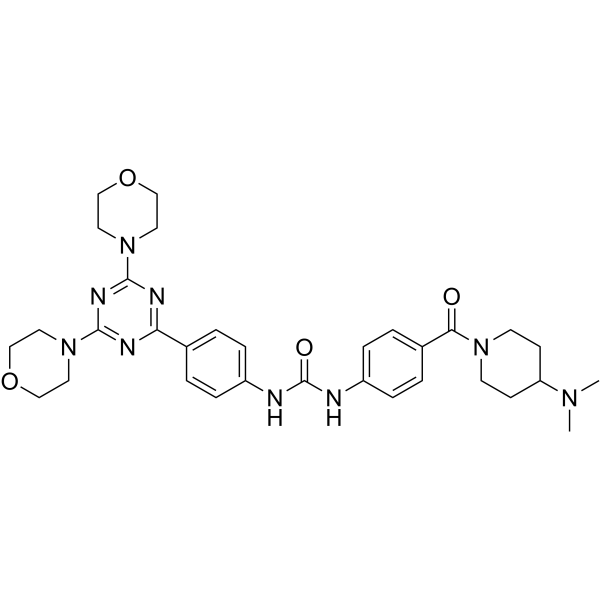
GedatolisibPI3K/mTOR Inhibitor -
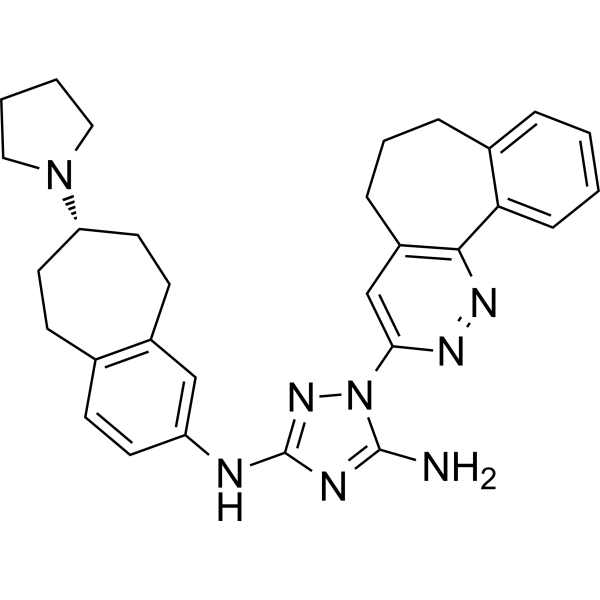
HY-15150
BemcentinibAXL Inhibitor -
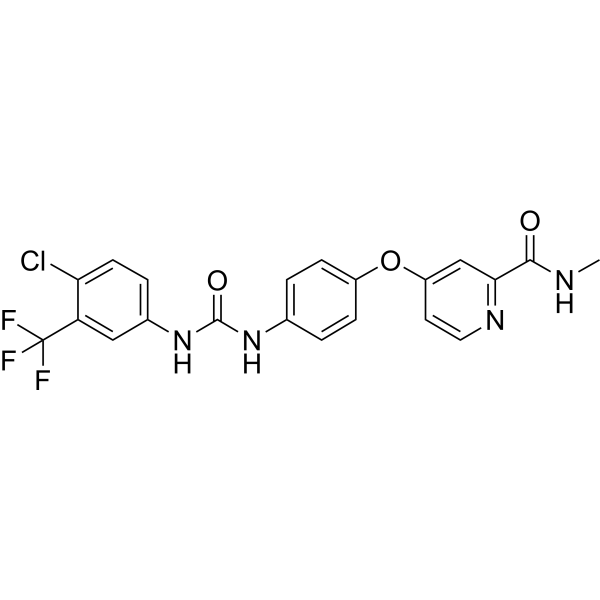
HY-10201
SorafenibMultikinase Inhibitor -
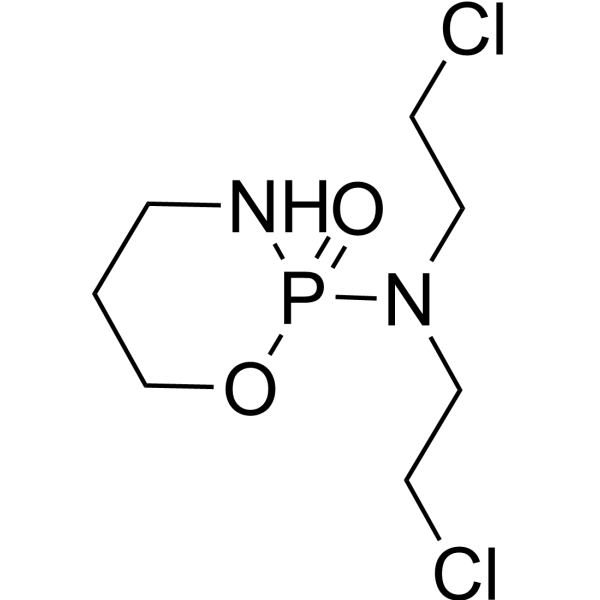
HY-17420
CyclophosphamideAlkylating Agent -
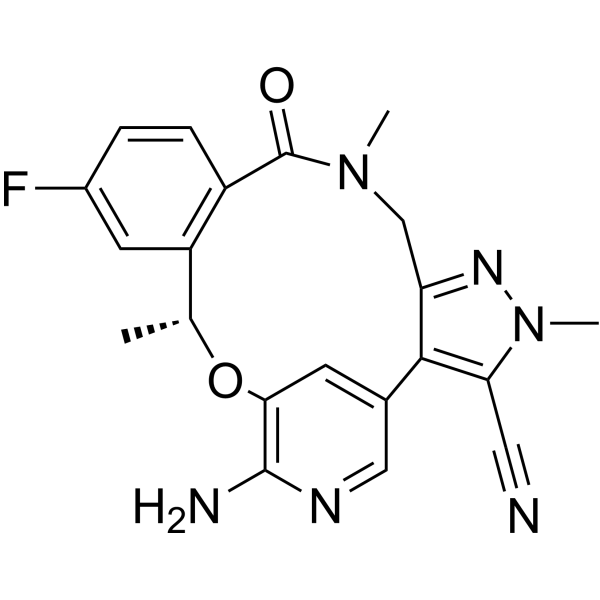
HY-12215
LorlatinibALK/ROS1 Inhibitor -
HY-16562
IrinotecanTopoisomerase I Inhibitor
Publications Citing Use of MedChemExpress (MCE) Merestinib
More Customer Validation & Images

-
WB


Biological Activity
Description
IC50 & Target
Ki: 2 nM (c-Met)[1]
IC50: 11 nM (MST1R), 7 nM (FLT3), 2 nM (AXL), 10 nM (MERTK), 63 nM (TEK), 0.1/7 nM (DDR1/2), 7 nM (MKNK1/2)[1]
Cellular Effect
|
Cell Line

|
Type | Value | Description | References |
|---|---|---|---|---|
| A549 | IC50 |
627.6 nM
Compound: 87
|
Antiproliferative activity against human A549 cells assessed as inhibition of cell growth
Antiproliferative activity against human A549 cells assessed as inhibition of cell growth
|
[PMID: 37262349] |
| NCI-H1703 | IC50 |
72.9 nM
Compound: 87
|
Antiproliferative activity against human NCI-H1703 cells assessed as inhibition of cell growth
Antiproliferative activity against human NCI-H1703 cells assessed as inhibition of cell growth
|
[PMID: 37262349] |
| NCI-H1993 | IC50 |
9.28 nM
Compound: 87
|
Antiproliferative activity against human NCI-H1993 cells assessed as inhibition of cell growth
Antiproliferative activity against human NCI-H1993 cells assessed as inhibition of cell growth
|
[PMID: 37262349] |
In Vitro
Merestinib (LY2801653) demonstrates effects on MET pathway-dependent cell scattering and cell proliferation. The mean IC50 value (n=6 determinations) of Merestinib (LY2801653) for inhibition of MET auto-phosphorylation in HGF-stimulated H460 cells is 35.2±6.9 nM and the IC50 for MET auto-phosphorylation in S114 cells is 59.2 nM.
Merestinib (LY2801653) also inhibits MST1R (IC50=11 nM), AXL (IC50=2 nM), MERTK (IC50=10 nM), TYRO3 (IC50=28 nM), ROS1, PDGFRA (IC50=41 nM), FLT3 (IC50=7 nM), TEK (IC50=63 nM), DDR1/2 (IC50=0.1/7 nM) and MKNK1/2 (IC50=7 nM)[1].
Transfection with the MET variants confers growth-factor independence and treatment with Merestinib (LY2801653) inhibits growth of these MET variant clones with an IC50 ranging from 3-fold more potent (V1092I) to approximately 6-fold less potent (L1195V) compare with the growth inhibition of cells with the MET wild-type sequence[1]. Merestinib (LY2801653) (2, 5, and 10 μM) reduces the number of viable TFK-1 and SZ-1 cells in a dose and time dependent manner, and significant inhibits wound healing for TFK-1 and SZ-1 cell lines. Merestinib (LY2801653) inhibits cell invasion in TFK-1 and SZ-1 cells in a concentration dependent manner[2].
MedChemExpress (MCE) has not independently confirmed the accuracy of these methods. They are for reference only.
In Vivo
MedChemExpress (MCE) has not independently confirmed the accuracy of these methods. They are for reference only.


Chemical Information
-
CAS No. 1206799-15-6
-
Appearance Solid
-
Molecular Weight 552.53
-
Formula C30H22F2N6O3
-
Color White to yellow
-
SMILES
O=C(C1=CC=C(C)N(C2=CC=C(F)C=C2)C1=O)NC3=CC=C(OC4=CC5=C(N(C)N=C5)C=C4C6=CNN=C6)C(F)=C3
-
Synonyms
LY2801653
-
Shipping
Room temperature in continental US; may vary elsewhere.
-
Storage
Powder -20°C 3 years 4°C 2 years In solvent -80°C 2 years -20°C 1 year


Publications (6)
-
Journal Impact Factor
-
Most Recent
-
Cancer Discov
2016 Dec;6(12):1334-1341. PMID: 27694386
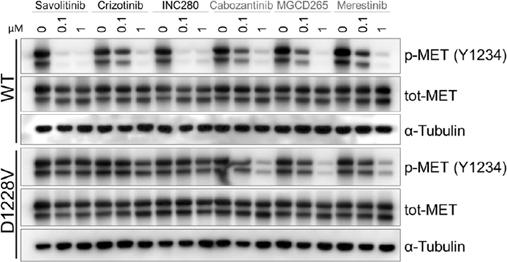
Merestinib purchased from MedChemExpress. Usage Cited in: Cancer Discov. 2016 Dec;6(12):1334-1341. [Abstract]
The MET D1228V mutation renders all type I MET inhibitors ineffective, as evidence by the failure of Savolitinib, PF-02341066, and INC280 to inhibit MET phosphorylation. In contrast, type II MET inhibitors XL184, MGCD265, and Merestinib (LY2801653) are able to effectively suppress MET phosphorylation in the presence of the D1228V mutation.
-
Clin Cancer Res
Molecular Mechanisms of Acquired Resistance to MET Tyrosine Kinase Inhibitors in Patients with MET Exon 14-Mutant NSCLC. [Abstract]2020 Jun 1;26(11):2615-2625. PMID: 32034073 -
Curr Res Microb Sci
Gut microbial metabolite, sphingosine-1-phosphate (S1P), drives mesangial cell phenotypic transformation and accelerates progression of IgA nephropathy via CCL2-MET-FAK pathway. [Abstract]2025 Oct 18:9:100494. PMID: 41209721 -
bioRxiv
2024 May 8:2024.05.07.592424. PMID: 38766123 -
Methods Mol Biol
2018:1711:351-398. PMID: 29344898 -


Solvent & Solubility
In Vitro:
DMSO : ≥ 32 mg/mL (57.92 mM; Hygroscopic DMSO has a significant impact on the solubility of product, please use newly opened DMSO)
* "≥" means soluble, but saturation unknown.
Please refer to the solubility information to select the appropriate solvent. Once prepared, please aliquot and store the solution to prevent product inactivation from repeated freeze-thaw cycles.
Storage method and period of stock solution: -80°C, 2 years; -20°C, 1 year. When stored at -80°C, please use it within 2 years. When stored at -20°C, please use it within 1 year.
Please refer to the solubility information to select the appropriate solvent. Once prepared, please aliquot and store the solution to prevent product inactivation from repeated freeze-thaw cycles.
Storage method and period of stock solution: -80°C, 2 years; -20°C, 1 year. When stored at -80°C, please use it within 2 years. When stored at -20°C, please use it within 1 year.
Concentration (start) × Volume (start) = Concentration (final) × Volume (final)
In Vivo:
Select the appropriate dissolution method based on your experimental animal and administration route.
- For the following dissolution methods, please ensure to first prepare a clear stock solution using an In Vitro approach and then sequentially add co-solvents:
- To ensure reliable experimental results, the clarified stock solution can be appropriately stored based on storage conditions. As for the working solution for In Vivo experiments, it is recommended to prepare freshly and use it on the same day.
- The percentages shown for the solvents indicate their volumetric ratio in the final prepared solution. If precipitation or phase separation occurs during preparation, heat and/or sonication can be used to aid dissolution.
Add each solvent one by one: 10% DMSO 40% PEG300 5% Tween-80 45% Saline
Solubility: ≥ 2.08 mg/mL (3.76 mM); Clear solution
This protocol yields a clear solution of ≥ 2.08 mg/mL (saturation unknown).
Taking 1 mL working solution as an example, add 100 μL DMSO stock solution (20.8 mg/mL) to 400 μL PEG300, and mix evenly; then add 50 μL Tween-80 and mix evenly; then add 450 μL Saline to adjust the volume to 1 mL.
Preparation of Saline: Dissolve 0.9 g sodium chloride in ddH₂O and dilute to 100 mL to obtain a clear Saline solution.
Add each solvent one by one: 10% DMSO 90% (20% SBE-β-CD in Saline)
Solubility: ≥ 2.08 mg/mL (3.76 mM); Clear solution
This protocol yields a clear solution of ≥ 2.08 mg/mL (saturation unknown).
Taking 1 mL working solution as an example, add 100 μL DMSO stock solution (20.8 mg/mL) to 900 μL 20% SBE-β-CD in Saline, and mix evenly.
Preparation of 20% SBE-β-CD in Saline (4°C, storage for one week): 2 g SBE-β-CD powder is dissolved in 10 mL Saline, completely dissolve until clear.
In Vivo Dissolution Calculator
Please enter the basic information of animal experiments:
-
-
-
-
Recommended: Prepare an additional quantity of animals to account for potential losses during experiments.
Please enter your animal formula composition:
-
%DMSO +
Recommended: Keep the proportion of DMSO in working solution below 2% if your animal is weak.
-
%+
-
+%Tween-80 + +
-
%Saline +
The co-solvents required include: DMSO, . All of co-solvents are available by MedChemExpress (MCE). , Tween 80. All of co-solvents are available by MedChemExpress (MCE).
Working solution concentration: 0.22 mg/mL
Method for preparing stock solution: mg drug dissolved in μL DMSO. Stock solution concentration: mg/mL.
1. Take μL DMSO stock solution;
2. Add μL .
μL , mix evenly;
3. Then add μL Tween 80, mix evenly;
4. Then add μL
Please ensure that the stock solution in the first step is dissolved to a clear state, and add co-solvents in sequence. You can use ultrasonic heating (ultrasonic cleaner, recommended frequency 20-40 kHz), vortexing, etc. to assist dissolution.


Purity & Documentation
-
Data Sheet (283 KB)
-
SDS (643 KB)
- English - EN (643 KB)
- Français - FR (643 KB)
- Deutsch - DE (643 KB)
- Norwegian - NO (643 KB)
- Español - ES (643 KB)
- Swedish - SV (643 KB)
- Italian - IT (643 KB)
- Korean - KR (643 KB)
- Portuguese - PT (643 KB)
-
Handling Instructions (2659 KB)
References
[1]. Yan SB, et al. LY2801653 is an orally bioavailable multi-kinase inhibitor with potent activity against MET, MST1R, and other oncoproteins, and displays anti-tumor activities in mouse xenograft models. Invest New Drugs. 2013 Aug;31(4):833-44. [Content Brief]
[2]. Barat S, et al. Targeting c-MET by LY2801653 for treatment of cholangiocarcinoma. Mol Carcinog. 2016 Jan 12. [Content Brief]


Complete Stock Solution Preparation Table
Please refer to the solubility information to select the appropriate solvent. Once prepared, please aliquot and store the solution to prevent product inactivation from repeated freeze-thaw cycles.
Storage method and period of stock solution: -80°C, 2 years; -20°C, 1 year. When stored at -80°C, please use it within 2 years. When stored at -20°C, please use it within 1 year.
| Optional Solvent | Concentration Solvent Mass | 1 mg | 5 mg | 10 mg | 25 mg |
|---|---|---|---|---|---|
| DMSO | 1 mM | 1.8099 mL | 9.0493 mL | 18.0986 mL | 45.2464 mL |
| 5 mM | 0.3620 mL | 1.8099 mL | 3.6197 mL | 9.0493 mL | |
| 10 mM | 0.1810 mL | 0.9049 mL | 1.8099 mL | 4.5246 mL | |
| 15 mM | 0.1207 mL | 0.6033 mL | 1.2066 mL | 3.0164 mL | |
| 20 mM | 0.0905 mL | 0.4525 mL | 0.9049 mL | 2.2623 mL | |
| 25 mM | 0.0724 mL | 0.3620 mL | 0.7239 mL | 1.8099 mL | |
| 30 mM | 0.0603 mL | 0.3016 mL | 0.6033 mL | 1.5082 mL | |
| 40 mM | 0.0452 mL | 0.2262 mL | 0.4525 mL | 1.1312 mL | |
| 50 mM | 0.0362 mL | 0.1810 mL | 0.3620 mL | 0.9049 mL |


Merestinib Related Classifications
HY-15514 Related Classifications
 Powered by Bioz