



SCR-1481B1

Based on 1 Customer Validation
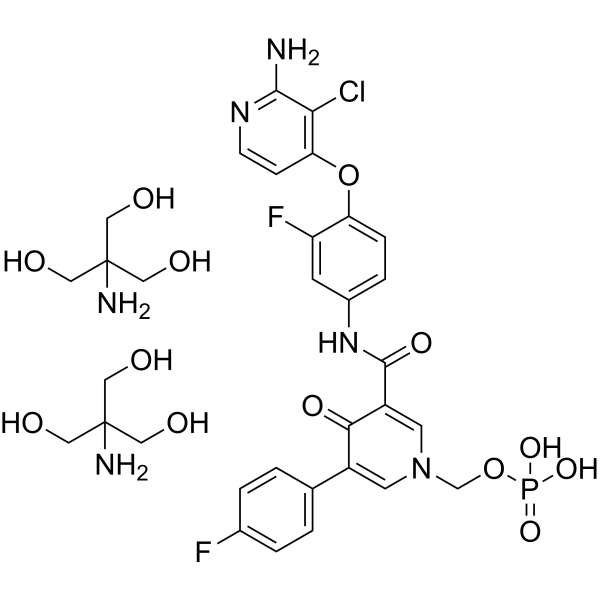
SCR-1481B1 (Metatinib anhydrous; c-Met inhibitor 2) is an inhibitor of the N-terminal fragment of Gasdermin D (GSDMD), with an IC50 of 1.04 μM and a Ka of 0.42 μM in mice. SCR-1481B1 effectively blocks GSDMD-NT oligomerization and pore formation, inhibits GSDMD-mediated pyroptosis (Pyroptosis), preserves mitochondrial integrity, and reduces proinflammatory cytokine secretion. SCR-1481B1 also inhibits angiogenesis, exerts GSDMD-independent antitumor effects, and enhances the infiltration of antitumor immune cells. SCR-1481B1 is also an inhibitor targeting to c-MET and VEGFR2, can be used in studies related to melanoma and sepsis.
For research use only. We do not sell to patients.
- Purity : 99.95%
- CAS No.: 1174161-86-4
- Formula: C32H40ClF2N6O13P
- Molecular Weight:821.12
-
Storage:
4°C, sealed storage, away from moisture
* In solvent : -80°C, 6 months; -20°C, 1 month (sealed storage, away from moisture)

To place orders, for customer services and technical support, please contact: MedChemExpress USA
Tel: 609-228-6898 E-mail: [email protected] [email protected]


-
 Biological Activity
-
Chemical Information
-
Solvent & Solubility
- Protocols
- Purity & Documentation
- References
-
 Help & FAQs


-
HY-50878
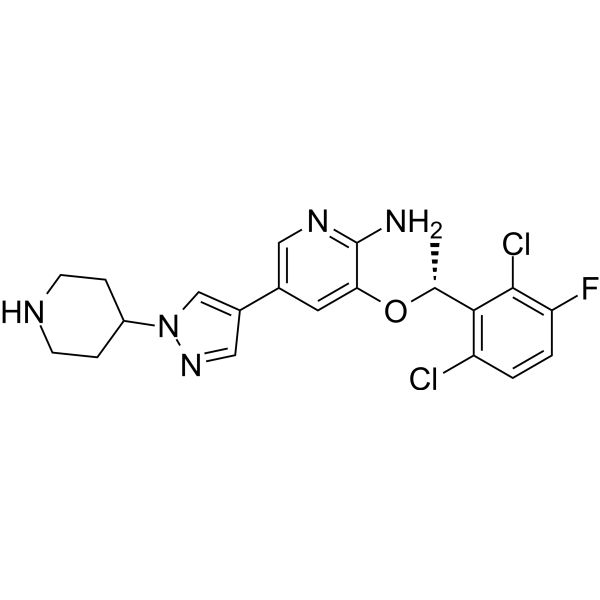
CrizotinibALK/c-Met/ROS1 Inhibitor -
HY-W040022
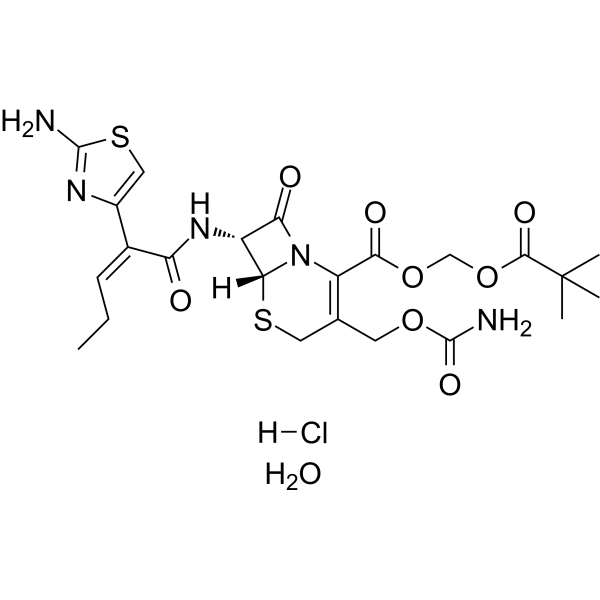
Cefcapene pivoxil hydrochloride hydrateCephem Antibiotic -
HY-10497
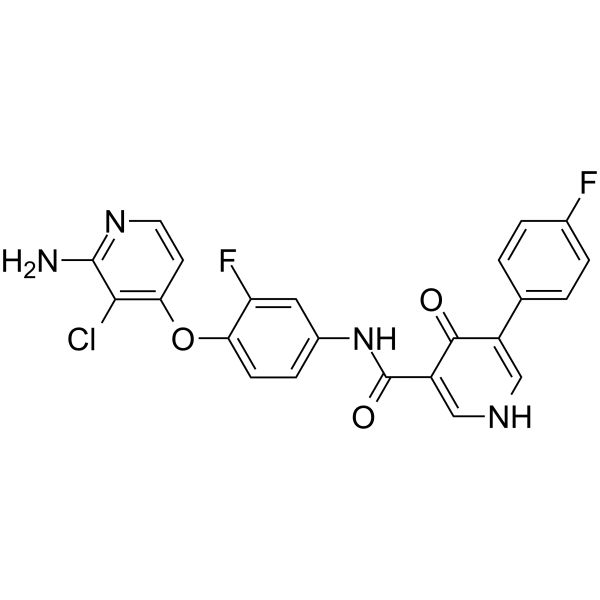
BMS-794833VEGFR2/Met Inhibitor -
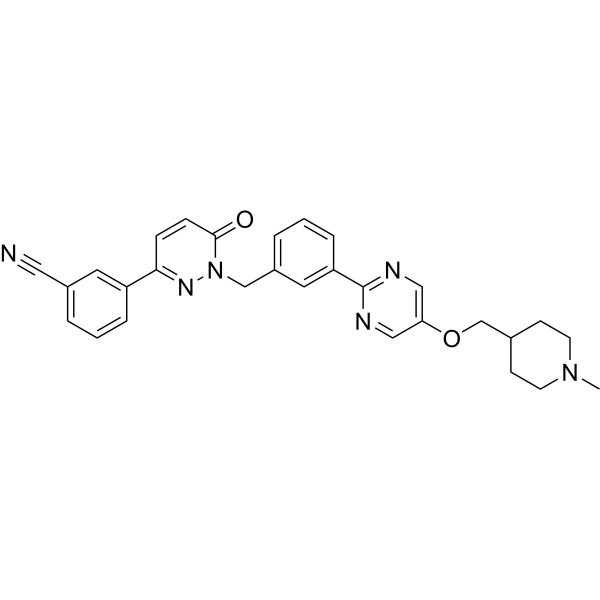
HY-14721
Tepotinibc-Met Inhibitor -
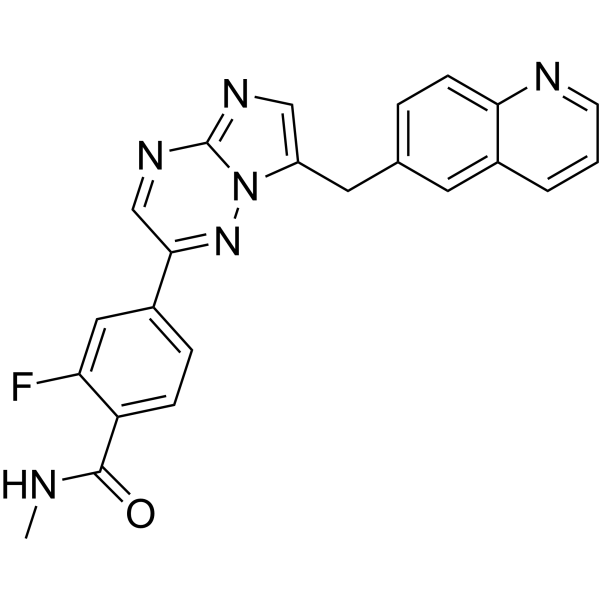
HY-13404
Capmatinibc-MET Kinase Inhibitor -
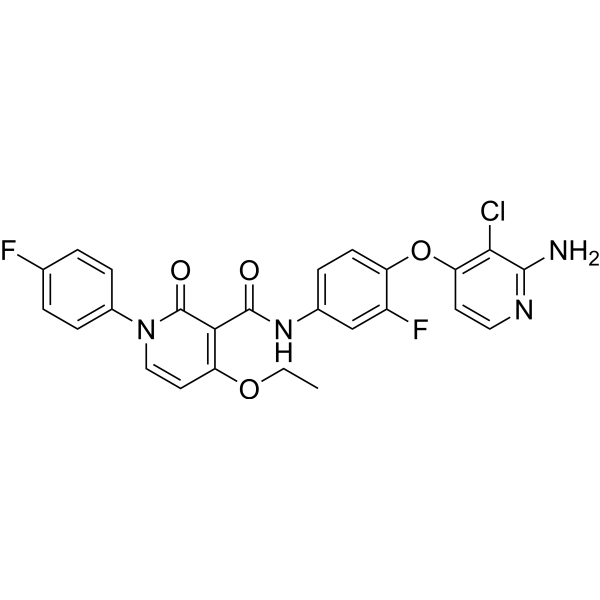
HY-12076
BMS 777607c-Met/Axl Inhibitor -
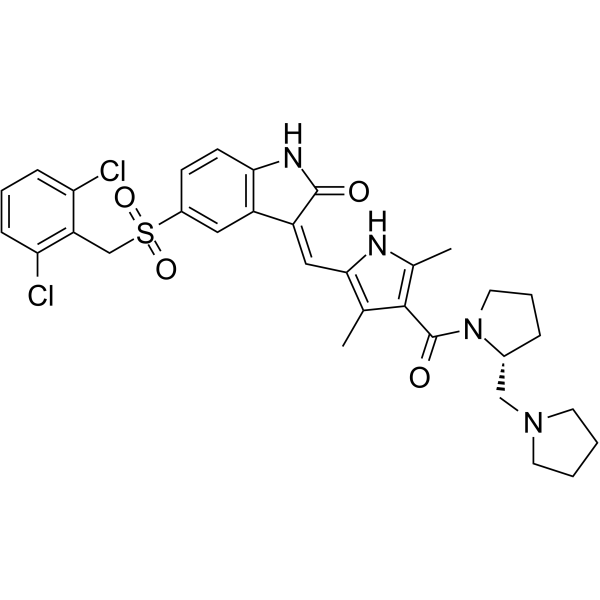
HY-11107
PHA-665752c-Met Inhibitor -
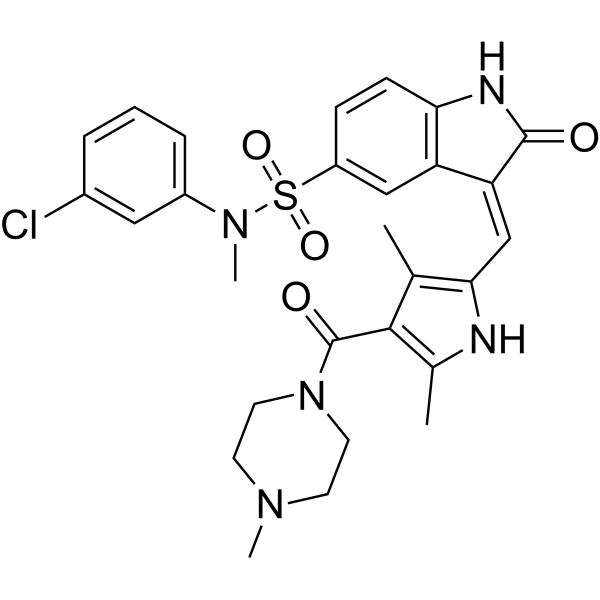
HY-12014
SU11274c-Met/HGFR Inhibitor -

HY-14721R
Tepotinib (Standard)c-Met Inhibitor -
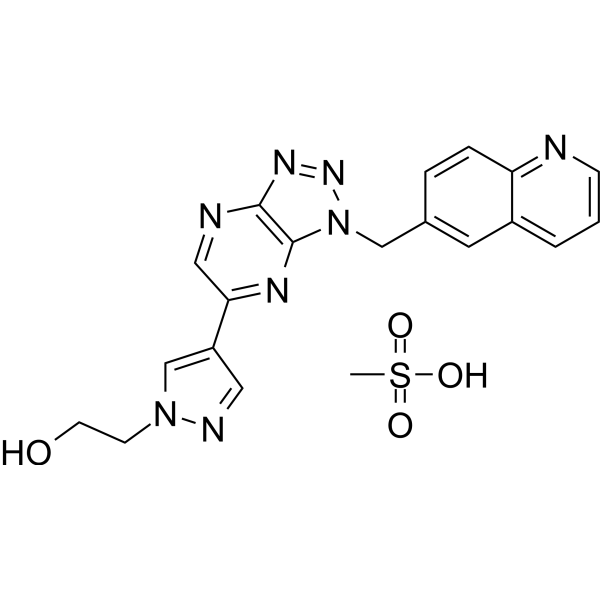
HY-12017A
PF-04217903 mesylatec-Met Kinase Inhibitor -
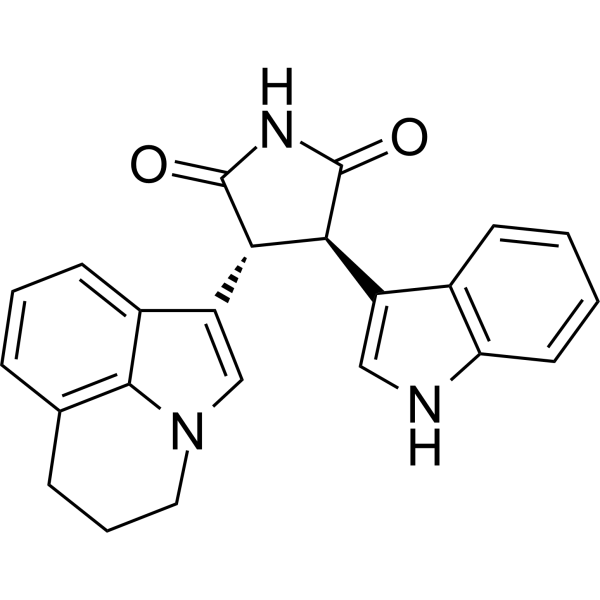
HY-50686
Tivantinibc-Met Inhibitor
All VEGFR Isoforms
More

Biological Activity
Description
IC50 & Target
[1]|
IL-1β |
VEGFR2 |
In Vitro
SCR-1481B1 (1-40 μM; 1 h pre-incubation) dose-dependently inhibits LPS plus nigericin-induced GSDMD-mediated pyroptosis in iBMDMs, reducing both LDH release and IL-1β secretion[1].
SCR-1481B1 (20 μM) inhibits LPS plus nigericin-induced GSDMD-mediated pyroptosis in human THP-1 monocytes, reducing both LDH release and IL-1β secretion[1].
SCR-1481B1 (20 μM; 4 h) inhibits mouse and human GSDMD-N oligomerization and subsequent pyroptotic cell death in HEK293T cells[1].
SCR-1481B1 (20 μM; 4 h) inhibits GSDMD oligomerization and pyroptotic cell death downstream of caspase-1/11-mediated GSDMD cleavage in HEK293T cells[1].
SCR-1481B1 (20 μM) inhibits human and mouse GSDMD-N oligomerization in the cytosol of HEK293T cells, as measured by split-luciferase reconstitution[1].
SCR-1481B1 (20 μM; 4 h pre-incubation) specifically binds to core sites at the oligomerization interface I of mouse GSDMD-N, enhancing its stability against protease degradation[1].
SCR-1481B1 (20 μM) directly binds to core sites at the oligomerization interface I of purified mouse GSDMD-N, increasing its thermal stability[1].
SCR-1481B1 (0.15-20 μM; 60 min) inhibits GSDMD-N-mediated liposome pore formation with an IC50 of 1.04 μM[1].
SCR-1481B1 (Metatinib) binds to the GSDMD dimer with a docking score of -7.28 kcal/mol[3].
MedChemExpress (MCE) has not independently confirmed the accuracy of these methods. They are for reference only. Further protocols information, click here.
In Vivo
SCR-1481B1 (10 mg/kg; i.p.; single dose) improves survival and reduces serum inflammatory cytokine levels in E. coli-induced septic mice, though it does not significantly reduce organ bacterial burden[1].
SCR-1481B1 (10 mg/kg; i.p.; every other day; starting after tumor implantation) enhances the antitumor efficacy of anti-PD-L1 antibody in a B16F10 melanoma model by increasing tumor-infiltrating immune cells and reducing T cell exhaustion, with activity independent of GSDMD[1].
MedChemExpress (MCE) has not independently confirmed the accuracy of these methods. They are for reference only.
-
Animal Model:C57BL/6J (8-12-week-old male, LPS-induced sepsis model)[1]
-
Dosage:10 mg/kg
-
Administration:i.p.; single dose; administered 4 hours prior to LPS challenge
-
Result:Reduced LPS-induced mortality to approximately 20%.
Strongly decreased serum levels of IL-1β, IL-6, and TNF-α at 12 hours after LPS challenge.
Did not further suppress inflammatory cytokine secretion in GSDMD-deficient septic mice.
-
Animal Model:C57BL/6J (8-12-week-old male, E. coli-induced sepsis model)[1]
-
Dosage:10 mg/kg
-
Administration:i.p.; single dose
-
Result:Significantly improved the survival of E. coli-induced septic mice.
Reduced serum levels of IL-1β, IL-6, and TNF-α compared to vehicle controls, though to a lesser extent than with compound 98.
Did not significantly reduce bacterial colony counts in the spleen or liver relative to vehicle controls.
-
Animal Model:C57BL/6J (8-12-week-old male, subcutaneous B16F10 melanoma model); Gsdmd-/- (8-12-week-old male, subcutaneous B16F10 melanoma model)[1]
-
Dosage:10 mg/kg
-
Administration:i.p.; every other day; starting after tumor implantation
-
Result:Reduced tumor burden and volume, and improved mouse survival, compared to anti-PD-L1 monotherapy.
Significantly increased the percentages and numbers of tumor-infiltrating CD4+ and CD8+ T cells.
Increased levels of IFN-γ, TNF-α, and granzyme B in tumor CD8+ T cells.
Decreased expression of exhaustion markers TIM-3 and TIGIT in CD8+ T cells.
Increased percentages and numbers of APCs including DCs and MHCII+ macrophages.
Still boosted antitumor immunity when combined with anti-PD-L1 in GSDMD-deficient mice.


Chemical Information
-
CAS No. 1174161-86-4
-
Appearance Solid
-
Molecular Weight 821.12
-
Formula C32H40ClF2N6O13P
-
Color White to off-white
-
SMILES
O=C(C1=CN(COP(O)(O)=O)C=C(C2=CC=C(F)C=C2)C1=O)NC3=CC=C(C(F)=C3)OC4=C(Cl)C(N)=NC=C4.OCC(CO)(CO)N.OCC(CO)(CO)N
-
Synonyms
Metatinib anhydrous; c-Met inhibitor 2
-
Shipping
Room temperature in continental US; may vary elsewhere.
-
Storage
4°C, sealed storage, away from moisture
* In solvent : -80°C, 6 months; -20°C, 1 month (sealed storage, away from moisture)


Solvent & Solubility
In Vitro:
DMSO : ≥ 100 mg/mL (121.78 mM; Hygroscopic DMSO has a significant impact on the solubility of product, please use newly opened DMSO)
* "≥" means soluble, but saturation unknown.
Please refer to the solubility information to select the appropriate solvent. Once prepared, please aliquot and store the solution to prevent product inactivation from repeated freeze-thaw cycles.
Storage method and period of stock solution: -80°C, 6 months; -20°C, 1 month (sealed storage, away from moisture). When stored at -80°C, please use it within 6 months. When stored at -20°C, please use it within 1 month.
Please refer to the solubility information to select the appropriate solvent. Once prepared, please aliquot and store the solution to prevent product inactivation from repeated freeze-thaw cycles.
Storage method and period of stock solution: -80°C, 6 months; -20°C, 1 month (sealed storage, away from moisture). When stored at -80°C, please use it within 6 months. When stored at -20°C, please use it within 1 month.
Concentration (start) × Volume (start) = Concentration (final) × Volume (final)
In Vivo:
Select the appropriate dissolution method based on your experimental animal and administration route.
- For the following dissolution methods, please ensure to first prepare a clear stock solution using an In Vitro approach and then sequentially add co-solvents:
- To ensure reliable experimental results, the clarified stock solution can be appropriately stored based on storage conditions. As for the working solution for In Vivo experiments, it is recommended to prepare freshly and use it on the same day.
- The percentages shown for the solvents indicate their volumetric ratio in the final prepared solution. If precipitation or phase separation occurs during preparation, heat and/or sonication can be used to aid dissolution.
Add each solvent one by one: 10% DMSO 90% (20% SBE-β-CD in Saline)
Solubility: ≥ 2.5 mg/mL (3.04 mM); Clear solution
This protocol yields a clear solution of ≥ 2.5 mg/mL (saturation unknown).
Taking 1 mL working solution as an example, add 100 μL DMSO stock solution (25.0 mg/mL) to 900 μL 20% SBE-β-CD in Saline, and mix evenly.
Preparation of 20% SBE-β-CD in Saline (4°C, storage for one week): 2 g SBE-β-CD powder is dissolved in 10 mL Saline, completely dissolve until clear.
In Vivo Dissolution Calculator
Please enter the basic information of animal experiments:
-
-
-
-
Recommended: Prepare an additional quantity of animals to account for potential losses during experiments.
Please enter your animal formula composition:
-
%DMSO +
Recommended: Keep the proportion of DMSO in working solution below 2% if your animal is weak.
-
%+
-
+%Tween-80 + +
-
%Saline +
The co-solvents required include: DMSO, . All of co-solvents are available by MedChemExpress (MCE). , Tween 80. All of co-solvents are available by MedChemExpress (MCE).
Working solution concentration: 0.22 mg/mL
Method for preparing stock solution: mg drug dissolved in μL DMSO. Stock solution concentration: mg/mL. * In solvent : -80°C, 6 months; -20°C, 1 month (sealed storage, away from moisture)
1. Take μL DMSO stock solution;
2. Add μL .
μL , mix evenly;
3. Then add μL Tween 80, mix evenly;
4. Then add μL
Please ensure that the stock solution in the first step is dissolved to a clear state, and add co-solvents in sequence. You can use ultrasonic heating (ultrasonic cleaner, recommended frequency 20-40 kHz), vortexing, etc. to assist dissolution.

Protocols
-
Human pluripotent stem cell endothelial-cell differentiation
Human pluripotent stem cell endothelial differentiation is based on stepwise developmental patterning: early activation of WNT/GSK3β inhibition promotes mesodermal or vascular progenitor entry, followed by endothelial specification using VEGF-related signaling, BMP4, FGF2, Notch modulation, or cAMP depending on the published protocol. Endothelial differentiation is read out by acquisition of CD31, CD34, VE-cadherin/CD144, KDR/VEGFR2, vWF, Tie2, NOS3, acetylated LDL uptake, tube/network formation, barrier function, and in vivo vessel-forming capacity where tested.
-
Cell Cytotoxicity Assay
Cytotoxicity assays are usually based on the assessment of cell membrane damage, which can also be indirectly detected by measuring cell viability. Detection methods include MTT assay, CKK-8 assay, LDH assay and ATP assay, etc.
-
Vascular/Branching Fractal Analysis
Vascular/branching fractal analysis quantifies the geometric complexity of vessel trees or vascular networks from segmented 2D images, commonly by converting vessels into binary and/or skeletonized maps and estimating fractal dimension using box-counting or related approaches. Fractal dimension is interpreted as an image-derived readout of vascular branching complexity, space filling, or density, and has been applied to retinal photographs, fluorescein angiography, OCT angiography, capillary perfusion maps, and in vitro Matrigel angiogenesis networks. The assay readout is generated from vessel-positive pixels after image preprocessing, vessel segmentation, binarization, and optional skeletonization; reported outputs include fractal dimension, vessel density, branchpoint density, endpoint density, vessel length density, tortuosity, and generation-based branching metrics when VESGEN-style analysis is used. The biological interpretation is limited to quantitative vascular patterning and s
-
LPS-Induced Endotoxemia/Systemic Inflammation
Lipopolysaccharide (LPS)-induced endotoxemia is a widely used in vivo model of acute systemic inflammation in which LPS, a Gram-negative bacterial endotoxin, activates innate immune signaling primarily through TLR4, leading to rapid and transient induction of pro-inflammatory cytokines such as TNF-α, IL-6, and IL-1β in circulation and tissues. This cytokine surge is commonly used as a measurable readout of systemic inflammatory activation and immune dysregulation, and is typically assessed within hours after intraperitoneal LPS administration in mouse models of endotoxemia. The model captures key features of systemic inflammatory response syndrome, including cytokine release, immune cell activation, and downstream tissue responses, and has been used to evaluate anti-inflammatory interventions such as cytokine modulation, lipid mediators, and immune cell-targeting therapies.
-
Endothelial Tube Formation Assay
Endothelial tube formation assay evaluates the ability of endothelial cells to attach, migrate, align, and organize into capillary-like networks when cultured on gelled basement membrane extract or Matrigel; the readout is the morphology and quantity of tube-like networks, which reflects an in vitro endothelial morphogenesis step related to angiogenesis. Basement membrane extract/Matrigel provides laminin-rich extracellular matrix cues that support endothelial differentiation into capillary-like structures, but it can contain biologically active growth factors, so growth-factor-reduced matrix is preferred when testing defined angiogenic stimulators or inhibitors.
-
Research Protocol for Inflammation-related Diseases
The NLRP3 inflammasome is a cytosolic innate immune signaling platform that integrates priming signals and danger-signal activation to promote caspase-1 activation, maturation of IL-1β and IL-18, and gasdermin D-mediated pyroptotic cell death. The core experimental logic is to determine whether inflammatory disease phenotypes are driven by increased NLRP3 expression, ASC-containing inflammasome assembly, caspase-1 cleavage, GSDMD cleavage, and extracellular release of IL-1β/IL-18 rather than by nonspecific cell injury alone. The pathway is strongly linked to inflammation-related disease phenotypes because monosodium urate crystals activate NALP3/NLRP3 inflammasome signaling in gout-like crystal inflammation, cholesterol crystals activate NLRP3 inflammasomes in atherogenesis models, and DSS-induced intestinal inflammation has been reported to involve NLRP3 inflammasome activity. However, experimental colitis studies also show context-dependent protective effects of NLRP3 inflammasome co
-
Endothelial Cell Migration/Angiogenic Sprouting Assay
Endothelial cell migration and angiogenic sprouting assays are in vitro (and partially ex vivo-adapted) functional models that quantify the ability of endothelial cells to undergo coordinated migration, extracellular matrix invasion, and multicellular organization into capillary-like sprouts in response to pro-angiogenic stimuli such as VEGF, bFGF, or conditioned microenvironments. These assays are used to model early angiogenic events including tip-cell formation, directional migration, and lumen-like sprout extension, which collectively reflect angiogenic activation and vascular morphogenesis processes observed in vivo.
-
Pyroptosis Solutions
Pyroptosis is a lytic inflammatory cell-death pathway executed by gasdermin pores, most classically through inflammasome-mediated activation of caspase-1, cleavage of gasdermin D, membrane pore formation, LDH release, and secretion of IL-1β and IL-18. The canonical pathway is commonly modeled by priming cells with an inflammatory signal such as LPS to induce pro-IL-1β and inflammasome components, followed by an activation signal such as ATP or nigericin to activate NLRP3, ASC speck formation, caspase-1 cleavage, GSDMD cleavage, cytokine release, and pyroptotic membrane rupture. The non-canonical pathway is triggered when cytosolic LPS activates mouse caspase-11 or human caspase-4/5, leading to GSDMD cleavage and pyroptosis, and this can secondarily activate NLRP3-dependent IL-1β release. Pyroptosis is linked to inflammatory injury, infection, cancer, liver disease, ocular disease, placental inflammation, and other disease phenotypes, but unresolved questions include which gasdermin fam


Purity & Documentation
-
Data Sheet (286 KB)
-
SDS (393 KB)
- English - EN (393 KB)
- Français - FR (393 KB)
- Deutsch - DE (393 KB)
- Norwegian - NO (393 KB)
- Español - ES (393 KB)
- Swedish - SV (393 KB)
- Italian - IT (393 KB)
- Korean - KR (393 KB)
- Portuguese - PT (393 KB)
-
Handling Instructions (2659 KB)
References
[1]. Hu Y, et al. Identification of two repurposed drugs targeting GSDMD oligomerization interface I to block pyroptosis. Cell Chem Biol. 2024;31(12):2024-2038.e7. [Content Brief]
[3]. Lestari B, et al. Discovery of pyroptosis-inducing natural products in neuroblastomas: computational studies with experimental validation. BMC Complement Med Ther. 2025;25(1):279. Published 2025 Jul 19. [Content Brief]
[4]. Cheng K, et al. Safety, Efficacy, and Pharmacokinetics of Metatinib Tromethamine Tablet in Patients with Advanced Refractory Solid Tumors: A Phase I Clinical Trial. Oncologist. 2021 Aug;26(8):649-e1313. [Content Brief]


Complete Stock Solution Preparation Table
Please refer to the solubility information to select the appropriate solvent. Once prepared, please aliquot and store the solution to prevent product inactivation from repeated freeze-thaw cycles.
Storage method and period of stock solution: -80°C, 6 months; -20°C, 1 month (sealed storage, away from moisture). When stored at -80°C, please use it within 6 months. When stored at -20°C, please use it within 1 month.
| Optional Solvent | Concentration Solvent Mass | 1 mg | 5 mg | 10 mg | 25 mg |
|---|---|---|---|---|---|
| DMSO | 1 mM | 1.2178 mL | 6.0892 mL | 12.1785 mL | 30.4462 mL |
| 5 mM | 0.2436 mL | 1.2178 mL | 2.4357 mL | 6.0892 mL | |
| 10 mM | 0.1218 mL | 0.6089 mL | 1.2178 mL | 3.0446 mL | |
| 15 mM | 0.0812 mL | 0.4059 mL | 0.8119 mL | 2.0297 mL | |
| 20 mM | 0.0609 mL | 0.3045 mL | 0.6089 mL | 1.5223 mL | |
| 25 mM | 0.0487 mL | 0.2436 mL | 0.4871 mL | 1.2178 mL | |
| 30 mM | 0.0406 mL | 0.2030 mL | 0.4059 mL | 1.0149 mL | |
| 40 mM | 0.0304 mL | 0.1522 mL | 0.3045 mL | 0.7612 mL | |
| 50 mM | 0.0244 mL | 0.1218 mL | 0.2436 mL | 0.6089 mL | |
| 60 mM | 0.0203 mL | 0.1015 mL | 0.2030 mL | 0.5074 mL | |
| 80 mM | 0.0152 mL | 0.0761 mL | 0.1522 mL | 0.3806 mL | |
| 100 mM | 0.0122 mL | 0.0609 mL | 0.1218 mL | 0.3045 mL |


SCR-1481B1 Related Classifications
HY-18711A Related Classifications
 Powered by Bioz